Aphids on Dragon Tree (Dracaena marginata): Causes, Checks
Quick answer
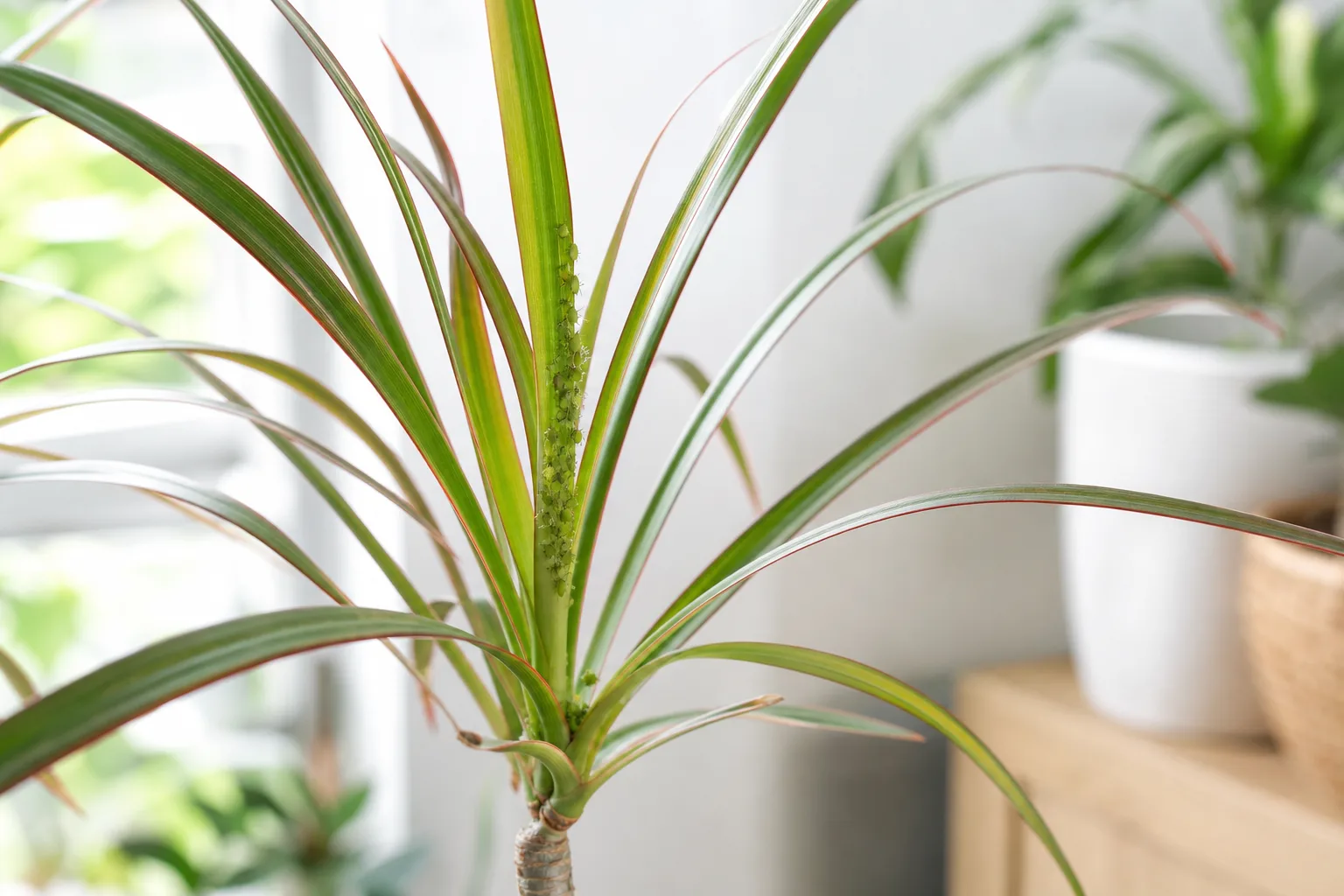
Aphids on Dragon Tree show up as soft clusters on new crown leaves and in narrow leaf axils along each cane, often with sticky honeydew below a tall specimen. Yellowing on the oldest lower leaves with dry soil is normal aging-not aphids, which damage upper crown growth. First step: isolate the plant and rinse the crown and leaf undersides with a strong stream of lukewarm water before applying any spray.
Aphids on Dragon Tree: Causes, Checks & Fixes
This guide covers aphids on Dragon Tree. See also the general Aphids guide, watering, and light pages for this plant.
Aphids on Dragon Tree: Causes, Checks & Fixes
Quick answer
Aphids on Dragon Tree (Dracaena marginata) are small soft-bodied insects that pierce sap from tender new growth at cane tips and from the narrow leaf axils where leaves clasp the stem. You may notice curled or yellowing crown leaves, shiny sticky honeydew on foliage or the floor below a tall specimen, or ants climbing the pot before you spot the insects themselves.
Yellow lower leaves on dry soil, with a clean crown above, are normal aging-not aphids. Aphid damage concentrates on new and upper growth. If only the bottom third of each cane shows yellowing while cane tips look firm and unsticky, see yellow leaves on Dragon Tree instead.
First step: isolate the plant and rinse the crown and leaf undersides with a strong stream of lukewarm water. Dragon Tree leaves are narrow but firm enough to handle a shower or sink spray when drainage is good. Knock off live aphids and fresh honeydew before reaching for soap or oil. If colonies return within a few days, follow with insecticidal soap on contact.
This page covers D. marginata-narrow strap leaves, multi-cane floor specimens, and tight crown axils. If you own a wide-leaf Corn Plant (D. fragrans), see aphids on Corn Plant for strap-whorl inspection and rinsing technique.
Why Dragon Tree gets aphids on crown rosettes and leaf axils
Dragon Tree is not especially aphid-prone compared with fast-growing flowering houseplants, but its growth pattern creates predictable feeding sites. Each cane produces new leaves slowly from a tight crown rosette. When the plant pushes a flush-often after spring light increases, a move to a brighter window, or light feeding during active growth-those soft unfolding leaves are exactly what aphids target.
On marginata, narrow leaves wrap the cane closely. That architecture traps colonies in axils where a casual glance from across the room misses them-unlike the looser strap-leaf whorl on Corn Plant, where crown tissue is easier to part and inspect. Braided or multi-head nursery specimens add another blind spot: aphids shelter between canes where spray and rinse water do not reach on the first pass.
Indoor collections lack the predators that suppress aphids outdoors. Aphids arrive on new nursery plants, hitchhike from infested neighbors, or enter through open windows in warm weather. Because Dragon Tree is often displayed as a floor plant with canes above eye level, colonies can build in the crown before honeydew on lower leaves or nearby surfaces alerts you.
Stress makes any houseplant easier prey. Dragon Tree that sits in too little light, stays overwatered, or receives heavy nitrogen fertilizer produces weak, succulent shoots that aphids colonize faster than firm, moderate growth. Match feeding to this slow grower-see Dragon Tree fertilizer-rather than pushing soft shoots during an active infestation. This species tolerates average humidity and dry air well, so aphid outbreaks here are less about humidity failure and more about introduction routes plus tender new tissue.
Ants complicate treatment. Ants harvest honeydew and protect aphid colonies from predators, so ant trails on pot rims or cane bases often appear before you find the insects feeding above.
What aphids look like on Dragon Tree - severity guide
Typical aphid signs:
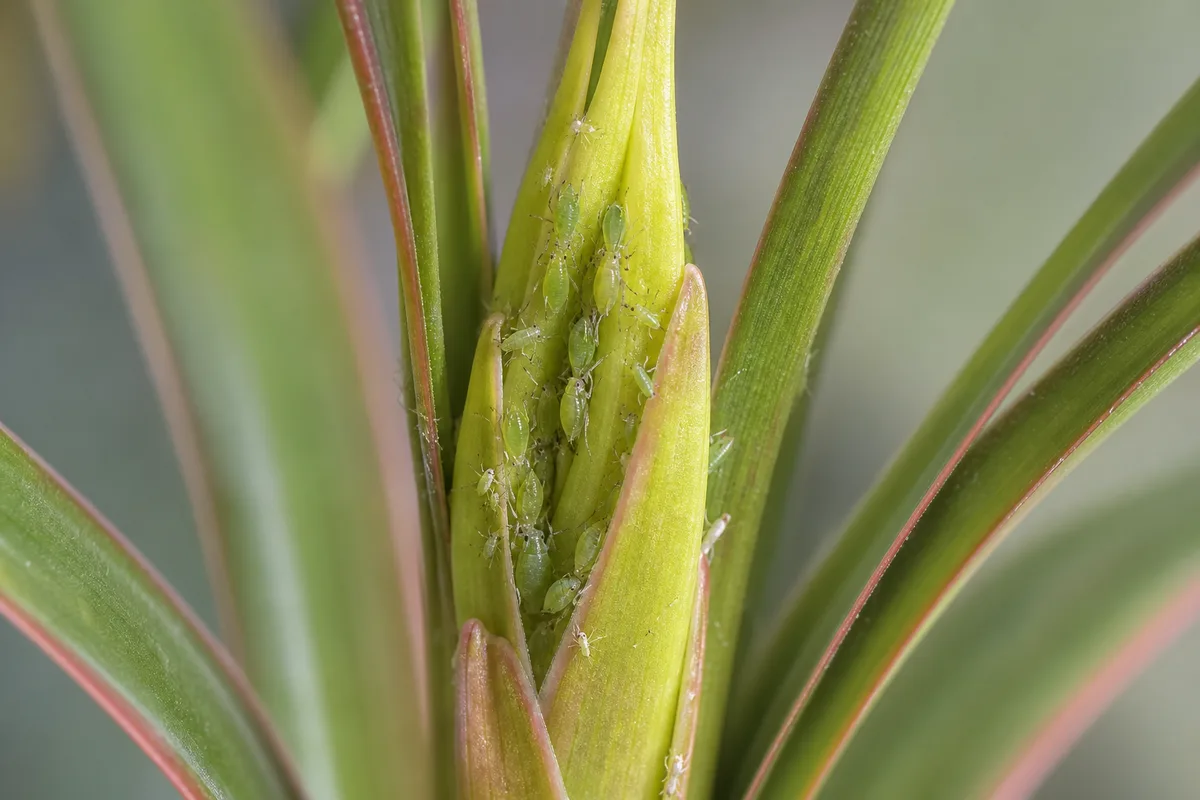
Aphids symptoms on Dragon Tree - compare with healthy tissue on the same plant.
- Soft clusters at cane tips, tucked beside unfolding crown leaves
- Groups in leaf axils where narrow green or variegated leaves meet the stem
- Pear-shaped insects about 1/16 to 1/8 inch long, usually green but sometimes black, gray, or pink
- Shiny, sticky honeydew on upper leaf surfaces where drips land, or on floors and furniture below
- Yellowing, curling, or slight twisting of new leaves when feeding is heavy
- Whitish cast skins left behind after molting
- Black sooty mold growing on honeydew deposits
- Ant activity on the container or lower cane
Dragon Tree rarely flowers indoors, so unlike garden plants you will not see aphids on buds. All feeding concentrates on foliage at cane tops and along the upper third of each stem. Tricolor and other variegated cultivars offer the same axil shelter-pale leaf margins do not repel aphids, though green insects can be harder to spot against green tissue until honeydew appears.
Severity guide:
- Early: A dozen or fewer aphids on one crown leaf; no ants; honeydew limited to the immediate leaf cluster
- Moderate: Multiple canes affected; sticky residue on several leaves; minor leaf curl
- Heavy: Dense colonies across crowns; sooty mold; ants present; new growth stunted or distorted on several stems
Confirm aphids vs. mealybugs, scale, mites, thrips, and normal leaf drop
Work through these checks in order before you treat:
- Crown inspection - Stand above the plant or use a step stool. Part the newest leaves at each cane tip with a hand lens. Aphids cluster as slow-moving soft bodies; they are not fixed to the plant like scale.
- Axil check - Slide a cotton swab or white paper along the base of upper leaves where they wrap the cane. Green smears or moving specks confirm aphids.
- Honeydew test - Rub a sticky upper leaf between fingers. Honeydew feels tacky and may darken with sooty mold; mineral dust or normal leaf texture does not smear shiny.
- Shake test - Hold white paper under a crown and tap the stem. Aphids dislodge as tiny moving dots. Scale insects stay attached; thrips jump or run quickly.
- Lookalike screen - Mealybugs show white cottony wax in the same sheltered axils-see mealybugs on Dragon Tree. Scale looks like brown or tan bumps that do not move. Spider mites cause fine stippling and webbing, not clustered soft insects. Thrips leave silvery scrape marks, not round colonies.
- Collection check - Examine other houseplants within a few feet, especially any recently purchased or summered outdoors.
If you find soft-bodied colonies with honeydew and no wax shells or webbing, aphids are confirmed.
Symptom lookalike comparison table
| What you see | Likely cause | How to tell apart |
|---|---|---|
| Soft green clusters at crown | Aphids | Pear-shaped, move when disturbed, excrete honeydew |
| White cotton in leaf axils | Mealybugs | Waxy filaments; crush pink on a swab |
| Fixed brown bumps on cane | Scale | Does not move; scrape reveals insect beneath |
| Fine stippling, bronzing, webbing | Spider mites | Mites need magnification; no round colonies |
| Silvery streaks on leaves | Thrips | Scraping damage, not sap clusters |
| Yellow bottom leaves only, dry soil | Aging or overwatering | Crown clean and unsticky; pattern starts at base |
Dragon Tree’s narrow leaves can yellow from normal lower-leaf senescence or overwatering without any insects present. Yellowing tied only to the oldest leaves at the bottom, with firm cane and dry appropriate soil, is aging-not aphids. Aphid damage concentrates on new and upper growth.
First fix: isolate, rinse, and treat safely on tall floor specimens
Move the plant away from others and rinse the crown, leaf axils, and undersides with a firm stream of lukewarm water.
Shower and trigger-sprayer technique for multi-cane plants
Place a smaller Dragon Tree in the sink or shower. For large floor specimens, use a step stool and spray from above with a handheld shower head or trigger sprayer, tilting each cane so water runs down leaf edges and reaches axils without flooding the pot. On braided multi-cane nursery plants, fan the canes apart gently and rinse the gaps between stems where colonies hide.
Angle the spray at leaf undersides and crown tissue-not straight into the soil line. Dragon Tree rots easily if the root zone stays saturated after repeated rinses; let excess water drain fully before returning the plant to its saucer. See Dragon Tree watering for dry-down expectations between rinses.
This single step dislodges nymphs and adults, washes fresh honeydew before ants or sooty mold establish, and gives you a clean baseline to see whether colonies return. Repeat the rinse every two to three days if you still find live insects.
Insecticidal soap and neem on narrow marginata leaves
If rinsing alone does not reduce populations within a week, apply insecticidal soap labeled for houseplants. Clemson HGIC recommends a 1–2% ready-to-use or properly diluted soap solution-always follow your product label rather than mixing stronger concentrations. Cover crown leaves, axils, and stems until spray runs off, with emphasis on undersides where aphids cluster on marginata.
Repeat every five to seven days for two to three cycles to catch newly hatched nymphs. UMN Extension notes soap has no residual activity-insects must be contacted directly. Treat in early morning or evening and keep plants out of direct sun until dry; narrow marginata leaves scorch easily if soap dries in hot sun.
Neem oil is a secondary option if soap is insufficient. Test one crown leaf first and avoid treating heat-stressed or sunburned foliage. On marginata, neem can leave a visible film on narrow leaves-rinse residue off after the label’s recommended interval if the plant sits in bright indirect light.
Do not start with systemic insecticides unless rinsing and contact sprays fail on a valuable plant-see escalation guidance below.
Drainage after repeated rinses
After two or more crown rinses in a week, check that the top half of soil is drying before the next watering. Soggy roots weaken Dragon Tree and slow pest recovery without helping aphid control. If the pot feels heavy and soil stays wet, skip the next scheduled water and improve airflow around the base until dry-down returns to normal.
Step-by-step recovery and timeline
Once aphids are confirmed and the plant is isolated:
- Rinse - Thorough water blast as described above; allow the pot to drain completely.
- Prune only if needed - Snip a heavily distorted crown leaf if it blocks spray access to live colonies. Do not strip the crown bare; Dragon Tree recovers slowly from excessive pruning.
- Contact spray if rinsing fails - Insecticidal soap on crown and upper stems in early morning or evening; keep treated plants out of direct sun until dry.
- Manage honeydew fallout - Wipe sticky lower leaves and nearby surfaces with a damp cloth so sooty mold does not spread.
- Address ants - If ants are farming aphids, trap or exclude ants from the pot area so natural control and sprays can reach insects.
- Re-inspect weekly - Focus on crown tips during active growth months. Dragon Tree’s slow flush cycle means a missed colony can persist on one cane while others look clean.
Hold off on Dragon Tree repotting guide or fertilizer until new crown growth looks healthy and no live aphids remain for at least two weeks.
Expect visible aphid numbers to drop within one to two thorough rinse cycles. Contact sprays usually require three weekly applications before you can call the plant clear.
Because Dragon Tree grows slowly, judge success by clean new leaves emerging from cane tips rather than old damaged foliage reverting. A crown leaf that curled under aphid feeding may stay slightly twisted; that is cosmetic if the next flush opens normally.
Sooty mold stops spreading once honeydew is gone and can be wiped or rinsed off over subsequent weeks. Plan on four to eight weeks before you can fully assess recovery on a mature multi-cane specimen.
Signs improvement is working:
- Fewer live insects on crown inspection
- No new honeydew on leaves or floor
- Ant activity declining
- New crown leaves opening without curl or stickiness
Signs the problem is worsening:
- Colonies spreading to additional canes
- Sooty mold coating large leaf areas
- New growth failing to open or staying tightly bunched
- Same sticky pattern appearing on neighboring plants
Mistakes to avoid
Do not apply horticultural oil or soap to Dragon Tree sitting in hot direct sun the same day-leaf scorch on narrow foliage is hard to reverse. Treat in shade and let sprays dry indoors.
Do not use household dish detergent instead of insecticidal soap. Harsh detergents can burn leaf tissue on Dracaena species.
Do not return an isolated plant to the main collection after a single treatment. Aphids reproduce quickly indoors; confirm two weeks of clean crown checks first.
Do not overwater after repeated rinsing. Dragon Tree needs the top half of soil to dry between waterings; soggy roots weaken the plant and do not help pest recovery.
Do not assume yellow lower leaves mean aphids. Check crown and upper axils first-the pattern of damage tells you whether insects or normal aging is responsible.
Do not compost infested prunings indoors where crawlers can spread to other pots.
Dragon Tree care cross-check after pest treatment
Aphid treatment works better when baseline care is stable. After pest control, confirm:
- Light - Bright to medium indirect light supports steady, firm growth. Leggy, pale crowns in dim corners produce weaker tissue that pests re-colonize easily. See Dragon Tree light.
- Watering - Allow the top half of soil to dry before watering. Overwatered Dragon Tree shows yellowing and soft cane-not the sticky honeydew pattern of aphids. See Dragon Tree watering.
- Fertilizer - Feed lightly at half strength during spring and summer only. Pause feeding while the plant is under pest stress. Excess nitrogen pushes soft shoots aphids prefer.
- Placement - Keep tall specimens where you can inspect crowns monthly without difficulty. A quick crown check during watering catches outbreaks early.
Dragon Tree is toxic to cats and dogs. Keep treated plants and rinse water away from pets during recovery. If your pet chewed Dragon Tree tissue, contact your veterinarian or ASPCA Animal Poison Control at (888) 426-4435.
How to prevent aphids next time
Quarantine every new plant for at least two weeks before placing it near your Dragon Tree. Inspect crown growth and leaf axils at entry and again before release.
Scout weekly during active growth-spring through early fall in most homes. A hand lens makes small colonies visible before honeydew spreads.
Avoid heavy nitrogen fertilizer that produces overly tender shoots. Match feeding to actual growth rate; slow-growing Dragon Tree rarely needs aggressive fertilizing.
If you summer plants outdoors, rinse and inspect Dragon Tree before bringing it back inside. Outdoor exposure can introduce aphids that thrive once predators are absent indoors. Pay extra attention to braided multi-cane specimens where pests hide between stems.
Keep ants off floor plants with sticky barriers on pot feet if ant farming has been a recurring issue in your home.
When to escalate - and Dragon Tree vs. Corn Plant aphids
Most Dragon Tree aphid infestations resolve with isolation, repeated rinsing, and contact sprays if needed. Escalate when:
- Every cane carries dense colonies despite three weeks of consistent rinse-and-soap treatment
- Sooty mold blocks most leaf surface and new growth has stopped entirely
- The same pest spreads to multiple valuable plants and isolation space is limited
- The plant is already weakened by root rot or cane softening-insects may be secondary to a failing specimen not worth intensive chemical treatment
Contact sprays vs. systemic drenches on marginata
UMN Extension lists imidacloprid among indoor aphid options but cautions it is toxic to bees-never use on plants that will sit outdoors during summer where pollinators visit. Systemic drenches are a last resort for valuable floor specimens when crown rinsing and three rounds of labeled insecticidal soap fail. They carry broader environmental considerations, require strict label compliance for indoor use, and are unnecessary for most marginata infestations caught early.
Before choosing a systemic, contact your local extension office or Master Gardener plant clinic for guidance on products legal for indoor ornamentals in your area. For strap-leaf D. fragrans care and crown-whorl inspection differences, see aphids on Corn Plant and the Dragon Tree overview.
For a healthy multi-cane Dragon Tree with moderate aphids caught early, recovery is realistic with crown rinsing and patience-judge progress by clean new flush growth, not old twisted leaves.
When to use this page vs other Dragon Tree guides
- Dragon Tree watering guide - Use for routine moisture checks before assuming aphids is the main issue.
- Dragon Tree problems hub - Browse all 16 common issues on this species.
- Mealybugs on Dragon Tree - Different entry point when symptoms overlap with aphids.
- Spider Mites on Dragon Tree - Different entry point when symptoms overlap with aphids.
- Yellow Leaves on Dragon Tree - Different entry point when symptoms overlap with aphids.