Aphids on Corn Plant: Causes, Checks & Fixes
Quick answer
Aphids on Corn Plant gather on the crown whorl and tender new strap leaves, leaving sticky honeydew. First step: move the plant away from neighbors and shower the crown and leaf undersides with lukewarm water before applying any spray.
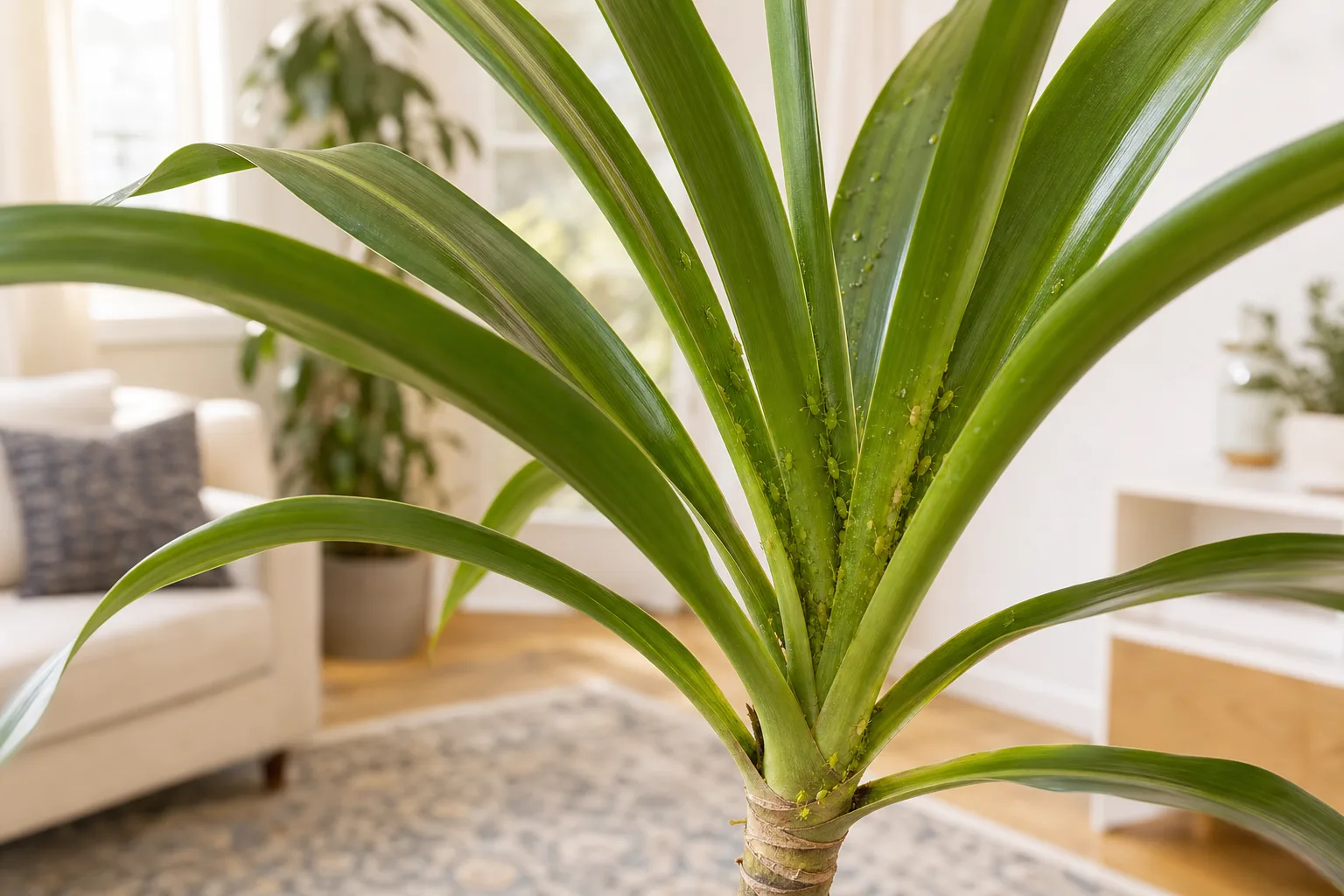
Aphids on Corn Plant: Causes, Checks & Fixes
This guide covers aphids on Corn Plant. See also the general Aphids guide, watering, and light pages for this plant.
Aphids on Corn Plant: Causes, Checks & Fixes
Quick answer
Aphids on Corn Plant (Dracaena fragrans) are small soft-bodied insects that pierce tender tissue and drain sap. On this upright cane plant, they almost always cluster at the crown whorl-the tight rosette of sword-shaped leaves at the top of each stem-not on the bare woody canes below.
First step: isolate the plant and shower the crown and leaf undersides with lukewarm water. Dracaena strap leaves are sturdy enough to tolerate a forceful rinse in a sink or shower, which knocks off aphids before honeydew attracts ants or sooty mold. Only move to insecticidal soap if rinsing alone does not clear the crown after several passes.
Why Corn Plant gets aphids
Corn Plant grows as one or more upright canes topped by a whorl of evergreen strap leaves. New leaves emerge slowly from the crown, and that soft terminal tissue is exactly where aphids concentrate-on stems just below newly opening leaf buds and along the undersides of the youngest leaves.
Aphids rarely walk in from outdoors on their own. They usually arrive on a new nursery plant, hitchhike from an infested neighbor on a shared shelf, or spread when winged adults develop on an untreated colony. Indoor collections lack the lady beetles and parasitic wasps that keep aphids in check outdoors, so a small cluster on one cane can expand across every whorl in the same pot within a few weeks.
Dracaena is not an unusually aphid-prone species, but its growth habit makes infestations easy to overlook. Owners focus watering at the soil line while the pest hides above eye level in the crown. Office Corn Plants in low light with stagnant air often push soft, pale new leaves-tissue aphids prefer over the older hardened strap leaves lower in the whorl. overwatering on Corn Plant is a common Dracaena stress pattern; roots sitting wet while crowns stay dry still weakens the plant and can coincide with pest outbreaks on tender shoots.
Ants complicate the picture. Aphids excrete excess sugar as honeydew, and ants harvest that sticky sap while protecting aphid colonies from predators. Ant trails on the pot rim or nearby desk surface often appear before you spot the insects tucked inside the crown.
What aphids look like on Corn Plant
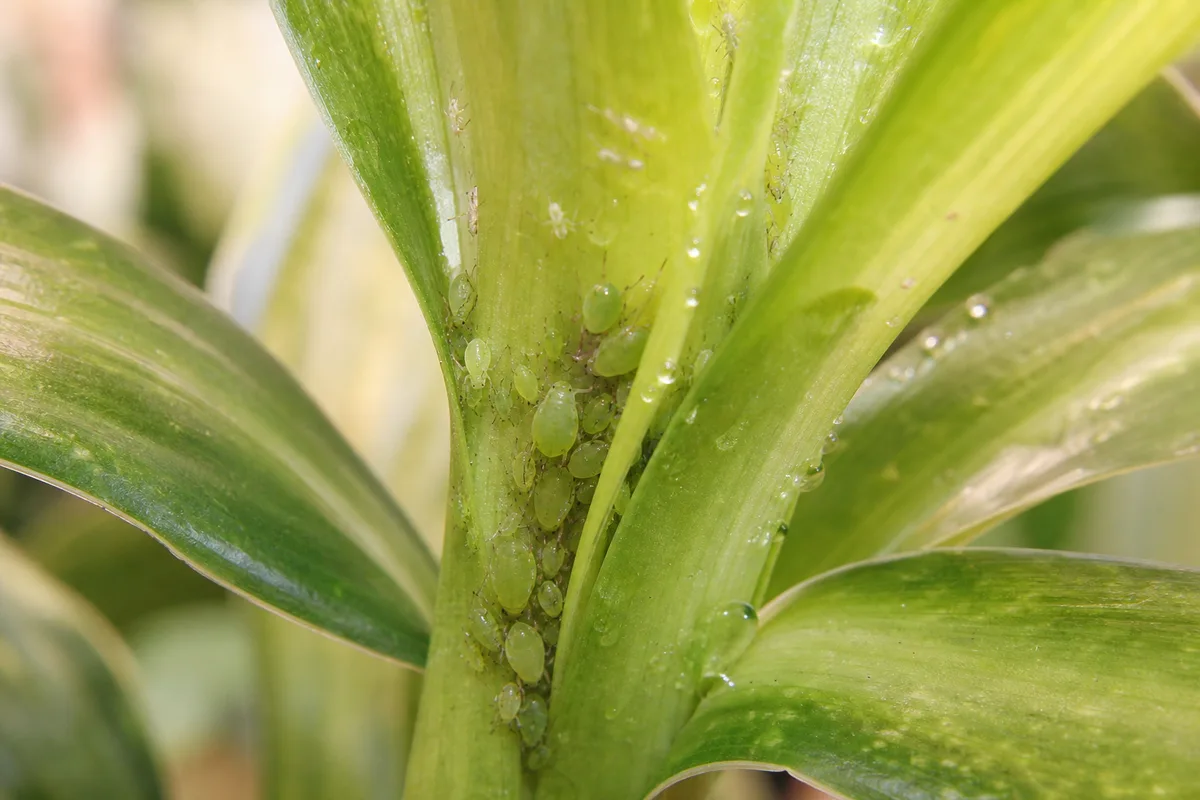
Soft pear-shaped aphids clustered at the Dracaena crown whorl with shiny honeydew on new strap leaves - inspect each cane top separately on multi-stem pots.
Typical aphid signs on Dracaena:
- Clusters of tiny pear-shaped insects at the crown center or along the base of new strap leaves
- Colors ranging from green to black, brown, or gray-species vary, but all are soft-bodied with visible legs
- Shiny, sticky honeydew on leaf surfaces, the pot rim, or furniture below the plant
- White cast skins left behind when aphids molt-often visible before you notice live insects
- Slight curling, yellowing, or stunting of the newest strap leaves when feeding is heavy
- Ant activity on or around the pot
Where to look on Corn Plant overview specifically:
Corn Plant sheds lower leaves over time, leaving bare cane stems. Aphids will not live on that woody tissue-they stay on live foliage at the top. Multi-stem pots need each crown checked separately. Variegated cultivars like Dracaena fragrans ‘Massangeana’ show damage on the yellow-striped central band of new leaves first, which can look like pale streaking before you see insects.
Honeydew on Dracaena leaves can feel similar to dust accumulation, but honeydew is tacky and may grow black sooty mold that wipes off with a damp cloth. That stickiness is different from the fluoride brown tips Dracaena develops from tap water-brown tips are dry and crisp at leaf margins, not shiny and localized near the crown.
How to confirm the cause
Work through these checks in order:
- Crown inspection - Part the top whorl gently and look at the stem tip and the undersides of the innermost strap leaves with a hand lens. Aphids cluster densely here on Dracaena.
- Movement test - Touch a cluster with a cotton swab. Aphids move slowly; they are not stationary bumps like scale.
- Honeydew check - Rub a finger on a shiny strap leaf near the crown. Tacky residue that smears confirms sap feeding, not dust.
- Molt skins - Look for tiny white shed skins on leaves or in the crown center-evidence of an active colony even when live counts look low.
- Ant trails - Ants marching up the cane strongly suggest aphids or other honeydew producers at the top.
- Neighbor scan - Check other houseplants on the same shelf. Aphids colonize many species and may have spread before the Corn Plant showed obvious damage.
Rule out lookalikes before spraying:
- Mealybugs on Corn Plant form white cottony masses in leaf axils and crown crevices, not loose pear-shaped clusters.
- Scale insects attach as immobile brown or tan disks on stems and leaf midribs-you cannot brush them off easily.
- Spider mites on Corn Plant cause fine stippling and webbing, not heavy stickiness, and favor dry warm conditions over crown soft tissue.
If you find soft moving insects with honeydew at the crown, aphids are confirmed.
First fix for Corn Plant
Move the pot away from other plants, then shower the crown and all strap leaf undersides with lukewarm water.
Place the container in a bathtub or shower. Use a handheld sprayer aimed upward so water hits the crown center and the backs of every strap leaf in the whorl. Dracaena leaves are smooth and strap-shaped-easier to rinse thoroughly than fuzzy or deeply cupped foliage on other houseplants. Let the plant drain and dry in Corn Plant light guide the same day.
This single step dislodges aphids, washes away fresh honeydew, and buys time before sooty mold or ant farming escalates. Do not apply insecticidal soap or neem on day one if you have not confirmed live insects-soap on unstressed Dracaena is unnecessary. Do not fertilize a pest-hit plant hoping to push new growth; soft nitrogen-rich shoots attract aphids back.
Step-by-step recovery
After the initial shower:
- Repeat water rinses every two to three days until live aphids are gone on crown inspection. Most dislodged aphids cannot return from floor or tub surfaces.
- Apply insecticidal soap if colonies persist after several rinses. Coat crown stems and leaf undersides completely; soap only kills insects it touches directly. Repeat every four to five days through at least two aphid generations.
- Wipe sooty mold off strap leaves with a damp cloth once honeydew production stops. Thick mold on older leaves may not fully clear-trim badly coated foliage if it blocks light to the crown.
- Manage ants if they are protecting colonies. Remove ant trails from the area and consider ant barriers on shelf legs so natural predators can reach aphids if the plant spends summer outdoors.
- Prune only when necessary - Snip a heavily infested outer strap leaf at the base if rinsing cannot reach every hiding spot in a dense whorl. Corn Plant is slow to replace lost foliage, so prune sparingly.
- Hold fertilizer until new crown growth emerges clean and Corn Plant watering guide is stable.
Keep the plant isolated until you see no live aphids for at least ten days.
Recovery timeline
Water knockdown shows results within two to three days on moderate colonies. A full soap course may take two to three weeks with label-interval repeats. Because Dracaena is a slow grower, expect the next clean whorl to tell the story-old distorted strap leaves may stay slightly curled for months.
Judge success by an unstippled crown and absence of fresh honeydew, not by instant cosmetic repair of damaged leaves on bare canes below.
Lookalike symptoms to rule out
Mealybugs - White cottony tufts in crown crevices and leaf bases. Treat with alcohol swabs, not water rinse alone.
Soft brown scale - Flat immobile bumps on cane tissue near the crown or along leaf midribs. Requires scraping or horticultural oil, not shower knockdown.
Spider mites - Fine yellow stippling and webbing at leaf bases in dry heated air. No significant honeydew. Increase humidity and use miticide-rated products.
Fluoride brown tips - Dry brown margins on older strap leaves from tap water sensitivity-a chronic Dracaena issue unrelated to crown stickiness or moving insects.
Normal leaf drop - Lower leaves yellow and drop on bare cane as the plant matures. That pattern does not involve stickiness or insects at the crown.
Mistakes to avoid
Do not spray the bare cane stems and ignore the crown-aphids live on the terminal whorl, not the woody trunk below.
Do not use homemade dish soap mixes. Commercial insecticidal soap is formulated for foliage and reduces burn risk on Dracaena strap leaves.
Do not return an isolated plant to a shared shelf after one treatment. Aphid eggs and crawlers hide in crown crevices and hatch over two weeks.
Do not increase nitrogen fertilizer during an active infestation. Lush soft shoots are aphid magnets.
Do not ignore ants. Controlling aphids is harder while ants defend colonies at the crown.
Do not compost heavily infested pruned leaves indoors where crawlers can spread to other pots.
Corn Plant care cross-check
Aphids exploit weak new growth. After treatment, confirm the basics that keep Dracaena crowns healthy:
- Light - Medium to bright indirect light supports firm new leaves. Deep shade produces pale, soft shoots aphids prefer.
- Watering - Water when the top half of soil is dry. Chronic overwatering weakens roots; drought cycles stress crowns.
- Airflow - Stagnant office corners trap warm air around the whorl. Light air movement helps foliage dry after rinsing.
- New plants - Quarantine fresh Dracaena before placing near existing collections.
Fixing care stress alone will not eliminate an established colony, but stable conditions help new crown growth stay clean after treatment.
How to prevent aphids next time
Scout crown whorls weekly during spring and summer when Dracaena pushes most of its new strap leaves. The terminal rosette is small-inspection takes seconds if you make it part of watering routine.
Quarantine new Corn Plants for at least two weeks before mixing them with other houseplants. Nursery stock often carries low-level aphid populations invisible at purchase.
Avoid excess nitrogen during active growth. Balanced feeding at half strength during spring and summer is enough; heavy nitrogen produces tender shoots that aphids colonize quickly.
Inspect plants you move outdoors for summer before bringing them back indoors in fall. Outdoor time can introduce aphids that explode once back in heated dry rooms.
Keep ants off plant shelves. Ant protection is one of the main reasons indoor aphid colonies persist longer than outdoor ones.
When to worry
Treat as urgent when honeydew and sooty mold coat most strap leaves in the whorl, winged aphids appear on multiple canes, or the infestation spreads to neighboring plants within days. Isolate immediately and begin repeated rinsing plus soap on the same schedule until clear.
A light cluster on one crown with no ant activity is manageable with shower knockdown alone. Dracaena rarely dies from aphids alone, but heavy chronic feeding can stunt the crown for a season and leave the plant vulnerable to secondary stress.
Replace severely weakened multi-stem specimens only if crowns stop producing new leaves entirely after months of reinfestation-otherwise patience and consistent treatment usually restore a clean whorl.
Conclusion
Aphids on Corn Plant hide in plain sight at the crown whorl, not on bare canes below. Confirm soft insects and honeydew at the top, isolate, and shower before you spray. Repeat until new strap leaves open clean-on this slow Dracaena, that crown growth is the recovery signal that matters.
When to use this page vs other Corn Plant guides
- Corn Plant watering guide - Use for routine moisture checks before assuming aphids is the main issue.
- Corn Plant problems hub - Browse all 16 common issues on this species.
- Mealybugs on Corn Plant - Different entry point when symptoms overlap with aphids.
- Spider Mites on Corn Plant - Different entry point when symptoms overlap with aphids.
- Yellow Leaves on Corn Plant - Different entry point when symptoms overlap with aphids.