Mealybugs on Corn Plant: Causes, Checks & Fixes
Quick answer
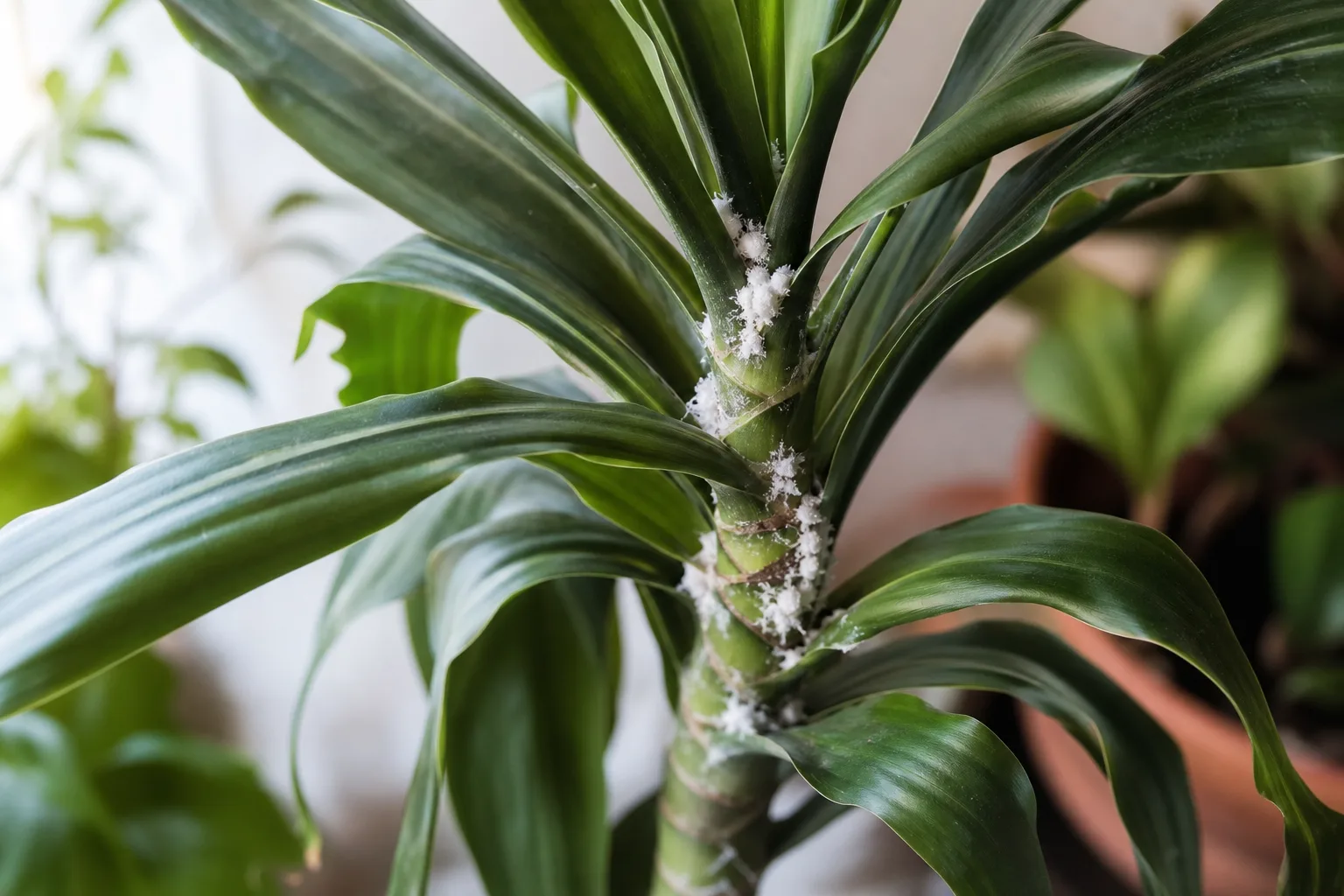
Mealybugs on corn plant appear as white cottony clusters in leaf axils, along the woody cane, and under strap-like leaves-often on stressed Dracaena in dry indoor air. First step: isolate the plant and wipe visible mealybugs with rubbing alcohol on a cotton swab before broader treatment.
Mealybugs on Corn Plant: Causes, Checks & Fixes
This guide covers mealybugs on Corn Plant. See also the general Mealybugs guide, watering, and light pages for this plant.
Mealybugs on Corn Plant: Causes, Checks & Fixes
Quick answer
Mealybugs on corn plant (Dracaena fragrans) show up as white cottony or waxy clusters tucked into leaf axils along the upright woody cane. These slow-moving sap feeders weaken strap-like leaves, excrete sticky honeydew, and invite sooty mold on foliage and nearby surfaces.
First step: isolate the plant and remove visible mealybugs with a cotton swab dipped in 70% isopropyl alcohol. Hit every axil where leaves meet the cane-mealybugs hide in those pockets on Dracaena architecture. Manual removal before spray treatment knocks down adults and egg masses you can reach.
What mealybugs look like on Corn Plant
Corn plant grows as one or more upright canes topped with rosettes of arching strap leaves. Mealybugs exploit the vertical structure:
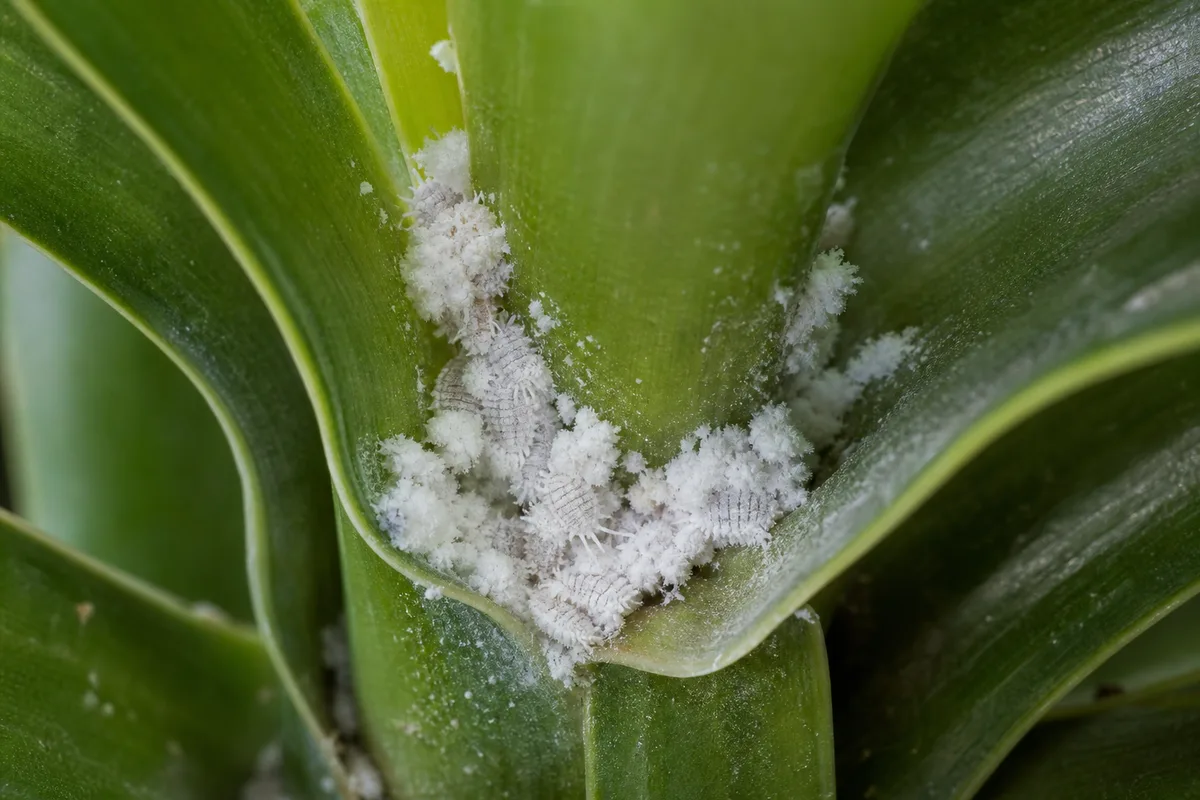
Mealybugs symptoms on Corn Plant - compare with healthy tissue on the same plant.
Early signs:
- Small white cottony tufts in leaf axils where straps clasp the cane
- Waxy white specks on leaf undersides near the midrib base
- Slight yellowing or stippling on leaves near clusters
- Sticky honeydew on leaf surfaces or floor beneath the pot
Established infestation:
- Dense white masses along multiple nodes on the cane
- Black sooty mold growing on honeydew-coated leaves
- Ants trailing to the plant for honeydew
- New strap leaves unfurling with mealybugs already present at the base
- General decline: pale leaves, slowed growth on an otherwise low-maintenance Dracaena
Mealybugs are soft-bodied scale insects covered in waxy filaments-not fungus, not lint, not mineral deposits. They move slowly when disturbed.
Damaged leaf tissue does not fully recover. Judge success by clean new strap growth and absence of new clusters.
Why Corn Plant gets mealybugs
Mealybugs are hitchhikers, not spontaneous infections. They arrive on new plants, tools, or hands and exploit stressed specimens.
New plant introductions. Nursery corn plants often carry hidden colonies in axils. UMN Extension notes mealybugs are common houseplant pests introduced on purchased plants.
Stressed Dracaena. Overwatering, low light, and dry heated air weaken corn plant defenses. Stressed plants produce softer tissue mealybugs prefer-see overwatering and low humidity if those factors are present.
Crowded shelves. Mealybugs crawl between pots and spread via dusting cloths. Multiple Dracaena cultivars on one shelf share infestations quickly.
Protected axil architecture. Overlapping leaf bases on upright canes create perfect hiding spots that rinsing alone may miss.
Honeydew feedback loop. Sticky residue attracts ants that protect mealybugs from predators, letting populations rebuild after light treatment.
How to confirm mealybugs
- Axil inspection - Peel back each strap leaf base along the cane; look for cottony clusters with a hand lens.
- Alcohol test - Touch a white cluster with an alcohol swab. Mealybugs dissolve to pinkish smear; mineral dust or wooly aphid debris behaves differently.
- Honeydew check - Sticky shine on leaves or pot rim supports active sap feeding.
- Neighbor scan - Inspect every Dracaena, succulent, and foliage plant on the same shelf.
- Lookalike rule-out - Scale forms hard brown shields; powdery mildew is flat white film on leaf blades, not cotton in axils; spider mites leave stippling and webbing, not waxy clusters.
Confirmed mealybugs: cottony clusters in axils plus honeydew or live insects under magnification.
First fix for Corn Plant
Isolate the plant and treat every visible cluster with 70% isopropyl alcohol on a cotton swab.
Work top to bottom along each cane. Swab until white wax is gone. Alcohol kills on contact but does not reach deep crevice eggs-plan repeat treatments.
After manual removal:
- Rinse straps with lukewarm water in a shower or with a narrow spray-avoid leaving water pooled in the crown overnight
- Apply insecticidal soap or horticultural oil to axils and undersides, avoiding runoff into soggy soil
- Repeat every 7–10 days for at least four cycles
- Set yellow sticky traps at pot level to monitor crawler movement
On tall multi-cane specimens, treat one section per session if the plant is heavy-missing axils is how infestations return.
Do not fertilize during active infestation.
Step-by-step recovery
- Day 1: Isolate; alcohol-swab all visible clusters; rinse straps
- Days 3–7: Re-swab new clusters; first soap/oil application to axils
- Weeks 2–4: Repeat alcohol and soap on 7–10 day schedule
- Weeks 4–6: Fourth cycle; inspect neighbors; replace sticky traps
- Ongoing: Monthly axil checks; quarantine new plants
Recovery success: no new cottony masses for three weeks, honeydew gone, new strap leaves unfurl clean.
Mistakes to avoid
- Spraying only leaf blades while axils stay infested
- One alcohol session-eggs hatch and colonies rebuild
- Treating without isolating-mealybugs spread across the shelf
- Overwatering while fighting pests-stressed wet roots compound damage
- Discarding a tall cane too early-systematic axil treatment saves mature corn plants
Care cross-check during recovery
- Light: Bright indirect per light guide-stressed dim plants stay vulnerable
- Water: Let top 2–3 cm dry between drinks per watering guide
- Humidity: Moderate indoor levels; avoid bone-dry heater air per low humidity guide
- Soil: Well-draining mix; do not keep soil soggy during repeated rinsing
How to prevent mealybugs next time
- Quarantine new plants two weeks before placing near corn plant
- Inspect leaf axils monthly-top to bottom along each cane
- Isolate at first white speck
- Avoid sharing dusters between infested and clean plants
- Keep Dracaena in appropriate light and watering rhythm to reduce stress susceptibility
When to worry
Escalate when ants farm the infestation, sooty mold coats most foliage, multiple canes show dense clusters after four treatment cycles, or mealybugs spread to every plant on the shelf. Severe cases on very tall specimens may require pruning out heavily infested canes to reachable height-sterilize blades between cuts and treat remaining sections on the repeat schedule.
When to use this page vs other Corn Plant guides
- Corn Plant watering guide - Use for routine moisture checks before assuming mealybugs is the main issue.
- Corn Plant problems hub - Browse all 16 common issues on this species.
- Yellow Leaves on Corn Plant - Different entry point when symptoms overlap with mealybugs.
- Slow Growth on Corn Plant - Different entry point when symptoms overlap with mealybugs.
- Spider Mites on Corn Plant - Different entry point when symptoms overlap with mealybugs.