Low Humidity on Dragon Tree: Causes, Checks & Fixes
Quick answer
Dracaena marginata tolerates average home humidity around 40–50% RH and is more forgiving than calatheas or ferns. Very dry winter air below about 30%, especially beside heating vents, mainly raises spider mite risk and can accentuate tip browning-not usually crown collapse. First step: confirm brown tips are not fluoride from tap water, then move the pot off forced-air paths and check RH beside the foliage.
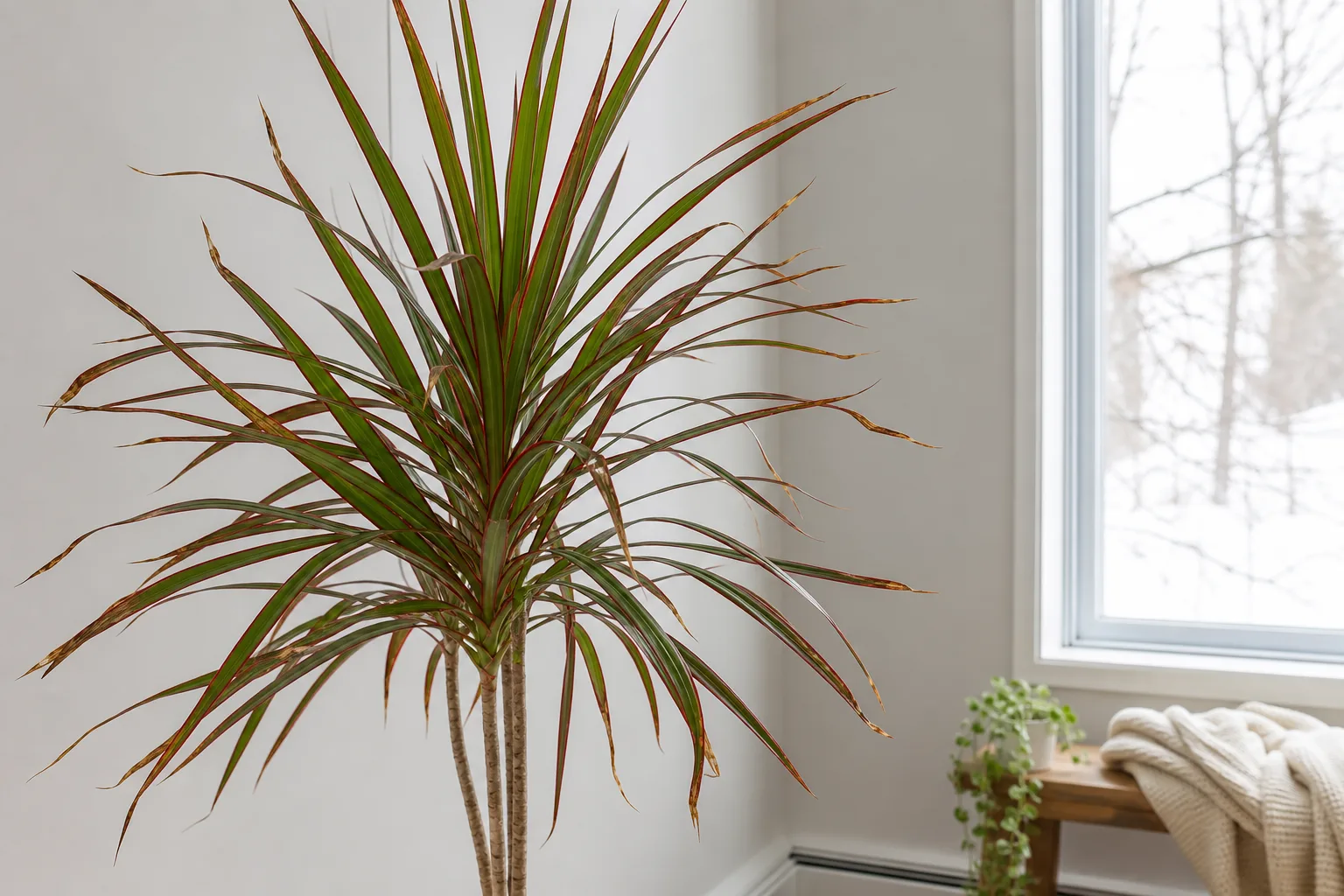
Low Humidity on Dragon Tree: Causes, Checks & Fixes
This guide covers low humidity on Dragon Tree. See also the general Low Humidity guide, watering, and light pages for this plant.
Low Humidity on Dragon Tree: Causes, Checks & Fixes
Quick answer
Dragon tree (Dracaena marginata) is a Madagascar-native indoor tree with narrow, arching leaves and a drought-tolerant cane that stores moisture. It tolerates average home humidity around 40–50% better than humidity-demanding tropicals like calatheas or ferns-and it is not a plant that needs greenhouse-level moisture to survive.
Low humidity becomes a real problem mainly when winter heating or HVAC paths drop relative humidity below about 30% beside the foliage, especially if the pot sits in the blast zone of a radiator, floor vent, or hot window glass. Then you may see accentuated leaf margin crisping, slow or thin new growth, and-after weeks of dry heat-spider mite stippling.
First step: rule out fluoride brown tips from tap water before you blame dry air. On marginata, fluoride in municipal water is a more common cause of uniform papery tip burn than humidity alone. Once water quality is addressed, move the pot off forced-air paths and check RH with a hygrometer at crown height.
Does Dracaena marginata need high humidity?
No-not by houseplant-enthusiast standards. Dragon tree evolved in seasonally dry tropical conditions; its small leaf surface area and woody cane mean it loses water more slowly than broad-leaf foliage plants. That biology is why it survives office air and heated apartments where ferns fail.
Practical targets:
| RH range | What it means for marginata |
|---|---|
| 40–50% | Ideal band for most homes-no special humidifier required if placement is stable |
| 30–40% | Tolerable for many specimens; watch vent proximity and new growth quality |
| Below ~30% | Stress zone-mite risk rises; margin burn may worsen on vent-facing leaves |
| Above 60% | Usually unnecessary; focus on drainage and airflow instead |
Clemson HGIC notes that house humidity often falls below 30–40% in winter and that dracaenas may benefit from occasional foliage misting in those conditions-but misting is a minor boost, not a substitute for moving off a dry-air vent or running a humidifier when RH stays low for weeks.
The counterintuitive point for anxious owners: raising humidity will not fix brown tips if fluoridated tap water is the driver. See brown tips on Dragon Tree before investing in humidity gear for tip burn alone.
What low humidity looks like on Dragon Tree
Dry-air stress on marginata is usually subtle compared with underwatering or fluoride burn-because the plant is genuinely adapted to drier air.
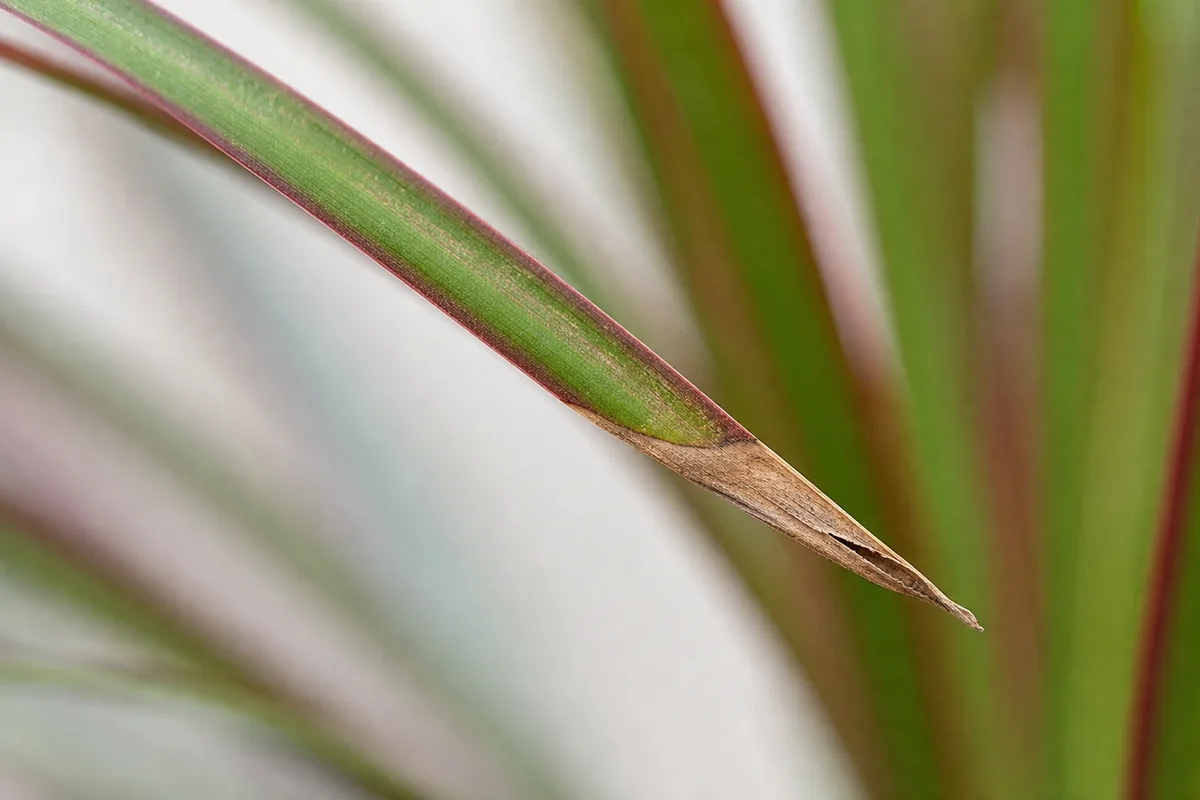
Low Humidity symptoms on Dragon Tree - compare with healthy tissue on the same plant.
Common patterns when humidity is the primary issue:
- Crisp brown margins on the leaf half facing a heater, register, or hot window-not necessarily every tip on every leaf at once
- Firm, upright crown leaves with adequate soil moisture; the cane stays woody and solid
- Slow unfurling or slightly thinner new leaves at the rosette during a long dry winter, without crown wilt
- Seasonal timing-symptoms appear or worsen when furnaces start, often without any change to your watering rhythm
- No yellow stippling or fine webbing on leaf surfaces-those point to spider mites, not humidity alone
What low humidity usually does not look like on this species:
- Uniform papery brown tips on firm leaves plant-wide while you water on a normal schedule-fluoride toxicity fits that pattern better
- Crown droop with a very light pot and dusty dry soil-that is underwatering, not dry air
- Soft cane at the base with sour wet soil-overwatering on Dragon Tree or rot, not humidity
- Sudden total collapse-marginata rarely fails from dry air alone when roots and water quality are sound
Variegated cultivars such as ‘Tricolor’ and ‘Colorama’ may show margin stress slightly sooner than plain green forms because pale tissue has less buffer when local air is hot and dry near glass-but they follow the same diagnostic rules.
Why Dragon Tree gets low humidity stress
Indoor environments create localized dry zones that whole-room thermostats hide:
- Forced-air heating lowers winter RH; UNH Extension explains that warmed indoor air holds more moisture capacity than is available, pulling water from leaves and people alike
- Floor and ceiling vents create microclimates drier than the rest of the room-dragon trees sold as tall floor specimens often sit directly in those paths
- South- or west-facing glass heats foliage while winter air stays dry, accelerating edge desiccation on the window side
- Air-conditioning registers in summer blow cold, dry air across the crown
- Isolated placement in a large dry room with no grouping or humidifier buffer
Dragon tree is more forgiving than humidity-demanding tropicals, which is why the dragon tree overview treats humidity as secondary to light and water. But very dry air below about 30% still matters because spider mites thrive in warm, dry conditions on many houseplants-including dracaenas stressed by placement near heat sources.
Lookalike symptoms to rule out
| What you see | More likely cause if… |
|---|---|
| Even papery brown tips on many leaves, any placement; persists after humidifier | Fluoride or salt in tap water - see brown tips |
| Crown wilt, very light pot, dry mix several inches down | Underwatering - see underwatering |
| Yellow speckles, bronzing, fine webbing at leaf bases in dry heated room | Spider mites - see spider mites |
| Margin crisping worse on vent-facing side; RH below 30% beside pot | Low humidity / placement - this page |
| Yellow lower leaves, heavy wet pot, soft cane base | Overwatering / root rot on Dragon Tree - not humidity primary |
| Bleached patches on side facing midday sun | Too much direct sun - move back from glass |
If margins crisp without wilt on dry soil, stippling, or scorch patches, and a hygrometer reads low beside the crown, dry air or vent placement is the leading explanation-after you have screened tap water for fluoride, which MSU Extension lists among the most fluoride-sensitive houseplant groups including Dracaena.
How to confirm dry air vs. other causes
Work through these checks in order-do not skip the water-quality step on marginata:
- Fluoride screen first - Are tips papery brown on otherwise firm leaves across the plant while soil moisture follows your normal watering rhythm? Switch to rainwater, distilled, or confirmed fluoride-removing filtration for one month before chasing humidity for tip burn alone.
- Hygrometer at crown height - Place the sensor beside the foliage, not across the room. Readings below 30% warrant action; 40–50% is adequate for most marginata.
- Vent, radiator, and AC audit - Feel for warm or cold drafts at leaf level. Move pots at least 3 feet (1 m) from registers; keep arching leaves from touching cold winter glass or sitting in direct radiator heat.
- Symmetry test - Damage concentrated on one side toward a heat source supports placement-driven dry air, not random fluoride or pest pattern.
- Soil moisture cross-check - Firm cane plus appropriate dry-down plus margin crisping fits humidity accentuation. Light pot and limp crown mean drought-see underwatering.
- Leaf underside inspection - Tap crown leaves over white paper. Moving specks and webbing mean mites, not humidity alone.
- Two-week placement trial - Relocate off the vent path and add one humidity step (humidifier or grouping). Cleaner new leaf tips confirm dry air was contributing; unchanged tips on new growth after stable RH point back to water quality.
First fix for Dragon Tree
Rule out fluoride in tap water, then move the pot off forced-air paths.
Practical order:
- Water quality check today - If you irrigate with fluoridated tap water and see classic tip burn, switch water source per the watering guide before buying humidifiers for tips alone.
- Relocate off dry-air sources - Move at least 3 feet from heating vents, radiators, and AC blasts; pull back from hot window glass in winter. RHS guidance warns that very dry air, cold drafts, and proximity to radiators can all contribute to dying leaves or brown tips on dracaenas.
- Measure RH beside the plant - If readings stay below about 30% after the move, add humidity (next steps)-not extra soil water.
- Run a room humidifier when RH is chronically low-most reliable for tall floor specimens in dry living rooms. UNH Extension recommends placing humidifiers close to plant collections and pairing with a hygrometer.
- Group plants to raise local moisture through shared transpiration-modest but free.
- Add a pebble tray if a humidifier is not available: rest the pot on pebbles above the water line so the cane base never sits submerged.
Do not stack Dragon Tree repotting guide, fertilizer, and pesticide on the same day. One environmental correction at a time lets you read the next rosette leaf.
Step-by-step humidity recovery
After the first fix:
- Hold watering steady using the top-half-dry rule from the watering guide-dry air is not cured by wetter soil.
- Run a humidifier through heating season while RH reads under 40% at crown height; clean the tank weekly.
- Wait for one to two new crown leaves before judging success. Look for intact margins on fresh growth.
- Trim only fully dead tip tissue cosmetically if it bothers you-brown tips do not re-green on any leaf.
- Inspect undersides weekly while air is dry. If stippling appears, follow the spider mites guide while keeping humidity up.
- Avoid daily misting with hard tap water on fluoride-sensitive marginata-surface moisture evaporates quickly and can leave mineral spots; humidifiers and grouping work better.
Recovery timeline
Expect stabilized margins on new growth within two to four weeks once RH rises and vent exposure stops-faster in warm bright months, slower in mid-winter.
Existing brown or crisp margin tissue does not turn green again. Judge recovery by clean new leaves at the crown and stopped spread on older foliage-not by old tips magically healing.
If RH climbs from the mid-20s to the low 40s and placement improves, the next leaf unfurling cleanly is the success signal. If tips keep browning on new growth after four weeks above 40% RH with good placement, return to brown tips for water chemistry-not more humidity.
Signs the problem is worsening: stippling and webbing spreading on crown leaves while RH stays low, multiple leaves bronzing, or thin new growth aborting. Treat humidity and mites together per the spider mites page.
What not to do
- Do not overwater because leaf edges look dry-soggy soil on marginata invites root rot without raising air moisture. Clemson HGIC lists dry tips and edges as possible humidity issues but root rot from overwatering as the greater survival threat on dracaenas.
- Do not treat humidity as the first explanation for brown tips in fluoridated tap-water regions-fix water before humidifiers.
- Do not rely on misting alone-brief leaf wetting does not meaningfully lift room RH for a tall floor tree the way a humidifier does.
- Do not fertilize stressed plants to green margins-salts can worsen tip burn on fluoride-sensitive tissue.
- Do not spray pesticides for margin crisping without confirming mites first.
- Do not place the pot in standing water to “add humidity”; pebble trays must keep roots above the water line.
How to prevent dry-air stress and spider mites next winter
Treat humidity as a seasonal placement variable on this drought-tolerant species:
- Check RH weekly beside the crown from October through March in heated climates; act when readings drop below about 30%
- Relocate before heating season-do not wait until half the rosette shows vent-side crisping
- Run a humidifier early in the plant room when furnaces start, especially if you have had mite outbreaks before
- Keep using fluoride-safe water so winter tip damage is not misread as humidity stress
- Cross-check baseline care on the dragon tree overview when margins, mites, and watering questions overlap
Dragon tree forgives drier air more than calatheas-but hot dry microclimates beside vents are still worth fixing because prevention beats mite treatment on a slow-growing indoor tree.
When to worry
Low humidity alone rarely kills a firm-caned marginata quickly. Escalate if you see rapid mite stippling, webbing on new crown growth, or widespread bronzing while the hygrometer still reads dry-humidify and treat pests together.
Also investigate further if new leaves stay thin or brown-tipped for more than a month after RH holds above 40%, placement is clear of vents, and water quality is addressed. Chronic underwatering, insufficient light, or hidden overwatering may still be limiting recovery-use underwatering and the overview to cross-check.
Conclusion
Low humidity on Dragon Tree is usually a placement and winter-RH problem, not a crisis demanding rainforest conditions. Dracaena marginata tolerates 40–50% RH in most homes; very dry air below about 30% beside heating paths mainly raises spider mite risk and can accentuate margin burn. Rule out fluoride brown tips first, move the pot off forced-air paths, confirm RH at crown height, then humidify or group plants if readings stay low. Judge success on new crown leaves, not old crispy tips-and branch to brown tips or spider mites when symptoms overlap.
When to use this page vs other Dragon Tree guides
- Dragon Tree watering guide - Use for routine moisture checks before assuming low humidity is the main issue.
- Dragon Tree problems hub - Browse all 16 common issues on this species.
- Brown Tips on Dragon Tree - Different entry point when symptoms overlap with low humidity.