Cast Iron Plant Care: Light, Water, Soil & Tips
Aspidistra elatior
Cast iron plant tolerates deep shade, irregular watering (every 10–14 days), and low humidity. Avoid direct sun and overfeeding. One of the lowest-maintenance houseplants available.
Cast Iron Plant Care: Light, Water, Soil & Tips
Start with wateringThe most common care mistake for Cast Iron PlantWatering guide →Cast Iron Plant care essentials
Light
low to medium indirect light, very low light
Water
Every 10–14 days (top 3–5 cm dry). Every 14–21 days in winter or low light. Drought-tolerant but prefers not to dry completely.
Soil
Well-draining potting mix. pH 6.0–7.0. Undemanding.
Humidity
40–50%
Temperature
10–24°C (50–75°F)
Fertilizer
Feed lightly during active growth. Slow-release balanced granular fertilizer or diluted liquid fertilizer and stop if the plant is stressed, newly repotted, or not actively growing.
About Cast Iron Plant
Cast Iron Plant has a upright growth habit.
| Detail | Information |
|---|---|
| Growth habit | Upright |
| Scientific name | Aspidistra elatior |
Cast Iron Plant Care: Light, Water, Soil & Tips
What Is Cast Iron Plant?
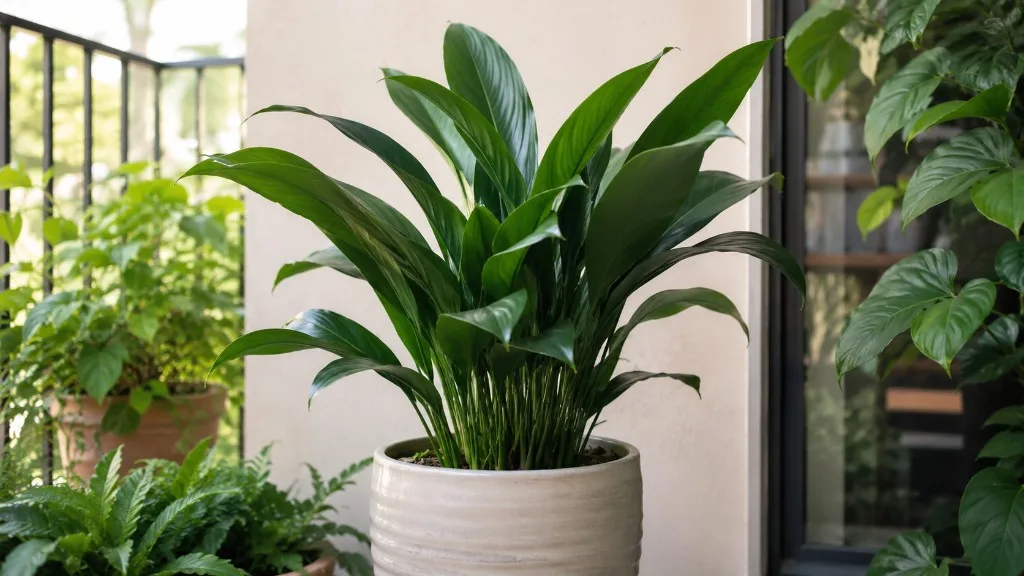
Cast iron plant - also sold as bar room plant, iron plant, or simply aspidistra - is a slow-growing evergreen houseplant prized for dark, leathery leaves that hold up in conditions that would stress most tropical foliage plants. The accepted scientific name is Aspidistra elatior, a rhizomatous perennial in the family Asparagaceae. It is stemless: arching lance-shaped leaves rise directly from thick underground rhizomes, giving the plant a clean, architectural silhouette that works in dim hallways, north-facing rooms, and offices where brighter-light plants struggle.
Indoors, cast iron plant typically reaches up to 2 feet (60 cm) tall with individual leaves up to 24 inches (60 cm) long and 4 inches (10 cm) wide, according to the Missouri Botanical Garden. Growth is deliberately slow - new leaves unfurl one at a time from the rhizome over weeks or months, not days. That pace is normal, not a sign of poor care. If you want a plant that fills a corner fast, a pothos or philodendron will outpace Aspidistra every time. If you want a plant that looks composed in low light and forgives missed waterings, Cast Iron Plant overview is among the most reliable choices in indoor horticulture.
The plant earned its common name because it tolerates heavy shade, irregular watering, cool rooms, and low humidity better than almost any mainstream houseplant. That tolerance is real, but it has limits. Cast iron plant is not immune to root rot on Cast Iron Plant, sun scorch, or pest pressure - it is simply more patient while you figure out what went wrong. For pet owners, it adds another practical advantage: the ASPCA lists cast iron plant as non-toxic to cats, dogs, and horses.
Botanical Background and Native Range
Cast iron plant is native to China and Japan, where it grows in the shaded understory of temperate forests on the forest floor. The Missouri Botanical Garden notes that the genus name Aspidistra comes from the Greek aspidion, meaning shield - a reference to the broad, protective-looking leaves. The species epithet elatior means taller, distinguishing this species from shorter relatives in the genus.
In its native range, the plant experiences filtered light, cool to moderate temperatures, and seasonal rainfall followed by drier periods. That rhythm explains why it performs well in homes that run cooler and dimmer than the average tropical houseplant prefers. Flowers exist but are easy to miss: creamy-purple blooms may appear at soil level in spring on outdoor or greenhouse specimens, pollinated mainly by fungus gnats in field studies. Indoor houseplants rarely flower, and lack of blooms is not a care failure - it is the norm in pot culture.
The most widely sold cultivar is the plain green species. Aspidistra elatior ‘Variegata’ adds irregular creamy-white striping along the leaves and is equally popular, though the RHS notes that variegated forms may revert to plain green in very poor light. Both forms share the same care requirements; the variegated version simply needs slightly brighter (still indirect) light to keep its white markings crisp.
Why the “Cast Iron” Reputation Deserves Context
Marketing copy often describes cast iron plant as impossible to kill. That framing sells plants and sets up disappointment. A more accurate summary: Aspidistra elatior survives neglect that would kill a calathea, fern, or fiddle-leaf fig, but it still has a physiology. Its leaves are thick and drought-tolerant because they lose water slowly. Its rhizomes store reserves that carry the plant through dry spells. Its shade tolerance comes from a native life under a closed canopy, not from a magical immunity to darkness.
What actually kills cast iron plants indoors is almost always too much care, not too little - especially overwatering on Cast Iron Plant in low light, where the mix stays wet for weeks. Direct sun bleaches and scorches leaves that evolved for shade. Prolonged drought can brown leaf tips and weaken the rhizome, even though the plant survives longer than most species would. Spider mites and scale appear less often than on fussier plants, but they still show up, particularly when air is very dry and dust accumulates on the leaf surface.
The reputation is useful if you read it as wide tolerance windows, not zero maintenance. Place it in the right light, let the pot dry down between waterings, and this plant will look good for years with modest feeding and infrequent Cast Iron Plant repotting guide. Ignore those basics and you will join the minority of growers who prove the common name wrong.
Best Growing Conditions for Cast Iron Plant
Cast iron plant does best when your room approximates the stable, shaded floor of a temperate forest - not a steamy jungle and not a sunny windowsill. The four variables that decide almost every outcome are light, water, soil, and temperature (with humidity playing a supporting, not starring, role). Get those aligned and feeding, repotting, and propagation become occasional tasks. Get one badly wrong - especially water in a dark corner - and the plant will yellow and decline slowly enough that you may not connect cause and effect for weeks.
Light Requirements
Cast iron plant needs low to medium indirect light. It is one of the few common houseplants that genuinely thrives in dim interiors: north-facing rooms, interior hallways, bathrooms with frosted glass, and spots several feet from a window all qualify. The RHS describes aspidistras as coping in very poor light where most other houseplants would fail, and the Missouri Botanical Garden lists its outdoor preference as part shade to full shade.
Cast Iron Plant light guide is also fine and often produces slightly faster growth and darker green foliage. An east-facing window or a filtered west- or south-facing exposure works well. The line you should not cross is direct sun on the leaves, especially harsh midday or afternoon rays. Sun exposure bleaches the deep green color to yellow-green, then produces brown scorched patches on the sun-facing side. Variegated forms are even more sensitive - white stripes burn first.
In very low light, expect slower growth, smaller new leaves, and plain green reversion on variegated cultivars. That is a trade-off, not a crisis. The plant will survive; it simply will not push new foliage quickly. Low light also slows soil drying, which means your watering interval must stretch longer than it would near a bright window. A practical test for placement: new leaves should emerge firm, fully expanded, and appropriately dark for the cultivar. Long periods with no new growth in a very dark spot may mean the plant wants slightly more ambient light - not direct sun, just a brighter indirect position.
Temperature and Humidity
Cast iron plant is unusually flexible on temperature for a foliage houseplant. The RHS recommends keeping it between 40 and 70°F (5 and 20°C), making a cool hallway or lightly heated room a good fit. The Missouri Botanical Garden notes a minimum winter temperature around 50°F (10°C) for houseplant culture and regular summer room temperatures otherwise. It tolerates fluctuating temperatures and draughty spots - such as near a front door - better than most tropical species, which is one reason Victorian-era parlors and bar rooms kept it as a dependable green accent.
Humidity is not a primary concern. Normal household humidity, even the dry 30–40% common in heated winter homes, is usually adequate. You do not need a humidifier, pebble tray, or misting routine for this plant to survive. That said, very dry air combined with dust on the leaves can encourage spider mites, the most likely pest indoors. Wiping leaves occasionally with a damp cloth removes dust, improves light capture, and gives you a chance to inspect undersides for mites or scale - a low-effort habit that prevents most infestations from establishing.
Avoid placing the pot directly above a radiator, against a cold winter windowpane, or in the direct path of an air-conditioning vent. Extreme heat dries the rhizome zone quickly; extreme cold damages leaf tissue overnight. Stable room conditions matter more than hitting a precise humidity percentage.
Soil and Drainage
Use a well-draining houseplant potting mix with enough structure to stay airy after repeated watering. The Missouri Botanical Garden recommends a peaty, well-drained potting mixture for container culture. A practical indoor recipe is standard peat- or coco-based houseplant mix blended with 20–30% perlite or coarse bark to speed drainage. Cast iron plant is not picky about soil texture the way specialists are - sandy, loamy, and clay-based outdoor soils all work in the ground if drainage is good - but in a pot, water must exit freely.
Target a slightly acidic to neutral pH around 6.0 to 7.0. Hobbyists rarely need to test; commercial mixes sit close enough. What matters more is avoiding compaction. Heavy, all-peat mixes that break down after a year or two become dense and hold water too long, especially in low light. Refresh the mix at repotting rather than chasing pH adjustments.
Every pot needs a drainage hole. Decorative cachepots are fine only if you empty runoff after watering. Sitting in saucer water is one of the fastest routes to rhizome rot, and this plant gives few early warnings before the damage is extensive. If water runs straight through the pot without soaking in, the mix has dried and shrunk - a soak from below or a repot into fresh mix solves that.
How to Water Cast Iron Plant
The general rule for cast iron plant is simple: water when the top of the mix has dried, then water thoroughly. More precisely, let the top 3 to 5 cm (1 to 2 inches) dry in active growth, and let the pot dry down further in winter or in very low light. A starting interval for many homes is every 10 to 14 days in spring through fall and every 14 to 21 days in winter, but pot size, soil, light, and room temperature all shift that rhythm. Calendar watering is a reminder to check, not permission to pour.
Cast iron plant is drought-tolerant - it can survive missed waterings that would wilt a peace lily - but it grows best with occasional deep watering, not chronic desiccation. The Missouri Botanical Garden advises watering regularly from spring to fall and reducing in winter as the plant rests. The RHS adds an important nuance: although aspidistras survive drying out occasionally, the compost should not stay bone dry for long periods in winter. Aim for a cycle of full drink, then partial dry-down, not permanent drought.
Cast Iron Plant watering guide During Active Growth
During active growth - typically warm months with at least some new leaf production - check moisture weekly and water when the upper mix is dry and the pot feels noticeably lighter. Water until a small amount runs from the drainage hole, then empty the saucer within 30 minutes. Deep watering wets the rhizome zone evenly; shallow sips leave dry pockets around the roots and encourage weak, shallow rooting.
Because cast iron plant often lives in lower light, its water use is modest. A plant in a north corner may need half the frequency of the same plant near an east window. Weight the pot with your hands as you learn its rhythm: a fully watered container is heavy; one ready for water is light and the surface mix is dry. Finger checks, wooden skewers, or a moisture meter at mid-depth all work - pick one method and use it consistently.
Seasonal Adjustments
In cooler, dimmer months, growth slows and the mix stays wet longer. Stretch the interval between waterings and verify moisture at mid-pot depth, not just the surface. The surface can look dry while the root zone remains damp for days - a common winter overwatering trap in low-light rooms. Hold off on fertilizer during this rest period unless the plant is clearly pushing new leaves in a warm, bright spot.
When spring light and temperatures rise, resume a slightly more frequent rhythm only after you see new growth or faster drying. Do not preemptively double watering in March because the calendar changed; let the pot tell you. If you run heating that dries the air, a plant near the heat source may need water sooner than one in a cool hallway, even in winter.
Common Watering Mistakes
The single most common mistake is watering on a weekly schedule without checking the pot, especially after moving the plant to a darker location. Low light plus frequent water equals root rot - the primary disease issue for this species. Second: leaving the pot in runoff, which keeps the rhizome zone anaerobic. Third: watering in tiny daily amounts, which never fully hydrates the root ball but keeps the surface perpetually damp, inviting fungus gnats.
underwatering on Cast Iron Plant is less common but not harmless. Repeated drought browns leaf tips, wrinkles older leaves, and slows the plant to a near standstill. If you return from travel to very dry mix, water thoroughly once and let it drain; do not compensate with daily small cups that swing the plant from drought to soggy. One full rehydration, then a return to the normal dry-down cycle, is the stable fix.
How to Feed Cast Iron Plant
Cast iron plant does not need heavy feeding. A modest, balanced fertilizer during active growth is enough to support its slow metabolism. Think of fertilizer as maintenance nutrition, not a growth accelerator - this species will never behave like a fast-feeding monstera no matter how much you fertilize.
Use a balanced water-soluble houseplant fertilizer (such as 10-10-10 or 20-20-20) at one-quarter to one-half the label dilution, applied to already-moist soil every four to six weeks from spring through early fall. Feeding dry roots or applying full-strength doses on a slow-growing plant in low light is how salt builds up in the mix and burns leaf margins. If your potting mix includes a starter fertilizer charge, skip supplemental feeding for the first month after repotting.
Pause feeding during winter rest, immediately after repotting, and while the plant recovers from pest damage or root issues. Resume only when new leaves are emerging and the pot dries on a normal rhythm. Organic slow-release granules applied sparingly at repotting are an alternative for growers who prefer set-and-forget nutrition; use half the recommended rate for slow growers.
Repotting and Root Health
Cast iron plant is slow to outgrow its pot and tolerates being somewhat root-bound - a trait that suits its low-maintenance reputation. The RHS notes that aspidistras can remain in their original container for several years until roots emerge through drainage holes. Repot when the plant is visibly crowded, the mix has broken down and drains poorly, or water runs straight through without absorbing.
The best time is early spring, as new growth begins. Remove the plant from its pot, tease away old compacted mix from the outer root zone without destroying the rhizome, and move up only one pot size - typically 1 to 2 inches (2.5 to 5 cm) wider. An oversized pot holds excess wet mix that the small root system cannot use, recreating the overwatering conditions this plant hates. Use fresh well-draining mix, replant at the same depth with rhizomes just below the surface, and water lightly once to settle the soil.
After repotting, keep the plant in stable indirect light and avoid feeding for four to six weeks. Minor leaf droop or paused growth is normal transplant shock. New leaf emergence from the rhizome confirms roots are re-establishing.
Signs It Is Time to Repot
The clearest signs are practical, not calendar-based: roots circling the pot bottom or poking through drainage holes, a plant that dries out within two to three days of every watering because roots occupy most of the volume, water that channels through the center without wetting the mix, or mix that smells sour and drains slowly. A plastic nursery pot that buckles from internal root pressure is another unmistakable signal.
If the plant looks healthy but has not been repotted in three to five years, refreshing the mix in the same size pot - or moving up one size - replaces decomposed peat and restores air to the rhizome zone. Do not repot a stressed, yellowing plant until you identify whether the problem is moisture, light, or roots; repotting a rotting rhizome spreads damage.
Propagation Methods for Cast Iron Plant
The reliable home propagation method for cast iron plant is rhizome division - not stem cuttings, not leaf cuttings, and not water propagation. Each leaf arises from the rhizome; without rhizome tissue and roots, a lone leaf will not root. Division produces new plants that are genetically identical to the parent, including variegation pattern on ‘Variegata’ selections.
Divide in spring or early summer when the plant is entering active growth. Water the parent thoroughly one day before division so rhizomes are hydrated and flexible. Unpot the clump and identify natural separations where the rhizome branches. Using a clean sharp knife or by hand, split the rhizome so each section has at least two healthy leaves and a portion of roots. The RHS recommends cutting through thick fleshy rhizomes with several leaves per division.
Pot each section into its own container with fresh well-draining mix. Plant at the same depth as before - burying the rhizome too deep invites rot. Water once to settle, then keep the mix lightly moist but never waterlogged while new roots establish. Place divisions in warm, bright indirect light - brighter than the parent’s dim corner, but still out of direct sun. Growth resumes slowly; expect weeks to months before a new leaf unfurls, and a year or more before the division matches the parent’s visual mass. Patience is part of the method.
Do not divide a plant that is yellowing from overwatering, heavily pest-infested, or recently shipped and stressed. Fix the parent’s health first; weak divisions fail at much higher rates than healthy ones.
Common Cast Iron Plant Problems
Most cast iron plant problems trace to environmental mismatch, not mysterious disease. The plant’s slow response time means symptoms often appear weeks after the triggering mistake, which makes diagnosis harder. Work through causes in this order: moisture at the roots, then light exposure, then pests, then fertilizer salt.
Yellow Leaves, Brown Tips, and Pests
Yellow leaves most often indicate overwatering and root stress, especially in low light where the mix stays wet. Check moisture at mid-depth before assuming underwatering. Soft yellowing across several leaves with sour-smelling soil points to rot - unpot, trim mushy rhizome tissue with sterile tools, and repot into fresh mix only if firm white roots remain. Occasional yellow of the oldest, lowest leaf is normal senescence; remove it at the base once fully dry.
Brown leaf tips and edges usually mean underwatering, excess light, salt buildup, or fluoride/chlorine in tap water - sometimes a combination. Review your last month of watering and light first. If care has been conservative, flush the pot with plain water equal to twice the pot volume to wash salts, or repot into fresh mix. Move the plant out of any direct sun if tips browned on the window-facing side.
Pests are uncommon but not impossible. Spider mites cause fine stippling and webbing in dry, dusty conditions. Scale appears as brown bumps along leaf bases and rhizomes. Mealybugs cluster in leaf axils. Inspect weekly; a damp cloth wipe plus insecticidal soap on labeled intervals controls most outbreaks if caught early. Fungus gnats signal persistently wet surface mix - reduce watering frequency rather than spraying the plant.
Leaf bleaching to pale yellow-green without crisp brown scorch often means too much light; move the plant deeper into the room or filter the window. No new growth for a year in a very dark spot may mean the plant needs slightly brighter indirect light or a light spring feeding - not a repot.
Is Cast Iron Plant Safe for Pets?
Cast iron plant is non-toxic to cats, dogs, and horses according to the ASPCA listing for Aspidistra elatior. That makes it one of the safer large-foliage choices for households with curious pets, alongside spider plants and calatheas - and unlike true lilies, pothos, or dieffenbachia, it does not carry a poisoning risk from casual contact.
Non-toxic does not mean intended for eating. The ASPCA and veterinary sources note that consumption of any plant material can cause mild gastrointestinal upset - vomiting or diarrhea - because of fiber and unfamiliar compounds, even when systemic poisoning is not expected. Discourage chewing when you can, especially on plants recently treated with any pest product. If your pet eats a large amount of foliage and shows persistent symptoms, contact your veterinarian or the ASPCA Animal Poison Control Center at (888) 426-4435.
For cat owners, the stiff upright leaves are less tempting than dangling vines but can still be nibbled. A heavy ceramic pot and stable placement reduce knock-over accidents more than toxicity concerns. For homes with children, the same non-toxic profile applies - still keep plants out of reach of toddlers who explore with their mouths.
Conclusion
Cast iron plant (Aspidistra elatior) is a shade-adapted rhizomatous perennial from China and Japan that earns its reputation through wide tolerance - not invincibility. Give it low to medium indirect light, a well-draining potting mix, a dry-down watering rhythm, and stable cool-to-moderate room temperatures, and it will look composed for years with modest feeding and infrequent repotting. Divide the rhizome in spring when you want more plants or when roots outgrow the pot.
When something looks wrong, suspect too much water before too little, and too much sun before too little light. Yellow leaves usually mean wet roots or natural old-leaf drop; brown tips point to drought, sun, or salt; pests appear when dust and dry air combine. Fix the environment first, adjust watering second, and reach for repotting or fertilizer only when the basics are already stable. Do that, and Aspidistra becomes the dependable low-light anchor it was bred into parlors to be - quiet, slow, and genuinely hard to kill by accident.
When to use this page vs other Cast Iron Plant guides
- Cast Iron Plant overview - Canonical hub for this species - care topics and problems branch from here.
- Cast Iron Plant problems - Symptom-first path when you already know something is wrong.
Related Cast Iron Plant guides
- Cast Iron Plant watering
- Cast Iron Plant light
- Cast Iron Plant soil
- Cast Iron Plant propagation
- Cast Iron Plant fertilizer
- Cast Iron Plant repotting
- Cast Iron Plant pruning
- Brown Tips on Cast Iron Plant
- Yellow Leaves on Cast Iron Plant
- Root Rot on Cast Iron Plant
- Overwatering on Cast Iron Plant
- Underwatering on Cast Iron Plant
How to care for Cast Iron Plant?
How much light does Cast Iron Plant need?
low to medium indirect light, very low light
- low to medium indirect light, very low light - low to medium indirect light, very low light.
When should you water Cast Iron Plant?
Every 10–14 days (top 3–5 cm dry). Every 14–21 days in winter or low light. Drought-tolerant but prefers not to dry completely.
- Check top 2 inches - Every 10–14 days (top 3–5 cm dry).
- Drain excess water - Empty the saucer after watering so the roots are not sitting in standing water.
What soil works best for Cast Iron Plant?
Well-draining potting mix. pH 6.0–7.0. Undemanding.
- Well-draining mix - Well-draining potting mix.
Grower notes for Cast Iron Plant
What matters most with Cast Iron Plant
Cast Iron Plant is easiest to grow when you judge the whole plant: new growth, root-zone moisture, light exposure, and how quickly the pot dries after watering. In practice, the care checkpoint is simple: low to medium indirect light, very low light. Pair that with well-draining potting mix; pH 6.0–7.0. Undemanding, and avoid changing water, pot size, and placement all at once.
Best placement in a real home
Cast Iron Plant belongs where low to medium indirect light, very low light is realistic for most of the day, not only where the pot looks good. Every 10–14 days (top 3–5 cm dry). Every 14–21 days in winter or low light. Drought-tolerant but prefers not to dry completely. If the pot stays wet longer than expected, move the plant into better light or reassess the mix before watering again. Humidity target: 40–50%. Temperature comfort zone: 10–24°C (50–75°F).
Before you buy this plant
Choose Cast Iron Plant with firm new growth, clean leaf undersides, and soil that does not smell sour or feel compacted. Be cautious if you see brown-tips, sticky residue, collapsed crowns, or a pot that is wet in poor light. Cosmetic old-leaf damage is less worrying than weak roots or active pests.
First month after bringing it home
Do not repot Cast Iron Plant on day one unless the mix is failing or pests are obvious. Quarantine it, learn how fast the pot dries, and keep care boring while it adjusts. Watch especially for brown-tips and yellow-leaves. If problems appear, correct the condition first rather than stacking fertilizer, repotting, and pruning together.
Safety note for Cast Iron Plant
Cast Iron Plant is not a plant to keep within reach of pets or children. Treat it as an inaccessible display plant. Use gloves if sap or plant tissue is irritating, and pick a pet-safe alternative for floor pots or low shelves.
How to tell Cast Iron Plant is settling in
If you plan to multiply it later, common methods include Division. If yellow-leaves shows up early, inspect light, watering, and roots before assuming the plant is permanently weak.
Is it pet safe?
Cast Iron Plant is generally considered pet safe.
Watering Cast Iron Plant
Every 10–14 days (top 3–5 cm dry). Every 14–21 days in winter or low light. Drought-tolerant but prefers not to dry completely.
Soil & potting for Cast Iron Plant
Well-draining potting mix. pH 6.0–7.0. Undemanding.
Humidity & temperature for Cast Iron Plant
Cast Iron Plant prefers 40–50%, though normal home humidity is usually fine. Keep temperatures around 10–24°C (50–75°F).
| Detail | Information |
|---|---|
| Humidity | 40–50% - normal home humidity is fine. |
| Ideal temperature | 10–24°C (50–75°F) |
Fertilizer & pruning for Cast Iron Plant
Use feed lightly during active growth. Slow-release balanced granular fertilizer or diluted liquid fertilizer and stop if the plant is stressed, newly repotted, or not actively growing. for Cast Iron Plant.
| Detail | Information |
|---|---|
| Fertilizer type | Feed lightly during active growth. Slow-release balanced granular fertilizer or diluted liquid fertilizer and stop if the plant is stressed, newly repotted, or not actively growing. |
Common problems on Cast Iron Plant
Brown Tips
MediumLikely cause: Drought, salt build-up from over-fertilising, or very dry air.
Quick fix: Flush soil with plain water to clear salts. Reduce fertiliser. Water more regularly. Low humidity is rarely the issue.
Full fix guide →Yellow Leaves
MediumLikely cause: Direct sun bleaching, overwatering in low-light conditions, or very old leaves naturally yellowing.
Quick fix: Move away from direct sun. Allow top 3–5 cm to dry before watering. Remove old yellowed leaves.
Full fix guide →Root Rot
MediumLikely cause: Common on this plant type; confirm with recent watering, light, and root checks.
Quick fix: Inspect the plant and correct the most likely care stressor before stacking treatments.
Full fix guide →Overwatering
MediumLikely cause: Common on this plant type; confirm with recent watering, light, and root checks.
Quick fix: Inspect the plant and correct the most likely care stressor before stacking treatments.
Full fix guide →Underwatering
MediumLikely cause: Common on this plant type; confirm with recent watering, light, and root checks.
Quick fix: Inspect the plant and correct the most likely care stressor before stacking treatments.
Full fix guide →Spider Mites
MediumLikely cause: Common on this plant type; confirm with recent watering, light, and root checks.
Quick fix: Inspect the plant and correct the most likely care stressor before stacking treatments.
Full fix guide →Mealybugs
MediumLikely cause: Common on this plant type; confirm with recent watering, light, and root checks.
Quick fix: Inspect the plant and correct the most likely care stressor before stacking treatments.
Full fix guide →Aphids
MediumLikely cause: Common on this plant type; confirm with recent watering, light, and root checks.
Quick fix: Inspect the plant and correct the most likely care stressor before stacking treatments.
Full fix guide →Leggy Growth
MediumLikely cause: Common on this plant type; confirm with recent watering, light, and root checks.
Quick fix: Inspect the plant and correct the most likely care stressor before stacking treatments.
Full fix guide →Slow Growth
MediumLikely cause: Common on this plant type; confirm with recent watering, light, and root checks.
Quick fix: Inspect the plant and correct the most likely care stressor before stacking treatments.
Full fix guide →Wilting
MediumLikely cause: Common on this plant type; confirm with recent watering, light, and root checks.
Quick fix: Inspect the plant and correct the most likely care stressor before stacking treatments.
Full fix guide →Drooping Leaves
MediumLikely cause: Common on this plant type; confirm with recent watering, light, and root checks.
Quick fix: Inspect the plant and correct the most likely care stressor before stacking treatments.
Full fix guide →Low Humidity
MediumLikely cause: Common on this plant type; confirm with recent watering, light, and root checks.
Quick fix: Inspect the plant and correct the most likely care stressor before stacking treatments.
Full fix guide →Not Enough Light
MediumLikely cause: Common on this plant type; confirm with recent watering, light, and root checks.
Quick fix: Inspect the plant and correct the most likely care stressor before stacking treatments.
Full fix guide →Fungus Gnats
MediumLikely cause: Common on this plant type; confirm with recent watering, light, and root checks.
Quick fix: Inspect the plant and correct the most likely care stressor before stacking treatments.
Full fix guide →Mold on Soil
MediumLikely cause: Common on this plant type; confirm with recent watering, light, and root checks.
Quick fix: Inspect the plant and correct the most likely care stressor before stacking treatments.
Full fix guide →