Overwatering on Cast Iron Plant: Causes, Checks & Fixes
Quick answer
Overwatering on cast iron plant means the rhizome zone stays wet too long-often from calendar watering in low light. Stop watering immediately, probe the top 2–3 inches of mix, and feel rhizome firmness at the soil line before you add another drop.
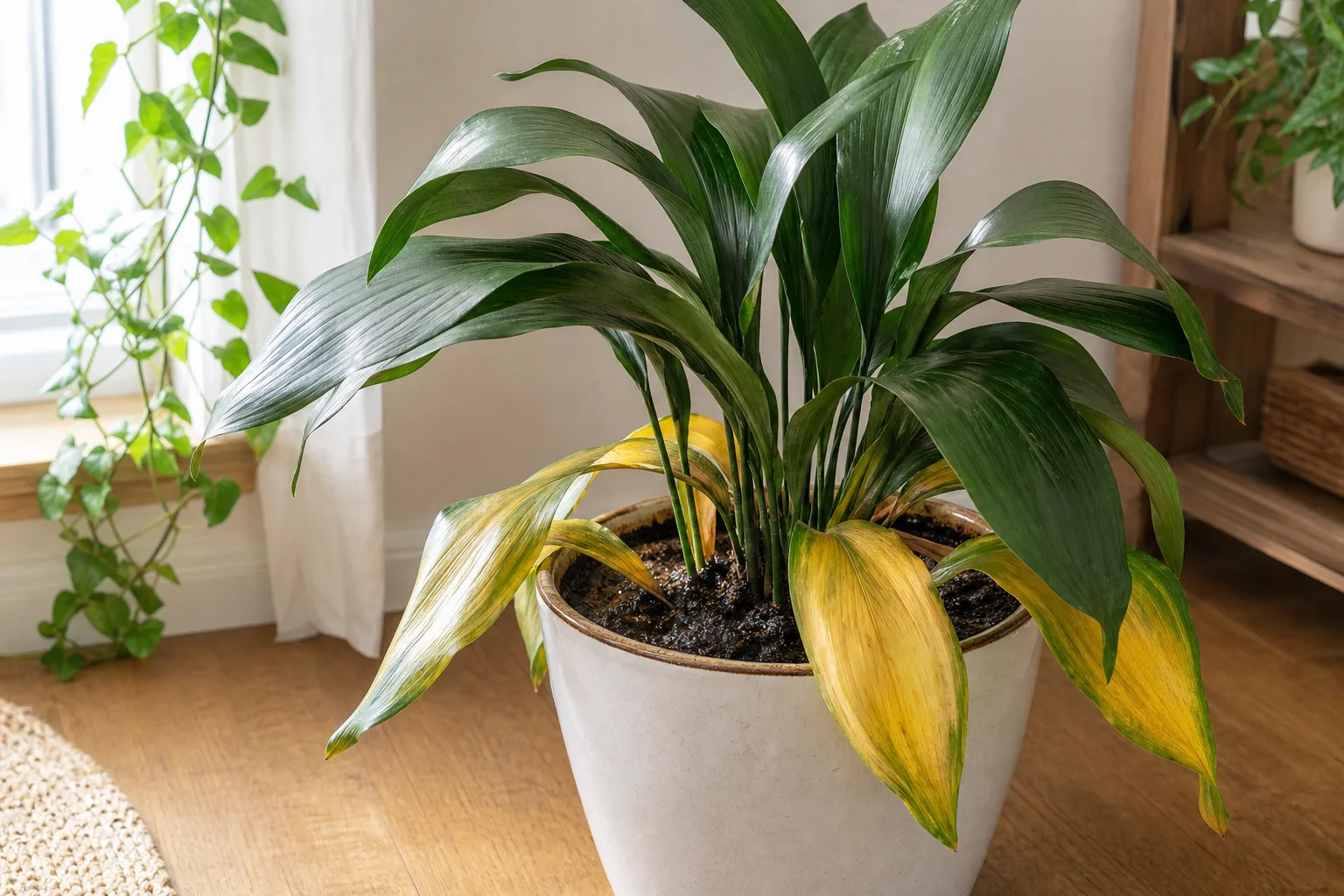
Overwatering on Cast Iron Plant: Causes, Checks & Fixes
This guide covers overwatering on Cast Iron Plant. See also the general Overwatering guide, watering, and light pages for this plant.
Overwatering on Cast Iron Plant: Causes, Checks & Fixes
Quick answer
Overwatering on cast iron plant means the rhizome zone stays wet too long-not that you poured once too generously. Aspidistra elatior is drought-tolerant and famously forgiving of neglect, which creates a dangerous paradox: owners assume the plant wants frequent water because it is a “houseplant,” or they water on a weekly calendar in a dim hallway while the mix never dries. Rhizomes store moisture between drinks, but they rot when soil stays saturated-and that kills cast iron plant far more often than a missed month of watering.
First step: stop watering immediately. Then push your finger 2–3 inches into the mix near the pot rim and lift the pot. Cool, clinging soil at depth plus a heavy pot confirms chronic overwatering. Firm, pale rhizomes at the soil line mean you can likely recover with a dry-down pause. Mushy rhizomes mean rot may be advancing-see the root rot guide before you pour again.
What overwatering looks like on cast iron plant
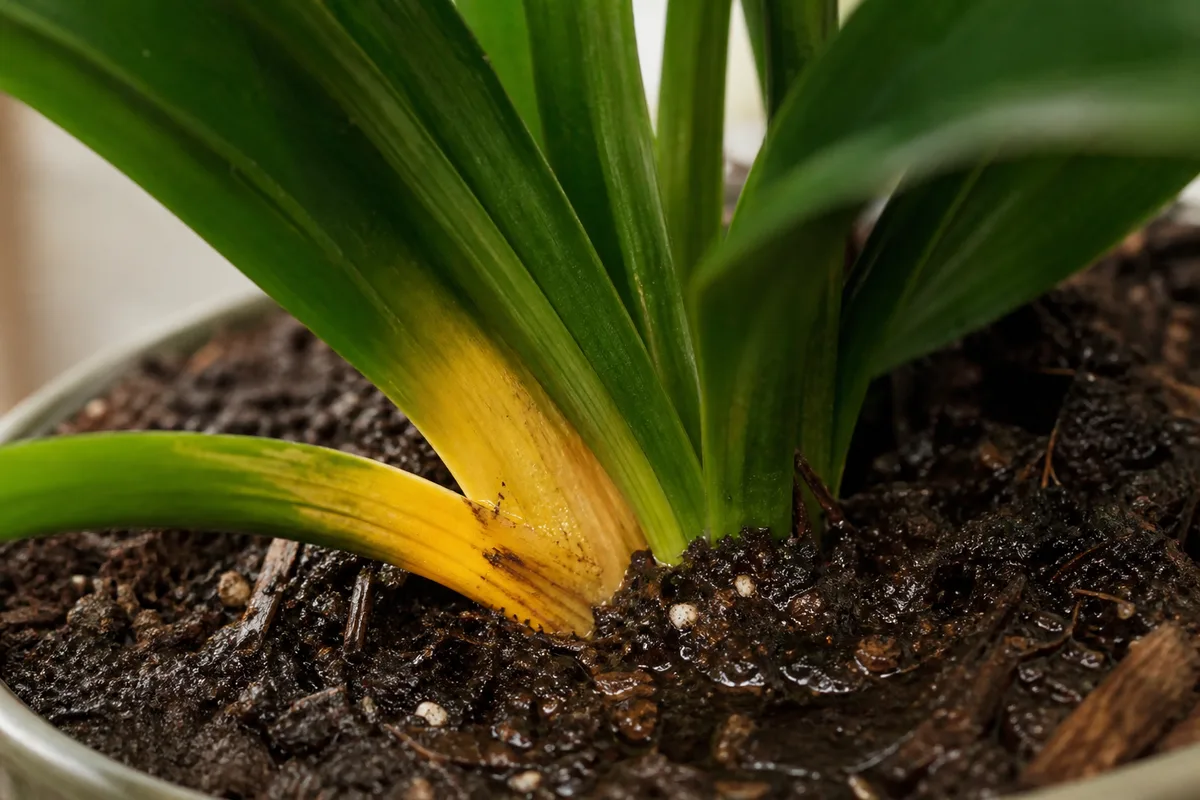
Yellow lower leaf where the petiole meets wet, cool soil - several yellow blades on heavy damp mix point to chronic overwatering, not a single missed drink.
Cast iron plant hides early water stress because its leaves are thick, leathery, and slow to change. By the time symptoms show, the root zone has usually been wet for weeks-not days.
Yellow leaf clusters on wet soil are the classic pattern. Multiple lower leaves turn yellow from the base upward while the mix stays dark, cool, and heavy. One occasional yellow leaf at the bottom can be natural aging; several yellow leaves in a month with damp soil at depth points to excess moisture.
Limp foliage despite wet mix is a critical misread. Owners see hanging leaves and add water, which accelerates rhizome decline. On cast iron plant, wilt on heavy, cool soil means roots or rhizomes cannot move water-not that the plant is thirsty.
Slow growth or no new spears in low light while soil never dries suggests roots are oxygen-starved. The clump looks “fine” from across the room but has not produced a new upright leaf in months.
Surface mold, algae, or fungus gnats often appear when mix stays damp in dim corners. Fungus gnats thrive in consistently wet potting soil.
Sour or earthy-rot smell from drain holes or when you probe near the crown confirms anaerobic conditions. Healthy cast iron mix smells neutral or lightly earthy-not sharp or fermented.
Soft rhizomes at the soil line mean overwatering has progressed toward rot. Healthy rhizomes feel firm and pale cream when you brush away the top layer of mix where leaf stalks emerge.
Cast iron plant rarely shows edema or water-soaked leaf spots like thin-leaved houseplants. If you see those patterns, look for a different cause. On this species, wet soil plus yellow lower leaves plus heavy pot weight is the reliable trio.
Why cast iron plant gets overwatered (the drought-tolerance paradox)
The nickname “cast iron plant” suggests the species survives almost anything. That is half true-and it is why overwatering is so common indoors.
Rhizome storage slows water use. Cast iron plant spreads by thick underground rhizomes that hold moisture between infrequent drinks. In low light, leaves lose water gradually. A pot that needed water every ten days in summer may stay wet for three weeks in a north-facing office in January. Calendar watering ignores that biology.
Low light is the primary accelerator. Cast iron plant is commonly placed in dim hallways and corners because it tolerates deep shade. Shade slows evaporation. The same weekly watering habit that barely worked near a window keeps rhizomes drowning in a dark spot.
“Kindness killing” from beginners. New owners hear “houseplant” and water on schedule. Clemson HGIC is explicit: water only when soil is dry 2 to 3 inches down, drain fully, and do not leave water in the saucer. Constant light moisture violates how this species functions.
Oversized pots and heavy mix. A small rhizome mass in a large decorative pot means most of the soil volume never dries. Heavy peat-based mix in a glazed cachepot without drainage holds water far longer than terracotta in Cast Iron Plant light guide.
Winter calendar mismatch. Reduce watering in winter as growth slows. Many overwatering cases start when owners keep a summer rhythm through December while the plant rests and the mix equilibrates slowly.
Standing water in cachepots. Watering inside a decorative sleeve, or leaving runoff in a saucer for days, keeps rhizomes wet even when the surface looked dry before you watered. Clemson HGIC warns against saucer water specifically for this species indoors.
Saturated soil drives out oxygen. Roots in waterlogged mix lose function before visible collapse. Cast iron plant forgives underwatering more readily than another soak into already-wet soil.
Lookalike symptoms to rule out
Before you commit to an overwatering diagnosis, rule out these common confusions.
Underwatering - Light pot, dry soil at 2–3 inches depth, firm rhizomes, and thin or slightly curled leaves with brown tips. The plant may look sad, but the mix is genuinely dry. See the underwatering guide if depth and weight confirm drought.
Natural old-leaf senescence - One lower leaf yellows and dries every few months on an otherwise stable clump with normal dry-down rhythm. No sour smell, no persistent wet soil, no spreading yellow cluster.
Wilting from root decline - Overlap is high. If limp leaves on wet soil are your main concern, the wilting page walks through wet-vs-dry wilt checks. This page focuses on chronic wet soil before collapse.
Cold damage - Leaves near a drafty window may brown or look tired in winter without wet soil. Check soil moisture and rhizome firmness; cold-stressed plants in dry mix need different care than waterlogged ones.
Insufficient light stress - Very slow growth in deep shade can mimic “sick” plants, but soil should still dry to depth on a reasonable interval. If soil stays wet for weeks purely from placement, overwatering and low-light evaporation are linked-adjust both checks and frequency.
| Signal | Overwatering | Underwatering | Natural aging |
|---|---|---|---|
| Top 2–3 inches of mix | Cool, damp, clings to finger | Dry, crumbly | Normal dry-down cycle |
| Pot weight | Heavy for days or weeks | Light | Matches your usual rhythm |
| Lower leaves | Yellow cluster on wet soil | Brown tips, thin limp leaves | One leaf at a time |
| Rhizome at soil line | Softening if advanced | Firm | Firm |
| Smell | Sour or rotten on wet mix | Neutral | Neutral |
How to confirm overwatering
Work through these checks in order. You need several wet-soil signals-not just one yellow leaf.
- Depth moisture probe - Insert your finger 2–3 inches near the pot rim, not against the crown. Cool, clinging soil several days after you last watered confirms the root zone is holding moisture too long.
- Pot weight - Lift the pot. If it stays noticeably heavy and cool between your usual watering days, the mix has not dried to depth.
- Rhizome firmness - Brush away a little surface mix where leaf stalks emerge. Firm, pale rhizomes suggest recoverable stress. Soft, dark, or collapsing tissue means rot may be advancing-link to root rot.
- Leaf pattern - Yellowing from the bottom up on wet soil strongly supports overwatering. See yellow leaves if discoloration is the primary symptom.
- Drainage and saucer check - Water sitting in a cachepot, blocked drain holes, or mix that never dries after a full week points to habitat problems, not a one-time mistake.
- Season and placement context - Deep shade, winter rest, or a recent move to a darker corner explains why a previously “fine” interval is now too frequent.
- Smell and pests - Sour odor from drain holes or fungus gnats on persistently damp surface mix adds confirmation.
- Timeline - Overwatering is usually chronic. If soil has been wet for two or more weeks while yellow leaves accumulate, treat it as confirmed even if you water “only once a week.”
Confirmed overwatering: wet at 2–3 inches depth, heavy pot, yellow lower leaves on damp mix, or softening rhizomes. Suspected but mild: slightly cool soil at depth after a recent soak in low light-pause and recheck in five days before watering again.
The first fix to try
Stop watering immediately. That is the single most important action-not Cast Iron Plant repotting guide, not fertilizing, not moving the plant to direct sun.
Empty any saucer or cachepot water. Set the pot on folded paper towels to wick excess moisture from the drain holes if the mix is sodden. Move to slightly brighter indirect light if the plant sits in deep shade-enough to speed evaporation without direct sun that bleaches leaves.
Feel rhizomes at the soil line. If they are still firm, wait until the top 2–3 inches of mix are genuinely dry before one careful soak-and-drain cycle. If tissue is mushy, stop here and follow the root rot page for trim-and-repot steps.
Do not fertilize a waterlogged plant. Do not repot into a larger container “to help drying.” Do not mist leaves or run a humidifier to “help” a plant whose problem is too much soil moisture.
Make this one correction, then wait at least seven to ten days before stacking additional interventions.
Step-by-step recovery when rhizomes may be damaged
Mild overwatering (firm rhizomes, wet mix, early yellow leaves)
- Stop all watering. Empty saucers and cachepots.
- Run depth and weight checks every three to five days until the top 2–3 inches are dry.
- Water once thoroughly at the sink, let excess drain for several minutes, and return the plant to an empty saucer.
- Resume the check-first rhythm from the watering guide-not a calendar.
Moderate stress (softening rhizome tips, persistent wet mix, several yellow leaves)
- Stop watering and wick excess moisture with paper towels under the pot.
- Gently expose rhizomes at the soil line. Trim any clearly mushy sections with clean shears.
- If more than a small edge is soft, unpot and inspect the full rhizome mass. Repot into fresh, dry, well-drained mix in a pot sized to the remaining healthy tissue-not oversized.
- Keep the mix barely moist-not wet-while waiting for new growth. Remove yellow leaves that will not recover.
Severe cases (sour smell, collapsing clump on wet soil, mostly mushy rhizomes)
- Treat as urgent. Unpot, rinse rhizomes, and cut away all brown, slimy tissue.
- Repot healthy divisions only if firm tissue remains. Discard severely rotted sections.
- See the root rot guide for full salvage protocol.
- Accept that some clumps cannot be saved if rhizomes have collapsed entirely-prevention through depth checks matters more than late rescue.
Winter recovery path
- Recognize that the same pot may need 14–21 days or longer between drinks while growth rests.
- Do not resume summer frequency when the mix finally dries once-re-baseline with twice-weekly checks instead of a calendar.
- Keep cachepots dry; winter overwatering often traces to decorative sleeves holding runoff.
Recovery timeline and what to watch
Mild overwatering with firm rhizomes - Soil may take one to three weeks to dry to depth in low light. Yellow lower leaves rarely green up again. Judge success by firm new shoots emerging upright from the soil line within two to four weeks after you restore a proper dry-down cycle-not by old foliage re-firming.
Moderate rhizome stress - Recovery spans two to six weeks after trim-and-repot if enough healthy tissue remains. Fungus gnats often fade once the mix dries consistently.
Advanced rot - Several weeks to never, depending on how much rhizome tissue was lost. Honest limit: if the rhizome mass is mostly mush on wet soil, salvage divisions only if firm sections remain.
Signs of improvement - Mix dries predictably between checks, pot weight drops on schedule, no new yellow leaves, firm rhizomes at the soil line, new spears emerging.
Signs of worsening - Spreading yellow leaves on still-wet mix, sour smell intensifying, rhizomes softening further, whole-clump collapse despite stopped watering. Escalate to the root rot guide.
Mistakes to avoid
Do not water because leaves look sad when the mix is still wet at depth-that is the classic cast iron plant trap. Do not follow a weekly calendar in a dim hallway without depth and weight checks. Do not leave standing water in saucers or cachepots. Do not repot into a bigger pot to “fix” drying problems. Do not fertilize stressed, waterlogged plants. Do not move an overwatered plant into harsh direct sun. Do not mist or humidify to compensate for soggy rhizomes-the fix lives in the pot, not on the leaf surface. Do not assume drought tolerance means the plant needs almost no water; it means the plant needs timed full soaks after real dry-down, not perpetual dampness.
How to prevent overwatering next time
Water only when the top 2–3 inches of mix are dry, confirmed with pot weight-not a calendar date. Use a well-drained potting mix in a container with drainage holes sized to the rhizome mass. Empty saucers within 30 minutes of every soak. In low light, expect longer dry-down intervals; in winter, reduce watering frequency while keeping the same soak-and-drain technique.
Treat calendar reminders as prompts to check soil, not commands to pour. Learn your plant’s rhythm in the first month after purchase by logging days between dry-down and the next drink-most indoor cast iron plants land near every 10–14 days in active growth and every 14–21 days or longer in winter, but your room decides the exact interval.
Full prevention rhythm, seasonal ranges, and pot-weight technique are on the cast iron plant watering guide. This page is the wet-soil diagnostic; that guide is the long-term schedule.
When to worry
Act immediately if rhizomes feel mushy at the soil line, the mix smells sour while staying wet, the whole clump collapses on a heavy pot, or yellow leaves spread rapidly despite stopped watering. Those signs suggest advancing rhizome rot-not a simple pause-and-wait case.
You can observe and dry down if rhizomes are firm, only a few lower leaves have yellowed, and you have already stopped watering and emptied standing water. Improvement should show as stable soil dry-down and new spears within two to three weeks.
Variegated cultivars like Aspidistra elatior ‘Variegata’ follow the same moisture logic; slightly brighter placement for color may shorten dry-down marginally, but the 2–3-inch rule still applies.
Related cast iron plant problems
- Watering - soak-and-drain rhythm, seasonal frequency, and depth checks
- Root rot - mushy rhizomes, sour smell, trim-and-repot protocol
- Yellow leaves - bottom-up yellowing patterns and overlap with wet soil
- Wilting - limp leaves on wet vs dry mix
- Underwatering - dry mix, light pot, firm rhizomes
- Fungus gnats - pests that follow persistently damp mix
- Mold on soil - surface growth on overwatered pots
- Cast iron plant overview - full care hub
When to use this page vs other Cast Iron Plant guides
- Cast Iron Plant watering guide - Use for routine moisture checks before assuming overwatering is the main issue.
- Cast Iron Plant problems hub - Browse all 16 common issues on this species.
- Root Rot on Cast Iron Plant - Different entry point when symptoms overlap with overwatering.
- Yellow Leaves on Cast Iron Plant - Different entry point when symptoms overlap with overwatering.
- Wilting on Cast Iron Plant - Different entry point when symptoms overlap with overwatering.
Related Cast Iron Plant guides
- Cast Iron Plant overview
- Cast Iron Plant watering
- Cast Iron Plant light
- Cast Iron Plant soil
- Root Rot on Cast Iron Plant
- Yellow Leaves on Cast Iron Plant
- Wilting on Cast Iron Plant
- Fungus Gnats on Cast Iron Plant
- Mold on Soil on Cast Iron Plant
- Drooping Leaves on Cast Iron Plant
- Cast Iron Plant problems