Drooping Leaves on Cast Iron Plant: Causes, Checks & Fixes
Quick answer
Drooping on cast iron plant usually means arching lance leaves losing rigidity-not a fast collapse. Wet, heavy soil in a dim room points to overwatering; a light pot with papery tips points to drought. First step: push your finger 3–5 cm into the mix and lift the pot before changing anything else.
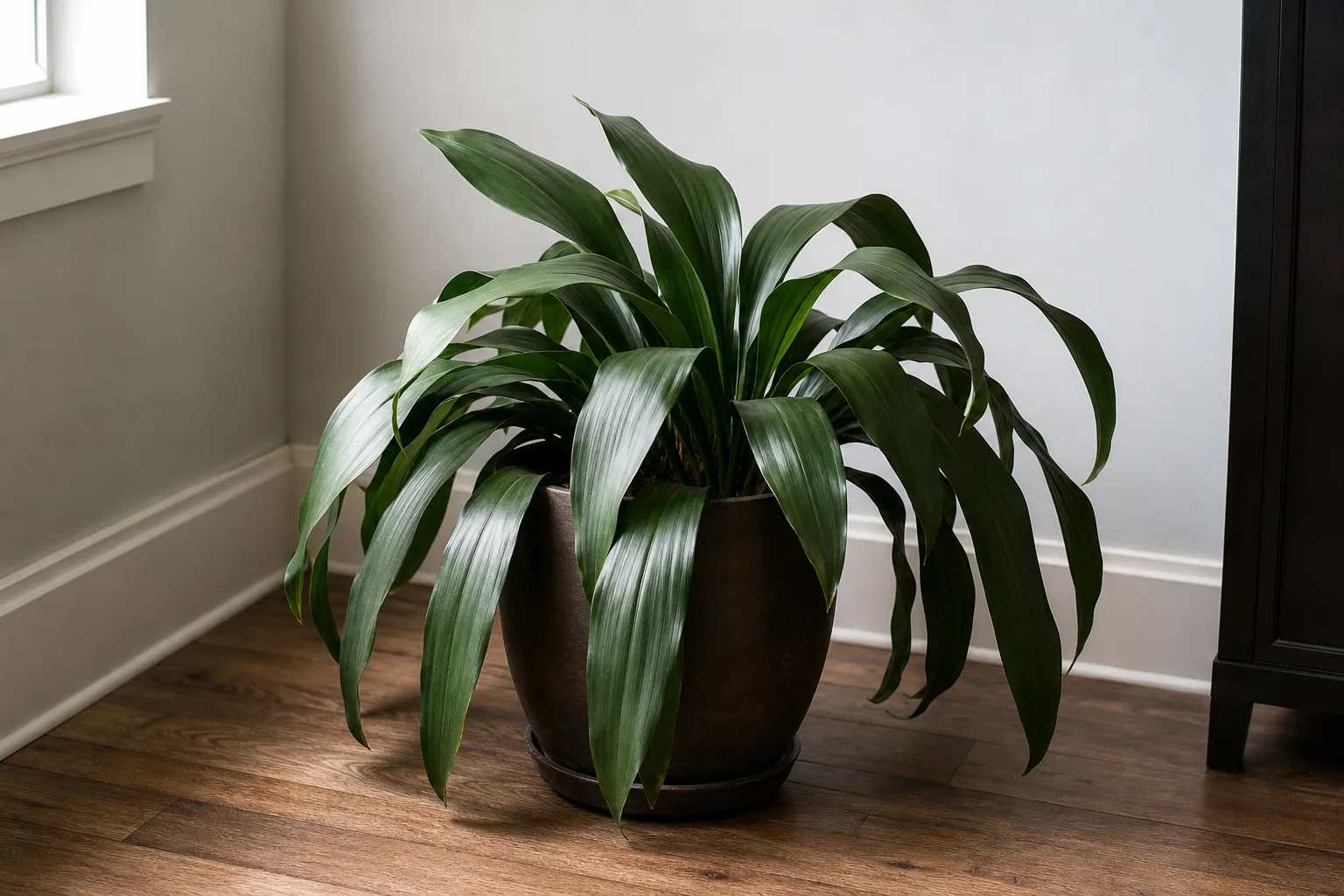
Drooping Leaves on Cast Iron Plant: Causes, Checks & Fixes
This guide covers drooping leaves on Cast Iron Plant. See also the general Drooping Leaves guide, watering, and light pages for this plant.
Drooping Leaves on Cast Iron Plant: Causes, Checks & Fixes
Quick answer
When cast iron plant (Aspidistra elatior) leaves droop, the arching lance blades lose stiffness and hang lower than usual-but they usually stay attached and green. That gradual sag is different from acute wilting, where leaves collapse quickly across the whole plant.
First fix: check soil moisture at 3–5 cm depth and lift the pot. A heavy, wet pot in a north-facing or hallway placement almost always means pause watering until the mix dries-overwatering in low light is the most common indoor cause. A noticeably light pot with dusty-dry soil and papery brown tips means a thorough soak-and-drain cycle, not more waiting.
Cast iron plant signals stress slowly. Its thick rhizomes store moisture and its leathery leaves lose water gradually, so drooping develops over days or weeks rather than hours. Do not assume the plant reacts as fast as a calathea or pothos. Make one care change at a time, then watch new leaf firmness over the next two to four weeks.
For acute sudden collapse, see wilting on cast iron plant. For baseline watering rhythm, see the cast iron plant watering guide.
What drooping leaves look like on Cast Iron Plant
On Aspidistra, drooping is a loss of arch rigidity, not necessarily yellowing or browning. Healthy cast iron plant leaves rise from underground rhizomes in a graceful arch, stiff enough to hold their curve. When stressed, the same blades hang floppier, sometimes touching pot rims or neighboring leaves, while remaining green for a long time.
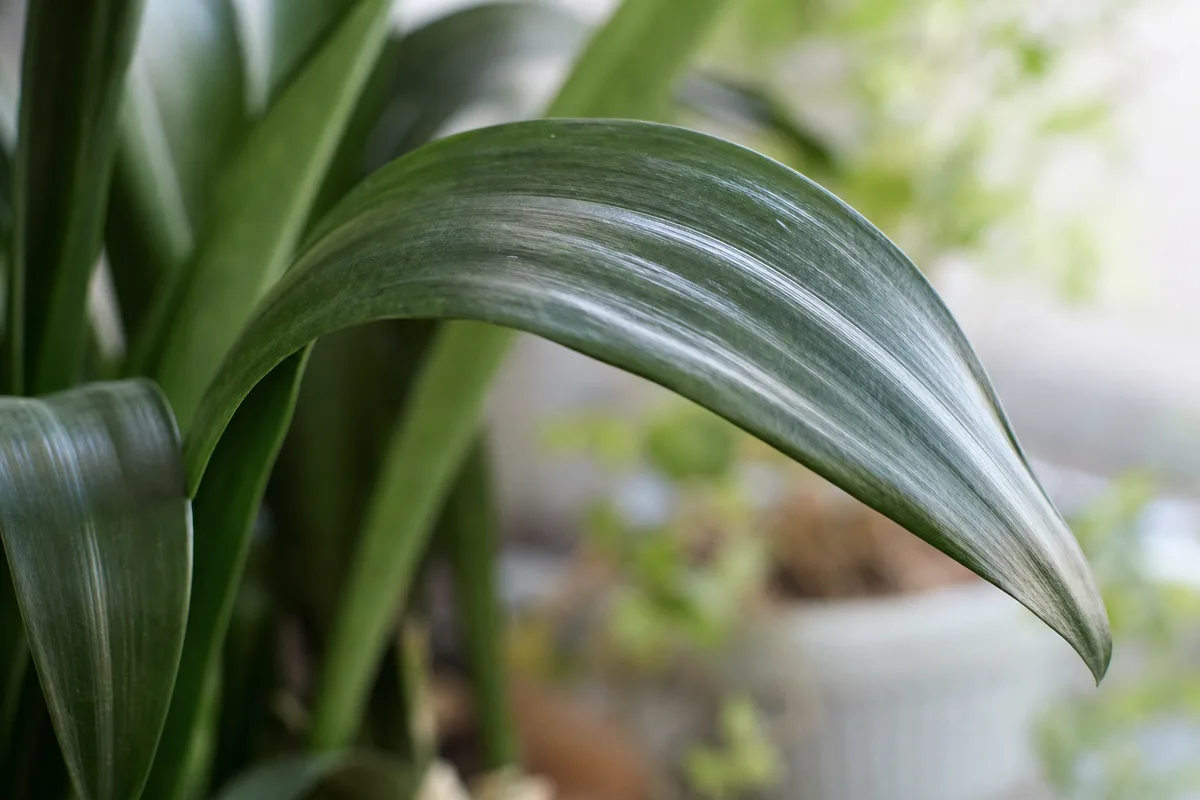
Loss of arch rigidity on Aspidistra - gradual droop with green tissue still attached.
Patterns that fit drooping (gradual):
- Several arching leaves sag lower over one to three weeks without sudden collapse
- Leaves feel softer when you lift a blade by the tip, but tissue is still green
- Lower, older leaves droop first while newer center leaves stay firmer-unless root trouble is advanced
- Soil context matches the stress: wet heavy mix with limp leaves, or dry light mix with papery tips
Patterns that suggest a different problem:
- Rapid limp collapse across the whole clump in 24–48 hours → wilting
- Yellow lower leaves spreading on wet soil → overwatering or root rot
- One old bottom leaf slowly declining over months with firm rhizome → normal aging; remove when fully yellow
- Bleached or tan patches on the window side → direct sun scorch, not droop from water stress
Because Aspidistra leaves are thick and leathery-individual blades can reach 60 cm long indoors-the droop reads as a heavy, tired arch rather than a thin leaf curl. That visual is specific to this species and helps separate it from humidity-sensitive plants that crisp at the edges first.
Drooping vs. wilting on Aspidistra
Both symptoms involve limp foliage, but timing and soil context differ-and the first fix is not always the same.
| Signal | Drooping (this guide) | Wilting (see wilting guide) |
|---|---|---|
| Speed | Gradual over days to weeks | Often rapid, within hours to a few days |
| Leaf color | Usually stays green initially | May look dull, gray-green, or collapsed |
| Typical soil | Wet mix (overwatering) or very dry mix (drought) | Either extreme; recent repot or cold shock common |
| Rhizome feel | Firm unless rot is advanced | Soft crown more likely in acute rot cases |
| First action | Confirm moisture depth; pause water or soak once | Identify urgent cause; may need immediate root check |
Cast iron plant tolerates neglect better than most houseplants, but that tolerance delays obvious symptoms. Owners often notice drooping only after the mix has been wrong for weeks-especially in low light where evaporation is slow. Treat gradual arch loss as a chronic care mismatch; treat sudden collapse as an acute event.
Why Cast Iron Plant gets drooping leaves
Overwatering in low light (most common indoors)
The classic cast iron plant setup-a dim hallway or north-facing room-slows soil drying dramatically. Owners who water on a weekly calendar keep the rhizome zone saturated while the plant sits in shade. Roots lose oxygen in wet mix, function declines, and arching leaves lose turgor even though the surface still looks dark and cool.
Clemson HGIC recommends watering indoor cast iron plants when soil is dry 2 to 3 inches down, with all excess drained from the saucer. In low light, reaching that dry-down can take 14 to 21 days or longer in a large pot-not seven. Calendar watering without checking is the primary droop trigger in home culture.
Underwatering and long drought
Cast iron plant survives drought better than most species, but extended dry spells still weaken rhizomes. A lightweight pot, dusty-dry mix, and papery brown leaf tips paired with drooping arches point to thirst-not rot. The plant stores water in rhizomes, so droop appears only after reserves drain, which can mislead owners into thinking the species never needs water.
Cast Iron Plant repotting guide or division shock
Freshly divided or repotted Aspidistra often droops for two to four weeks while roots re-establish. Disturbed rhizomes cannot supply water efficiently until new root hairs form. Leaves may sag across the clump even when moisture is appropriate. Firm rhizomes and stable-not waterlogged-soil distinguish shock from rot.
Rhizome rot from chronic wetness
When overwatering persists, rhizomes soften and turn brown or mushy. Leaves droop, lower blades yellow, and the mix may smell sour. The RHS notes that soggy compost can rot aspidistra roots-a serious escalation from simple droop. See root rot on cast iron plant when the crown feels soft.
Cold drafts and sub-50°F exposure
Missouri Botanical Garden lists a minimum winter temperature around 50°F (10°C) for houseplant culture. Prolonged cold near a drafty door or window can reduce root activity and cause limp leaves even when watering is correct. Move the pot to a stable room before adjusting water.
Normal aging of lower leaves
A single older bottom leaf slowly losing rigidity while the rhizome stays firm and new growth looks healthy is often senescence-not a care failure. Remove the leaf when fully yellow. This pattern overlaps with yellow leaves on cast iron plant but does not require a watering overhaul.
How to confirm the cause
Work through these checks in order. Stop when one pattern clearly matches-do not stack fixes.
- Push your finger 3–5 cm (1–2 inches) into the mix near the pot rim. Note wet, cool, or dry.
- Lift the pot. Heavy and waterlogged suggests overwatering; noticeably light suggests drought.
- Inspect the arch pattern. Whole-clump sag on wet soil differs from one old lower leaf on firm rhizome.
- Feel the rhizome at the soil line (gently scrape back a little mix if needed). Firm and white or pale tan is healthy; soft, mushy, or foul-smelling tissue suggests rot.
- Review recent events. Repotting within the last month, a cold snap, or a watering schedule change explains timing.
- Check light placement. Very dim corners slow drying; direct sun scorch shows as bleached patches, not uniform droop.
- Look at newest growth. A firm new leaf unfurling slowly is a good sign even when older blades sag.
If soil is wet and rhizomes are firm, overwatering is the working diagnosis-pause water. If soil is dry and the pot is light, drought is likely-soak once and drain. If rhizomes are soft on wet soil, escalate to root inspection before the next watering cycle.
First fix for Cast Iron Plant (by confirmed cause)
Make one change based on what you confirmed, then wait two to four weeks before adding another treatment.
Wet soil, firm rhizome → stop watering
Pause all watering until the top 3–5 cm of mix is dry and the pot feels meaningfully lighter. Pour off any saucer water. Move the plant slightly brighter-still indirect-if it sits in very deep shade, because faster evaporation helps wet mix recover. Do not fertilize. Do not repot unless rhizomes are already soft.
This is the most common fix for drooping cast iron plant in home culture. The Missouri Botanical Garden describes the species as tolerating less-than-regular watering and low light-but that tolerance does not mean constant dampness.
Dry soil, light pot → thorough soak
Water slowly until excess runs from drainage holes, let the pot drain several minutes, and empty the saucer. Wait for the next dry-down before watering again-typically 10 to 14 days in active growth, longer in winter or dim rooms. One full soak beats repeated small sips that wet only the surface.
Recent repot or division → hold steady
Keep mix lightly moist-not soggy-in bright indirect light. Avoid fertilizing, heavy pruning, or moving the pot repeatedly. Drooped leaves on firm rhizomes after repotting usually stabilize as roots recover. Expect weeks, not days.
Soft rhizome on wet soil → inspect and trim rot
Unpot, trim mushy rhizome tissue with clean shears, and repot into fresh well-draining mix. Do not water on a schedule until you read the root rot guide for full steps. This is the one scenario where immediate repotting is appropriate on day one.
Cold exposure → relocate
Move the pot away from drafty doors and sub-50°F windowsills. Hold watering steady until soil reaches your normal dry-down threshold-cold roots absorb water slowly.
Recovery timeline
Cast iron plant recovers on a slow clock. Rhizomes store reserves and new leaves unfurl one at a time over weeks or months, so drooped blades may never fully re-stiffen even after the root zone heals.
What to expect:
- Overwatering corrected: Soil oxygen returns within days; visible improvement often shows in two to four weeks as existing leaves feel slightly firmer and no new yellowing appears.
- Underwatering corrected: Leaves may perk partially within a week after a proper soak; brown tips on drought-stressed tissue stay brown.
- Repot shock: Two to six weeks before the clump looks composed again; judge by firm new growth, not old arch shape.
- Root rot (partial): Several weeks to months; some leaves may be lost permanently.
Judge success by new leaf firmness, stable rhizomes, and a healthy dry-down cycle-not by whether every old blade returns to its original arch. Damaged leaves may not fully recover; watch the center of the plant for clean replacement foliage instead.
If limpness spreads, multiple leaves yellow on wet soil, or the crown softens despite corrected watering, stop waiting and inspect roots.
What not to do
Do not water a wet, heavy pot because leaves look tired-that deepens root oxygen loss and is the most common mistake on this species in low light.
Do not assume drooping always means underwatering. Wet soil with limp arching leaves is more often too much water, not too little.
Do not fertilize a stressed cast iron plant to “perk it up.” Slow growth in dim rooms needs modest feeding at best; salts on stressed roots worsen leaf decline.
Do not cut off every drooping green leaf at once. Leaves still feed the rhizome while it recovers.
Do not stack repotting, pruning, pesticide, and fertilizer on the same weekend. Change one variable, then read the plant’s response over the next two to four weeks.
Do not expect overnight recovery. Aspidistra’s slow metabolism is normal-not a sign your fix failed in the first few days.
How to prevent drooping leaves next time
Prevention is mostly moisture timing matched to light, not a fixed calendar.
- Check soil at 3–5 cm depth twice weekly until you learn your pot’s dry-down interval in its current spot.
- Water only when that depth is dry-roughly every 10 to 14 days in active growth and 14 to 21 days in winter or very low light for many homes.
- Always drain the saucer after watering; never let the pot sit in standing water.
- Match pot size to the rhizome mass-oversized pots stay wet too long in dim rooms.
- Use well-draining mix; heavy peat blends hold moisture for weeks in shade.
- Wipe leaves monthly and inspect for pests; stressed plants in wet soil attract fungus gnats.
- Review cast iron plant light needs if growth is extremely slow-very poor light extends dry-down so much that owners forget to check, then overcorrect with a heavy soak.
The cast iron name reflects wide tolerance, not immunity to wet rhizomes. A weekly calendar reminder to check moisture beats a weekly calendar order to water.
When to worry (root rot escalation)
Drooping alone is usually reversible. Escalate immediately when:
- The rhizome feels soft or mushy at the soil line
- Soil stays wet for three or more weeks in an ordinary indoor pot
- Multiple leaves yellow while arches collapse and the mix smells sour
- New leaves emerge small, pale, or damaged despite corrected watering
- Limpness spreads rapidly across the whole clump after a cold snap or repot
Those patterns point to root rot or advanced overwatering-not a simple dry-down wait. Inspect rhizomes, trim rot, and repot into dry mix rather than hoping the next watering cycle fixes the problem.
Related Cast Iron Plant problems
- Wilting on cast iron plant - acute collapse vs. gradual droop
- Overwatering on cast iron plant - wet soil, yellow lower leaves
- Underwatering on cast iron plant - dry pot, papery tips
- Root rot on cast iron plant - soft rhizome escalation
- Yellow leaves on cast iron plant - overlapping lower-leaf stress
- Cast iron plant watering - dry-down checks and seasonal rhythm
- Cast iron plant light - placement and low-light dry-down interaction
- Cast iron plant overview - full care hub
Conclusion
Drooping leaves on cast iron plant are a diagnostic clue, not a crisis by themselves. The arching blades lose stiffness when the root zone has been too wet for too long in low light, too dry for too long, recently disturbed by repotting, or damaged by rot or cold. Check moisture depth and pot weight before anything else, make one correction, and judge recovery by firm new growth over the next few weeks-not by how fast a pothos would bounce back. That slow, steady rhythm is exactly how Aspidistra is built to work.
When to use this page vs other Cast Iron Plant guides
- Cast Iron Plant watering guide - Use for routine moisture checks before assuming drooping leaves is the main issue.
- Cast Iron Plant problems hub - Browse all 16 common issues on this species.
- Underwatering on Cast Iron Plant - Different entry point when symptoms overlap with drooping leaves.
- Overwatering on Cast Iron Plant - Different entry point when symptoms overlap with drooping leaves.
- Root Rot on Cast Iron Plant - Different entry point when symptoms overlap with drooping leaves.