Root Rot on Cast Iron Plant: Rhizome Checks & Rescue Steps
Quick answer
Root rot on cast iron plant means rhizomes or roots have decayed from soil that stayed wet too long-usually calendar watering in a dim hallway. Stop watering, unpot, and inspect rhizome firmness before you trim, air-dry cuts, and repot into fresh well-drained mix.
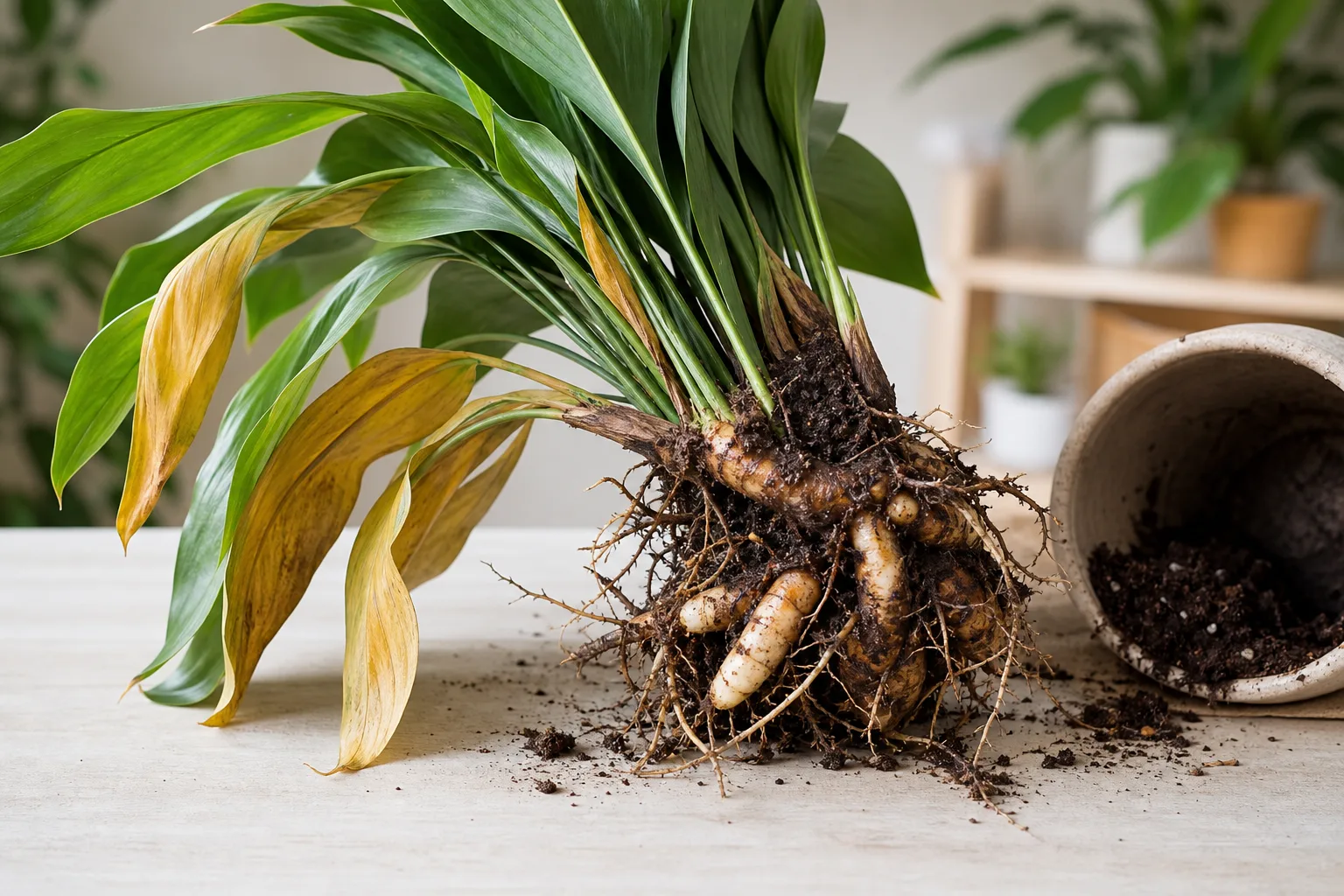
Root Rot on Cast Iron Plant: Causes, Checks & Fixes
This guide covers root rot on Cast Iron Plant. See also the general Root Rot guide, watering, and light pages for this plant.
Root Rot on Cast Iron Plant: Causes, Checks & Fixes
Quick answer
Root rot on cast iron plant (Aspidistra elatior) is almost always a watering and drainage failure, not a mysterious disease. This species is drought-tolerant and famously forgiving of neglect-which creates a dangerous paradox indoors. Owners water on a weekly calendar in dim hallways while thick underground rhizomes sit in saturated mix that never dries. Rhizomes store moisture between drinks, but soggy compost can rot the roots when soil stays wet too long and oxygen disappears from the root zone.
First step: stop watering immediately. Do not repot, fertilize, or pour again because leaves look limp on already-wet soil. Unpot the plant and inspect rhizomes and roots together-firm pale rhizome tissue at the soil line means you may recover with trim-and-repot; mushy rhizomes mean decay is advanced. If rhizomes are still firm and soil is merely wet, the overwatering guide dry-down path may be enough.
Why cast iron plant gets root rot
Cast iron plant is rhizomatous and stemless-architecturally different from rosette-form houseplants. Leaves emerge on long petioles directly from thick horizontal rhizomes just below the soil surface, not from a visible central crown. That anatomy explains both the plant’s toughness and its rot vulnerability.
Overwatering in low light (leading cause)
The dominant indoor pattern is kindness killing in dim rooms. Cast iron plant tolerates deep shade and is commonly placed in hallways and corners where evaporation is slow. A pot that dried in ten days near a window may stay wet for three weeks in a north-facing office. Calendar watering ignores that biology-and rhizomes rot while leaves still look glossy from stored moisture.
Missouri Botanical Garden lists overwatering as a primary indoor problem for this species. The Royal Horticultural Society warns that soggy compost can lead to root rot on aspidistras. On cast iron plant, rot advances silently because rhizome storage masks early thirst signals until multiple lower leaves yellow.
Heavy mix, blocked drainage, and calendar watering
Other contributors stack on the same wet-soil foundation:
- Heavy, compacted potting mix that holds water like a sponge-especially unamended peat straight from the bag in low light
- Blocked drainage holes or watering inside decorative cachepots that trap runoff
- Oversized pots where a small rhizome mass cannot dry a large volume of unused soil
- Standing water in saucers after every soak-Clemson HGIC is explicit about draining saucers on indoor cast iron plant
- Winter calendar mismatch when owners keep summer frequency while the plant rests and mix equilibrates slowly
Saturated soil deprives roots of oxygen. On rhizomatous cast iron plant, fibrous roots decay first; if wet conditions persist, the fleshy rhizome tissue softens next-and that is the point of no return for many clumps.
What root rot looks like on cast iron plant
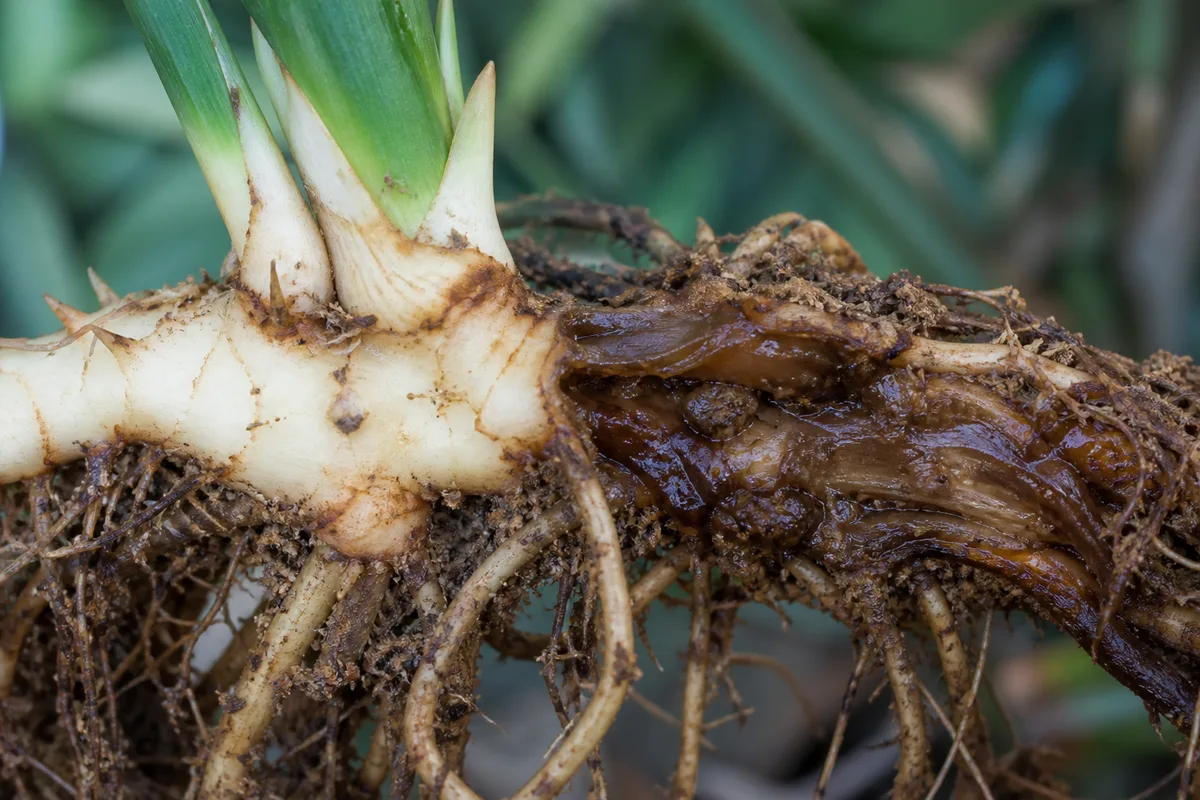
Contrasting firm pale rhizome tissue next to brown translucent mush - trim all soft tissue back to cream-colored firm flesh before repotting.
Symptoms creep before they crash because cast iron plant leaves are thick, leathery, and slow to change. Variegated Aspidistra elatior ‘Variegata’ and smaller A. lurida forms follow the same wet-soil rot pattern, though variegated leaves may show visible decline slightly faster because thinner stripe tissue loses turgor sooner on a stressed rhizome.
Early signs
- Yellow lower leaves in clusters while mix stays dark, cool, and heavy-not one occasional senescent leaf at the base
- Limp arching foliage despite wet soil-owners misread this as thirst and add water, which accelerates decline
- Sour or fermented smell from drain holes or when you probe near leaf bases
- Fungus gnats hovering over persistently damp surface mix in dim corners-fungus gnats thrive in consistently wet potting soil and often signal chronic wet soil (see fungus gnats)
- Slow or absent new spears for months while soil never dries to depth
See yellow leaves if discoloration is your primary concern; return here when rhizome tissue softens.
Advanced signs
- Mushy rhizomes at the soil line where petioles emerge-healthy tissue is firm and pale cream
- Brown, translucent, or slimy roots when you unpot; healthy roots are firm and pale
- Whole-clump collapse on a heavy pot despite moist soil
- Leaf bases pulling away from soft, darkened tissue underground
- Wobbly plant in the pot because deteriorating roots no longer anchor the rhizome mass
Lookalike: underwatering
Underwatering shows a light pot, dry soil at 2–3 inches depth, firm rhizomes, and brown leaf tips with thin, slightly curled leaves-not yellow clusters on wet mix. See the underwatering guide if depth and weight confirm drought.
| Signal | Root rot | Overwatering stress (firm rhizomes) | Underwatering |
|---|---|---|---|
| Top 2–3 inches of mix | Wet, cool, sour smell possible | Wet, cool | Dry, crumbly |
| Pot weight | Heavy for weeks | Heavy | Light |
| Rhizome at soil line | Mushy or collapsing | Firm, pale | Firm |
| Lower leaves | Yellow cluster on wet soil | Yellow cluster on wet soil | Brown tips, thin limp leaves |
| First fix | Stop water → unpot → trim → repot | Stop water → dry-down pause | One full soak after dry-down |
How to confirm root rot (numbered checklist)
Work through these checks in order. You need mushy tissue or multiple wet-soil rot signals-not a single yellow leaf.
- Stop watering and empty saucers or cachepot water before you disturb the root zone further.
- Depth and weight check - Probe 2–3 inches near the pot rim. Cool, clinging soil plus a heavy pot days after your last pour confirms chronic wetness.
- Smell test - Sour or rotten odor from drain holes on wet mix supports rot over simple overwatering stress.
- Rhizome firmness at soil line - Brush away a little surface mix where leaf stalks emerge. Firm, pale rhizomes suggest early stress; mushy tissue confirms rot.
- Unpot gently - Slide the plant out. Inspect rhizomes first, then fibrous roots. Healthy rhizomes are firm and cream-colored; rotting rhizomes are brown, translucent, or collapse under gentle pressure.
- Root comparison - Some fine root browning with a firm rhizome may recover after trim and repot. Rhizome mush is the critical threshold.
- Leaf pattern context - Rapid bottom-up yellowing on wet soil plus soft rhizomes strongly confirms rot. One old yellow leaf on an otherwise stable clump with normal dry-down is likely senescence, not rot.
- Drainage audit - Blocked holes, cachepot standing water, or mix that never dried for two or more weeks explains why rot advanced.
Confirmed root rot: mushy rhizome tissue, sour smell on wet mix, slimy roots, or collapse on heavy soil. Suspected but not confirmed: wet mix with firm rhizomes-try the overwatering page dry-down path first and re-inspect in seven to ten days.
Firm-vs-mushy urgency decision table
Use rhizome firmness-not leaf count alone-to choose your path:
| Rhizome condition | Pot and smell signals | Urgency | First action | Realistic timeline |
|---|---|---|---|---|
| Firm rhizomes, wet mix | Heavy pot, few yellow leaves, no sour smell | Routine | Dry-down per overwatering guide; re-probe in 7–10 days | 2–4 weeks |
| Firm rhizome, brown slimy fine roots | Wet mix, sour smell starting | Same week | Trim bad roots, air-dry cuts, repot same or slightly smaller pot | 4–8+ weeks to first new spear |
| Partial rhizome mush | Wet mix, one or more crowns collapsing | Same day | Cut all mush, divide multi-crown clumps, air-dry, repot firm divisions only | 4–8+ weeks; uncertain if >50% rhizome lost |
| Total rhizome collapse | All tissue soft, clump limp on heavy wet soil | Immediate salvage or discard | Salvage any firm edge sections; discard rest; sterilize pot | Weeks to never |
First fix for cast iron plant
Stop watering immediately. That single action matters more than repotting on day one if you have not yet inspected tissue.
Then unpot and inspect rhizomes before stacking treatments. Cast iron plant recovery follows one sequence-not five simultaneous interventions.
Numbered rescue checklist
- Stop all watering. Empty saucers and cachepots. Do not fertilize.
- Unpot gently and shake away loose wet mix. Rinse rhizomes with room-temperature water if soil is heavily compacted-avoid tearing healthy tissue.
- Assess severity (see staging below). Identify firm vs. mushy rhizome sections and attached roots.
- Trim rotten tissue with clean, sharp shears or a knife disinfected with rubbing alcohol. Cut back to firm, white or cream tissue. Remove all brown, slimy roots and rhizome sections-partial trims leave infection behind. Clemson HGIC notes that if only a few roots are infected, cut them out and repot in sterile soil.
- Air-dry cut surfaces for several hours (or overnight in a shaded, airy spot) so wounds callus before contact with fresh mix.
- Repot into fresh, dry, well-drained mix in a pot sized to the remaining healthy rhizome mass-one size up at most. See the soil guide for perlite-heavy recipes and the repotting guide for pot-sizing rules.
- Water once lightly after repotting to settle mix around roots, drain fully, then wait. Keep mix barely moist-not wet-while rhizomes heal.
- Remove yellow leaves that will not recover. They drain energy from a stressed rhizome.
- Resume check-first watering only after new growth or stable dry-down proves the root zone has recovered-typically weeks, not days. Follow the watering guide 2–3-inch dryness rule.
Do not repot into a larger container “to help drying.” Do not move the plant into direct sun. Do not panic-water limp leaves on wet soil.
Severity staging and when to discard
| Stage | What you find | Action | Realistic outcome |
|---|---|---|---|
| Early wet soil | Firm rhizomes, wet mix, few yellow leaves | Dry-down pause per overwatering guide | Good recovery in 2–4 weeks |
| Fibrous root decay | Brown slimy fine roots, firm rhizome | Trim bad roots, air-dry, repot in same or slightly smaller pot | Good if rhizome stayed sound |
| Partial rhizome mush | Soft sections on otherwise firm rhizome | Cut away all mush, air-dry, repot divisions with healthy leaves | Moderate-new leaf in 4–8+ weeks |
| Advanced rhizome collapse | Most rhizome mass mushy, sour smell, clump limp on wet soil | Salvage only firm divisions; discard rest | Uncertain-weeks to never |
| Total rhizome failure | No firm tissue remains | Discard plant; scrub pot with 1:9 bleach solution or discard porous terracotta | Not salvageable |
When rescue is futile: the entire rhizome mass collapses, tissue pulls away from all leaf bases, or only a few millimeters of firm edge remain on a large clump. Honest limit-prevention through depth and weight checks saves plants that late trim-and-repot cannot.
Division option: If one section of a multi-crown clump has firm rhizome and others are mush, divide during repot. Gently tease clumps apart where they separate naturally, or cut through the rhizome with a disinfected knife-each division needs at least one leaf and attached firm rhizome with roots. Plant each section in its own pot sized to the root mass, not the leaf spread, per the repotting guide division steps.
Recovery timeline
Cast iron plant heals slowly because rhizomes push new leaves one at a time-not in a flush from a central crown.
Early wet soil with firm rhizomes (no trim needed) - Mix may take one to three weeks to dry to depth in low light. Yellow lower leaves rarely re-green. Judge success by stable dry-down and no new yellowing-not by old foliage recovering.
After trim-and-repot with partial rhizome loss - Expect four to eight weeks or longer before the first firm new spear unfurls from healthy rhizome tissue. Some rescued plants take two to three months in dim rooms or winter rest.
Advanced rot with major tissue removal - Recovery spans several weeks to never, depending on how much firm rhizome remains. Fungus gnats often fade once mix dries consistently.
Signs of improvement - Mix dries predictably between checks, pot weight drops on schedule, rhizomes stay firm at the soil line, new upright spears emerge without immediate yellowing.
Signs of worsening - Spreading yellow leaves on still-wet mix, sour smell intensifying, rhizomes softening further after repot, or collapse despite corrected watering. Re-inspect and trim again-or accept the clump may not recover.
Damaged leaves do not “heal” green again. Recovery means firm rhizomes and unstressed new growth, not saving every old arching leaf.
What not to do
Do not keep watering because leaves look wilted when soil is already wet at depth-that is the classic cast iron plant trap and makes roots more susceptible to rot. Do not repot into dense garden soil or a pot without drainage. Do not repot into an oversized container after trim-the wet ring around a small rhizome mass invites repeat rot. Do not fertilize during recovery; stressed rhizomes need stable moisture, not nutrient pushes. Do not leave cut mushy tissue in the pot “to see if it recovers.” Do not mist leaves or run a humidifier to compensate-the fix lives in the root zone, not on foliage.
How to prevent root rot next time
Water only when the top 2–3 inches of mix are dry, confirmed with pot weight-not a calendar date. Use a light, well-drained potting mix with perlite or bark in a container with open drainage sized to the rhizome mass. Empty saucers within 30 minutes of every soak. In low light and winter, expect longer dry-down intervals; reduce watering frequency in winter while keeping the same soak-and-drain technique.
Treat calendar reminders as prompts to check soil, not commands to pour. Most indoor cast iron plants land near every 10–14 days in active growth and every 14–21 days or longer in winter-but your room decides the exact interval. Full rhythm and seasonal ranges are on the watering guide.
If you catch wet soil early with firm rhizomes, the overwatering page may prevent rot from advancing to this rescue stage.
FAQs
How do I tell rhizome rot from regular root damage on cast iron plant?
Healthy rhizomes feel firm and pale cream at the soil line where leaf stalks emerge. Rotting tissue is brown, translucent, or collapses under gentle pressure. Fine roots may brown while the rhizome stays firm-that is recoverable stress. When the thickened rhizome itself turns mushy or smells sour, you need trim-and-repot, not a dry-down pause.
Can I save a cast iron plant if the rhizome is partly mushy?
Often yes, if firm rhizome sections remain after you cut away all soft tissue with clean shears. Discard sections where the rhizome has collapsed entirely. Repot only divisions with at least one healthy leaf and attached firm rhizome. Air-dry cut surfaces for several hours before planting in fresh, dry, well-drained mix sized to the remaining root mass.
Should I use the overwatering page or this root rot guide?
Start with the overwatering guide if rhizomes are still firm, soil is wet, and yellow lower leaves are your main symptom. Escalate here when rhizomes feel mushy, the mix smells sour despite stopped watering, lower leaves yellow rapidly on wet soil, or the clump collapses while the pot stays heavy.
When is root rot urgent on cast iron plant?
Act immediately when most of the rhizome mass is mushy on inspection, the clump goes limp on heavy wet soil, or tissue at the soil line collapses and pulls away from leaf bases. You may still salvage divisions with firm sections, but advanced rhizome mush across the whole clump is often fatal.
How long until a rescued cast iron plant shows new growth?
Aspidistra pushes new arching leaves one at a time from rhizomes near the soil line. After trim-and-repot, expect weeks to a few months before the first firm new spear unfurls if enough healthy rhizome remains. Old yellow leaves rarely re-green; judge recovery by stable dry-down, firm rhizomes, and unstressed new growth.
Related cast iron plant problems
- Overwatering - wet-soil signs before rhizome mush; dry-down recovery when tissue is still firm
- Watering - soak-and-drain rhythm, 2–3-inch depth checks, seasonal frequency
- Yellow leaves - bottom-up yellowing on wet vs dry soil
- Wilting - limp leaves on heavy wet mix vs light dry pot
- Fungus gnats - flies that follow chronically damp mix
- Repotting - post-trim pot size, division, and mix refresh
- Soil - perlite-heavy mix after rot rescue
- Cast iron plant overview - full care hub
When to use this page vs other Cast Iron Plant guides
- Cast Iron Plant watering guide - Use for routine moisture checks before assuming root rot is the main issue.
- Cast Iron Plant problems hub - Browse all 16 common issues on this species.
- Overwatering on Cast Iron Plant - Different entry point when symptoms overlap with root rot.
- Yellow Leaves on Cast Iron Plant - Different entry point when symptoms overlap with root rot.
- Wilting on Cast Iron Plant - Different entry point when symptoms overlap with root rot.
Related Cast Iron Plant guides
- Cast Iron Plant overview
- Cast Iron Plant watering
- Cast Iron Plant light
- Cast Iron Plant soil
- Overwatering on Cast Iron Plant
- Yellow Leaves on Cast Iron Plant
- Wilting on Cast Iron Plant
- Mold on Soil on Cast Iron Plant
- Cast Iron Plant problems
Related tool
Use the Root Rot Risk Checker to narrow causes for root rot on this plant before changing multiple variables at once.