Mold on Soil on Cast Iron Plant: Causes, Checks & Fixes
Quick answer
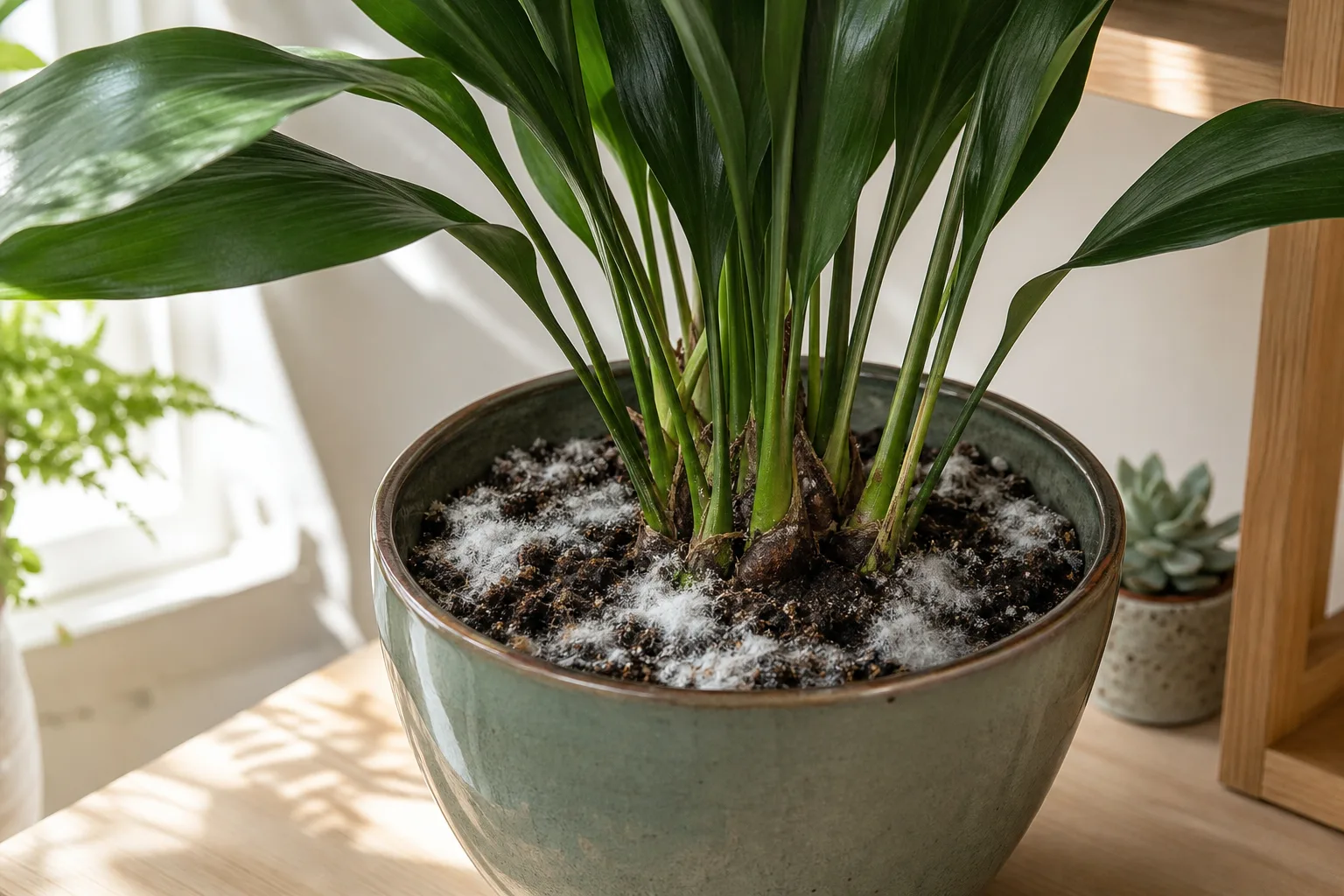
On cast iron plant, white or gray fuzz on potting mix is usually saprophytic surface growth from wet, slow-drying soil-not a leaf disease. First step: scrape off the moldy top layer, confirm the rhizome is firm at the soil line, and reset watering with depth and pot-weight checks before the next drink.
Mold on Soil on Cast Iron Plant: Causes, Checks & Fixes
This guide covers mold on soil on Cast Iron Plant. See also the general Mold on Soil guide, watering, and light pages for this plant.
Mold on Soil on Cast Iron Plant: Causes, Checks & Fixes
Quick answer
On cast iron plant (Aspidistra elatior), white or gray fuzz on potting mix is usually surface saprophytic growth, not a disease attacking leaves or stems. University guidance notes that fungi and algae on indoor potting media develop under moist conditions and are often not directly harmful to the plant when roots remain healthy.
First fix: scrape off the top quarter-inch of moldy mix and discard it. Then let the surface dry before watering again, and check that the rhizome at the soil line is firm. If rhizomes are soft or the pot smells sour, treat it as rot risk rather than cosmetic mold.
This page covers cosmetic fungus on wet topsoil in dim indoor placements. If rhizomes are mushy, the pot smells sour, or leaves collapse on heavy wet mix, start with our overwatering and root rot guides. For baseline soak-and-dry rhythm, see the cast iron plant overview and watering guide.
Why mold grows on Cast Iron Plant’s soil
Cast iron plant earned its reputation for tolerating neglect, drought, and deep shade. That same low-demand habit can create mold-prone pots indoors when watering frequency stays too high for low-light conditions.
Persistent surface moisture. Fungal and algal growth on potting media is favored by constantly moist surfaces and poor air movement.
Low-light dry-down is slow. Cast iron plant commonly sits in dim placements where evapotranspiration is reduced. Clemson HGIC recommends watering only when the top 2 to 3 inches are dry-many owners skip that check when watering by schedule. In winter or deep shade, the same pot may need 14 to 21 days or longer between drinks while growth rests; weekly calendar watering in a dark hallway keeps the surface chronically damp and mold-prone.
Thick strap leaves hide early rhizome stress. Cast iron foliage is leathery and slow to show decline. White fuzz on the soil surface can appear weeks before yellow leaves signal trouble-because the rhizome zone was already wet while the arching leaves still looked fine from across the room.
Organic debris feeds surface fungi. Saprophytic organisms use decaying material as substrate, so old strap-leaf pieces on wet soil increase visible growth.
Standing water in saucers and cachepots. Even when the top looks dry, pooled water below can keep lower media saturated and re-wet the profile. A cast iron plant in a plastic nursery pot sitting inside a tight glazed office cachepot is especially prone: water the inner pot at the sink, drain fully, and never let runoff sit in the decorative sleeve.
The “indestructible” paradox. Owners hear drought-tolerant and assume missed water is the risk. In practice, calendar watering in low light is the more common failure-wet rhizomes rot while surface mold advertises the problem.
What mold on soil looks like on Cast Iron Plant
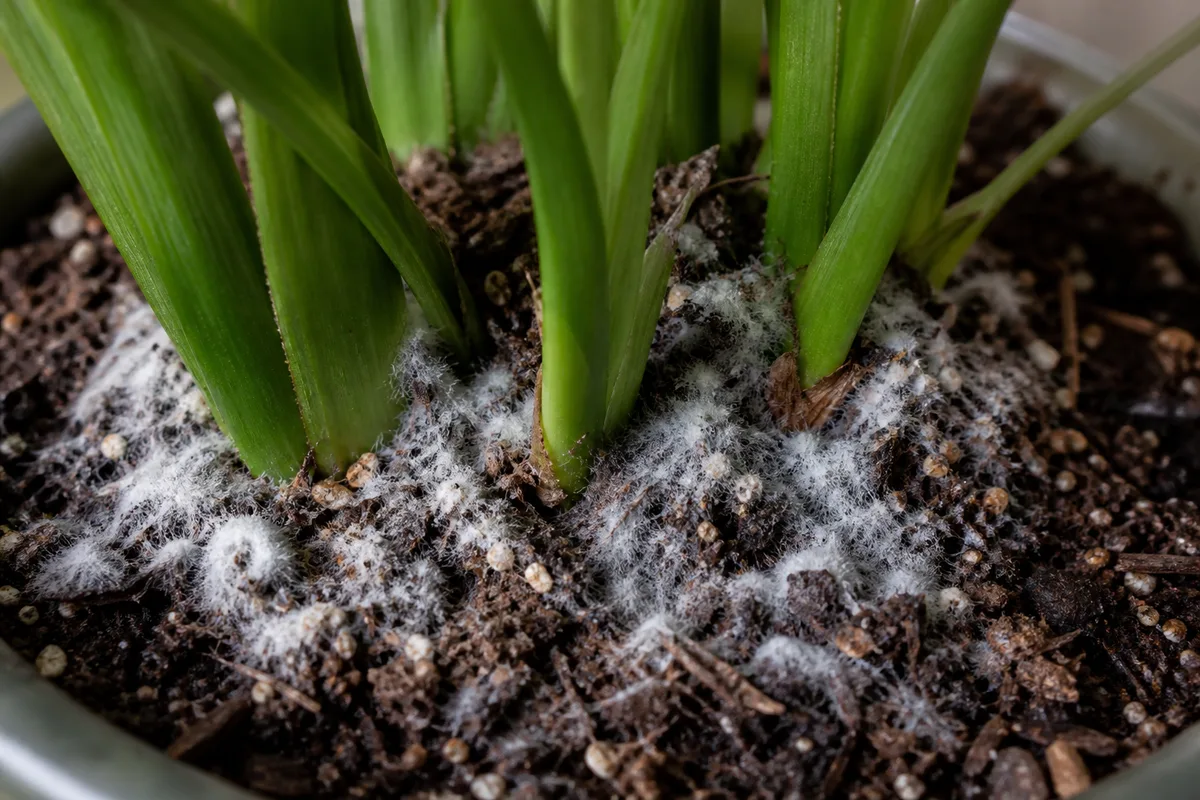
White or gray cottony fuzz on the soil surface around petiole bases - cosmetic saprophytic mold on wet topsoil, not a leaf disease.
Typical surface mold: white, gray, or pale fuzzy patches over the top layer of mix, sometimes around old leaf bases at rhizome crowns.
Typical plant state when cosmetic only: leaves stay mostly firm and upright, and rhizomes feel firm and pale cream when you brush away a little mix at the soil line.
Patterns that are not simple surface mold:
- black or mushy rhizome tissue at the crown
- sour, anaerobic odor from the pot
- multiple yellow leaves while soil remains wet and the pot stays heavy
- repeated wilting in a heavy, damp pot
Lookalikes to rule out first
Before you assume rot, rule out these common surface lookalikes:
| What you see | Likely cause | Urgency | What to do |
|---|---|---|---|
| White or gray cottony fuzz on soil only; firm rhizomes | Harmless saprophytic mold on wet topsoil | Cosmetic - scrape and dry | Stay on this page |
| Flat green film on soil | Algae in low light + constant surface moisture | Monitor - fix dry-down | Dry surface; see not enough light if placement is very dim |
| Tiny flies when you tap the rim | Fungus gnats on persistently wet media | Monitor - dry surface | See fungus gnats |
| Hard flat white crust | Mineral or salt deposits from tap water | Low - not organic mold | Flush concern; not a scrape-and-dry case |
| Soft rhizome, sour smell, yellow leaves on heavy wet pot | Root or rhizome rot / chronic overwatering | Urgent - same day | Unpot, trim mush, repot firm divisions - see root rot |
| Fresh-potting mycelium after repot | Brief saprophytic flare on organic mix | Monitor 7–10 days | Escalate only if it expands under wet conditions |
Mold vs. root rot vs. fungus gnats on Cast Iron Plant
| Sign | Surface mold only | Root / rhizome rot | Fungus gnats crossover |
|---|---|---|---|
| Fuzzy growth on topsoil | Common | Possible | Common |
| Rhizome at soil line | Firm | Soft / dark / collapsing | Usually firm early |
| Pot odor | Neutral to earthy | Sour / rotten | Damp-earthy |
| Leaf response | Mostly stable | Yellowing, limp decline | Mild stress unless severe |
| Insect activity | None | None specific | Tiny adults near soil |
| Urgency | Scrape and dry; recheck in 10–14 days | Unpot same day | Dry surface; trap adults; fix moisture |
How to confirm the cause
- Check depth moisture first. Probe near the pot rim, not at the crown. If the top 2 to 3 inches are still damp, do not water.
- Lift for pot weight. After a thorough soak, note how heavy the pot feels. As the mix dries to depth, weight drops noticeably. A heavy, cool pot many days after watering confirms chronic wet-profile-even if the surface looks pale.
- Inspect rhizome firmness. Brush away a little top mix at the soil line where leaf stalks emerge. Firm is reassuring; soft or dark tissue means escalation.
- Map the mold location. Soil-only fuzz with stable leaves is usually cosmetic. Mold plus yellowing on wet soil suggests deeper stress.
- Audit drainage behavior. Confirm open holes, no standing saucer water, and no runoff trapped in a decorative cachepot sleeve.
- Season and placement context. Deep shade and winter rest slow dry-down. If you have not adjusted interval since summer, overwatering and surface mold are linked-see not enough light when dim placement is part of the story.
Cosmetic mold is most likely when growth stays on topsoil, rhizomes are firm, and plant structure is stable.
First fix for Cast Iron Plant
Scrape off and discard the top quarter-inch of moldy media. Replace with fresh dry mix if you want a clean surface, then pause watering until the top 2 to 3 inches dry and the pot feels lighter.
Then:
- Let the surface dry before the next drink-confirmed by depth probe and pot weight, not a calendar date.
- Remove dead strap-leaf litter from soil.
- Improve airflow and spacing around the pot rim.
- Empty saucers and cachepots within 30 minutes after watering.
If rhizomes are soft, skip cosmetic cleanup and switch to root rot and overwatering recovery.
Step-by-step recovery path
Mild case (firm rhizome, stable leaves)
- Complete scrape-and-replace top layer.
- Reset watering to depth and weight checks.
- Monitor for recurrence over 10–14 days.
Recurring case (mold returns within a week)
- Remove surface debris and improve air movement.
- Confirm no standing runoff in decorative cachepots-lift the inner pot out to water at the sink if needed.
- Run pot-weight and depth checks daily until you learn the real dry-down interval for your room; in low light that often means 14 to 21 days or longer in winter, not your summer rhythm.
- Consider a partial top refresh with a better-draining blend per the soil guide.
- Review baseline moisture rhythm on the watering guide.
Escalation case (soft rhizome, sour odor, wet yellowing)
- Stop watering immediately and empty saucers or cachepot water.
- Unpot gently, shake away loose wet mix, and inspect rhizomes. Trim all mushy brown tissue with clean shears back to firm cream tissue; air-dry cut surfaces several hours.
- Repot firm divisions only into fresh, dry, well-drained mix in a pot sized to the remaining rhizome mass-not oversized.
- Full numbered rescue steps, severity staging, and discard guidance are on the root rot guide.
Do not scrape alone when rhizomes are already soft-that delays the unpot inspection roots need.
Recovery example (editorial observation)
January 2026, north-facing office hallway: A 20 cm cast iron plant in a glazed cachepot showed white fuzz across the top inch five days after a weekly winter water. Strap leaves were upright and firm; rhizomes at the soil line felt solid when probed gently. The grower scraped the surface, removed fallen leaf debris, pulled the nursery pot out to water at the sink, and tracked pot weight without watering. By day sixteen the top 2 inches were dry and the pot felt roughly one-third lighter; mold did not return after resuming soak-and-drain on a 18-day interval. The lesson matches extension guidance-surface fungus retreats when the top layer stays dry-but your interval depends on light, pot size, and season.
Recovery timeline
If the issue is cosmetic surface mold, recurrence should drop sharply within one to two weeks after dry-down correction. If mold keeps returning quickly, your moisture cycle is still too wet for conditions.
For plants that had mild overwatering stress, visible improvement is judged by stable new growth and fewer new yellow leaves over the next several weeks, not by old damaged tissue reversing.
What not to do
Do not drench fungicides for simple surface mold. Do not water to a calendar in low light without depth and weight checks. Do not leave runoff in saucers or cachepot sleeves. Do not ignore soft rhizome tissue because top fuzz looks minor-rot and surface mold can occur together. Do not scrape and immediately water again because the surface looks pale while the pot is still heavy.
How to prevent soil mold
Water only when the top 2 to 3 inches are dry, confirmed with pot weight, then soak and drain fully. In active growth most indoor clumps land near every 10–14 days between drinks; in winter or deep shade expect 14 to 21 days or longer-reduce watering frequency as growth slows while keeping the same soak-and-drain technique.
Keep the surface clean, use draining media, and prevent standing water in saucers and sleeves. Treat calendar reminders as prompts to check soil, not commands to pour. Full seasonal ranges and pot-weight method are on the watering guide.
When to worry
Treat mold as urgent when any of these appear:
- rhizome softening or blackened tissue
- sour odor from persistently wet media
- rapid yellowing or wilting while the pot remains heavy
- repeated collapse despite stopping water
- mold returning within days after corrected dry-down
Those signals indicate probable root-zone decline, not cosmetic top growth. For chronic mushy rhizomes after trim-and-repot attempts, a local extension office or master gardener helpline can help you decide whether salvage divisions remain viable.
Related cast iron plant problem guides
- Overview - species traits, dim-room placement, and care hub
- Watering - depth checks, pot weight, and seasonal 14–21-day winter intervals
- Soil - gritty mix and cachepot drainage for slow dry-down
- Overwatering - chronic wet soil and the drought-tolerance paradox
- Root rot - soft rhizomes, trim-and-repot rescue, severity staging
- Fungus gnats - flies plus persistently damp organic media
- Not enough light - dim corners that slow evaporation and extend wet surface periods
- Wilting - limp leaves on wet vs. dry soil
- Yellow leaves - lower-leaf yellowing when overwatering overlaps with mold
Conclusion
Mold on cast iron plant soil looks alarming but is usually saprophytic fungus telling you the surface has stayed wet too long-especially in dim rooms where the plant uses water slowly. Scrape, dry, remove leaf litter, and adjust watering with depth and pot-weight checks before the next drink. Reserve unpot-and-trim for soft rhizomes, sour odor, or mold that returns within days. When escalation signs appear, follow the root rot guide-on this species, fixing moisture at the rhizome zone prevents both the fuzzy surface and the rot that follows if wet habits continue.