Fungus Gnats on Cast Iron Plant: Causes, Checks & Fixes
Quick answer
Fungus gnats on cast iron plant mean the mix stays wet too long-usually from calendar watering in low light, not from a thirsty plant. First step: stop watering and let the top 2–3 inches of soil dry before you treat larvae or add another drink.
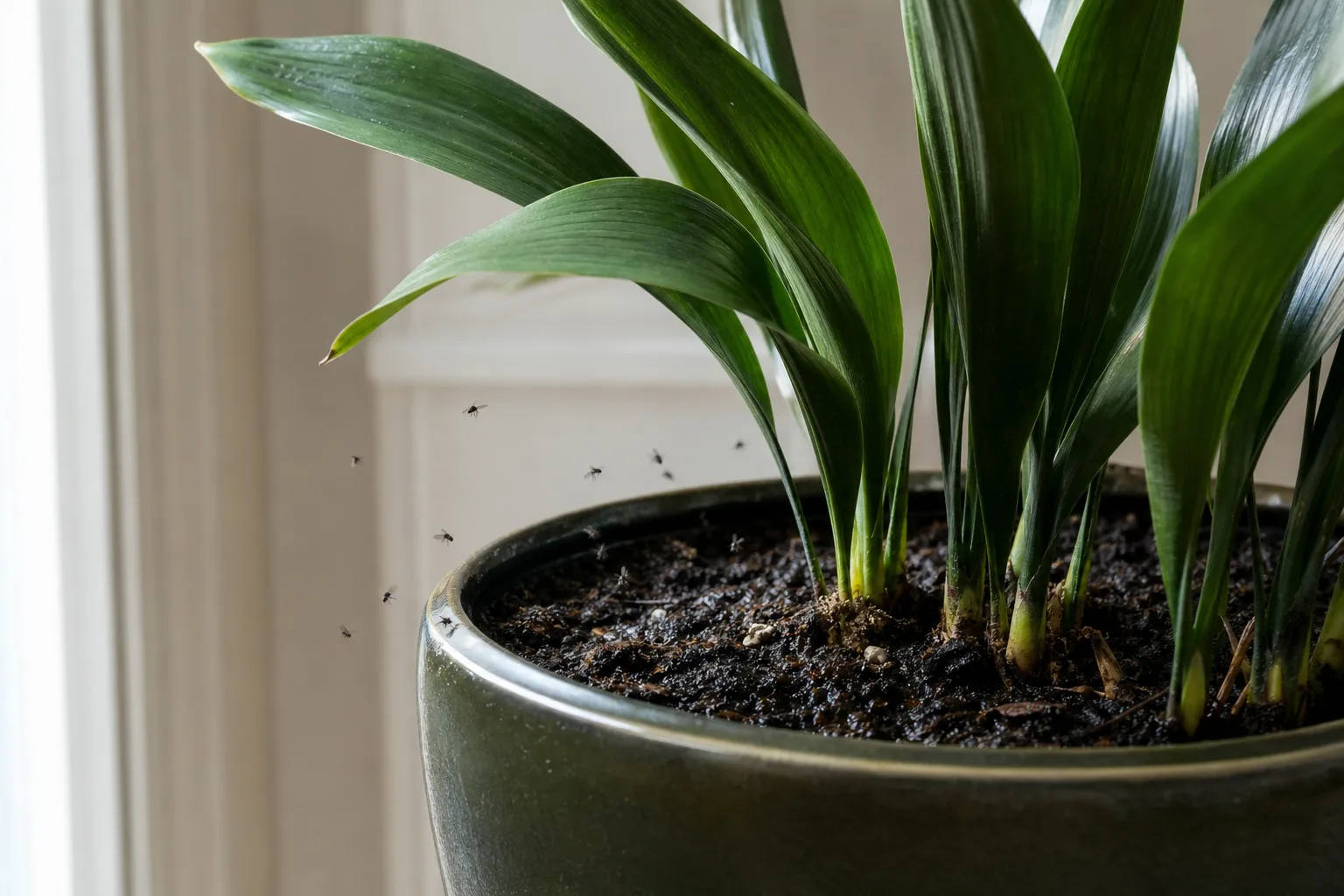
Fungus Gnats on Cast Iron Plant: Causes, Checks & Fixes
This guide covers fungus gnats on Cast Iron Plant. See also the general Fungus Gnats guide, watering, and light pages for this plant.
Fungus Gnats on Cast Iron Plant: Causes, Checks & Fixes
Quick answer
Fungus gnats on cast iron plant (Aspidistra elatior) almost always mean the potting mix stays wet too long-not that your “indestructible” plant suddenly became pest-prone. Look for tiny dark flies hovering weakly over the pot rim when you water or disturb the surface. This species is drought-tolerant and built for dry shade, but it is commonly placed in dim hallways where evaporation is slow. Calendar watering keeps the surface hospitable for egg-laying while thick rhizomes sit in damp mix below.
First step: stop watering and let the top 2–3 inches of mix dry to depth. Gnats need moisture to reproduce; drying the root zone breaks their cycle faster than spraying adults. Only after depth and pot weight confirm dryness should you add yellow sticky traps for adults or a Bacillus thuringiensis israelensis (Bti) drench for larvae.
Why gnats show up on a drought-tolerant plant
The cast iron plant paradox confuses owners. You chose this plant because it survives neglect-then flies appear, and it feels like failure. In practice, gnats are a moisture-management signal on a slow-growing, rhizome-based houseplant.
Low light slows dry-down. Cast iron plant tolerates deep shade indoors. In a north-facing office or hallway, the same watering that worked near a window may leave soil cool and damp for two to three weeks. Fungus gnats thrive in consistently wet potting soil-especially the organic surface layer where adults lay eggs.
Rhizome storage masks thirst signals. Thick underground rhizomes hold moisture between drinks. Leaves stay firm and glossy while the mix below stays wet far longer than owners expect. You do not see wilt, so you keep watering on schedule-and the surface never dries.
“Kindness killing” from beginners. New owners hear “houseplant” and water weekly. Clemson HGIC is explicit: water only when soil is dry 2 to 3 inches down, drain fully, and do not leave water in the saucer. That rhythm prevents gnats; constant light moisture invites them.
Fallen leaf debris. Wide strap leaves shed slowly at the base. Decaying foliage on damp soil feeds fungi and larvae-common on cast iron plant clumps that are rarely groomed.
Winter calendar mismatch. During slow growth, many indoor pots need longer between soaks. Colorado State Extension notes that cooler temperatures and shorter days slow plant water use-if watering frequency stays on a summer schedule, the growing medium remains moist and fungus gnat development accelerates through fall and winter.
Recent repotting or outdoor summer. Plants brought indoors after summer outdoors often carry larvae. Fresh, moisture-retentive mix in an oversized decorative pot extends surface wetness for weeks-exactly when gnat populations spike in fall. See the repotting guide for pot-sizing rules that prevent oversized volumes from staying wet.
Gnats are rarely the primary killer. The danger is the chronic overwatering that supports them and softens rhizomes over time. See the overwatering guide if yellow lower leaves and a heavy pot accompany the flies.
What fungus gnats look like on cast iron plant
What to look for: tiny dark flies about 1/8 inch long hovering over the pot rim-not on kitchen fruit or window glass. Adults rise weakly when you water or brush the soil surface.
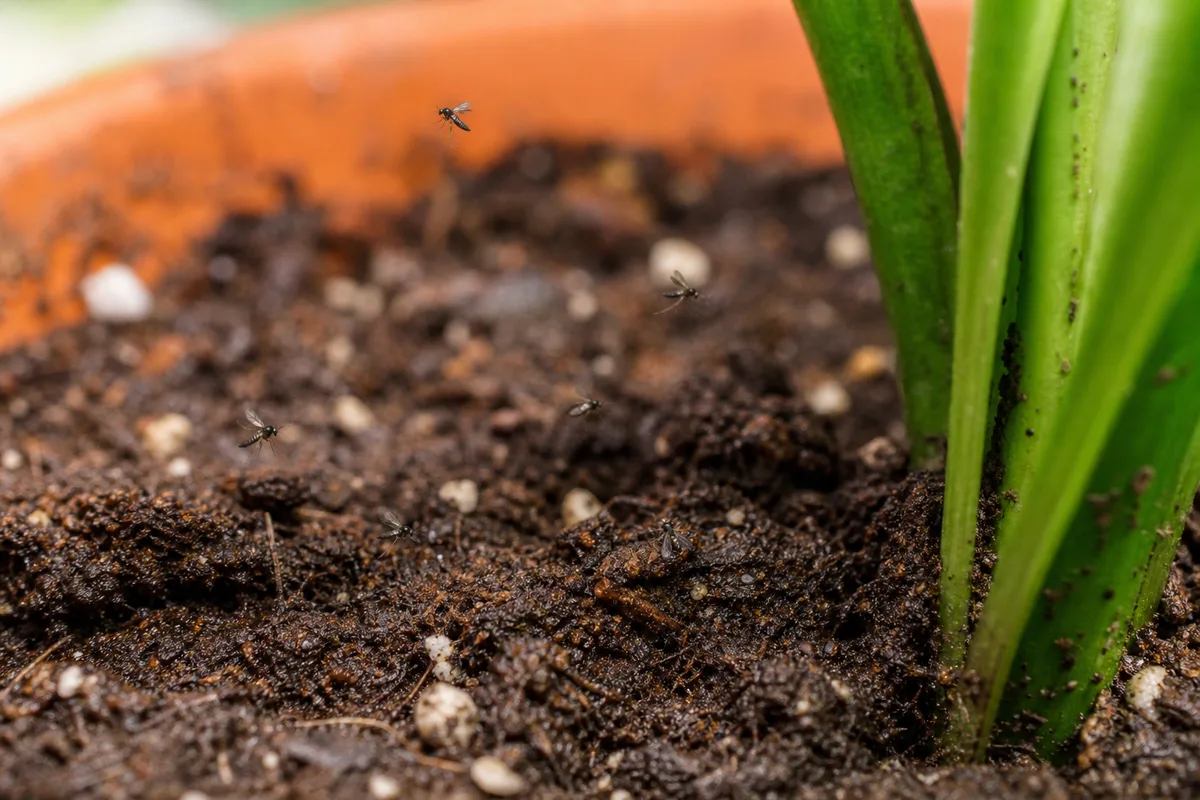
Tiny fungus gnats hovering over moist potting mix - wet-soil alarm on cast iron plant.
Adults
Tiny dark flies-about 1/8 inch long-with long legs and narrow wings. They hover weakly over the pot, especially when you disturb the soil or water. You may notice them near a cast iron plant in a dim corner before you notice any leaf change, because adult fungus gnats are weak fliers that rest on moist media surfaces.
Adults do not bite or feed. They are annoying, but the larvae in the mix cause the plant-relevant risk.
Larvae in the mix
Small translucent worms with shiny black head capsules in the top layer of soil. They feed on fungi, decaying organic matter, and fine roots. On established cast iron plant rhizomes, larval damage is usually minor unless the mix has been wet for many weeks-but wet soil that supports larvae also deprives roots of oxygen.
You rarely see larvae without a deliberate check. They stay just below the surface where moisture and organic debris collect. A potato slice on moist mix for 24–48 hours is the easiest home confirmation-translucent worms with black head capsules under the slice mean fungus gnat larvae, not fruit flies.
What healthy cast iron plant looks like during a gnat outbreak
Strap leaves stay firm, glossy, and dark green when gnats are early and rhizomes are still sound-unlike root rot, where lower leaves yellow and the clump goes limp on wet soil. Do not assume “no leaf damage” means “no problem.” The soil moisture pattern still needs correction.
Fungus gnats vs. lookalike flies
| Pest | Where you see it | Body / wings | Larvae in soil? | Fix focus |
|---|---|---|---|---|
| Fungus gnat | Hovering over moist potting mix | Tiny, delicate, weak flier | Yes-translucent with black head | Dry soil to depth; Bti for larvae |
| Fruit fly | Kitchen, compost, fruit bowl | Rounder body, reddish eyes | No in plant pots | Remove food source |
| Shore fly | Wet benches, algae on surfaces | Stocky; five light spots on wings | Yes-opaque, no distinct head capsule | Algae and surface moisture; not plant roots |
Shore flies resemble fungus gnats but are stronger fliers and feed on algae, not cast iron plant roots. On a typical indoor Aspidistra in a cachepot, assume fungus gnats until a potato test or wing inspection proves otherwise.
How to confirm fungus gnats in five checks
Work through these in order. You need moist-soil context plus flying insects or larvae-not a single stray fly.
- Flight pattern - Do tiny flies rise from the soil when you water or brush the surface? Do they reappear within a day of keeping the mix damp?
- Depth moisture - Push your finger 2–3 inches into the mix near the pot rim. Cool, clinging soil several days after your last soak confirms the habitat gnats need.
- Pot weight - A noticeably heavy pot days after watering means the mix has not dried to depth-consistent with gnat habitat and overwatering risk.
- Potato test - Place a 1-inch raw potato slice, cut side down, on the soil surface so it contacts moist mix. Check after 24–48 hours. Larvae migrate to potato tissue where you can count translucent worms with black head capsules. Remove the slice afterward so it does not mold on the pot.
- Rhizome firmness - Brush away a little mix where leaf stalks emerge. Firm, pale rhizomes suggest gnats with recoverable root-zone conditions. Mushy tissue means escalate to the root rot guide before focusing on flies alone.
Confirmed: flies over the pot, wet soil at 2–3 inches depth, larvae on potato or surface probe, or persistent adults after surface stays damp for a week.
Suspected: one or two flies with otherwise normal dry-down-monitor with a yellow sticky trap at the pot base for three days before treating.
Firm rhizome vs. mushy rhizome urgency
Use rhizome firmness-not fly count alone-to choose your path:
| Rhizome condition | Fly level | Urgency | First action |
|---|---|---|---|
| Firm rhizomes, wet mix | Many adults, larvae on potato | Routine | Dry-down to 2–3 inches; sticky traps |
| Firm rhizomes, trending dry | Few adults | Low | Continue dry-down; monitor traps |
| Partial rhizome mush | Persistent gnats | Same week | Trim mush, air-dry cuts, repot firm divisions-see root rot summary below |
| Total rhizome collapse | Gnats plus sour smell | Immediate | Salvage firm sections or discard; full root rot protocol |
First fix: dry the pot to depth
Stop watering until the top 2–3 inches of mix are genuinely dry-confirmed with finger depth and pot weight. This is the single most important action, not insecticide, not repotting, and not foliar sprays on glossy leaves.
Empty saucers and cachepots. If the mix is sodden, set the pot on folded paper towels under the drain holes to wick excess moisture. Move to slightly brighter indirect light if the plant sits in deep shade-enough to speed evaporation without direct sun that bleaches cast iron foliage.
Cast iron plant leaves are smooth, glossy, and lance-shaped-not fuzzy. Avoid pesticide sprays on foliage; water spots and residue show permanently on broad glossy blades. Keep all treatment at the soil level.
Do not increase watering because leaves look less perky while soil is still wet-that worsens gnats and rhizome stress. Do not mist leaves or run a humidifier to “help” a plant whose core problem is saturated mix.
Make this dry-down correction, then wait at least seven to ten days before stacking larval treatments. In low light, full dry-down may take two to three weeks. That patience is normal, not neglect.
Treat larvae and adults (after dry-down starts)
Once you have stopped adding moisture and the surface is trending dry, layer these tools in order.
Yellow sticky traps
Place yellow sticky cards just above the soil surface or at the pot rim. Sticky traps capture adult fungus gnats and reduce egg-laying. Replace cards when they fill or lose stickiness. Traps monitor progress-they do not replace drying the mix.
Bti soil drench
Products containing Bacillus thuringiensis israelensis (Bti)-such as Gnatrol or Mosquito Bits-target fungus gnat larvae in moist soil. Bti does not affect eggs, pupae, or adults, so repeat applications every five to seven days for at least three weeks to catch newly hatched larvae.
Apply with enough water to move Bti through the top layer where larvae feed. Follow label rates for houseplants. Bti is commonly used for fungus gnat larvae and is selective to mosquito and gnat larvae-still read the product label for indoor use and keep treated water out of pet water bowls.
Do not rely on Bti alone while soil stays constantly wet. Larvae return as soon as the surface is hospitable again.
Optional surface barriers
After dry-down is underway, a thin layer of coarse sand or fine gravel on the soil surface can keep the top drier and discourage egg-laying. Surface barriers complement dry-down, not replace it. Remove fallen cast iron plant leaves before topping-decaying debris under sand still feeds larvae.
Bottom-watering note
Bottom-watering after the surface has dried can keep the top layer less hospitable while rewetting the root zone. Set the pot in a tray of water for 15–30 minutes, then remove and empty all standing water. Only use this after depth checks confirm the plant needs a drink-not as a way to avoid drying a chronically wet pot.
Why neem oil and foliar sprays fail here
Neem oil, insecticidal soap, and hydrogen peroxide drenches are common online fixes-but Penn State Extension notes that short-contact sprays on adults do not provide sufficient long-term control when overlapping gnat generations persist in moist soil. On cast iron plant, foliar sprays also leave visible residue on glossy strap leaves without reaching larvae in the mix. Dry-down and Bti at the soil level address the actual problem; spraying leaves is cosmetic at best and damaging at worst.
Recovery timeline
Adult counts should drop within one to two weeks once the top 2–3 inches stay dry and sticky traps are in place.
Full larval control often takes three to four weeks because overlapping gnat generations hatch continuously in warm indoor air-Wisconsin Horticulture notes that modified watering plus sand or gravel barriers may need three to four weeks before populations are in check. Repeat Bti on the five-to-seven-day interval until traps stay nearly clean.
Rhizome recovery - If rhizomes stayed firm throughout, new upright spears within two to four weeks after restoring proper dry-down mean the root zone is stable. Old leaves do not “heal” from gnat presence; judge success by firm rhizomes, predictable dry-down, and new growth.
When improvement stalls - Adults still numerous after four weeks of dry-down and Bti usually means soil never dried to depth, standing water persists in a cachepot, or a neighboring infested plant is reinfecting the room. Re-run depth, weight, and rhizome checks before adding chemical sprays. If problems persist after corrected watering, contact your local cooperative extension office for region-specific pest guidance.
When this is really rhizome rot-not just gnats
Gnats can coexist with healthy cast iron plant for weeks, but the same wet soil eventually softens rhizomes.
If rhizomes are mushy, start salvage before chasing flies: stop watering, unpot gently, trim all brown or translucent rhizome tissue back to firm cream-colored cuts with disinfected shears, air-dry wound surfaces for several hours, then repot only firm divisions into fresh dry well-drained mix sized to the remaining root mass-not an oversized pot. Full numbered steps are on the root rot page.
Escalate to the root rot page if:
- Rhizomes feel mushy or collapse at the soil line
- Lower leaves yellow rapidly on still-wet mix
- The mix smells sour from drain holes
- The whole clump goes limp while the pot stays heavy
- Gnats persist despite four weeks of proper dry-down and Bti-sometimes because rotting organic matter in the mix feeds larvae
Firm rhizomes, green strap leaves, and only cosmetic fly annoyance mean you can stay on this page and the watering guide for long-term rhythm.
Surface mold or algae on wet mix often appears alongside gnats. See mold on soil if white fuzzy growth is your primary visible symptom.
Mistakes that make cast iron plant gnats worse
Do not water on a weekly calendar in a dim hallway without depth and weight checks. Do not increase watering when lower leaves yellow on wet soil-that accelerates rhizome decline and feeds larvae. Do not spray glossy foliage with pyrethrin, neem, or soap mixes; treat the soil, not the leaves. Do not leave standing water in saucers or decorative cachepots. Do not assume drought tolerance means the plant wants constant moisture. Do not repot into a larger pot to “fix” gnats while soil stays soggy-oversized volumes stay wet longer. Do not skip the dry-down step and jump straight to Bti drenches on chronically wet mix.
How to prevent fungus gnats long term
Water only when the top 2–3 inches of mix are dry, confirmed with pot weight-not a calendar date. Use well-drained mix in a pot with drainage holes sized to the rhizome mass, not an oversized decorative sleeve. Empty saucers within 30 minutes of every soak.
Terracotta vs. glazed cachepots: unglazed terracotta wicks moisture through the wall and often dries the profile one to three days faster than a glazed decorative sleeve holding the same mix in the same dim corner. If gnats recur in a cachepot, lift the inner pot after every soak and confirm no water pools in the outer shell.
Remove fallen strap leaves from the soil surface promptly. In low light, expect longer intervals between drinks-often two to three weeks or more in winter-and treat calendar reminders as prompts to check soil, not commands to pour. Reduce watering frequency when growth slows in cooler months.
Keep a yellow sticky trap at the base of plants that spent summer outdoors or were recently repotted; early adult capture prevents population spikes in fall.
Full soak-and-drain technique, seasonal ranges, and pot-weight method are on the cast iron plant watering guide. This page is the gnat diagnostic; that guide is the long-term schedule.
FAQs
Why does my “unkillable” cast iron plant have fungus gnats?
Gnats follow persistently damp mix, not plant weakness. Aspidistra elatior tolerates drought and deep shade, but slow evaporation in dim corners keeps soil wet for weeks after one soak. Adults lay eggs in that surface moisture. Gnats are an overwatering alarm on a species built for dry-down between drinks-not proof the plant is dying.
How dry should soil be before I water cast iron plant again when gnats are present?
Clemson HGIC recommends watering only when the top 2 to 3 inches of mix feel dry near the pot rim-not when the surface alone looks pale. In a dark hallway, that dry-down may take two to three weeks after you stop watering; a glazed cachepot often outlasts terracotta by several days. Combine depth probe with pot weight: a light pot plus dry soil at depth breaks the gnat life cycle.
Can fungus gnats damage cast iron plant rhizomes?
Larval feeding is usually minor on established rhizomes, but chronic wet soil that attracts gnats also starves rhizomes of oxygen and invites rot. If rhizomes feel mushy at the soil line while gnats swarm, treat it as a root-zone crisis-not a cosmetic fly problem. See the root rot guide if tissue softens.
How do I confirm fungus gnats and not fruit flies or shore flies?
Fungus gnats are tiny, weak fliers hovering over moist potting mix. Shore flies are stockier, faster, and have five light spots on dark wings; they feed on algae, not plant roots. Fruit flies cluster around kitchen fruit, not soil. A potato slice on the mix surface with translucent larvae and black head capsules under it confirms fungus gnat larvae in 24–48 hours.
How do I prevent fungus gnats on cast iron plant long term?
Check soil depth and pot weight instead of watering on a calendar. Expect 14–21 days or longer between drinks in low light or winter. Remove fallen strap leaves from the soil surface, empty saucers within 30 minutes after every soak, and keep yellow sticky traps near the pot base if adults reappear after travel or repotting.
Related cast iron plant problems
- Watering - soak-and-drain rhythm, 2–3-inch checks, seasonal frequency
- Overwatering - wet-soil signs and rhizome checks when gnats appear
- Root rot - mushy rhizomes, sour smell, trim-and-repot protocol
- Mold on soil - surface fungus on persistently damp mix
- Yellow leaves - bottom-up yellowing with wet soil
- Repotting - pot-sizing rules after fall outdoor return
- Cast iron plant overview - full care hub
When to use this page vs other Cast Iron Plant guides
- Cast Iron Plant watering guide - Use for routine moisture checks before assuming fungus gnats is the main issue.
- Cast Iron Plant problems hub - Browse all 16 common issues on this species.
- Overwatering on Cast Iron Plant - Different entry point when symptoms overlap with fungus gnats.
- Mold on Soil on Cast Iron Plant - Different entry point when symptoms overlap with fungus gnats.
- Root Rot on Cast Iron Plant - Different entry point when symptoms overlap with fungus gnats.