Slow Growth on Cast Iron Plant: Causes, Checks & Fixes
Quick answer
Slow growth is normal on cast iron plant (Aspidistra elatior)-new leaves unfurl one at a time from the rhizome over weeks or months. First step: confirm whether you are seeing healthy slow push or true stagnation by checking rhizome firmness, new leaf size, soil dry-down, and light level before changing water or fertilizer.
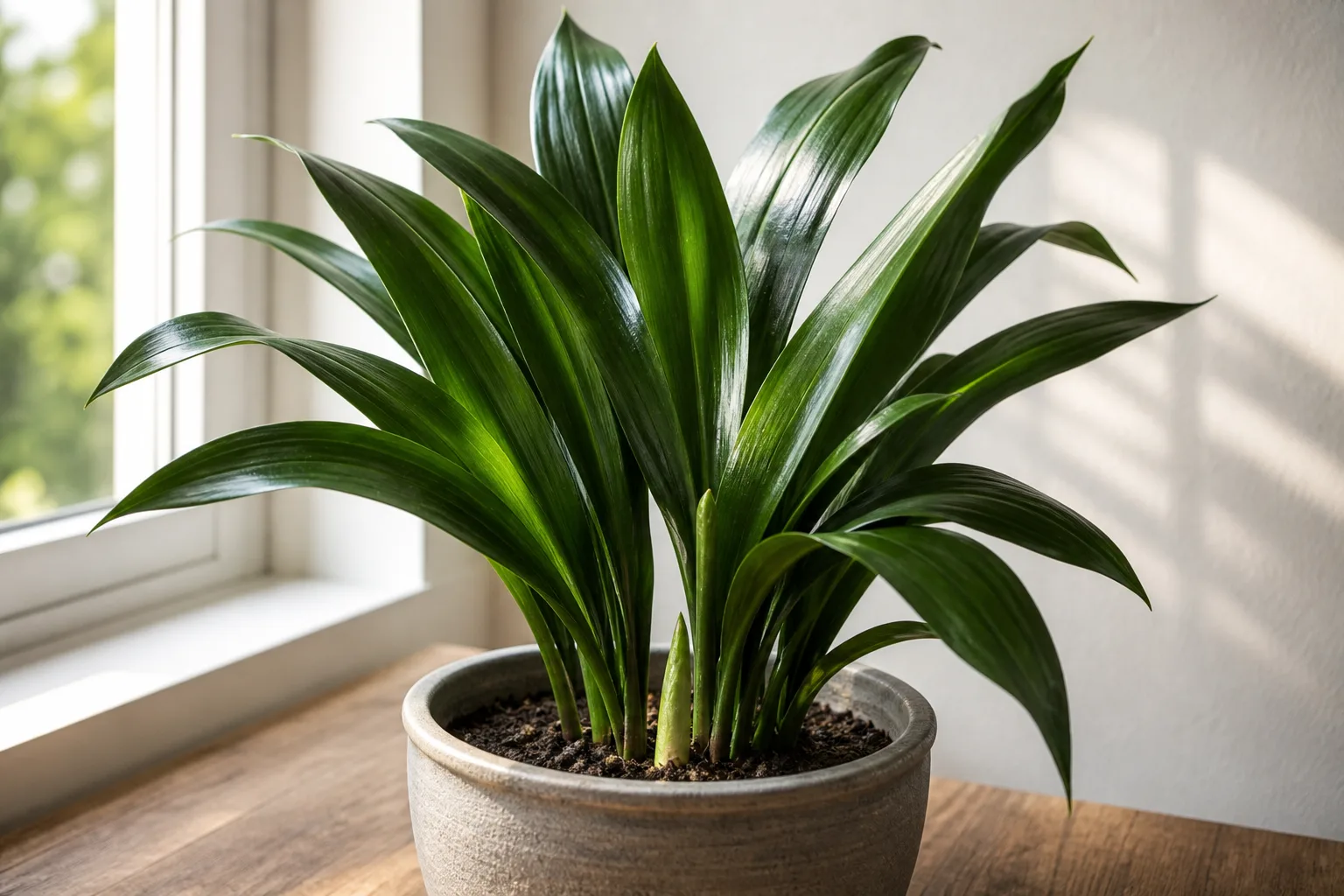
Slow Growth on Cast Iron Plant: Causes, Checks & Fixes
This guide covers slow growth on Cast Iron Plant. See also the general Slow Growth guide, watering, and light pages for this plant.
Slow Growth on Cast Iron Plant: Causes, Checks & Fixes
Quick answer
If you searched “cast iron plant slow growth,” you are probably wondering whether your plant is broken-or just being Aspidistra. On Aspidistra elatior, slow growth is usually normal, not a defect. The Missouri Botanical Garden describes a stemless, rhizomatous perennial whose arching leaves rise directly from fleshy underground rhizomes. North Carolina Extension lists cast iron plant’s growth rate as slow, and young plants may produce only one or two new leaves per year before the clump matures.
First fix: decide whether growth is healthy-slow or stalled-slow. Run a five-minute rhizome and environment check-firm rhizome at soil level, newest leaf size compared with older leaves, how long the pot takes to dry down, and whether the plant sits in usable indirect light-before repotting, fertilizing, or watering more. See the cast iron plant overview for baseline pace: new leaves unfurl one at a time over weeks or months in most homes.
Do not try to “speed up” a cast iron plant with extra water or heavy feed. That is how dim-room Aspidistras end up with wet soil and stalled rhizomes.
Is slow growth normal on cast iron plant?
Yes-almost always. Cast iron plant is marketed as tough and indestructible, but its biology is deliberately unhurried. Leaves do not sprout from a central stem; each blade emerges from a horizontal rhizome at soil level, unfurls slowly, and then sits for years looking unchanged. The RHS describes aspidistras as slow-growing foliage plants that cope in very poor light where faster houseplants would fail.
What normal looks like indoors:
- One new leaf at a time, not a flush of shoots
- Weeks to months between unfurling leaves in moderate indirect light; longer in very dim hallways or cool winter rooms
- Existing leaves stay dark, firm, and glossy while you wait
- Rhizome feels firm when you gently brush soil away at the crown-like a stiff potato, not mush
- Pot dry-down matches light: dimmer spots mean longer intervals between drinks, not a crisis
If your pothos adds vines weekly and your cast iron plant adds one leaf per season, the cast iron plant is winning at being Aspidistra-not losing at care. For propagation context, our cast iron plant propagation guide notes that divisions also push new growth slowly.
When slow growth signals a problem
Slow becomes stalled when the rhizome stops replacing leaves, new foliage shrinks, or care mistakes keep the root zone too wet or too depleted for months.
Patterns that suggest true stagnation-not patience:
- No new leaf in many months during spring and summer while the plant sits in moderate indirect light with appropriate watering
- Each new leaf smaller than the last, with thinner petioles and a softer arch
- Soil stays wet for two or more weeks in a dim corner because the plant is barely using water-often paired with yellow lower leaves
- Rhizome soft or sour-smelling at soil level after chronic overwatering
- Tight root and rhizome crowding with roots circling the drainage hole and no rhizome push despite good light-see repotting cast iron plant
- Pale or washed-out new growth on a variegated plant in very poor light-variegated forms may revert to plain green in very poor light, which can mean the plant wants slightly more indirect light, not fertilizer
Patterns that usually mean healthy slow growth:
- One new leaf every few months in a north-facing hallway with firm rhizome and stable leaf size
- Winter pause with no new leaves from late autumn through early spring in a cool room
- A mature clump that has not gained height but occasionally replaces an old lower leaf
- Slow push after recent rhizome division-disturbance often pauses growth for weeks
Overlap with other symptoms matters. Long petioles and a lean toward the window point to not enough light. Soft yellow leaves on wet soil point to overwatering or root rot. This page is about pace; those guides cover the damage patterns.
What stalled growth looks like on Aspidistra
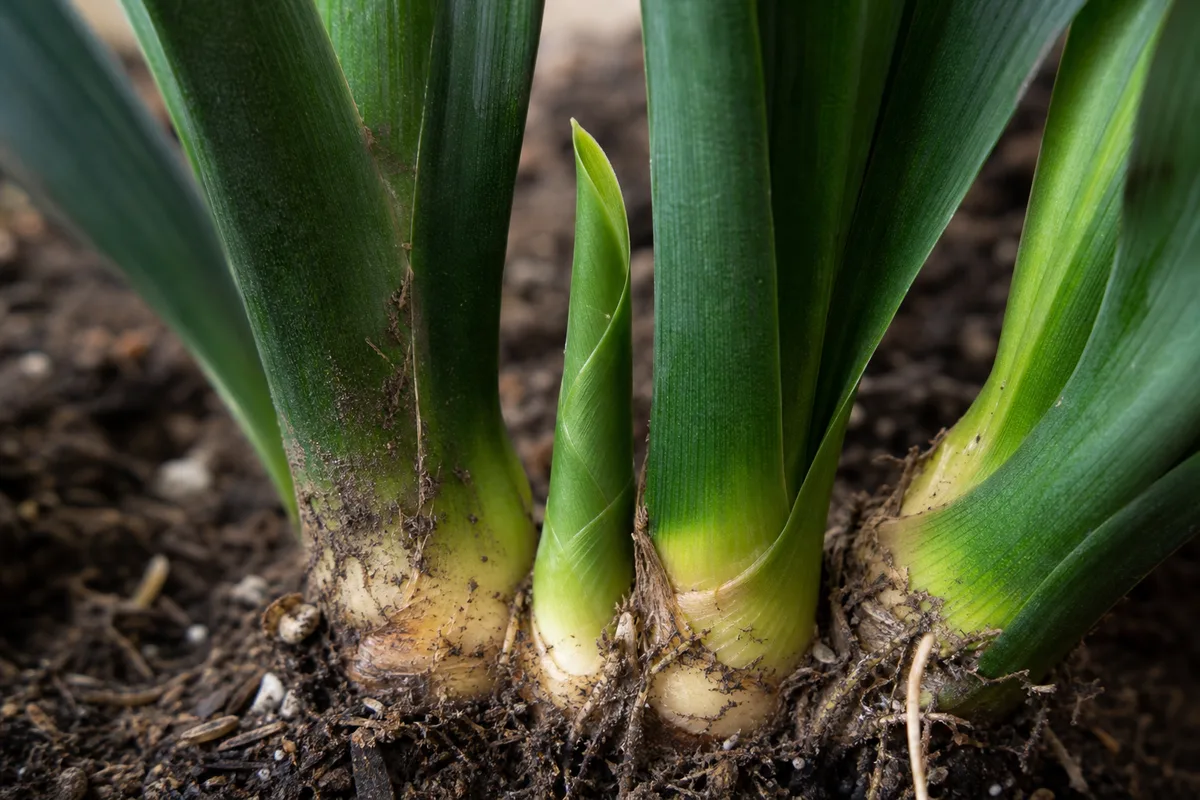
A single new leaf spear pushing from the rhizome - healthy slow Aspidistra pace, not a care failure.
Healthy slow growth and harmful stagnation can look similar from across the room-both are quiet. The difference is in new tissue at soil level and rhizome feel.
Healthy slow push:
- A single tight leaf spike or rolled blade emerging from the rhizome, even if it takes weeks to unfurl
- New leaf matches or slightly exceeds the size of the previous one
- Rhizome segments firm; soil dries on a predictable rhythm for your light level
- Older leaves may age out slowly at the bottom while the clump holds its height
Stalled rhizome:
- Flat clump with no spike at soil level for many months in active season
- New leaves absent or dramatically smaller than two-year-old foliage
- Crown area soft, or soil sour and constantly damp despite reduced watering
- Multiple lower leaves yellowing while no replacement growth appears-see yellow leaves on cast iron plant
Cast iron plant rarely shows dramatic wilt when growth stalls. It simply stops. That is why owners misread a healthy dim-corner plant as “not growing” and then overwater it into decline.
Cast iron plant growth benchmarks
Use this table to separate normal patience from a care problem. Timelines vary by home; treat ranges as guides, not deadlines.
| Signal | Healthy slow growth | Stalled growth (investigate) |
|---|---|---|
| New leaf interval (moderate indirect light) | Weeks to a few months; 1–4 leaves per year on a young plant | No new leaf through a full spring–summer growing season |
| New leaf size | Same as or slightly larger than prior leaf | Clearly smaller leaves each cycle |
| Rhizome at crown | Firm, pale tan to white | Soft, mushy, or sour-smelling |
| Soil dry-down | Top 3–5 cm dries on a rhythm matching light | Stays wet 2+ weeks in dim room |
| Existing foliage | Firm, dark green (or stable variegation) | Widespread yellowing or limp lower leaves |
| After repot or division | Pause 4–8 weeks, then resume | No push 3+ months with firm care |
| Winter in cool room | Slower or no new leaves | N/A unless paired with wet soil or rot |
Track progress with a monthly phone photo of the crown. Aspidistra rewards patience and documentation more than frequent repotting.
How to confirm the cause
Work through this checklist in order. Stop when one cause fits clearly.
- Rhizome firmness. Brush away a little surface mix at the crown. Firm rhizome tissue supports patience; soft tissue demands root inspection before any other fix.
- New leaf spike. Is any rolled leaf present at soil level? A visible spike means growth is happening-slowly. Absence through warm months in good light is more concerning.
- Leaf size trend. Compare the newest fully opened leaf to one from the outer ring. Shrinking size with no pests on undersides suggests light limitation or depleted mix-not normal slowness.
- Light audit. Could you read at plant level during daytime without a lamp? If not, read cast iron plant light requirements and not enough light before fertilizing.
- Soil moisture and pot weight. Push a finger 3–5 cm into the mix. Heavy, wet soil in a dim room explains stalled rhizomes. Light, dusty-dry soil with limp leaves may mean underwatering-see underwatering.
- Pot-bound check. Are roots circling the drainage hole or pushing the pot up? Rhizomes need room to spread; extreme crowding stalls pushes even when water and light are fine.
- Feeding history. Has the same depleted mix gone years without refresh or modest fertilizer? Very old peat can hold water unevenly and run low on nutrients-but nutrient stress is a secondary suspect after light and water.
- Recent disturbance. Repotting, division, or a cold draft can pause growth for weeks. Account for that before declaring stagnation.
If rhizome is firm, light is moderate indirect, soil dries appropriately, and a leaf spike is visible, you do not have a problem-you have Aspidistra. Put the plant back on the shelf and check again next month.
First fix for cast iron plant
Match your next action to the confirmed limiter-one change at a time.
If light is the limiter (smaller new leaves, very dark placement, wet soil from slow use): move the pot to the brightest safe indirect spot-within a few feet of a north or east window, or add a moderate grow light-before changing water or feed. Details in not enough light on cast iron plant.
If soil stays wet too long (heavy pot, soft lower leaves, sour smell): stop watering until the top half of the mix dries, confirm drainage holes are open, and inspect rhizome firmness. Escalate to overwatering or root rot if tissue is soft.
If the plant is root-bound (roots circling, no spike despite good light and water): repot into a slightly larger pot with fresh well-draining mix in spring-see repotting cast iron plant. Expect a post-repot pause; do not repot again hoping for speed.
If mix is depleted and growth is pale in good light: feed lightly during active growth per our fertilizer guide-half-strength balanced liquid, not a heavy dose.
If everything checks out and the rhizome is firm: no fix is required. Continue your normal watering rhythm and wait.
The mistake to avoid is stacking repot, fertilizer, and extra water on the same weekend because the plant “looks the same.” Make one care correction at a time so you can read the rhizome’s response.
Recovery timeline
Cast iron plant does not bounce back in days. After you correct the limiting factor, expect:
- 4–8 weeks before a visible new leaf spike appears if the rhizome stayed firm throughout
- Several months for that leaf to fully unfurl and for leaf size to normalize
- One full growing season before clump density noticeably increases
- Longer pauses after repotting or division-rhizome disturbance stalls pushes temporarily
Old leaves will not grow larger retroactively. Judge success by new growth, not old leaf color. Read the next one or two leaves from the rhizome: firm texture, appropriate size, and stable color. If yellowing stops spreading and soil dry-down normalizes, recovery is underway even when the clump still looks sparse.
If no spike appears after three months with corrected light and water, and rhizome firmness is questionable, unpot for a root inspection rather than another repot or feed cycle.
What not to do
Do not overwater a plant that “is not growing.” In low light, extra water keeps rhizomes wet for weeks-the most common way cast iron plants stall and rot. Overwatering wet soil is a common mistake when foliage looks tired.
Do not fertilize heavily to force speed. Slow-growing plants in dim rooms accumulate salts that brown leaf tips and stress roots.
Do not repot repeatedly hoping for faster growth. Aspidistras are slow-growing and need repotting only every few years when rootbound. Each disturbance resets the rhizome clock.
Do not move the plant into direct sun. Aspidistra leaves scorch in harsh light; that trade produces bleached tissue, not faster healthy growth.
Do not compare pace to pothos, philodendrons, or spider plants. Those species are built for speed; Aspidistra is built for shade-floor endurance.
Do not prune healthy leaves to “stimulate” growth. Remove only spent or damaged blades at the base.
How to prevent slow growth next time
Prevention on cast iron plant is mostly about aligning expectations and matching care to light:
- Accept that new leaves arrive slowly-track monthly crown photos instead of weekly interventions
- Place plain green plants in low to medium indirect light; give variegated forms one step brighter per light guide
- Water when the top 3–5 cm dries, stretching intervals in dim winter rooms per watering guide
- Repot only when roots circle the pot-typically every few years
- Feed lightly in warm months if new growth looks pale; skip feed in winter rest
- Rotate the pot a quarter turn when you water so future growth stays even-useful if slow growth pairs with a lean; see leggy growth when stems stretch
When to worry
Normal slowness does not need emergency action. Worry when:
- Rhizome tissue is soft, blackened, or smells sour
- Soil stays wet for weeks with spreading yellow leaves
- No leaf spike appears through a full warm season despite bright indirect light and corrected watering
- New leaves emerge damaged or stunted repeatedly after heavy feeding
- The clump loses leaves faster than the rhizome replaces them
Those patterns need root inspection or pest checks-not more patience.
Conclusion
Cast iron plant is supposed to grow slowly. One leaf at a time from a firm rhizome, with weeks or months between unfurling blades, is the species working as designed-not a care failure. Before you repot, fertilize, or water more, confirm whether you are seeing healthy slow push or true stagnation using rhizome feel, new leaf size, soil dry-down, and light level. Fix the real limiter once, then give the rhizome time. Aspidistra rewards steady hands, not hurry.
When to use this page vs other Cast Iron Plant guides
- Cast Iron Plant watering guide - Use for routine moisture checks before assuming slow growth is the main issue.
- Cast Iron Plant problems hub - Browse all 16 common issues on this species.
- Not Enough Light on Cast Iron Plant - Different entry point when symptoms overlap with slow growth.
- Leggy Growth on Cast Iron Plant - Different entry point when symptoms overlap with slow growth.
- Yellow Leaves on Cast Iron Plant - Different entry point when symptoms overlap with slow growth.