Underwatering on Cast Iron Plant: Causes, Checks & Fixes
Quick answer
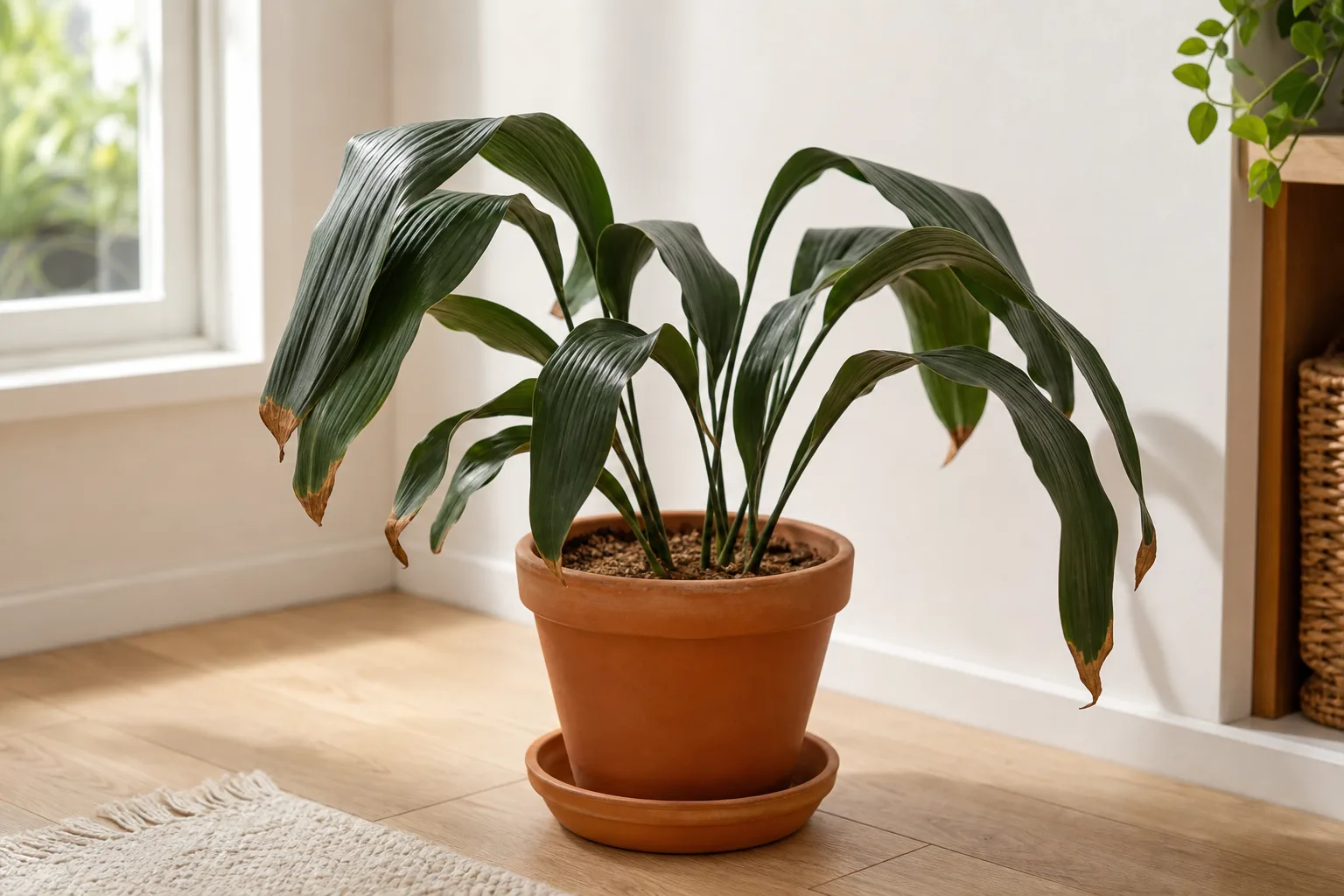
Underwatering on cast iron plant means rhizome reserves ran low while the mix stayed bone-dry too long-often after vacation neglect or fear of overwatering. First step: probe the top 2–3 inches of mix and lift the pot; dry soil at depth plus a light pot confirms thirst, not rot.
Underwatering on Cast Iron Plant: Causes, Checks & Fixes
This guide covers underwatering on Cast Iron Plant. See also the general Underwatering guide, watering, and light pages for this plant.
Underwatering on Cast Iron Plant: Causes, Checks & Fixes
Quick answer
Cast iron plant earned its indestructible reputation by surviving neglect that would kill most houseplants-months in a dim hallway, irregular attention, long dry spells. That same reputation causes owners to underwater on purpose, assuming Aspidistra elatior barely needs water. Rhizomes store moisture between drinks, but they are drought-tolerant, not drought-proof. Chronic bone-dry soil depletes those reserves, kills fine root hairs, and leaves you with limp, curling leaves and brown leaf tips while the pot feels feather-light.
First step: probe the top 2–3 inches of mix near the pot rim and lift the pot. Dry soil at depth plus a lightweight pot confirms underwatering. Cool, clinging soil at depth with a heavy pot means the opposite problem-see the overwatering guide before you pour. Once dryness is confirmed, give one full soak at the sink, let excess drain for several minutes, empty the saucer, and return to the 2–3-inch check-first rhythm on the watering guide.
Why cast iron plant gets underwatered - the neglect paradox
The species is marketed as impossible to kill, which pushes two opposite mistakes. Some owners never water because they heard cast iron plant wants almost no care. Others overcorrect after yellow leaves and stop watering entirely-even when the real problem was wet soil, not drought. Both paths can leave rhizomes running on empty.
Rhizome storage masks early thirst. Cast iron plant spreads slowly via thick underground rhizomes that hold moisture between infrequent drinks. In low light, leaves lose water gradually. A clump can look acceptable from across the room while the mix has been dust-dry for weeks and fine roots are dying back.
Vacation and office neglect are realistic triggers. A large glazed pot in a north-facing hallway may go four to six weeks without attention in winter and still show only subtle tip browning-until a hot summer week accelerates wilting. Missouri Botanical Garden notes the species tolerates less-than-regular watering, which owners misread as permission to ignore the pot indefinitely.
Fear of overwatering after yellow leaves or fungus gnats leads some growers to withhold water for too long. On cast iron plant, yellow clusters on wet soil mean excess moisture-not thirst. Cutting water when the mix is already dry compounds underwatering stress.
Bright placement on variegated cultivars dries mix marginally faster. Aspidistra elatior ‘Variegata’ in a brighter window to maintain stripe color may need checks every seven to ten days in summer, while a solid green specimen in deep shade may stretch toward three weeks. Same biology; different room physics.
Hydrophobic dry mix after prolonged drought makes underwatering worse. Peat-based nursery mix that shrinks away from pot sides repels water on the next pour-runoff without absorption-so the root zone stays dry even after you “watered.”
Underwatering is less common than overwatering on this species indoors, but it is not harmless. The fix is timed full soaks after confirmed dry-down-not perpetual drought and not daily sips.
What underwatering looks like on cast iron plant
Cast iron plant hides mild drought longer than thin-leaved houseplants because of rhizome reserves and thick, leathery foliage. By the time symptoms are obvious, the mix has usually been dry at depth for weeks-not days.
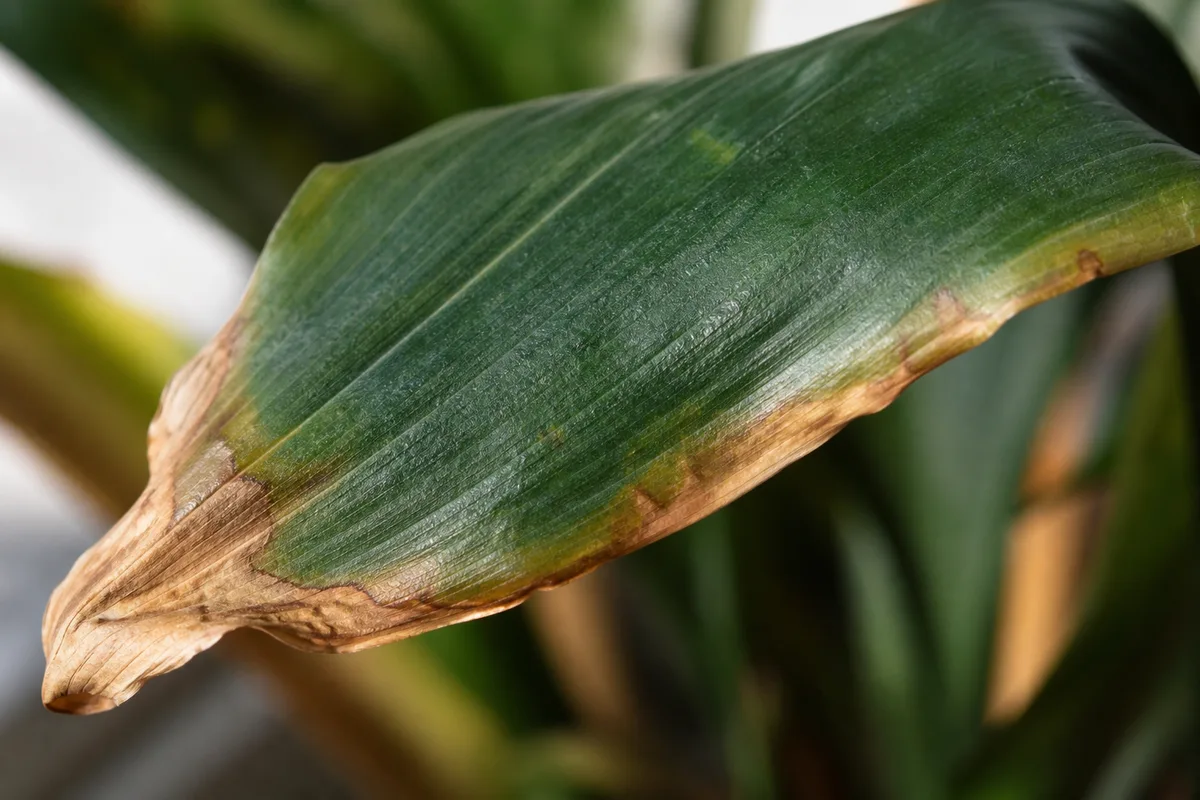
Brown crispy leaf tips or margins spreading inward on multiple arching blades, often paired with limp thin leaves and bone-dry mix pulled away from pot sides.
Leaf and soil clues
- Limp or drooping arching leaves that feel thin or slightly curled, especially on outer blades
- Brown, crispy leaf tips or margins that spread inward on multiple leaves after repeated dry cycles
- Soil pulled away from pot sides with a pale, cracked surface and dusty top layer
- Lightweight pot you can lift easily compared with its heft right after a thorough soak
- Water runs straight through the pot without darkening the mix-hydrophobic dry peat
- Stunted or infrequent new spears emerging smaller or slower than usual from the rhizome zone
One occasional brown tip on an otherwise firm clump with normal dry-down rhythm may trace to tap-water minerals or low humidity-not chronic underwatering. See brown tips if margins are the only symptom.
Rhizome clues when you inspect
Brush away a little mix where leaf stalks emerge from the clump. On an underwatered plant, rhizomes are usually firm and pale cream-not mushy. Fine root hairs may be dry and brittle, but the rhizome mass itself should still feel solid. If rhizomes are soft on wet soil, you are looking at overwatering or rot, not thirst.
NC State Extension describes cast iron plant as tolerating occasionally dry soil with good drainage-a tolerance that explains delayed visible wilt, not immunity to long drought.
What underwatering does not look like
These patterns point elsewhere:
- Multiple yellow lower leaves on cool, heavy soil - overwatering, not drought. See yellow leaves and overwatering.
- Limp foliage with wet mix at depth - root or rhizome decline from excess moisture. See wilting.
- One yellow bottom leaf every few months on stable soil - natural rhizome senescence on slow-growing Aspidistra.
- Patchy yellow-green bleaching on sun-facing leaves with dry soil - direct sun scorches leaves on shade-adapted foliage, not underwatering alone.
Confirm underwatering vs. overwatering and lookalikes
The primary question cast iron plant owners ask is whether wilt means thirst or drowning. This species confuses both because it wilts in either direction-and overwatering may cause root rot on this species far more often than a missed month of water.
Pot weight and 2–3 inch dryness check
Work through this inspection in order:
- Depth probe - Push your finger or a wooden skewer 2–3 inches into the mix near the pot rim, not against the crown. Dry soil that falls away cleanly at depth supports underwatering. Cool, clinging soil means wait-even if leaves look sad.
- Pot heft - Lift the pot. A noticeably light container days after your last watering confirms dry mix. A heavy pot with damp depth means do not add water.
- Rhizome firmness - Brush the soil line. Firm, pale rhizomes plus dry depth equals thirst. Mushy rhizomes on wet mix equals escalation toward root rot.
- Leaf pattern - Crispy tips and thin curled blades on dry soil differ from yellow clusters on wet soil.
- Smell and surface - Dust-dry, neutral-smelling mix versus sour, earthy-rot smell on persistently wet soil.
Clemson HGIC recommends watering indoor cast iron plant only when soil is dry 2 to 3 inches down-the same threshold confirms you have reached genuine dry-down before the next soak, and confirms underwatering when that zone has been dry too long.
Symptom lookalike comparison
| Pattern | Underwatering | Overwatering | Natural aging |
|---|---|---|---|
| Soil at 2–3 inches | Dry, falls away cleanly | Cool, clinging, damp | Normal dry-down rhythm |
| Pot weight | Light | Heavy days after watering | Matches your usual cycle |
| Leaf color change | Brown crispy tips; thin curled blades | Yellow lower leaves; soft feel | One bottom leaf fades slowly |
| Rhizomes at soil line | Firm, pale | Mushy if advanced | Firm |
| New growth | Stunted spears after long drought | Slow or absent on wet mix | Occasional new upright leaf |
| First action | One full soak and drain | Stop watering; dry down | Trim old leaf; maintain rhythm |
If two or more underwatering columns match, proceed to rehydration. If overwatering columns dominate, stop pouring immediately.
First fix: one full soak, then drain
Confirmed underwatering: water thoroughly once, drain completely, then wait for real dry-down before the next drink. That is the entire first fix-not daily sips, not fertilizer, not Cast Iron Plant repotting guide on day one.
At the sink, moisten the entire soil surface slowly with room-temperature water until excess runs freely from drainage holes. Let the pot drain for several minutes. Return it to an empty saucer or cachepot. Clemson HGIC is explicit: do not leave water standing in the saucer after watering.
When bottom-watering works vs. when to top-soak hydrophobic mix
Standard dry mix - Top watering at the sink is the right method. One full pass that rewets the entire root zone beats repeated half-cups that wet only the surface.
Hydrophobic mix after long neglect - If water channels down the sides without absorbing, set the pot in a basin so water reaches the lower third of the mix for twenty to thirty minutes, lift, drain fully, then finish with a light top pass once the peat has softened. Do not leave the pot submerged for days.
What not to do the same day - Do not compensate with daily small pours that keep the surface damp while the core stays confused. Do not fertilize a drought-stressed clump. Do not repot unless you discover mushy rhizomes on wet soil-which would mean misdiagnosis. Do not use ice-cold tap water on slow winter roots; room-temperature water is fine on this species’ smooth, glossy foliage.
If you misread wilt as thirst and soak into already-wet soil, you risk rhizome rot. Always confirm dry depth first.
Recovery timeline and what won’t green up again
Mild underwatering - Leaves often regain turgor within twenty-four to forty-eight hours after a proper soak when only the top 2–3 inches were dry and rhizomes stayed firm. Outer blades may still look slightly limp on day one; check again after a full night.
Moderate chronic drought - Tip necrosis and stunted spears may need one to three weeks before a firm new leaf unfurls from the rhizome. Brown crispy margins do not re-green; judge success by upright new growth with stable dark green color, not old blade color.
Severe long-term neglect - Recovery can span several weeks to a few months if fine roots died back extensively but rhizome tissue remains firm. If no new spears appear after four to six weeks on a corrected soak-and-drain rhythm with firm rhizomes, inspect for hidden rot or consider a master gardener or extension office review.
Signs of improvement - Pot weight returns to a predictable heavy-then-light cycle, soil absorbs water evenly, new spears emerge, limp blades firm up within days.
Signs of worsening - Continued collapse on light dry soil after two thorough soaks may mean root damage beyond simple thirst. Mushy rhizomes after rehydration attempts mean rot, not drought-see root rot.
How to prevent underwatering without causing rot
Prevention on cast iron plant is the same rhythm that prevents overwatering: check first, soak second, drain third, wait fourth.
Water only when the top 2–3 inches of mix are dry, confirmed with pot weight-not a calendar date. In active growth, most indoor clumps land near every 10–14 days between soaks; in winter, expect 14–21 days or longer in low light. Reduce watering in winter as growth slows, but do not interpret that as skipping checks for months.
Treat calendar reminders as prompts to probe soil, not automatic pour commands. A plant in a large glazed pot in a dim office may legitimately go three weeks between drinks in January; the same pot in a warm, bright room in July may need attention in ten days.
Full seasonal ranges, pot-weight technique, and soak-and-drain detail live on the cast iron plant watering guide. This page is the dry-soil diagnostic; that guide is the long-term schedule.
If you chronically underwater out of fear after yellow leaves, read yellow leaves first-wet-soil yellowing needs less water, not more neglect.
When to escalate - failed recovery and rhizome damage
Act promptly if:
- Rhizomes feel mushy or collapse at the soil line after you soaked-misdiagnosis or rot advanced while soil looked dry at the surface only
- The clump stays limp on light, dry soil after two thorough soak-and-drain cycles separated by a week
- No new spears emerge for six weeks despite firm rhizomes and corrected watering
- Rapid yellowing spreads on soil that is wet at depth-you may be overwatering, not underwatering
You can observe on a firm-rhizome plant with dry depth confirmation if only tips are crisp and one soak has not yet been tried. Improvement should show as firmer leaves within forty-eight hours and new growth within weeks.
For chronic failure after honest correction, contact your local cooperative extension office or a reputable master gardener program with photos of the pot weight test, depth probe result, and rhizome firmness at the soil line.
Related cast iron plant problems
- Watering - soak-and-drain rhythm, 2–3-inch depth checks, seasonal frequency
- Overwatering - wet-soil signs, rhizome checks, dry-down recovery
- Yellow leaves - bottom-up yellowing on wet vs dry soil
- Wilting - limp leaves on heavy wet mix vs light dry pot
- Brown tips - margin burn from drought, salts, or humidity
- Root rot - mushy rhizomes after misdiagnosis or chronic wet soil
- Cast iron plant overview - full care hub
When to use this page vs other Cast Iron Plant guides
- Cast Iron Plant watering guide - Use for routine moisture checks before assuming underwatering is the main issue.
- Cast Iron Plant problems hub - Browse all 16 common issues on this species.
- Wilting on Cast Iron Plant - Different entry point when symptoms overlap with underwatering.
- Brown Tips on Cast Iron Plant - Different entry point when symptoms overlap with underwatering.
- Yellow Leaves on Cast Iron Plant - Different entry point when symptoms overlap with underwatering.