Brown Tips on Cast Iron Plant: Causes, Checks & Fixes
Quick answer
Brown tips on cast iron plant are usually cosmetic and come from salt or mineral buildup, a long dry spell, dry air near a heating vent, or direct sun on shade-adapted leaves-not from needing more water on a schedule. First step: check whether the top 2–3 inches of soil are dry and whether rhizomes at the soil line are firm before changing anything.
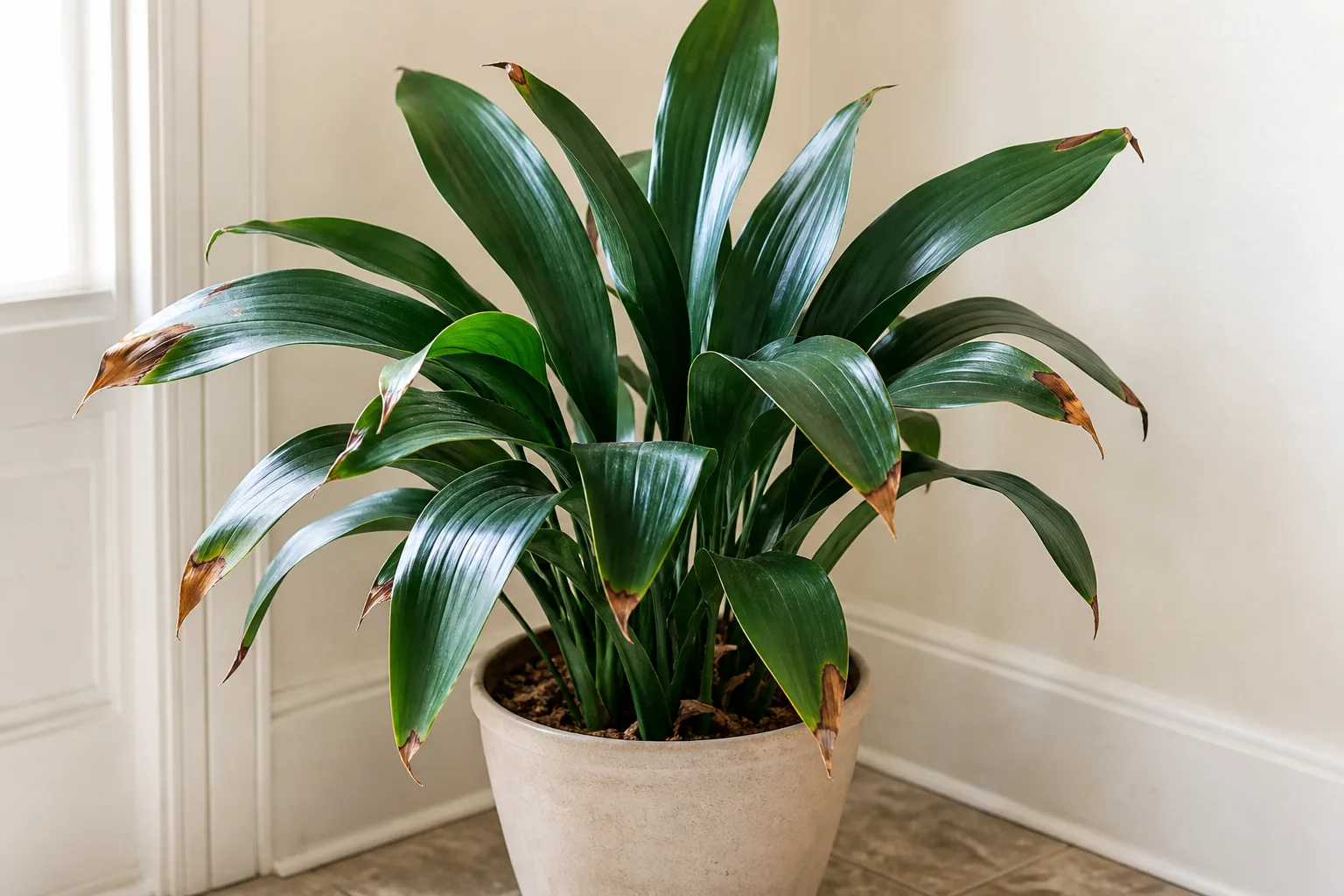
Brown Tips on Cast Iron Plant: Causes, Checks & Fixes
This guide covers brown tips on Cast Iron Plant. See also the general Brown Tips guide, watering, and light pages for this plant.
Brown Tips on Cast Iron Plant: Causes, Checks & Fixes
Quick answer
Brown tips on cast iron plant (Aspidistra elatior) are almost always environmental stress, not disease. The thick, lance-shaped leaves lose moisture at their farthest point first when salts accumulate, a long dry spell drains rhizome reserves, dry air hits a leaf beside a heating vent, or direct sun scorches shade-adapted foliage-but the rhizomes below are often still healthy.
First step: probe the top 2–3 inches of soil near the pot rim and feel rhizomes at the soil line. Dry mix plus a light pot and firm rhizomes point toward drought or salt stress. Cool, clinging soil at depth plus a heavy pot means stop-do not add water to fix tips. Cast iron plant stores water in thick underground rhizomes and is far more likely to die from overwatering than from a missed week in low light.
What brown tips look like on cast iron plant
On cast iron plant, tip burn shows as dry, tan-to-dark-brown crispy edges at the very end of individual lance-shaped leaves-the arching blades that rise directly from rhizomes at soil level. The damage typically:
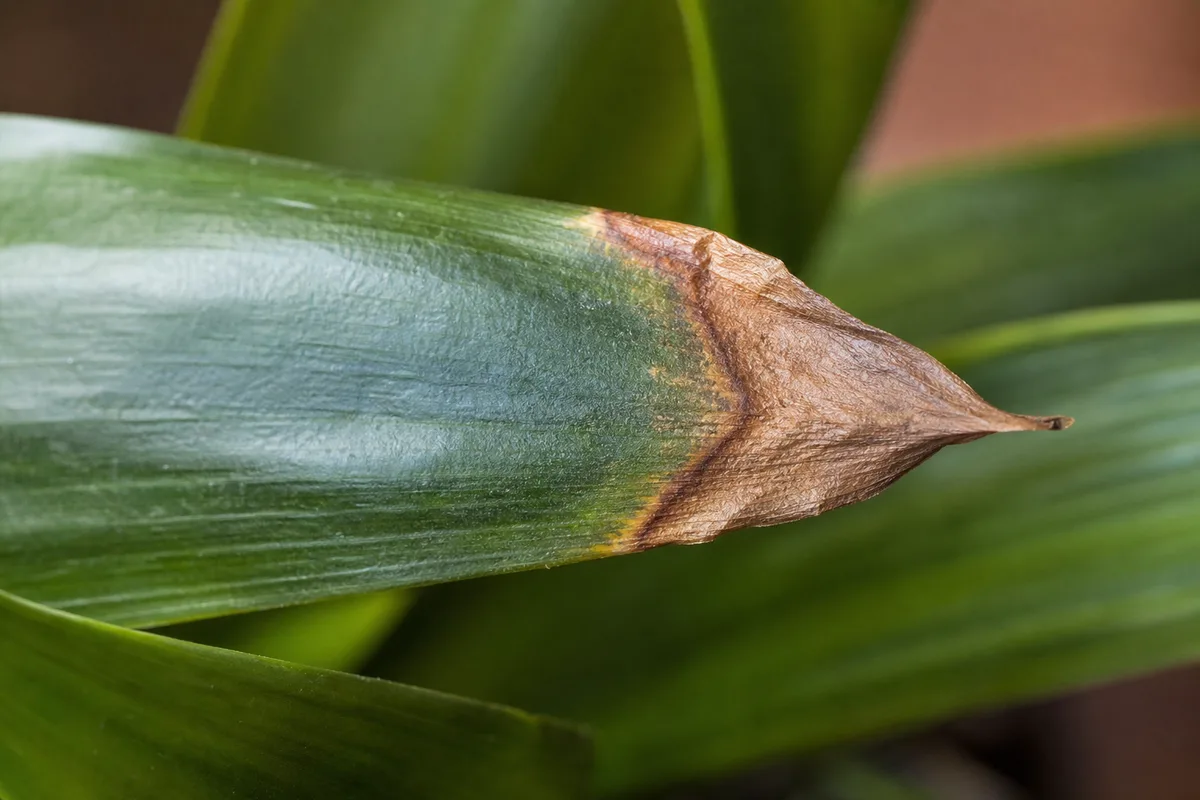
Dry crispy brown necrosis at the tip of a thick Aspidistra leaf - classic tip burn pattern.
- Starts at the leaf tip and may creep a few millimeters inward along the margin
- Affects scattered leaves while the rest of each blade stays glossy green and firm
- Appears on oldest leaves first when drought or salt stress is the driver
- Leaves the central leaf tissue leathery, not soft or wet
Because cast iron leaves are thick and slow-transpiring, tip necrosis looks papery and sharp-edged rather than mushy. You may also see a white or tan crust on the soil surface when fertilizer salts or hard-water minerals have built up-a clue that salts, not pests, are browning tips.
New leaves unfurl one at a time from the rhizome over weeks. If only older blades at the outer edge of the clump show tips, aging plus environmental stress may both be involved. If every new leaf opens already browned, look hard at water quality, recent feeding, or a move into direct sun.
Drought-related tips on oldest leaves
After an extended dry spell-weeks in bone-dry mix in a dim hallway-the plant draws on rhizome reserves and browns tips on the leaves farthest from stored moisture. The mix may have shrunk slightly from the pot sides, the pot feels light, and soil at 2–3 inches depth is dusty dry. Rhizomes should still feel firm when you brush away surface mix.
Salt and fertilizer burn
Hard tap water and fertilizer leave minerals in potting mix. Because cast iron plant is watered infrequently in low light, salts concentrate rather than flush out quickly. Tip burn that worsened within two weeks of feeding, plus white crust on the soil, strongly implicates salt stress.
Heating-vent dry air (not whole-room low humidity)
Cast iron plant tolerates normal indoor humidity better than most tropical foliage plants. Tips beside a radiator, forced-air vent, or fireplace in winter usually trace to a dry microclimate, not the humidity reading in the middle of the room. Misting the whole plant rarely fixes margins on thick leaves.
Direct sun scorch on shade-adapted leaves
Cast iron plant evolved in dry shade understory and bleaches or scorches in direct sun. Sun-facing tips or whole margins may crisp while shaded sides stay green. Aspidistra elatior ‘Variegata’ white stripes burn first in brighter placements.
Normal aging on lower leaves
One or two oldest leaves developing brown tips at the base of a mature clump can be simple senescence-especially if soil moisture, rhizome firmness, and new growth all look normal. Remove the whole leaf at soil level if it bothers you; that is cosmetic, not a crisis.
Why cast iron plant gets brown tips
Cast iron plant sends slow, delayed stress signals. Unlike a calathea that wilts within hours of dry soil, Aspidistra keeps glossy leaves firm for weeks while rhizomes draw down reserves-then tips brown long after the original stress event. That lag makes calendar watering and reactive leaf-watching unreliable.
The species is drought-tolerant, not drought-proof. Clemson HGIC advises watering indoor cast iron plants when soil is dry 2 to 3 inches down, with all excess drained from the saucer. Chronic underwatering eventually browns tips; chronic overwatering is the more common fatal mistake in dim rooms where mix stays wet for weeks.
Salt and mineral buildup is especially relevant because slow watering and low transpiration let minerals accumulate at the root zone. Combined with any fertilizer, salts pull moisture from fine roots and scorch margins furthest from the vascular supply.
Lookalike symptoms to rule out
Yellow leaves with wet soil - Multiple lower leaves yellowing while mix stays cool and heavy for days after watering points to overwatering and rhizome stress, not isolated tip necrosis. Tips may brown late in that process, but yellowing on wet soil comes first. See yellow leaves if discoloration is the primary symptom.
Wilting on wet soil - Limp leaves with heavy, damp mix mean root decline, not thirst. Adding water to fix brown tips accelerates rot. See wilting for wet-vs-dry wilt checks.
Stippling and fine webbing - Spider mites in very dry, dusty rooms cause speckled leaves, not clean margin-only necrosis. Wipe a leaf and inspect undersides before treating tips as environmental burn.
Whole-leaf scorch uniformly - Often direct sun exposure, cold draft below about 50°F (10°C), or advanced rot moving up leaf stalks-not classic tip burn from salts alone.
How to confirm the cause
Work through these checks in order before changing multiple variables at once:
- Timing - Did tips appear within two weeks of fertilizing? After a move closer to a window? During heated winter months beside a vent? After a long stretch without watering? Each pattern points to a different fix.
- Soil depth - Push your finger 2–3 inches into the mix near the pot rim per Clemson HGIC guidance. Dry, light pot: drought or salt flush candidate. Cool, clinging soil: overwatering branch-do not add water.
- Soil surface - White or chalky crust suggests salt buildup from fertilizer or hard water. No crust does not rule out water quality, but crust strongly implicates salts.
- Rhizome firmness - Brush away a little mix where leaf stalks emerge. Firm, pale rhizomes support environmental tip-burn diagnosis. Soft, dark, mushy tissue means stop and investigate root rot-not tip burn alone.
- Light exposure - Are damaged leaves on the sun-facing side of the pot? Can direct sun hit leaves midday? Sun scorch fits that pattern on this shade-adapted species.
- Placement microclimate - Is the pot directly beside a heating vent, radiator, or fireplace? Dry-air tips often follow winter heat, not whole-room humidity readings.
If rhizomes are firm, soil dries appropriately between drinks, and damage is limited to leaf margins, you are likely treating cosmetic tip burn-not root failure.
First fix for cast iron plant
Check soil moisture at 2–3 inches depth and rhizome firmness before changing watering, feeding, or placement.
If soil is genuinely dry at depth, the pot is light, and rhizomes are firm: water thoroughly once at the sink until excess runs from drainage holes, drain completely, and empty the saucer. Then resume the check-first rhythm from the watering guide-not a calendar schedule.
If white salt crust is visible or you recently overfed: place the pot in a sink and run plain filtered or rainwater through until it flows freely from drainage holes two to three times the pot volume. Let drain fully. Skip fertilizer until new growth opens clean.
If rhizomes feel mushy or soil stays wet for weeks: stop watering immediately and follow the overwatering and root rot guides-do not flush a waterlogged pot.
One clear branch first. Do not stack Cast Iron Plant repotting guide, heavy pruning, and fertilizer changes on the same day.
Step-by-step recovery by cause
After your first-fix branch, work through these steps based on what you confirmed:
- Drought recovery - One full soak-and-drain when depth tests confirm dryness. Wait for the mix to dry to 2–3 inches again before the next drink. Do not compensate with daily sips that keep the surface damp while the core dries unevenly.
- Salt flush - Run filtered or rainwater through drainage holes until excess flows freely two to three times. Pause all feeding until a new leaf unfurls with clean edges-often six to ten weeks on this slow grower.
- Heating-vent dry air - Shift the pot a few feet from the vent or radiator. Whole-room humidifiers are optional; fixing the microclimate usually matters more for cast iron plant.
- Sun scorch - Move back to low to medium indirect light. North-facing rooms, interior hallways, and spots away from south-window direct rays match this species’ shade preference.
- Water quality refinement - If tips persist after correct watering rhythm and drainage, try filtered, rested, or rainwater instead of hard tap water. Fix frequency and saucer drainage first; refine water chemistry second.
- Cosmetic trim - Snip brown tips with clean scissors, following the natural leaf curve and leaving a thin brown margin so you do not wound green tissue. Trimming is optional and does not affect recovery.
Recovery timeline
Cast iron plant is a slow grower that unfurls new leaves one at a time. After correcting the cause, expect:
- No change to existing brown tips - damaged tissue does not re-green
- Six to ten weeks before a new leaf opens with clean edges in typical indoor low light, sometimes longer in winter or very dim corners
- Gradual reduction in new tip damage if the fix matches the cause-one clean new spear is a better sign than old tips looking the same
Stress signals appear slowly on this species; recovery is equally slow. If every new leaf still browns after two months of corrected care, re-inspect for wet soil, a heating vent, direct sun, or an oversized pot that stays damp too long.
What not to do
Do not increase watering on a calendar to fix brown tips when soil at depth is still damp-cast iron plant rhizomes rot in wet mix, and extra water turns cosmetic tip burn into a serious problem.
Do not fertilize stressed plants hoping to green up tips. Salt stress gets worse with more fertilizer.
Do not mist daily on thick cast iron leaves. Surface moisture does not reach the rhizome zone and is unnecessary for whole-room humidity on this species.
Do not flush a waterlogged pot showing soft rhizomes or sour-smelling soil. That is a rot rescue, not a salt flush.
Do not assume brown tips mean the plant needs a humidifier. Fix water quality, feeding, placement, and the 2–3-inch dry-down test before chasing tropical humidity levels.
Do not stack repotting, heavy pruning, and pesticide on the same day as a major care change.
How to prevent brown tips next time
Water only when the top 2–3 inches of mix are dry, confirmed with pot weight-not a calendar date. Use well-draining mix in a pot with drainage holes sized to the rhizome mass. Empty saucers within 30 minutes of every soak.
Feed lightly during active growth and flush the pot with plain water every few months if you feed regularly. Hard tap water in slow-watering, low-transpiration pots concentrates minerals-filtered or rested water helps in problem homes.
Keep the plant in low to medium indirect light, away from hot direct sun on the glass. In winter, pull it back from heating vents. Variegated cultivars need slightly brighter indirect light to keep striping but burn faster in direct rays.
Full soak-and-drain rhythm, seasonal ranges, and depth-check technique are on the cast iron plant watering guide. Low humidity rarely drives tips on this species unless a dry microclimate is involved.
When to worry
Brown tips alone on an otherwise upright cast iron plant with firm rhizomes are cosmetic, not an emergency. Treat as urgent when:
- Browning spreads from tips to whole leaves while multiple lower leaves yellow on wet soil
- Rhizomes feel soft, hollow, or smell sour at the soil line
- Soil stays wet for weeks despite sparse watering
- The whole clump collapses or feels loose in a heavy pot
Those patterns mean rot or severe root stress-not tip burn you can trim away. See root rot before pouring more water.
Related cast iron plant problems
- Watering - soak-and-drain rhythm, seasonal frequency, and depth checks
- Overwatering - wet-soil misread when tips appear on damp mix
- Underwatering - dry mix, light pot, firm rhizomes
- Yellow leaves - bottom-up yellowing and overlap with wet soil
- Low humidity - why whole-room humidity rarely drives tips
- Root rot - mushy rhizomes, sour smell, trim-and-repot protocol
- Cast iron plant overview - full care hub
When to use this page vs other Cast Iron Plant guides
- Cast Iron Plant watering guide - Use for routine moisture checks before assuming brown tips is the main issue.
- Cast Iron Plant problems hub - Browse all 16 common issues on this species.
- Low Humidity on Cast Iron Plant - Different entry point when symptoms overlap with brown tips.
- Underwatering on Cast Iron Plant - Different entry point when symptoms overlap with brown tips.
- Overwatering on Cast Iron Plant - Different entry point when symptoms overlap with brown tips.