Low Humidity on Cast Iron Plant: Causes, Checks & Fixes
Quick answer
Low humidity is rarely the limiting factor for cast iron plant (Aspidistra elatior). Normal heated-home air around 30–40% RH is usually adequate. First step: wipe dusty leaves and inspect undersides for spider mites before buying a humidifier or watering more often.
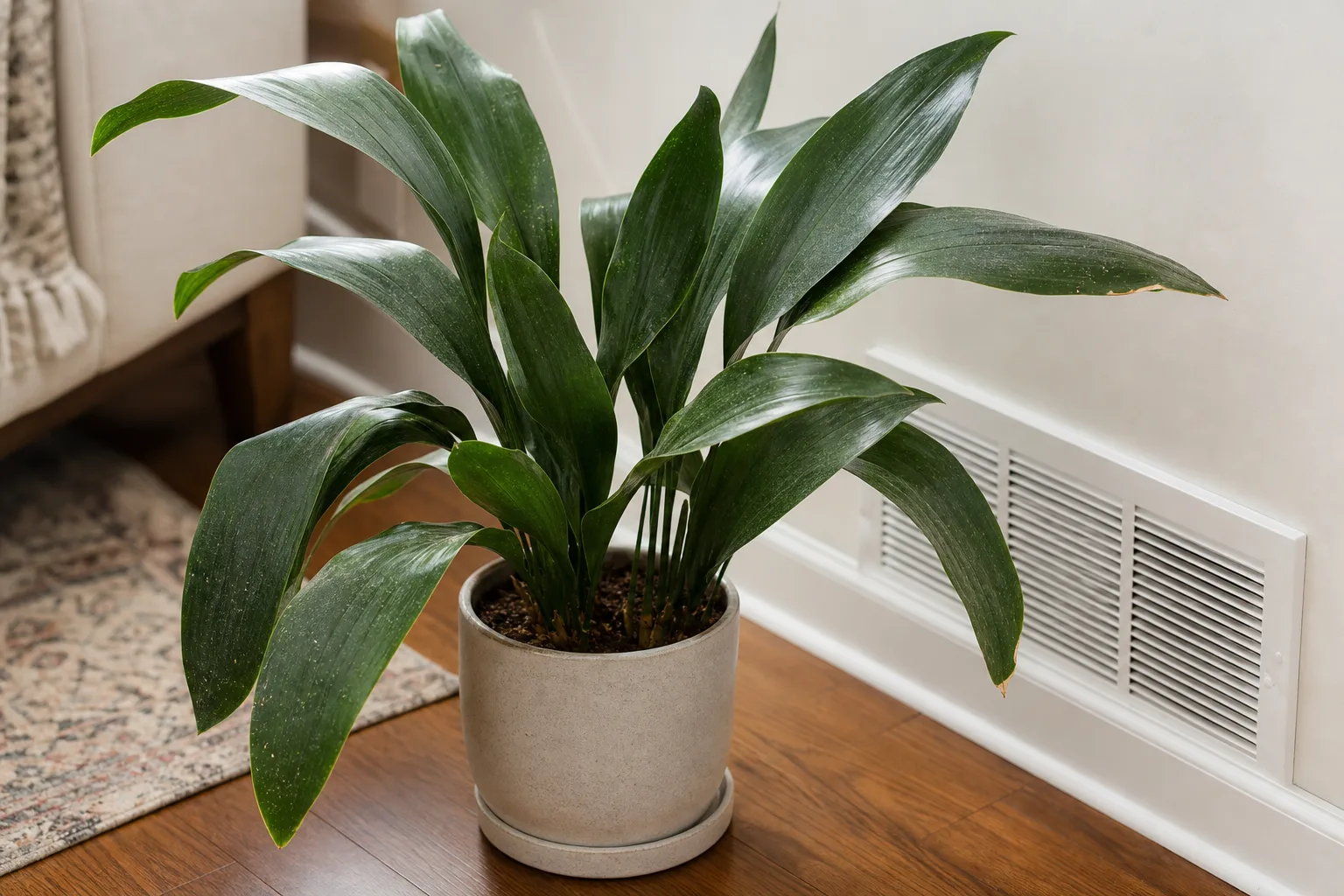
Low Humidity on Cast Iron Plant: Causes, Checks & Fixes
This guide covers low humidity on Cast Iron Plant. See also the general Low Humidity guide, watering, and light pages for this plant.
Low Humidity on Cast Iron Plant: Causes, Checks & Fixes
Quick answer
If you searched “cast iron plant low humidity,” you are probably worried about dry winter air crisping the leaves. On Aspidistra elatior, that worry is usually misplaced. The Missouri Botanical Garden lists cast iron plant among houseplants that does not require a humid atmosphere, and the RHS notes aspidistras are fine in the fairly dry air of typical homes. Normal heated-home humidity around 30–40% is adequate for this species.
First fix: wipe dusty leaves with a damp cloth and inspect the undersides for spider mites. Move the pot off radiator covers and out of direct forced-air paths. Do not buy a humidifier or water more often until you have ruled out drought, salt buildup, and pests-the mistakes owners make when they misread tired leaves as a humidity problem.
For baseline care context, see the cast iron plant overview Temperature and Humidity section. If edges are brown, start with brown tips on cast iron plant before assuming dry air is the cause.
Does cast iron plant need high humidity?
No-not in the way a calathea, fern, or prayer plant does. Cast iron plant earned its common name partly because it survives cultural abuse that would wilt thinner-leaved tropicals. Its thick, glossy, lance-shaped leaves lose water slowly. Underground rhizomes store reserves that carry the plant through irregular watering and cool, dim rooms. That physiology matches its native shaded forest-floor habitat in China and Japan, not a steamy greenhouse bench.
Institutional profiles agree. MOBOT describes cast iron plant as easily grown indoors because it tolerates a wide temperature range, low light, less-than-regular watering, and-critically-no humid atmosphere requirement. The RHS goes further: despite the tropical look, aspidistras don’t need humidity. You do not need pebble trays, daily misting, or a room humidifier for this plant to survive and look respectable in an ordinary apartment.
That does not mean air quality is irrelevant. It means humidity is rarely the first lever to pull when leaves look stressed. University of Maryland Extension correctly notes that most indoor environments lack sufficient humidity for healthy houseplants in winter-but cast iron plant is among the exceptions that tolerate those dry conditions without supplemental moisture. Treat this page as a misdiagnosis guide, not a plea to raise RH.
When dry air actually matters on Aspidistra
Dry air becomes relevant in three practical situations-not because the leaves desiccate like a fern frond, but because the environment favors secondary problems.
Forced-air microclimates. A pot on a radiator cover, directly under a ceiling heat register, or in the path of a space heater loses leaf moisture faster than the rest of the room. Indoor plants are sensitive to drafts or heat from registers. Cast iron plant tolerates fluctuating temperatures better than most houseplants, but a constant hot dry blast still stresses foliage and can pair with faster soil drying.
Dust plus very dry heat. MOBOT recommends that leaves benefit from occasional washing. Dust blocks light and gives spider mites a foothold. In warm, dry indoor air, mite populations can build on houseplants that otherwise look healthy. Spider mites prefer warm, dry environments with low humidity, and thrive in the warm, dry conditions found in most homes.
Misdiagnosis-driven overwatering. This is the most common “humidity” failure mode on cast iron plant. An owner sees dull or tired leaves, assumes dry air, and waters more often. In low light, wet mix stays soggy for weeks and rhizomes rot. The plant yellows and declines while the owner keeps chasing humidity that was never the limiting factor. If soil is wet and leaves are soft, pivot to overwatering on cast iron plant instead.
What dry-air stress looks like vs. other causes
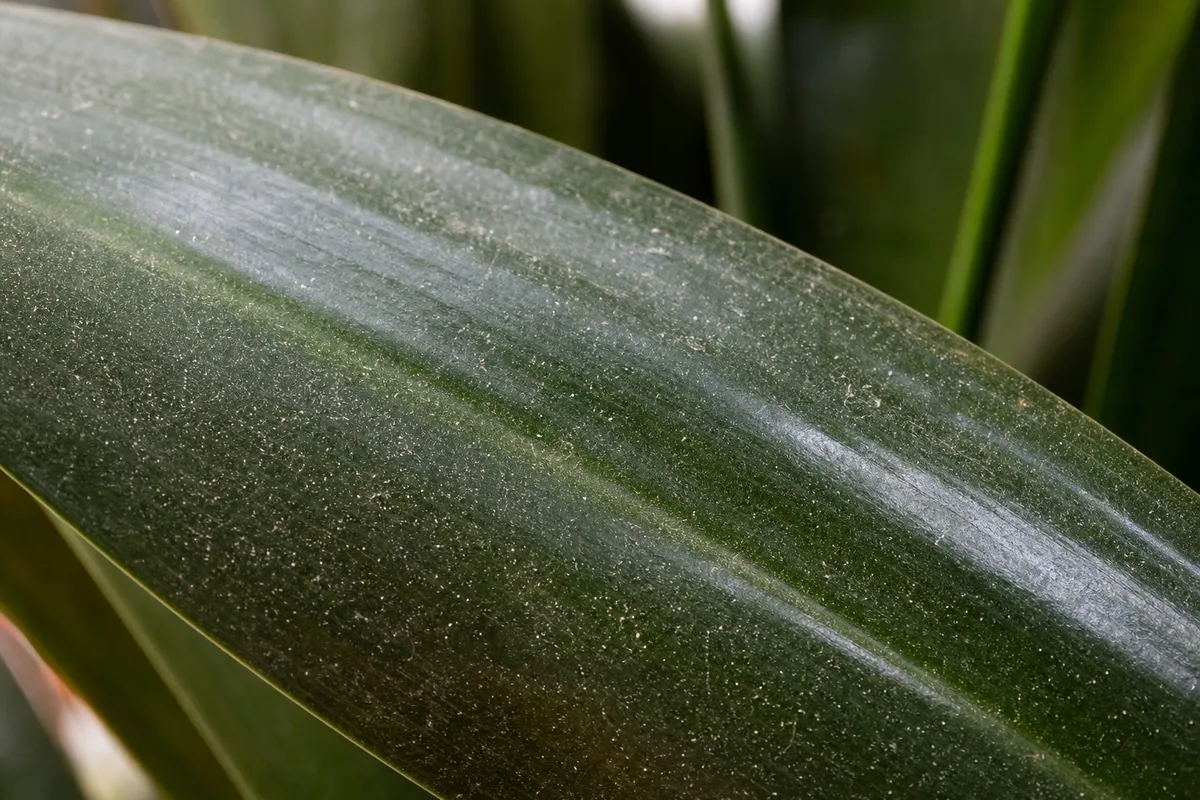
Dusty glossy leaf surface in a warm dry room - wipe leaves and inspect undersides for spider mites before assuming humidity is the limiter.
Patterns that weakly suggest dry air (or its side effects):
- Fine yellow or white stippling on leaf surfaces, worse on dusty plants near heat sources
- Delicate webbing at leaf bases or along the midrib on undersides
- General dullness on leaves in a very dry, dusty room-but stems still firm and soil follows a normal dry-down rhythm
- Damage concentrated on the side facing a heat vent or radiator, not random across the clump
Patterns that usually mean something other than humidity:
- Brown crispy tips on otherwise firm leaves with a lightweight, dry pot → underwatering
- Brown margins after heavy feeding or hard tap water → salt or fluoride stress; see brown tips
- Soft yellow lower leaves with wet, heavy soil → overwatering or root trouble
- Bleached or tan patches on the window-facing side → direct sun scorch, not dry air
- Slow growth in a very dark corner → light limitation, not humidity
Cast iron plant does not show the classic thin-leaf curl and widespread edge crisping that hits humidity-demanding tropicals in the same room. If your calathea is suffering while the Aspidistra looks merely “off,” the cast iron plant is probably telling you about water, salts, light, or pests-not ambient RH.
How to confirm the cause
Work through these checks in order before changing your whole care routine:
- Estimate local humidity (optional). A hygrometer near the pot is useful context, not a verdict. Readings in the 30–40% range are normal in heated winter homes and are adequate for cast iron plant. Worry more about hot dry microclimates than the room average.
- Map vents and heat paths. Note radiators, floor registers, fireplace proximity, and whether leaves sit in a rising heat column. Protect plants from sudden temperature changes near heat or AC sources.
- Check soil moisture and pot weight. Push your finger 3–5 cm into the mix. A light pot with dusty-dry soil explains tired leaves faster than dry air. A heavy, wet pot rules out humidity stress and points to watering or drainage issues.
- Inspect leaf undersides and wipe dust. Hold a white sheet under a leaf and tap the blade-slow-moving specks suggest spider mites. Wipe both sides with a damp cloth; if stippling is present, see spider mites on cast iron plant.
- Read the newest growth. A single firm new leaf unfurling slowly is normal for Aspidistra. Multiple new leaves with clean edges mean the plant is stable even if older blades look rough.
- Review watering and fertilizer history. Chronic drought browns tips. Heavy feeding on slow-growing plants in dim rooms builds salts. Both mimic “dry air” worry without any humidity deficit.
If humidity near the plant is ordinary, soil moisture is appropriate, and undersides are clean, low humidity is unlikely to be your problem. Stop shopping for humidifiers and audit cast iron plant watering rhythm instead.
First fix for cast iron plant in dry air
Wipe both sides of the leaves with a damp cloth, inspect undersides for mites, and move the pot away from forced-air heat.
This single action addresses the only dry-air scenarios that routinely matter for Aspidistra: dusty leaf surfaces in warm dry rooms and mite-friendly microclimates near vents. MOBOT’s occasional leaf-washing advice is especially relevant in heated homes where dust accumulates all winter.
After wiping:
- Relocate the pot at least a metre away from active heat registers or radiator covers. Stable room air matters more than hitting a precise RH percentage.
- Hold watering steady. Water when the top 3–5 cm of mix dries, then drain fully. Do not pour extra water because leaves look dull-that is how cast iron plants end up overwatered in low light.
- Treat mites if confirmed. Rinse undersides with lukewarm water repeatedly, then use horticultural oil or insecticidal soap labeled for mites if webbing persists. Dry air did not cause the infestation alone, but dry dusty conditions let it establish.
When a humidifier is optional-and when it is not needed
A humidifier is not required for cast iron plant health in a typical home. Consider one only as a secondary comfort measure if spider mites recur every winter in the same hot, dry room after leaf wiping and vent relocation-or if you keep humidity-loving plants nearby and want one device for the whole grouping. Grouping plants raises humidity in their shared area, which helps neighboring ferns more than the Aspidistra itself.
Skip daily misting as a humidity strategy. Misting is questionable as a reliable humidity fix and wet leaves in cool, crowded corners can encourage fungal spotting. A monthly wipe achieves the practical benefit-clean foliage and a mite inspection-without pretending you are raising room RH.
Recovery timeline
Cosmetic leaf damage from drought, salts, mites, or vent blast does not heal in place. Expect two to four weeks before you can judge whether conditions have stabilized: new leaves should emerge firm and dark green, stippling should stop spreading, and any mite webbing should disappear after consistent treatment.
Older blades may keep brown tips or dull patches indefinitely. That is normal. Judge success by the rhizome pushing clean replacement foliage, not by old tissue re-greening. If stems stay firm, the pot follows a healthy dry-down cycle, and new growth looks good, the plant is recovering even when you skipped the humidifier entirely.
If yellowing spreads on wet soil, the crown softens, or webbing coats new leaves despite wiping and relocation, escalate to the relevant problem guide-overwatering, root rot, or spider mites-rather than adding more humidity.
What not to do
Do not buy a humidifier before checking watering, salt buildup, and spider mites. Cast iron plant is one of the worst candidates for “humidity first” troubleshooting.
Do not overwater when leaves look tired. Overwatering wet soil is a common mistake when foliage looks stressed, and Aspidistra in dim rooms is especially vulnerable to rhizome rot.
Do not mist heavily every day instead of wiping leaves once. You will not raise ambient humidity meaningfully, and constantly wet foliage in a cool hallway invites leaf spotting.
Do not fertilize a stressed plant to “perk it up.” Slow-growing cast iron plants in low light need modest feeding at best; salts burn margins and mimic environmental stress.
Do not stack Cast Iron Plant repotting guide, pruning, pesticide, and a new humidifier on the same weekend. Make one care correction at a time so you can read the plant’s response.
How to prevent dry-air problems next winter
Prevention on cast iron plant is mostly about leaf hygiene and placement, not humidity engineering.
- Wipe leaves monthly when heating runs and dust accumulates on the glossy surface.
- Keep the pot off radiator covers and away from heat registers; avoid locating plants near heat or AC sources.
- Inspect undersides weekly during dry months-monitor houseplants for early pest colonies before webbing spreads.
- Maintain your normal watering dry-down rhythm; do not compensate for dry air at the roots.
- Quarantine new plants for a few weeks in winter; mites often arrive on other houseplants and exploit dry rooms.
If you also grow humidity-demanding plants in the same room, run a humidifier for their sake and let the cast iron plant benefit incidentally. It does not need the elevated RH, but it will not protest a 45–50% room either.
When to worry
Low humidity alone rarely kills cast iron plant. Worry when:
- Stippling and webbing spread despite repeated wiping and rinsing
- Multiple leaves yellow while soil stays wet and smells sour
- The crown feels soft at soil level after a humidity-motivated watering binge
- Every new leaf emerges damaged in a hot dry vent stream after relocation failed
Those patterns point to pests, root failure, or placement stress-not a room RH of 32%. Act on the specific diagnosis rather than chasing tropical humidity targets designed for calatheas.
Conclusion
Cast iron plant is one of the least humidity-sensitive houseplants you can grow. Dry winter air in a normal heated home is not the crisis this page title might suggest. When leaves look unhappy, check dust and spider mites, move the pot off forced-air blast, and verify watering before you buy humidity gear. The cast iron name is mostly accurate-just do not let humidity worry push you into overwatering the rhizome.
When to use this page vs other Cast Iron Plant guides
- Cast Iron Plant watering guide - Use for routine moisture checks before assuming low humidity is the main issue.
- Cast Iron Plant problems hub - Browse all 16 common issues on this species.
- Brown Tips on Cast Iron Plant - Different entry point when symptoms overlap with low humidity.