Spider Mites on Cast Iron Plant: Causes, Checks & Fixes
Quick answer
Spider mites on Cast Iron Plant show as fine stippling and webbing on arching dark leaves-often near winter heat vents even though Aspidistra tolerates dry air. First step: isolate the plant and rinse every leaf underside with lukewarm water before spraying anything.
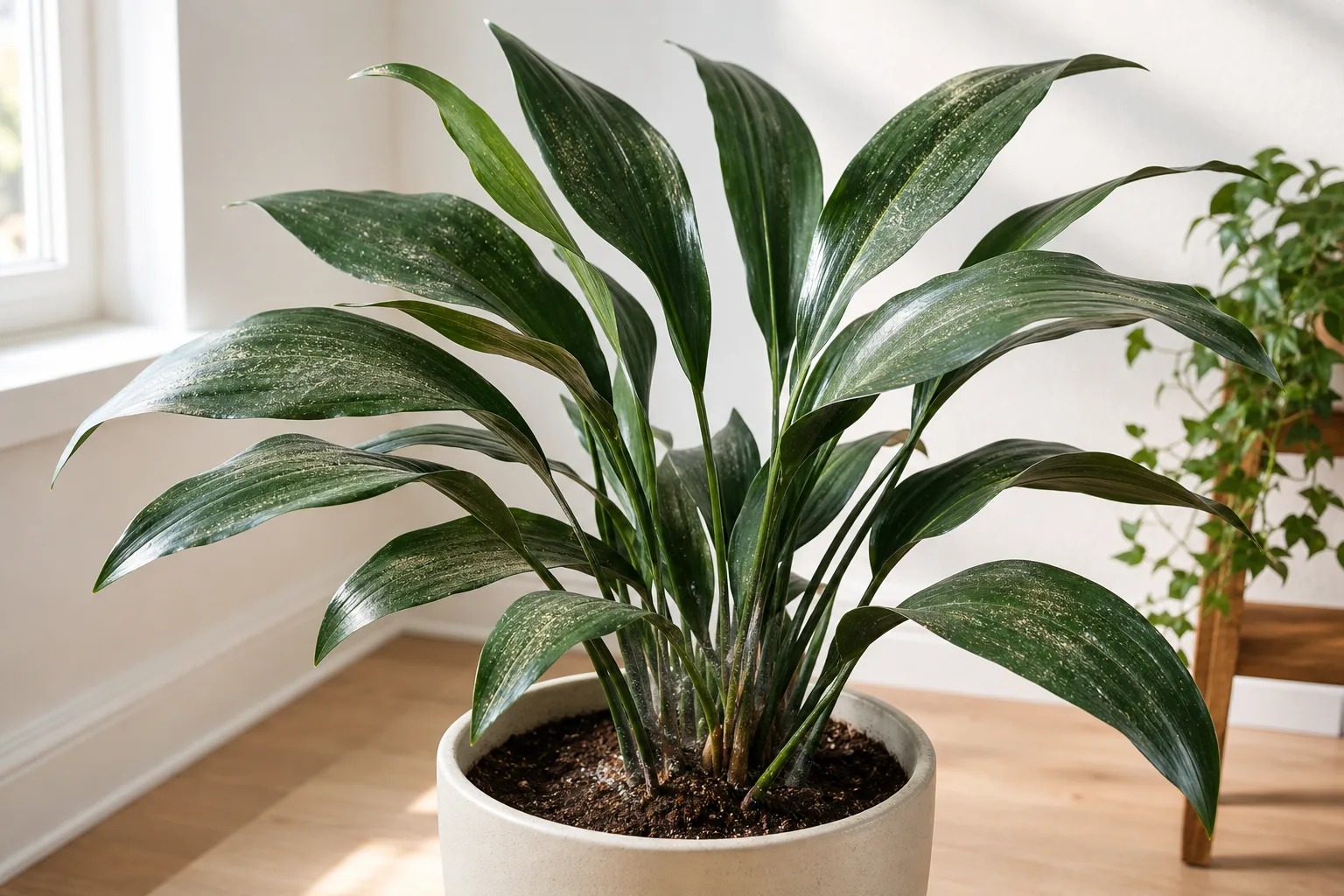
Spider Mites on Cast Iron Plant: Causes, Checks & Fixes
This guide covers spider mites on Cast Iron Plant. See also the general Spider Mites guide, watering, and light pages for this plant.
Spider Mites on Cast Iron Plant: Causes, Checks & Fixes
Quick answer
Spider mites on Cast Iron Plant (Aspidistra elatior) are almost always a dry-air pest flare-up, not proof the plant is failing. Aspidistra tolerates the fairly dry air of typical homes better than ferns or calatheas, but when winter heat, sunny glass, or a forced-air vent creates a hot dry microclimate, two-spotted spider mites multiply on the broad arching leaf undersides where sap is easy to reach.
First step: isolate the plant away from neighbors and rinse every leaf underside with lukewarm water. Knock down live mites and webbing before you reach for sprays. Dark glossy foliage hides early stippling-tilt leaves toward a window or lamp and inspect undersides along the midrib and at petiole bases near the rhizome. Only after you confirm moving specks or fresh stippling should you add insecticidal soap or horticultural oil-and plan on repeating weekly, because mite eggs survive a single pass.
For baseline care context, see the cast iron plant overview. If margins are brown without speckling, start with brown tips on cast iron plant before assuming mites.
What spider mites look like on Cast Iron Plant
Early damage is easy to miss on Cast Iron Plant because dark green, glossy, lance-shaped leaves mask pale feeding marks until colonies are well established. By the time webbing shows at a petiole base, mites have often fed for weeks on leaves you rarely flip over in a dim corner.
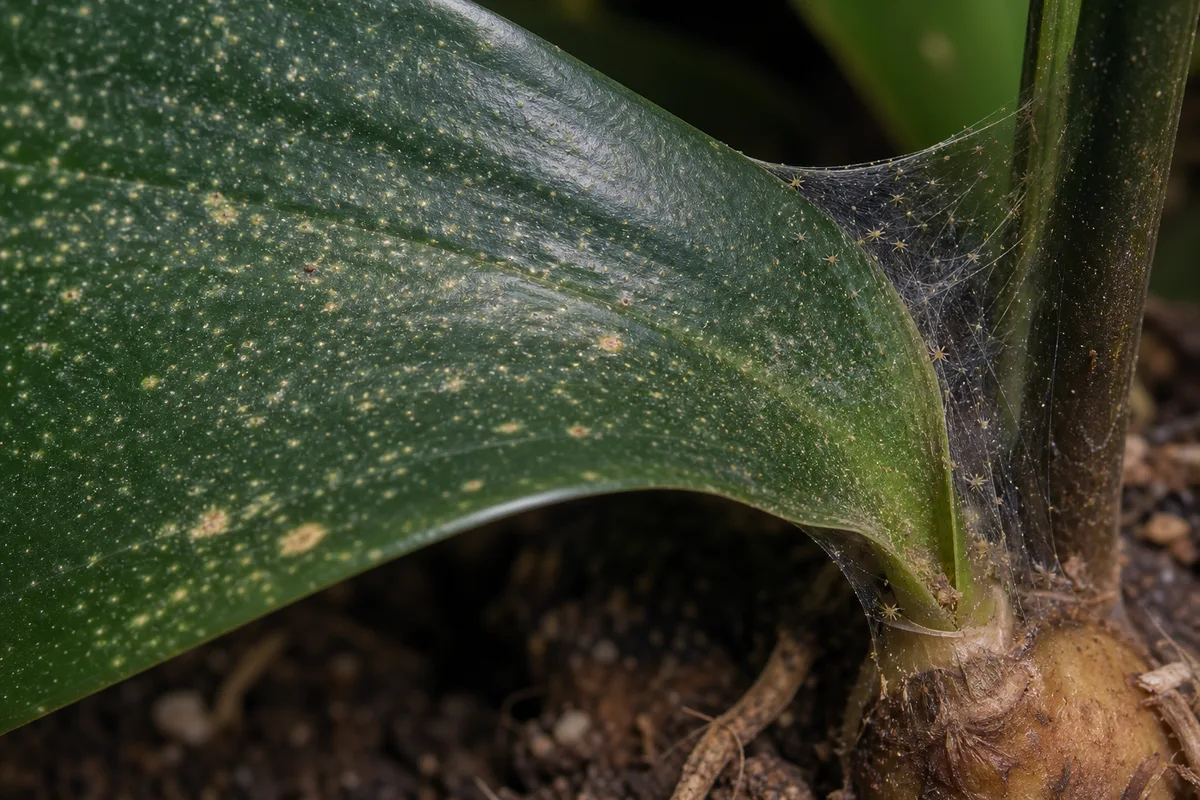
Fine yellow or white stippling on the upper leaf surface and delicate silk webbing at petiole bases near the rhizome - inspect undersides under angled light on dark Aspidistra foliage.
Typical signs on Aspidistra include:
- Fine yellow or white stippling on the upper leaf surface-each dot is a dead cell where mites pierced and drained sap.
- Dull, grayish patches on otherwise glossy blades that no longer reflect light evenly.
- Bronzing on heavily fed older leaves; severe feeding can yellow entire arching blades and trigger drop.
- Silk webbing at the base of petioles where long leaf stems emerge from the rhizome, between overlapping arching leaves, or along the midrib on undersides.
- Tiny moving dots on the paper test-mites look like grains of pepper that crawl slowly, not jump.
Cast Iron Plant leaves rise on long petioles directly from a fleshy underground rhizome-not a tight rosette crown. Mites concentrate on undersides along the midrib and at petiole bases near the soil line where arching foliage overlaps and stays dry. Lower, older leaves often show damage first because they stay in place longest and sit closest to heat sources.
Because mature leaves are thick and slow to replace, judge severity by stippling spread and webbing on new shoots, not whether every arching blade looks perfect.
Why Cast Iron Plant gets spider mites
Cast Iron Plant has a reputation for indestructibility. Missouri Botanical Garden notes it tolerates less-than-regular watering, low light, and no humid atmosphere requirement-yet mites still appear indoors when leaf surfaces dry out faster than the rest of the room suggests.
Hot dry microclimates override drought tolerance. A pot on a radiator cover, directly under a ceiling heat register, or in winter sun against glass loses leaf moisture faster than Aspidistra’s thick tissue can compensate. Spider mites prefer warm, dry conditions and reproduce quickly when humidity drops near the foliage-not in the middle of the room where a hygrometer reads 40%.
Dark foliage hides early colonies. Stippling that would scream on a pale Aglaonema leaf can look like normal gloss variation on Cast Iron Plant until you inspect undersides under angled light. That delay lets populations build before webbing appears at petiole bases.
Slow rhizome growth limits self-repair. Aspidistra pushes new arching leaves one at a time from rhizomes near the soil. Heavily stippled foliage persists for months because the plant does not shed and replace leaves quickly-so mite damage looks worse for longer even after treatment starts working.
Dusty leaves in dim corners. MOBOT recommends that leaves benefit from occasional washing. Dust blocks light and gives mites sheltered feeding sites on houseplants that otherwise look healthy in low light.
Spread from neighbors. Mites walk between touching leaves and ride on hands, tools, or draft airflow. A new plant from a shop display can introduce them before any symptom shows on your established Cast Iron Plant.
Overwatering does not cause mites, but repeated shower rinses without letting mix dry can stress rhizomes. Keep your normal watering rhythm while treating foliage-see overwatering if soil stays soggy after pest rinses.
Lookalike symptoms to rule out
Not every tired leaf is a mite. Check these before treating:
| What you see | Likely cause | Key difference |
|---|---|---|
| Fine stippling plus webbing or moving specks | Spider mites | Paper tap test confirms; damage spreads over days |
| Brown tips only, firm leaves, no speckling | Low humidity or drought | Margins crisp; no silk at petiole bases |
| White cottony clusters at rhizome-level petiole bases | Mealybugs | Waxy tufts smear pink; sticky honeydew |
| Silvery scarring and distorted new shoots | Thrips | Adults jump when disturbed; no fine silk webbing |
| Uniform white film on upper surfaces | Mineral or pesticide residue | Does not spread; no moving specks |
| Single lower leaf yellowing, firm rhizome | Normal senescence | One old arching leaf only; no stippling pattern |
Confirmed mites show stippling plus either moving specks or webbing-one sign alone is not enough if you cannot find live pests. Dry brown tips without upper-surface speckling usually point to low-humidity side effects or underwatering, not spider mites.
How to confirm the cause
Work through this inspection in order:
- Isolate the plant on a tray away from other houseplants before handling arching foliage.
- Hold white paper under a suspect leaf and tap the blade sharply. Slow-moving specks that streak when smeared confirm mites.
- Flip arching leaves and use a 10× magnifier on undersides-look for amber eggs, cast skins, and fine silk along veins and at petiole bases near the rhizome.
- Check lowest leaves and soil-level petiole joints first-Cast Iron Plant mites often start where foliage overlaps and stays dry near heat sources.
- Tilt dark glossy blades toward light-stippling is easier to see at an angle than from a top-down glance in a dim corner.
- Note the environment - heat vent within a metre, winter sun on glass, or a room humidifier turned off recently all support a mite diagnosis.
- Inspect neighbors even if they look clean; stippling on a pothos or dracaena on the same shelf means quarantine the whole group.
If you find webbing and stippling but no live mites after a thorough rinse, treat anyway-eggs hatch in cycles and colonies rebound within days in dry air.
First fix for Cast Iron Plant
Rinse leaf undersides thoroughly with lukewarm water. Place the pot in a sink or shower, support the soil so it does not wash out, and tilt the pot so water runs off leaf undersides without flooding the rhizome crown. Spray the undersides of every arching leaf until water runs clear and webbing loosens. Cast Iron Plant has smooth, leathery foliage-not fuzzy leaves-so a firm rinse is appropriate; just avoid ice-cold water that shocks slow winter growth.
Keep the plant isolated after rinsing. Let foliage dry in indirect light before returning it to a low-light corner. Wipe the saucer and pot exterior so dislodged mites do not crawl back up.
Make this one correction first. Do not repot, fertilize, and spray on the same day. You need to see whether knocking mites down with water slowed new stippling before adding chemicals.
If rinsing is not enough
When stippling spreads after two thorough washes, add a labeled insecticidal soap or horticultural oil spray, coating undersides and petiole bases until runoff. Repeat every five to seven days for at least three cycles-mite eggs survive single applications and hatch on staggered schedules. MS State Extension recommends treating two to three times at five-day intervals for thorough mite coverage on houseplants.
Move treated Cast Iron Plant out of direct sun until foliage dries; oils and soaps can mark glossy leaves that sit in hot window light while wet. Avoid homemade soap mixes; commercial insecticidal soaps are formulated to reduce burn risk on foliage plants.
Raising humidity with a pebble tray or small humidifier helps prevent new outbreaks in very dry rooms but does not replace direct mite removal on an active infestation-see low humidity on cast iron plant for when extra moisture actually matters on Aspidistra.
Recovery timeline
Cast Iron Plant heals slowly from pest stress because rhizomes push new arching leaves one at a time.
Week 1: Stippling should stop spreading after the first rinse plus one follow-up wash or soap treatment. Fresh webbing on new growth means the cycle is not broken-keep treating.
Weeks 2–3: With weekly contact sprays, live mite counts drop. Old damaged leaves stay stippled or bronzed permanently; they will not re-green.
Weeks 4–8: A clean new arching leaf unfurling from the rhizome with no stippling means the plant is winning. Aspidistra grows slowly, so full visual recovery can take two months or longer if lower leaves were heavily marked.
Judge success by new growth and absent webbing, not by old leaf color. Remove only leaves that are mostly bronze and crisp-keep partially stippled foliage if the plant is sparse, because Cast Iron Plant recovers faster with some photosynthetic surface intact.
What not to do
Do not use general insecticides labeled only for aphids or beetles-mites need miticides, horticultural oils, or insecticidal soaps that contact the pest directly.
Do not spray only the upper leaf surface. Mites feed underneath arching blades; top-only treatment leaves most of the colony alive at petiole bases.
Do not stop after one good-looking week. A single missed egg batch restarts the outbreak when dry air returns.
Do not increase fertilizer on a mite-stressed slow grower hoping for faster regrowth. Feed only after new leaves look healthy and you have finished the treatment cycle.
Do not flood the rhizome crown during repeated shower rinses. Tilt the pot, let mix drain fully, and return to your normal dry-down watering rhythm-soggy soil after pest treatment invites rhizome rot.
Do not assume Cast Iron Plant toughness means mites will disappear without treatment. Indoor colonies rarely decline on their own once webbing appears.
How to prevent spider mites on Cast Iron Plant
Prevention targets the dry dusty conditions mites prefer on arching foliage:
- Move pots off radiator covers and out of direct forced-air paths-microclimate matters more than room-average humidity on Aspidistra.
- Quarantine new plants for two weeks and inspect undersides before placing them with your Cast Iron Plant collection.
- Wipe or rinse arching leaf undersides monthly during heating season, especially on plants near windows or vents. MOBOT notes leaves benefit from occasional washing.
- Space pots so arching leaves do not touch; mites walk across contact points overnight.
- Check weekly in winter with the paper tap test on one lower leaf-early colonies are cheapest to stop before dark foliage hides the damage.
Cast Iron Plant is durable, but it is not mite-proof. Regular underside checks fit naturally into the same routine as confirming the top few centimeters of mix have dried.
When to worry
Treat as urgent when webbing covers multiple arching leaves, new rhizome shoots stay pale and small, or mites appear on several plants from the same shelf. At that point, isolate the whole group and treat every pot on the same schedule.
Consider discarding a severely defoliated, low-value plant in a shared indoor collection-bag it before moving so mites do not scatter during disposal. Most healthy Cast Iron Plants recover with consistent washing and repeated contact sprays if rhizomes stay firm and new petioles still emerge.
If stippling persists after three weekly treatments with confirmed technique, inspect again for mealybugs or thrips before switching to stronger pesticides.
Cast Iron Plant care cross-check
Spider mites and watering problems can both yellow leaves, but the patterns differ on Aspidistra:
| Signal | More likely mites | More likely care stress |
|---|---|---|
| Leaf surface | Fine upper-surface stippling; webbing at petiole bases | Uniform yellowing; brown tips without speckling |
| Soil | Normal dry-down rhythm | Wet clinging mix (overwatering) or very light pot (underwatering) |
| Rhizome | Firm; new petioles still emerge | Soft or sour-smelling rhizome tissue |
| Paper tap test | Moving specks | No specks |
A firm rhizome with stippled foliage means pests, not root rot on Cast Iron Plant. Fix the mite cycle first; only reassess watering if soil stays soggy after you stop rinsing foliage in the sink.
For the full cultural baseline while you treat, see cast iron plant watering and the overview Temperature and Humidity section.
When to use this page vs other Cast Iron Plant guides
- Cast Iron Plant watering guide - Use for routine moisture checks before assuming spider mites is the main issue.
- Cast Iron Plant problems hub - Browse all 16 common issues on this species.
- Low Humidity on Cast Iron Plant - Different entry point when symptoms overlap with spider mites.
- Slow Growth on Cast Iron Plant - Different entry point when symptoms overlap with spider mites.