Wilting on Cast Iron Plant: Causes, Checks & Fixes
Quick answer
Wilting on cast iron plant means leaves lost turgor because water is not reaching them. Lift the pot and probe the top 2–3 inches of mix first-dry, light soil needs a measured soak; wet, heavy soil with limp leaves means stop watering and check rhizome firmness at the soil line.
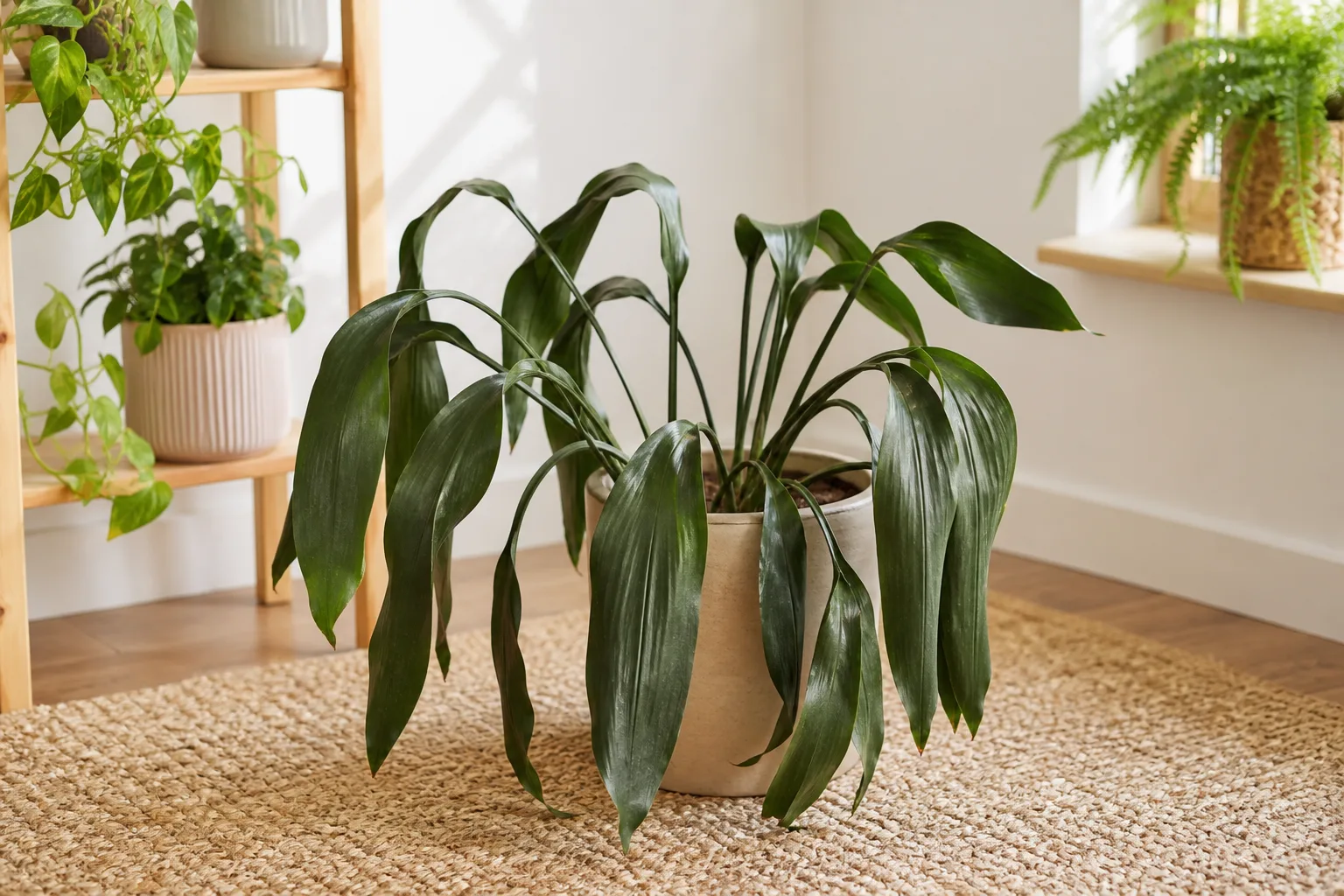
Wilting on Cast Iron Plant: Causes, Checks & Fixes
This guide covers wilting on Cast Iron Plant. See also the general Wilting guide, watering, and light pages for this plant.
Wilting on Cast Iron Plant: Causes, Checks & Fixes
Quick answer
Wilting on cast iron plant means the glossy lance-shaped leaves have lost turgor and hang limp instead of arching firmly from the rhizome. That failure almost always traces to the root zone-not because the plant automatically “needs a drink.” Cast iron plant is famously slow to show stress; when several leaves wilt at once, the underlying problem has usually been building for weeks. First step: lift the pot and push your finger 2–3 inches into the mix near the rim. A light, dry pot with limp leaves calls for one measured soak. A heavy, wet pot with wilt means rhizome stress or rot-stop watering and feel rhizome firmness at the soil line before you add more water.
What wilting looks like on cast iron plant
On a healthy Aspidistra elatior, dark green leaves rise on long petioles and arch outward with a leathery spring. Wilting changes that profile-and the pattern tells you which branch to follow.
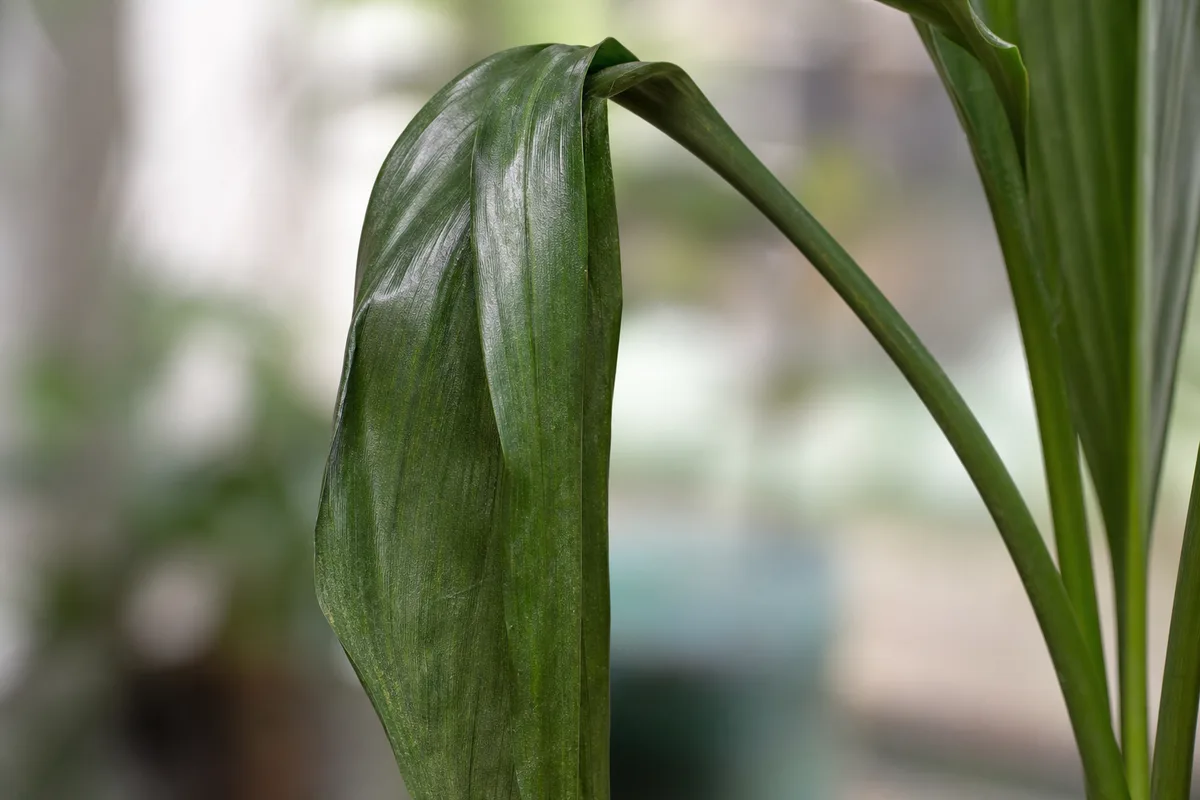
Loss of leaf turgor on arching Aspidistra blades - limp, floppy foliage that no longer springs outward from the rhizome, with wet-soil or dry-soil patterns telling opposite fixes.
Wet-soil wilt is the most common misread on this species. Multiple leaves hang limp while the mix stays dark, cool, and heavy. Lower leaves may yellow from the base upward. You may see fungus gnats near the soil surface or a faint sour smell from the drain holes. Rhizomes at the soil line may feel soft if rot is advancing. This pattern often follows calendar watering in a dim hallway, a cachepot holding standing water, or a heavy peat mix that never dries in winter.
Dry-soil wilt shows limp or slightly curled leaves on a lightweight pot. The surface mix is pale and crumbly at depth even if the top looks dusty. Leaves feel thinner but still leathery-not mushy. Because cast iron plant stores water in thick rhizomes, underwatering wilt can lag behind visible dryness by several days. This pattern often follows a long vacation, a very bright window that dried a small pot fast, or months of neglect mistaken for “drought tolerance.”
Sudden whole-clump collapse within a few days on wet soil usually points to rapid rhizome failure-not gradual thirst. If the pot was heavy and cool before collapse, treat it as an overwatering emergency even if you water infrequently.
Gradual softening over weeks on moist soil in deep shade can reflect insufficient evaporation keeping roots oxygen-starved. The leaves look tired before owners notice anything wrong-which matches how slowly this species signals distress.
Why cast iron plant wilts (and why it is uncommon)
Cast iron plant earned its nickname by surviving neglect that kills most houseplants. That reputation creates a diagnostic trap: owners assume wilt means thirst, or assume the plant cannot wilt at all. Both are wrong.
Overwatering and rhizome decline are the leading wilt causes indoors. Aspidistra elatior spreads by fleshy underground rhizomes that store moisture but rot when soil stays saturated. In low light-where this plant is commonly placed-evaporation is slow and wet mix persists for weeks. Saturated soil drives out oxygen; decaying rhizomes cannot move water to leaves even when the pot feels full. Owners see limp foliage and pour more water, which accelerates collapse.
Underwatering is less common but real after prolonged drought. Rhizomes eventually deplete stored moisture, and fine root hairs die back. Without working roots, even a later deep watering cannot restore turgor instantly.
Why wilt is relatively rare on healthy plants: Cast iron plant uses water slowly and tolerates drought. Rhizomes buffer short dry spells, and leaves lose moisture gradually in shade. When wilt appears, it often means a chronic habit-calendar watering into already-wet soil, standing saucer water, or months without a real soak-rather than a single missed day.
Winter slow-down extends dry-down intervals. Reduce watering in winter as the plant rests-a pot that needed water every twelve days in summer may stay damp for three weeks in January. Watering on a summer calendar while the plant rests is a classic wet-soil wilt trigger.
Wilting vs drooping vs yellow leaves - which page to use
Wilting (this page) - Noticeable loss of turgor: leaves feel limp, floppy, or collapsed rather than springy. Often several leaves at once. Usually tied to a clear moisture or rhizome problem you can confirm with pot weight and a depth probe.
Drooping leaves - Milder hang on older foliage while the clump still looks mostly upright. May be natural aging of bottom leaves or early stress. See the drooping-leaves guide if the pattern is slow and partial.
Yellow leaves - Color change without full collapse. Bottom-up yellowing on wet soil strongly suggests overwatering overlap. See yellow leaves if discoloration is the main symptom.
Root rot - Mushy rhizomes, sour smell, collapse on wet soil. See root rot when inspection confirms decay.
How to confirm the cause
Work through these checks in order so you do not water a rotting plant or repot one that only needs a drink.
- Depth moisture - Insert your finger 2–3 inches near the pot rim. Dry at depth confirms underwatering; cool, clinging soil with limp leaves suggests rhizome stress or rot.
- Pot weight - Lift the pot. Light weight plus wilt equals dry. Heavy, cool pot plus wilt equals oversaturated mix or dead roots.
- Rhizome feel - Gently brush soil away at the surface and press rhizomes where leaf stalks emerge. Firm and plump is recoverable. Soft, dark, or collapsing tissue means rot may be advancing.
- Leaf pattern - Yellowing from the bottom up on wet mix strongly suggests overwatering. Even wilt across all leaves on dry mix points to drought.
- Smell and drainage - Sour odor, water sitting in a cachepot for days, or mix that stays wet a week after watering confirms chronic overwatering habitat.
- Light and placement - Deep shade slows drying. A plant three meters from a window uses far less water than one near an east-facing sill. Low light does not cause wilt directly, but it makes overwatering easier to miss.
- Recent history - Vacation dry spell, Cast Iron Plant repotting guide within two weeks, a switch to a much larger pot, or a move to a darker corner narrows the cause quickly.
- Root and rhizome inspection - If wet wilt persists after stopping water for seven to ten days, slide the plant from the pot. Healthy rhizomes are firm and pale; rotted tissue is brown, translucent, or slimy.
| Signal | Wet-soil wilt | Dry-soil wilt | Rhizome rot |
|---|---|---|---|
| Top 2–3 inches of mix | Cool, damp, clings to finger | Dry, crumbly, falls away | Often wet and sour-smelling |
| Pot weight | Heavy between waterings | Light | Heavy; may not dry for weeks |
| Rhizome at soil line | Softening if advanced | Firm | Mushy, dark, or collapsing |
| Lower leaves | Yellow from base up | Thin, limp, may brown at tips | Yellow, brown, or collapsed |
| Urgency | Stop water now | Water when confirmed dry | Trim rot, repot; may be urgent |
Confirmed dry wilt: dry at 2–3 inches, light pot, firm rhizomes. Confirmed wet wilt: moist mix, yellow lower leaves, heavy pot, or soft rhizomes. Suspected rot: sour smell, mushy rhizomes, collapse despite infrequent watering calendar.
First fix for cast iron plant
Lift the pot and probe 2–3 inches into the mix before any other action. That single test separates opposite fixes.
If the mix is dry and the pot is light, water thoroughly until a small amount drains from the holes, then empty the saucer or cachepot within 30 minutes. Do not flood a severely dry plant repeatedly in one hour; one good soak, then wait several days and reassess turgor. Cast iron rhizomes rehydrate slowly-leaves may not firm for three to seven days.
If the mix is wet and the plant is wilted, stop watering immediately. Set the pot on folded paper towels to wick excess moisture from the drain holes. Move to slightly brighter indirect light if the plant sits in deep shade-slow evaporation worsens wet soil. Feel rhizomes at the soil line; if tissue is mushy, see the root rot page for trim-and-repot steps. Full wet-soil protocol is on the overwatering page.
Make one correction, then wait at least one week before stacking repotting, fertilizing, and heavy pruning together.
Step-by-step recovery by cause
Dry wilt path
- Water until a small amount drains; discard all runoff from saucers and cachepots.
- If the plant was severely dry, repeat a moderate drink after several days only if the top 2–3 inches are dry again-not sopping wet throughout.
- Keep the plant in low to medium indirect light-its normal range-while rhizomes rehydrate.
- Resume normal rhythm only when depth tests confirm dryness.
Wet wilt / rhizome stress path
- Stop all watering. Wick excess moisture with paper towels under the pot.
- If rhizomes are mushy when you inspect, trim decayed tissue with clean shears, repot into fresh well-drained mix in a pot sized to the remaining rhizomes, and keep the mix barely moist-not wet-while the plant stabilizes.
- Remove soft lower leaves that will not recover; they drain energy and harbor rot.
- Wait for firm new shoots from the soil line before fertilizing.
Winter overwatering path
- Recognize that slow winter growth means the same pot may need water every 14–21 days or longer-not your summer interval.
- Stop calendar watering; run depth and weight checks instead.
- Empty cachepots and saucers after every future soak.
Recovery timeline
Mild dry wilt often shows firmer leaves within three to seven days after proper watering, though severely dehydrated plants may need two measured cycles.
Rhizome stress or chronic overwatering recovery spans one to four weeks when rhizomes are still mostly firm and enough healthy tissue remains. Yellow lower leaves rarely green up; new upright shoots from the soil line are the benchmark.
Advanced rot may take several weeks after trim-and-repot, or the clump may not recover if most rhizome tissue was mushy. Honest limit: if rhizomes collapse to a soft mass on wet soil, salvage healthy divisions if any remain.
What not to do
Do not pour more water onto a wilted cast iron plant when the mix is already wet-that is the most common way owners turn reversible stress into rhizome rot. Do not assume underwatering because you “only water once a month”; low-light pots can stay wet that entire interval. Do not move a wilted plant into harsh direct sun; direct sun bleaches leaves easily. Do not fertilize a stressed plant before you know whether rhizomes are healthy. Do not repot on day one unless rot, failed mix, or severe compaction is confirmed. Do not stack repotting, pruning, and pesticide on the same day.
How to prevent wilting next time
Water when the top 2–3 inches of mix are dry-use your finger, a skewer, or pot weight, not a calendar. Give cast iron plant low to medium indirect light in a well-drained mix with open drain holes sized to the rhizome mass-not an oversized decorative cachepot holding standing water. Reduce check frequency in winter when growth slows; the same soak-and-drain technique applies, but the interval between drinks stretches longer. Empty saucers within 30 minutes of every watering. After travel or a missed watering, rehydrate with one thorough session rather than drowning the plant in repeated floods. Full rhythm details are on the watering guide.
When wilting is urgent
Act immediately if rhizomes feel mushy at the soil line, the mix stays wet while the whole clump collapses, or you smell sour rot from the drain holes-those signs mean decay is reaching the storage tissue that keeps this plant alive, and simple drying may not be enough.
You can wait and observe if only outer leaves are limp, rhizomes feel firm, and you have already corrected a clear dry-wilt mistake. Improvement shows as new shoots emerging upright within two to three weeks.
Cast iron plant care cross-check
| Check | Healthy baseline | Wilting red flag |
|---|---|---|
| Top 2–3 inches of mix | Dry before next drink | Wet for 14+ days while leaves limp |
| Pot weight | Light when dry, moderate after watering | Stays heavy and cool between waterings |
| Rhizome at soil line | Firm, plump | Soft, dark, or collapsing |
| Lower leaves | Occasional natural aging | Yellow on wet soil, spreading upward |
| Light | Low to medium indirect | Deep shade plus calendar watering |
| Season | Longer dry-down in winter | Summer watering rhythm kept in January |
Related cast iron plant problems
- Overwatering - primary overlap when soil is wet and leaves are limp
- Underwatering - dry mix, light pot, firm rhizomes
- Root rot - mushy rhizomes, sour smell, collapse on wet soil
- Drooping leaves - milder or partial limp foliage
- Watering - soak-and-drain rhythm and depth checks
- Light - low-light placement and evaporation context
- Cast iron plant overview - full care hub
When to use this page vs other Cast Iron Plant guides
- Cast Iron Plant watering guide - Use for routine moisture checks before assuming wilting is the main issue.
- Cast Iron Plant problems hub - Browse all 16 common issues on this species.
- Underwatering on Cast Iron Plant - Different entry point when symptoms overlap with wilting.
- Overwatering on Cast Iron Plant - Different entry point when symptoms overlap with wilting.
- Root Rot on Cast Iron Plant - Different entry point when symptoms overlap with wilting.