Aphids on Cast Iron Plant: Causes, Checks & Fixes
Quick answer
Aphids on Cast Iron Plant usually hide on new shoots and flower stalks at soil level. First step: isolate the plant and rinse every leaf surface and petiole base with lukewarm water before applying any spray.
Aphids on Cast Iron Plant: Causes, Checks & Fixes
This guide covers aphids on Cast Iron Plant. See also the general Aphids guide, watering, and light pages for this plant.
Aphids on Cast Iron Plant: Causes, Checks & Fixes
Quick answer
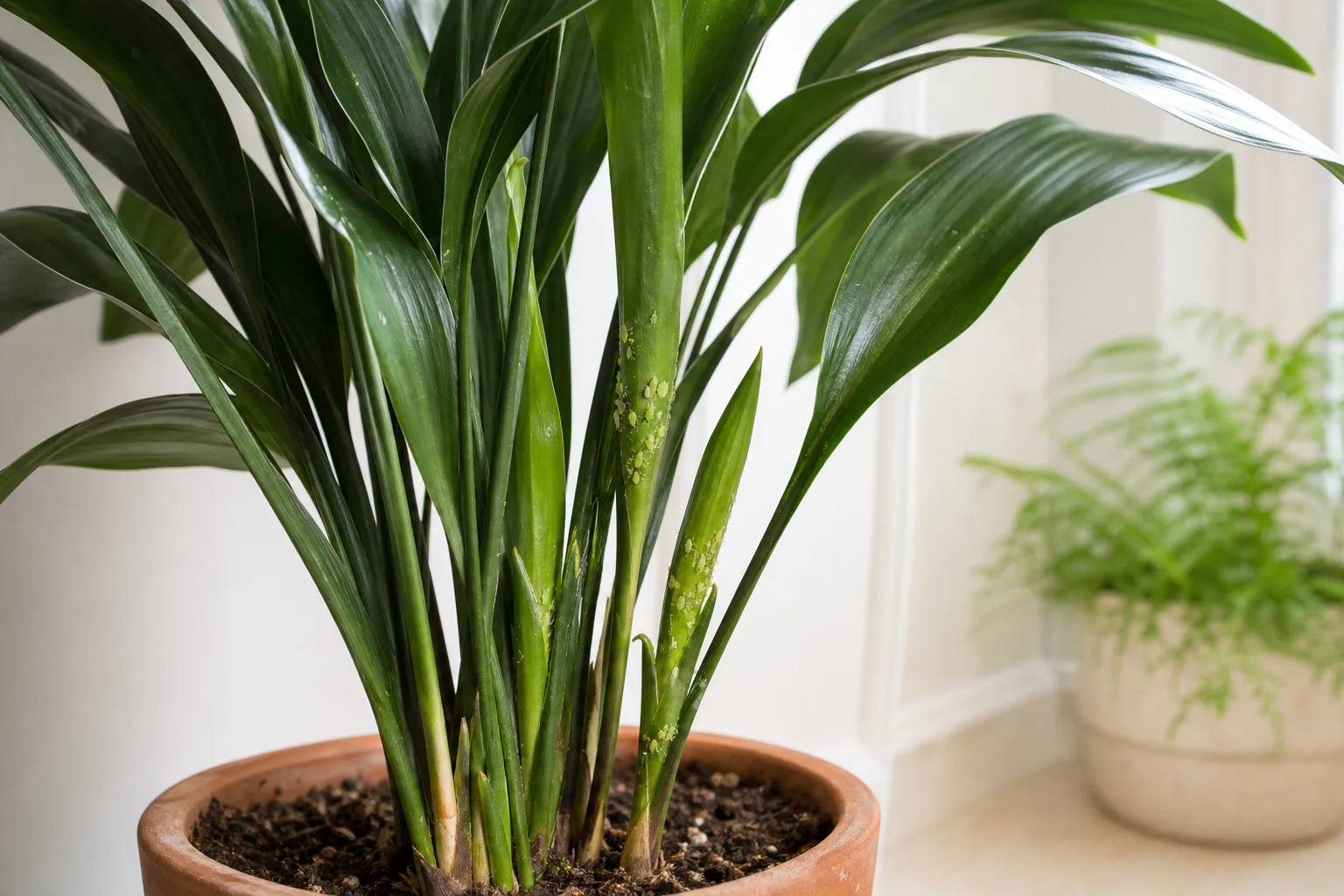
Aphids on Cast Iron Plant (Aspidistra elatior) are small soft-bodied sap feeders that cluster on new growth and flower stalks near the soil. Because Cast Iron Plant overview grows slowly from underground rhizomes, a modest colony can sit unnoticed for weeks under arching, glossy leaves until you see sticky residue, curled shoots, or ants on the pot rim.
First step: isolate the plant and rinse it thoroughly. Move it away from other houseplants, then shower or wipe every leaf surface-especially petiole bases where new shoots emerge and any brown flower buds at soil level. Knock down live aphids with water before reaching for soap or oil. Cast Iron Plant has tough, leathery foliage that tolerates a firm rinse better than delicate plants, but you still need to reach the hidden joints near the rhizome crown.
What aphids look like on Cast Iron Plant
On Cast Iron Plant, aphids rarely cover the entire leaf blade the way they might on a rose or pepper. They concentrate where tissue is soft:
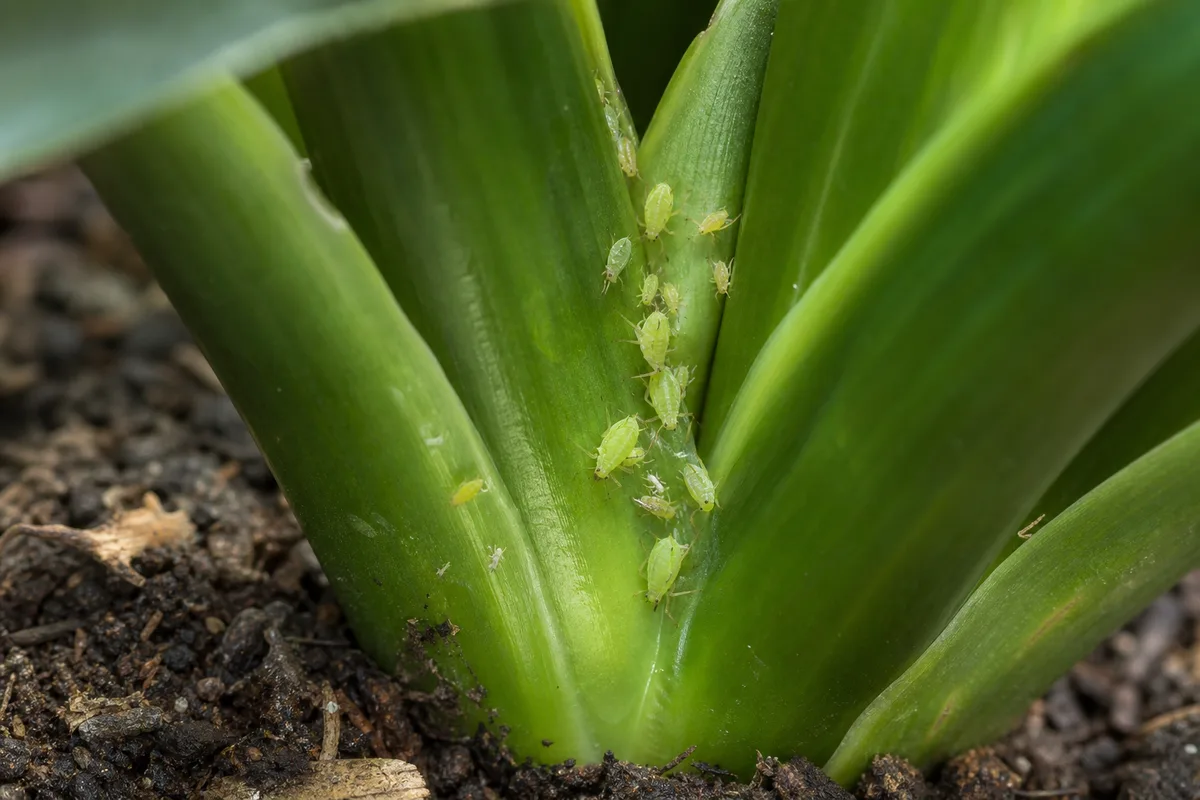
Soft green aphids clustered on an unfurling Cast Iron Plant shoot at the petiole base - compare with clean glossy mature leaves above.
- Unfurling new leaves rising from the rhizome, still partially rolled
- Petiole bases where the long leaf stem meets the soil line
- Flower stalks and buds that emerge at ground level-Cast Iron Plant flowers are easy to miss, but aphids find them quickly
- Undersides of younger leaves near the central vein
Individual aphids are tiny-roughly 1/16 to 1/8 inch-pear-shaped, and usually green, though they can also appear black, brown, or yellow. Most are wingless, but winged adults may show up when a colony gets crowded. Aphids have soft pear-shaped bodies with visible legs and antennae, which helps distinguish them from scale insects that look like immobile bumps.
Damage on this slow grower shows up as:
- Shiny, sticky honeydew on glossy dark green leaves-often your first visible clue in low light
- Curled or twisted new shoots that fail to open flat
- Yellowing or stunted young leaves while older arching foliage still looks fine
- Whitish cast skins left behind after aphids molt, sometimes mistaken for dust
- Ants on the pot or saucer, attracted to honeydew
Because mature Cast Iron Plant leaves are thick and leathery, older foliage may look untouched even while new growth is under heavy feeding pressure. Judge severity by new shoots, not the established leaf canopy.
Why Cast Iron Plant gets aphids
Cast Iron Plant has a reputation for toughness. UF/IFAS notes that no serious pests are normally seen on the plant outdoors, and Missouri Botanical Garden lists mites and scale-not aphids-as the main indoor watch items. Indoors, aphids are less common than on fast-growing tropicals, but they still arrive the usual ways:
New plants without quarantine. Aphids hitchhike on nursery stock and can spread to Cast Iron Plant sitting on the same shelf. Isolate new plants and inspect them before placing them near others.
Soft, nitrogen-rich new growth. Aphids feed on soft, new plant growth. Cast Iron Plant does not push leaves quickly, but heavy fertilizer or a sudden move to brighter light can trigger a flush of tender shoots that aphids prefer.
Hidden feeding sites on a slow grower. New leaves emerge one at a time from rhizomes near the soil. A cluster on a single petiole base can persist under overlapping foliage because the plant does not shed or replace leaves fast enough to expose the problem.
Dusty leaves and low light. Cast Iron Plant often lives in dim corners where dust accumulates on broad leaves. Dust reduces plant health and makes routine pest checks less effective. Missouri Botanical Garden recommends occasional leaf washing-which doubles as early aphid detection.
Nearby infested plants. Aphids on a fern, pothos, or herb in the same low-light grouping can walk or drift to Cast Iron Plant. Winged forms appear when colonies overcrowd a host.
overwatering on Cast Iron Plant does not cause aphids directly, but chronically wet soil combined with pest stress weakens recovery. Cast Iron Plant is more vulnerable to root problems from soggy mix than to occasional dry spells-keep that balance in mind while treating foliage.
How to confirm the cause
Work through these checks before spraying anything:
- Locate the colony. Use a hand lens on new shoots, petiole bases, and soil-level flower stalks. Live aphids move slowly when disturbed; scale and dried honeydew do not.
- Test for stickiness. Honeydew feels tacky and may turn black with sooty mold later. Mineral dust or hard-water spots wipe off dry; honeydew does not.
- Look for cornicles. The small tail-pipe structures on the rear of the body confirm aphids rather than young mealybugs or thrips.
- Rule out mealybugs. White cottony masses in leaf axils point to mealybugs, not aphids. Both produce honeydew, but treatment emphasis differs on thick petiole bases.
- Rule out scale. Brown, immobile bumps glued to petioles are scale. Aphids are soft and removable with a fingernail or water spray.
- Check neighbors. Inspect other shade-tolerant plants in the same room, especially any with new growth or flowers.
- Note recent changes. New nursery pot, open window season, or a fertilizer boost often precedes outbreaks on tender shoots.
If you find sticky residue but no insects, search again in two days-aphids hide on the undersides of unfurling leaves and may have been washed off during an earlier watering.
First fix for Cast Iron Plant
Isolate the plant and rinse every surface with lukewarm water.
Move the pot away from other plants. Take it to a sink, shower, or outdoor shaded spot and spray or wipe:
- Both sides of all leaves
- Every petiole base where it meets the rhizome
- Soil-level flower stalks and buds
- The pot rim and outer saucer where honeydew drips
Use enough pressure to knock aphids loose but not so hard that you tear partially unfurled leaves. A forceful spray of water can remove aphids on sturdy plants, and Cast Iron Plant’s leathery foliage handles this well.
Let the plant drain and dry completely. Do not apply soap or oil the same hour unless you still see live colonies after the rinse. Water removal is your first knockdown; chemicals come second.
Step-by-step recovery
After the initial rinse, escalate only as needed:
If a few aphids remain
- Repeat the rinse in three to four days. Aphid populations can increase rapidly because females give birth to live young-missed nymphs mature quickly.
- Spot-treat with a cotton swab dipped in 70% isopropyl alcohol on visible clusters at petiole bases. Avoid soaking the rhizome crown.
- Apply insecticidal soap labeled for houseplants if rinsing alone is not enough. Cover leaf undersides and petiole joints thoroughly. Insecticidal soap kills on contact and has no residual activity, so every live aphid must be wetted.
- Repeat soap every five to seven days for at least two to three cycles. Nebraska Extension recommends 2–3 applications at 4–7 day intervals to catch newly hatched nymphs.
If colonies are heavy or honeydew is widespread
- Prune the worst-affected new shoots at the rhizome with clean shears if they are already curled and distorted beyond recovery. Dispose of clippings in sealed trash, not the compost bin indoors.
- Continue soap or a plant oil spray (neem or horticultural oil labeled for aphids) on remaining foliage, testing one leaf first if the plant was recently stressed by overwatering or cold.
- Watch for ants. Ants protect aphids from predators. Keep ants off plants to help natural enemies. Wipe ant trails on shelves and saucers.
- Hold fertilizer until new growth emerges clean. Feeding during an active infestation pushes more soft tissue for aphids to colonize.
Do not repot solely because of aphids on foliage. Repotting is for soil-borne pests, not a standard aphid response on Cast Iron Plant. Repotting a stressed rhizome unnecessarily adds recovery time.
Recovery timeline
Cast Iron Plant heals slowly. Expect:
- Within 48 hours: Honeydew stops accumulating if live aphids are gone
- One to two weeks: No new curl on emerging shoots after consistent rinsing or soap cycles
- Three to six weeks: A clean new leaf unfurling from the rhizome with no sticky residue at its base
- Older damaged leaves: Permanently curled or yellowed tissue does not revert; remove it once new growth looks stable
If you still find live aphids after three weekly treatments, inspect every plant in the room again-reinfestation from a nearby host is more likely than soap failure on Cast Iron Plant itself.
Lookalike symptoms
| What you see | More likely cause | How to tell |
|---|---|---|
| Sticky glossy patches | Aphids or scale | Aphids are soft and mobile; scale is hard and fixed |
| White cottony clumps in leaf bases | Mealybugs | Cottony wax, not pear-shaped bodies |
| Fine stippling on older leaves | Spider mites | Webbing and speckled pattern, not honeydew |
| Brown bumps on petioles | Scale insects | Does not wipe off with water |
| Dry white crust on leaf tips | Hard-water minerals | Dry to touch, no insects at base |
| Yellow older leaves only | Overwatering in low light | Cool wet soil, firm petioles, no stickiness |
Mistakes to avoid
- Spraying the canopy while ignoring soil-level new shoots. That is where Cast Iron Plant aphids start.
- Using dish soap instead of labeled insecticidal soap. Homemade soap sprays carry higher phytotoxicity risk on glossy foliage.
- Treating once and stopping. One pass misses nymphs and eggs; plan on repeated cycles.
- Returning the plant to the group too soon. Keep it isolated until you see no live aphids for two full weeks.
- Heavy fertilizing during recovery. Soft new growth feeds the next wave.
- Applying oil or soap to a wilted, cold-stressed plant. Treat after the plant is hydrated and at room temperature.
- Assuming toughness means the plant will outgrow aphids alone. Indoor colonies rarely decline without intervention.
Cast Iron Plant care cross-check
While treating aphids, keep baseline care steady-big swings in light, water, or pot size add stress on top of sap loss.
Light: Low to medium indirect light is normal. Do not move the plant into direct sun to “strengthen” it; direct sun bleaches Cast Iron Plant leaves.
Watering: Let the top 3–5 cm of mix dry before watering. Soggy soil after repeated shower treatments slows rhizome recovery. Empty the saucer after every drink.
Cleaning: Wipe or rinse leaves monthly. Clemson HGIC recommends monitoring leaves weekly for insects on indoor Cast Iron Plant-make that part of your post-treatment routine.
Fertilizer: Feed lightly during active growth only. Do not over-fertilize; aphids target soft new growth.
How to prevent aphids next time
- Quarantine new plants for at least two weeks before placing them near Cast Iron Plant.
- Inspect petiole bases every time you water-this plant’s growth point is at soil level, not at branch tips.
- Wash leaves regularly to remove dust and early pests before colonies form.
- Avoid excess nitrogen that produces a flush of tender shoots.
- Space plants slightly in dim corners so you can see soil-level new growth.
- Check open windows in spring and fall when winged aphids can drift indoors.
When to worry
Escalate beyond soap and rinsing if:
- Winged aphids appear on multiple plants in the same room
- Sooty mold covers large sections of leaf surface and blocks light to an already slow-growing plant
- New shoots stop emerging entirely for more than one growing season while colonies persist
- The rhizome feels soft or smells sour-rare, but overwatering during repeated shower treatments can compound damage
Cast Iron Plant rarely dies from aphids alone if the rhizome stays firm. The realistic risk is a year of lost new foliage and secondary sooty mold-not sudden collapse. Discard the plant only if rhizome rot accompanies pest stress and new growth never returns after corrected care.
Conclusion
Aphids on Cast Iron Plant are uncommon but easy to miss because this slow rhizome grower hides pests at soil-level shoots and petiole bases. Sticky honeydew on glossy leaves is your early warning. Isolate, rinse thoroughly, then repeat contact treatments until new growth emerges clean. Keep watering disciplined, skip heavy feeding until the infestation clears, and inspect nearby shade plants so aphids do not cycle back from a neighbor pot.
When to use this page vs other Cast Iron Plant guides
- Cast Iron Plant watering guide - Use for routine moisture checks before assuming aphids is the main issue.
- Cast Iron Plant problems hub - Browse all 16 common issues on this species.
- Mealybugs on Cast Iron Plant - Different entry point when symptoms overlap with aphids.
- Spider Mites on Cast Iron Plant - Different entry point when symptoms overlap with aphids.
- Yellow Leaves on Cast Iron Plant - Different entry point when symptoms overlap with aphids.