Baby Rubber Plant Care Guide (Peperomia obtusifolia)
Peperomia obtusifolia
Baby Rubber Plant (Peperomia obtusifolia) needs medium indirect light and watering only when the top inch dries-its thick leaves store water and it dies quickly from overwatering. Pet-safe and great for beginners.
Baby Rubber Plant Care Guide (Peperomia obtusifolia)
Start with wateringThe most common care mistake for Baby Rubber PlantWatering guide →Baby Rubber Plant care essentials
Light
medium to bright indirect light
Water
Water when the top inch of soil dries. Stores water in thick succulent-like leaves-far more tolerant of drought than overwatering.
Soil
Light, well-draining mix; small pots prevent waterlogging.
Humidity
40–50%
Temperature
18–27°C (65–80°F)
Fertilizer
Use diluted balanced liquid fertilizer at half strength and stop if the plant is stressed, newly repotted, or not actively growing. Do not fertilize in winter.
About Baby Rubber Plant
Baby Rubber Plant is native to Florida, Mexico, and Caribbean (tropical and subtropical forests), typically reaches 8–12 inches tall; compact bushy growth with shiny oval leaves indoors, with slow to moderate growth. Baby Rubber Plant has a bushy growth habit and part of the Piperaceae family. It is also known as American Rubber Plant, Pepper Face, and Blunt-Leaf Peperomia.
| Detail | Information |
|---|---|
| Also known as | American Rubber Plant, Pepper Face, Blunt-Leaf Peperomia |
| Native region | Florida, Mexico, and Caribbean (tropical and subtropical forests) |
| Mature size | 8–12 inches tall; compact bushy growth with shiny oval leaves |
| Growth rate | Slow to moderate |
| Growth habit | Bushy |
| Scientific name | Peperomia obtusifolia |
| Family | Piperaceae |
Baby Rubber Plant Care Guide (Peperomia obtusifolia)
The baby rubber plant is one of those houseplants that looks tougher than it is. Peperomia obtusifolia has thick, glossy leaves that suggest drought tolerance-and that part is true. What the leaves do not advertise is how quickly fine roots fail when the potting mix stays wet for days. Most healthy baby rubber plants in ordinary homes share the same setup: medium to Baby Rubber Plant light guide, a light well-draining mix, a snug pot with drainage, and watering only when the top inch of soil has dried. Clemson HGIC confirms baby rubber plant is easy to grow and prefers to dry out between waterings, and RHS similarly advises letting the compost partially dry between waterings. Get that rhythm right and the plant stays compact, firm, and quietly handsome for years. Miss it, especially on water, and yellow leaves and mushy stems follow faster than many beginners expect.
This overview covers everything you need to keep a baby rubber plant stable indoors: what the plant actually is, how to place it, how to water without rotting the roots, when to repot or propagate, and how to read the early warning signs before a small problem becomes a lost plant.
For related Baby Rubber Plant care, see Spider Mites on Baby Rubber Plant.
What Is a Baby Rubber Plant?
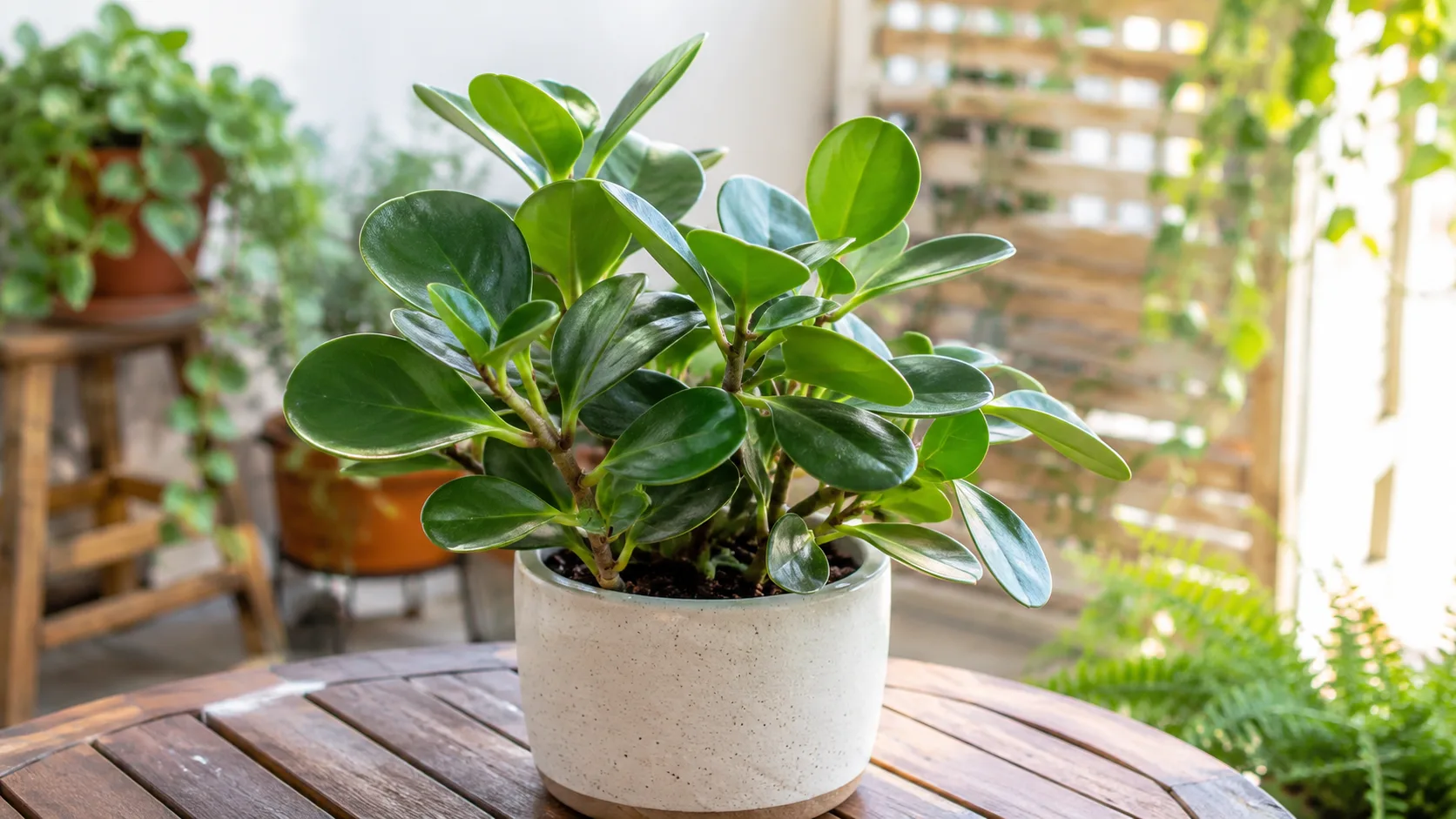
A baby rubber plant is a compact tropical foliage plant grown almost entirely for its rounded, waxy leaves and upright bushy shape. Botanically it is Peperomia obtusifolia, a member of the Piperaceae family-the same family as black pepper (Piper nigrum). The specific epithet obtusifolia means blunt-leaved, which matches the thick oval foliage you see in most pots. Indoors, plants typically reach about 0.5–1 foot tall (8–12 inches) with a slow to moderate growth rate, making them excellent desk plants, shelf accents, and beginner-friendly greenery.
Unlike flowering houseplants sold for bloom cycles, the baby rubber plant is a foliage plant. Its flower spikes are small, greenish-white, and easy to overlook. That is normal. A good specimen is judged by leaf firmness, even color, and compact new growth-not by showy flowers.
Why It Is Not a True Rubber Plant
The common name causes more confusion than almost any other aspect of Baby Rubber Plant overview. A baby rubber plant is not a rubber tree. The true rubber tree is Ficus elastica, a fig species that grows much larger, prefers different soil moisture, and has an entirely different root system. Garden centers sometimes group them visually because both have thick, glossy leaves, but the care is not interchangeable.
If you bought a plant labeled “rubber plant” without a botanical tag, check the leaf shape and stem structure. Peperomia obtusifolia has softer, smaller leaves on relatively thin upright stems and stays compact. Ficus elastica develops woody stems and much larger leaves over time. Treating a peperomia like a ficus-especially by keeping the soil evenly moist-is one of the fastest ways to lose it.
Botanical Background and Native Range
Understanding where Peperomia obtusifolia comes from explains its indoor behavior better than any generic “tropical plant” label. The Missouri Botanical Garden describes it as native from Mexico through northern South America and the West Indies, with populations in southern Florida as well. (Missouri Botanical Garden) Flora of North America corroborates this distribution, listing the species as native to Florida, Mexico, the West Indies, and northern South America and noting it grows epiphytically or terrestrially on rotten logs and humus. In the wild it grows as a bushy plant in warm, humid, filtered-light environments-not in baking sun or waterlogged soil.
What Baby Rubber Plants Look Like Indoors
A healthy baby rubber plant forms a tidy upright clump of thick stems topped with glossy leaves. Each leaf is typically oval to spoon-shaped, smooth-edged, and firm to the touch. The surface has a waxy sheen that reflects light, which is why the plant looks polished even without much maintenance. Stems are fleshy but not truly woody; over time the base can become slightly sturdier, but this is not a tree-like houseplant.
Growth is naturally compact when light is adequate. New leaves emerge from the tops of stems and unfurl slowly. If the plant is happy, you will see steady but unhurried development rather than explosive vines. That restrained pace is part of its appeal for offices, bedrooms, and small apartments.
Green vs Variegated Cultivars
Most plants sold as baby rubber plants are either solid deep green or variegated with cream, gold, or gray-green mottling. Solid green forms generally tolerate lower light better and keep color without as much fuss. Variegated cultivars-sometimes sold under names like ‘Variegata’ or ‘Golden Gate’-need brighter indirect light to maintain contrast. In too little light, variegation fades, new leaves look pale, and stems stretch.
Both forms share the same watering and soil rules, but variegated plants are less forgiving of dark corners. If you love the patterned look, prioritize placement over pot decoration. A variegated baby rubber plant near a bright east window usually outperforms the same plant placed across a dim room because it looks “pretty there.”
Best Growing Conditions at a Glance
Before diving into each topic, here is the care formula that works for most indoor Peperomia obtusifolia plants:
| Factor | Target range | What to watch for |
|---|---|---|
| Light | Medium to bright indirect | Leggy stems = too little; bleached leaves = too much direct sun |
| Watering | When top 1–2 inches of mix are dry | Wet soil + drooping leaves = likely root stress, not thirst |
| Soil | Light, airy, fast-draining | Dense mix that stays wet for days is the main rot trigger |
| Temperature | 65–80°F (18–27°C) | Below 50°F (10°C) can damage tissue |
| Humidity | 40–50% or ordinary home levels | Very dry air may invite spider mites |
| Fertilizer | Dilute feed in active growth only | Salt buildup and weak winter growth mean pause feeding |
| Pot size | Slightly snug with drainage holes | Oversized pots hold excess moisture around small root systems |
This table is not a substitute for checking your own pot. It is a quick reference so you know which lever to adjust when something looks off.
Light Requirements
Baby rubber plant light needs are straightforward: the plant grows best in bright indirect light and can tolerate medium indirect light, especially if the leaves are solid green. It does not want harsh midday sun on its foliage, but it also cannot thrive indefinitely in a dark hallway. The goal is enough light for compact internodes-short spaces between leaves-and firm new growth.
Think of light as the control dial for everything else. A brighter plant uses water faster and dries its pot on a predictable rhythm. A dimmer plant sits in wet mix longer, which raises rot risk even if you water less than before. That link between light and watering is one of the most useful things to internalize with peperomias.
Best Window Placement and Grow Lights
An east-facing window is often ideal because it delivers bright morning light without the intensity of afternoon sun. A few feet back from a west- or south-facing window also works if sheer curtains or filtered light soften direct rays. North windows can support green forms in bright rooms, but growth may slow and watering intervals must stretch accordingly.
If natural light is weak, a full-spectrum grow light can keep the plant compact. Place the light above the canopy, start with moderate intensity, and watch leaf temperature and color. Leaves should look evenly green or variegated, not scorched or faded. Rotate the pot every week or two if growth leans toward the window; baby rubber plants respond quickly to uneven light.
Acclimate gradually when moving a plant to a brighter spot. Leaves formed in lower light burn more easily. Increase exposure over one to two weeks rather than jumping from a dim corner to a sunny sill in one day.
Watering
Baby rubber plant watering should be driven by the pot, not the calendar. The standard trigger is simple: water when the top inch of soil is dry and the pot feels noticeably lighter. For many homes that means roughly every 7–14 days in summer and every 14–21 days in winter, but those numbers are guides only. Pot size, soil structure, humidity, light, and whether the plant is actively growing all change the interval.
Because the leaves store moisture, Peperomia obtusifolia tolerates brief dryness better than chronic wetness. Slightly wrinkled or thinner-feeling leaves can indicate thirst. Mushy stems, yellow lower leaves, and drooping foliage on still-damp soil usually mean too much water or poor drainage-not a request for more.
Water thoroughly when it is time. Soak the mix until water runs from the drainage holes, then empty the saucer so the pot is not sitting in runoff. Shallow sips every day keep the surface wet while the deeper root zone becomes oxygen-starved. Deep, less frequent watering with a drying cycle in between matches how this plant uses water.
Avoid splashing water onto the leaf crowns when possible. The cupped leaf shape can hold water on the surface, and wet foliage in stagnant air can encourage fungal issues. A narrow-spout watering can aimed at the soil line is safer than overhead watering.
Seasonal Adjustments and Common Mistakes
In the warm, bright months, the plant is usually in active growth and dries its pot faster. That is when the shorter end of the watering range often applies. In winter, shorter days and cooler room temperatures slow metabolism. The same volume of water that worked in July can rot roots in January if you do not adjust.
The most common baby rubber plant watering mistakes are easy to list because they repeat everywhere:
- Watering on a fixed weekday regardless of soil moisture
- Using an oversized pot that stays wet too long
- Leaving the pot in a full saucer after watering
- Interpreting drooping leaves as thirst without checking whether the mix is already wet
- Misting heavily instead of fixing dry air or watering properly
If you are unsure, check deeper than the surface. A dry top inch with damp soil below means wait. A dry top inch with a light pot and firm leaves means water. When in doubt, waiting an extra day is usually safer than watering a peperomia that is already stressed from excess moisture.
Soil, Pots, and Drainage
Peperomia obtusifolia needs a light, well-draining potting mix with enough air space for fine roots. A practical indoor blend is peat-free potting mix with 25–30% perlite, optionally with a small portion of orchid bark for extra structure. The exact brand matters less than the outcome: water should move through the pot quickly, and the mix should not compact into a dense block after a few months.
Target pH around 6.0–7.0 if you are mixing from scratch, but most quality houseplant mixes already fall near that range. Hobbyists rarely need to micromanage pH unless the plant shows chronic nutrient issues after other causes are ruled out.
Pot choice is care choice. Baby rubber plants often do better in slightly snug pots than in large decorative containers. An oversized pot holds excess wet mix around a small root system, which is a classic path to root rot on Baby Rubber Plant after Baby Rubber Plant repotting guide. Always use a pot with drainage holes. Cachepots are fine only if the inner grow pot can drain freely and is not left sitting in water.
Refresh the mix every two to three years, or sooner if it dries unevenly, smells sour, or water runs straight through without absorbing. Old mix loses structure; when structure fails, watering becomes guesswork.
Temperature and Humidity
Indoors, Peperomia obtusifolia prefers ordinary room warmth, roughly 65–80°F (18–27°C). It handles typical home conditions well but dislikes sudden cold. The Missouri Botanical Garden notes that regular dips below 50°F (10°C) are unsuitable for this plant. (Missouri Botanical Garden) Watch problem zones: winter window sills, air-conditioning vents, and doors that leak cold drafts. The Royal Horticultural Society recommends keeping peperomias in a warm room of 18–30°C (65–86°F) and out of cold draughts, which matches the indoor range above.
Humidity around 40–50% is comfortable for most plants, and many baby rubber plants do fine at ordinary indoor levels. Very dry air-often below 30% in heated winter rooms-can stress foliage and encourage spider mites. A pebble tray (with the pot above the waterline), grouping plants, or a small humidifier can help without turning the room into a greenhouse.
Do not rely on misting as a primary humidity strategy. The effect is temporary, and wet leaves in poor airflow can invite fungal spotting. Stable warmth, decent ambient humidity, and good air movement beat frequent misting for this species.
Fertilizing
Baby rubber plants are moderate feeders at most. They do not need heavy fertilizer to look good, and excess feeding causes more problems than it solves. During active growth in spring and summer, a balanced water-soluble houseplant fertilizer at half strength every four to six weeks is enough for most pots. Apply to already-moist soil so nutrients distribute without burning fine roots.
If the potting mix includes a starter fertilizer charge, skip supplemental feeding for the first month after repotting. Pause feeding during winter slowdown, after repotting, during pest recovery, or whenever the plant is stressed and not producing new growth. Fertilizer cannot fix rotten roots or compensate for low light.
Salt buildup shows up as crust on the soil surface, brown leaf edges, or general decline after feeding. If that happens, flush the pot with plain water during the next few waterings or repot into fresh mix rather than increasing fertilizer strength.
Repotting and Root Health
Repot Peperomia obtusifolia when the plant has clear signs of root congestion or depleted mix-not on a rigid schedule alone. Practical triggers include roots emerging from drainage holes, water running straight through, mix that breaks down, or growth stalling despite good light. For many plants that means every two to three years, often in spring when active growth resumes.
Choose a pot only one size larger at most. Jumping from a 4-inch pot to an 8-inch pot “to give it room” usually gives it wet soil instead. Use fresh airy mix, water lightly after repotting, and keep the plant in stable bright indirect light while roots settle.
Root health is the hidden center of baby rubber plant care. Above-ground symptoms often lag behind root damage by days or weeks. If you suspect rot-mushy stems, sour soil smell, yellow leaves on wet mix-remove the plant from the pot, trim soft brown roots with clean scissors, and repot into dry fresh mix. Reduce watering until new growth confirms recovery. Severe rot may not be salvageable, which is why prevention through drainage and light matters more than rescue attempts.
Propagation Methods
Baby rubber plant propagation is one of the easiest projects in houseplant care, which is part of why this species stays popular. Clemson Cooperative Extension lists stem cuttings, leaf cuttings, and water propagation as reliable methods for Peperomia obtusifolia. (Clemson HGIC)
Stem cuttings in water are the most beginner-friendly approach:
- Take a healthy cutting 3–6 inches long with several leaves.
- Remove the lower leaves so one or two nodes sit below the waterline.
- Place the stem in a clean jar of water in bright indirect light.
- Refresh water every two to three weeks and keep leaves out of the water.
- Pot into airy mix when roots are 1–2 inches long, usually in a few weeks.
Stem cuttings in soil work well too. Insert the cut end into moist, fast-draining propagation mix, keep humidity moderate, and avoid direct sun. Leaf cuttings are slower but useful: remove a leaf with about an inch of petiole, insert the petiole into moist mix, and wait for plantlets to form at the base over several weeks.
Propagate from healthy plants only. Stressed, pest-infested, or rot-damaged parent plants pass those problems to cuttings. Clean tools and patience beat rooting hormone for most home growers with this species.
Common Problems and Pests
Most baby rubber plant problems are environmental, not mysterious diseases. The plant communicates through leaf texture, stem firmness, and how fast the pot dries. The skill is reading those signals in order: roots and soil first, then light, then pests.
Mealybugs appear as white cottony clusters in leaf axils. Spider mites cause fine stippling in very dry conditions. Scale sticks along stems. Fungus gnats hover when the soil surface stays wet too long. Inspect weekly, isolate affected plants, and treat early with manual removal, a gentle shower, or insecticidal soap according to label directions.
Yellow Leaves, Brown Tips, and Leggy Growth
Yellow leaves are the most common complaint. They can mean overwatering on Baby Rubber Plant, underwatering on Baby Rubber Plant, low light, natural aging of older leaves, or salt stress. Check soil moisture before changing anything. Yellow lower leaves on wet soil strongly suggest root stress. Yellow scattered leaves on very dry soil may mean thirst-but confirm the stems are still firm.
Brown tips often point to dry air, inconsistent watering, fluoride or chlorine in tap water, or fertilizer salts. Occasional flushing with plain water and a more stable Baby Rubber Plant watering guide help more than trimming alone.
Leggy growth-long spaces between leaves and pale new foliage-usually means insufficient light. Move the plant gradually to brighter indirect light rather than pruning repeatedly in the same dim spot. Pruning can shape the plant, but it cannot replace adequate light.
| Symptom | Likely cause | First fix |
|---|---|---|
| Yellow lower leaves, wet soil | Overwatering / root stress | Stop watering; check roots; improve drainage |
| Wrinkled firm leaves, dry soil | Underwatering | Water thoroughly; adjust check method |
| Bleached or scorched patches | Too much direct sun | Filter light or move back from window |
| Long stems, small pale leaves | Low light | Increase bright indirect light |
| White cottony patches | Mealybugs | Isolate; remove manually; treat early |
| Fine webbing, stippled leaves | Spider mites | Raise humidity slightly; rinse; treat if needed |
Use the table as a starting point, not a diagnosis without inspection. One symptom can have more than one cause, especially when a plant has recently moved homes or been repotted.
Pet Safety and Household Placement
For cat and dog owners, Peperomia obtusifolia is one of the better common houseplant choices. The ASPCA lists Blunt-Leaf Peperomia (Peperomia obtusifolia), also known as Pepper Face and baby rubber plant, as non-toxic to dogs and cats. (ASPCA)
Non-toxic does not mean edible. Pets that chew houseplants may still get mild stomach upset, and damaged leaves stress the plant. Place pots on stable shelves or stands if cats knock plants over, and keep soil covered if pets dig. For households with rabbits, tortoises, or other exotic pets, do not assume cat-and-dog safety data applies; confirm with a species-appropriate veterinary source before offering any houseplant as forage.
Place the plant where it gets good light and stays out of cold drafts and hot radiator air. Kitchens and bathrooms can work if light is sufficient; humidity alone does not replace brightness. A bright home office desk often beats a shaded living-room corner that looks designer-perfect but leaves the plant slowly declining.
Conclusion
Baby rubber plant care rewards a simple, consistent approach more than constant tinkering. Peperomia obtusifolia is a compact, pet-friendly foliage plant from warm, filtered-light habitats, and it behaves like one indoors: it wants bright to medium indirect light, a fast-draining mix in a snug pot, and watering when the top inch of soil dries-not on autopilot. Its thick leaves forgive a missed drink now and then, but its fine roots do not forgive staying wet in low light.
If your plant looks unhappy, start with the pot and roots, then light, then pests. Fix one variable at a time and let new growth tell you whether the change worked. A stable baby rubber plant is not dramatic, but that quiet reliability is exactly why it belongs on so many desks and windowsills-and why it is worth learning to read before problems spread.
When to use this page vs other Baby Rubber Plant guides
- Baby Rubber Plant overview - Canonical hub for this species - care topics and problems branch from here.
- Baby Rubber Plant problems - Symptom-first path when you already know something is wrong.
Related Baby Rubber Plant guides
- Baby Rubber Plant watering
- Baby Rubber Plant light
- Baby Rubber Plant soil
- Baby Rubber Plant propagation
- Baby Rubber Plant fertilizer
- Baby Rubber Plant repotting
- Baby Rubber Plant pruning
- Root Rot on Baby Rubber Plant
- Yellow Leaves on Baby Rubber Plant
- Drooping Leaves on Baby Rubber Plant
- Mealybugs on Baby Rubber Plant
- Brown Tips on Baby Rubber Plant
How to care for Baby Rubber Plant?
How much light does Baby Rubber Plant need?
medium to bright indirect light
- medium to bright indirect light - medium to bright indirect light.
When should you water Baby Rubber Plant?
Water when the top inch of soil dries. Stores water in thick succulent-like leaves-far more tolerant of drought than overwatering.
- Let the top inch fully dry; leaves should still feel plump and firm - Stores water in thick succulent-like leaves-far more tolerant of drought than overwatering.
- Drain excess water - Water when the top inch of soil dries.
What soil works best for Baby Rubber Plant?
Light, well-draining mix; small pots prevent waterlogging.
- peat-free potting mix - Light, well-draining mix; small pots prevent waterlogging.
- perlite (25–30%) - Light white granules that keep soil airy and help prevent compaction.
Grower notes for Baby Rubber Plant
What matters most with Baby Rubber Plant
Baby Rubber Plant often reacts to change before it reacts to bad care. Leaf drop after a move is common, but repeated drop means light, drafts, watering, or root conditions are still unstable. In practice, the care checkpoint is simple: medium to bright indirect light. Pair that with light, well-draining mix; small pots prevent waterlogging, and avoid changing water, pot size, and placement all at once.
Best placement in a real home
Baby Rubber Plant belongs where medium to bright indirect light is realistic for most of the day, not only where the pot looks good. Water when the top inch of soil dries. Stores water in thick succulent-like leaves-far more tolerant of drought than overwatering. If the pot stays wet longer than expected, move the plant into better light or reassess the mix before watering again. Humidity target: 40–50%. Temperature comfort zone: 18–27°C (65–80°F).
Before you buy this plant
Choose Baby Rubber Plant with firm new growth, clean leaf undersides, and soil that does not smell sour or feel compacted. Be cautious if you see root-rot, sticky residue, collapsed crowns, or a pot that is wet in poor light. Cosmetic old-leaf damage is less worrying than weak roots or active pests.
First month after bringing it home
Do not repot Baby Rubber Plant on day one unless the mix is failing or pests are obvious. Quarantine it, learn how fast the pot dries, and keep care boring while it adjusts. Watch especially for root-rot, yellow-leaves, and drooping-leaves. If problems appear, correct the condition first rather than stacking fertilizer, repotting, and pruning together.
Pet-aware note for Baby Rubber Plant
Baby Rubber Plant is a better choice for pet-aware homes than toxic ornamentals, but pet safe does not mean the plant should be chewed. Use hanging, shelf, or room placement if pets dig in soil or shred leaves, and choose sturdier plants for high-traffic pet zones.
How to tell Baby Rubber Plant is settling in
Also sold as American Rubber Plant, Pepper Face, and Blunt-Leaf Peperomia, this plant should be judged by stable new growth rather than label names alone. If you plan to multiply it later, common methods include Leaf cuttings in moist mix and Stem cuttings in water. Repot only when you see Roots emerging from drainage holes and soil depleted. If yellow-leaves shows up early, inspect light, watering, and roots before assuming the plant is permanently weak.
Is it pet safe?
Baby Rubber Plant is generally considered pet safe.
Watering Baby Rubber Plant
For Baby Rubber Plant, let the top inch fully dry; leaves should still feel plump and firm and water every 7–14 days in summer; every 14–21 days in winter. Water minimally in winter.
| Detail | Information |
|---|---|
| How often | Every 7–14 days in summer; every 14–21 days in winter |
| How to check | Let the top inch fully dry; leaves should still feel plump and firm |
| Seasonal changes | Water minimally in winter |
Signs of overwatering
- Mushy wilting leaves despite moist soil
- yellowing lower leaves
- black stem bases
Signs of underwatering
- Slightly wrinkled leaves
- leaves becoming thinner
Soil & potting for Baby Rubber Plant
Use a mix of peat-free potting mix, perlite (25–30%) for Baby Rubber Plant. Good drainage; never dense or waterlogged. Target soil pH around 6.0–7.0. Repot every 2–3 years; prefers snug pots, ideally in spring.
| Detail | Information |
|---|---|
| Recommended mix | peat-free potting mix, perlite (25–30%) |
| Drainage | Good drainage; never dense or waterlogged |
| Soil pH | 6.0–7.0 |
| Repotting frequency | Every 2–3 years; prefers snug pots |
| Best season to repot | Spring |
Signs it needs repotting
- Roots emerging from drainage holes
- soil depleted
Humidity & temperature for Baby Rubber Plant
Baby Rubber Plant prefers 40–50%, though normal home humidity is usually fine. Keep temperatures around 18–27°C (65–80°F).
| Detail | Information |
|---|---|
| Humidity | 40–50% - normal home humidity is fine. |
| Ideal temperature | 18–27°C (65–80°F) |
Fertilizer & pruning for Baby Rubber Plant
Use use diluted balanced liquid fertilizer at half strength and stop if the plant is stressed, newly repotted, or not actively growing. Do not fertilize in winter. for Baby Rubber Plant.
| Detail | Information |
|---|---|
| Fertilizer type | Use diluted balanced liquid fertilizer at half strength and stop if the plant is stressed, newly repotted, or not actively growing. Do not fertilize in winter. |
Common problems on Baby Rubber Plant
Root Rot
HighLikely cause: Overwatering is the most common cause of death in this plant
Quick fix: Remove from pot; trim mushy roots; repot in dry fresh mix; delay next watering by 2 weeks
Full fix guide →Yellow Leaves
MediumLikely cause: Overwatering or cold temperatures
Quick fix: Reduce watering; move away from cold windows
Full fix guide →Drooping Leaves
MediumLikely cause: Wilting with moist soil indicates root rot; wilting with dry soil indicates underwatering
Quick fix: Diagnose by checking soil; if wet, treat for root rot; if dry, water
Full fix guide →Mealybugs
MediumLikely cause: Mealybugs nest in leaf axils
Quick fix: Treat with isopropyl alcohol on cotton swabs; apply neem oil spray
Full fix guide →Brown Tips
MediumLikely cause: Common on this plant type; confirm with recent watering, light, and root checks.
Quick fix: Inspect the plant and correct the most likely care stressor before stacking treatments.
Full fix guide →Overwatering
MediumLikely cause: Common on this plant type; confirm with recent watering, light, and root checks.
Quick fix: Inspect the plant and correct the most likely care stressor before stacking treatments.
Full fix guide →Underwatering
MediumLikely cause: Common on this plant type; confirm with recent watering, light, and root checks.
Quick fix: Inspect the plant and correct the most likely care stressor before stacking treatments.
Full fix guide →Spider Mites
MediumLikely cause: Common on this plant type; confirm with recent watering, light, and root checks.
Quick fix: Inspect the plant and correct the most likely care stressor before stacking treatments.
Full fix guide →Aphids
MediumLikely cause: Common on this plant type; confirm with recent watering, light, and root checks.
Quick fix: Inspect the plant and correct the most likely care stressor before stacking treatments.
Full fix guide →Leggy Growth
MediumLikely cause: Common on this plant type; confirm with recent watering, light, and root checks.
Quick fix: Inspect the plant and correct the most likely care stressor before stacking treatments.
Full fix guide →Slow Growth
MediumLikely cause: Common on this plant type; confirm with recent watering, light, and root checks.
Quick fix: Inspect the plant and correct the most likely care stressor before stacking treatments.
Full fix guide →Wilting
MediumLikely cause: Common on this plant type; confirm with recent watering, light, and root checks.
Quick fix: Inspect the plant and correct the most likely care stressor before stacking treatments.
Full fix guide →Low Humidity
MediumLikely cause: Common on this plant type; confirm with recent watering, light, and root checks.
Quick fix: Inspect the plant and correct the most likely care stressor before stacking treatments.
Full fix guide →Not Enough Light
MediumLikely cause: Common on this plant type; confirm with recent watering, light, and root checks.
Quick fix: Inspect the plant and correct the most likely care stressor before stacking treatments.
Full fix guide →Fungus Gnats
MediumLikely cause: Common on this plant type; confirm with recent watering, light, and root checks.
Quick fix: Inspect the plant and correct the most likely care stressor before stacking treatments.
Full fix guide →Mold on Soil
MediumLikely cause: Common on this plant type; confirm with recent watering, light, and root checks.
Quick fix: Inspect the plant and correct the most likely care stressor before stacking treatments.
Full fix guide →Curling Leaves
MediumLikely cause: Common curling leaves pattern on Baby Rubber Plant under indoor care stress.
Quick fix: Inspect roots, watering, light, and pests; adjust one variable and monitor new growth.
Full fix guide →Brown Leaves
MediumLikely cause: Common brown leaves pattern on Baby Rubber Plant under indoor care stress.
Quick fix: Inspect roots, watering, light, and pests; adjust one variable and monitor new growth.
Full fix guide →Black Spots
MediumLikely cause: Common black spots pattern on Baby Rubber Plant under indoor care stress.
Quick fix: Inspect roots, watering, light, and pests; adjust one variable and monitor new growth.
Full fix guide →Holes in Leaves
MediumLikely cause: Common holes in leaves pattern on Baby Rubber Plant under indoor care stress.
Quick fix: Inspect roots, watering, light, and pests; adjust one variable and monitor new growth.
Full fix guide →Pale Leaves
MediumLikely cause: Common pale leaves pattern on Baby Rubber Plant under indoor care stress.
Quick fix: Inspect roots, watering, light, and pests; adjust one variable and monitor new growth.
Full fix guide →Distorted Leaves
MediumLikely cause: Common distorted leaves pattern on Baby Rubber Plant under indoor care stress.
Quick fix: Inspect roots, watering, light, and pests; adjust one variable and monitor new growth.
Full fix guide →Scale Insects
MediumLikely cause: Common scale insects pattern on Baby Rubber Plant under indoor care stress.
Quick fix: Inspect roots, watering, light, and pests; adjust one variable and monitor new growth.
Full fix guide →Thrips
MediumLikely cause: Common thrips pattern on Baby Rubber Plant under indoor care stress.
Quick fix: Inspect roots, watering, light, and pests; adjust one variable and monitor new growth.
Full fix guide →Whiteflies
MediumLikely cause: Common whiteflies pattern on Baby Rubber Plant under indoor care stress.
Quick fix: Inspect roots, watering, light, and pests; adjust one variable and monitor new growth.
Full fix guide →Leaf Miners
MediumLikely cause: Common leaf miners pattern on Baby Rubber Plant under indoor care stress.
Quick fix: Inspect roots, watering, light, and pests; adjust one variable and monitor new growth.
Full fix guide →Caterpillars
MediumLikely cause: Common caterpillars pattern on Baby Rubber Plant under indoor care stress.
Quick fix: Inspect roots, watering, light, and pests; adjust one variable and monitor new growth.
Full fix guide →Nitrogen Deficiency
MediumLikely cause: Common nitrogen deficiency pattern on Baby Rubber Plant under indoor care stress.
Quick fix: Inspect roots, watering, light, and pests; adjust one variable and monitor new growth.
Full fix guide →Iron Deficiency
MediumLikely cause: Common iron deficiency pattern on Baby Rubber Plant under indoor care stress.
Quick fix: Inspect roots, watering, light, and pests; adjust one variable and monitor new growth.
Full fix guide →Magnesium Deficiency
MediumLikely cause: Common magnesium deficiency pattern on Baby Rubber Plant under indoor care stress.
Quick fix: Inspect roots, watering, light, and pests; adjust one variable and monitor new growth.
Full fix guide →Potassium Deficiency
MediumLikely cause: Common potassium deficiency pattern on Baby Rubber Plant under indoor care stress.
Quick fix: Inspect roots, watering, light, and pests; adjust one variable and monitor new growth.
Full fix guide →Calcium Deficiency
MediumLikely cause: Common calcium deficiency pattern on Baby Rubber Plant under indoor care stress.
Quick fix: Inspect roots, watering, light, and pests; adjust one variable and monitor new growth.
Full fix guide →