Aphids on Baby Rubber Plant: Causes, Checks & Fixes
Quick answer
Aphids on baby rubber plant cluster on soft new leaves and greenish flower spikes-not on thick mature foliage. First step: isolate the plant and rinse pests off with lukewarm water before applying any spray.
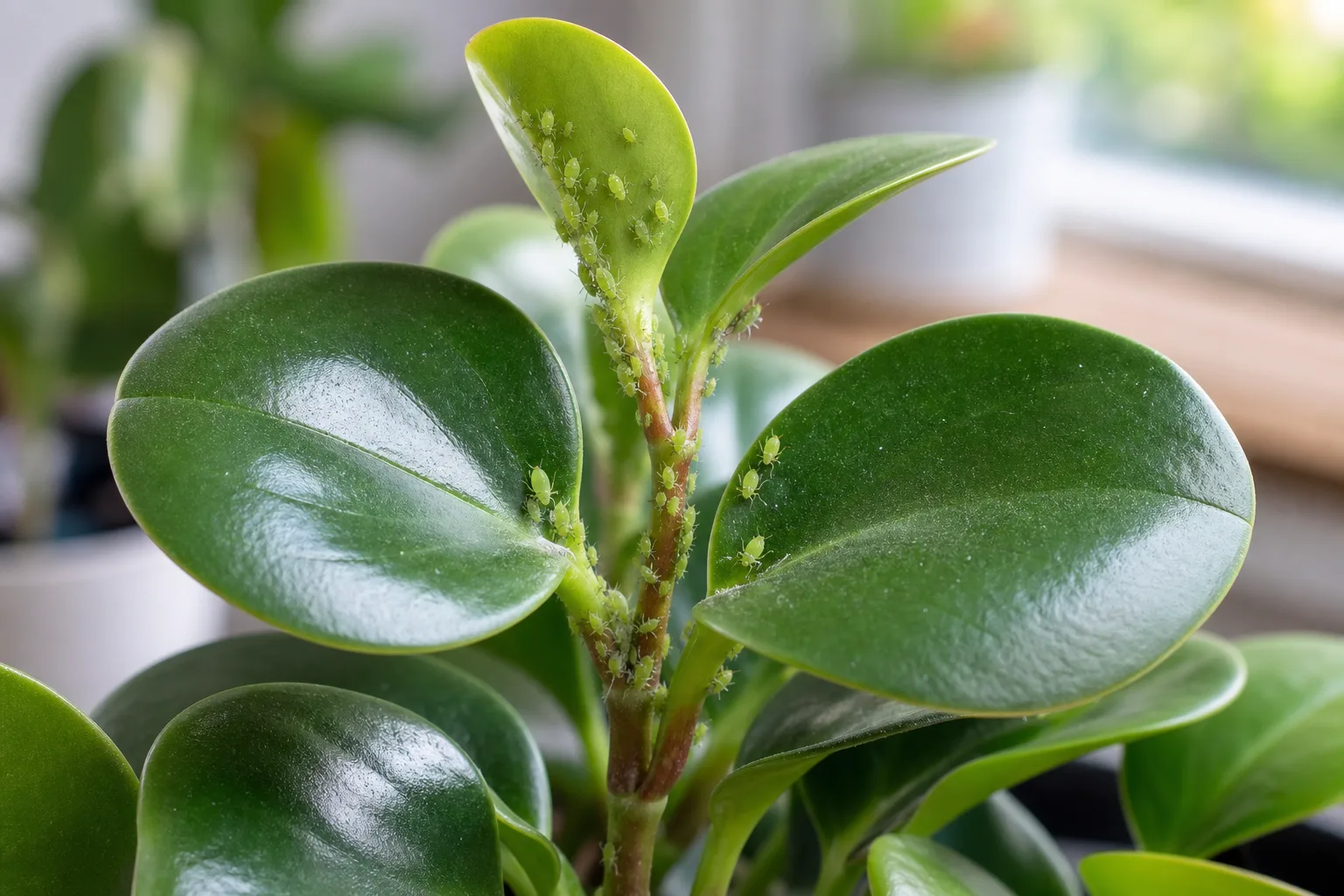
Aphids on Baby Rubber Plant: Causes, Checks & Fixes
This guide covers aphids on Baby Rubber Plant. See also the general Aphids guide, watering, and light pages for this plant.
Aphids on Baby Rubber Plant: Causes, Checks & Fixes
Quick answer
Aphids on baby rubber plant (Peperomia obtusifolia) are small soft-bodied insects that pierce tender growth and drain sap. On this compact plant, they usually show up first on new leaf tips, greenish flower spikes, and stem joints-not on the thick mature leaves that store water.
First step: isolate the plant and rinse aphids off with lukewarm water. Hold the pot at an angle, support the stems, and spray the undersides of young leaves and spike bases until insects dislodge. Confirm live aphids are gone before reaching for soap or oil. Baby rubber plant tolerates a gentle shower better than heavy chemical stacks, and washing removes honeydew that would otherwise attract ants and sooty mold.
This page covers the common-name baby rubber plant (P. obtusifolia). For genus-level peperomia aphid guidance at lower depth, see aphids on Peperomia. For dry-down rhythm after repeated rinses, see the baby rubber plant watering guide.
Aphids vs. mealybugs vs. spider mites on baby rubber plant
Before treating, confirm you are dealing with aphids-not a lookalike leaf pest:
| What you see | Likely cause | Where to look |
|---|---|---|
| Pear-shaped insects on new tips or spikes | Aphids | Tender growth, spike bases |
| Cottony white clusters in leaf axils | Mealybugs | Stems and petiole joints |
| Fine stippling with webbing on leaves | Spider mites | Leaf undersides, not spikes alone |
| Yellow lower leaves, heavy wet pot | Overwatering | No insects; soggy mix |
If insects are cottony or waxy, see mealybugs on baby rubber plant. If you find stippling and fine webbing across mature foliage, see spider mites. Yellow tips with firm thick leaves and wet soil fit overwatering better than aphids when no live insects are present.
What aphids look like on baby rubber plant
Aphids are pear-shaped, about 1/16 to 1/8 inch long, with visible legs and antennae. Most colonies on houseplants are green, but they can also appear black, brown, pink, or gray depending on species and age.
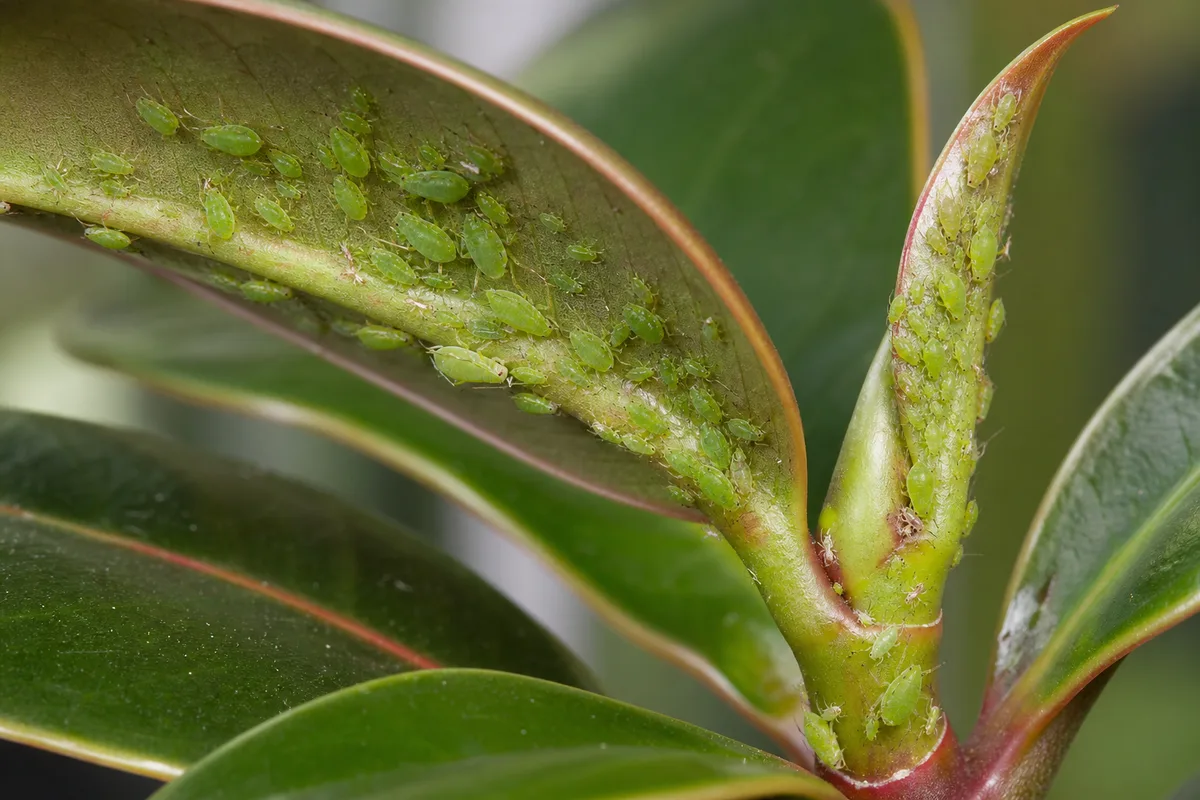
Aphids symptoms on Baby Rubber Plant - compare with healthy tissue on the same plant.
On baby rubber plant, check these spots first:
- Newest leaves at stem tips, where tissue is still soft
- Greenish-white flower spikes, which aphids often colonize just below buds
- Leaf axils where petioles meet the main stem
- Undersides of young leaves, especially along the midrib
Supporting damage includes:
- Sticky, shiny honeydew on waxy leaves or the pot rim
- Slight curling or puckering of new leaves
- Yellowing or stunted tips when colonies are dense
- Cast skins-whitish shed exoskeletons left behind as nymphs molt
- Ants on the pot or saucer, often a clue that honeydew is present even when aphids are hard to see
Mature baby rubber plant leaves are thick and succulent-like. Aphids rarely colonize old foliage in large numbers; if damage is spread evenly across every leaf with fine speckling and webbing, suspect spider mites instead.
Why baby rubber plant gets aphids
Baby rubber plant is not especially pest-prone, but its growth habit creates predictable weak points. The plant pushes new tips during warm, bright months and occasionally sends up flower spikes. Aphids prefer that soft tissue, and indoor collections lack the lady beetles, lacewings, and parasitic wasps that keep aphids in check outdoors.
Common entry routes and triggers:
- New plants without quarantine. Aphids hitchhike on nursery stock and spread before symptoms show on neighboring pots.
- Soft, fast new growth. Heavy or frequent nitrogen fertilizer produces tender shoots that aphids colonize quickly.
- Crowded shelves with poor airflow. Dusty, stagnant conditions stress plants and make early colonies easy to miss.
- Open windows in spring or fall. Winged adult aphids can fly in and land on the nearest tender growth.
- Stressed specimens. Overwatered roots, dim light, or recent Baby Rubber Plant repotting guide weaken a plant without killing it-exactly when sap-feeding pests gain ground.
Overwatering is baby rubber plant’s usual killer, not aphids-susceptible to rot if soils are kept too moist. But chronically wet soil and weak light do not cause aphids directly; they slow recovery once feeding starts. Fix pest pressure first, then cross-check watering so the plant can outgrow damage.
How to confirm the cause
Work through these checks before treating:
- Magnify the colony. A hand lens reveals pear-shaped bodies, cornicles (small tail pipes), and slow movement-aphid hallmarks.
- Test with a cotton swab. Aphids crush easily and may leave a green or brown smear. Mealybugs leave cottony wax; scale feels hard and immobile.
- Look for honeydew. Sticky residue that catches dust confirms sap feeders. Dry crusty spots without shine are more often hard-water deposits on waxy leaves.
- Check flower spikes and new tips only. If insects are scattered across every leaf with stippling and fine webbing, rule out spider mites.
- Inspect neighbors. Aphids often appear on multiple plants. If only one pot is affected and insects are clustered on one stem, you may have caught an early hitchhiker.
- Note recent changes. A new plant, open window, or fertilizer boost in the last two weeks fits aphid timing better than sudden environmental leaf drop.
Confirmed diagnosis requires live, moving insects on tender tissue plus honeydew or cast skins. Yellow tips alone, without insects, may trace to overwatering or cold stress on this species.
First fix for baby rubber plant
Isolate the plant and rinse aphids off thoroughly.
Move the pot away from other plants. In a sink or shower, use lukewarm water and moderate pressure to wash stem tips, spike bases, and leaf undersides. Tilt the pot so water drains freely-you do not want saturated soil on a plant that already dislikes wet feet. After each rinse session, let the top inch of mix dry before the next drink; repeated showering without dry-down is a common path to root stress on obtusifolia. Repeat the rinse two or three times, knocking clusters off with your fingers where they are accessible.
Let the plant drain and dry in bright indirect light, then inspect with a lens the same day. If you still see live aphids:
- Light infestations: Dab individual insects with a cotton swab dipped in 70% isopropyl alcohol. Target spike bases and leaf axils where rinse water may not reach.
- Persistent colonies: Spray insecticidal soap or neem oil, covering stems and both leaf surfaces until runoff. Treat in the evening or on an overcast day to reduce leaf stress.
Repeat rinses or sprays every five to seven days for at least three cycles. Aphids reproduce quickly, and eggs or nymphs missed on the first pass hatch within days.
Do not start with repotting, pruning half the plant, or systemic insecticides unless colonies are severe and nonchemical methods fail after several rounds.
Contact vs. systemic treatments on small pots
For desk-pot baby rubber plant, contact methods-rinse, alcohol dabs, labeled soap or neem-are the first line. They target the colonies you can see on spikes and new tips without moving insecticide into the root zone. UC IPM notes that systemic soil-applied products can reach hidden aphids but are more toxic and are a last resort; granular soil insecticides on houseplants have limited effectiveness and their use in the home is discouraged because of toxicity concerns per Iowa State Extension. Imidacloprid spikes or drenches may be labeled for some houseplants taken outdoors, but on a small obtusifolia in a cachepot, contact IPM plus isolation is usually safer and sufficient.
Step-by-step recovery
Once the first rinse or spray is done, follow this sequence:
- Keep the plant isolated until you see no live aphids for two full weeks.
- Re-rinse or re-treat on schedule. Mark calendar reminders; one application rarely clears an indoor infestation.
- Wipe honeydew from leaves and the pot with a damp cloth so sooty mold does not take hold.
- Trim only heavily distorted tips after insect numbers drop-not before-so you do not stress a plant still fighting feeding damage.
- Resume normal watering only when the top inch of mix is dry per the watering guide. Baby rubber plant stores water in thick leaves; soggy soil after repeated rinsing slows recovery.
- Check the collection weekly. Inspect new growth on every nearby plant, especially those that shared a windowsill or shelf.
If ants are farming aphids on the pot, interrupt the trail with a band of sticky tape around the pot base or move the plant until aphids are gone. Ants protect aphids from natural control and make reinfestation more likely.
Recovery timeline
Expect visible aphid numbers to drop within one to two treatment cycles if you are thorough on stem tips and spike bases. Full clearance usually takes three to four weekly treatments because nymphs hatch on a rolling schedule indoors.
Leaf recovery on baby rubber plant:
- New tips should emerge clean and firm within two to four weeks after the last live aphid is seen.
- Slightly curled young leaves may not flatten completely; that cosmetic damage is permanent on those leaves.
- Honeydew and light sooty mold wipe off once feeding stops; black mold on multiple leaves may need several cloth passes.
- Overall plant shape fills back in slowly-this is a slow to moderate grower, so judge success by clean new growth, not overnight size gain.
Grower observation (March 2026): A 4-inch obtusifolia with aphids clustered on one green spike received three shower rinses over ten days, plus alcohol dabs on two leaf axils the rinse missed. Live insects were gone by day 12; a clean new tip opened on day 18. The colonized spike tissue was trimmed after treatment, not before.
If colonies rebound after four consistent weekly treatments, escalate to a labeled houseplant insecticidal soap with complete coverage, or consider discarding a severely infested specimen before it spreads to the rest of the collection.
Lookalike symptoms
| What you see | Likely cause | How to tell apart |
|---|---|---|
| Cottony white clusters in leaf axils | Mealybugs | Waxy filaments, no pear shape; alcohol smear removes wax |
| Hard brown bumps on stems | Scale | Immobile; does not crush easily |
| Fine stippling with webbing | Spider mites | Microscopic; shake leaf over white paper to see moving specks |
| Shiny sticky leaves, no insects | Honeydew from prior aphids or other sap feeders | Search spikes and new tips; check ants |
| White crust on leaf surface | Hard-water or fertilizer residue | Wipes off dry; no insects under lens |
| Yellow lower leaves, firm thick foliage | Overwatering | No honeydew; soil wet; caudex-like stems still firm |
Mistakes to avoid
- Spraying soap or oil before rinsing. Contact products only kill what they touch; a strong rinse first removes most of the colony cheaply.
- Treating in hot direct sun. Baby rubber plant scorches easily; leaf burn on top of pest stress sets recovery back weeks.
- Using dish soap mixes. Household detergents can strip the waxy cuticle on thick Peperomia leaves. Use products labeled for plants.
- Returning the plant to the shelf after one treatment. Indoor aphids rarely disappear without repeated passes.
- Overwatering after repeated rinses. Wet soil plus stressed leaves invites root problems-the main reason this species fails indoors. Let the top inch dry between every drink, even during active treatment weeks.
- Heavy nitrogen fertilizer during recovery. Soft new flushes give aphids fresh feeding sites right when you are trying to clear them.
Baby rubber plant care cross-check
After pest treatment, align basic care so new growth stays healthy:
- Light: Medium to bright indirect light per the light guide. Dim corners slow recovery and produce weak, aphid-friendly shoots.
- Water: Let the top inch of mix dry before watering again. Leaves should stay plump, not mushy.
- Pot size: Snug pots dry faster; oversized pots stay wet and stress roots.
- Humidity: 40–50% is adequate. You do not need a steam room-good airflow matters more for pest prevention.
- Fertilizer: Hold off until new clean growth appears, then resume diluted balanced feed at half strength during active months only.
How to prevent aphids next time
- Quarantine new baby rubber plants for at least two weeks before placing them near other pots-isolate affected plants from others when pests are first detected.
- Inspect stem tips and spikes every time you water during spring and summer growth.
- Keep leaves dust-free with an occasional damp wipe-clean foliage is easier to inspect and less attractive to some pests.
- Space plants so air moves between them; crowded windowsills hide colonies.
- Fertilize lightly. Slow-release or half-strength liquid feed produces sturdy growth instead of soft aphid magnets.
- Close or screen windows when winged aphids are active outdoors, or check plants near open windows weekly.
When to worry
Escalate quickly if:
- Colonies cover most new growth and treatment after four weekly cycles has not reduced numbers
- Multiple plants in the same room show honeydew or ants
- Stems soften or leaves yellow widely while soil stays wet-root stress plus pests may overwhelm a small plant
- Sooty mold covers most foliage and blocks light to new leaves
Baby rubber plant rarely dies from aphids alone if caught early. A small pot with firm stems and at least one clean growing tip is worth saving. A plant reduced to bare stems with recurring colonies on every flush may be cheaper to replace than to keep treating across your collection.
Pet safety note
Most peperomias are considered safe for pets per Clemson Extension. Rinse and alcohol-dab treatments stay on foliage; if you use neem or soap, keep treated plants away from curious pets until sprays dry and follow label directions.
Related baby rubber plant problems
- Mealybugs - cottony axil clusters that mimic sticky residue without pear-shaped bodies
- Spider mites - stippling and webbing across mature leaves, not spike-only colonies
- Overwatering - yellow tips and wet mix without live insects
- Root rot - soft stems when repeated rinses keep soil saturated
- Baby rubber plant watering - dry-down rhythm after shower treatment
- Baby rubber plant overview - thick-leaf biology and baseline care
FAQs
How can I confirm aphids on my baby rubber plant?
Look for tiny pear-shaped insects clustered on new leaf tips, flower spikes, or stem joints. They move slowly when disturbed, leave sticky honeydew, and are not cottony like mealybugs or hard-shelled like scale.
Can shower rinses cause root rot on baby rubber plant while treating aphids?
Yes, if you soak the mix repeatedly without letting the top inch dry between rinses. Tilt the pot so water drains freely, then wait until the upper layer is dry before the next drink-the same dry-check in our watering guide. Thick leaves can look fine while wet roots stress the plant.
Why do aphids cluster on flower spikes but not thick older leaves?
Aphids pierce soft, actively growing tissue. Baby rubber plant pushes tender tips and greenish spikes in warm months while mature waxy leaves are too firm for large colonies. Check spikes and new tips first; stippling on every leaf with webbing points to spider mites instead.
When is an aphid infestation urgent on baby rubber plant?
Act fast if colonies cover multiple stems, honeydew has attracted ants or sooty mold, or nearby plants show the same sticky residue. Winged aphids can spread quickly through a collection.
Should I use the Peperomia genus aphid page or this one?
Use this page for baby rubber plant (Peperomia obtusifolia)-it covers spike colonization, thick-leaf resistance, and rinse-induced rot risk on desk-pot obtusifolia. See aphids on Peperomia for genus-slug queries.
Closing check: inspect spikes every week
During warm growth months, make green flower spikes and newest stem tips part of your weekly watering routine-not just the glossy mature leaves. Aphids on baby rubber plant announce themselves on that soft tissue days before honeydew spreads across the pot. One ten-second lens check at each tip beats a month of reactive spraying.
When to use this page vs other Baby Rubber Plant guides
- Baby Rubber Plant watering guide - Use for routine moisture checks before assuming aphids is the main issue.
- Baby Rubber Plant problems hub - Browse all 16 common issues on this species.
- Mealybugs on Baby Rubber Plant - Different entry point when symptoms overlap with aphids.
- Spider Mites on Baby Rubber Plant - Different entry point when symptoms overlap with aphids.
- Yellow Leaves on Baby Rubber Plant - Different entry point when symptoms overlap with aphids.