Baby Rubber Plant Repotting: When, How, and Mistakes
Baby Rubber Plant Repotting: When, How, and Mistakes to Avoid
Baby Rubber Plant Repotting: When, How, and Mistakes to Avoid
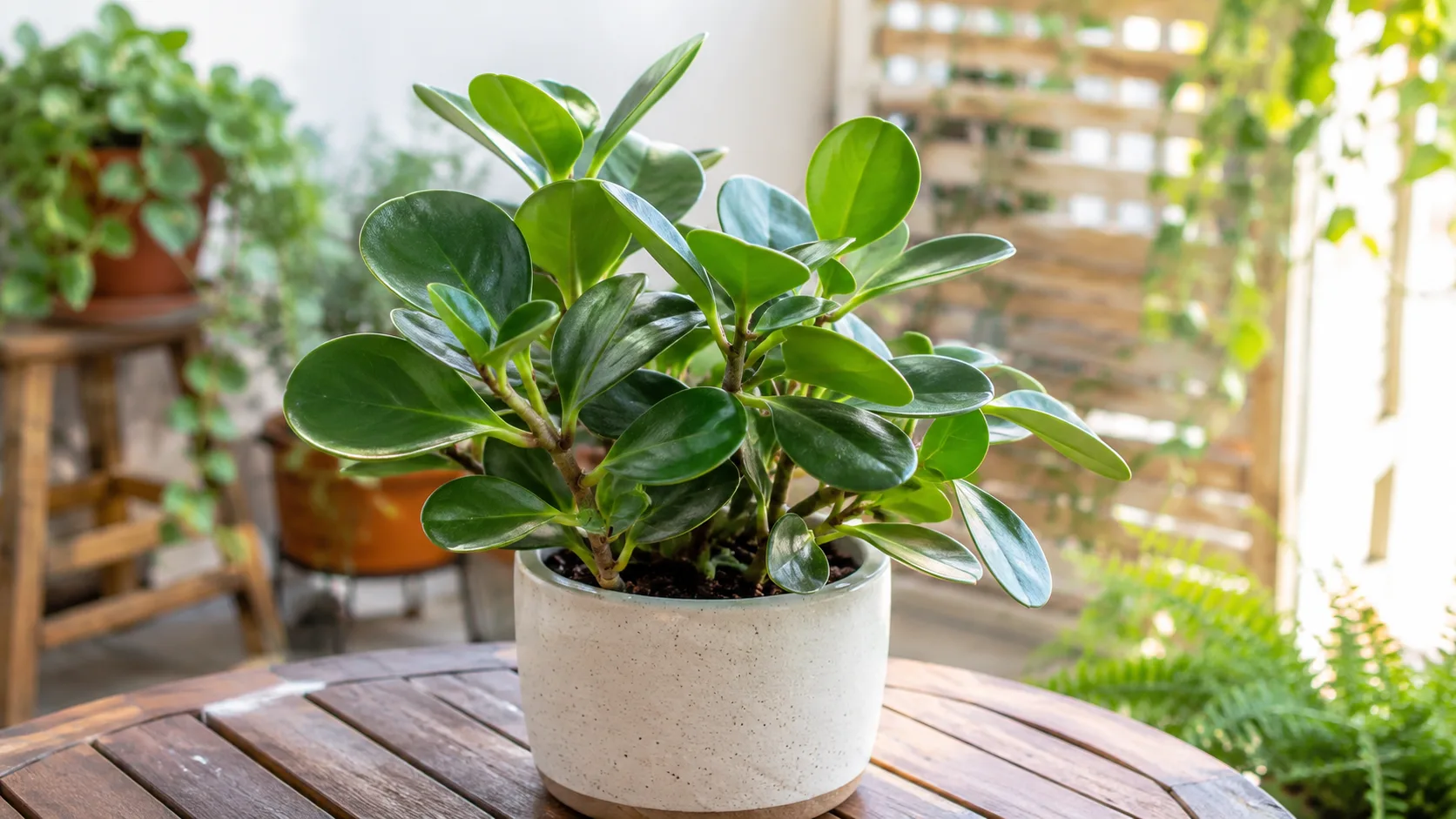
Baby rubber plant repotting is one of the most misunderstood routines in houseplant care because Peperomia obtusifolia looks like it wants a bigger home long before its roots actually do. The glossy, thick leaves store water. The root system stays small and shallow. The plant grows slowly indoors, often reaching only 0.5 to 1 foot tall in a typical home. That combination means repotting is a maintenance job you do every few years, not a seasonal upgrade you perform because the pot looks modest. Get the timing, pot size, and soil right, and the plant settles in within a couple of weeks. Jump sizes, repot on a calendar, or use dense wet mix, and you can turn a healthy plant into a weeks-long recovery project rooted in rot risk.
Why Baby Rubber Plant Repotting Is Different From Other Houseplants
Most popular houseplants tolerate generous pots and forgiving soil for a while. A pothos can live in a pot one size too large and still look fine. A monstera often wants room to push roots. Peperomia obtusifolia sits on the opposite end of that spectrum. It evolved as an epiphytic member of the Piperaceae family in the tropical and subtropical forests of Florida, Mexico, and the Caribbean, where roots cling to bark and leaf litter rather than sitting in deep, constantly wet soil. Indoors, that biology translates into a simple rule: the plant prefers a snug fit, fast-draining mix, and repotting only when the current container is genuinely failing the root zone.
The Missouri Botanical Garden describes Peperomia obtusifolia as a compact houseplant with thick, succulent-like leaves and a modest root system that does not demand frequent upsizing. The Spruce similarly notes that baby rubber plants are not repotted often because the compact species lacks an extensive root system, with once every few years usually enough. That is not laziness on the plant’s part. It is how the species manages moisture. A small root mass in a large wet soil column is one of the fastest routes to root rot on Baby Rubber Plant, especially in homes where watering habits are generous and winter light is weak.
The practical difference for you is diagnostic. When a pothos wilts, you often water. When a baby rubber plant wilts, the problem may be too much water, not too little, because damaged roots cannot move moisture even when the soil feels damp. Repotting should solve a root-zone problem, not become a reflex whenever growth slows. Slow growth alone is normal for Baby Rubber Plant overview. Yellow leaves alone can mean light or watering issues. Repotting makes sense when the pot, soil, or roots are clearly out of balance.
Repotting itself is not just “bigger pot, more soil.” For Peperomia obtusifolia, it usually means one of three jobs: a full repot with upsizing when the root ball has filled the current container, a soil refresh in the same pot when mix has broken down but roots still fit, or an emergency repot when soil is sour, waterlogged, or rotting regardless of season. Fresh soil matters because peat-heavy indoor mixes collapse over time, hold water longer, and accumulate salts. Repotting resets that environment and gives you the best chance to inspect roots, trim dead tissue, and confirm the crown is firm.
When Your Baby Rubber Plant Actually Needs a New Pot
A baby rubber plant tells you it needs attention through the container and the roots, not through dramatic leaf changes alone. The clearest signs include roots emerging from drainage holes, a root ball that lifts as one solid mass when you gently slide the plant out, soil pulling away from the pot walls, and water racing straight through the pot without moistening the root ball. Growth that stalls for months despite good light and sensible watering can also point to a tired root zone, especially if the plant has not been repotted in three or more years.
Soil behavior is an underrated signal. If the mix stays soggy for many days after watering, old compacted soil may be suffocating roots. Fungus gnats hovering constantly around the surface often mean the top layer is staying wet too long. A sour smell from the pot is not a repotting preference; it is an emergency. In those cases, waiting for spring may cost you the plant.
One sign alone is worth watching. Two or more together usually mean action is justified. Roots peeking from a drainage hole on an otherwise healthy plant can wait until spring if the mix still drains well. Roots peeking from the hole, water running through instantly, and no new leaves for a season is a stronger case for repotting soon. The Spruce recommends repotting when roots start growing out of drainage holes or soil lifts off the sides of the pot, which matches what most experienced growers look for in practice.
Do not repot just because the pot looks small relative to the foliage. Peperomia obtusifolia is supposed to look slightly top-heavy. The thick stems and glossy leaves are visually larger than the root system beneath them. A 4-inch nursery plant in a 4-inch pot is often exactly where it should be. Impatience is one of the most common hidden reasons for unnecessary repotting.
How Often to Repot (and When Not To)
Most healthy baby rubber plants need repotting every two to four years, with two to three years being the practical range for plants in active growth and Baby Rubber Plant light guide. Some slow-growing specimens happily go four years or longer if the soil still drains well and watering remains predictable. The Spruce states that once every few years is usually enough, and grower-focused guidance often lands around three to four years for plants that are not visibly root-bound.
That interval is a starting point, not a rule. A plant in a very small starter pot may need its first upsize sooner. A plant in an appropriate pot with refreshed top soil every spring may go longer between full repots. What matters is the condition of the root zone, not the date on your calendar. If the plant is healthy, putting out firm new leaves, and the pot dries on a steady rhythm, leave it alone.
There are also good reasons not to repot. A recently purchased plant should acclimate for two to four weeks unless it is clearly root-bound out of the box. A plant under pest treatment, heat stress, or severe underwatering on Baby Rubber Plant recovery should stabilize first. A plant that is merely not growing fast in winter does not need a bigger pot; it needs patience until longer days return. Repotting a comfortable plant because you want to “give it a boost” is one of the most reliable ways to create the exact setback you were trying to prevent.
Best Season to Repot Baby Rubber Plant
The best window for baby rubber plant repotting is spring through early summer, when daylight is lengthening, temperatures are stable, and the plant is entering active growth. During this period, roots can callus after minor damage, explore fresh mix, and support new leaves within weeks. The Spruce specifically recommends repotting in spring before the main growing season, which aligns with how most tropical houseplants recover from root disturbance. The RHS likewise notes that spring is the best time to repot peperomias, and most can stay in their original container for two or three years.
Early fall can work in warm homes with strong supplemental light, but it is a second-choice window. Growth is slowing, indoor heating may dry the air, and the plant has less time to establish before winter dormancy. Late fall and winter are the riskiest seasons. Roots heal slowly in cool, dim conditions. Wet fresh soil stays wet longer. A plant that was only slightly root-bound is often better left until March than repotted in December because you had free time.
Emergency repotting is the exception. Root rot, a completely waterlogged pot, or a plant tipping over because it is physically unstable should not wait for spring. In those cases, repot immediately, trim damaged roots, use very airy mix, and keep expectations modest. Recovery may be slow, but leaving rot in place is worse than repotting off-season.
Choosing the Right Pot Size and Material
When upsizing is truly needed, move up only one pot size: roughly 1 to 2 inches wider in diameter than the current container, or about 2 to 5 centimeters. The Spruce gives a useful rule of thumb: repot into a pot only about 2 inches larger than the original. If your plant is in a 4-inch pot, a 5- or 6-inch pot is the ceiling. If it is in a 6-inch pot, choose 7 or 8 inches. Jumping from a 4-inch to an 8-inch pot is how growers create a reservoir of wet soil the roots cannot use for months.
Drainage holes are non-negotiable. Decorative cachepots are fine only if the growing container inside drains freely and you empty excess runoff. A holeless ceramic pot turns every watering into a gamble this species does not win often. Depth matters too. Peperomia obtusifolia has a shallow root system, so a squat pot usually works better than a tall one. A deep pot filled with mix can hold moisture below the active roots, keeping the whole container humid and oxygen-poor.
Material choice is about your watering habits. Terracotta breathes and dries faster, which helps growers who tend to overwater. Plastic holds moisture longer, which can be useful in dry homes or under bright grow lights where pots dry quickly. Neither is automatically better. A disciplined grower with plastic and airy mix often outperforms an overwaterer with terracotta and dense soil. What matters is the combined system: pot size, material, mix, and Baby Rubber Plant watering guide working together.
Why Snug Pots Protect the Roots
Baby rubber plants do not “like” being root-bound in the emotional sense, but they tolerate a snug fit better than a loose one. Slight root contact with pot walls helps limit excess wet soil around a small root mass. That reduces the time roots sit in oxygen-poor conditions after watering. When the root ball nearly fills the pot, water moves through the mix predictably and the plant stabilizes quickly after each drink.
The danger is staying too long in stale soil, not being slightly tight in fresh soil. A plant can be root-bound yet still healthy if the mix drains. It can be loose in an oversized pot and rotting because the center never dries. Snug is good. Strangled, circling, and packed into degraded peat is not. That is why the best repot is often one size up with fresh airy mix, not the largest pot on the shelf.
Best Soil Mix for Baby Rubber Plant Repotting
The best soil for baby rubber plant repotting is loose, fertile, and fast-draining. The Spruce notes that the plant is not fussy about soil but prefers a loose potting mix, suggesting a blend of two parts peat with one part perlite or sand. In practice, most indoor growers do better with a chunkier recipe because bagged peat-heavy mixes compact over time.
A reliable home recipe is:
- 2 parts quality indoor potting mix or peat-free houseplant mix
- 1 part perlite or coarse pumice
- A handful of orchid bark or coco chips per quart of mix
That combination mimics the airy structure epiphytic roots expect: moisture retention without mud, and plenty of air pockets between waterings. Pre-mixed cactus or succulent soil blended with a little regular potting mix also works if you are short on ingredients. The goal is a mix that drains in seconds when you water a test pot, yet still holds enough moisture that the root ball does not desiccate in 24 hours.
Moisten the mix lightly before repotting. It should feel damp and crumbly, not wet and clumpy. Dry dusty mix can pull moisture from tender roots. Wet heavy mix can smother them on contact. Aim for the middle.
What to Avoid in Potting Mix
Several products cause trouble for Peperomia obtusifolia even when they are marketed for houseplants. Moisture-control potting mixes with water-absorbing crystals stay wet too long for these roots. Dense straight peat or straight coco coir compacts and suffocates. Garden soil, compost-heavy blends, and fine sand-heavy mixes bring poor drainage indoors and may introduce pests or pathogens.
Avoid reusing old soil from another plant. Even if it looks fine, it may carry fungus gnat larvae, salts, or disease spores. Avoid packing mix tightly around the roots to “secure” the plant. Firm contact is fine; compaction is not. University of Florida IFAS Extension material on root health consistently emphasizes that roots need oxygen as much as water, and dense saturated media is a primary driver of decline in indoor tropical plants.
Tools and Prep Before You Start
Good repotting starts before the plant leaves its pot. Gather a new container with drainage holes, fresh mix, clean scissors or pruning snips, a hand trowel, a chopstick or pencil, newspaper or a tray for work surface, and room-temperature water. If reusing a pot, scrub away old mineral crust and soil residue. If you trimmed rotted roots, sterilize blades with rubbing alcohol between cuts.
Watering prep is where advice diverges, and both approaches have logic. Some growers water lightly the day before so the root ball holds together and roots are flexible. Others let the soil dry for several days so old mix falls away cleanly and damaged tissue is easier to see. For routine repotting on a healthy plant, light moisture the day before is usually easiest. For rot rescue, drier soil is often safer because you need visibility and you will not water immediately afterward anyway.
Choose a stable workspace with bright indirect light. Baby rubber plant stems are thick but leaves can snap if the plant is handled roughly. Work at table height rather than over a deep sink if you can. Plan to finish in one session. A bare root ball sitting out while you hunt for mix is unnecessary stress.
Step-by-Step Baby Rubber Plant Repotting Guide
When the season, signs, and materials are ready, the process itself is straightforward.
First, slide the plant out of its pot. Squeeze flexible nursery pots gently. For rigid pots, run a knife around the edge if needed. Hold the base of the stems, not the leaves, and lift slowly. If the plant resists, tap the pot rim rather than yanking.
Second, inspect the root ball. Healthy roots are pale, firm, and flexible. Dark, mushy, or hollow roots should be trimmed back to solid tissue with clean scissors. Remove only what is clearly dead. Keep as much of the healthy root mass intact as possible.
Third, loosen circling roots lightly. Tease the bottom and outer edges if they wrap tightly. Do not shred the entire ball. The fine root hairs that absorb water are easily damaged.
Fourth, prepare the new pot. Add enough fresh mix to the bottom so the top of the root ball will sit about half an inch below the rim, matching its previous depth. Setting the plant too deep can bury the crown; too high dries the base too fast.
Fifth, position the plant and backfill. Hold the plant centered while you add mix around the sides. Use a chopstick to settle mix into gaps without compressing it. The plant should feel stable without being buried.
Sixth, decide on first watering based on root condition. If you trimmed heavily or the plant was rotting, wait three to five days so cuts can callus before introducing moisture. If the repot was gentle, roots were healthy, and the mix was pre-moistened, a light watering to settle soil is reasonable. When in doubt, wait. These plants store water in their leaves and tolerate a short dry window far better than a wet one.
Seventh, place the plant in bright indirect light and normal temperatures. Avoid direct sun for the first week. Skip fertilizer for at least four weeks, and longer if growth is slow.
Handling the Roots Without Damage
The biggest technical mistake in baby rubber plant repotting is treating the root ball like a hardy shrub. Peperomia obtusifolia has a small, fine root system that does not recover quickly from aggressive bare-rooting. You do not need to wash every old particle away. Keep a buffer of original soil around healthy roots when possible, especially during routine upsizing.
Trim only dead, mushy, or clearly circling roots that have no white growing tips. A few circling roots on the exterior are normal and can be loosened outward into the new mix. If more than a third of the root mass was rotten, consider same-size or even smaller pot recovery rather than upsizing. Recovery pots should match the roots you have left, not the size of the foliage above.
Soil Refresh vs Full Repot: Which Do You Need?
Not every repot requires a bigger pot. A soil refresh is the better choice when the plant is healthy, the current size still fits the root ball, but the mix has broken down. Remove the plant, shake or brush away the oldest loose soil from the outer third of the root ball, trim any dead roots, and replant in the same pot with fresh mix. Wash the pot if salts or algae are visible.
A full repot with upsizing is appropriate when roots circle heavily, emerge from holes, or the plant has clearly outgrown its container while remaining healthy. Move one size up and use fresh mix.
An emergency repot is appropriate when rot, sour smell, or chronic wet soil is present. Trim aggressively, downsize if needed, and prioritize airflow over aesthetics.
Choosing wrong is costly. Refreshing soil in a pot that is already too small without addressing circling roots solves only half the problem. Upsizing a plant that only needed fresh mix invites rot. When uncertain, slide the plant out and look. If roots still have room and are mostly white, refresh. If the root ball is a dense cylinder with little visible mix, upsize.
Signs of Successful Repotting vs Transplant Shock
A successful repot shows itself quietly. Within one to two weeks, leaves should feel firm again if they softened slightly. The plant should not wilt daily in unchanged light. Within four to six weeks, new growth points or slightly larger emerging leaves are the best confirmation that roots are working. The pot should dry on a predictable rhythm, lighter when ready for water, heavier just after watering.
Transplant shock looks different. Leaves droop persistently. Older leaves yellow and drop in clusters. The soil stays wet while the plant looks thirsty. Growth stops for more than three weeks in spring or summer. Some mild shock is normal for a few days, especially if many roots were trimmed. Shock that worsens after a week usually means too much water, too large a pot, or hidden rot left in place.
Damaged leaves do not heal backward. New growth tells the truth. If fresh leaves emerge small, pale, or misshapen, revisit light and watering before repotting again. Double repotting is rarely the answer within the same month.
How to Recover an Overpotted or Root-Rot-Prone Plant
If you already moved a baby rubber plant into a pot that was too large, or rot followed a well-intentioned repot, the fix is downsizing and drying out, not more fertilizer. Unpot the plant, remove all mushy roots back to firm tissue, and rinse only if you need to see damage clearly. Let trimmed roots air for a few hours if rot was advanced. Repot into a container that fits the remaining root mass, often the same size or smaller than the original.
Use the chunkiest mix you can manage. Water lightly once, then let the top half of the pot dry before watering again. Keep the plant in bright indirect light, not direct sun. Do not feed until new growth appears. Recovery can take four to eight weeks. Some leaves will be sacrificed. That is normal. The goal is a smaller but healthy root system, not a fast return to the previous size.
Prevention remains easier. One pot size up, airy mix, delayed fertilizer, and honest assessment of root condition beat rescue every time.
Aftercare: Watering, Light, and Fertilizer Rules
After repotting, aftercare is mostly about restraint. Light should stay bright and indirect, similar to what the plant had before, unless the previous spot was harsh direct sun. Temperature should remain stable. Cold drafts and hot radiators both slow root recovery.
Watering should follow the soil, not sympathy. If you repotted because of rot, let the mix approach dry before the next drink. If the repot was routine and roots were healthy, check moisture at one inch deep after a few days and water lightly only when that zone is approaching dry. Never soak a freshly repotted baby rubber plant “to help it settle” if you trimmed roots heavily. That is how rot returns.
Hold fertilizer for at least four weeks, and often six to eight weeks if growth is slow. Fresh roots are not ready for salts. When you resume feeding, use a diluted balanced houseplant fertilizer during active growth, not a heavy dose to “make up for lost time.”
Watch the weight of the pot. A healthy rhythm feels familiar within two to three weeks. If the pot stays heavy and leaves soften, inspect roots again rather than waiting for collapse. Repotting also resets your watering schedule: a plant in refreshed airy mix may need water less often, while a plant moved one size up may hold moisture longer. Check soil moisture after every repot instead of assuming the old interval still applies. Light top-dressing each spring-replacing the top inch of depleted mix without disturbing roots-can extend soil life between full repots.
Common Baby Rubber Plant Repotting Mistakes
The same errors appear repeatedly, and they all lead to wet soil around weak roots.
Repotting too often disrupts a plant that prefers stability. If growth is normal and soil drains, leave it alone.
Choosing a pot that is too large creates a moisture trap. One size up is the rule.
Using dense or moisture-retentive mix suffocates roots. Chunky drainage is mandatory.
Bare-rooting or over-teasing healthy roots removes the fine hairs that absorb water.
Watering immediately after heavy root trimming invites rot on uncalled cuts.
Fertilizing right after repotting burns tender roots and adds salts when the plant cannot use them.
Repotting in winter without urgency slows healing and keeps soil wet too long.
Repotting a brand-new plant the day it arrives stacks transplant stress on acclimation stress.
Each mistake is preventable with patience and a smaller pot than your instincts suggest.
The Oversized Pot Problem
The oversized pot is worth isolating because it is the most damaging single error. When you place a small root system into a large volume of fresh mix, every thorough watering wets a huge soil mass. The roots use only a fraction of it. The rest stays damp for days or weeks, especially in winter or low light. Oxygen drops. Roots decline. Leaves yellow. The grower sees wilting and waters again, compounding the problem.
The fix is not better drainage alone. It is proportional pot size. A 4-inch root ball belongs in a 5- or 6-inch pot, not an 8-inch statement planter. If you love a decorative large pot, use it as a cachepot and keep the plant in a properly sized inner container that can drain.
Winter Repotting, New Plants, and Other Edge Cases
Winter repotting should be avoided for routine upgrades. If you must, treat it like surgery: minimal root disturbance, same-size or only slightly larger pot, very airy mix, extended dry window before the second watering, and no fertilizer until spring growth is obvious.
Newly purchased plants should acclimate two to four weeks unless clearly root-bound or rotting. Moving homes and pots the same week is two stressors at once. Let the plant adjust to your light and humidity first.
Variegated cultivars such as Marble or Variegata recover more slowly because they carry less chlorophyll per leaf. Give them gentler post-repot care and avoid direct sun during recovery.
If your plant is tipping over because stems are heavy, a deeper stable pot or a stake may help, but upsizing diameter should still stay within the one-size rule. Sometimes the fix is pruning leggy stems, not repotting at all.
Conclusion
Baby rubber plant repotting succeeds when you respect how Peperomia obtusifolia actually grows: small roots, slow pace, succulent-like leaves, and a strong dislike for sitting in unused wet soil. Wait for real signs such as circling roots, poor drainage, or stalled growth paired with tired mix. Repot in spring or early summer when possible. Move up only one pot size, use chunky well-draining soil, handle roots gently, and hold off on fertilizer while the plant finds its footing.
Most failures are not mysterious. They are oversized pots, dense mix, winter timing, and watering too soon after root damage. Get those four decisions right and repotting becomes a quiet maintenance task you do every few years, not a recurring rescue. When in doubt, smaller, drier, and later beats bigger, wetter, and sooner every time for this plant.
When to use this page vs other Baby Rubber Plant guides
- Baby Rubber Plant overview - Start here for whole-plant context before deep-diving this topic.
- Baby Rubber Plant problems hub - Jump to symptom-specific fix guides when this care topic does not resolve the issue.
- Root Rot on Baby Rubber Plant - Escalate here when repotting adjustments are not enough.