Baby Rubber Plant Light Needs: Best Window & Warning Signs
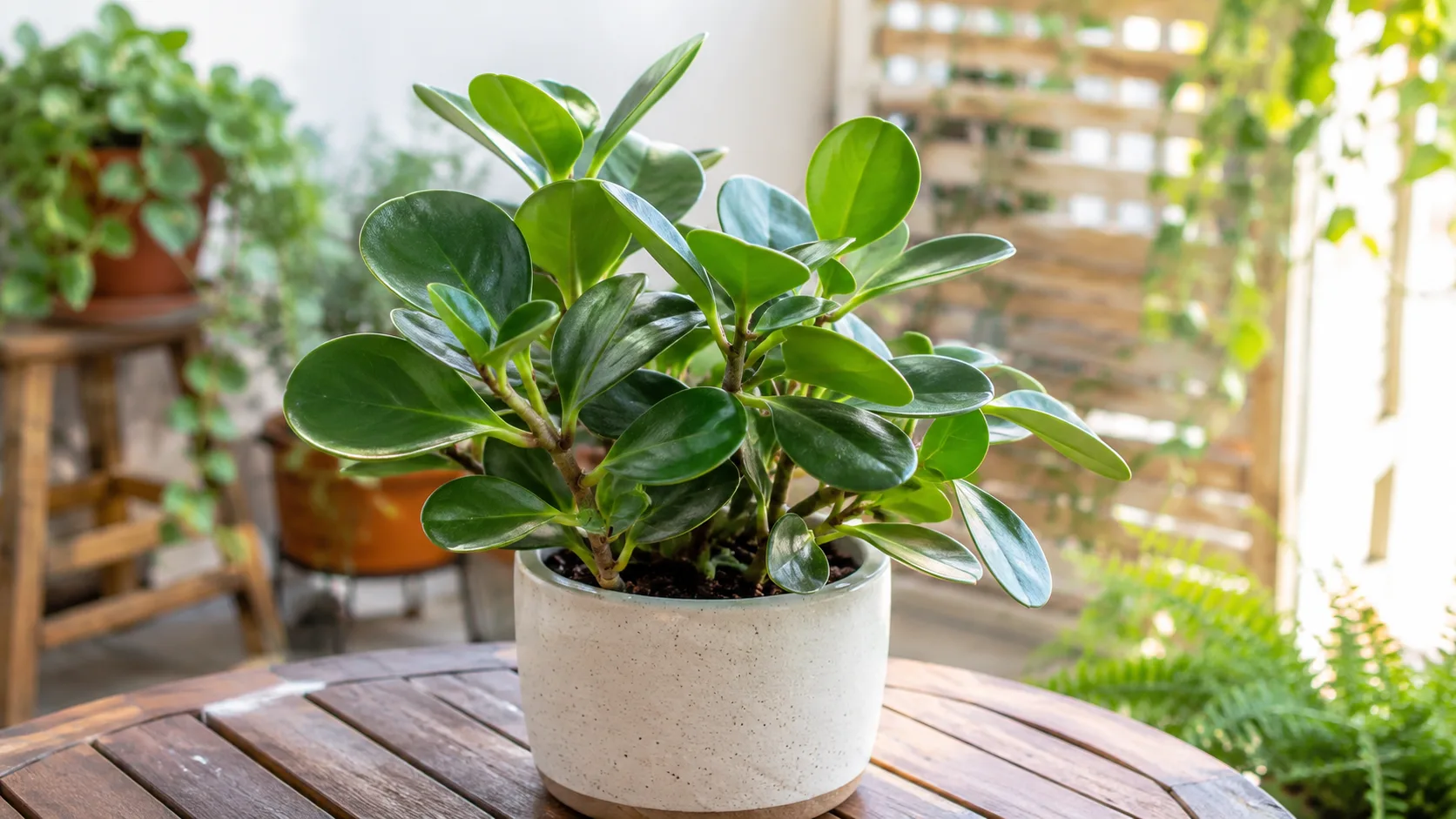
Baby Rubber Plant Light Needs: Best Window & Warning Signs
Baby Rubber Plant Light Needs: Best Window & Warning Signs
The short answer on baby rubber plant light
A baby rubber plant (Peperomia obtusifolia) grows best in medium to bright indirect light - strong enough to keep new leaves glossy and closely spaced, but soft enough that the foliage never sits in harsh, hot sun for long stretches. In practical home terms, that usually means within one to three feet of a bright window where daylight fills the room but direct afternoon rays do not land on the leaves. An east-facing window is often the easiest match because morning sun is gentler than midday or late-day sun. South and west windows can work too, but they usually need a sheer curtain or more distance from the glass.
The baby rubber plant is widely described as low-light tolerant, and that label is partly true. Solid-green plants can survive in dimmer corners longer than many flowering houseplants. Survival is not the same as thriving. In low light, growth slows, stems stretch, and variegated leaves often lose their pattern. If your goal is the compact, bushy look you see in nursery photos, aim for bright indirect light rather than the darkest spot that still keeps the plant alive.
Watch the newest growth, not old leaves. Old damage does not heal, but fresh leaves tell you whether the current light is working. Firm, plump, correctly colored new foliage means the placement is right. Long gaps between leaves, heavy leaning, or pale bleached patches mean something in the light setup needs to change.
What bright indirect light means for Peperomia obtusifolia
“Bright indirect light” sounds vague because human eyes adapt quickly. A room that feels adequately bright to you may still be weak for a plant several feet from the window. For Peperomia obtusifolia, the useful range is roughly 2,000 to 4,000 lux (about 200 to 400 foot-candles) for active, compact growth. The plant can tolerate lower levels - sometimes down to around 800 to 1,000 lux - but at that point it mostly maintains itself rather than pushing new growth. Below that threshold, etiolation begins: internodes lengthen, stems reach toward the light source, and the plant loses the dense shape that makes it attractive indoors.
You do not need expensive equipment to get close. A smartphone lux meter app can give a rough reading at the leaf surface. The simpler test is just as reliable: hold your hand between the window and the plant around midday. A sharp, dark shadow means direct sun - usually too strong for unacclimated baby rubber plants. A soft, diffused shadow means bright indirect light, which is the target. No visible shadow at the leaf level means the spot is probably too dim for strong growth.
Why light matters more than most baby rubber plant guides admit
Peperomia obtusifolia is often sold as an easy, forgiving desk plant, and that reputation is deserved - to a point. It tolerates inconsistent care better than many tropical foliage plants. But light still drives everything else: how fast the soil dries, how often you should water, whether new leaves emerge at all, and whether the plant stays bushy or slowly becomes a leggy cluster of bare stems. Treat light as the control dial for the rest of the care routine.
This species evolved on tropical and subtropical forest floors in Florida, Mexico, the Caribbean, and parts of South America. It is not a full-sun desert plant, and it is not a deep-shade understory moss. It lives in filtered light under canopy, where brightness is moderate but consistent and direct sun is brief or broken by leaves above. Indoor care works best when you imitate that filtered brightness rather than either a dark hallway or a blazing south window with no curtain.
The name “baby rubber plant” causes confusion. Peperomia obtusifolia is not related to Ficus elastica, the true rubber tree, or to Hevea brasiliensis, the source of natural rubber. It is a member of the pepper family (Piperaceae). Its thick, waxy leaves store some water, which is why it handles missed waterings better than thin-leaved tropicals - but those same leaves can still scorch when light intensity and heat spike together through glass.
How thick, succulent-like leaves change the rules
The baby rubber plant is sometimes called succulent-like because its leaves are fleshy, glossy, and firm. That leaf structure gives it two advantages in indoor light: it resists minor moisture loss better than thin-leaved plants, and it can handle slightly brighter ambient light than delicate shade lovers like ferns or calatheas. The trade-off is that the leaves have less surface flexibility when stressed. Once sunburn bleaches or crisps a patch, that tissue does not recover. You can only prevent further damage and wait for new leaves.
Thick leaves also mean the plant responds more slowly to light changes. A baby rubber plant moved from a dim shelf to a bright window may look fine for a week, then suddenly drop older leaves or show scorch on the sun-facing side. Slow feedback makes patience important. Make one placement change, then read the next two to four weeks of new growth before moving the pot again or changing watering habits.
Best window placement for baby rubber plants
The best window for a baby rubber plant is the one that delivers steady bright indirect light without hot afternoon sun on the foliage. For many homes in the Northern Hemisphere, that means an east-facing window is the most straightforward choice. The plant can sit on the sill or within about 0.5 to 1 meter of the glass and receive cool morning light that supports photosynthesis without the thermal stress of late-day sun.
North-facing windows are the safest from scorch risk because they rarely receive direct sun. They can still work, especially in bright rooms, but the plant should sit as close to the glass as possible. Moving even a meter away from a north window often drops light below the level needed for active growth. If the plant holds its size but rarely produces new leaves on a north window, the spot is probably a “maintenance” position, not a growth position.
South-facing windows offer the most total light, which is excellent in winter and risky in summer. Place the plant 1.5 to 2 meters back from a south window, or use a sheer curtain to filter midday intensity. West-facing windows are similar but often harsher in afternoon heat. A west window with a curtain, or a position to the side of the sunbeam rather than directly in it, usually works better than an unfiltered sill.
Distance matters as much as direction. Light falls off quickly as you move into the room. A baby rubber plant on a coffee table four meters from a window is often receiving a fraction of the light available at the sill, even though the room looks bright to your eyes. If you want compact growth without a grow light, keep the pot close to the light source.
East, north, south, and west windows compared
| Window direction | Typical indoor character | Best placement | Main risk |
|---|---|---|---|
| East | Cool morning sun, bright indirect afternoon | On sill or within 0.5–1 m | May weaken in very dark winters |
| North | Consistent low-to-moderate indirect light | Directly on sill | Slow growth, legginess over time |
| South | Strong year-round brightness | 1.5–2 m back or behind sheer curtain | Leaf scorch in unfiltered summer sun |
| West | Intense afternoon sun and heat | Side of window or filtered | Crisping and bleaching on sun-facing leaves |
Rotate the pot a quarter turn every week or two so all sides receive similar light. Baby rubber plants lean toward windows readily, and rotation keeps the plant symmetrical while you evaluate whether the overall light level is adequate.
How much light does a baby rubber plant need?
A healthy baby rubber plant in active growth needs roughly six to ten hours of usable bright indirect light per day. That does not mean six hours of direct sun. It means the plant should sit in a location where the ambient light at leaf level is strong enough to support steady photosynthesis through most of the daylight period. When that condition is met, you should see new leaves emerging regularly during spring and summer, internodes staying short, and mature foliage holding a deep green or stable variegated pattern.
The Spruce describes Peperomia obtusifolia as growing best in bright but indirect light, with non-variegated plants tolerating lower light more readily than variegated forms. Clemson HGIC recommends placing peperomia where it will receive bright, indirect light from east- or south-facing windows and notes it can tolerate low light near a large north window. The Sill places most Peperomia species in medium to bright indirect light, noting they can tolerate low indirect light but are not suited for intense direct sun. Specialist Peperomia obtusifolia references often cite an optimum range around 2,000–4,000 lux, with growth slowing markedly below roughly 1,000 lux.
The new-growth test for judging light levels
The most reliable way to judge light without gadgets is to track what the plant produces after conditions stay stable for two to four weeks. Mark the date you settle on a placement, then inspect the tip of the tallest stem every few days. A well-lit baby rubber plant should show visible new leaves or stem extension with short internodes during the growing season. If the only change is that existing leaves look slightly paler while no new tissue appears, the spot may be borderline - bright enough to prevent collapse but too weak for the bushy shape most growers want.
Compare new leaves to older ones on the same stem. Matching size and gloss means the light level is adequate. Noticeably smaller, thinner, or more widely spaced new leaves mean the plant is rationing energy because photons are scarce. This test works better than judging the room by eye because it measures what the plant actually captured, not what your adapted vision perceives.
If you are unsure whether your spot qualifies, run the new-growth test for a full month of stable care. A well-lit baby rubber plant should produce at least a few new leaves with normal size and color. If months pass with no fresh growth and stems are elongating, the plant is telling you it needs more light - even if the leaves still look green and intact.
Can baby rubber plants take direct sun?
Baby rubber plants can handle a small amount of gentle direct sun, especially cool morning exposure through an east window, but they should not sit in unfiltered midday or afternoon sun. Direct light through glass concentrates heat and ultraviolet intensity in ways that shaded forest conditions never replicate. Unfiltered south or west sun commonly produces bleached, papery patches on leaf surfaces, brown crispy margins, and in severe cases widespread leaf drop after a sudden move.
Morning sun before roughly 10 a.m. is the safest direct exposure for thick-leaved Peperomia species, provided humidity is reasonable and temperatures stay moderate. Even then, acclimation matters. A plant grown in a greenhouse or a dim shop corner has leaves built for lower light. Moving it straight to a sunny sill shocks those leaves. Increase light gradually over two to three weeks - an hour more of morning exposure at a time, or a foot closer to the window every few days - and watch the newest leaves for feedback.
Variegated cultivars are generally less forgiving of direct sun than solid-green plants because they have less chlorophyll per leaf area. A few hours of harsh sun can fade or bleach variegation permanently. When in doubt, filter the window or pull the plant back until the light is bright but soft.
Low-light tolerance and its real limits
Non-variegated baby rubber plants are among the more low-light-tolerant members of the Peperomia genus. Clemson HGIC and multiple care guides note that Peperomia species can survive in low indirect light near a large north window, and The Spruce specifically states that solid-green Peperomia obtusifolia can handle low-light conditions better than variegated forms. That tolerance makes the plant a realistic choice for offices, bathrooms with frosted glass, and rooms with only north exposure.
The limit is performance, not immediate death. In low light, the plant often enters a holding pattern. Water use drops. Soil stays wet longer. Growth slows or stops. Internodes stretch if the plant is still trying to reach brighter light. Over time, the soil’s wet-dry cycle breaks down, and root problems become more likely - not because the plant hates low light directly, but because low light changes every other rhythm in the pot.
If you must keep a baby rubber plant in a dim spot, adjust watering aggressively. Let the top inch of soil dry more thoroughly between waterings, reduce fertilizer, and accept a slower, leggier plant - or add a grow light. Do not assume the same weekly Baby Rubber Plant watering guide that works near an east window will work on a dark shelf five meters away.
Variegated vs solid green cultivars
Solid-green Peperomia obtusifolia is the most forgiving under lower light. Its leaves contain more chlorophyll per area, so each leaf captures light more efficiently. Variegated forms - including types sold as ‘Variegata’ or with cream, yellow, or white edging - need noticeably brighter indirect light to hold their pattern. In dim conditions, variegated baby rubber plants often revert toward solid green as the plant prioritizes photosynthetic tissue.
The Spruce makes this distinction directly: variegated cultivars need a brighter spot to keep variegation from fading, while solid-colored plants prefer filtered indirect light but cope better with lower levels. If you bought a variegated plant and the new leaves are increasingly green, insufficient light is the first suspect. Moving the plant closer to a bright window or adding a grow light usually produces better results than pruning alone.
Neither type should live in constant direct sun. Variegated leaves are more prone to bleaching. Solid-green leaves are more prone to hidden stretch - the plant looks fine in color while stems quietly elongate. Match the cultivar to the brightest indirect spot you can offer, then fine-tune distance and filtration based on new growth.
Seasonal light changes indoors
Window light is not static. A placement that works in June may fail in December simply because day length and sun angle change. Baby rubber plants are not dormant in the same dramatic way as outdoor deciduous trees, but growth does slow in lower light and cooler indoor temperatures. You may notice fewer new leaves from late autumn through early spring even when care otherwise looks identical.
In winter, south-facing windows often become the best natural-light option because the sun sits lower and light penetrates farther into the room. An east window that was perfect in summer may feel weaker in deep winter. If the plant stalls seasonally, consider moving it closer to the glass temporarily, cleaning the window to maximize transmission, or running a grow light on a timer for eight to ten hours daily.
Summer brings the opposite problem: stronger sun and more heat through glass. A plant that thrived on a south sill in January may scorch on the same sill in July. Watch for sudden bleaching or leaf curl during heat waves. A sheer curtain or a move of 30 to 60 centimeters back from the window is often enough to restore balance without sacrificing adequate brightness.
Using grow lights when windows fall short
Grow lights are a practical solution when your best window is still too dim, when furniture layout traps the plant away from glass, or when you want consistent growth through dark winters. Baby rubber plants respond well to full-spectrum LED fixtures designed for houseplants. Look for a light rated in the moderate intensity range - you do not need high-output flowering spectra for this foliage plant.
Place the fixture 30 to 45 centimeters above the top of the foliage as a starting point. Run it for about eight to ten hours per day on a timer. If new leaves emerge pale or tightly packed directly under the bulb, raise the fixture. If stems still stretch despite long run times, lower it slightly or extend duration by an hour and reassess after two weeks. The goal is even coverage across the canopy, not a single hot spot directly under the diode panel.
Grow lights also help office desks and interior shelves where window light never reaches. The mistake is using a standard household bulb and assuming it counts as plant lighting. Most decorative bulbs deliver poor photosynthetically active radiation at safe distances. A modest LED grow panel or a reputable clip-on grow light produces more usable results for Peperomia obtusifolia than a bright-looking desk lamp.
Warning signs your baby rubber plant has too much light
Too much light usually shows up on the leaves that face the sun or the fixture. The earliest sign is often dull or faded color on the exposed side, followed by bleached white or tan patches that feel papery or thin compared with healthy tissue. Leaf edges may turn crispy brown, and leaves may curl downward or inward during the brightest hours as the plant tries to reduce exposed surface area.
The Sill lists dull, fading leaves as a symptom of too much direct sun for Peperomia. Specialist Peperomia obtusifolia problem guides describe scorched patches developing rapidly when unfiltered afternoon light raises leaf surface temperature. Sudden leaf drop after a move to a brighter spot is another red flag - especially if the soil is neither bone dry nor waterlogged.
| Symptom | What it usually means | First fix |
|---|---|---|
| Bleached or papery patches | Direct sun or reflected heat on leaf surface | Move back or add sheer curtain |
| Crispy brown leaf margins | Intense light plus low humidity or heat | Filter light, check for AC or heater draft |
| Sudden leaf drop after a move | Shock from rapid light increase | Return to gentler light, acclimate slowly |
| New leaves smaller and pale under grow light | Fixture too close or too intense | Raise light or shorten daily run time |
Old scorched leaves will not green up again. Remove them only if they are mostly dead and unsightly. Focus on protecting new growth.
Warning signs your baby rubber plant needs more light
Insufficient light produces quieter symptoms that growers often blame on watering instead. The classic sign is leggy growth: stems elongate with two or more centimeters of bare space between leaves, and the plant looks sparse rather than bushy. You may also see strong leaning toward the window, slow or absent new growth, and smaller, paler leaves on recent shoots.
Variegated plants add another clue: loss of variegation on new leaves as the plant produces more green tissue to capture scarce light. The plant is not misbehaving. It is reallocating resources toward survival. The fix is brighter indirect light, not more fertilizer.
Leggy stems can be pruned to encourage branching, but pruning without improving light only produces a temporarily shorter plant that will stretch again. Move the plant to a brighter spot or add a grow light, wait for a sign of new growth, then trim long bare stems just above a leaf node to reset shape.
How to test a new light position safely
Changing light should be deliberate and incremental. Start by identifying the target spot - closer to an east window, farther back from a south window, or under a grow light - and measure or visually assess whether it offers bright indirect light rather than direct sun. Move the plant there, then wait at least two weeks before making another major change.
During the test period, check the top inch of soil before every watering because light changes alter drying speed. Brighter light means more frequent watering checks. Dimmer light means longer intervals. Do not simultaneously repot, fertilize heavily, and move the plant. One variable at a time keeps the feedback readable.
A simple acclimation protocol for brighter natural light looks like this: week one, place the plant in the new spot but out of the direct sunbeam; week two, allow gentle morning sun if the exposure is eastern; week three, evaluate new leaves and adjust distance. For grow lights, start at the upper end of the recommended distance and shorten photoperiod before lowering the fixture. The newest leaves are the scoreboard. Firm, glossy, evenly spaced foliage means the test succeeded.
Light and watering: the connection most growers miss
Light and watering are linked in every houseplant, but the connection is especially easy to overlook on Peperomia obtusifolia because the thick leaves hide drought stress longer than thin-leaved plants do. More light drives more photosynthesis and transpiration, so soil dries faster. Less light slows the whole system, and soil stays wet longer. Keeping the same watering calendar after a light change is one of the fastest routes to root rot on Baby Rubber Plant in a dim corner or chronic dryness in a bright bay window.
After any move, reset your expectations. In brighter light, check moisture every few days and water when the top inch of soil dries. In lower light, wait longer between waterings even if the leaves still feel firm. The leaves store water; the roots still need oxygen. A pot that never dries in weak light is a pot asking for trouble.
Humidity and temperature modulate the same relationship. A bright south window in winter heating can dry soil quickly while air humidity drops. A bright east window in a steamy bathroom may dry more slowly. Read the pot, not the calendar.
Common baby rubber plant light mistakes
The most common mistake is trusting the label “low-light plant” and placing the pot wherever it looks decorative. Bookshelves, distant side tables, and interior corners often fail the new-growth test within a month. The plant stays alive just long enough for the buyer to think care is fine, then slowly stretches or stalls.
The second mistake is sudden relocation. A baby rubber plant moved from a shop’s greenhouse to a dark apartment, then abruptly to a blazing west sill, will react badly even if both endpoints are theoretically acceptable over time. Gradual acclimation prevents leaf drop and scorch.
The third mistake is ignoring variegation needs. Treating a variegated cultivar like a solid-green plant in a north room produces progressive greening and weak growth. The fourth is pruning leggy stems without fixing light - a cosmetic fix on a structural problem. The fifth is overwatering on Baby Rubber Plant after a move to lower light because the leaves still look healthy even though root metabolism has slowed.
Conclusion
Getting baby rubber plant light right comes down to a few clear principles. Aim for medium to bright indirect light - roughly 2,000 to 4,000 lux at the leaves - with an east window or filtered south or west exposure as the most reliable indoor setup. Solid-green plants tolerate lower light better than variegated ones, but neither type thrives in a dark corner long term. Missouri Botanical Garden describes Peperomia obtusifolia as a low-maintenance houseplant for bright indirect light locations, and Clemson HGIC similarly recommends bright, indirect light from east- or south-facing windows. Direct afternoon sun is the main enemy; gentle morning exposure can work when introduced slowly.
Let the plant tell you whether the placement works. Compact new leaves, short internodes, and stable color mean success. Leggy stems, heavy leaning, bleached patches, and vanished variegation mean adjust distance, filter the window, or add a grow light. Every light change should trigger a watering reset, because brighter plants use water faster and dimmer plants need drier soil between drinks. Get those two variables aligned, and Peperomia obtusifolia rewards you with the glossy, bushy foliage that made it a standout houseplant in the first place.
When to use this page vs other Baby Rubber Plant guides
- Baby Rubber Plant overview - Start here for whole-plant context before deep-diving this topic.
- Baby Rubber Plant problems hub - Jump to symptom-specific fix guides when this care topic does not resolve the issue.
- Not Enough Light on Baby Rubber Plant - Escalate here when light adjustments are not enough.
- Leggy Growth on Baby Rubber Plant - Escalate here when light adjustments are not enough.
Related Baby Rubber Plant guides
- Baby Rubber Plant overview
- Baby Rubber Plant watering
- Baby Rubber Plant soil
- Baby Rubber Plant propagation
- Baby Rubber Plant fertilizer
- Baby Rubber Plant repotting
- Not Enough Light on Baby Rubber Plant
- Leggy Growth on Baby Rubber Plant
- Baby Rubber Plant problems
Related tool
Try the Plant Problem Diagnosis Tool with baby-rubber-plant pre-selected to estimate needs for your setup.