Overwatering on Baby Rubber Plant: Causes, Checks & Fixes
Quick answer
Overwatering on baby rubber plant (Peperomia obtusifolia) means the root zone stays wet too long on a semi-succulent species that forgives drought better than sogginess. First step: stop watering until the top 1 to 2 inches of mix dry and the pot feels noticeably lighter.
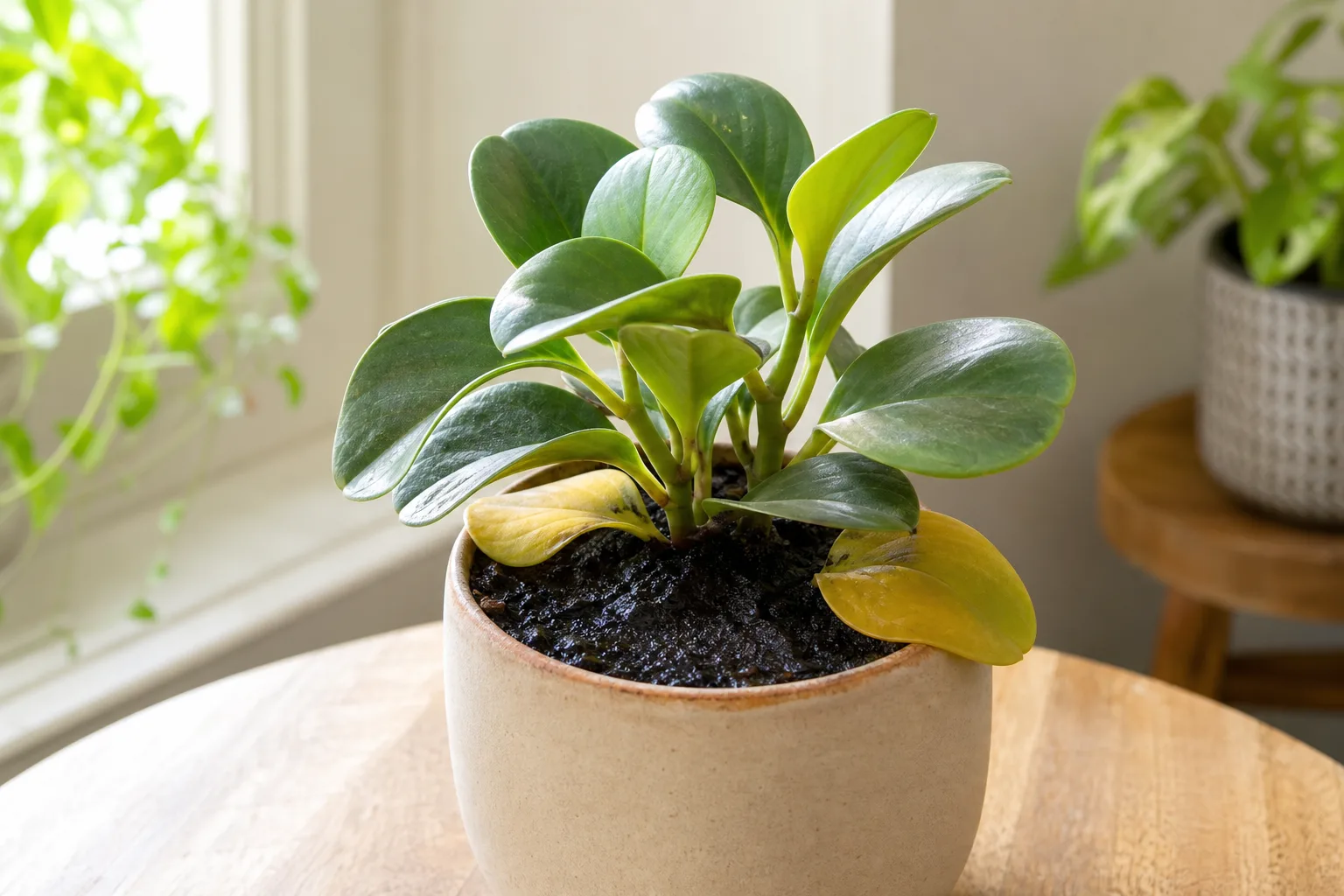
Overwatering on Baby Rubber Plant: Causes, Checks & Fixes
This guide covers overwatering on Baby Rubber Plant. See also the general Overwatering guide, watering, and light pages for this plant.
Overwatering on Baby Rubber Plant: Causes, Checks & Fixes
Quick answer
Overwatering on baby rubber plant (Peperomia obtusifolia) is not about one huge drink-it is about watering again before the root zone can breathe. This compact Piperaceae species has thick, glossy, semi-succulent leaves that store water and a small root system that rots quickly in airless, saturated mix. Obtusifolia is intolerant of wet soil and far more tolerant of brief drought than of chronic sogginess, which is why limp leaves with wet soil are one of the most common misreads in beginner care.
First step: stop watering until the top 1 to 2 inches of mix dry and the pot feels noticeably lighter. Do not add water because leaves look soft while soil is already damp-that pattern means damaged roots cannot move water upward efficiently, and another drink makes recovery slower.
For year-round dry-down rhythm and seasonal ranges, see the baby rubber plant watering guide. For mushy roots and sour soil, see root rot. For overlapping wilt patterns, see wilting and yellow leaves.
What overwatering looks like on Peperomia obtusifolia
The classic obtusifolia pattern starts at the oldest leaves. Lower foliage yellows or drops while the mix stays damp and the pot feels heavy and cool several days after the last watering. Leaves may look limp or soft even though the surface soil is wet-because failing roots cannot pull water into the leaves, not because the plant lacks water.
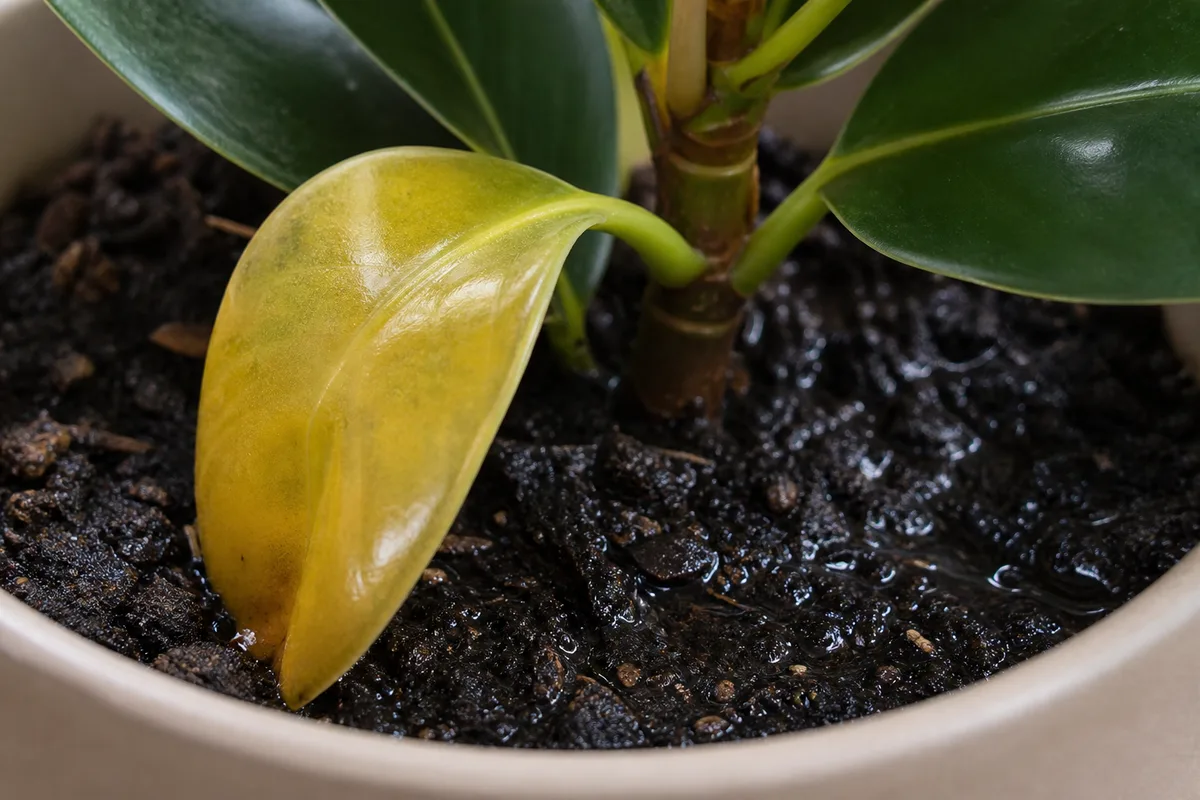
Overwatering symptoms on Baby Rubber Plant - compare with healthy tissue on the same plant.
Other common signs:
- Pot stays heavy and cool with dark, clinging surface mix
- Fungus gnats hover near the pot when soil never dries-see fungus gnats when flies are the main annoyance
- Sour or swampy smell from the drainage hole
- Soft or darkened tissue at the stem base while mix is wet
- New growth stalls or emerges smaller and pale
- Edema-style bumps or translucent patches after repeated wet cycles
- White mold fuzz on constantly damp surface peat-sometimes overlaps with mold on soil
What it does not look like: A light pot, dry mix throughout, and slightly thinner leaves with a firm stem base usually mean underwatering instead. Crispy brown tips with appropriate dry-down often trace to low humidity or water quality-not overwatering. One yellow lower leaf on an otherwise firm plant may be normal aging on woody lower nodes.
Why baby rubber plant gets overwatered
Peperomia obtusifolia belongs to the succulent-type peperomia group with thick, succulent-like leaves that act as small water reservoirs. Healthy foliage feels firm when you pinch it gently; the plant survives short dry spells by drawing on stored leaf moisture. That biology makes obtusifolia far more tolerant of drought than overwatering-missing one watering cycle rarely kills a mature plant, but watering while the root zone is still saturated drives out oxygen and kills fine roots within weeks.
Calendar watering is the leading trigger. The same weekly rhythm that works in summer can leave roots submerged through a cool, shaded winter week when growth slows and evaporation drops. Owners often interpret limp leaves as thirst and water again-exactly when the plant needs the opposite.
Common name confusion makes this worse. Baby rubber plant is not a rubber tree. Ficus elastica wants steadier moisture and a larger root system; obtusifolia wants a deeper dry-down and a smaller, airier root zone. Following Ficus-style advice on Peperomia is a reliable route to rot.
Obtusifolia-specific setup mistakes that keep pots wet:
- Dense retail peat in nursery pots that dries far slower at home than in a warm greenhouse
- Decorative cachepots that hide standing water after bottom-watering
- Heavy soilless mix without perlite or bark that holds water like a sponge
- Pots without drainage holes or blocked holes at the base
- Oversized pots where a small root ball sits in a large wet zone that never dries
- Cool dim rooms combined with wet soil-roots function poorly and stay wet longer
- Plastic or glazed ceramic pots that retain moisture longer than terracotta-wait for more dry-down before the next drink
- Variegated ‘Variegata’ forms in dim wet corners-they show stress sooner than solid-green types because pale sections photosynthesize less efficiently
How to confirm the cause
Work through these checks in order before changing anything else:
- Pot weight - Heavy and cool days after watering supports overwatering. A light pot with wilt may mean drought instead.
- Moisture at depth - Insert a finger or wooden skewer into the top 1 to 2 inches near the pot edge. Cool, clinging mix means wait. Dry upper layer with a firm crown may mean underwatering.
- Leaf firmness pinch - Gently pinch a healthy-looking leaf. Firm turgid tissue with wet heavy soil fits overwatering. Soft wrinkled leaves with a light dry pot fit thirst.
- Leaf pattern - Yellowing starting on lower leaves with wet mix fits overwatering. Even yellowing with dry mix may mean underwatering, low light, or age-see yellow leaves.
- Smell - Sour odor at the drainage hole suggests anaerobic soil and possible rot. Mild damp smell alone may still be recoverable overwatering.
- Light and season - Dim bookshelf placement and winter cool slow drying. Have you watered on schedule anyway?
- Stem base - Press gently at the soil line. Firm tissue with wet mix is overwatering you can fix with dry-down. Soft tissue means unpot immediately-you are past simple overwatering into root rot.
If the pot is light, the upper mix is dry, leaves are slightly softer but the crown is firm, underwatering may explain wilt better-water thoroughly once after confirming dryness, then resume your dry-down rhythm from the watering guide.
First fix for baby rubber plant
Stop all watering until the top 1 to 2 inches of mix dry and the pot feels noticeably lighter.
That single pause lets oxygen return to the root zone before you assess drainage, light, or pot size-Peperomia prefers to dry out between waterings. Lift the pot daily; when the upper mix is dry to your knuckle and weight has dropped, you have reached the reset point-do not water again until that condition returns after the next drink.
Do not fertilize, mist heavily, or repot on day one unless inspection shows mushy roots or blocked drainage holes. Stacking fixes while roots are still oxygen-starved often makes recovery slower.
Step-by-step recovery
Once you have stopped watering, work in this order:
- Empty standing water - Remove the nursery pot from any cachepot, dump saucers, and confirm drainage holes are open.
- Improve airflow and light within obtusifolia’s limits - Move to the brightest indirect spot the plant tolerates-never direct hot sun on stressed foliage. Gentle airflow helps the mix dry evenly without baking leaves.
- Let the mix dry on a predictable cycle - Wait until the top 1 to 2 inches feel dry and the pot is lighter before the next thorough watering. In a dim room that may take two to four weeks in winter.
- Water thoroughly once when dry - Apply room-temperature water until excess runs from drainage holes, then drain completely. One complete soak after a proper dry-down is not overwatering; overwatering is frequency and poor drainage.
- Inspect roots if decline continues - If leaves keep yellowing after one full dry cycle, unpot and look for firm versus mushy tissue. Trim decay only if you find rot-otherwise hold off on Baby Rubber Plant repotting guide.
- Remove spent lower leaves - Yellow leaves will not re-green. Snip them once the crown is stable to redirect energy to new growth.
- Hold fertilizer - Skip feed until new growth looks healthy for two weeks. Salt stress on recovering roots slows bounce-back.
If fungus gnats appeared with the wet soil, let the surface stay dry longer between drinks-that alone often breaks their breeding cycle without insecticides.
Recovery timeline
Stabilization often takes one to two weeks once the mix dries and stays on a predictable cycle-the crown should remain firm and yellowing should slow.
New glossy leaves unfurling from branch tips are the best sign of success; expect them in three to eight weeks during warm active growth, sometimes longer if recovery started in a cool winter room. Old yellow leaves will not green up again.
Worsening signs: crown softens after dry-down, stems blacken upward from the base, sour smell intensifies, or fungus gnats persist with constantly damp surface mix-those point toward advancing root rot and need immediate unpotting and root inspection.
Example recovery path: A grower with a 4-inch nursery pot in a north-facing office stopped watering on March 3 when the pot stayed heavy ten days after the last drink. Daily lifts showed weight dropping by March 10; the top inch was dry by March 14. The first new glossy leaf appeared April 8 after one thorough watering on March 15 followed by another full dry-down. The timeline matched winter-slow drying in low light-not a calendar, but a weight-and-depth check.
Lookalike symptoms
| Pattern | Likely cause | Key differentiator |
|---|---|---|
| Limp leaves, wet heavy soil, firm crown | Overwatering | Stop water; dry top 1–2 inches |
| Limp leaves, light dry pot, soft thin foliage | Underwatering | Water once thoroughly, then drain |
| Wet soil + soft stem base + mushy roots | Root rot | Unpot, trim decay, repot airy-see root rot |
| Pale stretched growth, slow dry-down | Low light + wet mix | Brighten indirect light and dry-down together |
| One yellow lower leaf, firm plant, normal dry-down | Normal aging | Remove leaf; no emergency dry-out |
| Crispy brown tips, firm roots, appropriate moisture | Low humidity or tap water minerals | Adjust humidity or water quality; do not soak pot |
| Drooping without soil change | Overlap with wilting or drooping leaves | Always check pot weight and stem base first |
What not to do
Do not water more because leaves look wilted while soil is already wet-that is the mistake that converts overwatering into rot. Avoid dense garden soil or water-retentive mix without amendments. Do not feed a stressed plant hoping to perk it up.
Skip repotting into a much larger pot “to help drying”-extra wet soil volume slows drying in low light. Do not leave the plant in a full saucer after bottom-watering. Do not mist heavily as a substitute for fixing soil moisture.
Do not treat obtusifolia like Ficus elastica-the common “rubber plant” name sends many owners toward the wrong watering rhythm.
How to prevent overwatering next time
Match watering to how fast your pot dries in your light. Let the compost partially dry between waterings-roughly the top 1 to 2 inches of mix before the next drink-in bright active growth that is often every 7 to 14 days; in slower winter months every 14 to 28 days, always confirming with touch and pot weight rather than dates.
Use well-draining soilless mix amended with perlite or orchid bark, pots with open drainage, and empty saucers within thirty minutes of watering. Avoid upsizing pots “for growth” in low light-a slightly root-bound obtusifolia in a right-sized pot dries more predictably than a small root ball swimming in extra mix.
Move plants away from cold drafts and reduce water in cool months when growth slows. Quarantine new peperomias and lift the pot weekly during your first month-early heaviness is easier to fix than a collapsed crown.
For complete species context-leaf storage biology, bottom-watering, pot material-see the baby rubber plant watering guide and the baby rubber plant overview.
When to worry
Escalate immediately if the stem base dents under light pressure, the mix smells strongly sour, or a quick root check shows brown mushy tissue. Those signs mean overwatering has progressed toward rot-dry-down alone is no longer enough.
If the crown stays firm, roots are pale when you inspect, and yellowing slows after one proper dry cycle, you are on track. Slow cosmetic yellowing on one old leaf with a firm crown can wait for a watering tweak.
Conclusion
Overwatering on baby rubber plant is a timing and drainage problem on a semi-succulent species-not bad luck. Confirm it with wet heavy mix versus firm crown, stop water until the top 1 to 2 inches dry, drain saucers, and resume only when the pot lightens on your schedule-not the calendar. Peperomia obtusifolia forgives brief drought far more willingly than it forgives a wet, shaded pot left on autopilot.
When to use this page vs other Baby Rubber Plant guides
- Baby Rubber Plant watering guide - Use for routine moisture checks before assuming overwatering is the main issue.
- Baby Rubber Plant problems hub - Browse all 16 common issues on this species.
- Root Rot on Baby Rubber Plant - Different entry point when symptoms overlap with overwatering.
- Yellow Leaves on Baby Rubber Plant - Different entry point when symptoms overlap with overwatering.
- Wilting on Baby Rubber Plant - Different entry point when symptoms overlap with overwatering.
Related Baby Rubber Plant guides
- Baby Rubber Plant overview
- Baby Rubber Plant watering
- Baby Rubber Plant light
- Baby Rubber Plant soil
- Root Rot on Baby Rubber Plant
- Yellow Leaves on Baby Rubber Plant
- Wilting on Baby Rubber Plant
- Fungus Gnats on Baby Rubber Plant
- Mold on Soil on Baby Rubber Plant
- Drooping Leaves on Baby Rubber Plant
- Baby Rubber Plant problems