Mold on Soil on Baby Rubber Plant: Causes, Checks & Fixes
Quick answer
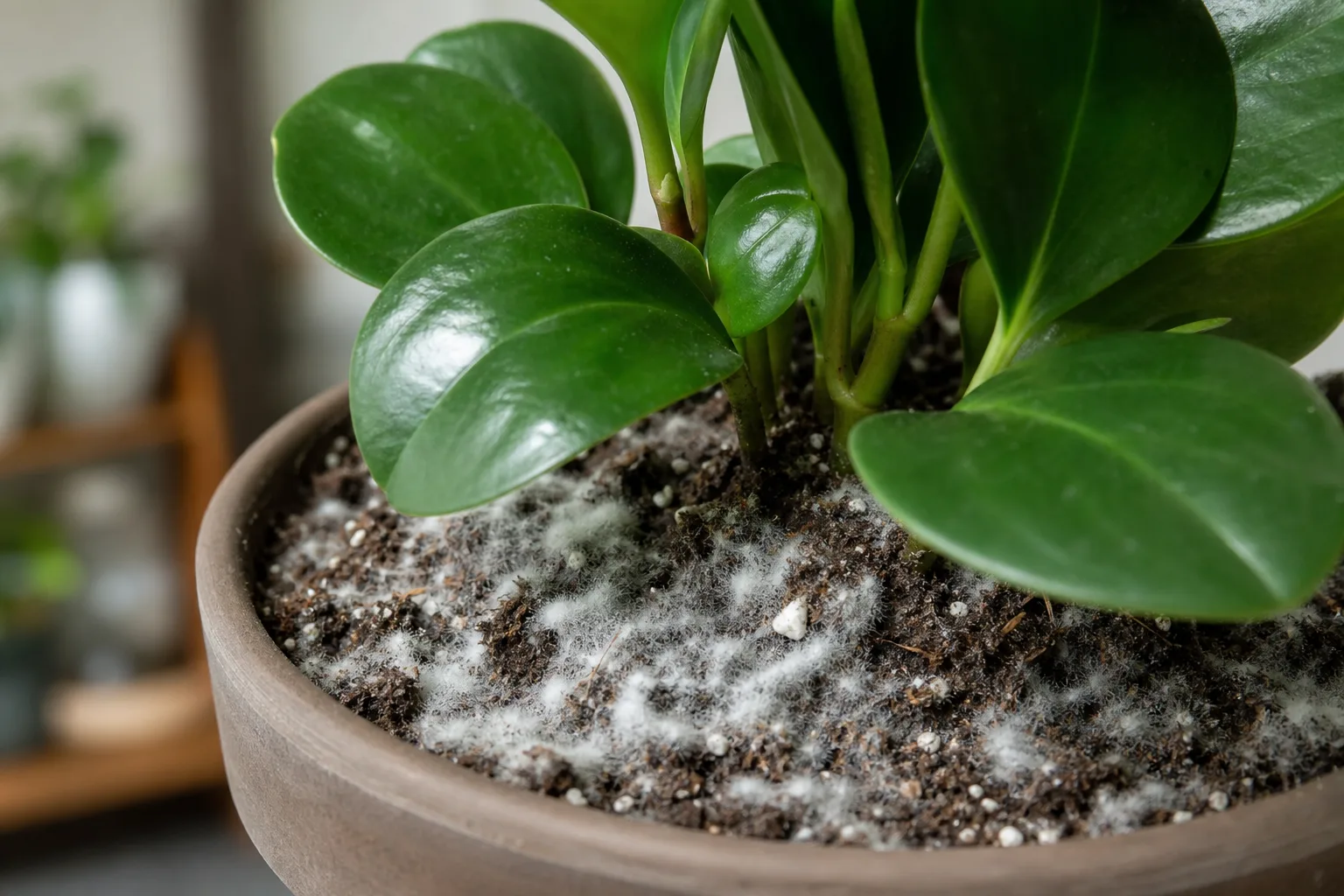
White or gray fuzz on baby rubber plant soil is usually harmless surface mold feeding on organic matter in wet mix. First step: scrape off the top quarter-inch and stop watering until the top 1–2 inches of mix are dry.
Mold on Soil on Baby Rubber Plant: Causes, Checks & Fixes
This guide covers mold on soil on Baby Rubber Plant. See also the general Mold on Soil guide, watering, and light pages for this plant.
Mold on Soil on Baby Rubber Plant: Causes, Checks & Fixes
Quick answer
White or gray fuzz on your baby rubber plant (Peperomia obtusifolia) potting mix is almost always harmless surface mold, not a fungus attacking those thick, glossy leaves. Saprophytic fungi feed on decaying organic matter in soil that stays damp too long. The mold itself rarely hurts a healthy obtusifolia-but it is a clear warning that moisture, airflow, or debris on the surface is out of balance.
First step: scrape off the top quarter-inch of affected mix and stop watering until the top 1–2 inches of mix are dry. Do not reach for fungicide, repot, or drench the plant on day one. On baby rubber plant, the usual trigger is watering before the top layer has dried-often in a dim corner where thick leaves still look firm while the soil surface never loses moisture between drinks.
This page covers the common-name baby rubber plant (P. obtusifolia). For genus-level peperomia mold guidance at lower depth, see mold on soil on Peperomia. For year-round dry-down rhythm, see the baby rubber plant watering guide.
What mold on soil looks like on Baby Rubber Plant
Surface mold on an upright, bushy peperomia is easy to spot once you look at the soil instead of the glossy foliage:
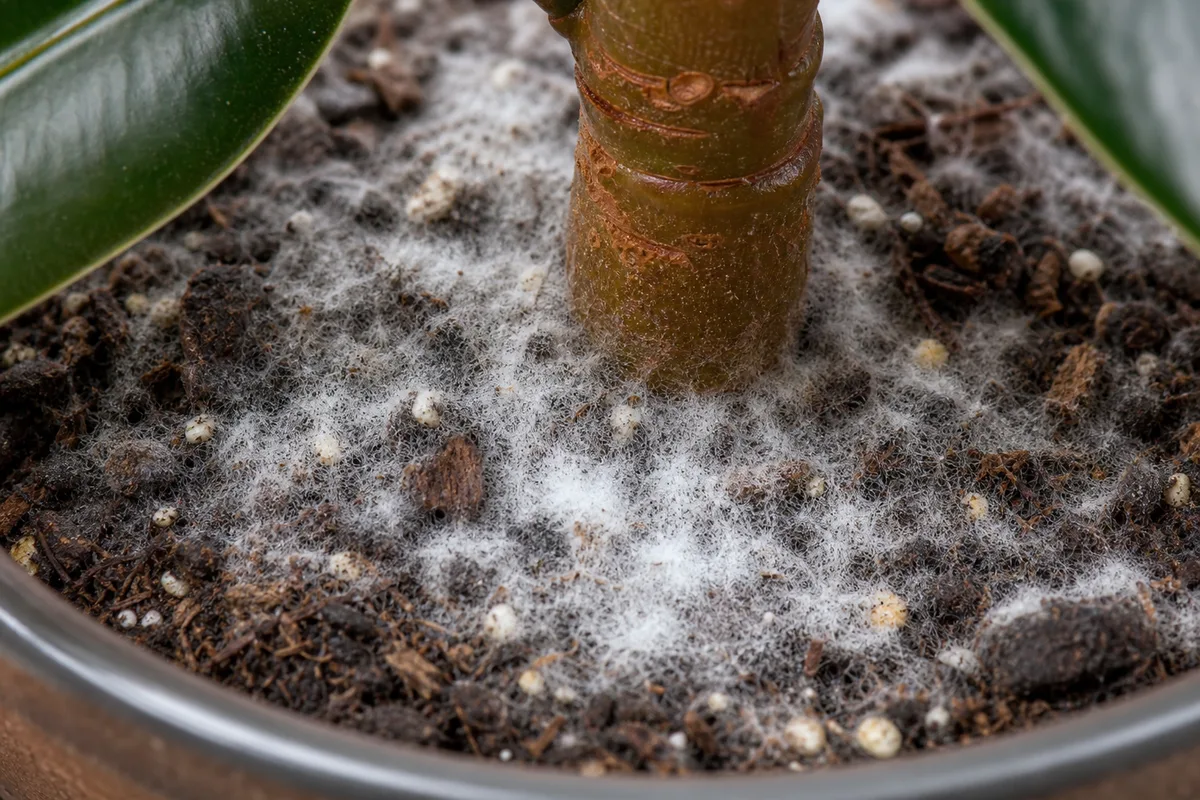
Mold on Soil symptoms on Baby Rubber Plant - compare with healthy tissue on the same plant.
- White, gray, or occasionally yellow-tan fuzzy patches on the top of the mix, sometimes in rings around the base of upright stems. Photo check: white cottony fuzz on damp potting mix beside firm, glossy obtusifolia leaves with upright stems-surface growth only, not on leaf blades.
- Soil that feels cool and damp for several days after watering, even when thick leaves still look firm and waxy.
- A faint musty smell when you lift the pot or disturb the surface-stronger than normal potting-soil smell but not the sharp sour odor of advanced root rot.
- Fallen thick leaves from lower nodes sitting on the mix, slowly breaking down into food for mold colonies.
- Tiny black fungus gnats hovering when you water-often sharing the same wet-surface habitat as mold. See fungus gnats when flies are the main annoyance.
- Plant foliage still upright with firm petioles in early cases. Unlike root rot, surface mold alone does not collapse the crown overnight.
Green algae on the pot rim or soil crust is a related lookalike: slick green film instead of fuzzy white growth, usually from constant surface moisture plus low light. Treat it with the same moisture-and-airflow correction, not a separate chemical protocol.
Photo check: mold concentrated in the outer damp ring of an oversized decorative pot while the center around the compact obtusifolia root ball stays darker and wet-classic oversized-cachepot pattern.
Why Baby Rubber Plant gets mold on soil
Overwatering and slow surface drying are the main drivers. Overwatering keeps soil too wet for too long. Peperomia obtusifolia stores water in its semi-succulent leaves and prefers to dry out between waterings. When you water on a fixed weekly schedule-or water because leaves look soft in low light-the top of the mix stays saturated while the plant uses water slowly. That is exactly where mold spores germinate.
Thick leaves mask wet soil. Healthy obtusifolia foliage feels firm and turgid even when the root zone has stayed damp for a week. Leaf-stored water lets the plant look fine while the surface grows mold-a pattern that does not happen on thin-leaved species that wilt quickly. Do not use leaf appearance alone as your watering signal; check the mix depth from the watering guide.
Low light extends drying time. Baby rubber plant tolerates moderate indirect light, but a pot on a bookshelf or north-facing desk evaporates far less water than the same plant in a brighter room. The same watering rhythm that works in summer sun can leave winter soil surface wet for ten days or more.
Dense, peat-heavy nursery mix holds surface moisture. Store-bought obtusifolia often arrives in moisture-retentive compost. Without enough perlite or bark, organic particles on top decompose in damp conditions-fuel for fungal growth. See the soil guide for mix ratios that dry faster.
Oversized pots create a wet outer ring. A decorative pot much larger than the compact peperomia root ball holds a wide band of mix that never dries. Mold frequently starts in that permanently damp zone before you notice any leaf symptoms.
Organic debris on the soil surface. Obtusifolia sheds older lower leaves naturally on upright stems. If those thick leaf blades land on wet mix, they become mold food. Pick them off promptly rather than letting them decay on the surface.
Poor airflow around grouped plants. Shelves packed with pots, tight cachepots, or plants pressed against walls trap humid air at soil level. Stagnant air slows evaporation the same way a closed bathroom stays damp after a shower.
Bottom-watering without a dry-down pause. Bottom-watering can keep the surface layer damp longer than top watering in a small desk pot, especially when the saucer holds standing water. If you bottom-water obtusifolia, still confirm the top 1–2 inches dry before the next drink-otherwise mold and fungus gnats can persist even when lower mix feels adequately moist.
Winter slowdown compounds the problem. Growth slows in cool months. Watering on a summer schedule while the plant is nearly dormant keeps the root zone wet longer than obtusifolia needs-raising mold risk and, if unchecked, overwatering stress. In grower practice, many indoor obtusifolia need water every 14–28 days in winter versus 7–14 days in active growth-always confirmed with a finger check rather than a calendar.
Variegated cultivars dry even slower in dim offices. Green and variegated P. obtusifolia share the same thick-leaf moisture trap, but white-splashed leaves photosynthesize less in low light. A variegated desk plant may need longer dry-down intervals than a solid-green sibling in the same room-judge by mix moisture, not leaf color alone.
Lookalike symptoms to rule out
Not every fuzzy or discolored patch on the pot means the same thing:
- Harmless saprophytic mold stays on the surface, stems stay firm, and the smell is mild mustiness-not swampy rot.
- Powdery mildew on leaves appears on foliage as white dusty patches, not primarily on soil. It is uncommon on obtusifolia indoors but worth distinguishing if you see white on leaf blades, not the mix.
- Mealybugs look like cottony white clusters on stems and leaf axils, not a uniform film across soil.
- Root or crown rot brings limp glossy leaves, soft stem bases, and sour-smelling mix even when you have scraped surface mold away. Follow the root rot page when stems dent under light pressure.
If stems are firm, new upper leaves look normal, and only the soil surface is fuzzy, you are almost certainly dealing with environmental mold-not a leaf infection.
How to confirm the cause
Work through this inspection in order before Baby Rubber Plant repotting guide or spraying:
- Press the top 1–2 inches of mix with your finger (or halfway down on a small 4-inch nursery pot). Obtusifolia should be watered when this zone dries. If it feels cold and damp days after the last drink, overwatering or slow drying is confirmed.
- Lift the pot. A heavy feel long after watering means saturated mix, not a plant that needs more water. Baby rubber plant pots are small-weight change is easy to feel once you know the post-watering heft.
- Smell near the drainage hole. Mild mustiness fits surface mold. A sharp sour or rotten odor suggests anaerobic conditions deeper in the root zone-investigate roots, not just the surface.
- Check stem bases at soil level. Firm, dry-feeling tissue supports a cosmetic mold diagnosis. Soft, brown, or collapsing tissue means rot work, not scrape-and-wait.
- Look for debris. Remove any fallen obtusifolia leaves and note whether mold sits directly on decaying organic matter.
- Watch for fungus gnats. Small flies in continuously wet soil, present within a day of watering and absent when the surface has been dry for a week, confirm a chronic wet-soil environment shared by mold and gnats.
- Assess light and pot size. A plant in deep shade in an oversized cachepot with no airflow is the classic mold setup on baby rubber plant.
Confirmed surface mold means fuzzy growth on wet topsoil, firm stems, and no sour root-zone smell-not just one odd spot after a single heavy watering.
Mold vs root rot vs fungus gnats
| What you see | Likely cause | Next step | Urgency |
|---|---|---|---|
| White fuzz on surface only, firm stems, mild smell | Surface mold | Scrape top layer; dry down 1–2 inches | Routine - scrape and wait |
| Tiny flies when watering, damp top inch | Fungus gnats + wet soil | Dry-down rhythm; sticky traps | Moderate - fix moisture within a week |
| Limp leaves + wet heavy pot + sour smell | Overwatering / root rot | Stop water; inspect stem base; see root rot | Urgent - same-day unpot inspection |
| Cottony clusters on stems, not soil film | Mealybugs | Isolate; alcohol swabs; see mealybugs | Moderate - treat before spread |
First fix for Baby Rubber Plant
Scrape off the top quarter-inch of moldy mix and discard it in the trash. Replace that layer with a small amount of dry, fresh potting mix if you want a clean surface-but the critical part is removing active spore mass, not dressing the pot for appearance.
Then stop watering until the top 1–2 inches of mix are dry. This single pause breaks the wet cycle that keeps mold alive. Move the plant slightly closer to indirect light or open airflow with a small fan if the surface has stayed damp for more than a week-but do not jump to repotting, fungicide, or cinnamon treatments on day one.
Wear gloves if you have sensitive skin when handling moldy soil. Peperomia obtusifolia is non-toxic to cats and dogs per ASPCA, but bag discarded moldy soil where curious pets cannot reach it.
Step-by-step recovery
If mold was mild and stems are firm, follow these steps in order after the first scrape and dry-down:
Let the surface dry fully
Wait until the top 1–2 inches feel dry and the pot lightens before the next thorough watering. On a corrected schedule in Baby Rubber Plant light guide, that may take 7–14 days in active growth and longer in winter depending on pot size.
Water thoroughly, then drain
When you do water, wet the mix evenly until water runs from drainage holes, then empty the saucer within 30 minutes. Avoid repeated small sips that keep the surface damp while lower roots stay inconsistently moist. Let compost partially dry between waterings on peperomias-the RHS dry-check standard matches obtusifolia needs.
Remove fallen leaves from soil surface
Pick off shed obtusifolia leaves from the soil weekly. Do not let pruned petioles or thick lower blades sit on the mix to decompose.
Improve airflow and light modestly
You do not need to blast baby rubber plant with direct sun-a brighter indirect spot or gentle fan movement helps the surface dry without scorching glossy foliage.
Address fungus gnats if present
If gnats appear with mold, let the top 1–2 inches of soil dry completely before watering again and use yellow sticky traps for adults. Persistent larvae may need a Bacillus thuringiensis israelensis (BTI) drench-but fix watering first; traps and BTI alone will not stop mold if the mix stays wet. Full gnat protocol: fungus gnats on baby rubber plant.
Repot only if mold keeps returning
If you scrape, dry down, and adjust watering but fuzzy growth returns within one to two weeks, the mix or pot is likely holding too much moisture. Repot into fresh perlite-amended compost in a right-sized container with drainage-not preemptively on the first sight of mold. P. obtusifolia is intolerant of wet soil; chronic surface mold often precedes root stress when the underlying mix never dries.
Recovery timeline
Cosmetic mold often clears within days once the surface stays dry. You should see no new fuzzy growth within one to two weeks after correcting the watering rhythm.
Judge success by dry soil surface between waterings, absence of new mold, and firm new glossy leaves from upper nodes-not by old lower leaves, which may yellow and drop for unrelated aging reasons.
Signs you are improving: the pot weight cycles predictably, gnats disappear when the surface dries, and stem bases stay firm.
Signs the underlying problem is worsening: mold returns within days of scraping, lower leaves yellow while mix stays damp, stems soften at soil level, or the drainage hole smells sour again.
What not to do
Do not spray fungicide on harmless surface mold without fixing moisture-that treats the symptom, not the cause.
Do not keep watering because leaves look limp while the mix is already wet. On obtusifolia, that pattern leads to root rot, not faster recovery. See overwatering for the full dry-down path.
Do not repot into a larger decorative pot “to fix” mold. A bigger wet zone makes recurrence more likely on a compact-rooted peperomia.
Do not rely on cinnamon, hydrogen peroxide, or vinegar as a substitute for drying the soil and correcting watering.
Do not ignore mold when fungus gnats, sour smell, and yellow lower leaves appear together-that combination means chronic overwatering, not a cosmetic issue alone.
How to prevent mold on Baby Rubber Plant soil
Long-term prevention matches normal good care for Peperomia obtusifolia:
- Water when the top 1–2 inches of mix are dry, not on a calendar. In grower practice, winter may mean watering every 14–28 days instead of weekly-always confirm with a finger test.
- Use well-draining mix with perlite or bark and a pot with open drainage. Empty saucers after every watering.
- Right-size the container to the root ball. Avoid oversized cachepots that trap humidity around the soil surface.
- Remove spent leaves from the pot surface promptly on upright stems.
- Adjust for light. A dim placement needs less frequent water than the same plant in a brighter room; variegated cultivars in offices often need the longest dry-down intervals.
- Maintain gentle airflow around grouped plants without cold drafts on wet foliage.
- Scout new purchases. Nursery pots in heavy mix plus immediate heavy watering at home is a common first-month mold trigger. Let the surface dry before the next drink after bringing obtusifolia home.
When to worry
Treat mold as urgent when scraping and drying fail within two weeks, stems feel soft at the base, the mix smells sour, or multiple lower leaves yellow while the pot stays heavy. Those signs point toward root-zone failure-not harmless surface fungus alone. Follow the root rot inspection protocol when the stem base dents under light pressure.
If mold appears once after overwatering a single time and disappears once the surface dries-with firm stems and stable upper leaves-you likely have a corrected habit slip, not an emergency repot.
If stems stay firm, watering is corrected, and mold still returns after repotting into fresh mix, contact your local Cooperative Extension office or a master gardener helpline with photos-persistent surface growth on an otherwise healthy obtusifolia can signal a contaminated mix batch or a drainage flaw in the container.
Escalation summary: cosmetic surface mold → scrape and dry-down (routine). Mold returns within two weeks despite corrected watering → repot into fresh, faster-draining mix in a right-sized pot. Sour smell, soft stems, or limp leaves on wet mix → same-day root inspection per the root rot guide-do not scrape-and-wait alone.
FAQs
Is white mold on baby rubber plant soil dangerous?
Surface saprophytic mold on potting mix is usually cosmetic and does not attack healthy Peperomia obtusifolia tissue. It becomes a warning sign when the mix stays damp for days, fungus gnats appear, or stems soften at the base-those patterns point toward chronic overwatering and possible root stress, not mold alone.
Why does mold keep coming back on my peperomia in winter?
Growth slows in cool, dim months while many owners keep a summer watering rhythm. The top layer stays wet longer in a small desk pot, mold spores germinate on damp peat, and the cycle repeats until you let the upper 1–2 inches dry fully-often stretching toward 14–28 days between drinks in winter (grower practice; confirm with a finger test each time).
Should I repot my baby rubber plant when mold keeps returning?
Try scrape-and-dry plus a corrected watering rhythm first. Repot into fresh perlite-amended mix in a right-sized pot only if fuzzy growth returns within one to two weeks after you adjust moisture, the mix smells sour, or the outer ring of an oversized pot never dries.
Can I just scrape mold off and keep watering on schedule?
Scraping removes visible spores but does not fix the wet surface that invited them. If you water again before the top 1–2 inches of mix dry, mold usually returns within days. The dry-down pause is the essential step-not another fungicide or cinnamon treatment.
How do I tell mold from root rot on Peperomia obtusifolia?
Harmless mold stays on the soil surface while stems feel firm and the smell is mild mustiness. Root rot brings a sharp sour odor from drain holes, soft black tissue at the stem base, and limp glossy leaves despite wet mix. When those rot signs appear, follow the root rot inspection path instead of scrape-and-wait alone.
Can I bottom-water while fighting mold on baby rubber plant?
Yes, but only if you still let the top 1–2 inches dry before the next drink and empty any standing water from the saucer. Bottom-watering without a surface dry-down can keep the top layer damp and sustain both mold and fungus gnats even when lower mix feels moist.
Related baby rubber plant problems
- Overwatering - heavy pot, sour smell, yellow lower leaves when the thick-leaf moisture trap masks wet soil
- Fungus gnats - tiny flies sharing the same wet-surface habitat as mold; bottom-watering dry-down traps
- Root rot - soft stems and mushy roots when mold is not cosmetic; same-day unpot when sour smell appears
- Mealybugs - cottony white clusters on stems, not uniform soil film
- Wilting - limp glossy leaves that can follow chronic wet mix after surface mold
- Mold on soil (Peperomia genus) - broader genus companion at lower depth
- Baby rubber plant overview - full care hub
- Baby rubber plant watering - dry-down rhythm and bottom-watering notes
When to use this page vs other Baby Rubber Plant guides
- Baby Rubber Plant watering guide - Use for routine moisture checks before assuming mold on soil is the main issue.
- Baby Rubber Plant problems hub - Browse all 16 common issues on this species.
- Fungus Gnats on Baby Rubber Plant - Different entry point when symptoms overlap with mold on soil.
- Overwatering on Baby Rubber Plant - Different entry point when symptoms overlap with mold on soil.
- Root Rot on Baby Rubber Plant - Different entry point when symptoms overlap with mold on soil.