Mealybugs on Baby Rubber Plant: Causes, Checks & Fixes
Quick answer
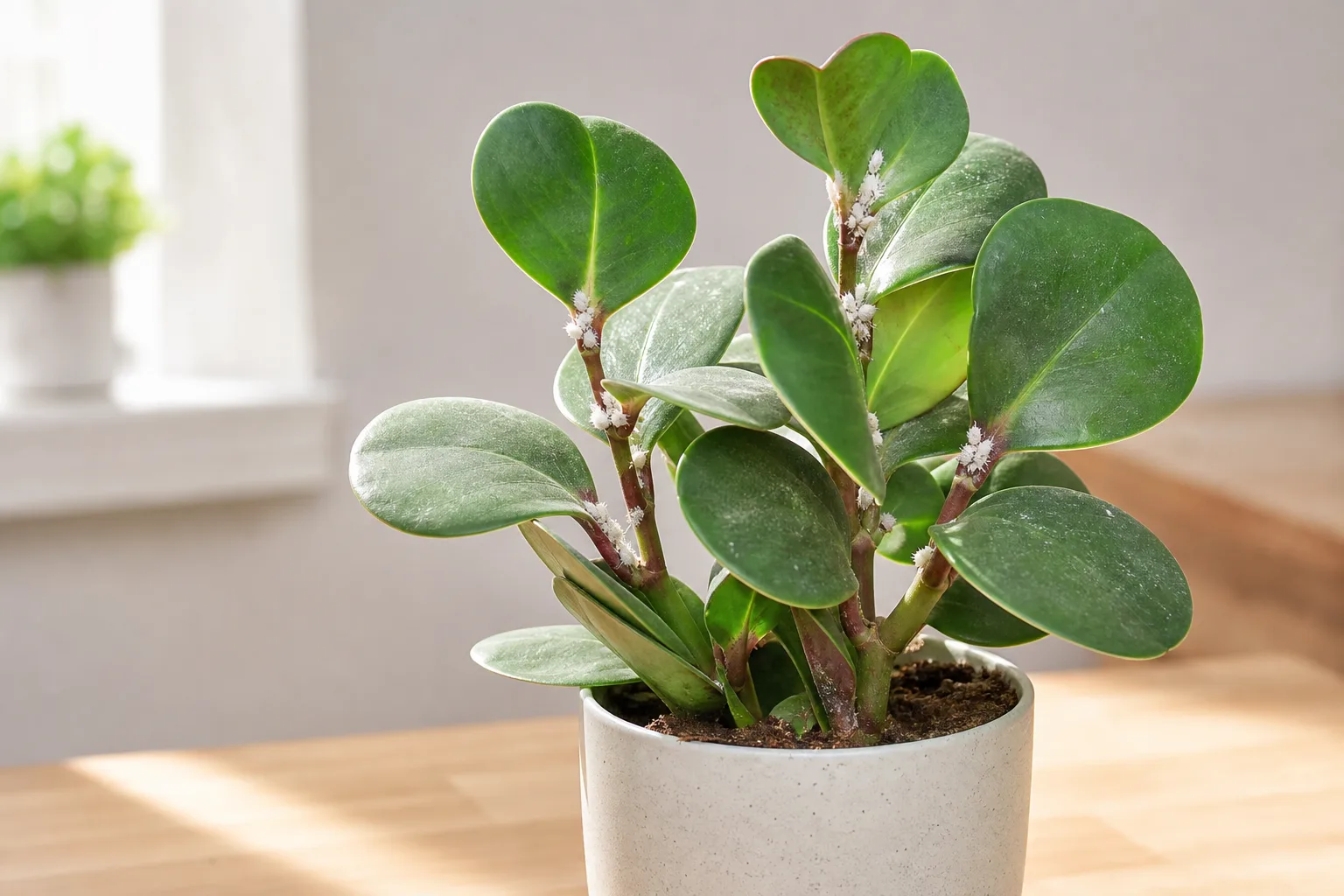
Mealybugs on Baby Rubber Plant cluster in leaf axils and stem joints where thick leaves meet the stem. First step: isolate the plant and dab every visible colony with 70% isopropyl alcohol on a cotton swab-do not spray the whole plant until you have confirmed the pest with a swab smear test.
Mealybugs on Baby Rubber Plant: Causes, Checks & Fixes
This guide covers mealybugs on Baby Rubber Plant. See also the general Mealybugs guide, watering, and light pages for this plant.
Mealybugs on Baby Rubber Plant: Causes, Checks & Fixes
Quick answer
Mealybugs on Baby Rubber Plant (Peperomia obtusifolia) are sap-sucking insects that hide where thick, glossy leaves meet stems. The bushy, compact shape that makes this plant desk-friendly also gives mealybugs sheltered feeding sites in leaf axils and the crown-places a quick glance during watering often misses.
First step: move the plant away from others and dab every visible colony with 70% isopropyl alcohol on a cotton swab. Target individual white masses rather than misting the whole plant on day one. To confirm before you treat, press a swab against a suspicious cluster: mealybugs crush to a pink or orange smear with tiny oval bodies beneath the wax; hard-water deposits and natural ‘Marble’ variegation wipe chalky without insects.
Alcohol kills adults on contact but does not reach eggs inside cottony sacs, so one pass is a start-not a cure. Plan on weekly repeats until two consecutive inspections find no new clusters. For genus-level Peperomia mealybug basics, see the Peperomia mealybugs overview-this page is the P. obtusifolia deep-dive.
What mealybugs look like on Baby Rubber Plant
Mealybugs appear as white, cottony or powdery clusters, usually 2–5 mm long, tucked into protected spots rather than evenly scattered across leaf blades. On Baby Rubber Plant, check these locations first:
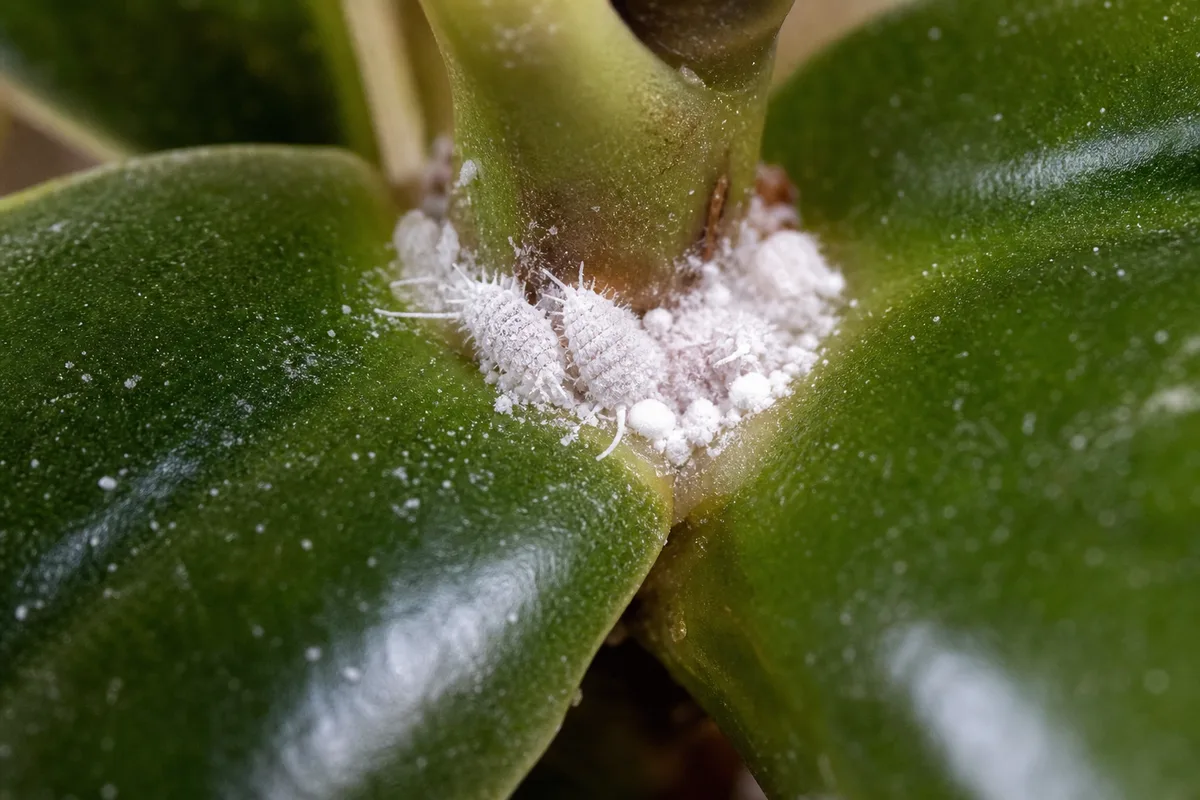
Mealybugs symptoms on Baby Rubber Plant - compare with healthy tissue on the same plant.
- Leaf axils - where the petiole joins the stem; colonies often look like bits of cotton wedged into the V
- Undersides of leaves - especially along midribs and near the base of the blade
- Stem joints - where side branches fork from the main stem
- Crown center - new leaves emerging from the top can harbor colonies beneath overlapping foliage
- Pot rim and soil line - some species also feed near the base; root-feeding mealybugs are less common on Peperomia but worth checking if stems look clean yet the plant keeps declining
Individual insects are soft-bodied and oval under the wax. Newly hatched crawlers are tiny, yellow to pink, and lack wax-they can walk short distances before settling and building new colonies.
Secondary signs on Baby Rubber Plant include:
- Sticky honeydew on leaves, stems, or the saucer below
- Sooty mold - black fungal growth on honeydew-coated surfaces
- Ant trails on the pot, saucer, or shelf - ants protect mealybugs and feed on honeydew, so unusual ant traffic around a desk pot often means sap feeders are active inside the foliage
- Yellowing or limp leaves on heavily fed stems, sometimes mistaken for overwatering
- Stunted or distorted new growth when feeding hits the crown during active growth
Unlike spider mite damage, you will not see fine webbing or dusty stippling on leaf tops. Unlike scale, mealybug masses are fluffy and removable with a swab rather than hard brown shells fused to the stem.
Why Baby Rubber Plant gets mealybugs
Mealybugs are not caused by your watering routine alone-they are living pests that arrive on plants, tools, or hands and then exploit sheltered anatomy. Baby Rubber Plant is vulnerable for several overlapping reasons.
Tight leaf architecture. Thick, upright leaves sit close to stems, creating leaf axils that stay shaded and hard to rinse. Mealybugs prefer protected areas such as crowns, branch crotches, and stem joints-exactly where a compact Peperomia packs its foliage. On a desk-height obtusifolia, you look down at glossy leaf tops while colonies feed in the shaded joints below eye level.
Indoor warmth year-round. Mealybugs thrive in mild temperatures without cold winters to knock populations back. Houseplants grown indoors can host all life stages continuously, which is why a small cluster can rebound within weeks if treatment stops early.
Introduction on new plants. The most common entry route is an infested nursery plant brought home without quarantine. Mealybugs spread slowly by crawling and hitchhiking on pruners, stakes, or touching leaves-not by flying across a room-but they still reach neighboring pots on a shared shelf over time.
Stress and soft new growth. Chronically overwatered Baby Rubber Plants-already prone to root stress per the watering guide-may grow weakly and attract pests, though the primary trigger is still contact with an infested source. Heavy nitrogen fertilizer paired with frequent watering can also push tender new leaves that mealybugs favor for egg laying.
Overlooked low-level infestations. Because colonies start small and hide under glossy foliage, many owners treat only after honeydew or mold appears-by which point crawlers have already moved to adjacent plants.
How to confirm the cause
Work through these checks before committing to sprays or systemic products:
- Magnified inspection - Use a hand lens or phone macro mode on leaf axils, crown leaves, and stem joints. Look for movement in pinkish crawlers or waxy filaments around white masses.
- Swab test - Touch a cotton swab to a suspicious spot. Mealybugs crush to a pink or orange smear. Hard water deposits wipe off as chalky white without bodies underneath. Natural leaf texture on ‘Marble’ stays uniform and does not cluster at joints.
- Honeydew check - Run a finger along the stem below a cluster. Sticky residue that glints under light supports a sap-feeding pest, not dust.
- Pattern on the plant - Mealybugs cluster in groups along veins and joints. Random single white dots on leaf faces are more often mineral splash or variegation on cultivars like ‘Marble’.
- Neighbor plants - Inspect every pot on the same surface. Matching axil clusters on a recently purchased plant strongly confirm mealybugs rather than a one-off soil mold or edema blister.
- Rule out lookalikes - If you see stippling without cotton, test for spider mites by tapping a leaf over white paper. Hard immobile bumps are scale, not mealybugs. Small flies over wet soil point to fungus gnats, not foliar mealybugs.
Confirmed diagnosis requires white wax-covered insects in colonies, not sticky leaves alone-honeydew can also come from aphids or scale on other plants nearby.
Lookalike symptoms
| What you see | Likely cause | Quick check | Next step |
|---|---|---|---|
| Cottony white masses in leaf axils | Mealybugs | Pink smear on swab; insects under wax | Isolate; alcohol dab |
| Flat white crust on leaf tops | Hard water spots | Chalky wipe; no clustering at stems | Wipe with damp cloth |
| Pale patching across ‘Marble’ blades | Natural variegation | Uniform pattern; no wax at joints | No pest treatment |
| Small flies from soil when watering | Fungus gnats | Larvae in damp top inch | Dry-down rhythm |
| Brown or tan domes on stems | Scale | Shell-like; not fluffy | Scrape or labeled oil |
| Pale stippling + fine webbing | Spider mites | Moving specks on paper tap | Rinse undersides |
| Corky bumps on leaf undersides | Edema | Not cottony; not sticky | Fix watering swings |
When in doubt, isolate the plant and perform the swab test before treating.
Baby Rubber Plant care cross-check
Mealybugs exploit weak plants, but the pest still has to arrive first. Before you blame care alone, confirm vigor matches what obtusifolia needs:
| Care factor | Healthy baseline for obtusifolia | Pest vulnerability when wrong |
|---|---|---|
| Watering | Top 1–2 inches of mix dry before the next drink (watering guide) | Chronic wet mix weakens roots; pests hit stressed crowns |
| Light | Medium to bright indirect; tolerates lower light short-term (light guide) | Dim shelves slow growth so damaged leaves linger visible longer |
| Fertilizer | Half strength during active growth only | Heavy nitrogen pushes soft tissue mealybugs prefer |
| Inspection | Lift leaves at stem joints weekly on desk pots | Missed axil colonies until honeydew appears |
A vigorous obtusifolia on the right watering and light rhythm still needs quarantine on new plants-good care does not repel mealybugs that hitchhike home from the nursery.
First fix for Baby Rubber Plant
Isolate the plant and dab visible mealybugs with 70% isopropyl alcohol on a cotton swab.
Move the pot to a separate room or at least 3 feet from other plants. Work methodically:
- Dip a cotton swab in 70% isopropyl alcohol (rubbing alcohol).
- Press directly onto each white cluster-leaf axils, petiole bases, stem joints, and crown-until the wax dissolves and the insect is gone.
- Wipe adjacent stem areas where honeydew collected.
- Discard swabs in the trash, not the compost bin indoors.
- Wash hands and any tools before touching clean plants.
Test alcohol on one leaf first and wait 24 hours. Baby Rubber Plant’s thick, glossy leaves usually tolerate targeted dabs well-more so than thin-leaved Peperomia species such as raindrop or watermelon peperomia on the same shelf, which burn faster when alcohol pools on delicate tissue. Variegated or sun-stressed obtusifolia can still show leaf burn if alcohol sits on the surface.
Do not start with whole-plant alcohol spray, neem oil, or systemic insecticide on day one. On a bushy desk specimen, broad sprays coat leaf tops but miss the tight axils where obtusifolia colonies hide-manual dabs reach those joints directly. One focused alcohol pass plus isolation is the correct first response.
Step-by-step recovery
If colonies remain after the first alcohol session, escalate in this order:
Week 1–3: Repeat contact treatment
Re-inspect every axil weekly. New crawlers hatch on a cycle, so missing one week lets populations rebuild. Dab any fresh white spots with alcohol again.
Grower observation (desk obtusifolia, winter 2026): A 6-inch bushy plant on an office shelf showed three axil clusters on week one. After isolating and dabbing every visible mass with 70% alcohol on Mondays, colony count dropped to one small spot by week two and zero by week three; crown leaves emerging in week four had clean petiole bases. Neighboring pots inspected weekly stayed clear-confirming the outbreak stayed localized when caught early.
For larger infestations where many colonies are exposed, a dilute 10–25% isopropyl alcohol spray can supplement swabbing-still after a patch test on obtusifolia’s thick leaves.
Add insecticidal soap or horticultural oil
After manual removal reduces visible adults, spray insecticidal soap or horticultural/neem oil to reach young nymphs with less wax. Coat undersides and stem joints thoroughly. Repeat every five to seven days for at least three to four cycles. Soaps and oils work on contact only; they do not persist, so coverage matters more than product strength.
On obtusifolia, aim spray at stem joints from below the leaf cluster-misting from above leaves wax in the axils untouched. Apply in indirect light per the light guide and let leaves dry before returning the plant to a bright windowsill. Avoid treating immediately after Baby Rubber Plant repotting guide or while the plant is wilted from drought.
Prune heavily infested leaves
If one stem carries dense cottony masses and the rest of the plant looks clean, cut that stem back to healthy tissue with clean scissors. Bag the cutting immediately. Baby Rubber Plant tolerates light pruning; recovery comes from clean new growth at the crown.
Consider systemic options only for persistent cases
Soil-applied systemic insecticides such as imidacloprid can reduce mealybug crawlers on houseplants when contact methods fail after repeated tries. Use only according to label directions, keep treated plants away from pets that chew soil, and avoid these products if you treat edible herbs on the same shelf. Systemics are a late step-not the opening move.
When to repot
Repot only if you suspect root-zone mealybugs-white wax near the soil line, decline despite clean stems, or reinfestation after thorough foliar treatment. Shake old mix off roots outdoors, rinse gently, and pot into fresh sterile mix in a washed container. Do not repot on day one of discovery unless the soil surface is heavily infested.
Recovery timeline
Expect visible colonies to shrink within one to two weeks of consistent weekly alcohol dabs. Calling the plant clear takes longer: plan on three to four weekly passes, then two additional weeks with no new cottony spots.
Signs treatment is working:
- Fewer white clusters each inspection
- Honeydew and stickiness drying up
- New center leaves emerging without wax at their bases
- No sooty mold spreading on fresh growth
- Ant traffic on the saucer fading once honeydew stops
Signs the problem is worsening:
- Colonies appearing on new stems between weekly checks
- Widespread yellowing despite correct watering
- Matching infestations on neighboring plants
- Plant collapse with clean-looking foliage but failing roots-rare on Peperomia, but possible with root-feeding species
Damaged leaves do not heal cosmetically. Judge success by clean new growth, not by old yellow blades turning green again.
Mistakes to avoid
- Treating once and stopping - One alcohol session kills adults present today, not eggs hatching next week.
- Only spraying the air above the plant - Mealybugs live in axils; foliar mist that does not wet stem joints leaves colonies untouched on bushy obtusifolia.
- Applying full-strength alcohol broadly without a test - Can burn glossy Peperomia leaves in hot direct sun.
- Returning the plant to the shelf too soon - Wait until two consecutive weekly inspections find zero new clusters.
- Over-fertilizing during recovery - Soft new flush attracts reinfestation; hold fertilizer until growth looks normal again.
- Composting pruned infested material indoors - Crawlers can migrate from the bin to nearby pots.
- Ignoring adjacent plants and ant trails - A clean Baby Rubber Plant on a dirty shelf-or one still visited by honeydew-farming ants-will get reinfected.
How to prevent mealybugs next time
Prevention on Baby Rubber Plant is mostly about inspection and quarantine, not special pesticides.
- Quarantine new plants for two to three weeks in a separate room; check axils twice weekly before placing them near your Peperomia.
- Inspect during watering - Lift leaves and glance at stem joints every time you check soil dryness.
- Keep plants vigorous - Medium to bright indirect light and watering when the top inch of mix dries matches how this species stays healthy without chronic wet stress.
- Moderate fertilizer - Apply at half strength during active growth; avoid nitrogen pushes that produce soft, pest-friendly tissue.
- Clean leaves occasionally - A damp cloth removes dust and makes new colonies easier to spot on glossy foliage.
- Isolate at first sign - One cottony dot treated early prevents a shelf-wide outbreak.
Baby Rubber Plant is non-toxic to cats and dogs per the ASPCA, but keep pets away from freshly treated plants until sprays and alcohol have dried completely.
When to worry
Most Baby Rubber Plants recover from moderate mealybug infestations if you isolate early and repeat contact treatment for a month. Consider discarding the plant-and protecting the rest of your collection-when:
- Colonies cover most stems despite four or more weeks of diligent weekly treatment
- The plant is already weakened from root rot or severe overwatering
- You cannot physically reach all axils on an overgrown specimen and reinfestation keeps returning
- Multiple high-value plants share one crowded tray and systemic treatment is not an option you want to use
Replacing one heavily infested Peperomia is often cheaper than losing an entire windowsill of plants to crawlers you cannot see.
Related Baby Rubber Plant problems
- Spider mites - stippling and webbing lookalike without cottony axil masses
- Aphids - sticky honeydew on soft new growth
- Overwatering - yellow limp leaves that mimic pest stress
- Fungus gnats - soil flies, not foliar cotton clusters
- Root rot - decline when mealybugs and wet soil overlap
- Watering guide - dry-down rhythm for prevention
- Peperomia mealybugs (genus overview) - general Peperomia guidance; use this page for P. obtusifolia specifics
When to use this page vs other Baby Rubber Plant guides
- Baby Rubber Plant watering guide - Use for routine moisture checks before assuming mealybugs is the main issue.
- Baby Rubber Plant problems hub - Browse all 16 common issues on this species.
- Yellow Leaves on Baby Rubber Plant - Different entry point when symptoms overlap with mealybugs.
- Slow Growth on Baby Rubber Plant - Different entry point when symptoms overlap with mealybugs.
- Spider Mites on Baby Rubber Plant - Different entry point when symptoms overlap with mealybugs.