Yellow Leaves on Baby Rubber Plant: Causes, Checks & Fixes
Quick answer
Yellow leaves on baby rubber plant (Peperomia obtusifolia) most often trace to soil that stays wet too long, insufficient light, or natural aging on the lowest woody stems. First step: probe the top inch of mix and note whether leaves stay firm or go limp before you fertilize or repot.
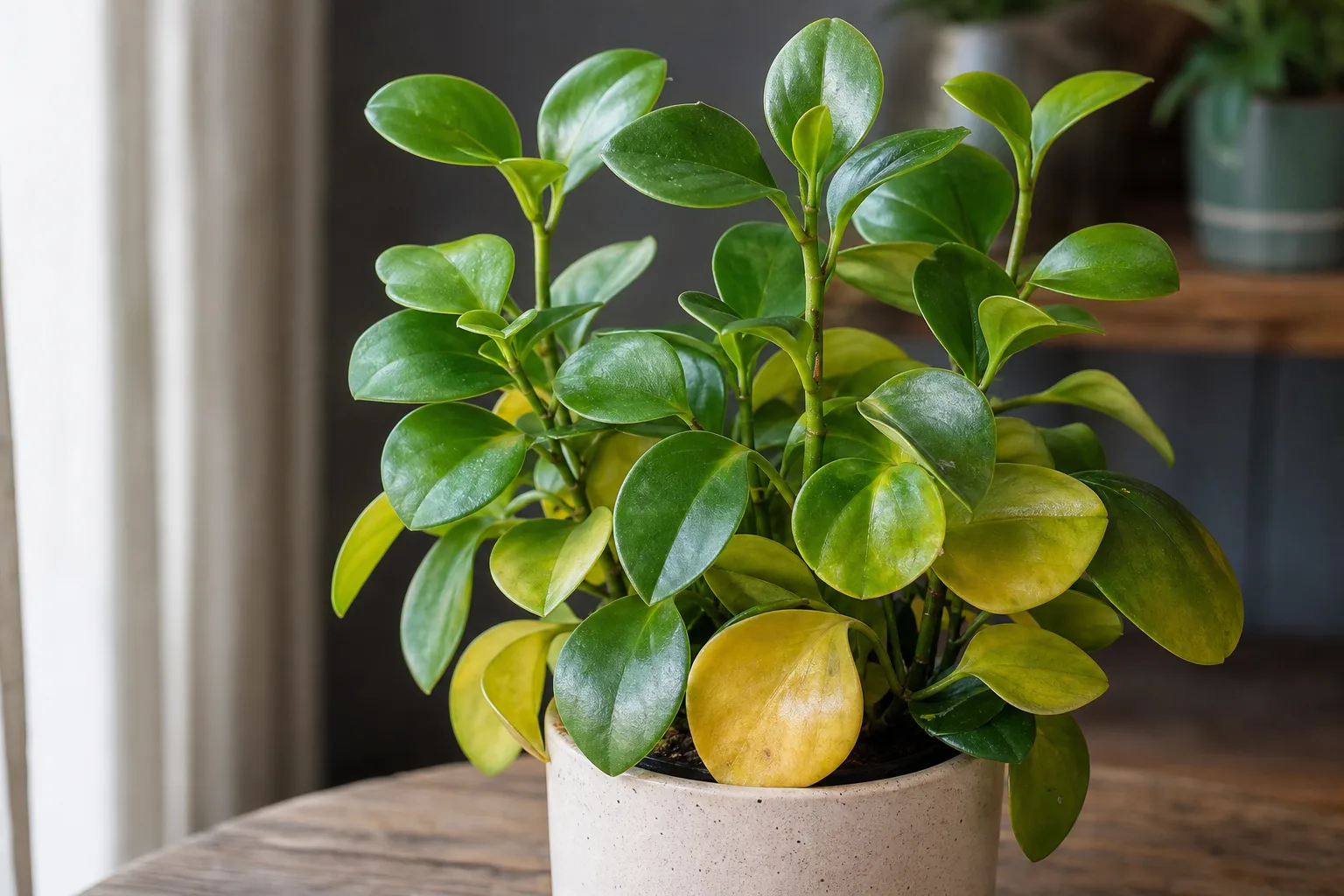
Yellow Leaves on Baby Rubber Plant: Causes, Checks & Fixes
This guide covers yellow leaves on Baby Rubber Plant. See also the general Yellow Leaves guide, watering, and light pages for this plant.
Yellow Leaves on Baby Rubber Plant: Causes, Checks & Fixes
Quick answer
Yellow leaves on baby rubber plant (Peperomia obtusifolia) are a stress signal, not one diagnosis. On this compact Piperaceae species with thick, glossy leaves on upright branching stems, the leading triggers are soil that stays wet too long, insufficient light, underwatering on Baby Rubber Plant after a long dry spell, and normal aging on the lowest woody nodes. Obtusifolia stores water in its leaves and tolerates short dry spells better than constant dampness-so yellowing from overwatering often looks like a healthy plant until several lower leaves fade at once.
First step: probe the top inch of mix and note which leaves yellow and whether they stay firm or go limp. If that zone is still damp, do not add water. If only one or two bottom leaves on woody lower stems fade over months while new tip growth stays green, aging is likely-not an emergency.
This page covers yellow foliage on P. obtusifolia. For year-round moisture rhythm and dry-down checks, see the baby rubber plant watering guide. For wet-soil deep-dives, see overwatering and root rot.
What yellow leaves look like on Peperomia obtusifolia
Baby rubber plant carries rounded, thick, succulent-like leaves on short upright branching stems-not a rosette crown. Yellowing shows up in distinct patterns:
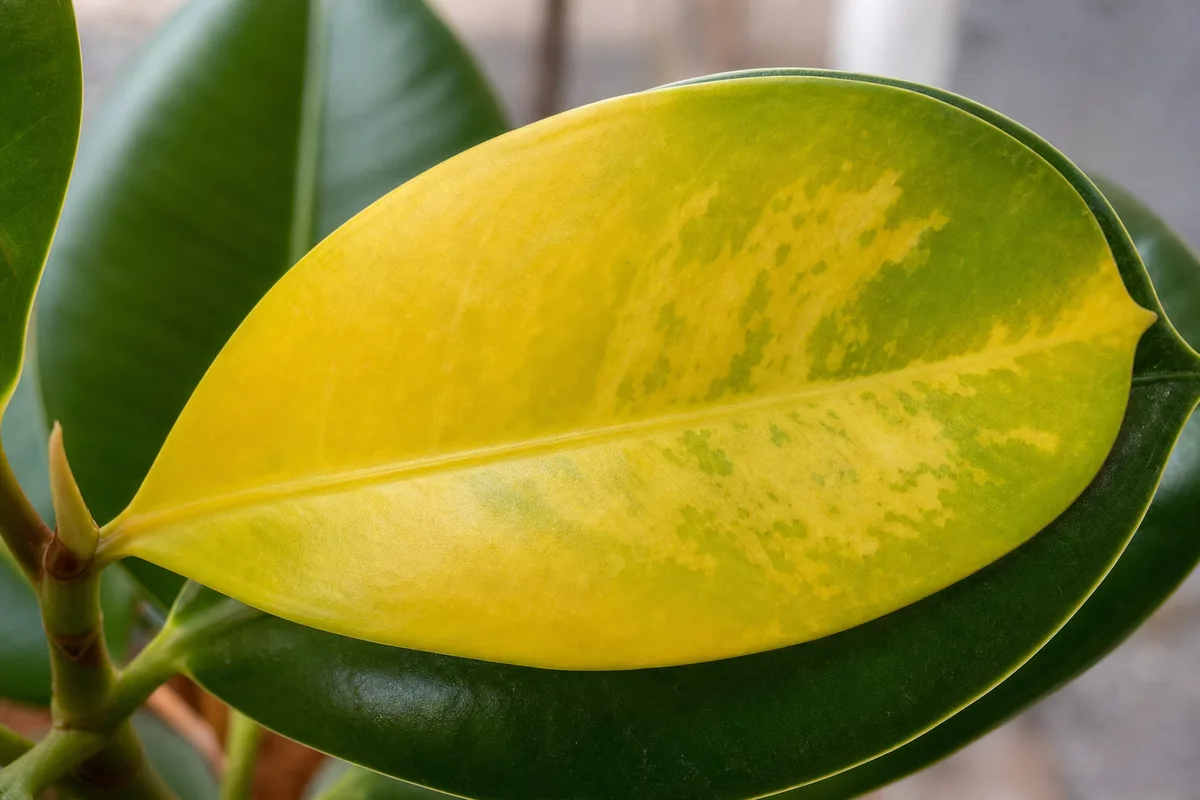
Yellow Leaves symptoms on Baby Rubber Plant - compare with healthy tissue on the same plant.
- Overwatering / root stress - Lower leaves yellow first, often several at once, while soil stays damp and the pot feels heavy days after watering. Overwatering causes leaves to yellow on Peperomia obtusifolia and can lead to root rot. Leaves may stay deceptively firm at first because of leaf water storage, then turn limp. Stems at the soil line may soften; a sour smell from the mix is a red flag.
- Underwatering - Bone-dry mix, lightweight pot, and yellowing that may start at leaf tips or margins on several leaves. Foliage feels slightly thinner or softer than usual. Less common than overwatering on this species but possible after long neglected dry cycles.
- Low light - Pale, yellow-green upper leaves with long gaps between nodes and smaller new growth. Lower leaves may stay green longer while the plant stretches toward a window. Variegated cultivars lose cream color and look washed out before solid-green types show stress.
- Natural lower-stem aging - One or two yellow leaves on the lowest woody nodes over months while the rest of the plant stays firm and glossy. New growth at branch tips remains green. This pattern is common on mature branching stems and needs no rescue if watering and light are sound.
- Salt or fertilizer stress - Yellowing on multiple leaves with brown crispy margins and white crust on the soil surface. Often follows heavy feeding or skipped soil flushes during active growth.
- Pest-related yellowing - Fine webbing, sticky residue, or stippled pale patches on leaf undersides from spider mites or mealybugs on a plant already weakened by wet soil or dim light.
Worry when yellowing hits new center growth, spreads up most stems within days, or pairs with wet, sour-smelling soil-not when a single old leaf on the lowest node fades slowly on an otherwise stable plant.
Why baby rubber plant gets yellow leaves
Overwatering is the most common cause
Peperomia obtusifolia belongs to the succulent-type peperomia group with thick, fleshy leaves similar to succulents that store moisture. That physiology makes the species far more tolerant of drought than overwatering. When the mix stays saturated, roots lose oxygen and stop functioning efficiently-even though the pot feels wet. Lower leaves yellow first because the plant sheds older tissue when root function fails. Cool rooms slow evaporation and turn a normal summer watering rhythm into chronic wet soil without any change to your calendar.
Baby rubber plant is not a rubber tree (Ficus elastica). Ficus types often want steadier moisture and larger root systems. Following Ficus watering advice on obtusifolia is a reliable route to yellow lower leaves within one season.
Thick leaves mask early underwatering
Leaf reservoirs let obtusifolia survive short dry spells with little visible wilt. When dry-down goes too far, several leaves may yellow or crisp at once after the plant finally draws down stored moisture. A light pot and dry top inch with slightly soft foliage confirm thirst-not a heavy, cool, damp pot.
Insufficient light weakens foliage
Obtusifolia wants bright indirect or filtered light. Too much shade can lead to poor, straggly growth; the plant may shed lower leaves or produce pale, yellow-green stretched growth. Variegated forms such as Peperomia obtusifolia ‘Variegata’ show stress sooner in dim corners because cream sections photosynthesize less efficiently. See not enough light if upper growth looks washed out with long internodes.
Lower-stem aging on branching architecture
Unlike rosette-form houseplants, obtusifolia grows upright branching stems that slowly lignify at the base. The oldest leaf at the lowest node naturally yellows and drops as new leaves emerge at stem tips. One fading lower leaf every few months on firm green growth above is normal senescence-not root rot.
Salt buildup and light feeding mistakes
Obtusifolia is a light feeder that should be fertilized only during active spring and summer growth. Overfertilizing or skipping occasional plain-water flushes lets salts concentrate in the root zone. Salt stress can yellow foliage and burn margins. Do not increase fertilizer to “green up” yellow leaves on a stressed plant.
Pests on an already weakened plant
Chronically wet soil attracts fungus gnats and weakens roots-root rot is the most common peperomia disease and is caused by overwatering-making obtusifolia more susceptible to spider mites and mealybugs. Sap-sucking pests drain moisture and accelerate yellowing-especially if the plant is already stressed by watering or light errors.
Lookalike symptoms to rule out
Before Baby Rubber Plant repotting guide or fertilizing every yellow leaf, rule out these common misreads:
| Pattern | Likely cause | Key check |
|---|---|---|
| Several lower leaves yellow, soil wet, pot heavy | Overwatering / early root stress | Top inch still damp; see overwatering |
| Yellow leaves with bone-dry mix, light pot | Underwatering | Dry through top inch; firm leaves may soften |
| Pale stretched upper growth, long stems | Low light | Dim placement; variegation fading |
| One yellow leaf on lowest woody node, months apart | Normal aging | New tip growth firm and green |
| Yellow with brown margins + white soil crust | Salt / fertilizer stress | Heavy recent feeding |
| Stippling, webbing, sticky leaves | Spider mites / mealybugs | Inspect undersides and stem joints |
| Soft black stem base, sour smell | Advanced root rot | Mushy roots on spot-check; see root rot |
If multiple lower leaves yellow with wet soil, treat root stress before assuming aging or nutrient deficiency.
How to confirm the cause
Work through this inspection in order:
- Which leaves are affected - Lowest nodes only, one at a time over months = aging likely. Several lower leaves at once = root stress likely. Upper pale growth = light likely. Most leaves quickly = urgent root or pest check.
- Moisture through the top inch - Insert a finger near the pot edge. Cool dampness an inch down means pause watering. Dry through that zone with a lightweight pot suggests underwatering is possible. Heavy pot days after watering confirms slow dry-down.
- Leaf firmness - Pinch a healthy leaf gently. Firm, turgid foliage with wet soil points to root failure, not thirst. Slightly soft, thinner leaves with dry mix suggest true underwatering.
- Stem base and smell - Soft, darkened tissue at the soil line or a sour odor from the mix means inspect roots promptly.
- Light exposure - Very dark corner? Direct hot afternoon sun on thick leaves? Variegated form losing cream color in shade?
- Pot weight - Lift after watering and again several days later. A pot that never feels lighter suggests chronic overwatering.
- Pest scan - Check leaf undersides and stem joints for webbing, cottony clusters, or stippling.
- Root spot-check (if wet soil + multiple yellow leaves) - Gently slide the plant partway out. Firm pale roots support a dry-down fix. Mushy brown roots confirm rot and need trimming before recovery.
Confirmed overwatering shows several yellow lower leaves, heavy wet pot, and optionally gnats or soft stems. Confirmed aging shows one lower leaf fading slowly on woody stems with clean new tip growth.
First fix for baby rubber plant
Probe the top inch of mix and identify which leaves yellow before you change anything.
That single step prevents the two most common mistakes-watering a already-wet root ball because leaves look “dry,” and fertilizing yellow foliage on saturated soil. If the mix is still damp an inch down, do not add water until it dries. If several lower leaves yellow with a heavy pot, skip fertilizer and repotting until you confirm moisture and root condition.
Do not compensate with fertilizer, an immediate repot, or a larger pot unless roots are mushy or drainage has failed.
After moisture and pattern check:
- If soil stays wet and the pot is heavy, let the top inch dry fully before the next drink. Move to brighter indirect light if the plant sits in deep shade-slow evaporation worsens wet soil. See overwatering for the full dry-down path.
- If mix is bone dry and the pot is light with soft foliage, water thoroughly once, drain fully, then resume the normal dry-down rhythm from the watering guide.
- If only one lower leaf on a woody node fades over months with firm green tip growth, remove the spent leaf and monitor-no emergency treatment needed.
- If upper growth is pale and stretched, move to Baby Rubber Plant light guide before adjusting water.
Make this one correction first. Wait two weeks before stacking repotting, fertilizer, or multiple care changes unless sour-smelling mushy roots demand immediate root rot recovery.
If roots are mushy
When a spot-check finds brown, slimy roots and sour-smelling mix with multiple yellow leaves and soft stems, escalate to root-rot recovery: unpot, trim dead roots, let cut surfaces dry briefly, and repot into fresh well-draining mix. Do not water for seven to ten days after repotting. That path is for confirmed rot-not for a single aging lower leaf.
Step-by-step recovery
Match follow-up steps to what you confirmed:
Overwatering (wet soil, heavy pot, yellow lower leaves):
- Stop watering until the top inch of mix dries.
- Empty saucers and ensure drainage holes are open.
- Move to brighter indirect light if evaporation is slow.
- Remove fully yellow leaves to reduce pest hiding spots.
- Spot-check roots if yellowing continues after one full dry-down cycle.
Underwatering (dry mix, light pot, soft foliage):
- Water thoroughly once until excess runs from drainage holes.
- Drain completely and empty the saucer within 30 minutes.
- Resume checking the top inch before every drink-do not return to calendar watering.
Low light (pale stretched upper growth):
- Move to bright indirect light-east or west windowsill, or set back from south-facing glass.
- Rotate the pot weekly for even exposure.
- Remove fully yellow lower leaves; new growth should emerge greener and tighter within two to four weeks.
Normal aging (one lower leaf, firm green tips):
- Gently remove the yellow leaf at the node.
- Continue your established dry-down rhythm-no other change required.
Salt stress (white crust, yellow margins on multiple leaves):
- Water slowly with plain room-temperature water until it runs freely from drainage holes to flush accumulated salts.
- Let the pot drain fully; skip fertilizer until new growth stays green.
- Resume light feeding only during spring and summer active growth.
Recovery timeline
Fully yellow leaves do not re-green. Recovery is measured by new growth from the center-new firm growth at stem tips, not old leaf color:
- Overwatering - Yellowing often stops spreading once soil oxygen returns, within one to two dry-down cycles. New glossy leaves may emerge within two to four weeks if roots are still firm.
- Underwatering - Perked, firm leaves within days of a thorough watering; new growth stays green within one to two weeks if damage was recent.
- Low light - Tighter, greener new leaves within two to four weeks after placement improves. Old stretched stems remain until pruned or replaced by bushier growth.
- Aging - Single lower leaf drops; no further yellowing if care is stable.
- Advanced root rot - Recovery takes longer and may be partial. If the crown softens or new leaves keep yellowing after dry-down and root trim, the plant may not be saveable.
Signs of improvement: new firm green leaves at branch tips, pot weight dropping on a predictable schedule, and yellowing that does not climb stems. Signs of worsening: sour smell, soft stems, multiple new leaves yellowing weekly, or soil that never dries.
What not to do
Do not fertilize yellow leaves on wet soil-salt buildup from overfeeding causes the same yellowing you are trying to fix, and stressed roots cannot use nutrients effectively.
Do not increase watering because leaves look limp when the pot is already heavy and damp-that deepens root stress on a semi-succulent plant.
Do not repot into a larger pot on day one to “help drying”-extra soil volume stays wet longer and often makes overwatering worse.
Do not mist heavily as the primary fix for yellow leaves. Wet leaf crowns in strong window light can invite rot on obtusifolia. Fix moisture rhythm and placement first.
Do not assume every yellow leaf needs emergency root surgery-one spent lower leaf on a woody node is normal on branching obtusifolia.
Do not confuse baby rubber plant with Ficus elastica-different species, different watering needs.
Do not ignore cold window drafts while fixing watering. Cool glass slows evaporation and turns a summer rhythm into chronic wet soil in winter.
How to prevent yellow leaves next time
Prevention comes down to appropriate dry-down, adequate light, and stable placement:
- Water on dryness, not calendar - Check the top inch of mix every time. Summer may mean every 7 to 14 days; winter often means every 14 to 28 days. Full rhythm is in the watering guide.
- Bright indirect light - East or west windowsill, or set back from south-facing glass. Variegated cultivars need stronger indirect light than solid-green forms.
- Drainage and saucers - Empty saucers within 30 minutes of every watering; never let the inner pot swim in a cachepot.
- Remove spent lower leaves promptly - Makes new yellowing easier to spot early on this slow grower.
- Feed lightly - Balanced fertilizer at reduced strength during spring and summer only; skip feeding in fall and winter.
- Stable temperature - Keep the pot away from cold window drafts and heating vents that alter dry-down speed.
For complete species context-Ficus confusion, cultivar differences, growth rate-see the baby rubber plant overview.
When to worry
Treat yellow leaves as urgent when:
- Multiple leaves yellow within days on several stems at once.
- Soil smells sour or stems feel soft at the soil line while leaves yellow.
- The pot stays heavy and damp more than ten days after watering with continuing yellowing.
- New tip growth yellows within days of emerging despite corrected watering-inspect roots the same week.
- The plant collapses with wet soil-roots may be failing to absorb water.
One fading lower leaf on the lowest woody node every few months on an otherwise firm obtusifolia is normal aging. Widespread lower-leaf yellowing with wet soil is not-inspect roots promptly.
Baby rubber plant care cross-check
If yellow leaves keep returning after you adjust watering, compare your routine to what this species actually needs:
| Checkpoint | Healthy target | Yellow-leaf risk when wrong |
|---|---|---|
| Soil moisture | Top inch dry before watering | Wet mix for days; lower leaves yellow first |
| Leaf texture | Firm, glossy, turgid | Mushy with wet soil; thin and soft with chronic drought |
| Light | Bright indirect; no deep shade | Pale stretched upper growth; variegation fading |
| Pot and drainage | Holes open; saucer empty | Cachepot pooling; oversized pot staying wet |
| Species ID | Peperomia obtusifolia dry-down rhythm | Ficus-style watering overwatering obtusifolia |
| Stem pattern | Branching upright stems | Expect lower-node aging-not rosette crown drop |
Fix the condition that fails this check before repotting for size, adding fertilizer, or treating for pests you have not confirmed.
When to use this page vs other Baby Rubber Plant guides
- Baby Rubber Plant watering guide - Use for routine moisture checks before assuming yellow leaves is the main issue.
- Baby Rubber Plant problems hub - Browse all 16 common issues on this species.
- Overwatering on Baby Rubber Plant - Different entry point when symptoms overlap with yellow leaves.
- Underwatering on Baby Rubber Plant - Different entry point when symptoms overlap with yellow leaves.
- Not Enough Light on Baby Rubber Plant - Different entry point when symptoms overlap with yellow leaves.