Underwatering on Baby Rubber Plant: Causes, Checks & Fixes
Quick answer
Underwatering on baby rubber plant (Peperomia obtusifolia) shows as a light dry pot, slightly wrinkled or thinner glossy leaves, and mix pulled away from the pot edge. First step: confirm the top inch is dry and the container feels light-then water thoroughly once and drain completely within thirty minutes.
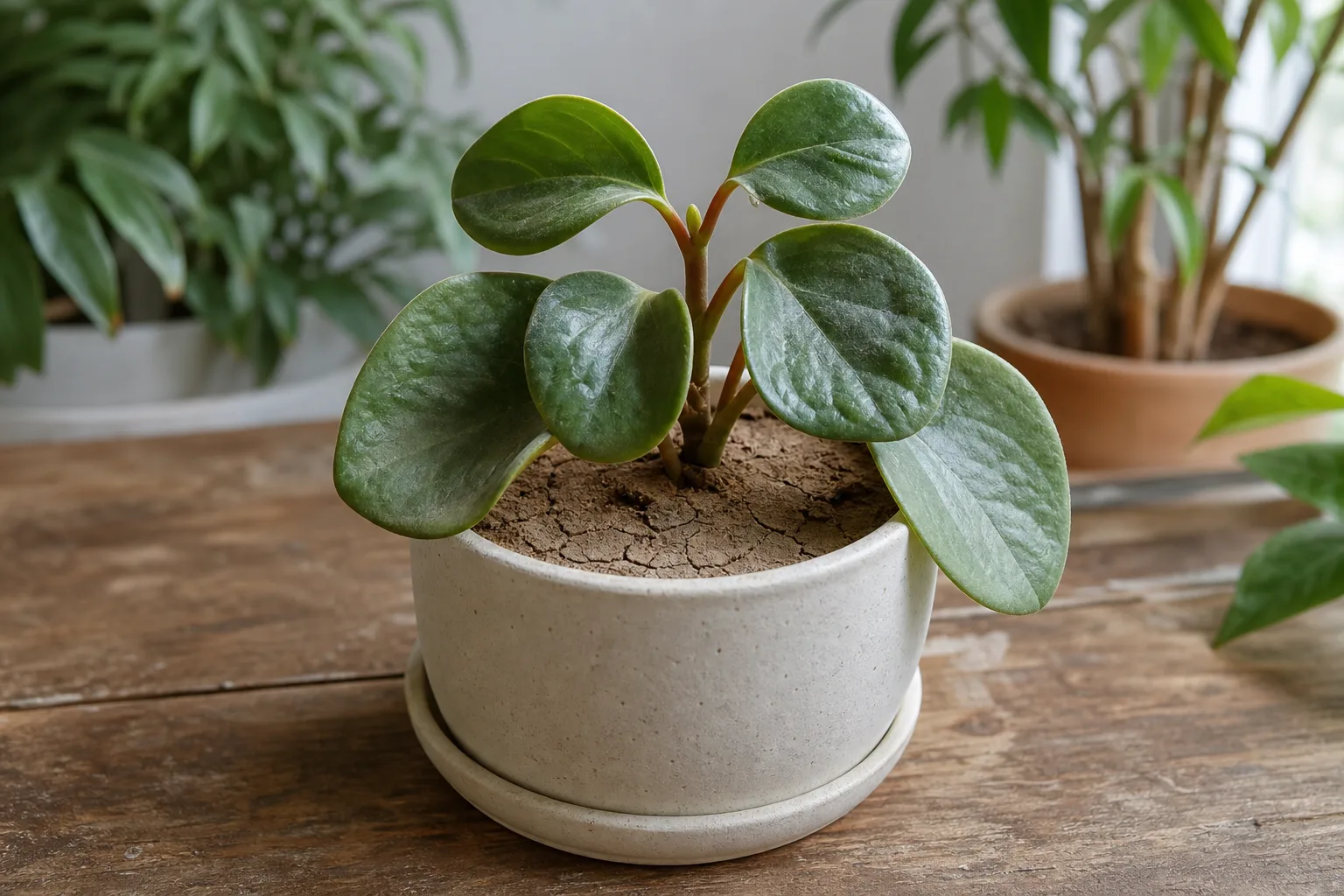
Underwatering on Baby Rubber Plant: Causes, Checks & Fixes
This guide covers underwatering on Baby Rubber Plant. See also the general Underwatering guide, watering, and light pages for this plant.
Underwatering on Baby Rubber Plant: Causes, Checks & Fixes
Quick answer
Underwatering on baby rubber plant (Peperomia obtusifolia) is not about one forgotten Tuesday-it is about letting stored leaf moisture run out while the root zone stays too dry for too long. This compact species has thick, glossy, semi-succulent leaves that act as small water reservoirs; healthy foliage feels firm when you pinch it gently. When those reserves deplete, leaves may look slightly thinner, softer, or faintly wrinkled along the midrib while the pot feels light and the top inch of mix is dry.
First step: lift the pot and probe the top inch of mix. If the container is light, the upper layer is dry, and leaves feel slightly soft or wrinkled with a firm stem base, water thoroughly once until excess runs from drainage holes, then drain completely within thirty minutes. If the pot is heavy and cool with damp mix, stop-that pattern is overwatering or root stress, not thirst.
For year-round dry-down rhythm, see the baby rubber plant watering guide. For overlapping wilt language, see wilting. For wet-soil confusion and mushy roots, see overwatering and root rot.
Underwatering vs. overwatering vs. wilting on baby rubber plant
Limp leaves on peperomias confuse beginners because three different problems look similar. Use pot weight and soil moisture at depth-not leaf angle alone.
| Pattern | Likely cause | Key check |
|---|---|---|
| Light dry pot, soft wrinkled leaves, firm crown | Underwatering | Top inch dry; see this page |
| Heavy wet soil, limp leaves, lower yellowing | Overwatering | Top inch still damp; see overwatering |
| Wet soil + soft stem base + mushy roots | Root rot | Unpot and inspect; see root rot |
| Dry soil + crisp edges only, firm stems | Chronic drought stress | Rewet in stages; edges may stay brown |
| Appropriate moisture + pale stretched growth | Low light | Not thirst; see not enough light |
| Sudden whole-plant collapse | Wilting fork | Always check pot weight first; see wilting |
Pinch test: Gently pinch a healthy-looking leaf. Firm turgid tissue with a light dry pot fits underwatering. Firm tissue with heavy wet soil fits overwatering-you need dry-down, not a drink. Soft tissue at the stem base with sour smell means rot, not either moisture extreme.
What underwatering looks like on Peperomia obtusifolia
Baby rubber plant carries rounded, thick, glossy leaves on short upright stems-not fuzzy or corrugated foliage like ripple peperomia (P. caperata). Underwatering changes texture and pot weight before the whole plant collapses.
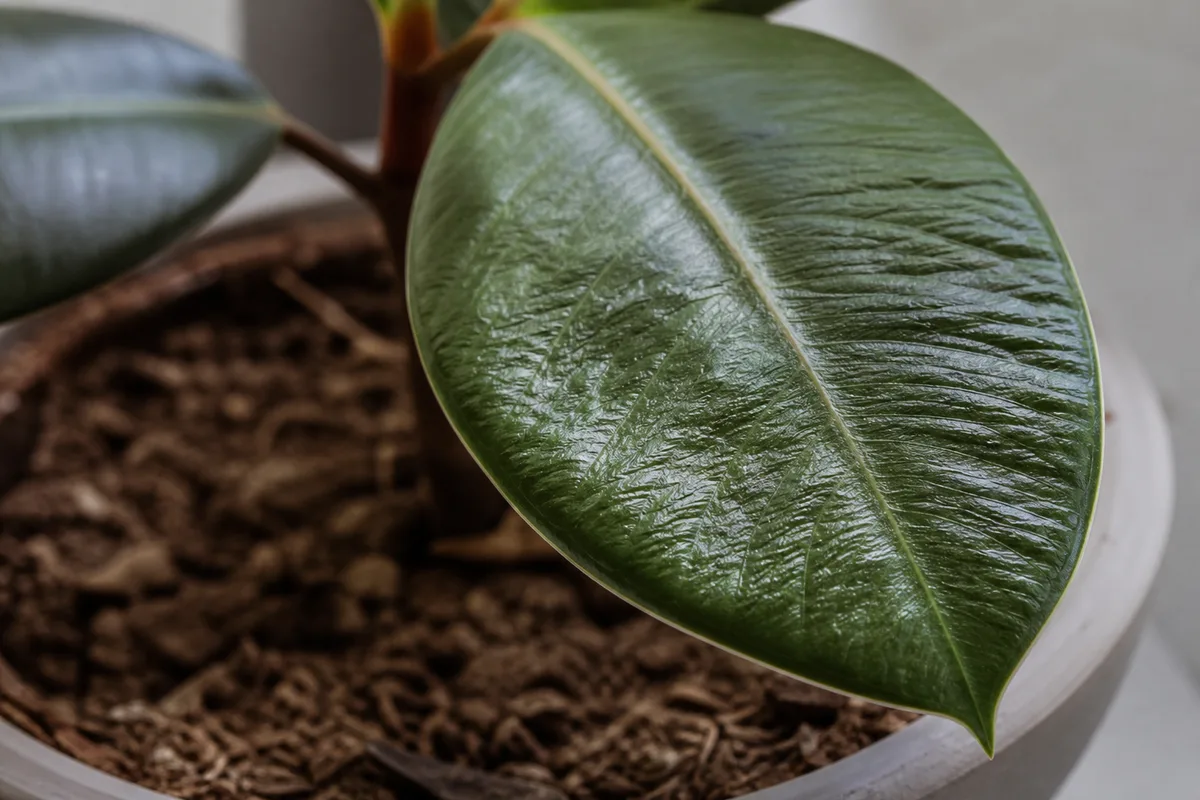
Underwatering symptoms on Baby Rubber Plant - compare with healthy tissue on the same plant.
Common thirst patterns on obtusifolia:
- Light pot that feels noticeably lighter than right after a thorough watering
- Dry mix through the top 1 to 2 inches; sometimes soil pulls away from the pot edge in small terracotta or peat-heavy containers
- Slightly wrinkled, thinner, or softer leaves along the midrib-thick blades lose turgidity but stems often stay firm at first
- Petioles and leaves droop slightly; the plant often perks within hours after one proper drink if the crown is still firm
- Crisp brown edges on older leaves after repeated drought cycles-permanent cosmetic damage even after recovery
- Slowed new growth or smaller emerging leaves when dry spells stack up
What it does not look like: Limp leaves with heavy, cool, damp soil several days after watering mean damaged roots cannot move water upward-not underwatering. See overwatering for the full wet-soil branch. Yellow lower leaves on wet mix fit overwatering. Crispy tips with firm upright stems and appropriate dry-down often trace to fluoride or low humidity-see brown tips rather than assuming thirst.
Why baby rubber plant gets underwatered
Semi-succulent leaves delay the alarm-but chronic dry-down still hurts
Peperomia obtusifolia belongs to the succulent-type peperomia group with thick, succulent-like leaves that store water and tolerate brief drought better than constant sogginess. The species has moderate drought tolerance but still needs regular checks-not abandonment. One missed watering cycle rarely kills a mature plant with healthy roots. That same biology makes owners under-estimate how long dry-down has gone-leaves still look glossy while internal reserves are nearly empty, then several blades soften at once.
Chronic neglect stresses fine roots, makes peat-heavy mix hard to rewet when water finally returns, and can trigger leaf drop or corky edema scars when hydration swings wildly after dry stress.
Calendar watering from summer habits in winter
The most common underwatering trigger is keeping a summer rhythm through slow months. When light drops and indoor temperatures cool, the same pot may need water half as often-but the calendar reminder still fires. A plant that drank every seven days in June may need fourteen to twenty-eight days in a cool back room by January. Skipping checks and assuming “it’s not time yet” lets obtusifolia dry past its comfort zone.
Bright light, small pots, and root-bound acceleration
Obtusifolia in Baby Rubber Plant light guide on an east or west windowsill transpires faster than the same cultivar on a dim bookshelf. Small terracotta pots and slightly root-bound containers dry quickly-sometimes twice as fast as a fresh nursery pot in plastic. Heating vents, sunny glass, and AC drafts accelerate surface drying without changing your mental schedule.
Variegated cultivars such as Peperomia obtusifolia ‘Variegata’ in strong light may dry slightly faster than solid-green types because pale sections photosynthesize less efficiently-they still follow the same dry-down logic, not a “keep moist” schedule meant for thinner-leaved peperomias.
Fear of overwatering and name confusion
Many owners underwater obtusifolia on purpose after reading that peperomias rot easily-which is true, but limp leaves on wet soil are the rot warning, not limp leaves on a light dry pot. Baby rubber plant is not a rubber tree (Ficus elastica). Ficus types often want steadier moisture; obtusifolia wants a real dry-down between drinks and is intolerant of wet soil when owners overcorrect after a dry spell. Following Ficus-style caution on Peperomia produces chronic drought instead of rot protection.
Cachepots, travel, and “sip” watering
Plants in decorative outer pots you rarely lift hide how fast the inner nursery pot dries. Travel weeks, busy seasons, and shallow daily sips that wet only the surface while the center stays dry also produce underwatering on a plant that looks “watered” on schedule. Bottom-watering once without checking weight afterward can miss a root ball that never fully rehydrated.
How to confirm the cause
Work through this inspection in order before you water:
- Pot weight - Lift the container. A light pot days after you thought you watered supports thirst. Heavy and cool supports overwatering instead.
- Moisture at depth - Insert a finger or wooden skewer into the top 1 to 2 inches near the pot edge. Dry, crumbly mix at that depth with a firm crown likely means underwatering. Cool, clinging mix means wait.
- Leaf pinch - Soft, slightly wrinkled thick leaves with dry checks fit thirst. Firm glossy leaves with wet heavy soil fit root stress on damp mix.
- Soil pull-away - Mix shrunken from the pot wall in small containers often follows extended dry-down; plan two-stage rewetting if water channels down the gap.
- Stem base firmness - Firm tissue at the soil line with dry mix is underwatering you can fix with one thorough drink. Soft dark tissue with wet or dry mix means unpot for root rot assessment-not a simple soak.
- Smell - Musty dry peat smells different from sour anaerobic wet soil. Sour odor on damp mix points away from underwatering.
- Season and light - Hot bright window in summer dries faster than a cool dim shelf in winter. Are you still on last season’s interval?
- Recent care - Did you bottom-water briefly without drainage, leave the plant untended during travel, or switch to “tiny sips” after a rot scare?
Confirmed underwatering shows a light pot, dry top inch, slightly soft or wrinkled foliage, and a firm crown. Confirmed overwatering shows heavy wet mix with limp leaves despite surface moisture.
Wet-vs-dry urgency decision table
| What you see | Pot / soil signal | Crown firmness | Urgency | First action | Read next |
|---|---|---|---|---|---|
| One soft wrinkled leaf, rest firm | Light; top inch dry | Firm | Routine | One thorough top-water; drain fully | This page |
| Several wrinkled leaves, light pot | Dry at depth; mix may pull from wall | Firm | Moderate | Top-water or bottom-water 15–20 min; drain | This page |
| Most leaves thin and limp, hot window | Very light; dust-dry top layer | Firm | Same-day | Two-stage rewet if mix repels water | This page |
| Limp leaves, heavy wet soil | Cool, clinging at depth | Firm | Not underwatering | Stop water; dry-down | Overwatering |
| Limp leaves, sour smell | Saturated mix | Softening | Urgent-same day | Unpot; inspect roots | Root rot |
| Crisp edges only, firm stems | Appropriate dry-down | Firm | Low | Adjust rhythm; edges stay brown | Brown tips |
| Pale stretched growth | Variable moisture | Firm | Light issue | Move to brighter spot | Not enough light |
First fix for baby rubber plant
Water thoroughly once when-and only when-the top inch is dry and the pot feels light.
That single action fixes most true underwatering without swinging into overwatering. Use room-temperature water and drain fully:
Top watering (simple default)
Water evenly across the soil surface until excess runs from drainage holes. Keep the stream on the mix, not the leaf crown. Empty the saucer within thirty minutes. One full drink followed by a real dry-down works better for obtusifolia than shallow daily sips that never reach the center.
Bottom watering (when mix has pulled away)
Set the pot in a basin of room-temperature water so the mix wicks upward through drainage holes. Leave it fifteen to twenty minutes (editorial timing-confirm with pot weight before the next drink), remove it, let it drain fully, and empty any cachepot runoff. Bottom watering hydrates the root ball evenly when surface peat repels water after dry stress-peperomias prefer drying between waterings and draining fully before returning to a saucer.
Two-stage rewetting for very dry pots
If mix has pulled away from the edge, give a moderate drink, wait ten minutes for the peat to swell, then water again until runoff appears. That prevents water from channeling down the gap while the center stays dry.
Do not fertilize, mist heavily, or repot on day one unless inspection shows blocked drainage or mushy roots. Make this one moisture correction first, then resume checking the top inch before every drink from the watering guide.
Step-by-step recovery
After the first thorough watering:
- Drain completely - Never leave the pot sitting in runoff or a full cachepot.
- Wait for perk-up - Firm crowns often show improved leaf turgidity within hours to one day after proper hydration.
- Track dry-down - Lift the pot daily for one week to learn how many days until the next light, dry top inch.
- Trim only fully spent leaves - Crisp edges and yellowed drought-damaged blades will not revert; remove them once new growth looks stable.
- Adjust placement if needed - Very hot direct sun plus drought dries pots dangerously fast; bright indirect light with consistent checks is safer than rescue soaks every few days.
- Hold fertilizer until new glossy leaves unfurl for two weeks-stressed roots need stable moisture, not feeding.
If leaves stay limp on wet soil after you watered, you misread the branch-switch to the overwatering dry-down path instead of another soak.
Recovery timeline
Initial perk-up often appears within hours to forty-eight hours after one thorough watering when the crown stayed firm throughout dry stress. Judge success by turgid new leaves unfurling from branch tips in the following weeks-the best sign of recovery on stressed houseplants-not by old blades regaining perfect gloss.
Permanent damage: Crisp brown margins on leaves that hardened during drought will not green up again; they can be trimmed for appearance once recovery is underway. Chronic underwatering over many weeks may drop lower leaves even after rehydration.
Worsening signs: Crown softens after rehydration, stems blacken from the base, or most leaves stay thin and limp on appropriately moist mix-those point toward root damage beyond simple thirst and need inspection.
Example recovery path (illustrative): A grower with a 10 cm terracotta pot on a bright east windowsill noticed faint midrib wrinkling and a very light container after roughly seven days without a check during a heat spell. Bottom-watering for eighteen minutes, full drainage by evening, and leaves noticeably firmer by the next morning. The oldest leaf kept a crisp edge; new glossy tip growth within a week confirmed the plant was back on rhythm-not a calendar, but weight-and-depth checks every five to seven days in that light.
What not to do
Do not drench daily after one dry spell-that swings obtusifolia into overwatering within a week. Avoid cold tap water straight from the fridge-room-temperature water prevents root shock on stressed plants. Peperomias can be sensitive to fluoride in tap water, which may cause brown tips over time; if tips brown despite good watering rhythm, try rainwater or filtered water-see brown tips.
Do not mist heavily as a substitute for soil hydration-wet foliage in strong window light can spot, and misting does not rehydrate roots. Skip Baby Rubber Plant repotting guide into a much larger pot “to hold moisture”-extra wet volume increases rot risk in dim rooms.
Do not assume limp leaves always mean add water when soil is already damp. Do not treat obtusifolia like Ficus elastica. Do not stack repotting, pruning, and fertilizer the same day you finally watered a drought-stressed plant.
How to prevent underwatering next time
Match checks to how fast your pot dries in your light-not a fixed calendar. Let the compost partially dry between waterings-roughly the top 1 to 2 inches before the next drink. In bright active growth, many indoor obtusifolia plants need water somewhere between every 7 and 14 days; in slower winter months, every 14 to 28 days is a common editorial range-always confirming with the top inch and pot weight rather than dates.
Lift the pot weekly during your first month with a new plant. Use well-draining mix in a pot with open drainage holes, empty saucers within thirty minutes, and avoid decorative cachepots that hide dry-down. Slightly root-bound plants in right-sized terracotta often dry predictably; upsizing “for growth” in low light slows drying unevenly.
After travel: Have someone lift the pot and probe the top inch-not just glance at surface color. Cluster plants away from hot glass, pre-water only if the top inch is already dry, and resume your normal weight-and-depth rhythm within two days of return. For complete species context-leaf storage biology, bottom- vs top-watering, pot material-see the baby rubber plant watering guide and the baby rubber plant overview.
When to worry
Escalate the same week if the stem base dents under light pressure, most leaves stay thin and limp after two proper rewettings, or a quick root check shows brown mushy tissue-those signs mean damage beyond simple thirst. If two thorough rewettings fail and the crown softens, contact your local cooperative extension office or a master gardener helpline for hands-on root inspection before you soak again.
If the crown stays firm, leaves perk within forty-eight hours after one thorough drink, and new growth resumes within weeks, you are on track. One slightly soft leaf on an otherwise firm plant with appropriate dry-down can wait for a routine check-not an emergency daily soak.
Escalation summary: which path to take
Use this fork after you have checked pot weight and the top inch of mix:
- Routine drink - One slightly soft leaf, firm crown, light pot, dry top inch. Water thoroughly once, drain fully, recheck in five to seven days (or sooner in bright heat).
- Two-stage rewet - Mix pulled from the pot wall, water runs through channels, or the pot still feels light an hour after a single pour. Moderate soak, wait ten minutes, soak again until runoff; bottom-water if peat stays hydrophobic.
- Same-day unpot - Crown dents under light pressure, sour smell on damp mix, or limp leaves that stay limp after two proper rewettings on appropriately moist (not soggy) mix. Stop soaking; inspect roots and follow root rot recovery if tissue is mushy.
- Not underwatering - Heavy wet pot with limp leaves and firm or softening crown on saturated mix. Dry-down first; see overwatering.
Permanent cosmetic note: Crisp brown edges from repeated drought will not re-green-trim them once new growth looks stable. Judge recovery by firm new leaves, not old damaged blades.
Related baby rubber plant problems
- Baby rubber plant overview - Semi-succulent biology, light needs, and culture hub
- Watering - Top-inch-dry rhythm and seasonal intervals
- Overwatering - Wet-soil wilt paradox and cachepot traps
- Root rot - Mushy roots when wilt pairs with sour wet mix
- Wilting - Acute collapse on wet or dry soil
- Drooping leaves - Gradual sag vs acute thirst
- Brown tips - Fluoride margins that persist after rehydration
- Low humidity - Crisp tips on otherwise moist soil
- Yellow leaves - Lower yellowing on wet mix vs dry stress
- Not enough light - Pale stretched growth mistaken for thirst
FAQs
My baby rubber plant leaves are limp but the soil is wet-is that underwatering?
No. Limp leaves with heavy, cool, damp soil on Peperomia obtusifolia usually mean damaged roots cannot move water upward-not thirst. Stop watering until the top inch dries and see overwatering guidance. Underwatering fits a light pot, dry top inch, and slightly soft or wrinkled thick leaves with a firm stem base.
How long can Peperomia obtusifolia go without water?
Healthy obtusifolia tolerates one missed cycle in bright active growth because thick leaves store moisture-often one to two weeks between drinks depending on pot size and light. Chronic neglect over several weeks still stresses fine roots, causes permanent crisp edges, and makes peat-heavy mix hard to rewet. Do not treat drought tolerance as permission to skip checks.
Are wrinkled leaves on baby rubber plant always underwatering?
Wrinkled or thinner glossy leaves with a light pot and dry mix through the top inch strongly suggest thirst. Wrinkling with wet heavy soil points to overwatering or root damage instead. Pinch a leaf gently-firm tissue with damp mix means wait; soft wrinkled tissue with a light dry pot means water thoroughly once.
When is underwatering urgent on baby rubber plant?
Act the same day if most leaves feel thin and limp, the pot is very light, mix has pulled away from the edges, and the plant sits in hot direct sun or near a heating vent. One slightly soft leaf on an otherwise firm plant with appropriate dry-down can wait for a routine moisture check-not an emergency soak every day.
How do I prevent underwatering on baby rubber plant next time?
Check the top 1 to 2 inches of mix and pot weight before every drink. In bright active growth, many pots need water every 7 to 14 days; in slower winter months, every 14 to 28 days is a common editorial range-always confirming with the top inch and pot weight, not dates. Empty saucers after watering, avoid cachepots that hide dry-down, and do not follow Ficus elastica rubber-tree advice on this semi-succulent species.
When to use this page vs other Baby Rubber Plant guides
- Baby Rubber Plant watering guide - Use for routine moisture checks before assuming underwatering is the main issue.
- Baby Rubber Plant problems hub - Browse all 16 common issues on this species.
- Wilting on Baby Rubber Plant - Different entry point when symptoms overlap with underwatering.
- Brown Tips on Baby Rubber Plant - Different entry point when symptoms overlap with underwatering.
- Yellow Leaves on Baby Rubber Plant - Different entry point when symptoms overlap with underwatering.