Basil Plant Care: Indoor and Outdoor Growing Guide
Ocimum basilicum
Basil needs at least 6 hours of direct sun daily, consistent watering every 1–2 days in summer, pinching off flower spikes to prevent bolting, and regular tip harvesting to encourage bushy growth.
Basil Plant Care: Indoor and Outdoor Growing Guide
Start with wateringThe most common care mistake for BasilWatering guide → →Basil care essentials
Light
full sun (6+ hours of direct sunlight)
Water
Keep soil moist but not waterlogged - every 1–2 days in summer, every 3 days in winter or cooler weather. Allow top 2–3 cm to dry between waterings.
Soil
Well-draining potting mix with 20% perlite or coarse sand. pH 6.0–7.5. Good drainage prevents damping off.
Humidity
Moderate (40–60%); tolerates Indian outdoor conditions well
Temperature
20°C to 35°C (68–95°F)
Fertilizer
Use balanced liquid fertilizer (5-5-5) or compost tea at half strength and stop if the plant is stressed, newly repotted, or not actively growing. High-phosphorus flowering fertilizers - promotes bolting over leaf production.
About Basil
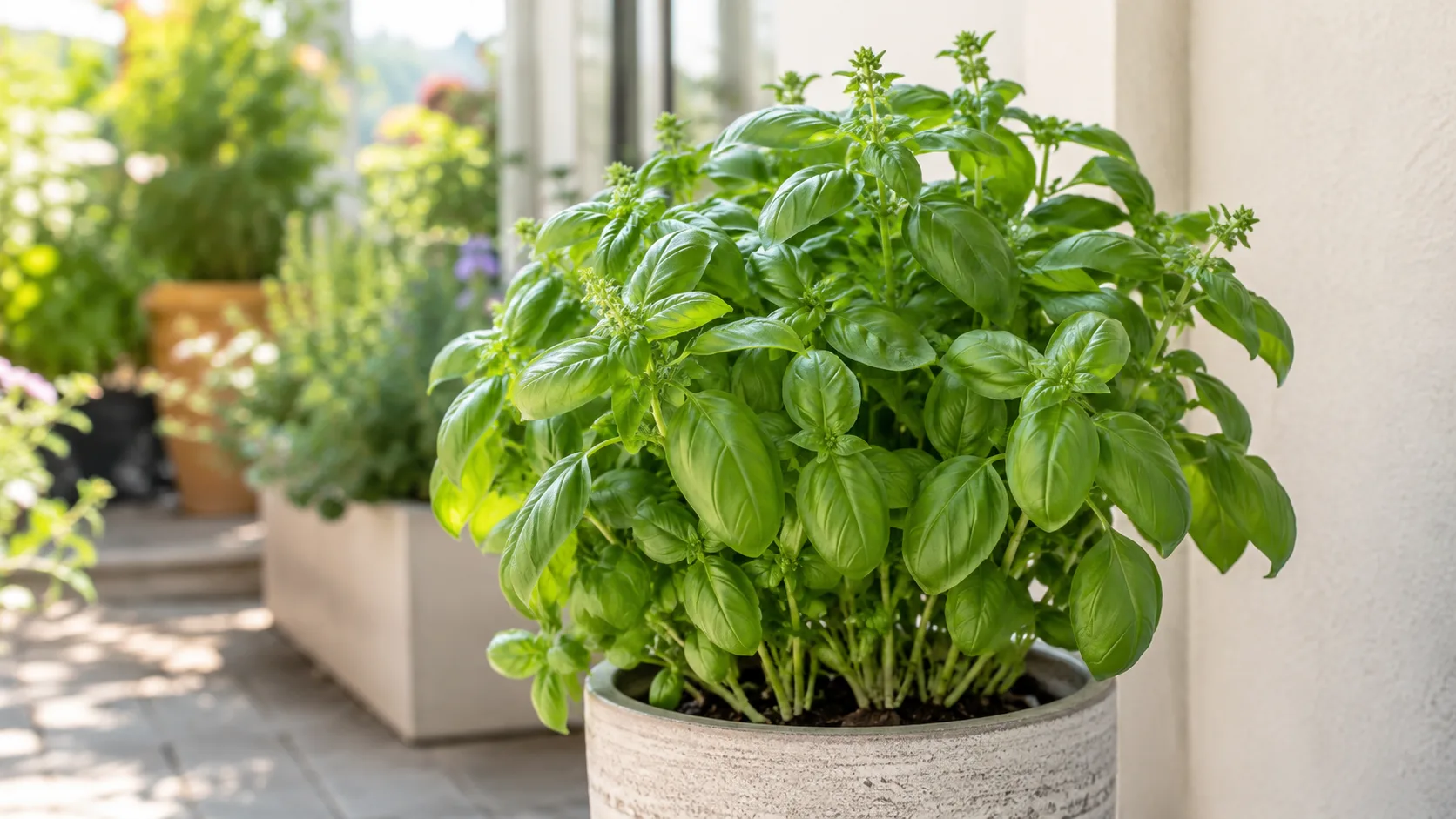
Basil is native to Tropical Asia (South and Southeast Asia), typically reaches 30–60 cm tall and 30 cm wide indoors, with fast - harvest-ready in 3–4 weeks from transplant growth. Basil has a herbaceous growth habit and part of the Lamiaceae family. It is also known as Sweet Basil, Tulsi Basil, Holy Basil variant, and Sabja parent plant.
| Detail | Information |
|---|---|
| Also known as | Sweet Basil, Tulsi Basil, Holy Basil variant, Sabja parent plant |
| Native region | Tropical Asia (South and Southeast Asia) |
| Mature size | 30–60 cm tall and 30 cm wide |
| Growth rate | Fast - harvest-ready in 3–4 weeks from transplant |
| Growth habit | Herbaceous |
| Scientific name | Ocimum basilicum |
| Family | Lamiaceae |
Basil Plant Care: Indoor and Outdoor Growing Guide
What Is Sweet Basil?
Sweet basil (Ocimum basilicum) is the culinary herb behind pesto, caprese salad, and countless summer dishes. It belongs to the Lamiaceae family, the mint family, alongside oregano, rosemary, and thyme. Unlike woody Mediterranean herbs, basil is a tender warm-season annual in most climates. It grows fast, roots shallowly, and rewards regular harvesting with a steady supply of aromatic leaves for weeks or months, depending on how and where you grow it.
The plant typically reaches 30 to 60 cm (12 to 24 inches) tall in a pot or garden bed, though vigorous outdoor specimens can grow taller when conditions are ideal. Leaves are opposite, oval, and softly textured, branching from a central stem that becomes woody only at the base as the plant matures. Small white, pink, or pale purple flowers appear in clustered spikes when the plant shifts from leaf production to reproduction. That flowering shift, called bolting, is one of the most important moments in basil care because leaf flavor and texture change once bloom begins.
Basil is native to tropical and subtropical regions of South and Southeast Asia, which explains nearly every care rule that follows. The plant wants warmth, bright light, moist but airy soil, and protection from cold. Treat it like a sun-loving summer crop, not a shade-tolerant houseplant, and most of the frustration disappears. Whether you grow it on a kitchen windowsill, a balcony container, or a raised bed, the goal is the same: keep the plant actively producing tender leaves for as long as possible before it flowers or frost ends the season.
Botanical background and common varieties
The Latin name Ocimum basilicum refers specifically to sweet or common basil. Nursery tags and seed packets sometimes use only the word “basil,” but several distinct types exist, and they are not interchangeable in the kitchen or the garden. Genovese basil is the classic Italian large-leaf type prized for pesto. Thai basil (O. basilicum var. thyrsiflora) has purple stems, smaller leaves, and a licorice note. Lemon basil and lime basil carry citrus aromas from different chemotypes within the species. Purple basil cultivars such as ‘Purple Ruffles’ are ornamental as well as edible, though they are often less sweet than green Genovese types.
Knowing which type you have matters because growth speed, cold tolerance, and disease resistance vary. Most sweet basil sold as transplants is a Genovese-type green cultivar. For gardeners in humid regions where basil downy mildew is common, seek resistant cultivars. Minnesota Extension lists ‘Rutgers Devotion DMR’, ‘Rutgers Obsession DMR’, ‘Prospera’, and ‘Amazel’ among resistant options. Maryland Extension trials found ‘Prospera’ and ‘Amazel’ showed no disease symptoms through a humid season, while Rutgers cultivars showed only minor lower-leaf symptoms under heavy pressure. (Cornell Vegetables)
Best Growing Conditions for Basil
Basil is not a complicated plant, but it is an honest one. It shows stress quickly and recovers slowly from major mistakes. The four conditions that decide almost every outcome are light, water, soil, and temperature. Get those aligned with the plant’s tropical origins and daily care becomes straightforward. Miss any one of them badly, especially light or cold, and no amount of fertilizer will rescue a leggy, yellowing, or bolted plant.
In cultivation, basil behaves as a fast-growing herbaceous annual. University of Minnesota Extension notes seeds germinate in five to seven days and plants can be harvest-ready within a few weeks of transplant. That speed lets you start fresh plants multiple times per season and always have young, flavorful foliage available.
Light requirements indoors and outdoors
Basil needs Basil light guide, which means at least 6 to 8 hours of direct sunlight daily outdoors, according to University of Minnesota Extension, the Old Farmer’s Almanac, and North Carolina Extension Gardener Plant Toolbox. Partial sun can work in very hot climates where afternoon shade prevents leaf scorch, but shade-grown basil tends to be pale, soft, and less aromatic. Indoors, a south-facing window is the best natural option. East windows work in bright climates. North windows and interior rooms without supplemental light usually produce stretched, weak plants that are more vulnerable to overwatering on Basil and pests.
A practical light test: new growth should be compact, with short spaces between leaf pairs (internodes). If stems elongate, leaves shrink, and the plant leans hard toward the glass, it needs more light. Move it closer to the window, remove obstructions, or add a full-spectrum LED grow light positioned 6 to 12 inches above the foliage for 10 to 12 hours daily. Minnesota Extension specifically recommends artificial lighting at that duration when overwintering basil indoors, because winter daylight through glass is rarely enough to sustain active growth.
Outdoors, choose the sunniest spot available. Container plants on patios and balconies often outperform in-ground plantings in partial shade simply because you can move the pot to chase the sun. Rotate indoor pots a quarter turn every few days so growth stays even rather than one-sided.
Temperature and humidity
Basil is a warm-season crop. The Old Farmer’s Almanac advises waiting to plant outside until soil has warmed to at least 50°F (10°C), with 70°F (21°C) ideal for strong growth. Nighttime temperatures should not drop below 50°F (10°C). Cold soil and air stunt basil, and temperatures at or below 50°F can cause blackened or damaged leaves, as Illinois Extension warns.
Indoors, aim for 70 to 85°F (21 to 29°C) during the day. Keep plants away from cold window glass in winter, air-conditioning vents, and drafty doors. Basil tolerates average household humidity, but very dry air below 30% can encourage spider mites on stressed indoor plants. Grouping herbs together or using a humidity tray helps in heated winter rooms, though humidity is secondary to light and warmth for Basil overview.
Frost ends the outdoor season completely. Basil will not survive freezing temperatures. If a cold snap is forecast, harvest what you can and bring container plants indoors temporarily, understanding that they may decline without adequate light.
How to Water Basil Correctly
Basil likes consistently moist soil but hates sitting in waterlogged mix. University of Minnesota Extension recommends watering deeply every 7 to 10 days for in-ground plants when rainfall is insufficient, with more frequent watering for containers because they dry faster. For pots, a reliable rule used across extension guides is to water when the top 1 inch (2.5 cm) of soil feels dry to the touch. Insert a finger or wooden skewer to check moisture below the surface rather than watering on a fixed calendar.
When you water, water at the base of the plant, not over the leaves. The Royal Horticultural Society advises watering in the morning when possible and avoiding wet foliage overnight, because basil dislikes having wet roots in cool, dark conditions. Base watering also reduces basil downy mildew, a destructive fungal disease that thrives on wet foliage in humid weather. Water thoroughly until it runs from the drainage holes, then empty the saucer so the pot is not standing in runoff. Shallow, frequent sprinkles encourage shallow roots and make the plant less resilient during hot spells.
Container-grown basil in full sun may need water daily or every other day in peak summer, especially in small pots. Large garden beds hold moisture longer. The pot size, soil mix, wind exposure, and whether the plant is actively growing all change the interval. A calendar schedule is a starting point; the soil moisture check is the final authority.
Seasonal watering adjustments
During active growth in spring and summer, basil uses water quickly and wilts visibly when dry. A brief midday wilt on a hot day can be normal, but wilting every afternoon usually means the pot is too small or the watering interval is too long. Upgrade pot size or increase frequency before leaves turn crispy.
In cooler, dimmer months, the same Basil watering guide that worked in summer will overwater the plant. Stretch the interval, check moisture more carefully, and reduce or stop fertilizer when growth slows. Resume the summer rhythm only when new growth is clearly visible and temperatures are stable. In hot, dry climates such as Indian summers, daily watering in small containers is common, while winter intervals of every two to three days may suffice when growth slows and evaporation drops.
Soil, Containers, and Drainage
Basil performs best in moist, well-drained, moderately fertile soil with a pH between 6.0 and 7.5, according to Minnesota Extension and the Almanac. Heavy clay that stays saturated causes root rot on Basil and poor flavor. Pure sand that dries in hours forces constant watering and nutrient leaching. The target is a loamy or potting mix that holds moisture for a day or two in a container while still draining freely.
For containers, use a quality potting mix amended with perlite or coarse sand for extra drainage if your mix feels dense. Minnesota Extension stresses that pots must have drainage holes. A decorative cachepot without drainage turns every watering mistake into a longer problem. Terracotta dries faster than plastic, which is helpful for gardeners who tend to overwater. Plastic and glazed ceramic retain moisture longer, suiting hot, dry balconies where plants need more hydration between waterings.
In garden beds, work compost into the top few inches of soil before planting. Compost amendment often supplies enough nutrients that additional fertilizer is unnecessary for in-ground basil. Raised beds are excellent because they warm faster in spring and drain better than heavy native soil.
Space plants 6 to 12 inches apart in beds or one plant per 6- to 8-inch pot for a single windowsill specimen, widening to 10- to 12-inch pots for mature outdoor container plants. Good spacing improves airflow, which helps prevent fungal diseases in humid summers.
Fertilizing Basil Without Sacrificing Flavor
Basil is a moderate feeder, not a hungry one. Over-fertilization produces lush, soft growth that can taste milder and is more attractive to aphids. Penn State Extension notes that leaf flavor declines after flowering and that overly lush growth from heavy feeding may reduce intensity. The goal is steady nutrition during active leaf production, not maximum vegetative bulk.
For in-ground plants, Minnesota Extension suggests a 5-10-5 granular fertilizer applied once or twice during the growing season at about 3 ounces per 10 feet of row, or relying on compost if soil fertility is already good. For container and indoor basil, use a balanced liquid fertilizer at half the label strength every 3 to 4 weeks outdoors or every 4 to 6 weeks indoors, as Minnesota Extension recommends. Organic options such as diluted fish emulsion or compost tea work well because nutrients release more slowly.
Always fertilize moist soil, never dry roots, to prevent chemical burn. Stop feeding when the plant is stressed, cold, or not actively growing. If older leaves yellow while new growth stays pale green and the watering schedule is correct, a light feeding during warm weather may help. If the plant is blooming, fertilizer will not restore peak leaf flavor; pinching flowers is the better fix.
Planting Basil: Seeds, Transplants, and Timing
Basil can be started from seed or purchased transplants. Seeds are inexpensive and offer the widest cultivar choice, including downy mildew resistant types. Transplants give you a head start when spring is short.
Direct sow outdoors after the danger of frost has passed and soil temperatures reach at least 60°F (16°C), as Illinois Extension advises. Sow seeds ¼ inch deep, keep the soil moist until germination, and thin seedlings to final spacing once they have two or three pairs of true leaves. Minnesota Extension notes germination in 5 to 7 days under warm conditions.
Start seeds indoors 6 to 8 weeks before your last expected frost if you want transplants ready for spring. Use a seed-starting mix, keep media temperature at least 70°F for best germination, and provide bright light immediately after sprouts appear to prevent leggy seedlings. The RHS recommends sowing on the surface for some indoor trays or covering lightly outdoors, keeping seedlings warm and bright, then moving them into individual 7.5 cm (3 inch) pots before transplanting.
Move seedlings outdoors only when night temperatures stay above 50°F and days are consistently warm, per the Almanac. Harden off transplants over a week by gradually increasing sun and wind exposure. Plant at the same depth they grew in the pot. Pinch the growing tip after transplant to encourage branching.
Pruning, Pinching, and Flower Management
Basil stays productive when you pinch growing tips regularly. Penn State Extension, Illinois Extension, and Maryland Extension all recommend pinching stems to promote bushy, branching growth and delay flowering. Remove the top set of leaves on each stem when the plant reaches 6 to 8 inches tall, cutting just above a leaf pair. Two new shoots will emerge from that node within days.
Flower buds should be removed as soon as you see them forming. Once basil blooms, the plant shifts energy toward seed production and leaf flavor becomes less sweet and more bitter or sparse, as multiple extension sources note. Pinching flowers is not optional if your goal is culinary leaves. If you want seeds for next year, allow one plant to flower at the end of the season while keeping others pinched.
Do not strip more than one-third of the foliage at a time during heavy pruning. Aggressive cutting into woody stems slows recovery. Steady, light harvesting doubles as pruning and keeps the plant in vegetative mode longer. ‘Amazel’, a seed-sterile resistant cultivar from Proven Winners, continues producing leaves even after limited flowering, though flavor is still best before heavy bloom.
Harvesting Basil for Maximum Yield
You can begin harvesting when plants are 6 to 8 inches tall, often within 3 to 6 weeks of transplant depending on conditions. Minnesota Extension advises snipping individual leaves as needed or cutting whole stems just above a pair of leaves so new growth sprouts from the cut point within about a week. The Almanac recommends harvesting in the early morning when leaves are fullest of essential oils and least stressed by heat.
For pesto-sized quantities, cut the top one-third of the plant, always leaving enough foliage to sustain photosynthesis. Repeat weekly during peak summer. Store cut stems in a glass of water at room temperature for a few days, or wrap loosely in a paper towel inside a plastic bag in the refrigerator for up to about a week. Do not refrigerate bare leaves without protection; they blacken quickly.
To preserve surplus harvest, freeze chopped leaves in ice cube trays covered with water or olive oil, or air-dry small batches in a warm, ventilated space. Oven drying often scorches basil. Dried sweet basil loses much of its fresh character but works in cooked dishes.
Growing Basil Indoors Year-Round
Growing basil indoors is absolutely possible, but indoor culture has a different ceiling than outdoor summer growth. The limiting factor is almost always light, not pot size or fertilizer. A healthy indoor basil plant on a bright south windowsill can supply weekly harvests for months. A plant in a dim kitchen corner will stretch, yellow, and attract pests unless you add grow lights.
For year-round indoor production, treat basil as a succession crop rather than a permanent perennial. Minnesota Extension notes that even overwintered basil will eventually flower and decline indoors because it is an annual. Plan to start fresh seeds every 8 to 12 weeks for continuous supply, especially in winter when existing plants slow down.
Windowsills and grow light setups
Place indoor basil where it receives the longest possible direct sun exposure. In winter, move pots away from cold glass at night or insulate the windowsill. If leaves touch freezing glass, they can blacken even when the room feels warm.
When natural light is insufficient, use full-spectrum LED grow lights for 10 to 12 hours daily, as Minnesota Extension recommends for overwintered plants. Position lights close enough for intensity but far enough to avoid leaf burn. A simple timer keeps the photoperiod consistent. Without this supplementation, most indoor basil in temperate climates becomes leggy between November and February.
Use a 6- to 8-inch pot with drainage for a single indoor plant. Larger pots are fine if you have strong light and want a bigger harvest. Avoid oversized pots that hold wet soil around a small root system.
Growing Basil Outdoors in Garden Beds and Pots
Outdoor summer culture is where basil shines. Full sun, warm nights, and open airflow produce the most aromatic, abundant leaves. In garden beds, plant after frost in compost-amended soil and mulch with 2 to 3 inches of straw, compost, or grass clippings to retain moisture and suppress weeds, as Minnesota Extension suggests.
Container outdoor basil is ideal for renters, balcony gardeners, and anyone who wants to move plants during weather swings. Use pots with drainage, quality potting mix, and daily moisture checks in heat waves. Grouping containers together creates a favorable microclimate but do not crowd plants so tightly that airflow disappears, because downy mildew risk rises in humid weather.
In very hot, dry regions, afternoon shade can prevent scorch, but prioritize morning sun. In cool-summer climates, choose the warmest microsite, such as a south-facing wall that radiates heat, and consider black plastic mulch to warm soil at planting time.
Rotate planting locations each year if you grow basil in the same bed repeatedly. Penn State Extension notes that Fusarium wilt and downy mildew spores can persist in soil and plant debris. Good sanitation, resistant cultivars, and avoiding overhead irrigation are your best defenses.
Propagation from Stem Cuttings
Basil is one of the easiest culinary herbs to propagate. Penn State Extension states that stem cuttings root readily in water. Take a 4- to 6-inch cutting from a healthy, non-flowering stem, remove lower leaves, and place it in a clear jar of clean water with at least one node submerged. Change the water every few days. Roots typically appear in 7 to 14 days. Transplant to moist potting mix once roots are 2 to 3 inches long.
You can also root cuttings directly in moist perlite or seed-starting mix under a clear humidity dome or plastic bag propped open for airflow. Keep them in bright, indirect light until new growth confirms establishment. Cuttings taken in spring and summer root fastest. Winter cuttings need warmth and supplemental light.
Propagation is useful when a store-bought plant is leggy but disease-free, when you want identical genetics to a favorite Genovese mother plant, or when you need replacements after downy mildew takes out part of a bed. Always start with healthy stock; never propagate from plants showing mildew, wilt, or pest infestations. ‘Amazel’ is only available as vegetative cuttings or purchased plants because it is seed-sterile.
Common Pests, Diseases, and Troubleshooting
Most basil problems trace to cold, insufficient light, overwatering, or disease pressure in humid summers. Start diagnosis with those four factors before reaching for products.
Yellow leaves often mean overwatering, cold damage, or nitrogen deficiency. Check soil moisture first. If soil stays wet for days, reduce watering and improve drainage. If nights have been cool and leaves are blackened at edges, cold is the culprit. If older leaves yellow while new growth is pale and watering is correct, a light balanced feeding may help during warm active growth.
Leggy, sparse stems almost always indicate too little light, especially indoors. Add grow lights or move the plant to a sunnier window before adjusting water or fertilizer.
Wilting on hot afternoons can be normal if the plant recovers by evening. Wilting with wet soil suggests root rot. Wilting with dry soil means underwatering on Basil.
Common pests include aphids, Japanese beetles on outdoor plants, slugs, and spider mites on dry indoor specimens. Hand-pick beetles, rinse aphids with a strong water spray, use slug traps outdoors, and treat mites with increased humidity and insecticidal soap if needed. North Carolina Extension notes basil is deer and rabbit tolerant, a small but real advantage in suburban gardens.
Basil downy mildew causes yellowing between leaf veins and gray-purple fuzzy growth on leaf undersides. It spreads fast in humid weather. Remove infected plants immediately; do not compost them. Prevent it with resistant cultivars, wide spacing, morning watering at soil level, and good airflow. Minnesota Extension confirms that leaves from infected plants are safe to eat, but the disease ruins plant vigor, so removal is still the practical choice. Pathogen races evolve, so planting a mix of Rutgers DMR cultivars alongside newer options like Prospera Active provides insurance if one resistance source fails.
Fusarium wilt causes wilting, brown streaking on stems, and decline despite adequate water. It is soil-borne and persistent. Remove affected plants, rotate crops, and choose resistant varieties such as ‘Newton’ where Fusarium is known locally. There is no reliable cure once wilt is established in a plant.
| Symptom | Most likely cause | First fix |
|---|---|---|
| Yellow leaves with wet soil | Overwatering / root stress | Let soil dry, improve drainage |
| Leggy pale stems | Low light | Move to full sun or add grow lights |
| Blackened leaf edges | Cold exposure below 50°F | Move to warmth, protect from frost |
| Gray fuzz on leaf undersides | Downy mildew | Remove plant; replant resistant cultivar |
| Wilting with brown stem streaks | Fusarium wilt | Remove plant; rotate planting site |
| Holes in leaves outdoors | Slugs or beetles | Hand-pick; traps; evening inspection |
Basil and Pet Safety
According to the ASPCA, sweet basil (Ocimum basilicum), including common names such as sweet basil, Thai basil, and St. Joseph’s wort, is non-toxic to dogs and cats. That makes basil one of the safer culinary herbs to grow in homes with curious pets, especially compared to toxic houseplants.
Non-toxic does not mean pets should eat large quantities. The ASPCA notes that consumption of any plant material may cause mild gastrointestinal upset, such as vomiting or diarrhea, in some dogs and cats. Fresh leaves nibbled occasionally are generally not a concern. Basil essential oil is a different matter: concentrated oils can irritate mucous membranes and should never be applied to pet skin or added to food without veterinary guidance. Cats are especially sensitive to concentrated plant compounds because they metabolize certain essential oil constituents differently than humans.
Grow basil in reachable pots if you like, but wash harvested leaves before cooking and avoid pesticide sprays if pets have access to the plants. Do not confuse sweet basil with holy basil (tulsi), a related species used in traditional medicine, which some veterinary sources treat with more caution for pets. If a pet eats a large amount of any plant and shows persistent vomiting, lethargy, or distress, contact your veterinarian.
Conclusion
Sweet basil rewards growers who respect its tropical nature: 6 to 8 hours of direct sun, warm temperatures above 50°F at night and ideally 70°F or higher by day, moist well-drained soil, base watering that keeps foliage dry, regular pinching to delay flowers, and harvest cuts above leaf pairs to keep branching vigorous. Outdoors, plant after frost in compost-enriched soil or well-drained containers. Indoors, pair a south window with 10 to 12 hours of grow light in winter and restart plants from seed or cuttings every few months for best flavor.
When problems appear, check light and moisture before changing everything else. Yellow leaves and leggy stems usually mean too little sun or too much water. Downy mildew and Fusarium wilt are serious but manageable with resistant cultivars, sanitation, and rotation. For pet owners, fresh sweet basil is ASPCA-listed as non-toxic, though moderation still applies and essential oils should stay away from pets. Match the care to the season, harvest often, and basil will supply some of the most useful leaves you can grow at home.
When to use this page vs other Basil guides
- Basil overview - Canonical hub for this species - care topics and problems branch from here.
- Basil problems - Symptom-first path when you already know something is wrong.
Related Basil guides
How to care for Basil?
How much light does Basil need?
full sun (6+ hours of direct sunlight)
- full sun (6+ hours of direct sunlight) - full sun (6+ hours of direct sunlight).
When should you water Basil?
Keep soil moist but not waterlogged - every 1–2 days in summer, every 3 days in winter or cooler weather. Allow top 2–3 cm to dry between waterings.
- Lift the pot - lighter weight signals it is time to water - Keep soil moist but not waterlogged - every 1–2 days in summer, every 3 days in winter or cooler weather.
- Drain excess water - Keep soil moist but not waterlogged - every 1–2 days in summer, every 3 days in winter or cooler weather.
What soil works best for Basil?
Well-draining potting mix with 20% perlite or coarse sand. pH 6.0–7.5. Good drainage prevents damping off.
- 50% potting mix - Well-draining potting mix with 20% perlite or coarse sand.
- 30% compost
- 20% perlite or coarse sand - Well-draining potting mix with 20% perlite or coarse sand.
Grower notes for Basil
What matters most with Basil
Basil is usually grown for harvest, so flavor, fresh shoots, and quick regrowth matter more than keeping old stems forever. Replace or restart tired plants instead of nursing woody, exhausted growth indefinitely. In practice, the care checkpoint is simple: full sun (6+ hours of direct sunlight). Pair that with well-draining potting mix with 20% perlite or coarse sand; pH 6.0–7.5. Good drainage prevents damping off, and avoid changing water, pot size, and placement all at once.
Best placement in a real home
Basil belongs where full sun (6+ hours of direct sunlight) is realistic for most of the day, not only where the pot looks good. Keep soil moist but not waterlogged - every 1–2 days in summer, every 3 days in winter or cooler weather. Allow top 2–3 cm to dry between waterings. If the pot stays wet longer than expected, move the plant into better light or reassess the mix before watering again. Humidity target: Moderate (40–60%); tolerates Indian outdoor conditions well. Temperature comfort zone: 20°C to 35°C (68–95°F).
Before you buy this plant
Choose Basil with firm new growth, clean leaf undersides, and soil that does not smell sour or feel compacted. Be cautious if you see root-rot, sticky residue, collapsed crowns, or a pot that is wet in poor light. Cosmetic old-leaf damage is less worrying than weak roots or active pests.
First month after bringing it home
Do not repot Basil on day one unless the mix is failing or pests are obvious. Quarantine it, learn how fast the pot dries, and keep care boring while it adjusts. Watch especially for root-rot and leggy-growth. If problems appear, correct the condition first rather than stacking fertilizer, repotting, and pruning together.
Pet-aware note for Basil
Basil is a better choice for pet-aware homes than toxic ornamentals, but pet safe does not mean the plant should be chewed. Use hanging, shelf, or room placement if pets dig in soil or shred leaves, and choose sturdier plants for high-traffic pet zones.
How to tell Basil is settling in
Also sold as Sweet Basil, Tulsi Basil, and Holy Basil variant, this plant should be judged by stable new growth rather than label names alone. If you plan to multiply it later, common methods include Stem cuttings in water and Seeds. Repot only when you see roots escaping drainage holes and stunted growth. If leggy-growth shows up early, inspect light, watering, and roots before assuming the plant is permanently weak.
Safe for cats and dogs
Basil (Ocimum basilicum) is non-toxic to cats and dogs. Safe for pet households.
Watering Basil
For Basil, lift the pot - lighter weight signals it is time to water and water every 1–2 days in Indian summer; every 3 days in winter. Reduce frequency in winter; increase during peak summer.
| Detail | Information |
|---|---|
| How often | Every 1–2 days in Indian summer; every 3 days in winter |
| How to check | Lift the pot - lighter weight signals it is time to water |
| Seasonal changes | Reduce frequency in winter; increase during peak summer |
Signs of overwatering
- wilting despite wet soil
- black stem base
- yellow lower leaves
Signs of underwatering
- drooping leaves midday
- dry crumbly soil
- crispy leaf edges
Soil & potting for Basil
Use a mix of 50% potting mix, 30% compost, 20% perlite or coarse sand for Basil. Excellent drainage required - basil roots rot quickly in waterlogged soil. Target soil pH around 6.0–7.0. Repot basil is usually grown as an annual; repot into larger pots if overwintering, ideally in spring.
| Detail | Information |
|---|---|
| Recommended mix | 50% potting mix, 30% compost, 20% perlite or coarse sand |
| Drainage | Excellent drainage required - basil roots rot quickly in waterlogged soil |
| Soil pH | 6.0–7.0 |
| Repotting frequency | Basil is usually grown as an annual; repot into larger pots if overwintering |
| Best season to repot | Spring |
Signs it needs repotting
- roots escaping drainage holes
- stunted growth
- wilts quickly after watering
Humidity & temperature for Basil
Basil prefers moderate (40–60%); tolerates Indian outdoor conditions well, though normal home humidity is usually fine. Keep temperatures around 20°C to 35°C (68–95°F).
| Detail | Information |
|---|---|
| Humidity | Moderate (40–60%); tolerates Indian outdoor conditions well - normal home humidity is fine. |
| Ideal temperature | 20°C to 35°C (68–95°F) |
Fertilizer & pruning for Basil
Use use balanced liquid fertilizer (5-5-5) or compost tea at half strength and stop if the plant is stressed, newly repotted, or not actively growing. High-phosphorus flowering fertilizers - promotes bolting over leaf production. for Basil.
| Detail | Information |
|---|---|
| Fertilizer type | Use balanced liquid fertilizer (5-5-5) or compost tea at half strength and stop if the plant is stressed, newly repotted, or not actively growing. High-phosphorus flowering fertilizers - promotes bolting over leaf production. |
Common problems on Basil
Root Rot
MediumLikely cause: Overwatering in cool or dim conditions causing damping off (fungal stem collapse at soil level).
Quick fix: Improve drainage, reduce watering, ensure 6+ hours sun, good air circulation.
Full fix guide →Leggy Growth
MediumLikely cause: Insufficient light causing weak, stretched growth with poor flavour.
Quick fix: Move to full sun position - 6+ hours daily. Pinch back leggy stems.
Full fix guide →Yellow Leaves
MediumLikely cause: Common on this plant type; confirm with recent watering, light, and root checks.
Quick fix: Inspect the plant and correct the most likely care stressor before stacking treatments.
Full fix guide →Brown Tips
MediumLikely cause: Common on this plant type; confirm with recent watering, light, and root checks.
Quick fix: Inspect the plant and correct the most likely care stressor before stacking treatments.
Full fix guide →Overwatering
MediumLikely cause: Common on this plant type; confirm with recent watering, light, and root checks.
Quick fix: Inspect the plant and correct the most likely care stressor before stacking treatments.
Full fix guide →Underwatering
MediumLikely cause: Common on this plant type; confirm with recent watering, light, and root checks.
Quick fix: Inspect the plant and correct the most likely care stressor before stacking treatments.
Full fix guide →Spider Mites
MediumLikely cause: Common on this plant type; confirm with recent watering, light, and root checks.
Quick fix: Inspect the plant and correct the most likely care stressor before stacking treatments.
Full fix guide →Mealybugs
MediumLikely cause: Common on this plant type; confirm with recent watering, light, and root checks.
Quick fix: Inspect the plant and correct the most likely care stressor before stacking treatments.
Full fix guide →Aphids
MediumLikely cause: Common on this plant type; confirm with recent watering, light, and root checks.
Quick fix: Inspect the plant and correct the most likely care stressor before stacking treatments.
Full fix guide →Slow Growth
MediumLikely cause: Common on this plant type; confirm with recent watering, light, and root checks.
Quick fix: Inspect the plant and correct the most likely care stressor before stacking treatments.
Full fix guide →Wilting
MediumLikely cause: Common on this plant type; confirm with recent watering, light, and root checks.
Quick fix: Inspect the plant and correct the most likely care stressor before stacking treatments.
Full fix guide →Drooping Leaves
MediumLikely cause: Common on this plant type; confirm with recent watering, light, and root checks.
Quick fix: Inspect the plant and correct the most likely care stressor before stacking treatments.
Full fix guide →Low Humidity
MediumLikely cause: Common on this plant type; confirm with recent watering, light, and root checks.
Quick fix: Inspect the plant and correct the most likely care stressor before stacking treatments.
Full fix guide →Not Enough Light
MediumLikely cause: Common on this plant type; confirm with recent watering, light, and root checks.
Quick fix: Inspect the plant and correct the most likely care stressor before stacking treatments.
Full fix guide →Fungus Gnats
MediumLikely cause: Common on this plant type; confirm with recent watering, light, and root checks.
Quick fix: Inspect the plant and correct the most likely care stressor before stacking treatments.
Full fix guide →Mold on Soil
MediumLikely cause: Common on this plant type; confirm with recent watering, light, and root checks.
Quick fix: Inspect the plant and correct the most likely care stressor before stacking treatments.
Full fix guide →Curling Leaves
MediumLikely cause: Common curling leaves pattern on Basil under indoor care stress.
Quick fix: Inspect roots, watering, light, and pests; adjust one variable and monitor new growth.
Full fix guide →Brown Leaves
MediumLikely cause: Common brown leaves pattern on Basil under indoor care stress.
Quick fix: Inspect roots, watering, light, and pests; adjust one variable and monitor new growth.
Full fix guide →Black Spots
MediumLikely cause: Common black spots pattern on Basil under indoor care stress.
Quick fix: Inspect roots, watering, light, and pests; adjust one variable and monitor new growth.
Full fix guide →Holes in Leaves
MediumLikely cause: Common holes in leaves pattern on Basil under indoor care stress.
Quick fix: Inspect roots, watering, light, and pests; adjust one variable and monitor new growth.
Full fix guide →Pale Leaves
MediumLikely cause: Common pale leaves pattern on Basil under indoor care stress.
Quick fix: Inspect roots, watering, light, and pests; adjust one variable and monitor new growth.
Full fix guide →Distorted Leaves
MediumLikely cause: Common distorted leaves pattern on Basil under indoor care stress.
Quick fix: Inspect roots, watering, light, and pests; adjust one variable and monitor new growth.
Full fix guide →Scale Insects
MediumLikely cause: Common scale insects pattern on Basil under indoor care stress.
Quick fix: Inspect roots, watering, light, and pests; adjust one variable and monitor new growth.
Full fix guide →Thrips
MediumLikely cause: Common thrips pattern on Basil under indoor care stress.
Quick fix: Inspect roots, watering, light, and pests; adjust one variable and monitor new growth.
Full fix guide →Whiteflies
MediumLikely cause: Common whiteflies pattern on Basil under indoor care stress.
Quick fix: Inspect roots, watering, light, and pests; adjust one variable and monitor new growth.
Full fix guide →Leaf Miners
MediumLikely cause: Common leaf miners pattern on Basil under indoor care stress.
Quick fix: Inspect roots, watering, light, and pests; adjust one variable and monitor new growth.
Full fix guide →Caterpillars
MediumLikely cause: Common caterpillars pattern on Basil under indoor care stress.
Quick fix: Inspect roots, watering, light, and pests; adjust one variable and monitor new growth.
Full fix guide →Nitrogen Deficiency
MediumLikely cause: Common nitrogen deficiency pattern on Basil under indoor care stress.
Quick fix: Inspect roots, watering, light, and pests; adjust one variable and monitor new growth.
Full fix guide →Iron Deficiency
MediumLikely cause: Common iron deficiency pattern on Basil under indoor care stress.
Quick fix: Inspect roots, watering, light, and pests; adjust one variable and monitor new growth.
Full fix guide →Magnesium Deficiency
MediumLikely cause: Common magnesium deficiency pattern on Basil under indoor care stress.
Quick fix: Inspect roots, watering, light, and pests; adjust one variable and monitor new growth.
Full fix guide →Potassium Deficiency
MediumLikely cause: Common potassium deficiency pattern on Basil under indoor care stress.
Quick fix: Inspect roots, watering, light, and pests; adjust one variable and monitor new growth.
Full fix guide →Calcium Deficiency
MediumLikely cause: Common calcium deficiency pattern on Basil under indoor care stress.
Quick fix: Inspect roots, watering, light, and pests; adjust one variable and monitor new growth.
Full fix guide →