Fungus Gnats on Basil: Causes, Checks & Fixes
Quick answer
Fungus gnats on Basil mean the soil surface stays wet too long. First step: let the top 1–2 inches of mix dry completely before the next watering.
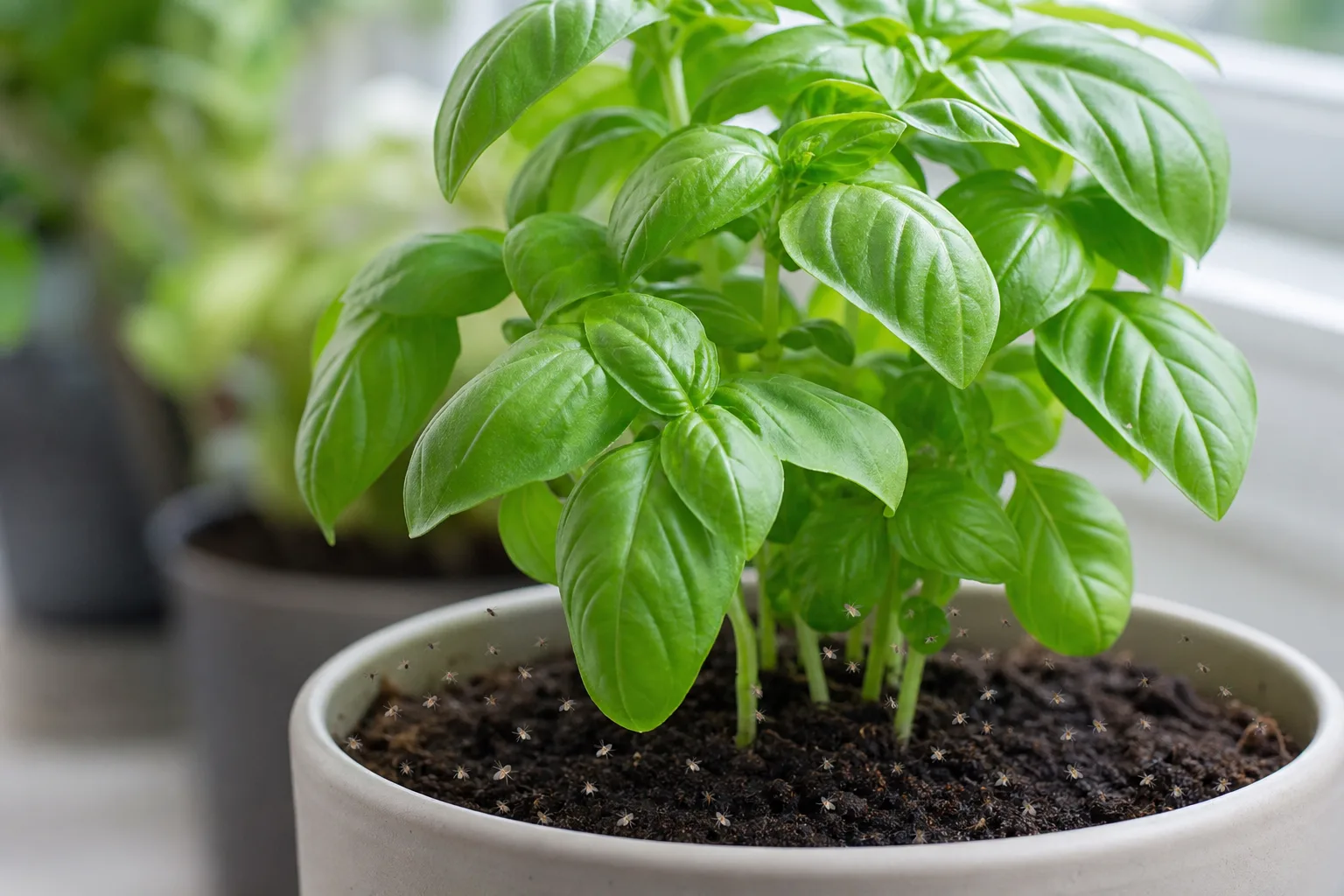
Fungus Gnats on Basil: Causes, Checks & Fixes
This guide covers fungus gnats on Basil. See also the general Fungus Gnats guide, watering, and light pages for this plant.
Fungus Gnats on Basil: Causes, Checks & Fixes
Quick answer
Fungus gnats on Basil (Ocimum basilicum) are almost always a moisture signal, not a basil-specific pest outbreak. The small dark flies hovering over a kitchen herb pot mean the top of the compost has stayed wet too long-often because basil’s reputation for loving water leads to daily top-ups even when the root zone is already saturated.
First step: let the top 1–2 inches of mix dry completely before the next watering. That single change breaks the larval life cycle in the upper soil layer where fungus gnats breed. Adults are mostly a nuisance on established basil, but chronic wetness that supports them can also stress roots and invite rot-see overwatering on basil and root rot if wilting persists on wet soil.
What fungus gnats look like on Basil
On basil, the clearest sign is behavior around the pot, not leaf damage. You will notice:
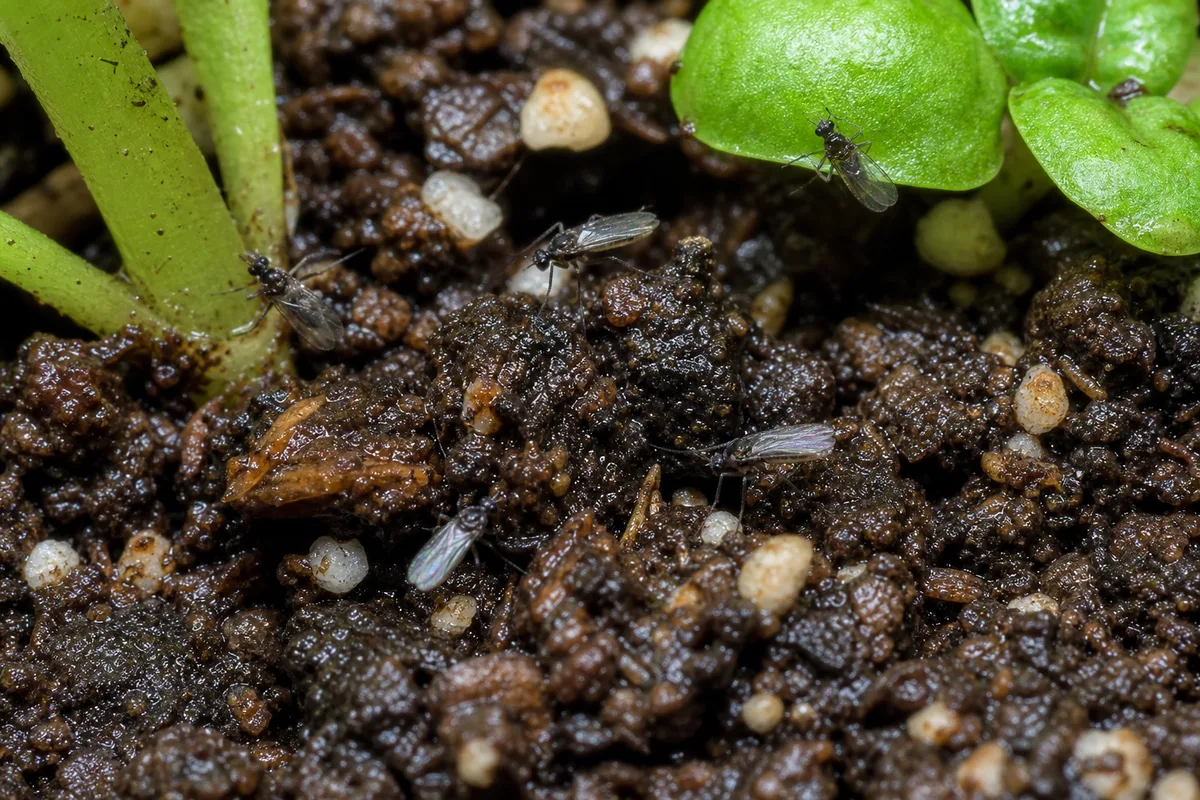
Fungus Gnats symptoms on Basil - compare with healthy tissue on the same plant.
- Tiny gray or black flies (about 2 mm long) that rise when you water, harvest, or bump the container
- Adults resting on the soil surface, pot rim, or nearby window glass-especially under kitchen grow lights
- More activity after top-watering than after a dry spell
- Occasionally, translucent worm-like larvae in the top 2–3 cm of mix if you scrape the surface gently
Basil leaves are smooth and glossy-they do not show chew marks from gnats. When damage appears, it is indirect: slow regrowth, pale new tips, or slight yellowing if larval numbers are high and roots stay in soggy mix for weeks. A fast-growing Genovese basil that suddenly stalls while the surface never dries fits gnat habitat plus root stress better than a true leaf disease.
Do not confuse with: fruit flies around compost bins (not tied to one pot), whiteflies that fly up from leaf undersides, or spider-mite stippling with fine webbing on leaves.
Why Basil gets fungus gnats
Basil is grown in rich, organic potting mix-often peat or cocopeat blended with compost-which holds moisture well and breaks down on the surface. That is good for flavour and harvest, but it is also exactly what fungus gnat larvae feed on: fungi and decaying organic matter in damp upper soil.
Three basil habits make infestations common indoors:
1. “Keep it moist” taken too literally. Container basil wants consistently moist, well-drained soil during active growth, but consistently moist is not the same as the surface never drying. Watering on a calendar-every day because basil is a kitchen herb-leaves the top layer constantly wet in cool months or dim windows when the plant drinks slowly. The basil watering guide recommends checking the top 1–2 inches before each drink, not watering on autopilot.
2. Kitchen counter placement with poor drying. Grocery-store basil in a 4-inch nursery pot on a counter often sits in lower light than outdoor herbs. Less light means slower evaporation from the pot surface. A saucer that holds runoff extends wetness at the base and keeps the whole profile damp longer.
3. Small pots with dense peat mix. Store-bought basil arrives in tight root balls inside pots that look adequate but hold water far longer than the plant uses it. The outer ring of mix stays wet for days while the centre is only moderately moist-prime egg-laying territory for adult females.
Fungus gnats rarely attack healthy basil in fast-draining outdoor beds where the surface dries between rains. The problem is almost always container culture plus overwatering, not a weakness of sweet basil itself.
How to confirm the cause
Work through these checks before reaching for sprays-on edible basil, diagnosis should drive cultural fixes first.
- Surface moisture - Insert a finger 1–2 inches deep. If it feels wet several days after the last watering, you have gnat-friendly conditions whether or not flies are visible yet.
- Fly test - Tap the pot or water lightly. A small cloud of flies from the soil surface confirms active adults.
- Sticky trap test - Place a yellow sticky trap at soil level for 48 hours. Several small gnat-shaped bodies mean breeding in that pot, not just random flies from the room.
- Pot weight and drainage - A pot that stays heavy for days suggests waterlogged mix. Confirm drainage holes are open and the saucer is empty.
- Plant response - Firm new shoots on slightly dry surface = likely cosmetic gnats. Wilting on wet soil, sour smell, or mushy stem bases = escalate toward root rot checks, not gnat traps alone.
- Larval check (optional) - Scrape the top centimetre of mix onto white paper. Larvae are tiny, whitish, with dark heads-distinct from perlite grains or compost worms.
If traps stay empty, flies do not rise from the pot, and the surface dries normally, look elsewhere (drains, garbage, other houseplants) before treating basil.
First fix for Basil
Stop top-watering until the top 1–2 inches of mix is dry to the touch.
Skip the next scheduled drink even if lower leaves look slightly soft-the goal is to break larval survival in the upper layer without letting the whole root ball go bone dry for days. Basil can tolerate a short surface dry cycle better than it tolerates stagnant wet compost.
Check dryness at the same depth each time (1–2 inches), not at the surface alone. In hot summer windows you may reach that point in one to two days; in a cool winter kitchen it may take four or five. The interval matters less than the dry surface before the next drink.
Do not apply chemical soil drenches, neem, or insecticidal sprays as your opening move on herbs you plan to eat. Extension guidance for edible indoor plants prioritizes drying soil and non-chemical larval control over persistent insecticides.
Step-by-step recovery
After the surface dry cycle is underway, add these steps in order based on severity:
Light infestation (occasional flies, firm new growth)
- Deploy yellow sticky traps - Set one trap per infested pot at soil level to catch egg-laying adults and monitor progress. Replace when coated or every one to two weeks.
- Empty saucers and debris - Pour out standing water within 15 minutes of watering. Remove fallen basil leaves from the soil surface-they add organic food for larvae.
Moderate infestation (daily flies, slow new growth)
- Bottom-water selectively - If roots still need moisture but the surface stays soggy with top watering, sit the pot in a tray of water for 15–30 minutes and water from the bottom so the plant drinks from below while the top layer stays drier.
- Improve light and airflow - Move basil to a brighter spot (six or more hours of direct sun or strong grow light) so the mix cycles moisture faster. Harvest crowded stems to let air reach the soil.
Heavy infestation (swarms, seedlings collapsing, wet soil for weeks)
- Apply BTI for persistent larvae - If flies remain after two weeks of corrected watering, use a product containing Bacillus thuringiensis subsp. israelensis (Bti) as a soil drench labeled for fungus gnats. Bti targets larvae in moist soil and is suitable for edible herbs when used as directed-still wash leaves before harvest.
- Top-dress or repot only if needed - A half-inch layer of coarse sand or fine gravel on the surface can discourage new egg laying. Repot into fresh, perlite-amended mix if the current media stays waterlogged despite dry cycles, or if gnats persist after four weeks of cultural control.
Expect three to four weeks of consistent drying before adult numbers drop sharply-eggs and larvae hatch in overlapping waves.
Recovery timeline
Week 1: Adult flies may still appear when you water, but sticky traps should start catching them. The top layer should feel dry before each new drink.
Weeks 2–3: Fly counts normally fall if the surface stays dry. Basil should push new tips if roots were only mildly stressed.
Weeks 4–6: A well-managed pot often looks “clean” on traps for several days at a time. Full suppression can take longer if multiple nearby pots share the same wet conditions.
Signs you are winning: Fewer flies on disturbance, dry surface between waterings, firm new basil shoots, no spreading yellowing.
Signs it is worsening: Swarms increase despite dry surface (check other pots), seedlings collapse, wilting on wet soil, sour smell, or soft stem bases-shift focus to root health and drainage, not more traps alone.
Lookalike symptoms
| Symptom source | How it differs from fungus gnats on basil |
|---|---|
| Fruit flies | Around food waste or compost, not consistently rising from basil soil when watered |
| Whiteflies | Tiny white insects flushed from leaf undersides; basil leaves show stippling, not clean foliage with flies only at soil level |
| Mold on soil surface | White or green fuzz from chronic overwatering; often appears with gnats-see mold on soil |
| Normal basil droop | underwatering on Basil basil wilts with light, dry mix; overwatered basil wilts with heavy, wet mix. Gnats strongly suggest the second pattern |
| Aphids on new tips | Curled, sticky shoot tops with insects visible; unrelated to soil flies |
What not to do
Do not water more because leaves droop while the mix is still wet-that feeds larvae and risks root rot. Do not drench basil with hydrogen peroxide or unlabeled chemicals on every watering; repeated harsh drenches stress edible roots without fixing a calendar that keeps the surface moist. Do not ignore saucer water “so the plant can drink later.” Do not stop treatment after a few days when adults decline-larvae in soil continue hatching for weeks. Do not use long-residual insecticides or foliar sprays right before harvest on kitchen herbs when drying soil and Bti resolve most home infestations-wash leaves after any soil treatment before eating.
Basil care cross-check during treatment
While fighting gnats, keep these basil norms in view:
| Care factor | Basil target | Gnat-friendly mistake |
|---|---|---|
| Watering trigger | Top 1–2 inches dry before next drink | Daily top-ups because basil “likes moisture” |
| Pot drainage | Open holes, empty saucer within 15 minutes | Saucer left full; decorative pot without holes |
| Light | Six or more hours direct sun or strong grow light | Dim counter where soil never dries |
| Harvest | Regular pinching for airflow and flavour | Overgrown canopy shading wet soil surface |
| Mix | Well-drained with perlite; not dense peat alone | Heavy store mix that stays soggy at edges |
Full watering rhythm: basil watering guide.
How to prevent fungus gnats on Basil
Prevention on basil is mostly water rhythm matched to the pot, not pest sprays.
- Water when the top 1–2 inches dry, not on a fixed daily schedule-reduce frequency when growth slows in winter or in dim rooms.
- Use well-draining mix with perlite and pots with open drainage holes; empty saucers after every drink.
- Harvest regularly so stems do not shade the soil surface and trap humidity.
- Quarantine new basil for two to three weeks before placing it beside other herbs; inspect store-bought pots for flies when you bring them home.
- Bottom-water during gnat-prone seasons if top watering keeps the surface soggy.
- Keep a sticky trap in the pot when outdoor basil comes inside for winter-hitchhiking gnats are common when plants move indoors.
Basil that dries predictably at the surface, drinks deeply when needed, and grows in bright light rarely keeps a gnat problem for long. Treat the wet soil habit first and the flies usually leave on their own.
When to worry
Fungus gnats alone on a vigorous basil are low urgency. Escalate promptly if:
- Fly numbers increase weekly despite dry surface cycles
- Seedlings, newly rooted cuttings, or weak divisions collapse (larvae damage tender roots faster)
- Basil wilts on wet soil with sour smell or soft stem bases-inspect for root rot immediately
- Gnats persist more than six weeks after corrected watering and Bti-repot into faster-draining mix and review pot size
For a mature kitchen basil with only occasional flies and firm new growth, stay the course on drying the top layer before adding stronger interventions.
FAQs
How can I confirm fungus gnats on Basil?
Confirm when small dark flies rise from the pot after watering, yellow sticky traps catch adults within a few days, and the top mix stays damp for days after one drink. Larvae look like tiny translucent worms in the upper soil layer.
What should I check first on Basil?
Press a finger into the top 1–2 inches of mix, lift the pot to feel weight, and check whether saucers hold standing water. Basil that droops on heavy soil points to overwatering-the same habit that breeds gnats.
Will damaged Basil leaves recover from fungus gnats?
Gnats rarely scar basil leaves directly. Yellow or slow growth from larval root feeding clears once you dry the surface and new shoots grow firm. Old yellow leaves will not green up again.
When are fungus gnats urgent on Basil?
Escalate if fly numbers climb weekly, seedlings or fresh cuttings collapse, or basil wilts on wet soil with sour smell-those patterns suggest root stress beyond a cosmetic gnat problem.
How do I prevent fungus gnats on Basil next time?
Water when the top 1–2 inches dry, empty saucers after every drink, harvest regularly for airflow, and bottom-water if the surface stays soggy while roots still need moisture.
Is BTI safe on basil I plan to harvest this week?
Bti products labeled for fungus gnats are commonly used on edible herbs and are approved for organic production when applied at label rates. Wash basil leaves before eating to remove any soil residue from the drench, regardless of timing.
Can I bottom-water basil while fighting gnats without keeping the surface wet?
Yes-bottom-watering hydrates the root zone while the top layer stays drier than with repeated top splashes. Still let the surface dry between sessions and empty the saucer promptly so standing water does not re-wet the upper mix.
When to use this page vs other Basil guides
- Basil watering guide - Use for routine moisture checks before assuming fungus gnats is the main issue.
- Basil problems hub - Browse all 16 common issues on this species.
- Overwatering on Basil - Different entry point when symptoms overlap with fungus gnats.
- Mold on Soil on Basil - Different entry point when symptoms overlap with fungus gnats.
- Root Rot on Basil - Different entry point when symptoms overlap with fungus gnats.