Slow Growth on Basil: Causes, Checks & Fixes
Quick answer
Basil is a fast warm-season herb-when growth stalls, cold below 50°F, too little sun, root-bound pots, or flowering are the usual causes. First step: check whether new leaf pairs appear at the top and whether the pot sits in six or more hours of direct sun or under a grow light.
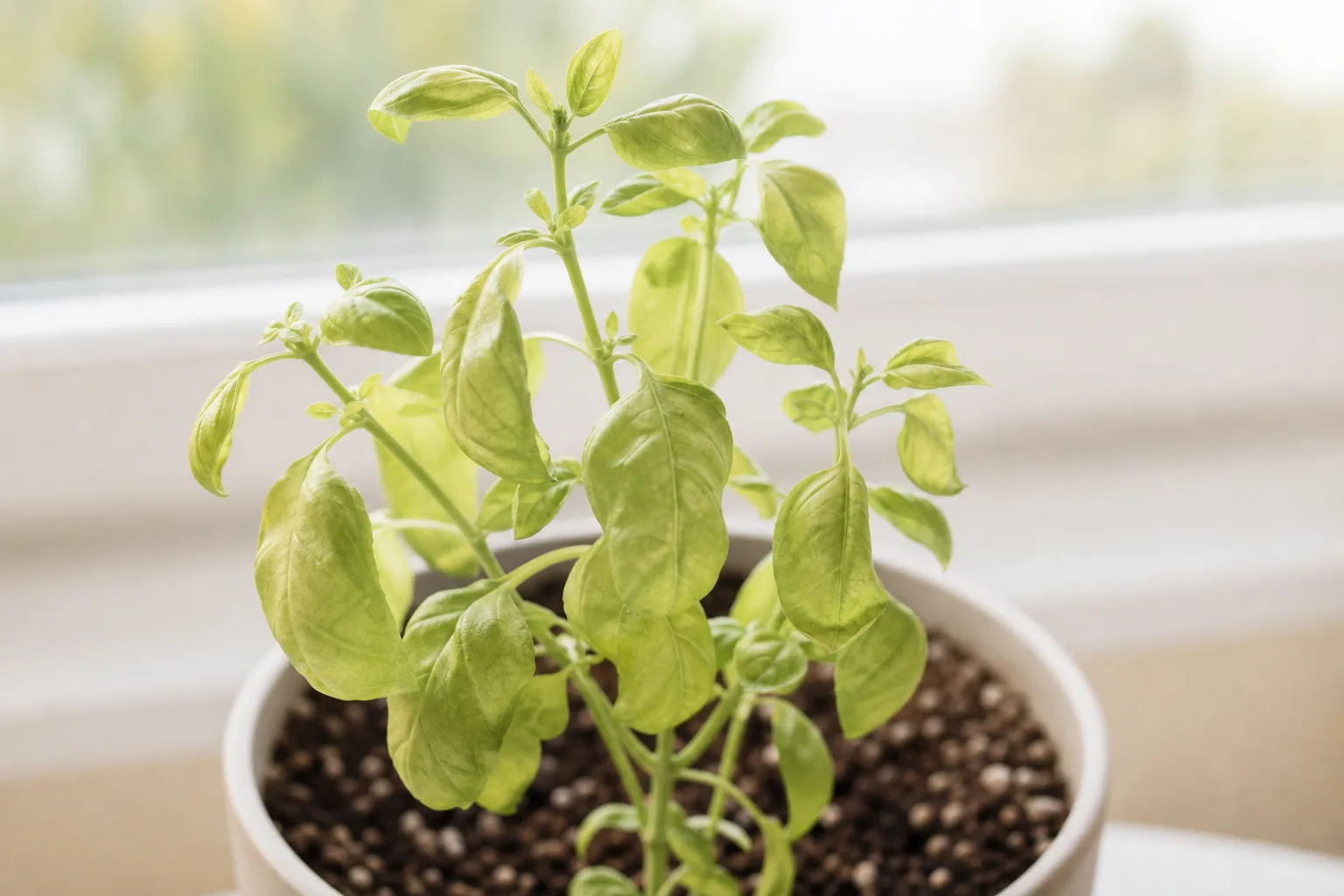
Slow Growth on Basil: Causes, Checks & Fixes
This guide covers slow growth on Basil. See also the general Slow Growth guide, watering, and light pages for this plant.
Slow Growth on Basil: Causes, Checks & Fixes
Quick answer
Sweet basil (Ocimum basilicum) is built to grow fast in heat and sun-a warm-season annual that can be harvest-ready within a few weeks of transplant when conditions are right. When growth feels “slow,” the bar is higher than for a pothos or snake plant: you should see new leaf pairs at stem tips every few days in summer, not a static plant for weeks.
First step: look at the top two nodes and your light setup. If internodes are long, leaves are small, or the plant leans toward a window, fix light before changing water or fertilizer. If nights have been cool, soil feels cold, or leaves blackened at edges, warmth is the limiter-basil stalls when temperatures drop to about 50°F (10°C). If the pot is tiny and roots circle the surface, root bind is likely. Do one correction at a time and judge progress by new growth only.
What slow growth looks like on basil
Slow growth on basil means little or no new foliage over time, not just one quiet day after a heavy harvest.
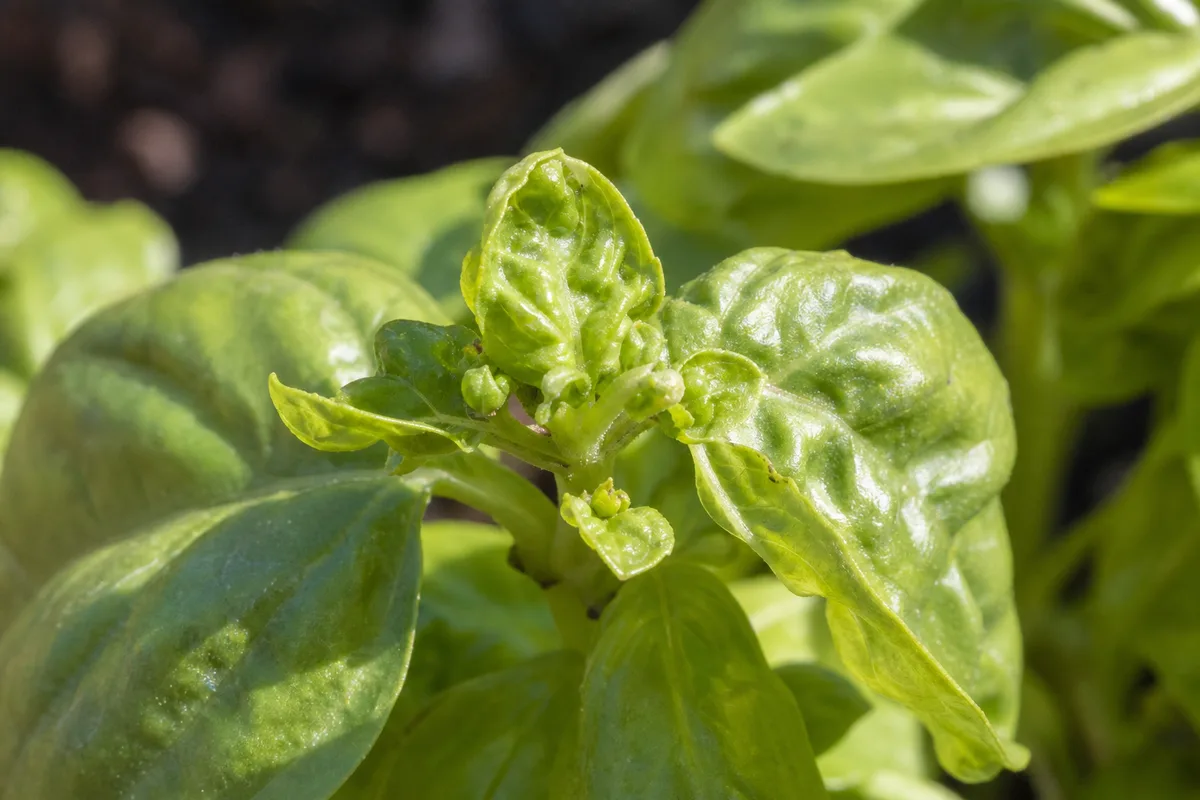
Slow Growth symptoms on Basil - compare with healthy tissue on the same plant.
Typical signs:
- No new leaf pairs at stem tips for one to two weeks during warm summer weather
- Smaller new leaves than older ones, with long gaps between nodes (internodes)
- Static height despite regular watering-plant looks alive but does not bush out
- Fewer harvests per week than you expect from a culinary herb
- Early flower spikes on weak stems-basil bolts faster when stressed, then leaf production drops
What still counts as normal:
- Slower pace in late fall and winter on a windowsill when days shorten
- A brief pause for one to three days right after a heavy harvest or repot
- Compact growth after pinching-the plant redirects energy before side shoots appear
Basil is not a slow houseplant. If your mental model is “herbs grow like succulents,” adjust expectations: in full summer sun, six or more hours of direct light daily should produce visible new tissue within days.
Why basil stops growing fast
Insufficient light (most common indoors)
Basil wants full sun-six to eight hours of direct light outdoors-not the bright indirect corner where many kitchen pots sit. In weak light, photosynthesis drops, internodes stretch, and new leaves stay small. Growth does not stop instantly; it creeps until the plant looks permanently stalled. See not enough light on basil for the full light-deficit pattern and leggy growth when stretch is the main symptom.
Cold air or cold soil
Basil is a tropical annual. Illinois Extension warns that growth slows sharply when nights fall to 50°F (10°C) and that cold damage blackens leaves. A warm room with a cold windowsill, an unheated balcony in spring, or soil that stays cool in a shaded pot will stall basil even when you water faithfully. Indoor winter growth often needs supplemental heat near the root zone, not just more water.
Root-bound or undersized pots
Supermarket basil in a 3-inch clamshell roots out in two to three weeks. Roots circle the pot, water runs straight through, and the plant stops sizing up despite green leaves. Penn State Extension notes basil needs room and consistent moisture for steady leaf production-tiny containers exhaust both quickly. Our repotting guide covers when to move up a size.
Bolting and flower shift
Flowering is a predictable slowdown, not always a disease. Once basil commits to bloom, energy shifts from leaves to flowers and seed. Leaf flavor turns bitter and new leaf pairs appear rarely. Regular pinching and harvest delay this shift; heavily bolted plants may not return to kitchen-grade production without restarting from seed or cuttings.
Overwatering in dim or cool conditions
Basil in weak light uses less water. If you keep a summer watering schedule, mix stays wet, roots lose oxygen, and growth stalls-sometimes with yellow lower leaves or soft stems. That overlap is overwatering or root rot, not simple “slow growth.” Fix drainage and light together.
Nutrient depletion (after other causes are ruled out)
In the same small pot for months, nitrogen leaches with every watering. Pale new growth on a plant in strong light with correct moisture may need a light feed. Do not fertilize cold, shaded, or soggy plants-see our fertilizer guide for timing.
How to confirm the cause
Work through this checklist in order-each step rules in or out a major limiter:
- Track new nodes - Mark a stem tip with tape. Count days until a new leaf pair opens. In warm summer sun, expect visible progress within three to seven days. No change in two weeks means a real stall.
- Log direct sun hours - Note whether sun actually hits leaves for six or more hours, or only bright indirect light. Distance from glass matters; beyond about 60 cm (2 ft), intensity drops fast indoors.
- Check overnight temperature - If the pot sits on a cold sill or outdoor nights dip near 50°F, cold is a prime suspect even when daytime watering looks fine.
- Inspect roots and pot size - Slide the plant partway out. White tips circling the ball, roots visible at drainage holes, or a grocery clamshell-sized pot confirm root bind.
- Look for flower spikes - Small buds at stem tips explain slowdown without mystery disease. Pinch one; if the plant still barely pushes leaves afterward, combine bolting with light or root issues.
- Cross-check soil moisture - Lift the pot. Heavy and wet in a dim room suggests overwatering stall. Very light and dry every day in hot sun may mean underwatering on Basil-growth pauses until roots recover. See watering guide.
- Rule out lookalikes - Uniform stretch toward a window is light, not generic “slowness.” Yellow lower leaves with wet soil is rot risk. Fine webbing is spider mites, not nutrient lack alone.
Confirmed diagnosis means one dominant limiter you can fix first-not four changes the same afternoon.
First fix for basil
Move the plant to full sun-or add a grow light-before repotting, feeding, or changing water rhythm.
Outdoors (after frost danger), place basil where it receives six or more hours of direct sun and good airflow. Indoors, use the sunniest window and sit the pot within 30 cm (12 in) of the glass, or run a full-spectrum LED 6–12 inches above the foliage for 10–12 hours daily when natural light is weak-University of Minnesota Extension recommends that duration for overwintered indoor basil.
That single light fix comes first because most stalled kitchen basil is light-starved. After two weeks of improved light:
- If roots circle a tiny pot → repot one size up with fresh well-drained mix (step two, not day one)
- If flower buds present → pinch spikes above a leaf node per the pruning guide
- If nights are cold → move away from drafty glass or wait until outdoor lows stay above 50°F before expecting summer pace
- If soil stays wet in the new bright spot → reduce watering to match faster drying; inspect roots if stems soften
Do not stack repot, heavy prune, and fertilizer on the same day as the light move.
Step-by-step recovery
- Relocate or light up - Full sun outdoors or grow light indoors as above. Hold other variables steady for 14 days.
- Adjust watering to match new growth rate - Brighter basil dries faster; dim stalled basil needs less. Use the top 1–2 inch dry rule from the overview.
- Repot if root-bound - Move to a 6- to 8-inch pot with drainage, gently loosen circling roots, and water once thoroughly. Expect a three- to seven-day pause after repot before new tips push.
- Pinch and harvest - Cut above leaf nodes to force branching once light is adequate. Remove flower buds as they form.
- Feed only if warranted - After two weeks of compact new growth in warm conditions, apply half-strength balanced liquid fertilizer if leaves stay pale despite good light and moisture.
- Rotate weekly - Turn the pot a quarter turn every few days so growth stays even.
If a store-bought clump is exhausted and woody after bolting, starting fresh seed or water cuttings in bright light is often faster than rehabbing the original pot.
Recovery timeline
| Cause fixed | What to expect |
|---|---|
| Light increased | New leaf pairs with shorter internodes within 2–3 weeks; first pair may still look small |
| Root-bound repot + sun | Pause 3–7 days, then new tips in 7–14 days in warm weather |
| Cold corrected | 1–2 weeks before steady growth resumes; blackened leaf edges do not green up |
| Bolting pinched early | Side shoots in about a week when light and warmth are adequate |
| Overwatering corrected | 2–4 weeks if roots are firm and white; longer if rot was advanced |
Success signal: the next leaf pair above your fix is larger and closer to the one below it than the previous stalled pair. Old small leaves and long internodes do not shrink back-judge recovery on new tissue only.
Worsening signs: continued stretch under a grow light (fixture too weak or too far), yellowing lower leaves with wet soil (reduce water; check roots), or black soft stems at soil level (treat as rot, not slow growth alone).
Lookalike symptoms
| What you see | Likely problem | First check |
|---|---|---|
| Long stems, small pale leaves, lean toward window | Light deficit | Not enough light |
| Long gaps between nodes but plant still “growing” upward | Etiolation / leggy growth | Leggy growth |
| Yellow lower leaves, wet soil, soft base | Overwatering / root stress | Overwatering |
| Pale green new leaves in full sun, moist soil | Possible nitrogen lack | Fertilizer after light confirmed |
| Buds at every tip, bitter leaves | Bolting | Pruning |
| No new growth, cold nights, black leaf edges | Cold stall | Warmth + light |
| Fine stippling, webbing | Spider mites | Spider mites |
Slow growth vs. yellow leaves: yellowing with stall often shares root or water stress-see yellow leaves on basil when color change dominates.
What not to do
Do not fertilize heavily to “force” a shaded or cold plant-lush weak growth tastes worse and burns roots in wet mix. Do not repot on day one without checking light; a bigger pot of soggy soil in a dim corner stalls longer. Do not expect outdoor July growth from a January windowsill without grow lights. Do not mist or spray as a substitute for sun. Do not ignore flower spikes while wondering why leaf harvests stopped.
How to prevent slow growth next time
Match placement to basil biology before aesthetics: sunny balcony, south-facing sill, or herb bed with six or more hours of direct sun. Harvest and pinch regularly so the plant stays in vegetative mode-see the basil overview for the full warm-season rhythm.
In winter or dark apartments, plan supplemental LED lighting from day one rather than waiting for stall. Repot supermarket basil within the first two weeks into a proper container. Refresh plants every 8–12 weeks indoors by seed or cuttings if old specimens bolt or woody bases stop branching. Align watering with season and light-less in winter, more in summer sun.
When to worry
Pure slow growth is rarely an overnight emergency, but wilting in a dark corner with soggy soil needs same-day root inspection. Black, soft stems at soil level mean rot, not patience. If grow lights already run 12 hours and new internodes still lengthen, increase intensity or lower the lamp before assuming the plant is finished.
Heavily bolted, woody basil with few leaves left may not be worth saving-restart from seed in warm bright conditions instead of stacking treatments on an exhausted annual.
Conclusion
Basil slows when something blocks its tropical pace-usually light, cold, cramped roots, or flowering-not because it is inherently a slow plant. Confirm the limiter with new node spacing, sun hours, soil temperature proxy, and root room, fix light first, then repot, pinch, or feed in that order. Track recovery on the next harvest, not old stretched stems. When basics from our overview, light, pruning, and fertilizer guides are aligned, basil should return to the fast leaf production this herb is known for.
When to use this page vs other Basil guides
- Basil watering guide - Use for routine moisture checks before assuming slow growth is the main issue.
- Basil problems hub - Browse all 16 common issues on this species.
- Not Enough Light on Basil - Different entry point when symptoms overlap with slow growth.
- Leggy Growth on Basil - Different entry point when symptoms overlap with slow growth.
- Yellow Leaves on Basil - Different entry point when symptoms overlap with slow growth.