Yellow Leaves on Basil: Causes, Checks & Fixes
Quick answer
Yellow basil leaves often mean downy mildew, wet roots, cold exposure, or heavy harvest without feeding-not a mystery disease. First step: flip a yellow leaf and check the underside for gray fuzz; if absent, finger-test soil moisture and note whether only old bottom leaves are fading.
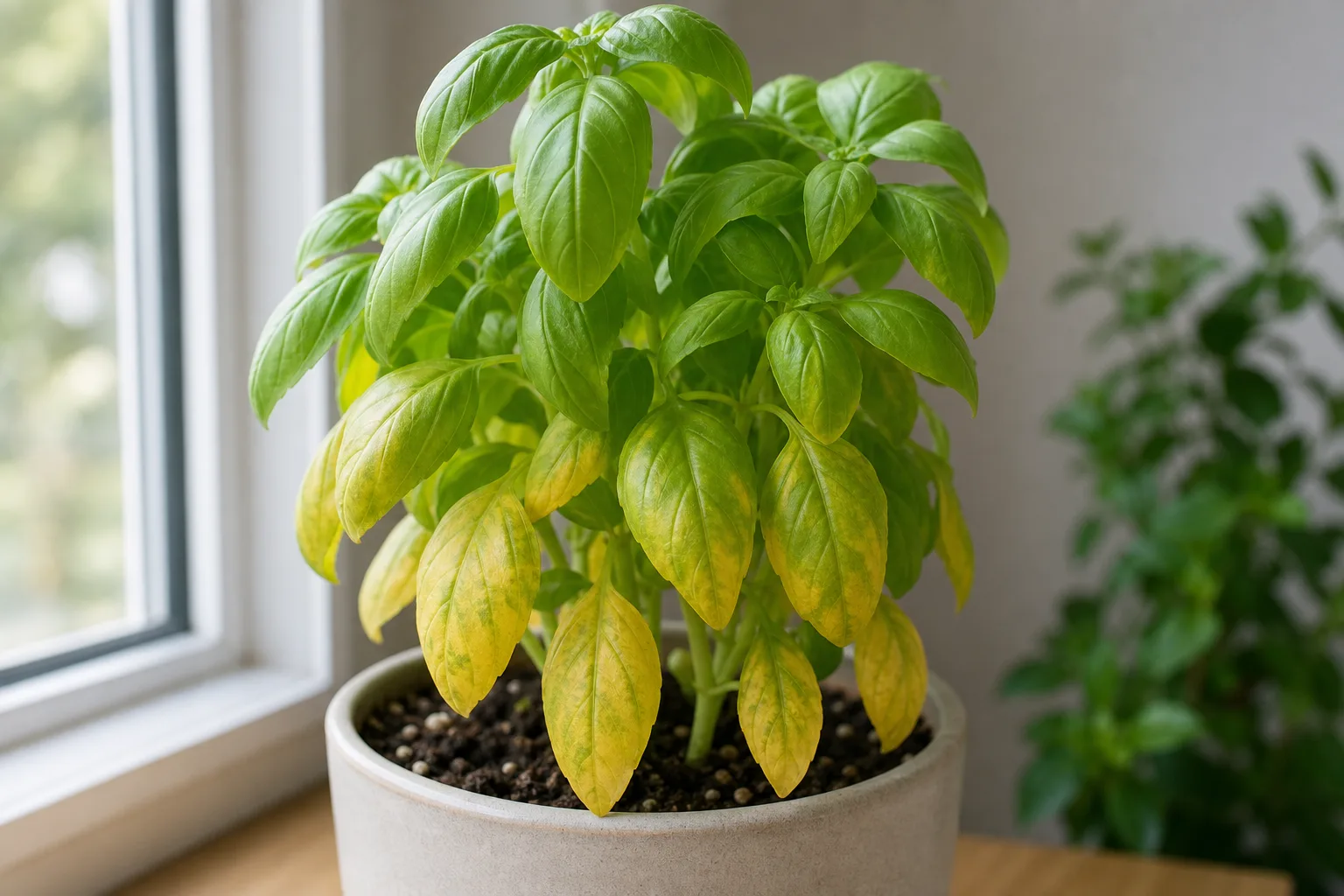
Yellow Leaves on Basil: Causes, Checks & Fixes
This guide covers yellow leaves on Basil. See also the general Yellow Leaves guide, watering, and light pages for this plant.
Yellow Leaves on Basil: Causes, Checks & Fixes
Quick answer
Yellow leaves on basil (Ocimum basilicum) are a symptom, not a single diagnosis. Sweet basil is a heat-loving annual with opposite leaves on square stems-not a rosette-so bottom leaves naturally age and drop as you harvest the tips. That harmless pattern is easy to confuse with downy mildew, wet roots, cold damage, or nitrogen depletion after heavy pesto harvests.
The fastest way to sort causes is a 30-second underside check. Flip a yellow leaf: velvety gray or purple fuzz between the veins means basil downy mildew-remove and destroy the plant; fungicides rarely save infected kitchen pots. Clean undersides with limp yellow lowers and wet soil point to overwatering. Pale upper leaves on long stems in a dim room signal not enough light. Yellow-black patches after a cold night trace to basil’s frost intolerance.
First step: inspect one yellow leaf underside, then press your finger 2–3 cm into the mix. Fuzz confirms mildew. Wet heavy soil without fuzz means pause watering before fertilizer. Full species context: basil overview.
What yellow leaves look like on basil
Basil grows as an upright, branching herb with glossy opposite leaves on four-sided stems. Yellowing patterns differ by cause-matching the pattern saves a week of wrong fixes.
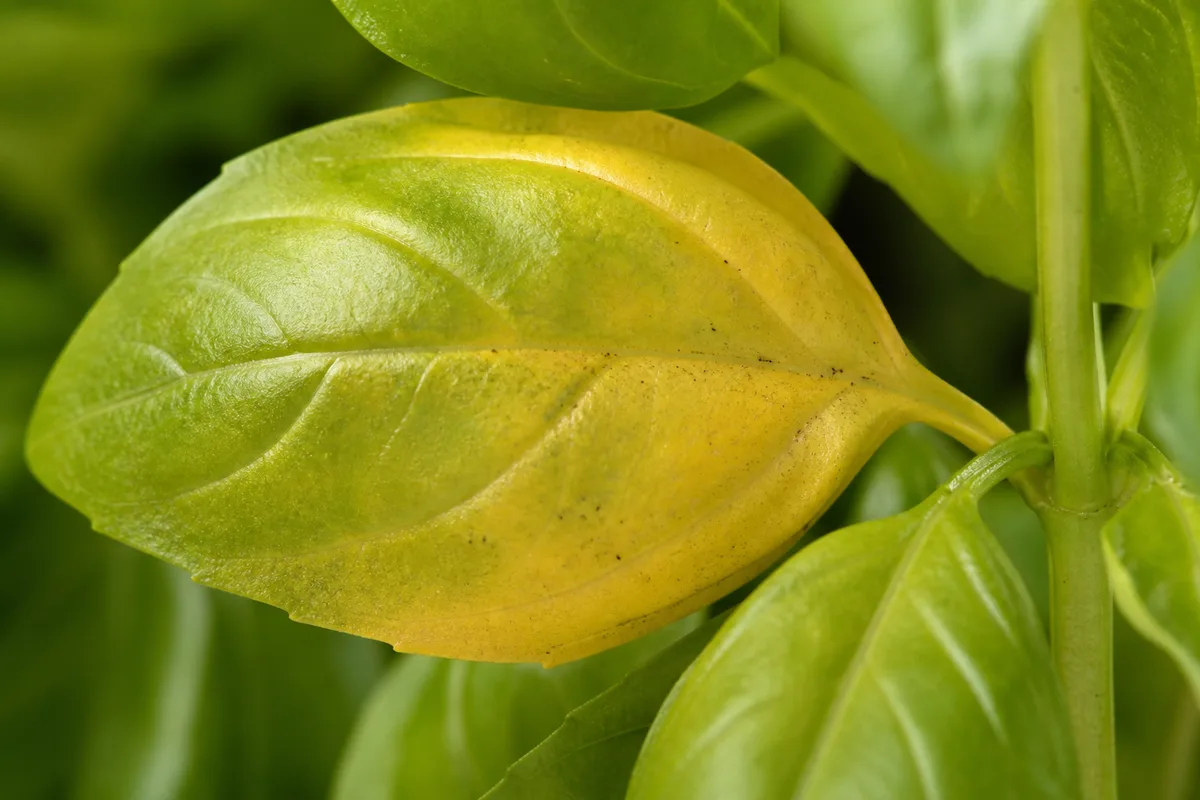
Yellow Leaves symptoms on Basil - compare with healthy tissue on the same plant.
Downy mildew (most serious disease):
- Yellow areas restricted by major leaf veins on the upper surface-often band-shaped, not uniform
- Velvety gray, purple, or brown fuzz on the underside (best seen in early morning)
- Starts on lower leaves and moves up the plant
- Can be mistaken for nutrient deficiency until spores appear
- Spreads fast in humid conditions with poor airflow
Overwatering and root stress:
- Lower leaves yellow first, often limp while soil stays wet
- Pot feels heavy; saucer holds stale water
- No fuzzy underside; stems may still feel firm briefly
- May pair with fungus gnats or sour smell-see overwatering on basil and root rot
Underwatering in hot sun:
- Leaves yellow from edges or uniformly pale; feel thin and papery
- Soil pulls from pot walls; pot is light
- Common on patio basil in midsummer when harvest outpaces watering-see underwatering
Low light indoors:
- Upper leaves pale yellow-green; stems stretch with long gaps between leaves
- Plant leans toward the brightest window
- Lower leaves may yellow from shading as top growth dominates
- Cross-check basil light guide and not enough light
Sun scorch after sudden exposure:
- Bleached, white, or tan patches on leaves facing intense afternoon sun
- Often follows moving indoor seedlings to full patio sun without acclimation
- Affected tissue crisps; surrounding leaf may yellow before browning
Cold and frost damage:
- Yellowing, blackening, or translucent patches after exposure below about 50°F (10°C)
- Curled or necrotic leaf edges after a cold windowsill night or early outdoor transplant
- Basil is intolerant of frost; freezing temperatures kill plants outright
Fusarium wilt:
- One-sided yellowing and wilt; plant may develop a shepherd’s crook bend
- Brown streaks on lower stems; vascular tissue inside stem may look discolored
- Often appears after plants reach 8–12 inches tall
- No gray fuzz on leaves-this is a soil-borne fungus, not mildew
Nitrogen deficiency from heavy harvest:
- New growth pale yellow-green while older leaves may stay darker briefly
- Common in small kitchen pots after weeks of daily top harvest without feeding
- Plant stays upright-no fuzzy spores, no brown stem streaks
- Cross-check basil fertilizer guide
Natural lower-leaf aging:
- One or two oldest bottom leaves fade to yellow over weeks
- Center and upper harvest tips stay bright green
- Normal on mature stems after repeated tip pruning
- No limpness, no wet soil smell, no underside fuzz
Spider mite stippling:
- Fine yellow speckles on upper leaf surface progressing to broader yellow patches
- Webbing on stem joints in advanced cases
- Dry indoor air accelerates mites-see spider mites on basil
Why basil gets yellow leaves
Downy mildew
Basil downy mildew, caused by the water mold Peronospora belbahrii, is the most common basil disease in Minnesota and has spread across much of North America since 2007. Infection starts on lower leaves and moves upward. The pathogen produces spores on leaf undersides and can spread on wind, transplants, seed, and fresh leaves. Sweet basil varieties are most susceptible; some Thai and red basils show more resistance. There are no reliable cures once infection is established-prevention and early removal are the practical kitchen-garden response.
Overwatering and root oxygen loss
Basil wants evenly moist, well-drained soil, not constant sogginess. When roots sit in waterlogged mix-especially in cool dim rooms where evaporation slows-they lose function and lower leaves yellow while the crown may still look green briefly. Calendar watering and oversized pots with slow-drying mix are common indoor triggers.
Underwatering during peak harvest
Container basil in full summer sun can dry within hours. Repeated dry cycles yellow leaves from the bottom up and stress roots. Heavy harvest increases transpiration; a pot that held moisture in spring may need daily checks by July.
Insufficient light
Basil is a full-sun herb needing at least six to eight hours of bright light daily outdoors. Indoors, weak window light produces elongated stems and pale upper foliage as the plant stretches toward the brightest source. Lower leaves yellow partly from shading when top growth dominates.
Sun scorch and poor acclimation
Moving shade-grown seedlings to full patio sun without a gradual transition can bleach leaf tissue. Basil wants bright light-but sudden intense exposure burns leaves already adapted to lower intensity.
Cold and chilling injury
Basil is a tender tropical annual. Exposure to temperatures below about 50°F (10°C) causes chilling injury-yellowing, blackening, wilting, and necrotic spots-even without a hard frost. Leaving pots on a cold windowsill overnight or planting outdoors too early produces this pattern. Frost kills basil completely.
Fusarium wilt
Fusarium wilt, caused by Fusarium oxysporum f. sp. basilicum, infects sweet basil through roots and plugs xylem vessels, restricting water flow. Plants often grow normally until 8–12 inches tall, then show stunting, yellow malformed leaves, stem streaks, and sudden wilt. The fungus can persist in soil for years-infected plants should be removed immediately and not composted.
Nitrogen draw-down from frequent harvest
Basil rewards constant pinching-but every harvest removes nitrogen from a finite pot of mix. University of Minnesota Extension recommends liquid fertilizer at half label strength every four to six weeks for indoor basil and every three to four weeks for outdoor containers. Skipping feed during peak pesto season commonly produces pale new growth.
Natural senescence on harvested stems
As you repeatedly cut tips above leaf pairs, the oldest lower leaves on each stem receive less light and age out. One or two yellow bottom leaves on an otherwise vigorous plant often mean normal leaf turnover, not emergency root failure.
Lookalike symptoms to rule out
| Pattern | Likely cause | First direction |
|---|---|---|
| Yellow bands between veins; gray fuzz underneath | Downy mildew | Remove plant; do not compost |
| Yellow lower leaves; wet heavy soil; clean undersides | Overwatering | Stop watering; check drainage |
| Pale upper leaves; long stems; dim room | Low light | Move to sun or add grow light |
| Bleached patches after moving to full sun | Sun scorch | Provide afternoon shade; acclimate |
| Yellow-black leaves after cold night | Chilling / frost | Warm bright spot; trim damage |
| One-sided wilt; brown stem streaks | Fusarium wilt | Discard plant; sanitize pot |
| Pale new growth; heavy harvest; moist soil | Nitrogen deficiency | Half-strength feed once |
| One to two yellow bottom leaves; green tips | Natural aging | Remove spent leaves; keep harvesting |
| Fine yellow speckles; webbing | Spider mites | Rinse; isolate; see mite guide |
How to confirm the cause
Work through these checks in order. One pattern match beats guessing from a single yellow leaf.
- Underside fuzz test - Flip a yellow leaf in early morning. Gray or purple velvet between veins confirms downy mildew. Bag a suspect leaf overnight in a sealed plastic bag; spores often intensify by morning if the pathogen is present.
- Soil moisture - Finger-test 2–3 cm deep. Wet heavy pot with limp yellow lowers suggests root stress. Dry light pot with papery leaves suggests drought.
- Which leaves yellow - Bottom only, slowly, on harvested stems → aging. Pale new growth throughout → nitrogen. Bands between veins + fuzz → mildew. One-sided collapse + stem streaks → Fusarium.
- Light and placement - Count direct sun hours or grow-light runtime. Leggy pale tops in a north room → light stress. Bleached patches after a recent move outdoors → scorch.
- Temperature history - Did the pot sit on a cold windowsill, near an AC vent, or outside on a night below 50°F? Chilling injury shows within 24–48 hours.
- Stem inspection - Split or scrape a lower stem on wilted plants. Brown vascular discoloration with no underside fuzz points to Fusarium, not overwatering alone.
- Pest scan - Hold a leaf to light for stippling and check stem joints for webbing-see spider mites and aphids.
First fix for basil
After you identify the most likely pattern, apply one primary correction-not fertilizer, Basil repotting guide, and watering changes on the same day.
If downy mildew: Remove the entire plant immediately. Bag it and discard in trash-not compost. Disinfect the pot before reuse. Do not attempt to salvage leaves for cooking once spores are visible. Sow or buy downy-mildew-resistant varieties next cycle.
If overwatering: Stop watering until the top 2–3 cm of mix dries. Empty the saucer. Confirm drainage holes are open. Remove fully yellow mushy leaves. Do not fertilize a waterlogged plant.
If underwatering: Water thoroughly at the base until a small amount drains, then discard runoff. Check daily in hot weather-see basil watering guide.
If low light: Move the pot to the brightest location-six or more hours of direct sun outdoors or a supplemental grow light 6–12 inches above foliage for 10–12 hours daily indoors.
If sun scorch: Move to bright indirect recovery light or provide afternoon shade. Acclimate gradually over 7–14 days before returning to full sun.
If cold damage: Move to a warm spot above 60°F (16°C) with bright light. Trim blackened tissue. Watch for new green tips within one to two weeks.
If Fusarium wilt: Discard the plant and soil from sweet basil pots. Do not compost. Sanitize containers; avoid planting sweet basil in the same mix. Choose Fusarium-resistant cultivars if replanting.
If nitrogen deficiency on an otherwise healthy plant: Apply one half-strength balanced liquid feed after a normal watering, then wait three to four weeks before repeating per container guidelines.
If natural aging only: Pinch off yellow lower leaves and continue harvesting tips above leaf pairs.
Step-by-step recovery by confirmed cause
Downy mildew: No recovery path for infected tissue. Focus on preventing spread-destroy affected plants, space remaining pots for airflow, avoid overhead watering, and select resistant varieties for the next sowing.
Overwatering / early root stress: Let soil dry to moist-not-wet. If yellowing spreads after the mix dries, unpot and inspect roots-trim mushy sections, repot into fresh well-drained mix only if roots are salvageable. See root rot if the crown softens.
Underwatering: Establish a rhythm matched to pot size and sun exposure-shallow containers in July may need daily checks. Mulch outdoor pots lightly to slow surface evaporation.
Low light: Improve light first, then pinch leggy tips to force bushier regrowth from nodes. Old stretched internodes will not shorten.
Sun scorch: Remove severely bleached leaves. New growth under filtered sun should emerge green within two weeks after acclimation.
Cold damage: Remove necrotic leaves. Maintain warm bright conditions. Light damage recovers; plants blackened to the stem base rarely warrant saving-reseed.
Fusarium wilt: Destruction is the fix. Rotate away from sweet basil in that container for multiple seasons if growing outdoors.
Nitrogen deficiency: One dilute feeding, then consistent light harvest rotation with periodic feeding during active growth.
Recovery timeline
Downy mildew: Irreversible once sporulation is visible. Replacement plants need two to three weeks from seed to first usable harvest under good light.
Overwatering: Yellowing often stops spreading within 3–7 days once soil dries appropriately. New center leaves should stay green within one to two weeks if roots were not rotted.
Underwatering: Foliage firms and yellowing halts within 24–48 hours after a thorough drink if roots are intact.
Low light: New growth should look darker and more compact within two to three weeks after light improvement. Old pale leaves do not re-green.
Cold damage: Minor chilling shows recovery signs in one to two weeks at warm temperatures. Frost-killed plants do not recover.
Fusarium wilt: Progressive decline-discard rather than wait for rebound.
Nitrogen deficiency: New tips should green up within one to two weeks after a single dilute feeding when light and moisture are already adequate.
Natural aging: Old yellow leaves drop; success means continued green new growth at harvest tips.
Judge success by new leaf color and absence of spreading fuzz or stem streaks, not by old yellow tissue re-greening.
What not to do
- Do not compost Fusarium-infected or downy-mildew basil-pathogens persist in compost and soil.
- Do not increase watering on a wet, yellowing plant-root oxygen loss worsens before it improves.
- Do not assume every yellow leaf needs fertilizer-mildew, overwatering, and cold are more common than nutrient gaps.
- Do not spray generic fungicides on kitchen basil hoping to cure established downy mildew-many products do not target water molds; removal is more reliable for home growers.
- Do not place recovering basil back on a cold windowsill after chilling injury-night temperatures should stay above 50°F (10°C).
- Do not discard a whole pot for one yellow bottom leaf on an otherwise green, fuzzy-free plant-aging is normal on harvested stems.
How to prevent yellow leaves on basil
- Choose disease-resistant varieties for downy mildew and Fusarium where available-UMN Extension emphasizes resistant cultivars as the primary mildew defense.
- Space pots for airflow and water at the base; let foliage dry before evening to reduce mildew humidity.
- Match watering to season and pot size-see basil watering guide; container plants dry faster than garden beds.
- Give full sun: at least six to eight hours outdoors; indoors use a bright window or grow lights per basil light guide.
- Acclimate seedlings over 7–14 days when moving from indoors to full patio sun.
- Protect from cold: bring pots in before nights drop below 50°F (10°C); wait to transplant until frost danger passes.
- Feed lightly during harvest season-half-strength liquid every three to six weeks depending on indoor vs. outdoor culture.
- Pinch tips regularly above leaf pairs to delay flowering and maintain productive upper growth-UMN notes flowering leads to woody, less productive plants.
- Inspect new transplants weekly for underside fuzz before introducing them beside healthy pots.
When to worry
Escalate immediately when:
- Gray or purple fuzz appears on leaf undersides-destroy the plant to protect neighbors.
- Brown stem streaks and one-sided wilt suggest Fusarium-discard; do not reuse soil for sweet basil.
- Many leaves yellow while soil stays soggy and the crown feels soft-unpot for root rot before salvage becomes impossible.
- Blackened stems after frost with no green tips emerging after two weeks-reseed rather than wait.
- Yellowing spreads up the plant within days during humid weather-treat as mildew until proven otherwise.
Basil care cross-check
| Factor | Healthy baseline | Yellow-leaf warning sign |
|---|---|---|
| Light | 6–8 h direct sun outdoors; grow light indoors | Pale stretched tops; heavy lower shading |
| Water | Moist-not-wet; top 2–3 cm dries between drinks | Wet pot + limp yellow lowers, or dry crispy leaves |
| Temperature | Above 50°F nights; frost-free | Black-yellow patches after cold exposure |
| Harvest | Pinch above leaf pairs | Pale new tips after weeks of heavy picking |
| Disease | Clean leaf undersides | Vein-bounded yellow bands + gray fuzz |
| Soil | Well-drained; not waterlogged | Sour smell; fungus gnats; mushy roots |
Related basil problems
- Overwatering - wet soil deep-dive
- Root rot - mushy roots and crown collapse
- Underwatering - dry pot in hot sun
- Not enough light - pale leggy growth
- Spider mites - stippling and webbing
- Leggy growth - stretch from dim conditions
- Basil light - sun hours and grow-light setup
- Basil watering - seasonal rhythm
- Basil fertilizer - feeding during harvest
Yellow leaves on basil are actionable when you match the pattern to mildew, moisture, light, cold, disease, or harvest stress-and honest when the best kitchen move is remove the plant, sanitize the pot, and start resistant seed.
When to use this page vs other Basil guides
- Basil watering guide - Use for routine moisture checks before assuming yellow leaves is the main issue.
- Basil problems hub - Browse all 16 common issues on this species.
- Overwatering on Basil - Different entry point when symptoms overlap with yellow leaves.
- Underwatering on Basil - Different entry point when symptoms overlap with yellow leaves.
- Not Enough Light on Basil - Different entry point when symptoms overlap with yellow leaves.