Watering Basil: Schedule, Soil Checks, and Mistakes
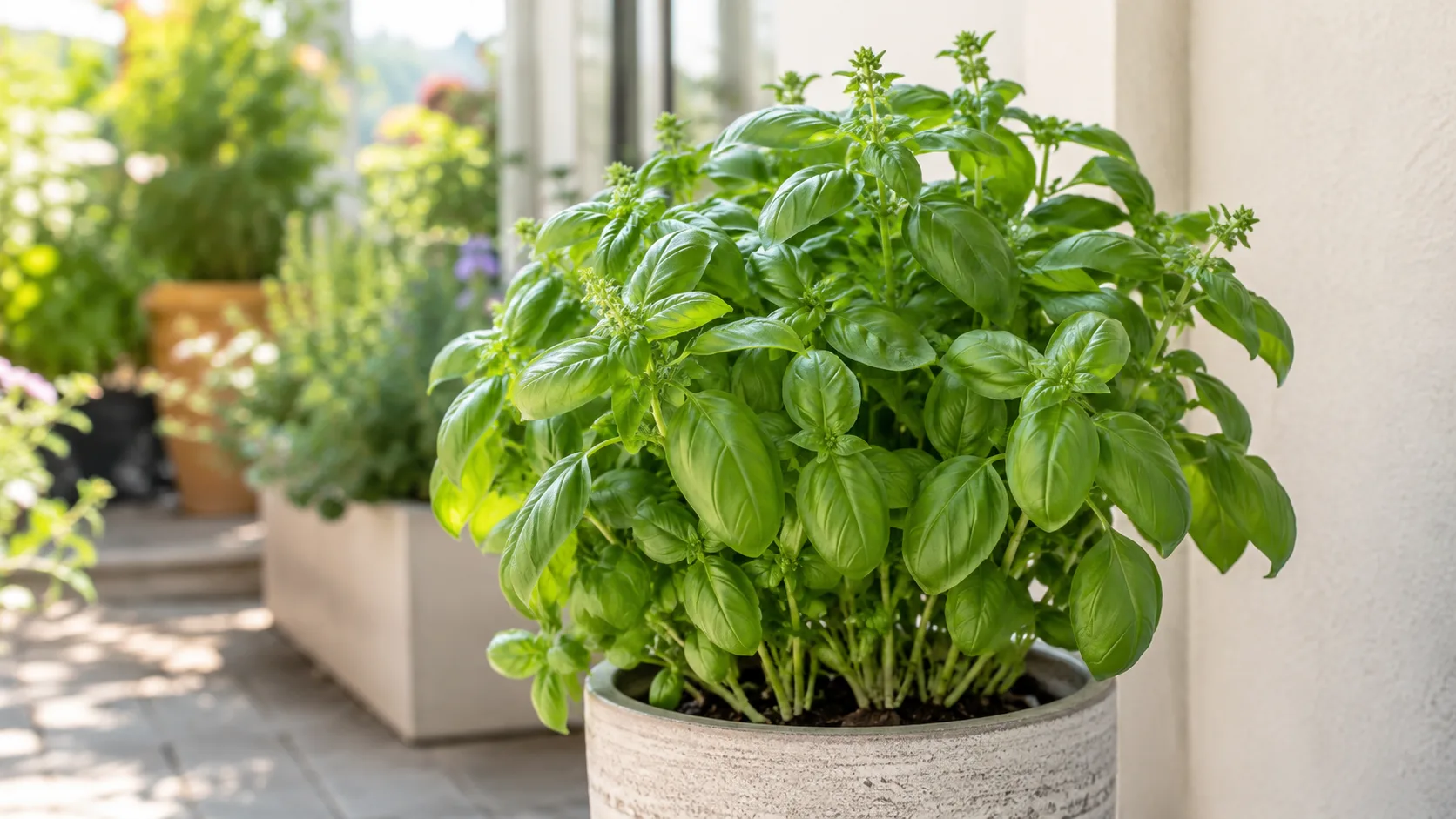
Watering Basil: Schedule, Soil Checks, and Mistakes
Watering Basil: Schedule, Soil Checks, and Mistakes
You brought home a bushy Genovese basil from the market, harvested a handful of leaves for pasta night, and two mornings later the whole plant looked heartbroken - limp stems, dull leaves, and that guilty feeling that you killed something that was fine yesterday. Basil does this because it is a fast-drinking warm-season annual in full leaf production, not because you are a bad gardener. Sweet basil (Ocimum basilicum) pulls water through soft leaves aggressively when sun, harvest cuts, and root size all peak at once. Skip a dry-down check after a big harvest and the plant wilts before lunch. Water on autopilot without looking at the mix and you get yellow lower leaves, sour soil, or a sudden bolt to flower that ruins leaf flavor for the rest of the season.
The rhythm that works is simple: check the top 1–2 inches of soil, water deeply at the base when that zone is dry, let the pot drain fully, and adjust for season, pot size, light, and harvest load. This guide covers how much water basil needs, realistic indoor and outdoor intervals, a wilt-timing table so you stop guessing, and the mistakes that turn a promising plant into woody, bitter stems. For full species context, start with the basil care overview; pair watering with light placement and soil drainage because those two factors change dry-down speed more than any calendar app.
Quick Answer: Check Soil Before You Pour
Indoor basil in active growth: water when the top 1–2 inches of mix feel dry - often every 2–5 days depending on pot size and window light. Outdoor containers in summer sun: often daily to every 1–2 days. In-ground garden basil: a deep soak every 7–10 days when rain is scarce, targeting about one inch of water per week including rainfall. Always confirm with a finger or pot-weight check before pouring. Morning base-level watering beats evening splashes on leaves. If leaves wilt while soil stays wet, suspect root stress - not thirst.
Why Basil Watering Confuses Even Experienced Growers
Basil sends mixed signals on purpose - or at least it feels that way. Leaves can droop in afternoon heat even when the soil is fine. They can also droop because the roots are drowning. Yellow lower leaves can mean too much water, but they can also track to nitrogen stress, cold damage, or normal aging. That overlap is why beginners either water on autopilot or freeze up and underwater until stems go crispy.
The core confusion comes from treating basil like a drought-tolerant succulent or like a moisture-loving fern. It is neither. Basil needs consistently moist, well-drained soil - moist means the root zone should not swing from dust to mud; well-drained means excess water leaves the pot or bed instead of pooling around the stem. University of Minnesota Extension notes that basil in garden beds should receive deep watering every seven to ten days depending on rainfall, while container plants dry out faster and need more frequent attention. That single distinction - container vs in-ground - already explains why your windowsill basil and your neighbor’s garden basil follow different rhythms.
Basil also changes its water appetite as it grows. A seedling with shallow roots cannot tolerate the dry-down cycle a mature, bushy plant handles for a few hours. A plant in full harvest mode with six hours of direct sun transpires far more water than the same cultivar sitting in bright indirect light indoors. Penn State Extension lists drought and water stress among the conditions that weaken basil and push leaf flavor downhill. Watering basil well means reading the plant’s current stage and environment - not memorizing one interval from a generic herb chart.
Repeated drought cycles push basil toward flowering faster than many cooks expect. Inconsistent moisture - especially dry spells followed by heavy soaking - adds stress on top of heat and day length, both bolting triggers for this annual. If your plant suddenly shoots up with flower spikes after a dry week, the fix is steadier moisture plus pinching buds, not more panic watering on wet soil.
How Much Water Basil Actually Needs
A useful starting benchmark for in-ground basil is about one inch of water per week across the root zone, including rainfall. Utah State University Extension recommends roughly 1 to 1½ inches per week to maintain vigorous growth. In practice, that means a slow, deep soak that wets the soil several inches down rather than a daily sprinkle that only dampens the surface. Illinois Extension recommends watering basil regularly at the base, using drip irrigation or a watering can so foliage stays dry, and increasing frequency when temperatures climb. In hot, dry stretches, that weekly inch becomes a floor, not a ceiling.
In-Ground vs Container Benchmarks
Container basil breaks the math on purpose. A pot - especially a small terracotta pot on a sunny balcony - exposes soil to heat and wind on all sides. The same one-inch-per-week guideline does not translate to “water once a week.” It translates to “check daily in summer and water when the top layer dries.” Clemson HGIC emphasizes that basil needs a relatively constant supply of soil moisture even though the soil itself must drain well, and that mulch helps reduce watering frequency in garden plantings. In pots, you become the mulch, the rain, and the drainage system.
The amount of water per session matters less than how thoroughly you rewet the root ball. A half-cup dribbled on the surface every morning often keeps the top wet while the center stays dry - then the plant wilts, you add more sips, and the roots never get a coherent drink. Water until moisture moves through the full depth of the mix and exits the drainage holes. Then stop until the top inch or two approaches dry again. That cycle - full drink, partial dry-down, full drink - is the rhythm basil prefers.
Self-watering pots and capillary mats can work for basil only when the reservoir does not keep the root zone saturated 24/7. Constant wet feet in cool indoor light invite the same fungus gnat and root-stagnation problems as a full saucer. If you use self-watering containers, check that the wicking zone dries slightly between refills and that the mix matches our basil soil guidance - heavy peat with a always-on reservoir is riskier than gritty, perlite-amended mix in bright sun.
How Often to Water Basil Indoors
Indoor basil usually needs watering every two to five days during active growth, but the honest answer is always “when the top one to two inches of soil feel dry.” A bright south-facing windowsill in summer may push you to the two-day end of that range. A cooler east window in spring may stretch toward five days. A small pot in dry, air-conditioned air can surprise you by drying overnight. The schedule is a guess until you confirm it against your room, your light level, and your pot.
Check indoor basil at least every other day during the growing season. Do not water by default. Run the moisture checks first, then water or walk away. After two weeks in the same spot, you will know whether your plant behaves like a two-day basil or a four-day basil. That personal baseline is more accurate than any blog chart because it accounts for your pot material, your mix, and your window.
Indoor humidity changes the interval more than beginners expect. Basil tolerates moderate humidity and typical Indian outdoor conditions well, but heated winter rooms with humidity below thirty percent pull moisture from leaves and soil faster. Grouping pots or using a humidity tray can slow drying slightly. Do not compensate by leaving the soil constantly wet - high humidity plus soggy mix is an invitation to fungal problems, especially when airflow is weak.
Finger Test and Pot Weight Test
The finger test is the fastest daily check. Press your finger into the mix one to two inches deep near the pot edge, not against the stem. If the soil feels cool and clings slightly, wait. If it feels dry and crumbly at that depth, water. If only the surface is dry but your finger comes out with damp particles at depth, wait - surface color lies, especially on peat-based mixes.
The pot weight test is the most reliable signal for repeat growers. Lift the pot right after a thorough watering and notice the weight. Lift it daily. A pot that feels dramatically lighter has lost much of its available moisture. Combine weight with the finger test when you are unsure: light pot plus dry top inch equals water; heavy pot plus wilted leaves equals trouble, not thirst.
A wooden skewer works as a low-tech backup. Insert it to mid-pot depth, wait sixty seconds, pull it out. Damp skewer means wait. Dry skewer with a light pot means water. Moisture meters help some growers, but they can read inconsistently in coarse, perlite-heavy mixes. Treat them as a second opinion, not the final word.
How Often to Water Basil Outdoors
Outdoor basil in garden beds typically needs a deep soak every seven to ten days when rain is scarce, per University of Minnesota Extension guidance. Mulch two to three inches deep with straw, compost, or grass clippings slows evaporation and keeps the root zone steadier between sessions. Illinois Extension recommends that same mulch depth to retain soil moisture and reduce weeds. After a deep watering, the bed should not go bone dry in twenty-four hours, but it should not stay shiny-wet on the surface for days either.
Outdoor container basil is a different animal. In full summer sun, many pots need water daily or every one to two days. Wind, reflected heat from walls and paving, and the limited soil volume all accelerate drying. A twelve-inch patio pot with a mature basil plant can lose usable moisture in a single hot afternoon. If you are harvesting heavily and the plant is full sun for six or more hours, lean toward checking every morning and every evening during heat waves.
Rain complicates the calendar in a good way. A summer thunderstorm may deliver enough water to reset your timer. A light misting rain might wet leaves while barely penetrating the pot. After any rain, still do a finger or weight check before assuming the plant is set for three days. Overcast cool weather after rain can keep mix wet longer than expected - the risk shifts from drought to root stagnation.
Garden Beds vs Patio Containers
In-ground basil benefits from the soil’s natural buffer. Roots can spread outward and downward, accessing moisture reserves a pot cannot offer. Clay soil holds water longer; sandy soil dries faster and may need more frequent irrigation. Either way, the goal is even moisture in the active root zone, not a flooded surface after every pass with the hose.
Container basil limits root spread to the pot walls. That constraint is why container plants need more frequent checks even when the weather looks mild. University of Minnesota Extension explicitly warns that plants grown in containers dry out faster than those in garden beds and should be watered more often, using pots with drainage holes in the bottom. A decorative outer pot without drainage, or a saucer that never gets emptied, is the most common reason outdoor container basil dies despite “regular watering.”
Seasonal Watering Schedule for Basil
Basil is a warm-season herb. Its water use tracks temperature, day length, and growth speed more closely than the day of the week. A seasonal framework helps you anticipate change without locking into bad habits.
In spring, newly transplanted basil is establishing roots. Keep the mix evenly moist - not saturated - for the first ten to fourteen days. Water when the top inch dries, which may mean every two to three days in an outdoor pot and every three to four days indoors. Avoid letting fresh transplants crash into severe wilt; they have fewer roots to recover with.
In summer, peak sun and harvest pressure maximize water demand. Outdoor container basil in hot climates - including much of India - often needs water every one to two days. In-ground beds with mulch may stay on a seven-day deep-watering rhythm if rain is absent. Indoor basil on a hot windowsill behaves more like a container plant than a garden plant.
In fall, cooler nights and shorter days slow growth. Stretch the interval between waterings and verify with soil checks. Overwatering becomes the bigger risk as evaporation drops.
In winter, indoor basil in cool rooms may need water only every three to seven days. Growth slows, but dry heating air can still pull moisture quickly from small pots. Reduce frequency, not thoroughness - when you do water, water fully.
Summer Heat and Winter Slowdown
Summer mistakes cluster around two extremes: forgetting the afternoon pot on a ninety-degree balcony, and watering every morning out of habit even when the mix is still wet from yesterday. Heat increases evaporation and transpiration; it does not suspend the need for drainage. If basil wilts at midday and perks up by evening without your intervention, that may be heat stress, not drought. If it stays wilted into the next morning, check moisture.
Winter slowdown does not mean neglect. Basil dislikes cold wet feet. Royal Horticultural Society guidance notes that basil hates having wet roots overnight and that watering in the morning is preferable when possible. In a cool room with low light, a pot that took two days to dry in July may take five in January. Adjust by check, not by memory of summer frequency.
Watering by Pot Size, Growth Stage, and Harvest Days
Pot size changes the schedule immediately, often more than season. A four-inch nursery pot dries fast and may need water every one to two days in summer sun. A gallon container holds more buffer and may go three to four days between sessions in the same location. After repotting into a larger pot, expect slower dry-down until roots fill the new volume - many growers overwater freshly repotted basil because they keep the old schedule.
Seedlings need gentle, even moisture. The top should not crust dry while the bottom stays wet, and the whole cell should not stay waterlogged. Cornell Cooperative Extension disease guidance on basil notes that damping off and root rot in greenhouses are worsened by overwatering and that sterile soil and clean pots help, but drainage discipline is the daily lever. Use a fine spray or bottom watering for trays until roots strengthen.
Young transplants reward consistency. Let the top inch dry slightly, then water thoroughly. Do not punish a new transplant with a drought “to toughen it up.” Basil does not toughen; it bolts or stalls.
Mature, harvest-ready plants can handle a modest dry window between waterings, especially if you are harvesting regularly and the plant is bushy. Heavy harvesting removes leaf surface that transpires water, but strong sun can still dry pots quickly. Harvest days are high-demand days - a large morning cut on a sunny windowsill can pull the plant into wilt by afternoon even when yesterday’s schedule felt perfect. Check soil the evening before a planned harvest and again the morning after a big cut; you may need to shorten the interval by a day without keeping the mix soggy.
Cultivar note: Genovese and large-leaf sweet basil types with soft foliage often show wilt sooner than smaller-leaf Thai basil in the same pot and light. Purple and lemon basils sit between those extremes. The check routine stays the same; only the dry-down speed changes.
The Right Way to Water Basil at the Base
Technique matters because basil is susceptible to fungal issues when foliage stays wet in humid, crowded conditions. Illinois Extension, Clemson HGIC, and Penn State Extension all steer growers toward base-level watering - drip lines, soaker hoses, or a narrow-spout can aimed at soil, not leaves. Overhead sprinkling is convenient but wets leaves, splashes soil-borne pathogens upward, and wastes water on pavement.
Water slowly enough for the mix to absorb rather than shed water down the inside wall of the pot. Dry peat sometimes hydrophobes - water runs around the root ball and out the bottom while the center stays dry. If that happens, water in two passes five minutes apart, or bottom-water the pot in a tray until the surface darkens, then drain.
Always empty the saucer within thirty minutes of watering. Standing water re-saturates the bottom root zone, blocks oxygen, and causes the classic paradox: wilting plant, wet soil. If you use a decorative cachepot, lift the inner pot to water, drain fully, then return it.
For in-ground beds, irrigate early enough that leaves dry before evening. A deep morning soak sets the plant up for the day’s heat. A late evening soak leaves basil sitting damp through the cool night, which RHS specifically cautions against.
Signs You Are Overwatering Basil
Overwatering is the silent killer because the plant looks thirsty while the roots are failing. Watch for these patterns together, not in isolation:
Wilting despite wet soil is the hallmark. Roots damaged by low oxygen cannot transport water, so leaves droop even though moisture is present. If you respond by adding more water, you accelerate the decline. See our overwatering on basil guide for full triage.
Yellow lower leaves often appear when the root zone stays wet too long. Older leaves yellow first; new growth may look pale or stunted. Overlap with yellow leaves from cold or hunger - wet soil at depth confirms water stress.
Blackening at the stem base, soft stems, and a sour smell from the mix suggest advanced trouble - damping off in young plants or root rot in mature ones.
Edema - small blister-like bumps on leaves - can appear when roots take up water faster than leaves release it, often linked to cool, wet conditions and poor airflow.
Mold or algae on the soil surface and fungus gnats hovering around the pot are secondary clues that the mix stays wet near the surface day after day.
If several signs align, stop watering, improve airflow, confirm drainage holes are open, and inspect roots if the plant keeps declining. Healthy roots are firm and white or pale tan. Mushy brown roots need a trim, fresh well-draining mix, and a smaller pot if the root mass is reduced.
Signs Basil Is Thirsty or Underwatered
Underwatered basil is usually more straightforward. The plant tells you earlier, and recovery is faster if you act before leaves crisp.
Midday wilting that resolves after watering within an hour is classic drought stress. If wilting happens at the same time every hot afternoon but the plant recovers by evening without watering, suspect heat alone - still check soil before assuming.
Dry, crumbly soil pulling away from the pot edge means the root ball went too dry. Rewater in stages if water runs straight through cracks along the wall.
Crispy leaf edges and dull, thin leaves follow repeated drought cycles. Flavor can turn bitter and plants may flower early as a stress response.
Slowed new growth during what should be active season often tracks back to inconsistent moisture. Basil wants steady access, not boom-and-bust cycles.
When rehydrating a dry pot, water until drainage appears, wait ten minutes, water again, then drain completely. One frantic flood after weeks of neglect can stress roots; two moderate passes rewet more evenly. More detail in underwatering on basil.
Wilt Timing: Quick Reference
Use when wilting appears plus soil moisture at 1–2 inches - not leaf drama alone - to choose the fix.
| Wilt pattern | When you notice it | Soil at 1–2 in depth | Pot weight | Likely cause | What to do |
|---|---|---|---|---|---|
| Leaves droop, recover by evening | Midday heat | Moist | Heavy | Heat wilt | Optional shade; do not auto-water |
| Limbs soft, slow to recover | Morning | Dry | Light | Drought | Deep base water; drain saucer |
| Limbs soft, no recovery | Morning | Wet | Heavy | Root failure / overwatering | Stop water; drain; inspect roots |
| Wilt after big harvest | Same or next day | Dry faster than usual | Lighter than yesterday | Harvest + transpiration demand | Water when top inch dry; shorten interval 1 day |
| Wilt + yellow lower leaves | Any time | Wet for days | Heavy | Chronic overwatering | Dry-down; fix drainage; see wilting guide |
If two rows match, trust soil moisture and pot weight over timing alone.
Soil Mix and Drainage
Your watering skill cannot overcome a bad mix. Basil wants well-draining potting soil with enough organic matter to hold moisture without compacting. A practical home blend adds roughly twenty percent perlite or coarse sand to a quality peat- or coco-based potting mix, targeting a pH between 6.0 and 7.5. University of Minnesota Extension lists 6.0 to 7.5 as the suitable pH range for basil. Dense, aged indoor mix that has collapsed into a brick will stay wet on top and repel water in the center - the perfect trap for well-meaning daily watering. Full ratios live on the basil soil page.
Drainage holes are non-negotiable in containers. University of Maryland Extension notes that basil should be planted in moist but well-drained soil in full sun. “Well-drained” in a pot means holes, elevation from saucer water, and a mix that does not smear when squeezed.
If your pot dries unevenly, the plant may be rootbound. A tight root ball channels water down the sides and out the bottom while the core stays dry. Repotting into a slightly larger container with fresh mix often stabilizes watering behavior more than changing your calendar.
When you fertilize basil regularly, occasional flushing - watering until a generous amount drains out - helps leach accumulated salts from small pots.
Basil Watering in Hot and Humid Climates
Hot climates - including much of India, the American South, and Mediterranean summer zones - compress the dry-down window. A sunny balcony pot may need water every one to two days in peak summer, with the top two to three centimeters allowed to dry between sessions. Cooler winter indoor growing often stretches to every three days or longer, but dry heating air in small pots can still force shorter intervals than you expect from season alone.
Humidity adds nuance. Moderate humidity forty to sixty percent is comfortable for basil. Very high humidity with poor airflow and wet leaves raises downy mildew risk. Cornell disease guidance links several basil fungal problems to high humidity, poor circulation, and splashing water on foliage. In humid monsoon seasons, water at the base, space plants for airflow, and resist the urge to keep soil soggy just because the air feels wet.
Heat without humidity - common near AC vents, concrete rooftops, and west-facing walls - pulls water from leaves faster. Shade cloth during extreme afternoon heat can reduce wilting drama without reducing watering discipline. Wilting from radiant heat is different from wilting from dry roots; the soil check still decides.
Common Basil Watering Mistakes and Quick Fixes
Mistake: Watering on a calendar. Fix: Use the calendar as a reminder to check soil, not as a trigger to pour. Two plants in the same room can differ by a full day.
Mistake: Daily sips instead of full drinks. Fix: Water until drainage, then let the top inch approach dry. Sips keep surface wet and core thirsty.
Mistake: Leaving runoff in the saucer. Fix: Empty saucers and cachepots after every watering. Roots need air as much as water.
Mistake: Overhead splashing at dusk. Fix: Switch to base watering in the morning. Dry leaves resist disease better.
Mistake: Ignoring pot size after repotting. Fix: Reset your expectations after upsizing. Larger pots dry more slowly until roots explore the volume.
Mistake: Chasing wilt with water without checking. Fix: Wilting plus heavy wet pot means root stress; wilting plus light dry pot means drought. Different problems, different fixes.
Mistake: Letting soil crash dry repeatedly to “prevent overwatering.” Fix: Steady moisture prevents flavor loss and early bolting. Drought-boom cycles stress basil more than many Mediterranean herbs.
Mistake: Using heavy garden soil in small pots. Fix: Use porous potting mix with perlite. Garden soil compacts in containers and suffocates roots.
Mistake: Wet foliage and disease risk. Penn State Extension advises avoiding overhead watering to help prevent disease and recommends good air circulation between plants. If you must wash dust off leaves, do it on a warm morning when air moves and the plant can dry before night.
Related Basil Care Guides
- Basil overview - species hub, varieties, and seasonal rhythm
- Basil light - window placement that changes dry-down speed
- Basil soil - drainage mix and pH targets
- Basil fertilizer - feeding when moisture is steady
- Overwatering - wet-soil wilt triage
- Underwatering - dry pot recovery
- Root rot - mushy root rescue
- Yellow leaves - water vs nutrition vs cold
- Wilting - when cause is unclear
How We Wrote and Verified This Guide
Author: sai-ananth · Reviewer: LeafyPixels Review Board · Reviewed: 2026-06-15
This guide targets home cooks and gardeners growing basil indoors, on balconies, and in garden beds who need check-based watering - not calendar guesswork. Recommendations were checked against University of Minnesota Extension, Penn State Extension, Illinois Extension, Clemson HGIC, Royal Horticultural Society, Cornell Cooperative Extension disease guidance, University of Maryland Extension, and Utah State University Extension before publication.
Methodology: Guide recommendations are reviewed against botanical or extension references, LeafyPixels plant-care data, and practical indoor growing constraints before publication. Factual claims in the body carry inline citations; a claims-validator-v1 pass records link counts and any flagged claims below.
Revision note (2026-06-15): Rewrote template-shared introduction; added wilt-timing table, harvest-day and drought-to-bolt framing, internal hub links, visible author/reviewer block, basil-specific FAQs, self-watering caveat, and cultivar dry-down note per E-E-A-T audit.
Conclusion
Watering basil well is a check-first habit: finger or skewer at 1–2 inches, pot weight when unsure, deep base watering only when dry at depth, and a drained saucer every time. Harvest days raise demand - plan an extra soil check after a big cut, not an automatic double soak. When wilt and wet soil show up together, open the root-rot playbook before you pour again.