Best Soil for Basil: Mix Recipe, Drainage, and Container
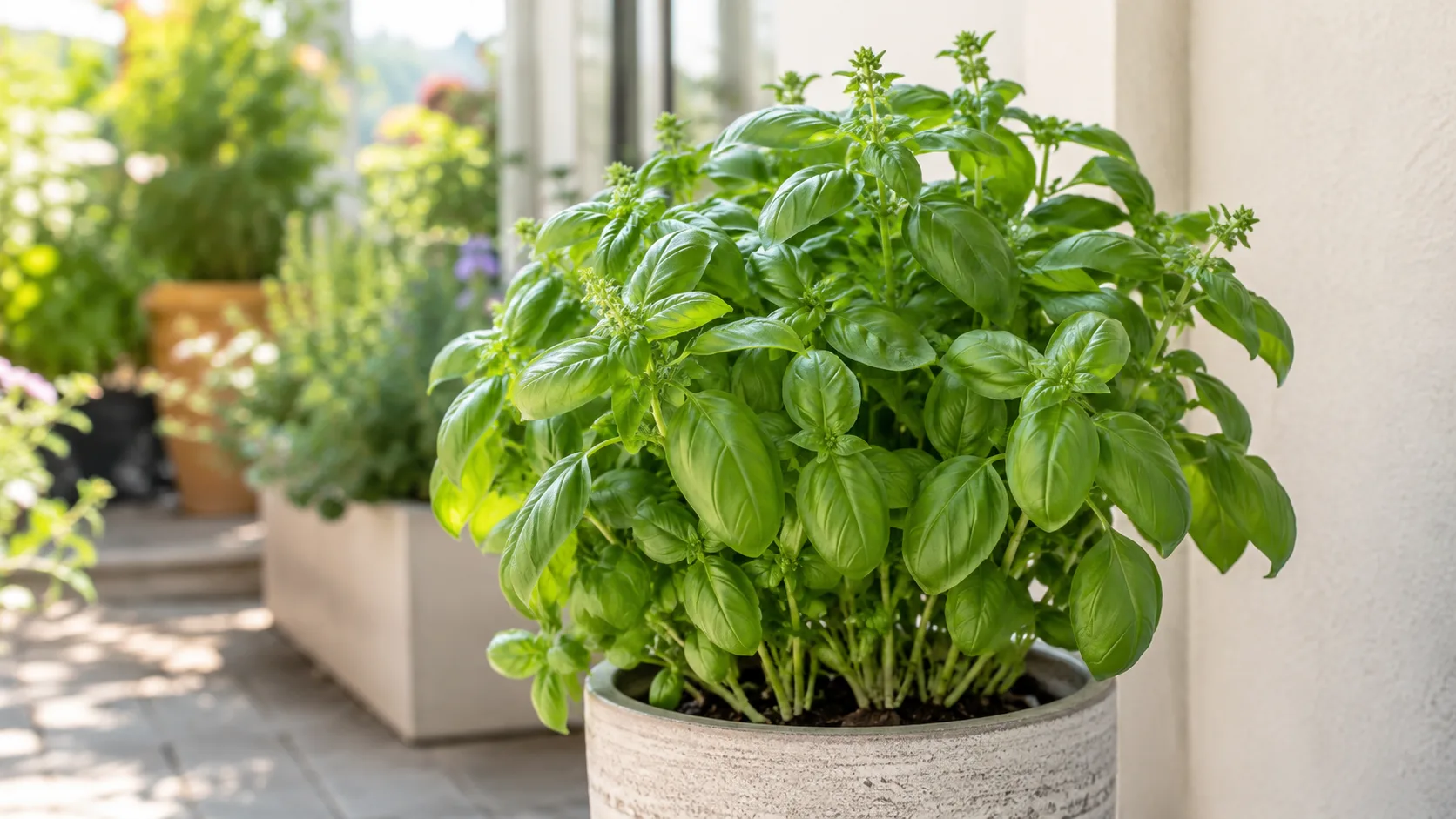
Best Soil for Basil: Mix Recipe, Drainage, and Container Tips
Best Soil for Basil: Mix Recipe, Drainage, and Container Tips
Why the Right Soil Matters for Basil
Basil (Ocimum basilicum) is grown for leaves, not for patience. You want tender shoots, strong aroma, and fast regrowth after every harvest cut. Soil is the hidden engine behind all of that. It controls how much oxygen reaches the roots, how long moisture stays in the root zone, and how steadily nutrients become available for new leaf tissue. Get the soil wrong and basil does not always die dramatically on day one. More often it limps along: pale leaves, thin stems, bitter flavor, or sudden collapse after a normal watering. The plant looks thirsty when the real problem is suffocation.
Basil comes from warm, bright climates in tropical and subtropical Asia, and in cultivation it behaves like a fast annual herb that wants fertile ground and regular moisture. Utah State University Extension notes that basil prefers fertile, well-drained loamy soils rich in organic matter and does best with consistent irrigation through the growing season. (Utah State University Extension) That combination is the whole puzzle. Fertile supports leaf production. Well-drained protects roots from rot. Loamy structure keeps the mix open enough for air and water to move predictably. The Old Farmer’s Almanac gives a similar baseline: soil should be moderately fertile and moist but well-draining, with a pH ideally between 6.0 and 7.5. (Old Farmer’s Almanac)
The mistake most growers make is treating soil like a one-time ingredient choice. In containers especially, soil is a living system that compacts, salts up, and changes drainage speed as the season progresses. A mix that felt perfect in April can become dense and sour by July if it was too peat-heavy, too compost-heavy, or sitting in an oversized pot that stays wet. Basil forgives a lot of beginner errors in light and harvesting technique, but it is less forgiving when roots sit in stale, airless mix. If your basil wilts right after you watered, smells off at the soil line, or produces smaller leaves even with good sun, soil is the first place to look-not fertilizer, not another repot into an even bigger pot.
What Basil Soil Needs to Accomplish
The best soil for basil is not one magic bag from the garden center. It is a mix that performs four jobs at once: anchors the plant, holds enough moisture for steady growth, drains excess water quickly, and supplies slow, balanced nutrition for leaf production. Container basil adds a fifth requirement: the mix must resist compaction for weeks to months, not just at planting time. In-ground basil can lean on native soil biology and deeper drainage paths. Potted basil only has what you put in the pot and the holes at the bottom.
A practical answer you can use today: start with a quality container potting mix, add 20 to 30 percent perlite or pumice by volume for drainage and aeration, and incorporate 10 to 20 percent finished compost or worm castings for organic matter and gentle fertility. Moisten the blend before planting so it feels like a wrung-out sponge, not dust and not mud. Then pair it with a pot that matches the root ball, not the size you hope the plant becomes next month.
Fast Drainage and Root Oxygen
Basil roots need oxygen between waterings. In saturated soil, air spaces fill with water, beneficial aerobic microbes decline, and roots lose the ability to take up moisture properly. That is when you see the cruel paradox of wilting in wet soil. The leaves droop because damaged roots cannot transport water, even though the mix is damp.
Good drainage is not the same as letting the pot dry to concrete every day. It means excess water exits within a reasonable time after a thorough watering, while some moisture remains in the middle of the root ball. Perlite, pumice, and coarse sand create pore spaces that keep the structure open. In containers, aim for enough aeration material that the moist mix looks speckled with white perlite or feels visibly gritty when you rub it between your fingers. A useful benchmark used by many container growers is at least 10 to 15 percent perlite by volume in a basil pot, with more aeration if you tend to water heavily or grow on a shaded patio where evaporation is slow.
Steady Moisture Without Waterlogging
Basil is not a desert herb. It wants the root zone to stay consistently moist during active growth, especially in Basil light guide where transpiration is high. The Old Farmer’s Almanac and multiple extension guides emphasize regular moisture for vigorous leaf production. (Old Farmer’s Almanac) The trick is moisture with air, not moisture with stagnation.
Coconut coir and peat-based potting mixes hold water well, which helps on hot balconies and windowsills. The risk is that those same materials compact over time, especially when blended with heavy compost or when topped with hard, crusted dry soil that repels water. If water runs down the inside wall of the pot while the center stays dry, you do not have a watering problem first-you have a structure problem. Refresh the top inch of mix, repot into a better-blended medium, or increase perlite before you chase the issue with more frequent watering.
Organic Matter for Leaf Production
Basil is a leaf crop, and leaf crops respond to nitrogen and organic matter more visibly than many ornamentals. Utah State University Extension recommends amending garden soil with compost before planting and notes that basil benefits from nutrient-rich conditions when grown in pots on patios, where regular feeding and watering support high production. (Utah State University Extension) Organic matter improves cation exchange, feeds soil biology, and buffers moisture swings.
There is a ceiling, though. In containers, an overly compost-heavy mix can become dense within weeks, reducing airflow around roots. For garden beds, Utah State University Extension cautions against over-application, recommending no more than about 1 inch of well-composted organic matter per 100 square feet when using compost as a fertilizer amendment in prepared beds-a useful reminder that “more compost” is not automatically better in every context. (Utah State University Extension) In pots, think in proportions, not dumping. Finished compost or worm castings at 10 to 20 percent of the total mix volume is usually enough to support lush basil without turning the container into a wet brick.
Ideal pH for Basil: 6.0 to 7.5
Basil soil pH should fall in the slightly acidic to neutral range, roughly 6.0 to 7.5. The Old Farmer’s Almanac places the ideal window at 6.0 to 7.5, which matches what most growers see in practice: basil tolerates a little variation, but extremes lock up nutrients and produce pale, weak growth. (Old Farmer’s Almanac) In that middle range, nitrogen, phosphorus, potassium, and micronutrients remain available without the leaf-edge burn and crusting that can appear when pH drifts too high and salts accumulate.
Most quality potting mixes for herbs and vegetables already land near this range because manufacturers buffer peat or coir blends. That is why many home growers never test pH and still succeed. Problems appear when you build mixes from raw peat without lime, reuse old acidic mix year after year, or irrigate with very alkaline water in arid regions. Purple-leaf and specialty cultivars do not get a separate pH rule in credible references; the same 6.0 to 7.5 target applies to sweet basil, Genovese types, Thai basil, and container seedlings.
Testing and Adjusting pH at Home
Exact pH testing is optional for a single patio pot, but it becomes worthwhile if basil repeatedly looks pale, stunted, or fertilizer-sensitive despite good light and watering. Inexpensive soil pH meters or slurry tests with pH strips give a workable estimate. For in-ground beds, a laboratory or extension soil test is the better tool because it also reports nutrient levels.
If pH is below 6.0, garden beds can be raised with dolomitic lime according to soil-test rates. In containers, it is usually simpler to repot into a fresh, balanced mix than to chase chemistry in a small volume. If pH is above 7.5, elemental sulfur or acidifying fertilizers may be recommended for beds, but again, container growers often get faster results by replacing compacted, alkaline-old mix and flushing salts with plain water. For most readers, the practical pH strategy is this: choose a labeled potting mix for vegetables or herbs, avoid raw peat-only blends without buffering, and flush the pot monthly during heavy feeding seasons if white crust appears on the soil surface.
Best DIY Basil Soil Mix Recipes
No single recipe is perfect for every home. The best basil soil mix is the one that stays moist but not soggy in your pot, in your light, and with your watering habits. Use the recipes below as starting points, then adjust based on how fast the pot dries and how the plant responds after two weeks of growth.
Simple Beginner Container Mix
This is the most dependable all-purpose formula for a first basil pot on a sunny windowsill, balcony, or patio:
| Component | Proportion by volume | Role |
|---|---|---|
| Quality potting mix | 2 parts | Base structure and moisture retention |
| Perlite or pumice | 1 part | Drainage and aeration |
| Finished compost or worm castings | 1 part | Organic matter and gentle nutrition |
Blend thoroughly in a tub or wheelbarrow, then moisten until evenly damp. Fill the pot, plant your seedling or sow seeds according to depth guidelines, and water until a little excess drains from the bottom. This 2:1:1 ratio is widely recommended for container herbs because it balances fertility with the open structure basil roots need. If the mix still feels heavy, shift to 2 parts potting mix, 1.5 parts perlite, 0.5 to 1 part compost instead of equal compost.
High-Drainage Patio and Balcony Mix
Use this version during rainy seasons, in humid coastal climates, on partly shaded patios, or if you already know you water generously. It is also useful for larger outdoor tubs where a standard mix might stay wet too long:
| Component | Proportion by volume | Role |
|---|---|---|
| Potting mix | 2 parts | Base |
| Perlite or pumice | 1.5 parts | Extra aeration |
| Compost or worm castings | 0.5 to 1 part | Moderate fertility without heaviness |
This blend dries a little faster, which is an advantage when summer rains or overcast weeks keep standard mixes wet. You may need to water slightly more often, but basil usually prefers that trade to sitting in stale moisture. Pair this mix with terracotta or fabric grow bags if you struggle with waterlogging. Both breathe better than glazed ceramic and give you earlier warning when the root zone is drying.
Indoor Windowsill Mix for Fast Harvests
Indoor basil often grows in smaller pots under bright light with drier air, especially where air conditioning runs. That setup benefits from a mix that holds a little more moisture while still draining freely:
| Component | Proportion by volume | Role |
|---|---|---|
| Potting mix or coconut coir–based medium | 2 parts | Moisture retention |
| Perlite | 1 part | Aeration |
| Worm castings | 0.5 part | Gentle nutrition for repeated harvests |
Coir rewets more easily than old peat when the surface dries, which helps on windowsills where soil surfaces crust quickly. Keep the pot smaller-often 4 to 6 inches for a single productive plant-so the root zone does not stay cold and wet in a large volume of unused mix. If seedlings damp off at the soil line, that is usually a sign of poor airflow, overwatering on Basil, or a mix that stayed saturated in cool conditions, not simply “bad luck.”
Garden and Raised-Bed Soil Prep
In-ground and raised-bed basil is simpler in some ways and trickier in others. You are not fighting container compaction as aggressively, but you are working with native texture, drainage paths, and existing fertility. Utah State University Extension recommends choosing a full-sun site with good air circulation and preparing soil before planting with compost and fertilizer based on a soil test when possible. (Utah State University Extension)
For most kitchen gardens, work 1 to 2 inches of finished compost into the top 6 to 8 inches of soil before transplanting or direct sowing. If your native soil is heavy clay, organic matter is the right fix; sand alone is not. Clay plus sand without enough organic matter can set into a cement-like texture. If soil is very sandy and dries too fast, compost improves water-holding capacity while preserving drainage. Raised beds solve drainage problems in wet yards by lifting the root zone above saturated subsoil and letting you build a loamy blend from the start.
Basil seeds germinate best when soil temperatures are warm-extension sources commonly cite roughly 75 to 85°F (24 to 29°C) for strong sprouting, with emergence often in about 10 to 14 days under moist conditions. (Utah State University Extension) Cold, wet garden soil is a recipe for slow germination and seedling stress even if the adult plant would eventually survive. In short-season or high-rainfall areas, start seeds in a well-drained container mix indoors, then transplant into prepared beds once weather stabilizes.
Container Selection for Basil
Soil and container work as a pair. A perfect mix in the wrong pot still fails. Basil has a relatively shallow but active root system compared with deep-rooted vegetables, yet it grows fast enough to need regular moisture and nutrition. That means you want enough soil volume to buffer heat and watering swings, but not so much extra volume that unused mix stays wet for days.
Pot Size, Depth, and Material
A single mature basil plant for regular kitchen harvest usually does well in a pot around 6 to 8 inches wide and at least 6 inches deep. Smaller 4-inch pots work for young plants or short-cycle windowsill harvests, but they dry quickly and need more attentive watering. If you are growing multiple plants for pesto-level production, use a 10- to 12-inch bowl or window box with proper spacing rather than crowding several plants into one tiny pot.
Terracotta dries evenly and helps prevent overwatering in cool or humid homes. Plastic and glazed ceramic hold moisture longer, which can help in hot, dry balconies but increases rot risk if drainage is poor. Fabric grow bags offer excellent aeration and are a strong choice for outdoor summer basil. Avoid planting basil in decorative containers with no drainage hole unless you use a nursery pot inside and remove it to water-roots should never sit in a permanent puddle at the bottom of a cachepot.
Go up one pot size at Basil repotting guide, not three. An oversized pot surrounds a small root ball with wet, unused mix. Beginners often interpret a big pot as “room to grow,” but for basil it often means room to rot.
Drainage Holes and Saucer Habits
Drainage holes are non-negotiable for long-term basil health in containers. They are the exit path for excess water and the simplest insurance against root rot on Basil. One clear hole is a minimum; several holes are better, especially in wide planters. After watering, let the pot drain fully, then empty the saucer so the plant is not sucking water back up from below.
The old trick of putting gravel or pot shards in the bottom of a pot does not fix bad mix. It can actually create a perched water table where saturated soil sits directly above the gravel layer. Fix drainage in the mix itself with perlite or pumice, and fix habit by watering thoroughly but not on a schedule that ignores how the soil actually feels. A one-minute check after watering tells you a lot: if water is still pooling on the surface five minutes later, the mix is too dense or the pot lacks holes.
Store-Bought Mixes That Work
You do not have to blend your own soil to grow excellent basil. A good store-bought potting mix-not garden soil, not topsoil-can be the base of a successful container. Look for bags labeled for containers, vegetables, or herbs, then read the ingredient panel. Perlite, pumice, or rice hulls listed near the top are positive signs. Heavy mixes with only fine peat and compost may need 20 to 25 percent extra perlite stirred in before planting.
Organic herb and vegetable mixes from reputable brands often work well out of the bag for a single season. If you are growing basil through a long hot summer with frequent harvests, refresh nutrition through light liquid feeding or repotting into fresh mix midseason rather than assuming the initial fertilizer charge will last forever. That is a feeding topic more than a soil topic, but it matters because exhausted, broken-down mix compacts and holds salts.
Never use products labeled in-ground soil or raised-bed soil alone in a small pot. Those blends are designed for different volume and drainage dynamics. In a container they usually compact, stay wet, and starve roots of oxygen-the same failure pattern whether the bag was inexpensive or premium.
Core Ingredients Explained
Understanding what each component does helps you adjust a recipe without guessing.
Potting mix is the structural base. Quality mixes combine peat or coir, bark or composted forest products, and some starter fertilizer. They are engineered to be lighter than garden soil. Perlite is expanded volcanic glass that creates air pockets and improves drainage; it is the most important upgrade for basil containers. Pumice behaves similarly with a bit more weight and durability. Coarse sand can aid drainage in garden beds but is less ideal as the main aeration source in small pots because of weight and settling.
Compost and worm castings add organic matter, microbes, and gentle nutrition. They improve moisture buffering and support the rapid leaf growth basil is grown for. Use them as a portion of the blend, not the whole pot. Vermiculite holds moisture and can help in very dry homes, but too much vermiculite in a cool, low-light room can keep mix wet longer than basil prefers. Coconut coir is a sustainable peat alternative with a more neutral pH and good rewetting behavior; it pairs well with perlite for indoor growers.
If you are deciding how much perlite to add to an already decent bagged mix, start with one part perlite to three or four parts bagged mix by volume and plant one test pot. Increase perlite if the mix stays clumped and wet more than a day after thorough watering in your conditions.
Common Soil Mistakes to Avoid
The most expensive soil mistake is using garden soil in a container. Outdoor soil contains fine mineral particles, weed seeds, and pathogens that compact in pots. It may work for one season in a huge planter, but it is a poor default for basil on a windowsill or balcony. Use potting mix.
Another common error is interpreting “moist soil” as “wet soil.” Basil wants access to water, not a swamp. If you water every day without checking, you can drown a plant in a dense mix even while following advice that basil “likes moisture.” Check the middle of the root ball, not just the surface.
Oversized pots, blocked drainage holes, and stale compacted mix are the other big three. Basil is often treated as disposable after it flowers or woodifies, but many growers keep the same tired mix through multiple herb cycles in one container. Refresh mix when it smells sour, drains slowly, or crusts with salt. Do not assume fertilizer will resurrect biology-poor, airless soil.
Finally, avoid the myth that stones at the pot bottom improve drainage. They do not fix a heavy mix. They can shorten the usable rooting depth and create odd wet layers. Put your effort into perlite, compost balance, and pot size instead.
Conclusion
The best soil for basil is fertile, loamy in texture, and fast-draining, with a pH roughly between 6.0 and 7.5. In containers, that usually means a quality potting mix upgraded with perlite or pumice and a modest amount of finished compost or worm castings, planted in a pot only slightly larger than the root ball with clear drainage holes. In garden beds and raised beds, work compost into the topsoil, respect your native drainage, and plant when soil is warm and moist-not cold and saturated.
Basil will tell you when the soil system is wrong. Persistent wilting after watering, sour smells, slow regrowth after harvest, and seedlings collapsing at the base are all soil-and-drainage signals more often than mysterious plant moods. Build a mix that holds moisture with air, match the pot to the roots, and refresh the medium when structure breaks down. Do that, and the rest of basil care-sun, water rhythm, harvesting-becomes far easier to get right.
When to use this page vs other Basil guides
- Basil overview - Start here for whole-plant context before deep-diving this topic.
- Basil problems hub - Jump to symptom-specific fix guides when this care topic does not resolve the issue.
- Root Rot on Basil - Escalate here when soil adjustments are not enough.
- Mold on Soil on Basil - Escalate here when soil adjustments are not enough.
Related Basil guides
- Basil overview
- Basil watering
- Basil light
- Basil propagation
- Basil fertilizer
- Basil repotting
- Root Rot on Basil
- Mold on Soil on Basil
- Basil problems
Related tool
Try the Soil Mix Calculator with basil pre-selected to estimate needs for your setup.