Mold on Soil on Basil: Causes, Checks & Fixes
Quick answer
Surface mold on basil is usually harmless saprophytic fungus, but it flags wet soil that can lead to damping off or root rot. First step: stop watering and let the top 2–3 cm of mix dry completely before you water again.
Mold on Soil on Basil: Causes, Checks & Fixes
This guide covers mold on soil on Basil. See also the general Mold on Soil guide, watering, and light pages for this plant.
Mold on Soil on Basil: Causes, Checks & Fixes
Quick answer
White or gray fuzz across your basil pot almost always means the top layer of mix has stayed damp too long. Sweet basil (Ocimum basilicum) wants steady moisture with a dry-down cycle-water when the top 2–3 cm feels dry, not every morning by habit. The mold itself is usually harmless saprophytic fungus breaking down peat, compost, and old leaf bits. It is not powdery mildew on foliage and it is not automatically killing roots.
First fix: stop watering immediately and do not resume until the top 2–3 cm of mix is dry and the pot feels noticeably lighter. Only after that dry-down should you scrape off any remaining fuzzy layer if it bothers you.
On basil, surface mold is a moisture alarm. Kitchen windowsills and grouped herb pots often combine frequent splashing, harvest debris, and less sun than a balcony-exactly the setup where surface fungi appear while stems still look fine. Wet soil at the surface is the same environment that invites fungus gnats and the damping off or root rot on Basil that can collapse a young seedling overnight.
What mold on soil looks like on basil
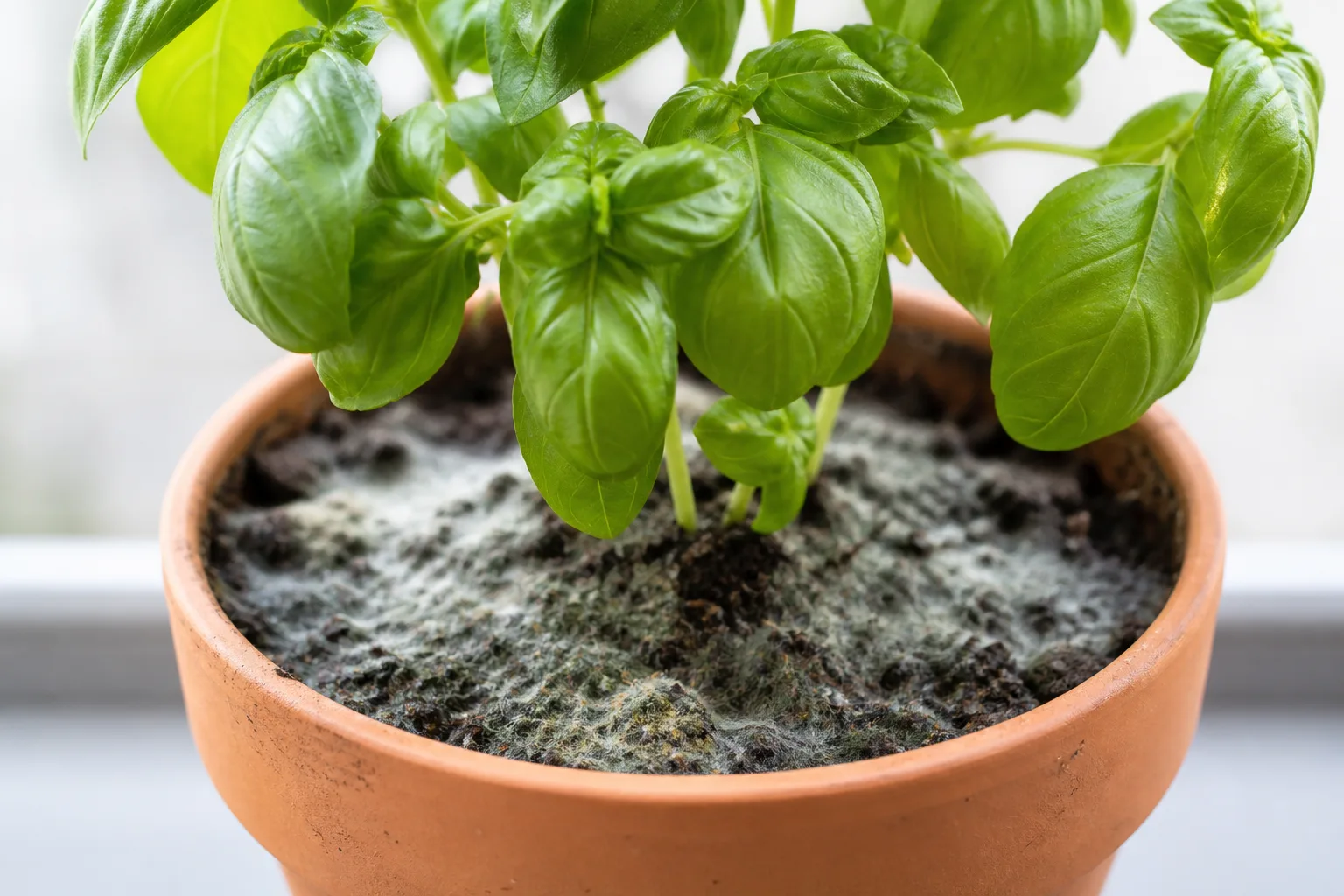
On basil pots, mold most often appears as a thin white, gray, or occasionally yellowish fuzzy film across the top of the mix. It may show up in patches near the stem or cover the entire surface after a rainy stretch indoors or several days of overhead watering. Sometimes you notice it alongside a musty smell, dark cool-looking soil that has not dried in days, or small dark flies hovering when you disturb the pot.
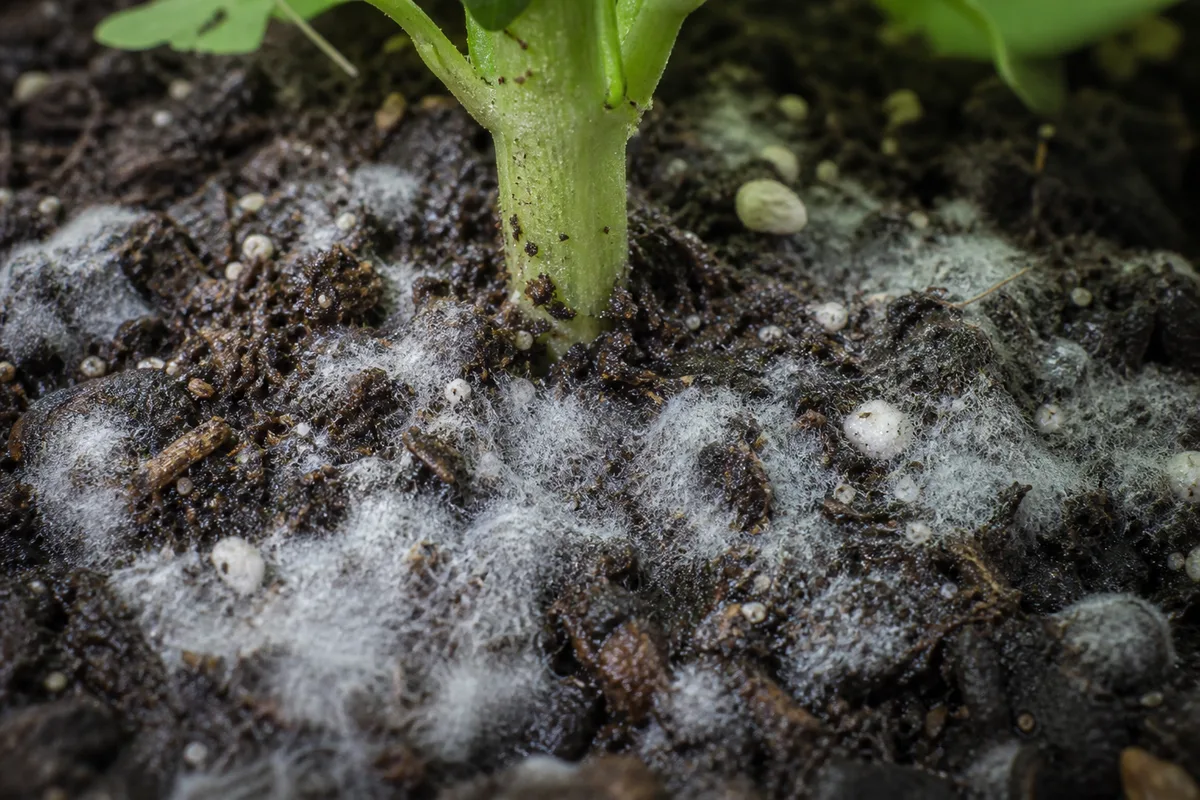
Mold on Soil symptoms on Basil - compare with healthy tissue on the same plant.
Healthy basil in Basil light guide should have a dry or lightly dusty soil surface within a day or two of watering in warm weather. If the top stays dark, cool, and soft to the touch for many days-especially on a north-facing sill or in a crowded herb tray-mold is a predictable follow-up. The aromatic leaves may still look perky at this stage. That is why surface mold catches growers off guard. The risk is not the fuzz itself but the wet conditions feeding it.
Do not confuse soil mold with basil downy mildew. Downy mildew is a serious leaf disease-yellow patches on top with gray fuzz on leaf undersides-not a film confined to the potting mix. If only the soil surface is fuzzy and leaves are clean and firm, you are likely dealing with saprophytic surface fungi, not a foliar pathogen.
Why basil gets mold on soil
Basil is a fast-growing sun-loving herb that evolved in warm climates with sharp drainage through organic matter-not a pot of peat that stays wet at the surface for a week. When the top layer holds moisture, saprophytic fungi colonize decaying organic matter in the mix. Spores are everywhere; they germinate when humidity and surface moisture stay high.
Several care patterns trigger this on basil more than on drought-tolerant succulents:
overwatering on Basil on a schedule. Watering every morning because “herbs need moisture” keeps the top layer wet even when the plant has not used the last drink. Basil needs a finger test to 2–3 cm depth and pot weight, not a calendar tied to mealtimes.
Kitchen placement with weak light. Basil wants at least six hours of direct sun daily. A dim counter slows evaporation and leaf transpiration, so the same watering that works on a sunny balcony leaves indoor soil soggy at the surface.
Harvest debris on the soil. Pinching leaves for cooking drops stem bits and fallen foliage onto damp mix-prime food for surface fungi. A busy harvest routine without cleaning the pot surface is a common basil-specific trigger.
Heavy or peat-rich mix in small pots. Standard bagged potting soil without enough perlite or coarse sand retains water at the surface. Dense mix plus a saucer that holds water re-wets the top from below.
Seedling trays and crowded pots. Young basil in shallow cells or overcrowded windowsill planters dry unevenly-the center stays wet while edges look fine. Cool, wet conditions that grow surface mold also favor damping off on seedlings.
Overhead watering on fuzzy leaves. Splashing water and wet foliage can shed debris onto soil. Bottom-watering after the surface dries keeps the top layer less hospitable to fungi.
How to confirm the cause
Work through these checks before Basil repotting guide or spraying fungicide:
- Stem firmness at the base. Pinch the stem where it meets soil gently. Firm and green is reassuring. Black, mushy, or collapsed tissue at the crown suggests damping off or root rot-not just surface mold.
- Soil moisture at depth. Push your finger or a bamboo skewer 2–3 cm down. If it comes out dark and clinging, the problem is wet soil throughout, not a harmless one-time surface bloom after a single heavy drink.
- Pot weight and drainage. Lift the pot. Heavy days after you thought you watered lightly means water is not exiting. Confirm drainage holes are open and the saucer is empty within 30 minutes of watering.
- Light and plant age. Is the basil getting six or more hours of direct sun? Is it a seedling in a cool room? Seedlings in wet mix with surface mold need faster action than a mature plant with firm stems.
- Companion signs. Fungus gnats, yellowing lower leaves on wet soil, or green algae on the pot rim point to the same root-zone moisture issue.
- Smell and roots. A sour or swampy smell from drainage holes warrants unpotting. Healthy basil roots are firm and white or pale; rot is brown, mushy, and collapses between fingers.
If stems are firm, new tips are growing after pinching, and only the top centimeter is fuzzy after one overwatering episode, you likely caught it early. Soft stem at soil line plus wet deep soil means escalate beyond scraping.
The first fix to try
Stop watering and let the top 2–3 cm of mix dry completely.
Do not scrape, repot, or spray on day one. Pausing irrigation gives you a clear read on whether the plant was simply overwatered. In warm sun on a small basil pot, the surface often dries in three to seven days. In a cool dim kitchen, it may take longer-and that wait is part of the fix.
Once the surface is dry:
- Scrape off the top 1–2 cm of fuzzy soil with a spoon and discard it in the trash.
- Remove any fallen leaves, stem bits, or flower debris from the pot surface.
- Move the pot to the sunniest spot available-six or more hours of direct sun if possible-and leave space around it for airflow.
- Resume watering only when the dry-down test passes-then water thoroughly until it runs from drainage holes, and empty the saucer.
That single correction resolves most first-time mold cases on established basil.
If mold comes back within a week
Recurring fuzz means the environment still favors fungus. After the dry-down cycle:
- Top-dress with a thin layer of dry mix containing extra perlite or coarse sand to replace the removed surface layer.
- Bottom-water once if you tend to soak the surface every time-roots absorb from below while the top stays drier.
- Add yellow sticky traps if small flies appear-adults are a clue that larvae are feeding in damp organic soil.
- Repot if the mix is peat-heavy, smells sour, or takes more than a week to dry in summer sun. Use a loose blend with perlite and a pot only slightly larger than the root ball.
Repotting is a second-step fix, not an emergency response to a single mold patch on an otherwise healthy plant.
Lookalike symptoms
Green algae on the pot rim or soil surface also signals constant surface moisture and low light-not a different disease.
Fungus gnats share the same wet-soil habitat. Adults are mostly a nuisance; larvae can stress fine roots on seedlings. Drying the mix treats both.
Powdery mildew or downy mildew on leaves are separate foliar issues. Mold confined to soil with clean, firm leaves points to watering and mix, not leaf fungus.
Salt or mineral crust can look white but feels hard and gritty, not fuzzy. Flush and repot concerns are different from organic mold.
Damping off and root rot wilt or collapse the plant even when you think you watered correctly. Mushy black stems at the soil line with yellowing and collapse mean root-zone decay-not harmless surface saprophytes alone.
Mistakes to avoid
Do not drench with fungicide, cinnamon, or hydrogen peroxide as a substitute for drying the soil-basil roots need oxygen, not another wet treatment on day one.
Do not increase watering because leaves droop midday while the soil is still damp. Basil wilts in heat then recovers when hydrated; wilting with wet mix means root stress, not thirst.
Do not scrape repeatedly without changing the Basil watering guide-the fungal mat returns whenever the surface stays moist.
Do not assume mold is harmless and ignore a blackening stem base. Surface saprophytes and damping off share the same cause: too much moisture for too long, especially in cool or dim conditions.
Do not harvest heavily without removing debris from the soil surface afterward-decaying leaf matter feeds the next mold cycle.
Recovery timeline and warning signs
With firm stem tissue and corrected watering, new side shoots after pinching are the best sign you are clear. Surface mold should not return once the top dries between drinks.
Improvement usually shows within one dry-down cycle (roughly one to two weeks depending on pot size, light, and season). Watch for:
- Good: Firm green stems, dry soil surface before each watering, no new fuzz, steady new leaf tips after harvest.
- Bad: Stem blackening at soil line, sour smell from drainage holes, mold returning within days of scraping, increasing fungus gnat swarms, seedlings falling over at the base.
Rotten stem tissue at the crown does not firm up again. You can sometimes restart from healthy cuttings above the damage, but prevention at the mold stage is far easier-especially on seedlings.
How to prevent mold next time
Match watering to basil’s rhythm: thorough drinks followed by a dry top 2–3 cm, in a pot with drainage and full sun. Pair that with a chunkier mix, prompt removal of harvest debris from the soil surface, and empty saucers after bottom-watering.
Treat the first patch of white fuzz as a moisture alarm-not a cosmetic annoyance. On basil, fixing wet soil early is what keeps stems firm, harvests tasting clean, and root decay out of a pot you planned to cook from all season.
When to use this page vs other Basil guides
- Basil watering guide - Use for routine moisture checks before assuming mold on soil is the main issue.
- Basil problems hub - Browse all 16 common issues on this species.
- Fungus Gnats on Basil - Different entry point when symptoms overlap with mold on soil.
- Overwatering on Basil - Different entry point when symptoms overlap with mold on soil.
- Root Rot on Basil - Different entry point when symptoms overlap with mold on soil.