Root Rot on Basil: Causes, Checks & Fixes
Quick answer
Root rot on Basil usually follows soil that stays saturated too long-common after heavy rain or daily watering in a pot without drainage. Stop watering immediately, lift the plant, and inspect roots before repotting or harvesting leaves.
Root Rot on Basil: Causes, Checks & Fixes
This guide covers root rot on Basil. See also the general Root Rot guide, watering, and light pages for this plant.
Root Rot on Basil: Causes, Checks & Fixes
Quick answer
Root rot on Basil (Ocimum basilicum) is decay in the root zone-not a leaf disease you can spray away. This warm-season herb grows upright branching stems from a central axis and needs evenly moist, well-drained soil-not a constantly wet root ball. After heavy rain or repeated watering on a calendar, saturated soil drives out oxygen and roots stop functioning; pathogens such as Pythium and Rhizoctonia can accelerate collapse in those same wet conditions.
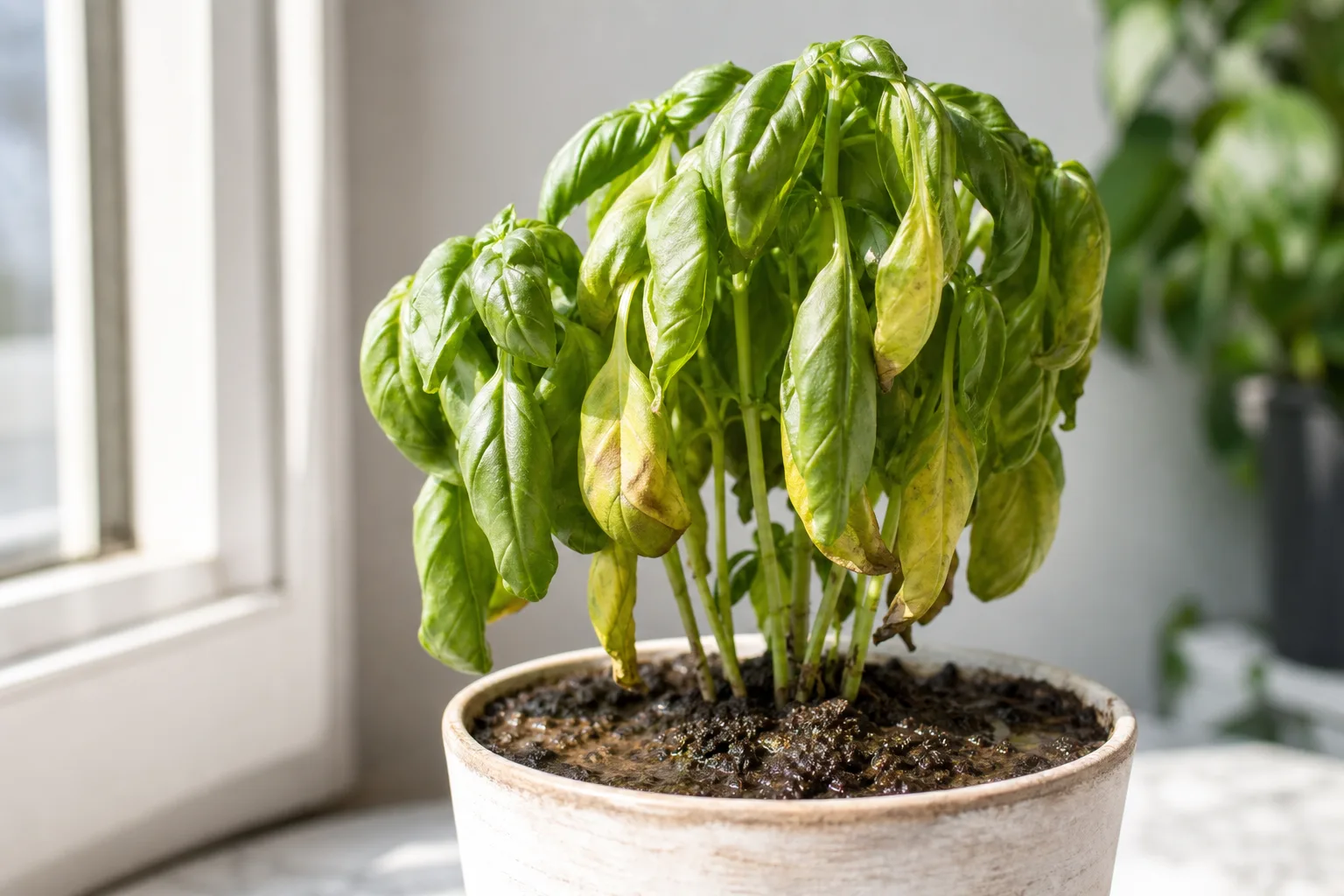
The signature trap is limp, yellowing leaves on soil that still feels wet-many growers water again because the plant looks thirsty, which deepens the damage. Your first move is to stop watering and inspect the root zone, not to add more water or fertilizer.
What root rot looks like on Basil
Symptoms differ between seedlings and mature plants, but the wet-soil paradox is the same: the plant wilts as if dry while the mix stays damp.
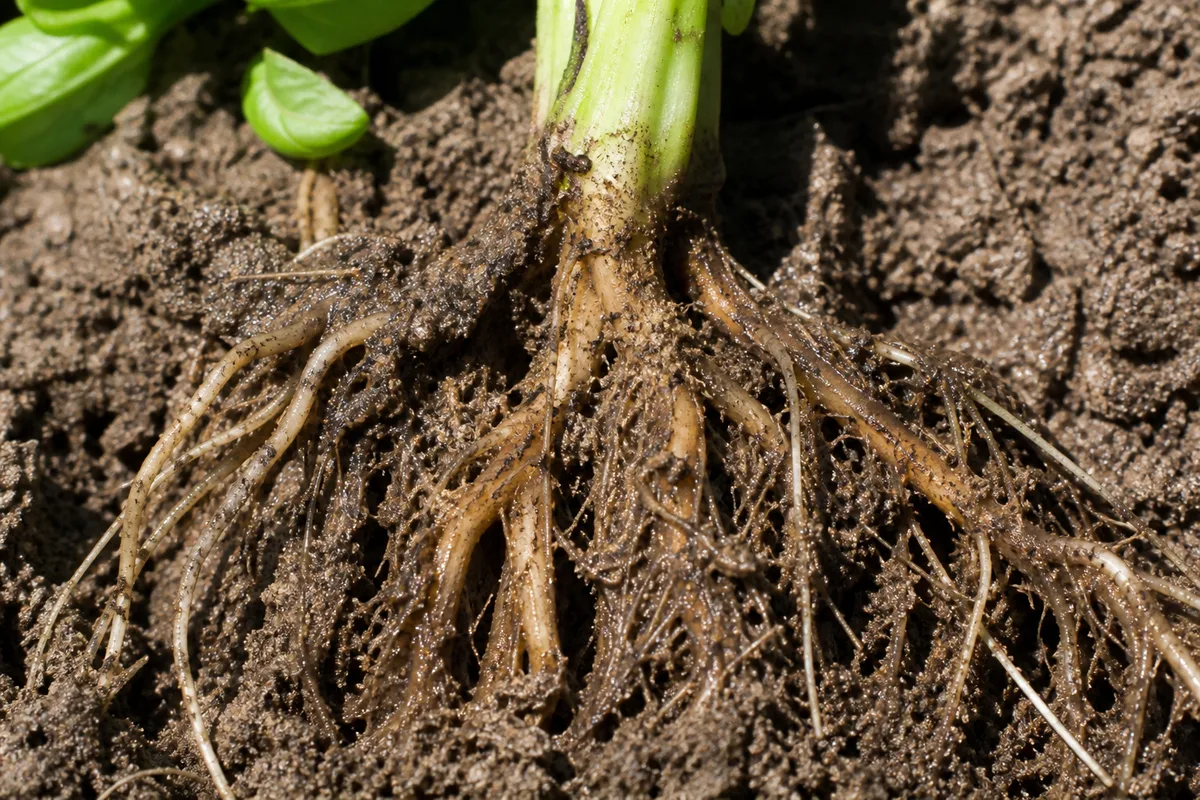
Root Rot symptoms on Basil - compare with healthy tissue on the same plant.
Seedlings and young transplants
Damping off strikes soon after germination. The stem pinches and collapses at soil level, often with shriveled tissue at the base, while leaves above may still look green briefly. In trays, neighboring seedlings can fail in clusters when mix stays wet and air circulation is poor. This is distinct from mature-plant root rot, which usually starts on established roots lower in the pot or bed.
Mature plants in pots or garden beds
On established basil, several lower leaves yellow and go limp at once while upper growth may still look acceptable for a few days. The pot or bed feels heavy. A sour or swampy smell when you lift the plant is a strong rot signal. Advanced cases show soft, dark tissue at the stem base where it meets wet soil, and leaves that turn brown and papery despite moisture.
Infected roots turn brown or black; with Pythium, the outer root cortex may slough off, leaving a thin dark inner core sometimes called a “rat tail” pattern. Compare with underwatering: a light, dry pot and wilted but firm leaves that recover after a thorough soak point away from rot. Fungus gnats hovering over chronically wet herb soil are a clue that the surface is not drying fast enough-they do not prove rot alone, but they often appear alongside it.
Why Basil gets root rot
Basil is a fast-growing warm-season annual that wants full sun and medium moisture in moderately rich, well-draining soil. That combination leaves little margin when drainage fails or weather turns wet.
Overwatering and poor drainage. The most common trigger is cultural, not a random fungus attack. When roots stay too wet, oxygen is displaced from soil pores and tissue decays. Basil is especially vulnerable compared with many kitchen herbs-extension specialists note it fails from root rot more readily than tougher herbs after prolonged rain or soggy beds.
Heavy rain and garden-bed saturation. A single multi-inch downpour can leave in-ground basil sitting in waterlogged soil for days. Impaired roots cannot take up water, which produces leaf wilting and yellowing even though the bed is soaked-the classic misread that leads to more watering.
Seedling trays and kitchen pots. Daily light watering on a windowsill, blocked drainage holes, dense garden soil in containers, and reused potting mix from a previous rotted crop all keep the root zone anaerobic. Cool spring soil plus wet roots slow growth and extend the danger window for young transplants.
Pathogens in wet conditions. Damping off and root rot on basil involve organisms such as Rhizoctonia solani and Pythium species that thrive in high humidity, poor airflow, and saturated substrate. Hydroponic and greenhouse basil face the same Pythium pressure when water temperatures and oxygen levels are unfavorable-less common for home gardeners but worth knowing if you root cuttings in standing water too long.
Several habits push basil into the danger zone:
- Watering on a schedule instead of checking whether the top inch of mix is dry
- Leaving pots in full saucers after watering so the root ball reabsorbs standing water
- Overhead sprinkling that keeps foliage and soil surface wet for hours
- Reusing contaminated mix from a pot where basil rotted the previous season
- Planting in cold, wet spring soil before basil’s preferred warm conditions
For the broader wet-soil cause chain, see the overwatering guide.
Root rot vs. Fusarium wilt vs. underwatering
Misdiagnosis wastes time on an edible crop you may want to harvest soon. Use this quick split before you trim roots or discard plants.
| Pattern | Roots on inspection | Stem when cut above soil | Soil moisture | Likely cause |
|---|---|---|---|---|
| Root rot / damping off | Brown, mushy, sour smell; outer layer may slough off | Interior usually pale; rot at base if advanced | Wet, heavy | Saturated soil ± Pythium / Rhizoctonia |
| Fusarium wilt | Often relatively firm; rot not the main story | Brown streaks on stem; brown vascular discoloration inside the cut | Can be moist or dry | Fusarium oxysporum f. sp. basilicum - not salvageable |
| Underwatering | Firm and white or tan | Green, firm | Dry throughout; light pot | Drought stress - see underwatering |
Fusarium wilt on sweet basil produces stunting, wilting, yellowish leaves, brown stem streaks, and twisted growth; internal stem browning is the decisive sign. Root rot destroys roots first-stems stay green inside until rot climbs from the base. If vascular tissue is brown in a firm-looking plant, discard the plant and do not compost it; crop rotation or fresh sterile mix is needed for the next planting. For acute collapse patterns, cross-check the wilting guide.
How to confirm the cause
Work through these checks in order before trimming roots or repotting:
- Weigh the pot or probe the bed. A heavy container with limp leaves suggests wet roots, not drought. In garden beds, dig gently near the base-waterlogged soil clings and may smell off.
- Feel the top inch of mix. Constant dampness with failing lower leaves supports rot over simple underwatering.
- Smell the drainage hole or root zone. A sour odor means active decay.
- Unpot or lift carefully. Slide container plants out; lift garden plants with a fork to avoid snapping stems. Rinse away wet soil so you can see root color and texture.
- Inspect roots. Healthy basil roots are white and firm. Rotted roots are brown, black, translucent, slimy, or hollow; advanced Pythium damage may show outer tissue sloughing off.
- Cut a stem sample if wilt persists on modestly wet soil. Slice the main stem two inches above soil level. Brown discoloration through the vascular core with relatively intact roots points to Fusarium, not cultural root rot.
- Review recent care. Saucer standing water, daily watering after rain, dense mix, cool wet planting weather, or reused soil from a prior rot episode all support a root-rot diagnosis.
If the pot is dry and light, roots are firm, and only one old bottom leaf is yellow, rule out normal leaf aging-see yellow leaves on basil-before cutting tissue.
First fix for Basil
Stop watering immediately. When roots are rotting, adding water because leaves look wilted makes the problem worse. Do not fertilize, mist heavily, or repot until you have seen the roots.
Once watering stops, unpot or lift the plant in daylight and rinse away old mix so you can tell firm tissue from mush. That inspection-not leaf color alone-decides what happens next.
Mild case: some firm roots remain
- Trim all decayed roots with clean scissors until only firm white or tan tissue remains. Disinfect blades between cuts.
- Remove mushy lower leaves that pull away easily; they will not re-green.
- Let cut root surfaces air-dry briefly if you removed a large mass-ten to thirty minutes on a paper towel reduces reinfection risk in fresh mix.
- Repot into fresh, light, well-drained mix with perlite in a clean pot with open drainage holes-see the soil guide and repotting guide. Match pot size to the remaining root ball; oversized pots hold excess wet soil.
- Water lightly at the base only after the top inch of new mix feels dry. Follow the watering guide rhythm for your context-windowsill, patio, or garden bed.
- Hold fertilizer until new top growth looks firm and normal-sized.
For garden beds after a flood event, lift the plant, trim rotted roots, loosen the planting area, and replant slightly raised if drainage is poor. Recovery depends on how much root tissue was lost.
Severe case: most roots gone or stem base soft
When the stem base is soft, most roots are mush with no firm tissue after trimming, and wilt keeps spreading, discard the plant rather than composting it-pathogens can carry over. Do not reuse that soil for basil. Starting fresh seed or a new transplant in sterile mix is more realistic than waiting for a crown with no roots to reroot. If a few upper stems are still firm, you can try rooting stem cuttings in water or moist mix, but treat them as a backup, not a guarantee.
Food-safe recovery for an edible herb
Basil is grown for the kitchen, so salvage decisions differ from ornamental houseplants.
- Harvest only from plants with firm stems, healthy smell, and roots trimmed to firm white tissue. Snip upper growth you are confident was not sitting against sour wet mix.
- Discard all foliage from severely rotted plants or any leaves that smell off, look slimy, or sat against decaying stem tissue.
- Do not eat leaves from plants treated with non-food-safe fungicides or unlabeled greenhouse drenches.
- When in doubt, start a new plant from seed for culinary use-it is inexpensive and faster than gambling on a marginal recovery.
Recovery timeline
Mild cases with firm stem tissue and partial healthy roots may stabilize within one to two weeks after repotting and corrected watering. New white root tips and firm upper leaves matter-not whether old yellow bottom leaves green up again.
Severe root loss means two to four weeks of slow rerooting before normal harvest resumes, and longer if the plant sat in dim light during recovery. If wilt spreads upward, the stem base softens, or no new roots appear after four weeks in corrected conditions, the plant is unlikely to recover.
What not to do
Do not keep watering because leaves look wilted when soil is already wet. Do not repot into a much larger pot after root loss-the extra wet mix will rot what remains. Do not use dense garden soil in containers or a pot without drainage holes. Do not fertilize a rotting plant; salts in saturated mix add stress. Do not assume cinnamon, neem, or a fungicide drench fixes the problem while keeping the same soggy routine and blocked drainage. Do not compost severely infected plants or reuse their soil for basil.
How to prevent root rot next time
Water at the base when the top inch of soil is dry-not on a fixed calendar. In garden beds, avoid overhead sprinkling that keeps leaves and soil wet for hours; morning base watering or drip lines dry faster.
Use a light, well-drained potting mix with perlite for containers. Keep drainage holes open and empty saucers after watering so the plant never sits in runoff. In beds, improve drainage with compost and avoid low spots that pool after storms.
Give basil full sun outdoors or your brightest window indoors so soil dries predictably between drinks. Space plants for airflow. For seedlings, use sterile mix and clean trays; avoid overwatering during germination.
Rotate garden beds or replace container mix if basil rotted the previous year. Sow succession plantings through midsummer so a failed crop does not end your harvest season. Pair prevention habits with the watering and overwatering guides so wet-soil problems are caught before roots fail.
When to discard the plant
Dispose of basil when the crown and stem base are soft, most roots are mush with no firm tissue left after trimming, and wilt keeps spreading despite dry corrected care. For Fusarium wilt-brown internal stem discoloration with relatively healthy-looking roots-discard immediately and do not compost.
Before giving up on a variety you value, take firm upper stem cuttings for rooting if tissue above the rot zone is still green. For kitchen use, starting fresh seed is often the cleaner choice than harvesting from a marginal recovery.
When to use this page vs other Basil guides
- Basil watering guide - Use for routine moisture checks before assuming root rot is the main issue.
- Basil problems hub - Browse all 16 common issues on this species.
- Overwatering on Basil - Different entry point when symptoms overlap with root rot.
- Yellow Leaves on Basil - Different entry point when symptoms overlap with root rot.
- Wilting on Basil - Different entry point when symptoms overlap with root rot.