Basil Repotting: When, How, and Mistakes to Avoid
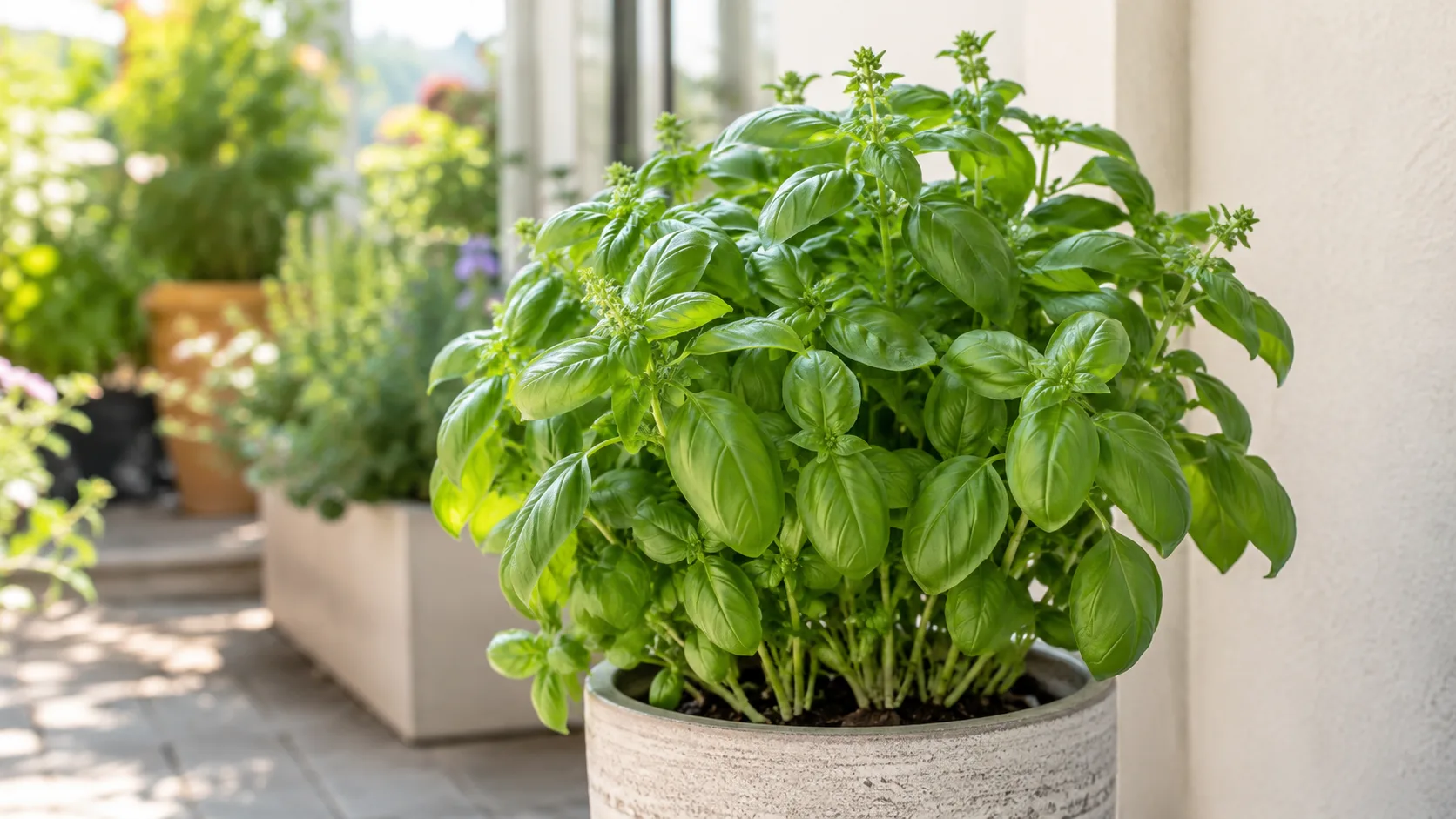
Basil Repotting: When, How, and Mistakes to Avoid
Basil Repotting: When, How, and Mistakes to Avoid
Basil (Ocimum basilicum) grows faster in a pot than almost any herb you will keep on a windowsill. Penn State Extension describes sweet basil as a tender annual that needs warmth, full sun, and fertile, well-draining soil - conditions that also push rapid root development when the plant is happy. A seedling started in a plug tray can need its first upgrade within two weeks. A supermarket clump can become root-bound before you finish the first jar of pesto. Repotting is not optional maintenance for long-term basil harvests; it is the difference between a plant that keeps producing tender leaves and one that stalls, yellows, and bolts early.
This guide covers when to repot, pot sizing and soil linked to the basil soil guide, step-by-step repot and supermarket-split workflows, seedling progression timing, bolted-plant repot-vs-sow decisions, recovery aftercare tied to watering and light, and links to the full basil overview and sibling care pages.
Why Basil Needs a Different Repot Strategy Than Houseplants
Repotting basil is not the same as repotting a slow-growing houseplant like a snake plant or a peace lily. Basil is an annual herb bred for rapid leaf production in a single season. Its root system expands aggressively to match the above-ground growth you harvest every few days. When roots fill a container, they circle the pot walls, compress the soil, and eventually choke off the oxygen and water movement that fine root hairs depend on. At that point, adding fertilizer or watering more often does not fix the problem - the plant needs fresh mix and slightly more room.
University of Maryland Extension emphasizes that container plants depend entirely on a relatively small volume of growing medium, unlike garden-grown herbs whose roots can explore outward. For basil, that small volume goes stale quickly. Organic matter breaks down, air spaces collapse, and salts from repeated watering accumulate at the root zone. Repotting resets that environment. It also gives you a chance to inspect roots directly: healthy basil roots are white to pale tan and firm. Dark, mushy tissue or a sour smell from the mix signals overwatering on Basil or poor drainage - issues that a bigger pot alone will not solve. Pair repot work with the basil watering guide rhythm so you are not stacking a root refresh with a new soak schedule on the same day.
How Fast Basil Outgrows Its Container
Basil can outgrow a 3- or 4-inch nursery pot in as little as two to three weeks during warm, bright weather - an editorial timeline based on typical windowsill and balcony growth, not a fixed extension interval. Seedlings started indoors typically need potting up when they reach about 4 inches tall and have at least two sets of true leaves. University of Minnesota Extension recommends thinning or transplanting seedlings to stand 6–12 inches apart once they develop two to three pairs of true leaves. If you wait until the seedling is leggy and floppy, the repot still works, but recovery takes longer because the plant has already spent energy stretching toward light instead of building roots - see the basil light guide if stretch is your main symptom.
Store-bought basil tells the same story in compressed time. Grocery and garden-center pots often contain four to six seedlings in a container meant for short-term display. Those plants share one root mass, compete for water at different rates, and dry unevenly - wet in the center, dry at the edges. Splitting and repotting into individual containers is frequently the highest-impact step you can take after purchase, more important than fertilizer and sometimes more important than upgrading light. Mississippi State Extension recommends professional soilless growing mixes for container basil precisely because the plant’s fast metabolism demands consistent drainage and aeration that garden soil cannot provide in a pot.
| Stage | Typical container | When to move up | Notes |
|---|---|---|---|
| Germination | Plug tray / 72-cell | - | Keep warm; see propagation guide |
| First true leaves | 3–4 inch pot | 2–3 weeks after germination in warm light | Root ball holds plug shape, not a solid mat |
| Bushy vegetative growth | 6-inch finishing pot | When roots circle or water runs through | One-size-up from 4-inch nursery pot |
| Heavy harvest / mid-season | Same pot refresh or 8-inch | When mix breaks down or growth stalls | Refresh mix without upsizing if diameter is adequate |
| Bolted / flowering | Do not upsize - sow new seed | N/A | See bolted-plant section below |
When to Repot Basil
The right time to repot basil is when the plant shows it has outgrown its container, not when a calendar reminder pings. Many outdoor gardeners in warm climates never repot at all - they sow seed, harvest through summer, and replant the following year. That works when basil lives in open ground. Indoors, on a balcony, or in any container longer than a few weeks, repotting becomes routine care.
Plan the move during active growth whenever you can. Basil recovers fastest when temperatures are warm, days are long, and the plant is already pushing new leaves at the tips. A healthy plant repotted in spring or early summer usually shows visible new growth within one to two weeks under good light and watering. A stressed, flowering, or cold-damaged plant repotted in winter can survive, but expect a slower bounce-back and accept that some leaf loss is normal.
Observable Signs of a Root-Bound Plant
Root-bound basil gives off clear signals if you know what to watch for. The most obvious is roots emerging from drainage holes at the bottom of the pot. Less obvious but equally telling: water runs straight through the container seconds after you pour, because the root mass has become so dense that fresh water cannot penetrate the center of the ball. You may also notice the plant wilts quickly after watering even though the surface looks moist, because roots cannot access water trapped in the middle of a tight mat.
Stunted growth is another sign. If basil has adequate light and you are watering appropriately but new leaves stay small or internodes stretch, gently slide the plant from its pot. A solid cylinder of roots with little visible soil - especially roots circling the bottom in a tight spiral - means it is time to pot up. Yellowing lower leaves combined with a pot that dries out unevenly can also point to a root system that has outgrown its space, though always rule out overwatering first by checking moisture an inch or two below the surface before you repot.
Visual check (editorial): In a root-bound 4-inch nursery basil, the root ball often slides out as a rigid brown-tan cylinder with roots tracing the pot wall in a visible spiral; after a gentle tease and one-size-up repot, white root tips typically appear at the outer mix within 7–10 days in warm bright conditions.
Seasonal Timing That Speeds Recovery
Spring and early summer are the safest windows for routine basil repotting. Warm soil temperatures, longer daylight, and active leaf production help roots re-establish quickly. If you start seeds indoors, plan the first transplant into individual 4- to 6-inch pots when seedlings develop their second set of true leaves and roots begin filling the cell.
Mid-summer repotting is fine for vigorous plants that have not yet flowered, especially if you are rescuing root-bound basil before a heavy harvest period. Try to repot between harvests rather than immediately after stripping a large portion of foliage, because the plant has more energy to allocate to root repair when it retains a reasonable leaf canopy.
Fall repotting makes sense mainly when you are moving basil indoors to extend harvest. Choose young, healthy plants that have not yet turned woody or gone to flower. Older flowering basil is nearing the end of its natural cycle; repotting may buy a few extra weeks of leaves, but it will not transform a spent annual into a long-lived perennial. NC State Extension guidance for container edibles suggests replacing cool-season herbs with basil transplants once nighttime temperatures stay above 50°F - the same warmth threshold applies when you reverse the move and bring plants inside before cold nights arrive.
Winter repotting should be reserved for emergencies: severe root rot on Basil, a pot that will not hold moisture evenly, or a plant clearly failing in its current container. If the plant is merely slow because of short days, wait until late winter or early spring when you can supplement with a grow light per the basil light guide and warmer room temperatures. Repot in early morning or late afternoon rather than during midday heat, especially if the plant will sit in direct sun afterward.
When Not to Repot: Bolted and Spent Plants
Do not repot heavily flowering basil expecting a second youth. University of Minnesota Extension notes that allowing basil to flower and set seed makes plants woody, reduces yields, and leads to more bitter flavor. Once flower spikes dominate and lower stems lignify, succession sowing beats forcing another repot.
Repot vs. divide vs. sow new - decision guide:
| Situation | Best action | Why |
|---|---|---|
| Root-bound, vegetative, warm season | Repot one size up | Fresh mix + room restores harvest pace |
| Crowded supermarket clump, no flowers | Split into 4–6 inch pots | Division outproduces crowded display pot |
| Mix sour but pot size adequate | Same-pot refresh + trim ≤⅓ roots | Resets drainage without wet oversized soil |
| Full flower spikes, woody stems | Sow new seed or take cuttings | Annual lifecycle is ending; repot rarely pays off |
| Downy mildew or Fusarium in old pot | Discard plant; do not reuse soil | Penn State Extension warns against composting infected basil; sow resistant cultivars like ‘Devotion’ or ‘Prospera’ in fresh mix |
If you need new plants fast, start seeds or root stem cuttings per the basil propagation guide rather than repotting a bolted mother plant.
Choosing Pots, Depth, and Drainage
The right pot for basil balances root space with drainage. Basil does not benefit from a huge container “so it has room to grow.” Excess soil holds excess water, and a small root system cannot use that water fast enough in a large pot. The result is soggy mix, reduced oxygen around roots, and the kind of root rot that looks like mysterious wilting from above. Every basil container needs drainage holes - no exceptions for indoor growing. Saucers are fine as long as you empty them after watering so the pot never sits in standing water.
The One-Size-Up Rule Explained
Follow the one-size-up rule: choose a new pot only 1 to 3 inches (2.5 to 7.5 cm) wider in diameter than the current one. A basil plant in a 4-inch nursery pot moves to a 6-inch pot, not a 10-inch bowl. Penn State Extension notes that a single large container - roughly one foot wide by two feet long and 8 inches deep - can support a plentiful basil harvest, but that scale assumes you are starting with established plants in appropriate proportion, not jumping a tiny seedling into a massive pot.
Depth matters less than width for basil, but a pot that is 6 to 8 inches deep comfortably supports one mature plant. If you are growing multiple basil plants in one container for kitchen harvest, scale up gradually - a 10- to 12-inch pot for three plants is reasonable only if each plant already has an established root ball. Skipping straight from a tiny cell to a large pot is one of the most common ways beginners stall basil growth for weeks.
When repotting only to refresh soil - not to upsize - you can return the plant to the same pot after trimming no more than one-third of the root mass if the plant was severely bound. Clean the pot, add fresh mix, and replant at the same depth. This same-pot refresh is useful mid-season when mix has broken down but the plant has not yet needed more diameter.
Plastic, Terracotta, and Self-Watering Options
Plastic pots retain moisture longer, which can help on a hot windowsill where basil dries out quickly. They are lightweight and inexpensive - practical for kitchen herbs you move between counter and sink. Terracotta breathes through porous walls and dries faster, which protects against overwatering but may require more frequent checks in air-conditioned rooms or under intense grow lights. Mississippi State Extension notes that container type matters less than using a good professional growing mix; match the pot material to your watering habits instead of chasing a universal “best” container.
Self-watering inserts can work for basil if you monitor the reservoir and avoid keeping the bottom constantly saturated - basil tolerates brief dry spells better than perpetually wet roots. After repotting, place basil where it receives at least 6 to 8 hours of bright light daily per University of Maryland Extension. Direct sun near a south-facing window is ideal indoors. If you are moving a repotted plant outdoors, harden it off over seven to ten days: start with an hour of morning sun, increase exposure gradually, and bring it in if temperatures drop or wind is strong.
Soil Mix for Repotting
Basil needs a well-draining, lightweight potting mix that holds moisture without staying waterlogged. Target a slightly acidic to neutral pH around 6.0 to 7.5 per University of Minnesota Extension. Heavy garden soil pulled from a yard bed is a poor choice for containers: it compacts, drains poorly, and can introduce pests or pathogens. University of Maryland Extension recommends commercial soilless mixes or blends that combine peat or coir, perlite, vermiculite, and composted bark - components that maintain aeration in a confined root zone. Full mix recipes and drainage tests live on the basil soil guide - use the same blend at repot time so you are not guessing a second ratio.
A reliable baseline blend for repotting:
- 50% quality peat-free or peat-based potting mix
- 30% compost or worm castings for slow nutrients
- 20% perlite, coarse sand, or fine bark for aeration
NC State Extension suggests a custom container mix of one part compost, one part perlite or coarse sand, and one part potting soil for edibles - a similar ratio that drains quickly while holding enough moisture for fine roots. The mix should feel fluffy in your hand and crumble rather than form a tight ball when squeezed. If water pools on the surface for more than a few seconds when you water, the mix is too dense or has compacted - both are reasons to repot into fresh material.
DIY Blend vs. Commercial Mix
Commercial organic potting mixes labeled for vegetables or herbs work well for basil repotting, especially if perlite or another coarse amendment is already blended in. Read the label: mixes heavy on fine peat alone may need extra perlite at roughly one part perlite to three parts mix for basil. University of Maryland Extension warns against products that feel heavy, gritty, or clumped - signs of poor structure for container herbs.
DIY blending gives you control in humid climates where store mixes stay wet too long. Coconut coir combined with perlite and a small amount of compost creates a structure that drains quickly while still holding enough moisture for fine roots. Avoid adding too much compost; excess organic matter can retain water beyond what a small root zone needs in a fresh, oversized pot. Never reuse old potting soil from a previous basil crop without refreshing it. Spent mix loses structure, may harbor fungus gnats or disease, and often carries fertilizer salt buildup that shows up as brown leaf edges after repotting. Penn State Extension specifically cautions against composting Fusarium-infected basil - treat spent mix from diseased plants as discard, not refresh material.
How to Repot Basil Without Shock
Repotting basil is straightforward when you prepare materials first and disturb roots only as much as necessary. Rushing the process - yanking the plant, bare-rooting it aggressively, or fertilizing the same day - turns a ten-minute job into a two-week recovery. Transplant shock happens when a plant struggles to adjust after root disturbance and environmental change. Most herbs recover within a week when handled correctly; basil typically shows new tip growth within one to two weeks in warm, bright conditions.
What to Gather Before You Start
One day before repotting, water the basil thoroughly so the root ball holds together and slides out of the old pot cleanly. Hydrated roots are flexible and less brittle than dry ones, which reduces breakage when you tease circling roots apart. Gather your supplies: the new pot (one size up, with drainage holes), fresh potting mix, a hand trowel, clean scissors, a chopstick or pencil for settling soil, and a watering can. Wash reused pots with hot soapy water to remove old salt deposits and algae.
Add a layer of fresh mix to the bottom of the new pot so the plant will sit at the correct height - the base of the stem should end up roughly half an inch below the pot rim, at the same soil depth it occupied before. Planting too deep can rot the stem; planting too shallow exposes roots and dries the crown. Pre-moisten the new mix slightly so it is damp but not soggy. Dry mix pulled straight from the bag can leave air pockets that roots cannot bridge, while soaking wet mix drives out oxygen before the plant is even placed.
Removing the Plant and Working the Root Ball
Turn the potted basil on its side and gently slide it out. For plastic nursery pots, squeeze the sides to loosen. Never yank the plant by the stem alone - basil stems are succulent but snap easily under force. Examine the root ball. If roots are lightly circling at the bottom, use your fingers to tease the lowest roots outward - think of massaging the edge, not shredding the center. If the plant is severely root-bound, make two or three shallow vertical cuts along the sides of the root mass with clean scissors, then loosen the bottom.
Trim away any brown, mushy roots with sterile scissors. Healthy tissue after trimming should look white or cream-colored. Remove dead or yellowing leaves at the base if they are clearly spent, but keep as much healthy foliage as possible - leaves are the plant’s energy source during recovery. Set the plant in the new pot and backfill with fresh mix, working soil gently between roots with a chopstick. Firm the mix lightly with your fingers so the plant stands upright, but do not pack it tightly. Compressed soil suffocates roots the same way an oversized wet pot does.
Leggy seedlings: Plant slightly deeper than they sat in the cell if stems are floppy; buried stem nodes can root along the base on young plants, which stabilizes seedlings. This technique works for tender starts, not woody mature stems - see basil propagation for cutting-based restarts.
Watering, Light, and Aftercare in Week One
Water thoroughly immediately after repotting until excess drains from the bottom. This settles the mix around roots and eliminates large dry voids. For the first week, keep soil evenly moist but not waterlogged - check daily using the top 1–2 inch test from the basil watering guide because fresh perlite-heavy mix can look dry on top while staying damp below. Hold off on fertilizer for two to four weeks after repotting. Fresh mix usually contains enough nutrients for short-term growth, and feeding too soon can burn disturbed roots. Resume a light liquid feed at half strength only after you see new growth.
Expect mild transplant shock: slight wilting, a pause in growth, or a few lower leaves yellowing in the first three to five days. That is normal if the crown stays firm and soil moisture is appropriate. Place the plant in bright indirect light for two to three days after repotting if it was previously in full sun, then return it gradually to its normal level per the basil light guide. Avoid harvesting heavily for about a week so the plant can redirect energy to roots. Full recovery - new leaves at normal size, steady growth, stable wilting rhythm - typically takes one to two weeks in warm conditions. Root establishment deep in the pot may take four to six weeks, but you do not need to wait that long to resume light harvesting once new tips appear.
Winter indoor recovery: If you repot while bringing plants inside, position grow lights 6–12 inches above the canopy for 10–12 hours daily when window light falls below six hours, as University of Minnesota Extension recommends for overwintered annuals.
Splitting a Crowded Supermarket Pot
Supermarket basil pots are designed for short-term display, not long-term growing. You will often find six or more seedlings sharing one small container, with roots tangled at the bottom. Splitting is worth the effort: four properly spaced plants in individual pots usually produce more total leaves than one crowded clump fighting for the same soil.
Water the pot lightly a few hours before splitting so roots are flexible. Slide the mass out and gently pull the root ball apart into groups of one to two stems each. Some root tearing is inevitable; minimize it by working slowly with fingers rather than a knife. Pot each division into its own 4- to 6-inch container with fresh mix, water from below by setting pots in a tray of water for ten minutes, then let them drain. Keep divisions in bright indirect light for three to five days before moving to full sun. Not every division will survive - that is normal - but the ones that do will outproduce the original crowded pot within two weeks.
Editor observation (June 2026): A six-stem grocery basil clump in a 4-inch peat pot was divided into four groups (one to two stems each) and potted into individual 6-inch containers with fresh 50/30/20 mix. Divisions rested in bright indirect light for four days, then returned to a south-facing sill. Two divisions failed within the first week (collapsed stems at soil line); two survivors pushed harvestable tips by day 18. The unsplit control half of the original clump stalled and bolted by week five. Documented takeaway: expect roughly 50% division loss on dense grocery pots, but surviving splits usually outproduce the crowded original within three weeks when light and watering stay consistent.
Overwintering note: Repot young plants in early fall as you bring them inside, using fresh mix and a pot one size up. Expect slower growth and plan to start new seed in late winter regardless - overwintered basil is a bridge, not a permanent perennial.
Common Basil Repotting Mistakes and Fixes
Even experienced gardeners repot basil badly once in a while. The mistakes below cause most post-repot wilting, rot, and stalled harvests. Each is avoidable with a smaller pot, gentler hands, or a bit more patience.
Jumping multiple pot sizes is the most damaging error. A basil plant moved from a 3-inch pot into a 10-inch bowl sits in a large volume of wet soil its roots cannot explore. Oxygen drops, roots rot, and the visible symptom is a plant that wilts whether you water or not. One size up, every time. If you already made this mistake, do not repot again immediately into yet another pot. Let the plant dry slightly toward the outer edge of the mix, water lightly near the stem only, improve light and airflow, and plan a corrective same-pot refresh once the plant stabilizes - usually after one to two weeks of careful monitoring.
Bare-rooting or washing all soil away strips fine root hairs that do most of the water absorption. Tease circling roots; do not rinse the ball clean unless you are treating confirmed root rot and are prepared for a longer recovery. Repotting during midday heat or immediately before a cold night adds environmental stress on top of root disturbance. Choose mild conditions. Fertilizing right after repotting burns tender regrowing root tips - wait until new leaves confirm the plant has restarted growth. Planting too deep buries the stem in moist mix and invites stem rot, especially in heavy soil. Match the previous soil line on the stem. Ignoring drainage by using pots without holes or letting saucers stay full turns repotting into a root-rot setup. If you love a decorative pot, use it as a cover pot only.
Repotting bolted plants wastes effort when succession sowing or propagation cuttings would deliver better flavor faster. Reusing Fusarium-contaminated mix risks the next crop - start fresh soil and choose resistant cultivars listed by Penn State Extension.
Cultivar and Setup Notes
Not all basil fills a pot at the same pace. Genovese and large-leaf sweet types (‘Italian Large Leaf’, ‘Napoletano’) grow vigorously and often need the fastest pot progression in the table above. Thai basil (‘Siam Queen’, ‘Queenette’) can reach taller mature height (24–36 inches per University of Minnesota Extension) and may benefit from slightly deeper 8-inch finishing pots for single-stem specimens. Spicy Globe and other dwarf types stay compact longer in smaller containers - useful for windowsills but still need fresh mix when roots circle.
When repotting stressed outdoor basil in humid weather, choose downy-mildew-resistant cultivars (‘Devotion’, ‘Prospera’, ‘Amazel’) for the next sowing if disease was present - University of Maryland Extension recommends resistant varieties and discarding infected plants rather than repotting them into shared indoor space.
Related basil care guides:
- Basil overview - buying checks, first-month settling, species hub
- Watering - moisture checks after repot
- Light - brightness and grow-light placement
- Soil - full mix recipes and drainage tests
- Propagation - cuttings and seeds when repot will not save a bolted plant
- Pruning - pinching to delay flowering after a successful repot
Conclusion
Read the root ball, not the calendar - but know when repotting has stopped being the right tool. Vegetative, root-bound basil in warm light belongs in fresh mix one size up; crowded grocery clumps belong split into individual pots; bolted woody plants belong in the compost bin while you sow or root a replacement. Time the job for active growth when possible, link aftercare to the watering and light guides, skip fertilizer for a few weeks, and judge success on new tips within two weeks. When in doubt between forcing an old flowering plant and starting fresh, choose fresh - basil is an annual built for one strong harvest season, not infinite rescue repots.
When to use this page vs other Basil guides
- Basil overview - Start here for whole-plant context before deep-diving this topic.
- Basil problems hub - Jump to symptom-specific fix guides when this care topic does not resolve the issue.
- Root Rot on Basil - Escalate here when repotting adjustments are not enough.