Basil Fertilizer: When, How Much, and Best Products
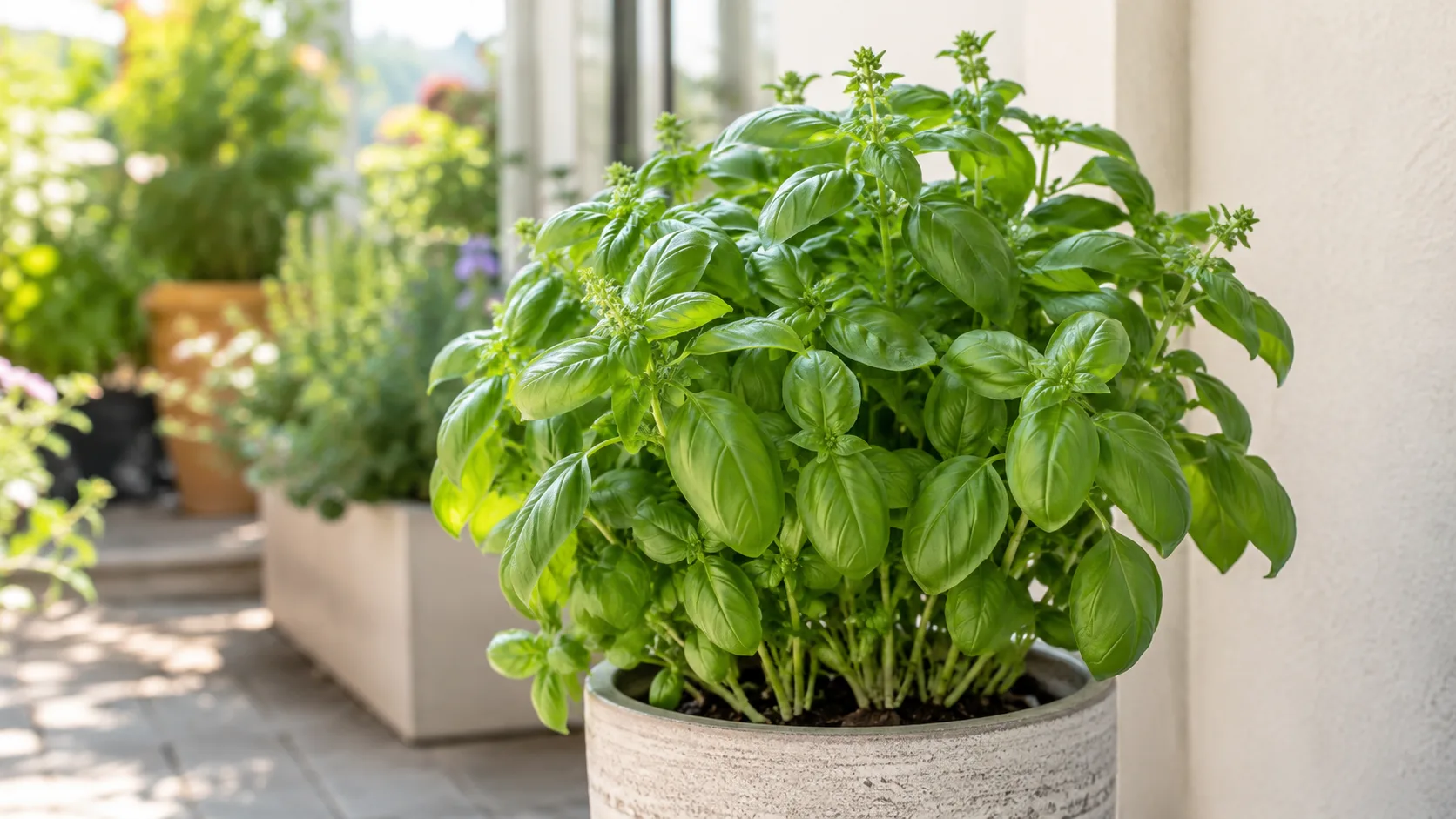
Basil Fertilizer: When, How Much, and Best Products
Basil Fertilizer: When, How Much, and Best Products
Basil (Ocimum basilicum) is grown for leaves, not flowers or fruit, so basil fertilizer choices should support steady foliage production without pushing the plant into weak, fast growth that tastes bland. The feeding question is not whether basil needs food at all - it usually does during active growth - but how often, how strong, and with what product in your specific setup. A windowsill pot, a sunny balcony container, and a compost-rich garden bed all need different schedules even though the plant is the same species.
Basil belongs to Lamiaceae, the mint family, and behaves like other fast-growing culinary herbs: it uses nutrients quickly when light and warmth are strong, then slows sharply when days shorten or indoor conditions dim. Fertilizer supports that rhythm. It does not replace good light, drainage, or consistent watering. If those basics are wrong, feeding harder usually makes the problem worse.
What Basil Needs From Fertilizer
Basil pulls nitrogen, phosphorus, potassium, and small amounts of micronutrients from the soil or potting mix as it produces new leaves and stems. Every harvest removes tissue the plant already built from those nutrients. Every watering session in a container washes some fertilizer salts out of the root zone. Over a season, that combination creates a real need for replacement feeding - especially in pots where the soil volume is small and roots cannot roam for resources.
The goal of fertilizing basil is leaf quality, not maximum size alone. You want firm, aromatic leaves on a compact plant that keeps branching after cuts. Heavy feeding can produce bigger but softer leaves with diluted flavor, which matters when you are growing basil for cooking rather than ornamental bulk. That is why extension guidance for herbs consistently emphasizes sparing, diluted feeding rather than full-strength doses on a fixed calendar.
The Role of NPK in Leaf, Stem, and Root Growth
Fertilizer labels show three numbers - N-P-K - for nitrogen, phosphorus, and potassium. Nitrogen drives leafy growth and green color, which is why many basil guides mention moderate nitrogen as useful for harvest plants. Phosphorus supports root development and overall energy transfer; basil needs it, but not in the extreme ratios marketed for blooming houseplants. Potassium helps with water regulation, stress tolerance, and general plant function during hot weather when container basil dries quickly.
For most home growers, a balanced formula such as 10-10-10 or 20-20-20 works well because basil uses all three macronutrients during vegetative growth. A slightly nitrogen-leaning organic product like fish emulsion at 5-1-1 or 4-1-1 can also perform beautifully for leafy herbs when diluted properly. The ratio matters less than the concentration you actually apply. A 20-20-20 product used at one-quarter strength is gentler than a 10-10-10 product used full strength, even though the numbers on the bottle look similar.
Micronutrients - iron, manganese, zinc, and others - rarely need separate products for basil in good potting mix, but they become more important if you use highly purified water or a very inert soilless medium with little organic matter. A complete water-soluble fertilizer with micronutrients listed on the label is a sensible default.
Why Basil Is Not a Heavy Feeder
Commercial basil production uses meaningful nitrogen because farmers harvest repeatedly at scale, but home basil in a 6-inch pot is a different equation. University of Minnesota Extension recommends fertilizing basil sparingly and using liquid fertilizer at half the label strength, with outdoor container basil fed every three to four weeks and indoor basil every four to six weeks. (University of Minnesota Extension - Growing basil) That language - sparingly, half strength - tells you basil tolerates lean feeding better than aggressive feeding.
Basil also shares a practical trait with many herbs: it grows fast when conditions are right, so it can look hungry when the real problem is insufficient light or root stress from wet soil. Adding fertilizer to a plant that is yellow from overwatering on Basil or sitting in a dark corner often fails and can burn roots. Treat fertilizer as maintenance for a healthy plant in active growth, not as a rescue tonic for every pale leaf.
Best Fertilizer for Basil Plants
The best fertilizer for basil in most home situations is a complete, water-soluble or liquid organic product applied at reduced strength on a predictable schedule. You do not need a specialty basil-only bottle unless you want one for convenience. What you need is a product that dissolves cleanly in water, includes all three macronutrients, and can be diluted precisely.
Avoid two extremes: ultra-high-nitrogen lawn or foliage boosters used at full label rate, and slow-release pellets piled on top of an already enriched potting mix without reading the bag. Basil in containers responds best to small, repeated doses you control rather than a single strong hit that releases unpredictably in a small root zone.
Balanced Liquid Fertilizers and NPK Ratios
Balanced liquid fertilizers - 10-10-10, 12-12-12, or 20-20-20 - are the most versatile choice for basil because they support leaves, roots, and general vigor without assuming the plant needs one nutrient far more than the others. These products are widely available, easy to measure, and fast-acting, which suits container herbs that lose nutrients through frequent watering.
University of Minnesota Extension also notes that in-ground basil with good soil may need only light supplemental feeding, such as a 5-10-5 granular product once or twice during the season at modest row rates, while container plants need more frequent liquid feeding because nutrients leach faster. (University of Minnesota Extension - Growing basil) For pots, liquid beats granular for day-to-day control.
If your basil is lush and deep green but you want slightly faster leaf production under strong sun, a mild nitrogen-leaning organic liquid is reasonable. If stems are thin and leaves are pale yellow-green despite good light and proper watering, a balanced feed at half strength is a better first step than jumping to maximum nitrogen.
Organic Options: Fish Emulsion, Compost Tea, and Worm Castings
Organic options work well for basil and align with how many cooks think about edible plants. Fish emulsion - commonly around 5-1-1 - delivers readily available nitrogen for leafy growth and is a standard recommendation for container herbs. It smells strong when mixed, so apply it where ventilation is good, and always dilute more than you think you need on the first application.
Compost tea and worm casting tea provide a broader nutrient profile plus microbial activity in garden beds. They are gentler than synthetic salts and fit basil planted in raised beds or containers topped with compost. Quality varies with the compost source, so treat tea as a supplement rather than your only nutrient plan unless you know the brew is consistently balanced.
Worm castings mixed into potting soil at planting time or applied as a thin top dressing release nutrients slowly and improve organic matter. They pair well with occasional liquid feeding during peak summer harvests. For indoor basil, liquid organics are usually easier to manage than bulky amendments on a windowsill.
Slow-Release vs Water-Soluble: Which Fits Your Setup
Both approaches can work; the right choice depends on how you water and how often you harvest.
| Fertilizer type | Best for | Typical use | Main risk |
|---|---|---|---|
| Water-soluble liquid | Containers, frequent harvests | Half strength every 2–4 weeks in active growth | Salt buildup if too strong or too often |
| Slow-release granular | Outdoor pots, busy growers | Mixed into potting soil at planting | Double-feeding if mix already contains fertilizer |
| Organic liquid (fish emulsion) | Leafy boost, edible gardens | Half strength every 2–3 weeks | Odor indoors; overuse softens flavor |
| Compost or worm castings | Garden beds, Basil repotting guide | At planting + optional top dress | Harder to dose precisely in tiny pots |
University of Minnesota Extension notes that many potting mixes include slow-release fertilizer, and additional feeding may not be needed for two to six weeks after planting - then regular diluted liquid applications should begin as growth and watering deplete the initial charge. (University of Minnesota Extension - Fertilizing container plants) Read your bag label before adding another product on top.
Container-grown basil is sensitive to fertilizer salt buildup in small pots, which is a useful warning for home growers too. (University of Minnesota Extension - Fertilizing container plants) Small containers concentrate salts quickly when evaporation leaves minerals behind. Water-soluble feeding with periodic plain-water flushing is safer than repeated strong doses.
When to Fertilize Basil
Timing matters as much as product choice. Basil should be fed when it is actively growing and able to use nutrients, not when it is wilted, cold-stressed, freshly repotted, or entering a natural slowdown.
For most climates, that active window runs from late spring through summer and often into early fall for outdoor plants. Indoor basil under grow lights may grow year-round, but plants on a winter windowsill often stall even indoors; feeding a stalled plant accumulates salts in unused soil.
Timing From Seedling to First Harvest
Do not fertilize basil the moment cotyledons appear. Wait until seedlings develop two to three sets of true leaves and show steady new growth. Young roots are small and easily burned by strong solutions, and seed-starting mix usually carries enough initial nutrition for the first week or two.
Once seedlings are established in their final pot or garden spot, begin a light feeding program. For container seedlings under good light, half-strength balanced liquid every three to four weeks is a conservative starting point. Increase frequency only if growth is clearly strong, leaves are pale despite correct watering, and the plant is not already receiving slow-release fertilizer in the mix.
Basil can be harvest-ready within a few weeks of transplant under warm, bright conditions, so the feeding clock starts early. That fast growth is exactly why containers need attention - the plant builds tissue quickly and drains the pot’s nutrient reserve faster than a woody houseplant would.
Seasonal Schedule for Containers and Garden Beds
Use different schedules based on where the plant lives:
Outdoor containers in Basil light guide: Feed with half-strength balanced liquid every two to three weeks during peak summer growth, then stretch to every three to four weeks as days shorten in late summer. University of Minnesota Extension recommends every three to four weeks for outdoor container basil as a baseline. (University of Minnesota Extension - Growing basil) Hot, dry weather increases watering frequency, which also increases nutrient leaching - watch for pale lower leaves as a signal to feed, not just calendar dates.
Indoor pots on a bright windowsill: Feed every four to six weeks at half strength when the plant is clearly producing new leaves. Reduce or stop in winter if growth slows and the plant is kept mainly for occasional harvest. University of Minnesota Extension advises against fertilizing indoor herbs during the darker winter period when they will not fully recover from heavy harvesting. (University of Minnesota Extension - Growing herbs)
In-ground garden beds with compost-amended soil: Feed lightly. A balanced granular application once or twice during the season, or half-strength liquid every three to four weeks, is often enough. Well-prepared beds with organic matter may need little beyond post-harvest recovery feeds.
Pause feeding when: the plant is flowering heavily and you are finished harvesting (annual basil declines after seed set), nights turn cold, the plant is newly repotted into fresh mix, roots are damaged from overwatering, or you see salt crust on the soil surface.
How Much Fertilizer to Use
The most reliable rule for home basil is half the label strength unless your product specifically states it is formulated for herbs at ready-to-use concentrations. Many general fertilizers assume outdoor landscape plants or large containers. Basil roots in a 4-inch or 6-inch pot experience that same dose as a much harsher concentration relative to their soil volume.
More fertilizer is not a shortcut to faster harvests. Excess nitrogen can produce soft, watery leaves and has been widely noted by herb growers to reduce flavor intensity when pushed too hard. Your kitchen goal is aromatic leaves on a sturdy plant, not the largest possible foliage at any cost.
Half-Strength Dilution and Dosing Math
Half strength means using half the fertilizer volume the label recommends per gallon or liter of water. If the label says 1 teaspoon per gallon for houseplants, use ½ teaspoon per gallon for basil. If it says 2 ml per liter, use 1 ml per liter. Mix thoroughly before applying.
For very small collections, quarter strength is a valid starting point on aggressive labels, especially for indoor pots. Run that lighter dose for four to six weeks and evaluate new growth color and stem strength before increasing.
Apply enough solution to moisten the entire root zone until a little drains from the bottom, then empty the saucer. Do not leave basil sitting in fertilizer runoff; evaporation reconcentrates salts at the root line.
Commercial reference points help calibrate expectations even if you are not fertigating a greenhouse. Cornell-linked guidelines for field basil in New York cite roughly 120 ppm nitrogen as a common target in commercial programs, with soil pH around 6.0–6.4. (SARE - Basil production manual) Home half-strength liquids at monthly intervals are far gentler - which is appropriate for pots.
Feeding After Heavy Harvests
Basil responds to pruning and harvest with new branching if conditions stay bright and warm. A heavy cut removes a significant share of the plant’s biomass and the nutrients stored in those leaves. After a large harvest, a light half-strength feed within the next week - combined with good watering and sun - helps the plant rebuild foliage without forcing weak sappy growth.
Do not feed immediately on the same day you harvest if the plant looks wilted from the cut. Give it a day of normal watering first, then fertilize when stems are firm and leaves are turgid. Pair post-harvest feeding with pinching flower buds if you want continued leaf production; once basil shifts hard toward seed production, fertilizer will not restore tender leaf quality.
How to Apply Basil Fertilizer Safely
Safe application is mostly about moist soil, correct dilution, and clean drainage. Basil roots are functional but not forgiving of concentrate applied to dry media or repeated strong doses in a pot that never gets flushed.
Read the fertilizer label every time you mix. Products differ. A “bloom booster” houseplant food is a poor default for culinary basil even if the bottle is already under the sink.
Water Before and After Feeding
Water before fertilizing if the pot is dry. University of Minnesota Extension and multiple herb guides recommend moistening dry soil with plain water first to reduce root burn risk. (University of Minnesota Extension - Growing basil) Dry roots are more vulnerable to osmotic stress when fertilizer salts arrive suddenly.
Apply the diluted solution slowly at the soil surface, not as a foliar spray for routine feeding. Basil leaves are meant to be eaten; foliar feeding with synthetic products adds unnecessary residue and does not replace root uptake for steady growth. Organic foliar sprays are occasionally used in gardens, but root feeding remains the standard for potted kitchen herbs.
After feeding, watch drainage. If water runs through instantly, the mix may be too porous and leaching nutrients fast - increase feeding frequency slightly at the same mild strength rather than doubling concentration.
Avoiding Root Burn and Salt Buildup
Root burn and salt buildup show up as brown leaf tips, crispy margins, white crust on the soil surface, or sudden leaf drop after feeding. Prevention beats recovery: half strength, skip stressed plants, and flush monthly.
To flush salts, water the pot thoroughly with plain room-temperature water until excess runs freely from the drainage holes, repeat once, and empty the saucer. Do this monthly if you feed regularly in small pots, or any time you see crust forming.
If burn symptoms appear, stop feeding for four to six weeks, flush well, and remove badly damaged leaves so you can monitor new growth. Basil usually rebounds quickly when roots are still healthy. If the mix smells sour or roots are brown and mushy, repot into fresh well-draining mix before restarting a very weak feed program.
Signs Your Basil Is Under- or Over-Fertilized
Learn to read the plant before reading the calendar. Under-fertilized basil in an old, leached container often shows pale green or yellowish lower leaves while upper growth still looks somewhat normal. Stems may stay thin and new leaves small despite good light and watering. Rule out nitrogen shortage only after confirming the plant is not waterlogged, root-bound, or starved for sun - those problems mimic hunger.
Over-fertilized basil may suddenly look too dark and soft, with weak stems that flop under their own weight. Leaf tips brown. A white or yellow salt crust appears on the soil. Sometimes the plant wilts even though the soil is wet, because damaged roots cannot move water properly. Flavor can taste flat or harsh when growth was pushed too fast with excess nitrogen.
| Symptom | Likely cause | First action |
|---|---|---|
| Pale lower leaves, slow growth | Low nutrients, old mix, or low light | Confirm sun first; then mild feed |
| Brown tips after feeding | Too strong or too dry at application | Flush; pause feeding 4–6 weeks |
| White crust on soil | Salt buildup | Flush; reduce strength or frequency |
| Lush but bland leaves | Excess nitrogen | Reduce feed; harvest regularly to prune |
| Yellow leaves, wet soil | Overwatering, not hunger | Fix drainage before feeding |
Yellow leaves alone are not a fertilizer diagnosis. Overwatering, cold drafts, transplant shock, and natural aging of lower leaves all cause yellowing. Check moisture, roots, and light before adding nutrients.
Common Basil Fertilizer Mistakes
Feeding on a calendar without looking at the plant is the most common error. Basil in a sunny outdoor pot in July may need food every two to three weeks; the same cultivar on a dim winter sill may need none for months. Calendar feeding without observation leads to winter salt accumulation indoors.
Using full label strength because “herbs are hungry” burns roots in small pots faster than in garden soil. Half strength exists in extension guidance for a reason. If growth is weak, verify six or more hours of direct sun or equivalent grow light before increasing dose.
Double feeding happens when potting mix already contains slow-release granules and the grower also adds weekly liquid fertilizer. Read the mix bag. If it lists fertilizer content, delay liquid feeds accordingly.
Fertilizing dry or wilted plants after a missed watering session causes immediate root damage. Rehydrate with plain water, let the plant recover, then feed on the next appropriate cycle.
Chasing yellow leaves with nitrogen while the soil stays soggy worsens root rot on Basil. Fix water management first.
Ignoring flavor turns basil into a generic green leaf. Moderate feeding plus regular pinching produces better kitchen results than maximum nitrogen.
Feeding flowering, end-of-season plants wastes effort. Once basil bolts hard toward seed on short days, leaf quality drops regardless of food. Sow succession plants instead of forcing old ones with fertilizer.
Conclusion
Basil fertilizer success comes down to three practical decisions: use a complete balanced or mildly nitrogen-leaning product, apply it at half label strength, and feed on a schedule matched to your container and season - roughly every two to four weeks for active outdoor pots, every four to six weeks for indoor plants, and less or none when growth slows in cold, dim conditions. Start feeding after seedlings have true leaves, moisten soil before application, and flush small pots periodically to prevent salt crust.
The best product is the one you will dilute consistently - balanced liquid fertilizer, fish emulsion, or compost tea all work when used gently. Watch new growth, not just the bottle label. Firm, aromatic leaves on a bushy plant mean your feeding matches the harvest rhythm. Brown tips, crusty soil, or weak floppy stems mean pull back, flush, and fix light and water before you feed again. Basil forgives a missed feeding far more easily than it forgives a burned root zone.
When to use this page vs other Basil guides
- Basil overview - Start here for whole-plant context before deep-diving this topic.
- Basil problems hub - Jump to symptom-specific fix guides when this care topic does not resolve the issue.
Related Basil guides
- Basil overview
- Basil watering
- Basil light
- Basil soil
- Basil propagation
- Basil repotting
- Basil problems
Related tool
Try the Fertilizer Dilution Calculator with basil pre-selected to estimate needs for your setup.