Overwatering on Basil: Causes, Checks & Fixes
Quick answer
Overwatering on Basil keeps roots oxygen-starved in wet mix-showing as limp leaves on damp soil, yellow lowers, and sometimes black soft stems. First step: stop watering until the top 2–3 cm dries and empty the saucer.
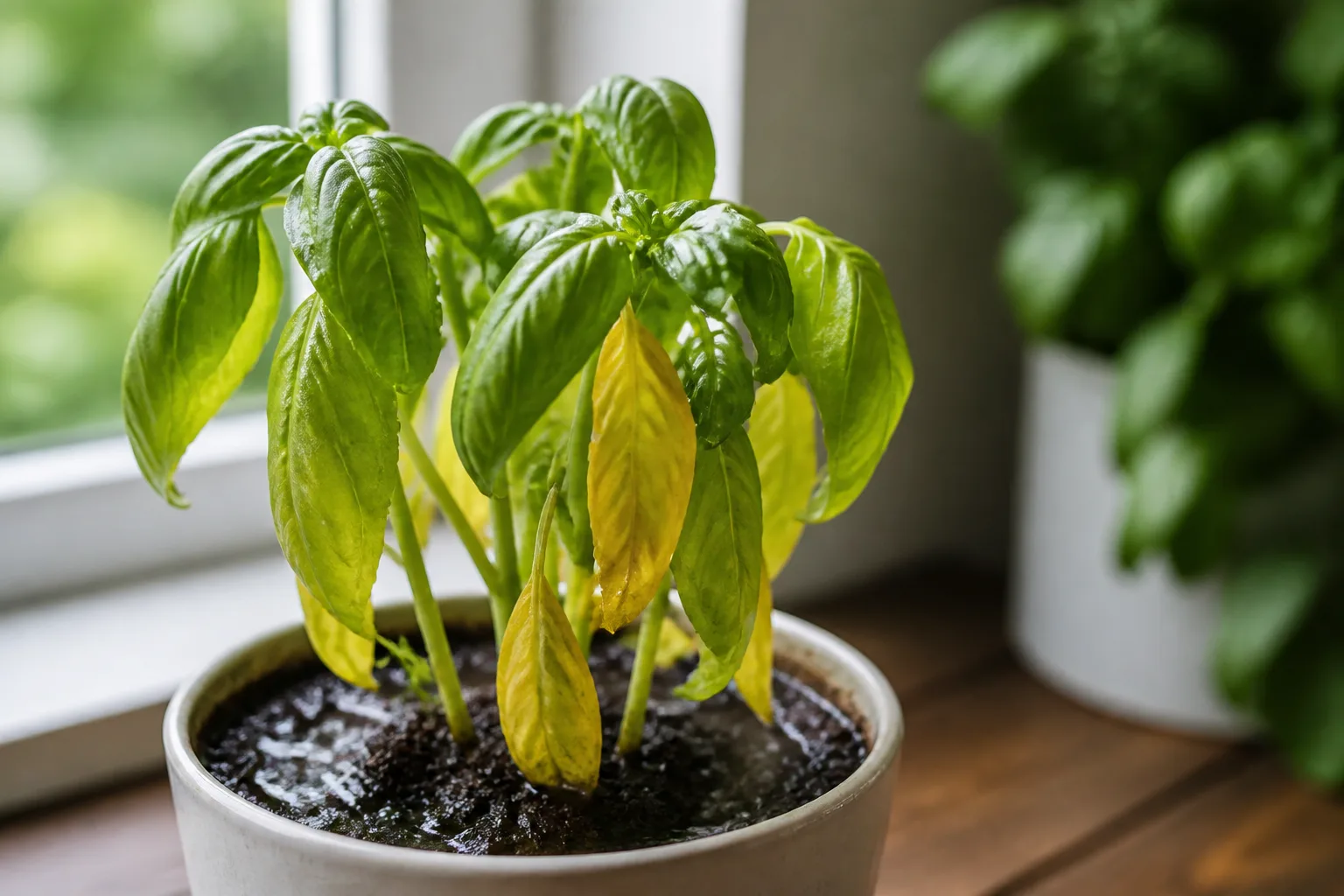
Overwatering on Basil: Causes, Checks & Fixes
This guide covers overwatering on Basil. See also the general Overwatering guide, watering, and light pages for this plant.
Overwatering on Basil: Causes, Checks & Fixes
Quick answer
Overwatering on basil (Ocimum basilicum) means the root zone stays wet too long-not that you gave one generous drink. Sweet basil is a fast-growing warm-season herb that wants steady moisture in well-drained soil. When drainage fails or watering outpaces evaporation, roots lose oxygen, tissue decays, and the plant shows drought symptoms on soggy soil.
First step: stop watering until the top 2–3 cm of mix feels dry, and empty any water in the saucer. Do not soak again because leaves look limp. For prevention schedules and seasonal rhythm, see the basil watering guide. Full species context: basil overview.
What overwatering looks like on Basil
Basil’s soft leaves wilt dramatically-so owners often water more when the real problem is roots failing in wet mix. Damaged roots cannot absorb water even when the pot is heavy. Above soil, overwatering commonly shows as:
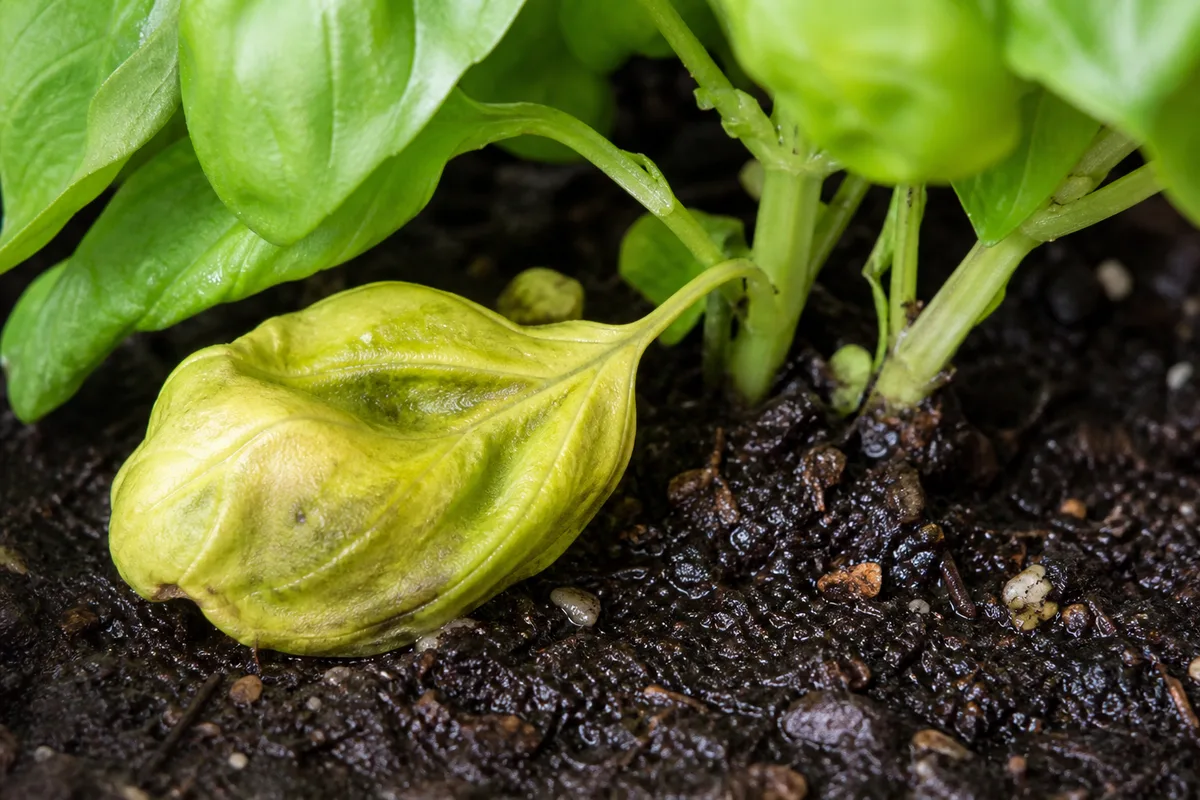
Overwatering symptoms on Basil - compare with healthy tissue on the same plant.
- Limp, drooping leaves on Basil while the pot feels heavy and surface soil stays dark
- Yellow lower leaves that may drop while center tips still look green briefly
- Black or brown soft tissue at the stem base where it meets wet soil-early crown stress before full collapse
- Edema or water-soaked spots on leaf edges in humid, low-light rooms with chronically wet mix
- Stalled new growth or pale, smaller leaves after a wet spell
- White or green mold on the compost surface
- Small fungus gnats rising when you disturb the pot-see fungus gnats on basil
- Sour or swampy smell from the root zone
Below soil, healthy basil roots are firm and white or pale cream. Overwatered roots turn brown, slimy, or hollow. On mature plants, stem blackening at the base often appears before the whole plant collapses-different from a single thirsty afternoon wilt that revives after one proper drink.
Seedling damping-off is the seed-start version: newly germinated basil collapses at the soil line when trays stay saturated and cool. Stems pinch and topple while neighboring cells may still look fine-a pattern tied to Pythium and Rhizoctonia in wet media, not random bad luck.
Normal aging to ignore: One or two yellow bottom leaves on a heavily harvested plant in good light and evenly moist (not soggy) soil can be simple old foliage. Overwatering is a pattern: persistent wetness, soft bases, smell, gnats, and spreading yellowing-not one leaf alone.
Why Basil gets overwatered
Basil evolved in warm climates with bright sun and free-draining ground. In a pot-especially indoors-it is easy to keep the center wet while the surface looks merely damp.
Indoor windowsill triggers:
- Calendar watering through winter - Basil in a cool east window grows slowly and drinks little; the same summer schedule keeps mix wet for a week
- Grocery-store plugs in cachepots - Dense root balls and decorative sleeves hide standing water; the visible soil dries while the core stays saturated
- Low light plus frequent water - Partial shade indoors cuts evaporation roughly in half compared with the same pot on a sunny sill; wet soil lingers
- Heavy peat or cocopeat mix - Retains water without enough perlite for airflow
- No drainage holes or full saucers - Do not let basil stand with water in saucers
Outdoor container triggers:
- Rain plus manual watering - Patio pots may get a soak from a storm and another from habit the next morning
- Oversized pots - A small transplant in a large tub creates a wet zone the roots never dry out
- Cool overcast stretches - Mix stays wet for days when sun and wind drop
Seed-start triggers:
- Overhead misting and dome lids - Trays stay saturated; damping-off favors cool, wet, poorly aerated media
- Sowing too deep or too dense - Weak seedlings in wet cells collapse faster
Basil tolerates heat better than cold, but roots still need oxygen. Fast summer leaf growth increases water demand above soil while poor drainage below soil defeats the purpose-creating the cruel trap of wilt on wet soil.
Overwatering vs. underwatering vs. root rot on Basil
| Clue | More likely cause |
|---|---|
| Soil wet 2–3 cm down, heavy pot, wilt, yellow lowers | Overwatering |
| Soil dry throughout, light pot, wilt revives within hours after soak | Underwatering |
| Black soft stem at base, sour smell, mushy roots when unpotted | Root rot - often advanced overwatering |
| Only oldest bottom leaves yellow; firm roots; even moisture | Natural aging or heavy lower harvest |
| Pale upper leaves, long leggy stems in dim room | Not enough light - slows drying, worsens wet soil |
| Yellow leaves with gray fuzz on undersides | Downy mildew - not a watering fix; see yellow leaves |
How to confirm the cause
Work through these checks before Basil repotting guide or fertilizing:
- Soil moisture at 2–3 cm depth - Soggy or cold-wet for many days after one watering confirms excess moisture. Dry throughout with a light pot suggests underwatering instead.
- Pot weight - Heavy days after watering means water is not leaving. Very light with wilted leaves means drought.
- Wilting pattern - Wilt plus wet soil equals suspect root failure. Wilt plus dry soil that revives after a thorough base soak equals thirst.
- Stem base firmness - Pinch the main stem at soil level. Firm and green is healthier; mushy, black, or hollow means advancing stress-see wilting on basil for wet-soil collapse.
- Smell and surface - Sour odor, mold, or fungus gnats point to chronic wetness.
- Light and season - Is growth slow in winter while you still water every other day? That mismatch fits overwatering.
- Drainage test - Water once and confirm excess runs freely from holes. If it pools, fix drainage before blaming the plant.
Unpot if the base is soft, smell is sour, or yellowing spreads while soil stays wet. Rinse roots gently and look for firm white tissue versus brown slime.
First fix for Basil
Stop watering until the top 2–3 cm of mix is dry, and empty the saucer completely.
That single pause breaks the wet cycle and lets you read whether roots are still functioning. Do not fertilize, mist heavily, or repot on day one unless the base is already mushy or the mix smells sour-those cases need root inspection, not more moisture.
If soil is only slightly over-wet with firm stems and no smell, drying the top layer and fixing saucer drainage is often enough. Jump to repotting only when inspection shows decay.
Step-by-step recovery
If symptoms are moderate or advanced, work in this order:
- Pause irrigation - Let the top 2–3 cm dry. For very soggy pots, tilt the container to pour out trapped saucer water. Do not water again until that layer feels dry to your finger.
- Improve airflow and light - Move basil to a brighter spot with at least six hours of sun outdoors or the brightest indoor window available. Better light increases water use and slows fungal growth on wet surfaces.
- Inspect roots - If stems soften or smell develops, unpot and rinse roots. Trim brown, mushy sections with clean scissors. Keep firm white root tissue.
- Repot if roots were trimmed or mix is sour - Use fresh well-drained mix with perlite in a pot with drainage holes. Do not reuse soggy media. Size the container to the root mass-not dramatically larger.
- First water after repot - Water once at the base until a small amount drains, then discard runoff. Wait for the top inch to approach dry before the next drink.
- Manage fungus gnats - Let the surface stay drier between waterings while you fix moisture. See fungus gnats on basil if adults persist after the dry-down.
- Hold fertilizer - Stressed roots cannot handle salts. Resume half-strength feed only after new shoots look healthy for two weeks.
If most roots are rotten but upper stems are still firm, take 10–15 cm stem cuttings from healthy tips, root them in water or moist perlite, and discard the parent. Basil recovers fast from clean cuttings when the root mass is gone.
Recovery by severity
Mild - Wet too long but roots firm. Dry the top layer, fix drainage, expect perky leaves within a few days.
Moderate - Some mushy roots trimmed and repotted. Foliage may look rough for two to three weeks while new roots form. Judge success by firm new tips, not old yellow leaves.
Stem rot at crown - Black soft base usually means salvage cuttings only, or fresh seed. Do not wait on a collapsed crown.
Recovery timeline
Mild overwatering - Soil was wet too long but roots stayed firm. After you dry the top layer and fix drainage, expect perky leaves within a few days and usable new top growth within 10–14 days.
Moderate damage - Some mushy roots trimmed, plant repotted. Foliage may look rough for 2–3 weeks while new roots form.
Severe rot - Most roots lost. Recovery from cuttings takes 2–4 weeks for roots, then bushy regrowth after a hard pinch. Old damaged leaves will not green up again.
Example: A 15 cm Genovese basil in a 6-inch plastic pot on a north-facing winter sill was watered every three days on habit. After ten days without water-top 2–3 cm finally dry-and moving to a brighter west window, new center leaves stayed firm by day 7 and harvestable tips returned by day 14. Lower yellow leaves never re-greened.
Signs recovery is working: New shoots emerge, stem bases stay firm, soil dries at a predictable rate between waterings, gnat numbers drop.
Signs it is getting worse: Spreading black softness up stems, more yellowing while soil stays wet, sour smell returns after repot, no new growth for three weeks in warm light.
Mistakes to avoid
- Watering because leaves wilt without checking soil - On basil, wet-soil wilt means stop watering, not soak again
- Repotting into a much larger pot - Extra wet compost around a small root ball prolongs saturation
- Misting leaves instead of fixing drainage - Surface moisture does not replace root-zone oxygen
- Keeping a calendar schedule through winter - Reduce frequency when growth slows indoors
- Leaving grocery-store sleeves or cachepots sealed - Hidden standing water at the plug base
- Harvesting heavily from a root-compromised plant - Light pinches only after firm new growth returns
- Fertilizing to “perk up” a soggy plant - Salt stress on damaged roots worsens decline
How to prevent overwatering on Basil
Match water to how fast this specific pot dries, not to basil’s reputation for liking moisture.
- Check before every drink - Press a finger 2–3 cm deep. Water when dry at that depth during active growth; wait longer in cool, low-light months. Full schedules: basil watering guide
- Use drainage holes and empty saucers - Trays must be dumped within 30 minutes of watering
- Amend mix with perlite - Keeps moisture retention without compaction in containers
- Right-size the pot - Kitchen basils outgrow small pots fast; divide or step up one size when roots circle-avoid huge tubs for small plants
- Give enough sun - Outdoor basil wants full sun; indoor plants need the brightest spot or supplemental light so the plant actually uses the water you give it
- Water at the base - Keep foliage dry to reduce gray mold on harvest wounds
- Adjust for season - Summer patio pots may need daily checks; indoor winter basil may go a week between drinks
Basil is forgiving when you catch wet soil early. The plant fails when soggy conditions persist long enough for roots or crowns to rot-usually a drainage or schedule problem, not a single overpour.
When to worry
Treat as urgent if:
- Stem tissue is soft or black at the soil line and spreading upward
- The whole plant collapses within days while soil stays wet
- Sour smell returns after repot and dry-down
- Seedling trays lose entire rows to damping-off-sterilize trays and resow in fresh mix with better airflow
At that point, see root rot on basil and consider cuttings or a fresh sowing rather than repeated soaking.
Related Basil problems
- Basil watering guide - prevention schedules and soil checks
- Root rot - mushy roots and crown collapse
- Yellow leaves - wet roots vs. mildew vs. cold
- Wilting - wet-soil wilt vs. drought
- Underwatering - dry-soil wilt pattern
- Fungus gnats - chronic wet surface soil
- Basil overview - species hub
When to use this page vs other Basil guides
- Basil watering guide - Use for routine moisture checks before assuming overwatering is the main issue.
- Basil problems hub - Browse all 16 common issues on this species.
- Root Rot on Basil - Different entry point when symptoms overlap with overwatering.
- Yellow Leaves on Basil - Different entry point when symptoms overlap with overwatering.
- Wilting on Basil - Different entry point when symptoms overlap with overwatering.