Underwatering on Basil: Causes, Checks & Fixes
Quick answer
Underwatered basil wilts with light, dry soil and often perks up within hours after a deep soak. First step: check moisture 2–3 cm down, then water thoroughly until drainage runs from the pot bottom.
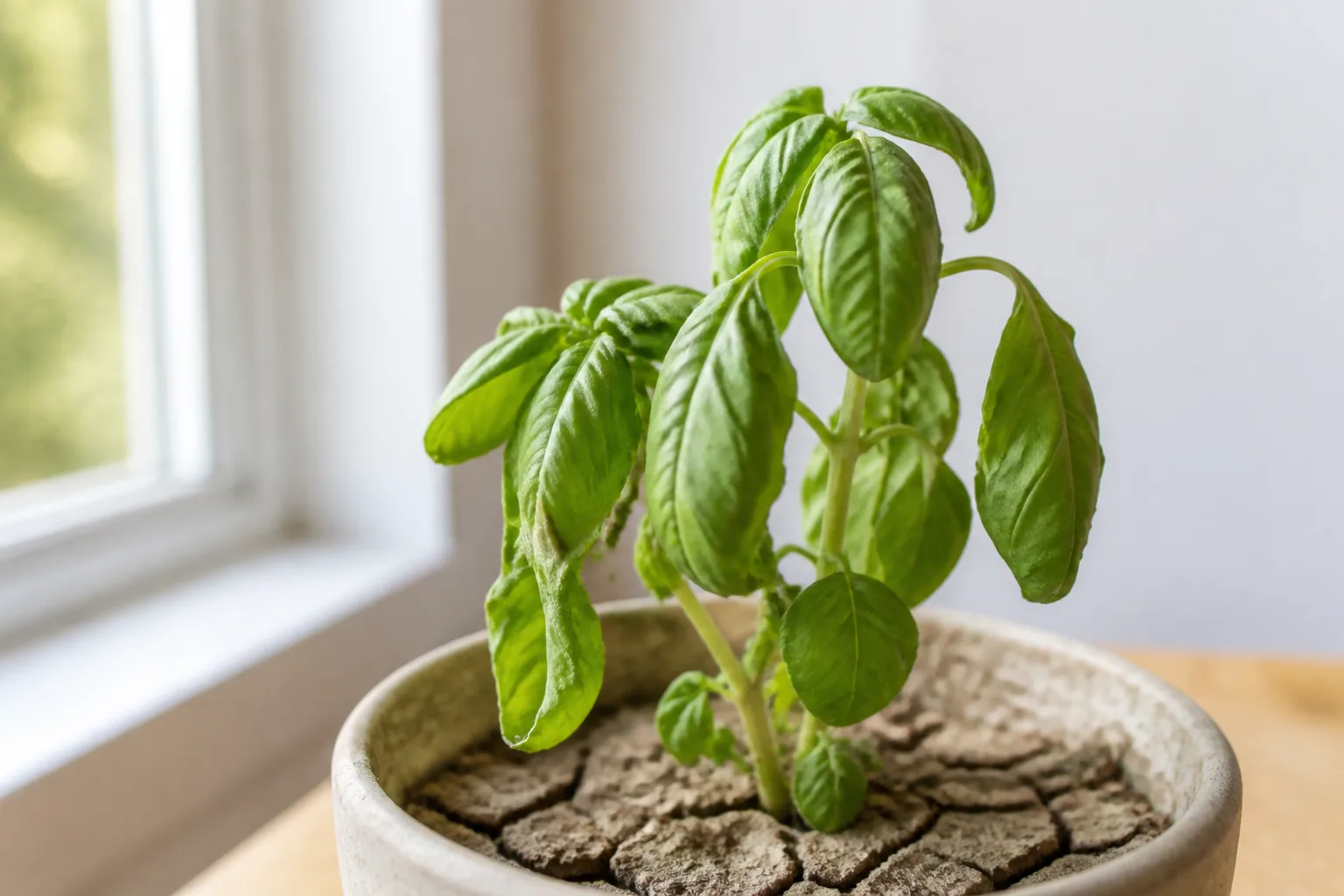
Underwatering on Basil: Causes, Checks & Fixes
This guide covers underwatering on Basil. See also the general Underwatering guide, watering, and light pages for this plant.
Underwatering on Basil: Causes, Checks & Fixes
Quick answer
Underwatered basil (Ocimum basilicum) wilts because roots cannot replace water fast enough for leaves losing moisture in bright sun. The pot feels light, the mix is dry several centimetres down, and leaves droop or crisp at the edges-not yellow and limp on wet soil.
First step: water thoroughly once. Soak until water runs from the drainage holes (or bottom-water in a tray until the surface darkens), then let excess drain. Do not sprinkle the surface, repot, or fertilize before you confirm the root zone was actually dry.
This page is the drought-stress hub for basil-dry soil, light pots, and thirst that revives after a soak. If soil stays wet while leaves wilt, see overwatering on basil instead. For general wilt routing, see wilting on basil. Prevention schedules: basil watering guide. Species hub: basil overview.
What underwatering looks like on Basil
Basil is a fast, sun-hungry herb. When it runs dry, symptoms show quickly-often within hours on a hot windowsill.
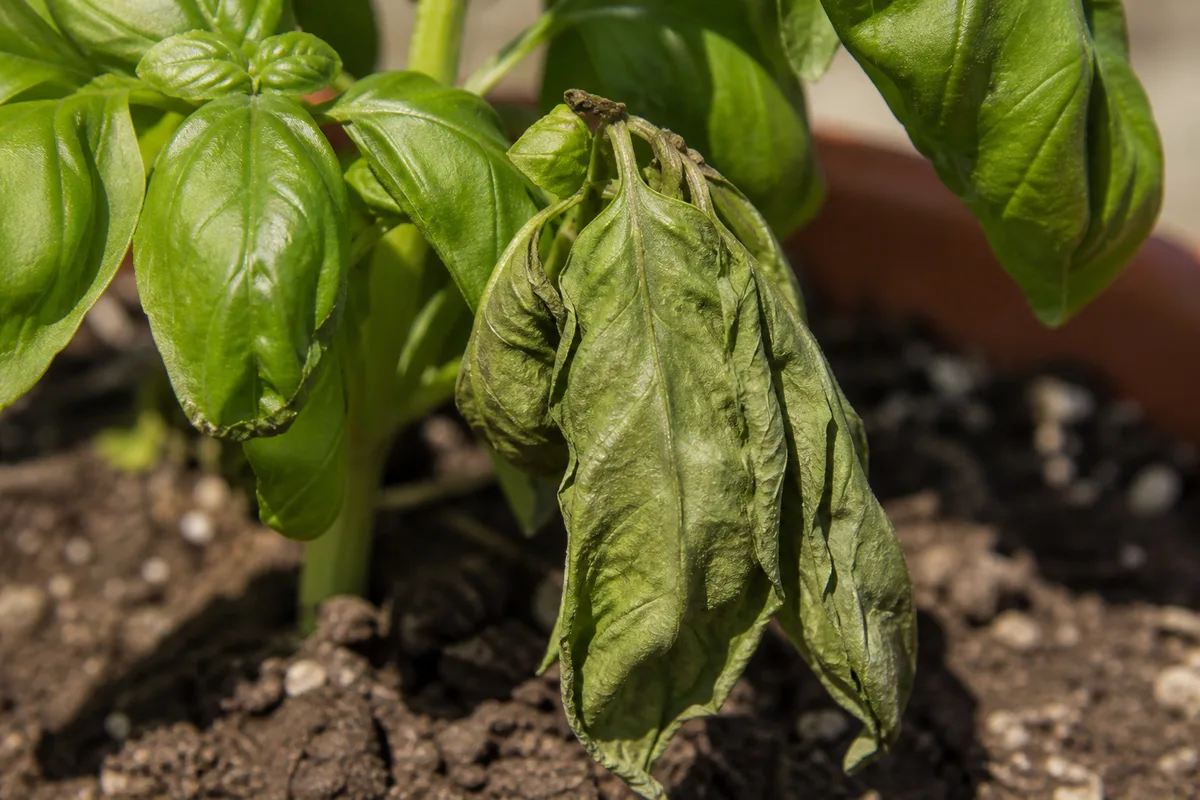
Underwatering symptoms on Basil - compare with healthy tissue on the same plant.
Above soil, watch for:
- Midday droop that improves after a deep drink (if roots are still healthy)
- Dry, pale, or papery leaves-especially on outer or lower foliage; see also brown tips on basil when edges crisp repeatedly
- Crispy brown edges on leaves that were stressed repeatedly
- Soil pulling away from the pot rim
- Slow or stalled new shoots despite good light
Below soil, roots in a mildly underwatered plant stay firm and pale. That matters because overwatered basil wilts too-but with dark, damp mix and sometimes a sour smell or soft stem base.
Basil grown for harvest loses turgor fast when you pick heavily and forget to water. A bushy pot in six or more hours of direct sun can go from fine to limp overnight in summer heat. That speed is normal for this species; it does not mean the plant is diseased.
Basil’s soft, broad leaves show drought faster than needle-leaved herbs like rosemary in the same pot size-the large leaf surface loses water quickly when roots cannot keep up.
Why Basil gets underwatered
Basil wants moist, well-drained soil-not bone-dry cycles and not constant sogginess. Most underwatering on basil comes from a mismatch between how fast the plant uses water and how often you refill the pot.
Basil light guide drives high water use. Basil performs best with at least six to eight hours of bright light daily. More sun means more transpiration, so a schedule that worked in spring may leave a midsummer pot dry by afternoon.
Containers dry faster than garden beds. Plants grown in containers will dry out faster than those in garden beds-basil in a small pot on a balcony or windowsill loses moisture much quicker than basil planted in the ground. Hot, windy, or air-conditioned spots accelerate drying.
Small pots and porous materials. A 10 cm nursery pot in full sun may need water every day; a 20 cm planter in the same light might go every two days. Unglazed terracotta wicks moisture through the walls and dries faster than glazed ceramic or plastic-adjust checks accordingly, not your calendar.
Calendar watering fails. Watering every Sunday regardless of weather skips drinks during heat waves and overcorrects during cool, cloudy weeks. Basil needs you to read the pot, not the clock.
Fear of root rot backfires. Because basil rots in waterlogged soil, some growers under-water until the mix is dust-dry. Damaged or dry roots cannot move water upward; wilt follows even though the problem started as drought, not disease.
Hydrophobic mix after a dry spell. Peat-heavy potting soil that has dried completely can repel water. The surface may look briefly damp while the root ball inside stays dry-classic underwatering with confusing soil readings.
Heavy harvesting without adjusting water. Removing lots of foliage does not reduce root demand much, but a large harvest on a dry day can leave the plant visibly limp within hours.
Cultivar pace differs slightly. Genovese and other sweet O. basilicum types grow vigorously in heat and drink heavily. Thai basil often runs taller with more stem mass; purple opal types can look wilted sooner in the same pot because dark leaves heat up faster in direct sun. The fix is still moisture at depth-not less light.
How to confirm the cause
Work through these checks before treating:
- Soil moisture at depth - Check soil moisture before watering: push a finger 2–3 cm into the mix (about the first knuckle). Dry and crumbly supports underwatering. Wet or cool at depth points to overwatering or root rot instead.
- Pot weight - Lift the pot. Very light compared to right after watering means the root zone is dry.
- Leaf and stem feel - Thin, droopy, slightly dull leaves on dry soil fit drought. Yellow lower leaves on wet soil fit overwatering. Black, mushy stem tissue at the soil line suggests damping off or rot-not simple thirst.
- Time of wilting - Basil in full sun often droops at midday in heat even with adequate moisture, then firms up in the evening. If it stays limp overnight with dry soil, underwatering is likely.
- Drainage and saucer - Confirm holes are open. An empty saucer after watering does not cause underwatering; a plant sitting in stale water causes the opposite problem.
- Recovery test - One thorough soak is diagnostic. Perked leaves within several hours strongly confirm drought stress on healthy roots.
If soil is wet, stems are soft at the base, or the plant fails to respond after a proper soak, switch your diagnosis to overwatering, root rot, or disease-not more water.
Underwatering vs. lookalike problems on Basil
| Clue | More likely cause |
|---|---|
| Dry soil 2–3 cm down, light pot, wilt revives within hours after soak | Underwatering (this page) |
| Wet soil at depth, heavy pot, wilt, yellow lowers | Overwatering |
| Black soft stem at base, sour smell, mushy roots | Root rot - often after drought-to-flood swings |
| Midday droop only; moist soil at depth; firms by evening | Heat stress alone - no extra water needed |
| Yellow patches between veins; gray fuzz on leaf undersides | Basil downy mildew - not fixed by watering |
| Wilting for days after Basil repotting guide with even moisture | Transplant shock - hold steady, do not alternate flood and drought |
| Long leggy stems, pale small leaves in dim room | Not enough light - weak growth, not thirst |
First fix for Basil
Give one deep, thorough watering.
Place the pot in a sink or outdoors. Water slowly until it runs freely from the drainage holes. Alternatively, set the pot in a tray of water for 20–30 minutes so the mix wicks moisture upward, then remove it and let excess drain. Bottom-watering is often better when peat has gone hydrophobic; top-soaking alone may channel through dry mix without wetting the center.
Wait until the top 2–3 cm dries before the next drink. In active summer growth, that may be every one to two days for a container in full sun-outdoor container herbs may need daily water on hot, sunny days; in cooler weather, every few days may be enough.
Do not:
- Mist leaves instead of soaking roots-surface humidity does not rehydrate a dry root ball
- Water again the same day if the mix is still damp at depth
- Fertilize a drought-stressed plant before it rehydrates
- Repot on day one unless the mix is hydrophobic and water runs straight through
If water channels through dry peat and out the bottom without wetting the root ball, repeat the soak once or break the surface crust gently before the second pass.
Recovery timeline
Mildly underwatered basil often perks within a few hours to one day after a proper soak, especially if wilting was recent. Leaves that turned crispy or brown will not green up again-trim them if they look unsightly, but judge success by new firm leaves and steady tip growth.
Repeated dry cycles slow the plant and can make leaves bitter or smaller . Allowing basil to flower and seed also turns flavor bitter-drought stress during active growth pushes the plant toward stress responses faster. A basil that was severely dry for many days may lose lower leaves entirely yet still recover if stems stay green and roots are firm.
Example: Genovese basil in a 15 cm terracotta pot on a south-facing sill wilted by 2 p.m. on a 32 °C day; top 2–3 cm of mix was dust-dry and the pot felt noticeably light. One deep soak at 3 p.m. (water until runoff, saucer emptied) produced firm stems by 6 p.m. New tip pairs unfolded within 48 hours; lower papery leaves were trimmed and never re-greened.
Signs recovery is working:
- Stems stiffen and hold leaves horizontally within 24–48 hours
- New pairs of leaves unfold at growing tips
- Pot weight stays moderate for a day or two after watering
Signs the problem is worsening or misdiagnosed:
- Continued wilt after the mix is evenly moist
- Yellowing spread on wet soil
- Soft, dark stem tissue at the soil line
- No new growth for more than a week in warm, bright conditions
Basil is usually grown as an annual. If most of the plant is crispy and stems are woody with no new shoots after two weeks of corrected watering, starting fresh seed or buying a new transplant is often faster than nursing exhausted stock.
Mistakes to avoid
- Assuming all wilt means overwatering - On basil, dry soil plus limp leaves usually means drink, not drain. Wet-soil wilt needs the overwatering guide.
- Shallow sips daily - Light top watering never reaches deep roots in a dry pot.
- Waiting for a calendar day - Check the pot when sun and heat increase.
- Keeping basil in low light to reduce watering - Weak light causes leggy, weak growth; the fix is matching water to full sun, not removing light. See not enough light.
- Soaking repeatedly without drainage - Swinging from drought to soggy soil invites root rot.
- Harvesting heavily on a dry day without checking moisture - Pinch and water the same afternoon when the pot is light.
How to prevent underwatering next time
Build a routine around soil moisture and pot weight, not guesswork:
- Water when the top 2–3 cm of mix is dry during active growth
- Lift the pot regularly so a light weight triggers a check
- In summer sun, expect daily or every-other-day watering for small containers-never allow basil to wilt between waterings during active growth
- Use well-draining mix with perlite or coarse sand so you can water thoroughly without leaving the root zone waterlogged for days
- Empty saucers after watering so you are not guessing whether the plant reabsorbed stale water
- Mulch the surface lightly on outdoor pots to slow evaporation in heat
- After heavy harvests, check moisture the same day
- Size up small pots that wilt every afternoon despite daily water-the root ball may have outgrown the container
- For short vacations in summer, a self-watering insert or capillary mat can bridge two to three days, but check that the wick does not keep soil constantly soggy
Full seasonal rhythm and indoor vs. outdoor timing: basil watering guide.
Basil replaces easily from seed or cuttings. Consistent moisture during the harvest window matters more than saving every old leaf-steady watering keeps flavour mild and growth bushy through the season.
Related Basil problems
- Basil watering guide - prevention schedules and soil checks
- Overwatering - wet-soil wilt and root oxygen loss
- Wilting - general wilt routing hub
- Root rot - mushy stems after drought-to-flood swings
- Yellow leaves - downy mildew and wet-root yellowing
- Brown tips - crispy edges from repeated dry cycles
- Not enough light - leggy weak growth lookalike
- Basil overview - species hub
When to use this page vs other Basil guides
- Basil watering guide - Use for routine moisture checks before assuming underwatering is the main issue.
- Basil problems hub - Browse all 16 common issues on this species.
- Wilting on Basil - Different entry point when symptoms overlap with underwatering.
- Brown Tips on Basil - Different entry point when symptoms overlap with underwatering.
- Yellow Leaves on Basil - Different entry point when symptoms overlap with underwatering.