Drooping Leaves on Basil: Causes, Checks & Fixes
Quick answer
Basil leaves droop when roots cannot keep up with leaf water loss-usually from dry soil, soggy roots, afternoon heat, or a cold draft. First step: note when drooping appears and stick your finger 1–2 inches into the mix; if dry, water deeply and expect firm stems within 30–60 minutes; if wet, stop watering and check roots.
Drooping Leaves on Basil: Causes, Checks & Fixes
This guide covers drooping leaves on Basil. See also the general Drooping Leaves guide, watering, and light pages for this plant.
Drooping Leaves on Basil: Causes, Checks & Fixes
Quick answer
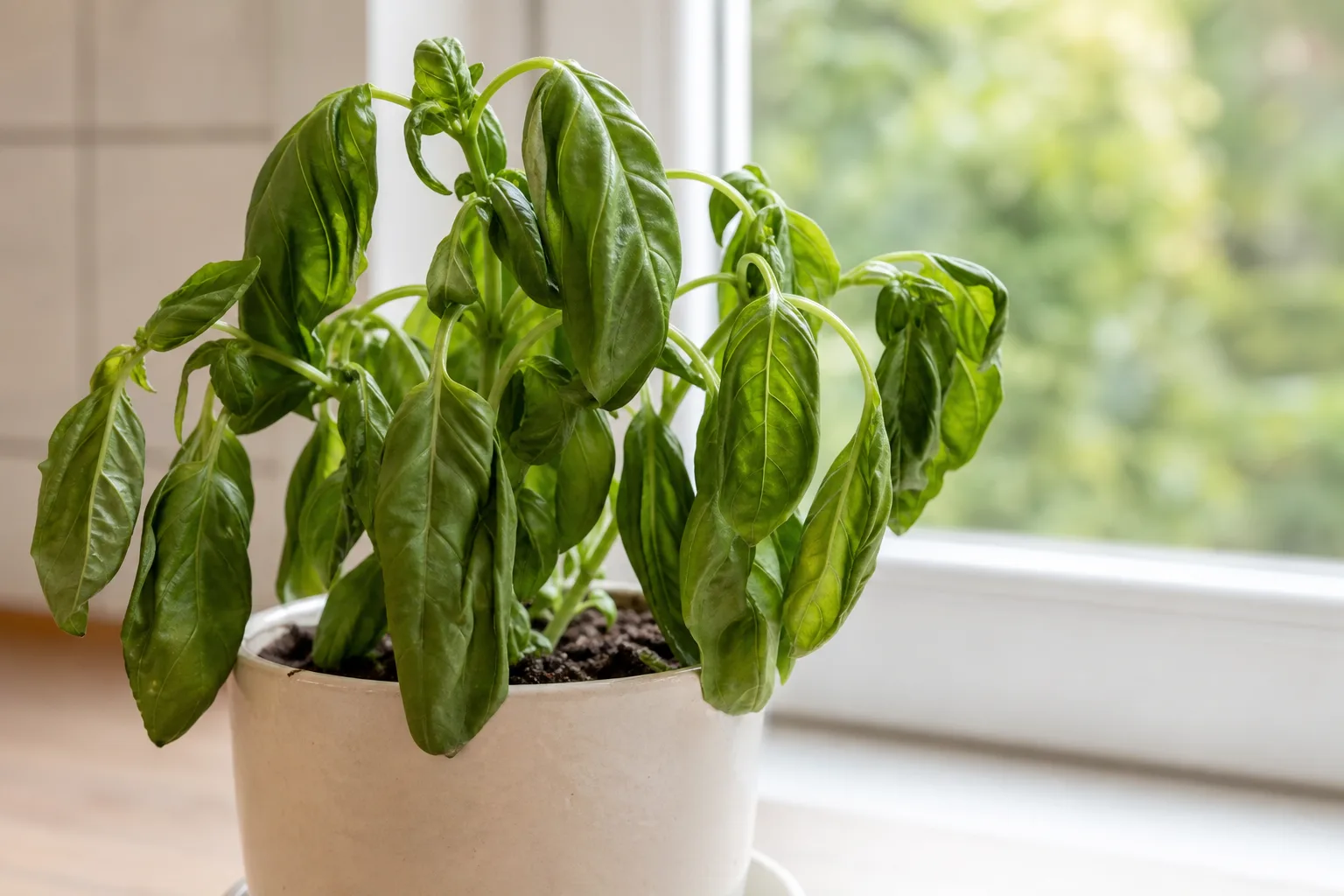
Sweet basil (Ocimum basilicum) shows drooping leaves when stems and foliage lose turgor-the internal water pressure that keeps tissue firm. Unlike the sudden collapse of wilting, drooping on basil is often a gradual, day-after-day sag that still demands a clear diagnosis before you pour more water.
First step: timing plus the 1–2 inch soil check. Note when leaves hang lowest-morning, afternoon only, or all day-and stick your finger 1–2 inches into the mix near the pot edge.
- Dry soil + droop that improves within 30–60 minutes after a deep soak → underwatering. See underwatering on basil.
- Wet, heavy pot + limp leaves that do not rebound → root stress from overwatering or root rot. Do not add water.
- Afternoon droop on moist soil that recovers by evening → heat transpiration stress, not drought.
- Droop after a cold night below ~50°F → cold draft stress on a windowsill; move away from the glass.
Change one care variable at a time and read the plant over the next 24–72 hours before Basil repotting guide, pruning, or feeding.
What drooping looks like on basil (and how it differs from wilting)
On basil, drooping leaves hang downward or outward with a soft, limp feel. Stems may lean to one side in a small pot. Lower leaves often sag first while the top still looks slightly perky-or the whole plant may look tired without the dramatic flop of acute wilt.
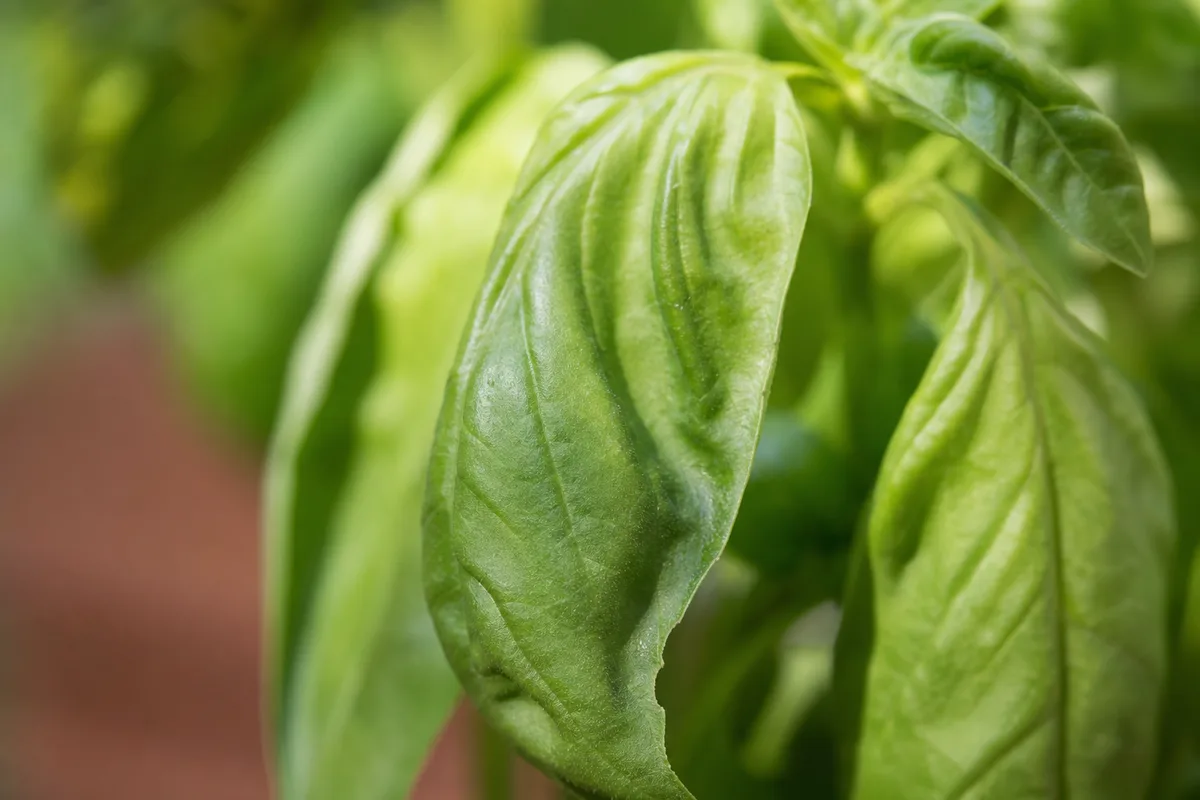
Drooping Leaves symptoms on Basil - compare with healthy tissue on the same plant.
Gradual droop (this page): Symptoms build over several days. Leaves stay mostly green at first. You notice the plant looks “tired” at the same time each day before you connect it to watering or heat.
Acute wilt (wilting guide): Collapse over hours. Often linked to a missed watering cycle, a heat spike, or wet-soil root failure. The wet-vs-dry check is the same, but wilt feels more urgent because tissue goes limp fast.
Thirst droop: Soil dry at 1–2 inches. Pot feels light. Leaf edges may look dull. Stems stay green and firm at the base. A deep drink produces visible firming within 30–60 minutes on warm days.
Root-stress droop: Mix stays dark, cool, and heavy. Lower leaves may yellow. Stem bases can darken. Drooping persists or worsens after you water. Sour smell from the pot suggests advanced rot.
Afternoon heat droop: Flags between noon and 4 p.m. on sunny containers or west windows, then re-firms overnight without watering. Soil at depth is still moist.
Cold-draft droop: Appears the morning after nights below roughly 50°F near a window. Pale, water-soaked patches may accompany limp tissue. No stem streaks.
Post-harvest droop: Soft sag within 24 hours of removing a large share of leaf surface. Usually temporary if moisture stays even.
Healthy basil can look slightly relaxed toward evening even when care is good-that is not the same as chronic droop that never fully recovers by morning.
Why basil leaves droop
Basil is a warm-season herb with soft stems, thin leaves, and high transpiration in sun. Clemson HGIC notes basil needs a relatively constant supply of soil moisture even though the mix must drain well. That combination means small kitchen pots swing from fine to droopy faster than most houseplant advice assumes.
Underwatering
University of Minnesota Extension advises never allowing herbs to wilt between waterings. Container basil in full sun may need water daily or every one to two days in peak summer; missing one dry-down cycle is enough for visible droop. Basil’s perk-up speed after a deep soak is unusually fast among kitchen herbs-use it as a diagnostic tool, not just a recovery sign.
Overwatering and failing roots
Saturated mix drives out oxygen; roots stop moving water to leaves even while surrounded by moisture. Penn State Extension lists drought and water stress among conditions that weaken basil, but chronic soggy soil is equally damaging indoors where evaporation slows. Drooping with wet soil is root failure mimicking drought above ground.
Afternoon heat and transpiration
Basil in full sun loses water through leaves faster than roots replace it during the hottest hours. N.C. Cooperative Extension explains that well-hydrated plants-including tender annuals like basil-often droop midday as a protective response, then recover when temperatures drop. Panic watering every time leaves flag at 3 p.m. can create the wet-soil droop you were trying to avoid.
Cold drafts and low temperatures
Basil is frost-sensitive and struggles when nights drop near 40–50°F. Windowsill plants can droop the morning after a cold snap even when watering was unchanged. Cold-stressed roots take up water poorly; adding more moisture before the plant warms up can worsen tissue damage.
Root-bound thirst cycling
Dense root balls in undersized pots create a flood-and-drought pattern: water channels down the sides while the core stays dry, or the pot dries so fast that droop returns hours after you thought you watered enough. The plant looks chronically tired rather than sharply wilted.
Heavy harvest or transplant shock
Removing lots of leaf surface reduces the plant’s ability to regulate water on a hot day. Fresh transplants droop when disturbed roots cannot match leaf demand for several days. Both patterns are usually temporary with even moisture and minimal extra stress.
Lookalike symptoms to rule out
| What you see | Soil (1–2 in.) | Timing | Most likely cause | First action |
|---|---|---|---|---|
| Soft sag, mostly green leaves | Dry | Any time; worse mid-day | Underwatering | Deep soak; drain saucer → underwatering |
| Sag + yellow lower leaves | Wet, cool | All day, worsening | Overwatering / root rot | Stop watering; inspect roots → overwatering |
| Afternoon limpness, fine by morning | Moist | Midday only | Heat stress | Morning base watering; light afternoon shade → watering guide |
| Pale patches + limp after cold night | Any | Morning after chill | Cold draft | Move above ~65°F; wait to water until warm |
| Sag soon after big harvest | Approaching dry | Within 24 h | Harvest stress | One deep drink at soil surface |
| One-sided collapse, brown stem streaks | Any | Progressive | Fusarium wilt | Discard; do not compost → wilting guide |
How to confirm the cause
Work through these checks in order:
- Clock the pattern - Afternoon-only droop on moist soil → heat. All-day droop with dry soil → thirst. Morning droop after a cold night → draft stress.
- Soil moisture at 1–2 inches - Dry with a light pot → underwatering. Wet with limp leaves → root problem.
- The perk-up test - If dry, soak once at the soil surface until drainage runs. Recheck in 30–60 minutes (two to four hours on cool days). Firm stems confirm thirst. No change on wet soil → stop watering and inspect roots.
- Pot weight - Lift the pot. Noticeably lighter than after a recent watering supports dry-soil droop.
- Stem exam - Green firm bases fit care issues. Soft black bases, sour soil, or brown streaks fit rot or fusarium-see root rot and the wilting guide.
- Recent events - Heavy harvest, repot, or move to full sun within 48 hours? Temporary droop is common; still verify moisture.
- Light and placement - Dim rooms slow evaporation and invite wet-soil droop; leggy weak stems from not enough light collapse easily. Cross-check the light guide.
First fix for basil (by confirmed cause)
If soil is dry at 1–2 inches: Water slowly at the base until moisture exits drainage holes. Wait ten minutes and water once more if the mix absorbed unevenly. Empty the saucer within thirty minutes. Expect stems to firm within 30–60 minutes on a warm day if roots are healthy.
If soil is wet and leaves stay limp: Do not water. Move the pot to brighter air circulation if it sits in a dim corner. Confirm drainage holes are open and the saucer is empty. If drooping continues more than 48 hours on wet soil, unpot and inspect roots per the root-rot guide.
If afternoon heat droop on moist soil: Provide light afternoon shade or move containers temporarily during heat waves. Water in the morning at soil level so roots enter the hot part of the day with even moisture-University of Minnesota Extension recommends deep watering on a schedule matched to rainfall for in-ground basil; containers need more frequent checks, not more panic watering at peak heat.
If cold-draft droop: Move the pot away from the glass to a spot that stays above roughly 65°F. Avoid watering until the plant has warmed for several hours-cold roots uptake poorly.
If root-bound cycling: Slide the plant out. If roots circle densely and water runs straight through, repot one size up into well-drained mix-after you have ruled out active rot. Do not repot and fertilize the same day as a droop crisis.
Recovery timeline
Single thirst event: Stems often firm within 30–60 minutes after a thorough soak; full leaf turgor may take two to four hours. Older leaves that went dull may not fully flatten-judge success by new growth and firm stems.
Overwatering without advanced rot: Three to seven days after you stop watering and improve drainage, lower leaves may yellow while new tips stay green. Recovery is slow; change one variable at a time.
Heat droop: Recovery the same evening when temperatures drop-no extra watering needed if soil was moist at depth.
Cold stress: Minor damage may improve over five to seven days once temperatures stabilize. Leaves with brown collapse will not recover-remove them.
Root-bound repot: Three to ten days of even moisture while new root tips establish. Expect temporary soft droop for 24–48 hours after repotting.
Fusarium or advanced stem rot: No recovery after corrective watering. Replace with clean seed or transplants in fresh mix.
What not to do
Do not water drooping basil by default-confirm soil moisture first. Wet-soil droop plus more water accelerates root death.
Do not fertilize a sagging plant to perk it up. Feed only after the cause is corrected and new growth looks stable.
Do not mist leaves as a substitute for root watering. Basil needs moisture at the soil surface, not a shower on foliage.
Do not move a dry drooping pot into blazing afternoon sun immediately after watering-brief shade during recovery reduces further transpiration stress.
Do not stack repot, prune, and pesticide on the same day while the cause is still unknown. One correction, then wait 24–72 hours.
How to prevent drooping leaves next time
Check soil every morning during summer harvest season-finger at 1–2 inches or lift the pot for weight. Water deeply at the base when dry, not daily sips that wet only the surface.
Give basil full sun outdoors or your brightest window indoors. Royal Horticultural Society guidance for grow-your-own basil emphasizes warm, bright conditions and watering at the base so foliage stays dry. Pair that with the light guide so dim rooms do not slow evaporation into chronic wet-soil droop.
Use pots with drainage holes; empty saucers within thirty minutes. University of Minnesota Extension recommends containers with bottom holes because basil in closed containers suffocates quickly.
After heavy harvest, water once if the top inch is approaching dry. Repot before root balls outgrow small kitchen pots mid-season. For the full watering rhythm, keep the basil watering guide beside this page.
When drooping is urgent
Escalate immediately when:
- Soft black stem bases and sour soil accompany total collapse
- Drooping spreads over 2–3 days despite correct dry-down or rehydration
- Brown vascular streaks appear inside cut stems (fusarium-discard the plant)
- Yellow lower leaves multiply while the mix stays wet for more than a day
Those patterns fit advanced root rot or fusarium wilt-not a scheduling tweak. Remove severely infected plants, clean tools, and start fresh with tested seed or healthy transplants in clean mix.
Related basil problems
- Wilting on basil - sudden collapse and the 60-second wet-vs-dry check
- Underwatering - dry-soil droop and rehydration
- Overwatering - wet-soil droop and drainage fixes
- Yellow leaves - often pairs with chronic root stress
- Basil overview - full care hub
Conclusion
Drooping basil leaves usually trace to dry soil, soggy roots, afternoon heat, or a cold draft-and timing plus the 1–2 inch soil check separates them in minutes. Water deeply when dry and expect firm stems within 30–60 minutes if thirst was the cause. Stop watering and inspect roots when the mix stays wet. Afternoon droop on moist soil that recovers by evening is heat, not drought. For sudden collapse, use the wilting guide; for everyday rhythm, the watering guide keeps droop from becoming a daily crisis.
When to use this page vs other Basil guides
- Basil watering guide - Use for routine moisture checks before assuming drooping leaves is the main issue.
- Basil problems hub - Browse all 16 common issues on this species.
- Underwatering on Basil - Different entry point when symptoms overlap with drooping leaves.
- Overwatering on Basil - Different entry point when symptoms overlap with drooping leaves.
- Root Rot on Basil - Different entry point when symptoms overlap with drooping leaves.