Wilting on Basil: Causes, Checks & Fixes
Quick answer
Basil wilts fast when thirsty and often perks within a few hours after a deep drink-but wilt with wet soil means root failure, not drought. First step: stick your finger 1–2 inches into the mix; if dry, water thoroughly; if wet and the plant stays limp, stop watering and check roots.
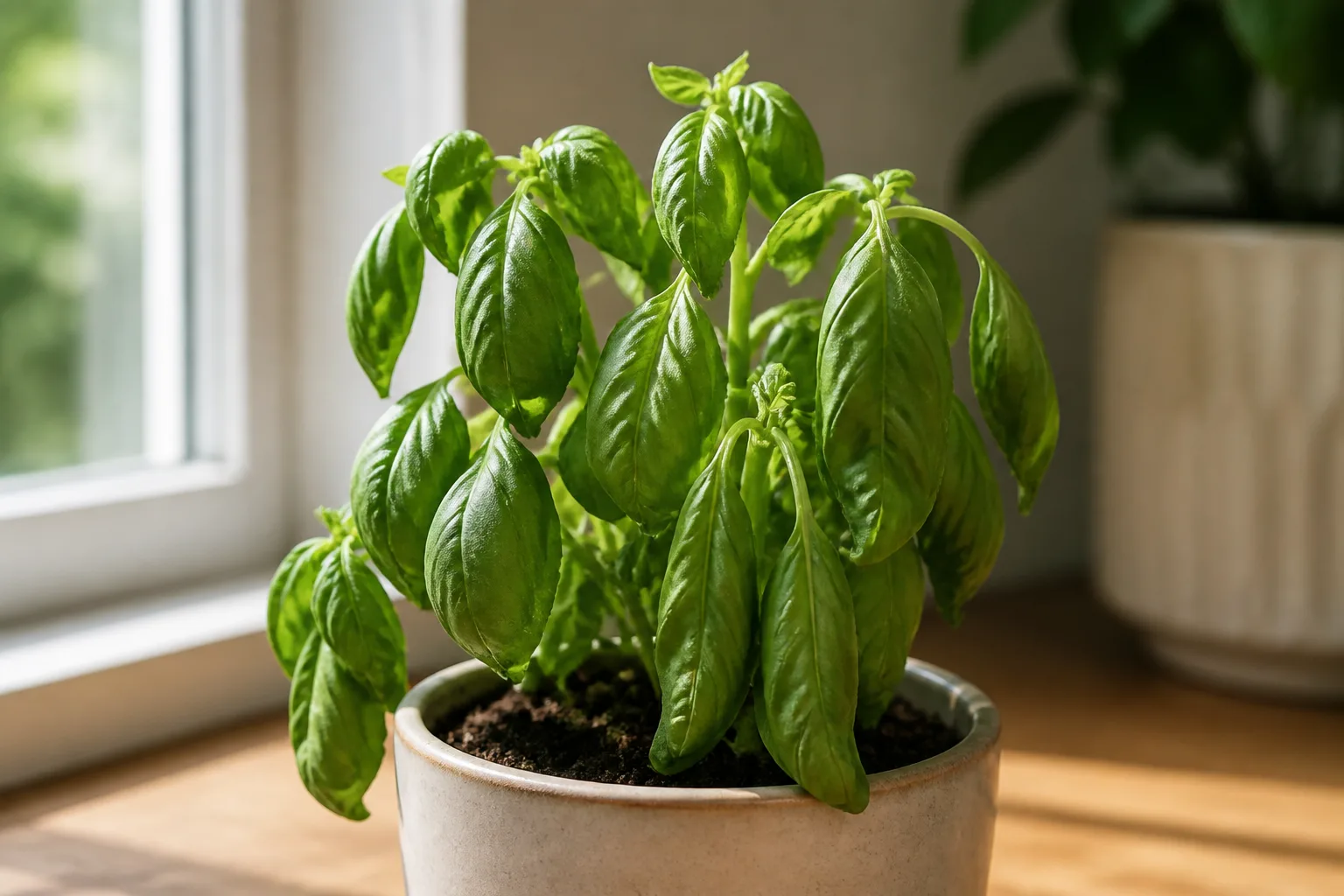
Wilting on Basil: Causes, Checks & Fixes
This guide covers wilting on Basil. See also the general Wilting guide, watering, and light pages for this plant.
Wilting on Basil: Causes, Checks & Fixes
Quick answer
Sweet basil (Ocimum basilicum) wilts dramatically because it has soft stems, thin leaves, and fast transpiration in sun-so collapse looks sudden even when the fix is simple. That same sensitivity makes wilt the most misdiagnosed basil problem: thirsty plants and drowning plants look identical above ground.
First step: the 60-second wet-vs-dry check. Stick your finger 1–2 inches into the mix near the pot edge-not only at the surface.
- Dry and light pot → underwatering. Water thoroughly until drainage runs, empty the saucer, and expect firm stems within two to four hours if roots are healthy.
- Wet, heavy pot and no rebound → root stress from overwatering or root rot. Do not add more water. Improve drainage and inspect roots if decline continues.
Afternoon wilt on outdoor basil that recovers by evening without watering is often heat stress, not drought-still confirm soil before you pour.
What wilting looks like on basil
On basil, wilt shows up as limp, hanging stems and soft, drooping leaves that lose their usual cupped shape. The whole plant may collapse sideways in a small pot, or only the top growth may sag while lower leaves stay flat.
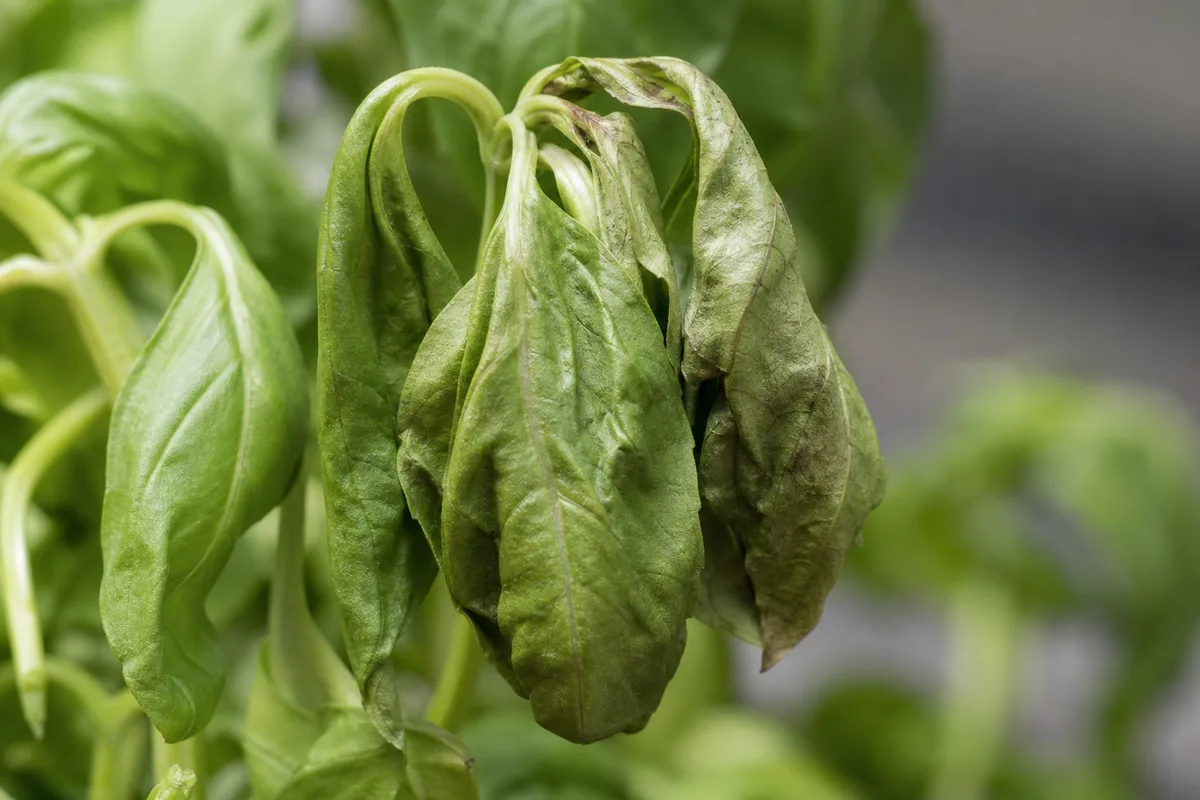
Wilting symptoms on Basil - compare with healthy tissue on the same plant.
Thirst wilt (dry soil): Leaves look dull and floppy; soil pulls slightly away from the pot wall on severe cases. The pot feels noticeably lighter than after a recent watering. Wilt often appears in the morning after a hot day or when you skipped a check. Stems stay green and firm at the base.
Root-stress wilt (wet soil): Leaves droop while the mix stays dark, cool, and heavy. Lower leaves may yellow. Stem bases can darken or feel soft. A sour smell from the pot suggests advanced rot. Watering again makes limpness worse within a day or two.
Heat wilt (moist soil, afternoon timing): Outdoor or west-window basil flags at midday in summer, then perks up overnight without your intervention. Soil at depth is still moist; stems re-firm when temperatures drop.
Fusarium wilt (disease): Often one-sided-one half of the plant collapses while the other looks briefly normal. Brown streaks on stems, twisted growth, and yellowing leaves appear as plants reach roughly 6–12 inches tall. Wilt does not recover after watering. Internal stem tissue browns when you cut a stem open.
Transplant or harvest shock: Wilt within 24–48 hours after Basil repotting guide or a heavy harvest, with otherwise healthy green tissue and no stem streaks. Usually temporary if moisture stays even.
This page focuses on acute wilt. For a softer, day-after-day sag without sudden collapse, see drooping leaves on basil-the causes overlap but the first checks differ slightly.
Why basil wilts
Basil is a warm-season culinary herb that needs steady moisture and excellent drainage at the same time. Clemson HGIC notes basil requires a relatively constant supply of soil moisture even though the soil itself must drain well. Small kitchen pots dry faster than most houseplant advice assumes-so wilt arrives quickly when you miss a watering cycle.
Underwatering
University of Minnesota Extension advises never allowing herbs to wilt between waterings. Container basil in sun may need water daily or every one to two days in peak summer; missing one dry-down cycle is enough for a visible collapse. Basil recovers fast from single drought events if roots are intact-our underwatering guide walks through the full rehydration pattern.
Overwatering and root rot
Saturated mix drives out oxygen; roots stop taking up water even while surrounded by moisture-the classic wilted plant, wet soil paradox. Penn State Extension lists drought and water stress among conditions that weaken basil, but chronic soggy soil is equally damaging indoors in cool, low-light rooms where evaporation slows. See overwatering on basil when the pot stays heavy.
Heat and midday transpiration
Basil in six or more hours of direct sun loses water through leaves faster than roots can replace it on the hottest afternoons. University of Minnesota Extension recommends deep watering every seven to ten days for in-ground basil depending on rainfall, but container plants dry faster and need more frequent checks-not more panic watering every time leaves flag at 3 p.m.
Fusarium wilt
Fusarium oxysporum f. sp. basilicum causes a soilborne wilt especially on sweet basil. University of Maryland Extension describes plants that grow normally until roughly 8–12 inches tall, then stunt, yellow, and wilt with brown stem streaks and discolored internal tissue. The pathogen can persist in soil for years-home treatment is not realistic; discard infected plants.
Transplant shock and rootbound pots
Fresh transplants wilt when fine roots are disturbed and cannot keep up with leaf demand for several days. Rootbound basil wilts soon after watering because water channels down the sides while the dense core stays dry-a pattern that feels like underwatering but needs repotting, not more daily sips.
Heavy harvest stress
Removing a large share of leaf surface in one session reduces the plant’s ability to regulate water on a hot day. A deep drink at the soil surface after harvest prevents the wilt that follows aggressive picking.
Wet soil vs. dry soil: the first 60-second check
| What you notice | Soil feel (1–2 in. deep) | Pot weight | Most likely cause | First action |
|---|---|---|---|---|
| Morning wilt, green firm stems | Dry, crumbly | Light | Underwatering | Deep soak; drain saucer → underwatering |
| Wilt all day, yellow lower leaves | Wet, cool | Heavy | Overwatering / root rot | Stop watering; check roots → overwatering |
| Afternoon wilt, fine by evening | Moist at depth | Medium | Heat stress | Shade during peak heat; water in morning → watering guide |
| One-sided wilt, brown stem streaks | Any moisture | Any | Fusarium wilt | Discard plant; do not compost |
| Wilt after repot or big harvest | Evenly moist | Medium | Shock / harvest stress | Keep evenly moist; avoid extra stress |
Do not fertilize, repot, and prune on the same day while wilt cause is still unknown-change one variable and read the plant’s response over the next 24–72 hours.
How to confirm the cause
Work through these checks in order:
- Soil moisture at 1–2 inches - Dry with a light pot → thirst. Wet with limp leaves → root problem, not drought.
- Time of day - Afternoon-only wilt on moist soil → heat. Morning wilt on dry soil → missed watering.
- Recovery test - If dry, soak once and recheck in two to four hours. Firm stems confirm underwatering. No change on wet soil → stop watering and inspect roots.
- Stem exam - Green firm bases fit care issues. Brown streaks, twist, or soft mushy crowns fit disease or advanced rot.
- Stem cross-section - Slice a lower stem. Uniform green tissue fits water stress. Brown vascular streaks inside the stem suggest fusarium-discard the plant.
- Pot and drainage - Standing water in the saucer, blocked holes, or a cachepot with no exit path explains wet-soil wilt indoors.
- Recent events - Repot, move to full sun, or heavy harvest within 48 hours? Temporary wilt is common; still verify moisture.
First fix for basil
If soil is dry at 1–2 inches: Water slowly at the base until moisture exits the drainage holes. Wait ten minutes and water once more if the mix absorbed unevenly. Empty the saucer within thirty minutes. Do not mist leaves as a substitute for root watering.
If soil is wet and the plant is wilted: Do not water. Move the pot to brighter air circulation if it sits in a dim corner-slow evaporation worsens soggy mix. Confirm drainage holes are open and the saucer is empty. If limpness continues more than 48 hours on wet soil, unpot and inspect roots: firm white roots can recover with a dry-down cycle; mushy brown roots need trimming and fresh mix per the root-rot guide.
If wilt is one-sided with brown stem streaks: Discard the plant in household trash, not the compost pile. Cornell Cooperative Extension notes fusarium can persist in soil for years-do not replant basil in the same container mix without replacing soil and cleaning the pot.
If afternoon heat wilt on moist soil: Provide light afternoon shade or move containers temporarily during heat waves. Water in the morning at soil level so roots enter the hot part of the day with even moisture-see the full rhythm in our basil watering guide.
Recovery timeline
Single drought event: Stems often firm within two to four hours after a thorough soak; full leaf turgor may take overnight. Older leaves that went crispy may not flatten completely-judge success by new growth and firm stems, not every old leaf.
Overwatering without rot: Three to seven days after you stop watering and improve drainage, lower leaves may yellow while new tips stay green. Recovery is slow; do not repot and fertilize simultaneously.
Root rot after trim and repot: One to three weeks for new roots to support top growth. Discard plants with no firm white roots remaining.
Heat wilt: Recovery the same evening when temperatures drop-no extra watering needed if soil was moist at depth.
Fusarium: No recovery after corrective watering. Replace with clean seed or transplants in fresh mix.
Transplant shock: Three to ten days with even moisture and minimal handling.
Lookalike symptoms and causes to rule out
- Drooping leaves - Gradual sag over days; wilt is sharper and often time-linked to dry soil or heat.
- Yellow leaves - May accompany wet-soil wilt but yellow alone without limp stems points to nutrition or age.
- Leggy weak stems - Thin stretched growth from low light collapses easily; move brighter before treating as wilt.
- Downy mildew - Gray-purple fuzz on leaf undersides; leaves may curl but stems stay firm at the base.
- Aphids or spider mites - Stippling and webbing with patchy wilt; inspect undersides before soaking dry soil.
Mistakes to avoid
Do not water wilted basil by default-confirm soil moisture first. Wet-soil wilt plus more water accelerates root death.
Do not fertilize a collapsed plant to ” perk it up.” Feed only after wilt cause is corrected and new growth looks stable-see the fertilizer guide for timing.
Do not move a dry wilted pot into blazing afternoon sun immediately after watering-brief shade during recovery reduces further transpiration stress.
Do not compost fusarium-infected basil or reuse that soil for mint-family herbs without sanitizing containers.
Do not stack repot, prune, and pesticide on the same day as a wilt crisis. One correction, then wait.
Basil care cross-check
Healthy basil on a windowsill or patio needs full sun, well-drained mix, and a watering rhythm matched to pot size-summarized on the basil overview. Indoor pots often land on a two-to-five-day cycle during active growth; outdoor containers in Indian or Mediterranean summer sun may need daily checks.
Basil hates wet roots overnight; morning base watering aligns with RHS guidance to keep foliage dry and roots aerated. Pair moisture checks with the light guide-dim rooms slow evaporation and invite wet-soil wilt even when you water sparingly.
How to prevent wilting next time
Check soil every morning during summer harvest season-finger at 1–2 inches or lift the pot for weight. Water deeply at the base when dry, not daily sips that wet only the surface.
Use pots with drainage holes; empty saucers within thirty minutes. University of Minnesota Extension recommends containers with bottom holes because basil in closed containers suffocates quickly.
Mulch in-ground beds to even out moisture; in pots, you are the mulch-consistent checks beat a calendar.
After heavy harvest, water once if the top inch is approaching dry. Replace tired, woody basil mid-season rather than nursing endless wilt cycles on an exhausted plant.
Rotate young transplants gradually to full sun over seven to ten days to reduce heat wilt drama.
When wilting means disease
Escalate immediately when:
- Brown streaks or shepherd’s crook stems appear with one-sided collapse
- Wilt spreads over 2–3 days despite correct dry-down or rehydration
- Internal stem browning is visible on cut stems
- Soft black stem bases and sour soil accompany total collapse
Those patterns fit fusarium wilt or advanced stem rot-not a watering tweak. Remove the plant, clean tools, and start fresh with tested seed or healthy transplants. Resistant cultivars such as Prospera or Nufar exist for field growers; home windowsill growers should prioritize clean pots and fresh mix over trying to save infected stock.
Conclusion
Basil wilting is usually fixable thirst, fixable root stress, or temporary heat flagging-and the wet-vs-dry soil check tells them apart in under a minute. Water deeply when dry; stop watering and inspect roots when wet. Afternoon wilt on moist soil that recovers overnight is heat, not drought. Brown stem streaks with one-sided collapse mean discard, not rescue. For ongoing rhythm and seasonal adjustments, keep the watering guide beside this page-and use overwatering, underwatering, and root rot when one branch of the decision tree fits your pot.
When to use this page vs other Basil guides
- Basil watering guide - Use for routine moisture checks before assuming wilting is the main issue.
- Basil problems hub - Browse all 16 common issues on this species.
- Underwatering on Basil - Different entry point when symptoms overlap with wilting.
- Overwatering on Basil - Different entry point when symptoms overlap with wilting.
- Root Rot on Basil - Different entry point when symptoms overlap with wilting.