Not Enough Light on Basil: Causes, Checks & Fixes
Quick answer
Basil is a full-sun herb that stretches and loses flavor in dim rooms. First step: move the pot to the brightest spot you have-six or more hours of direct sun daily-or add a grow light 6–12 inches above the foliage.
Not Enough Light on Basil: Causes, Checks & Fixes
This guide covers not enough light on Basil. See also the general Not Enough Light guide, watering, and light pages for this plant.
Not Enough Light on Basil: Causes, Checks & Fixes
Quick answer
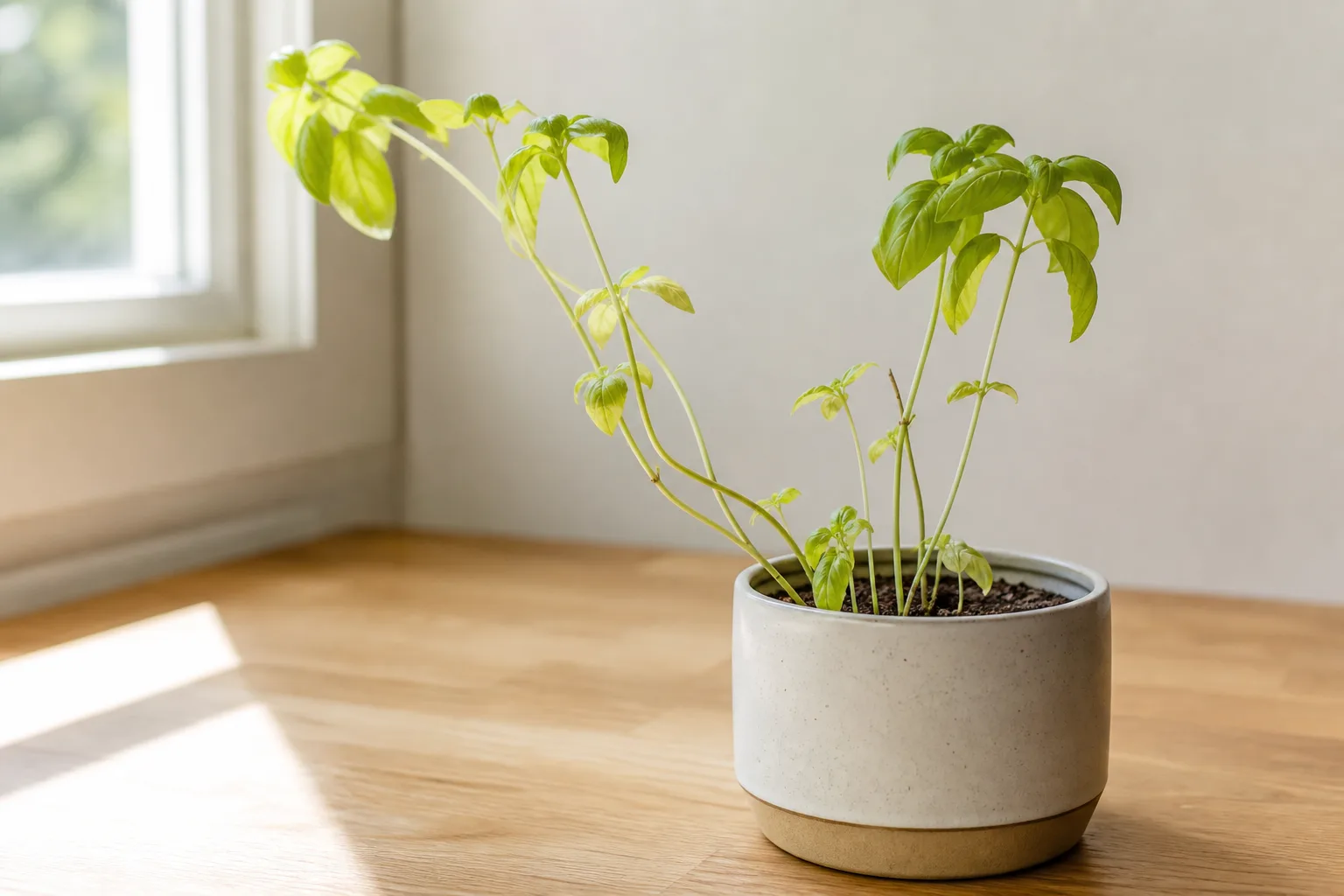
Basil (Ocimum basilicum) is built for Basil light guide, not the dim corners where many kitchen herbs end up. When light is too weak, stems stretch between leaves, new foliage stays small and pale, and the plant leans hard toward the nearest window. Flavor drops too-basil grown in shade tastes milder and less aromatic than sun-grown leaves.
First step: move the pot to the brightest location available. Outdoors or on a sunny sill, aim for six or more hours of direct sun daily. If your brightest spot still falls short-especially in winter-add a full-spectrum grow light 6–12 inches above the plant and run it 10–12 hours per day. Do not repot, fertilize, or change watering until you have fixed light; those steps hide the real problem.
What not enough light looks like on Basil
Low light on basil reads differently than on a snake plant or pothos. Basil is a fast-growing annual herb; it shows stress within days to weeks, not months.
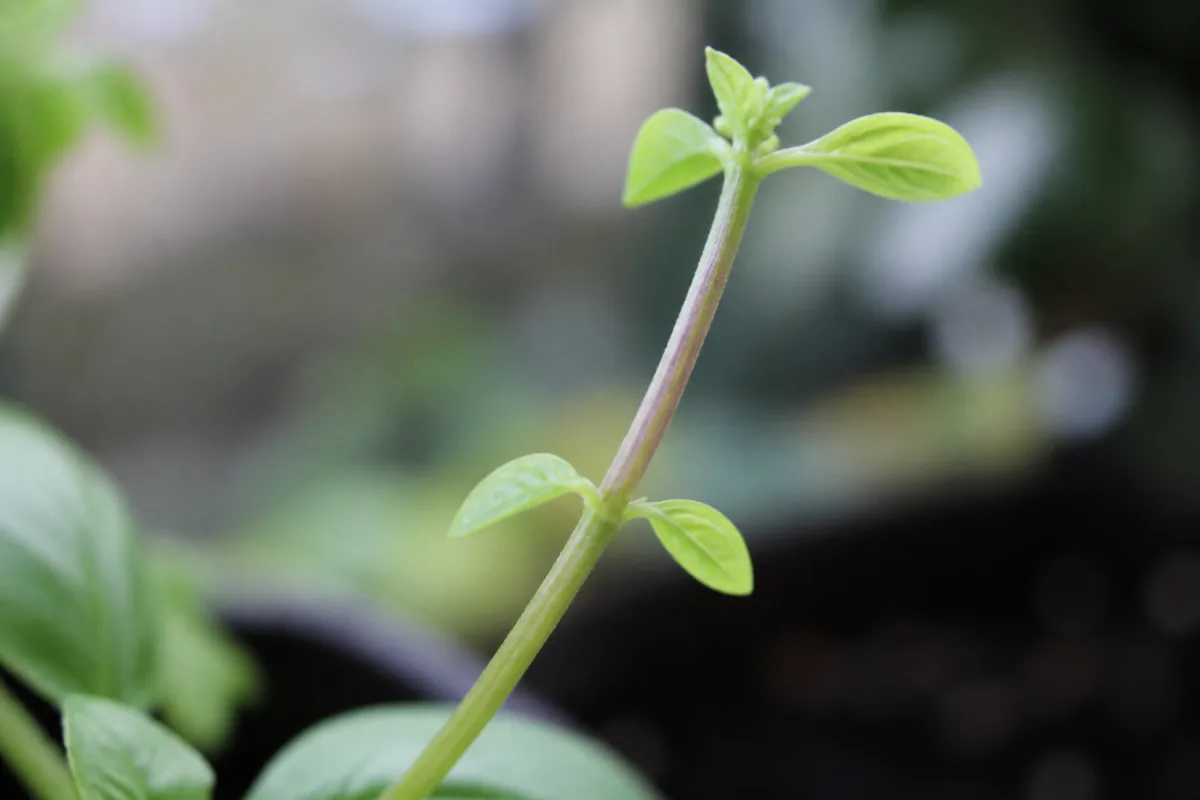
Not Enough Light symptoms on Basil - compare with healthy tissue on the same plant.
Above-soil signs:
- Leggy stems with long, bare gaps between leaf pairs (internodes)
- Smaller, thinner new leaves compared with older sun-grown foliage
- Pale or dull green color instead of the rich green Genovese basil is known for
- Leaning or reaching toward the window or light source
- Slow or stalled harvest cycles-fewer usable leaves per week
- Early flowering on weak stems-basil bolts faster when stressed, and flowering leads to more bitter flavors
What low light does not usually look like:
- Crispy brown patches on sun-facing leaves (that is sunburn, not shade)
- Wet soil with black mushy stems (that is rot, often worsened by dim conditions)
- Sticky residue or webbing (pests, not light)
Basil stems are naturally square and somewhat thin, so judge the pattern: one stretched stem after a harvest is normal; every new shoot reaching sideways with tiny leaves is a light problem.
Why Basil runs out of light
Sweet basil evolved in tropical Asia as a sun-loving annual. Extension guides consistently place it in full sun-six to eight hours of direct light daily-for best growth and flavor. It is not a low-light houseplant that merely “survives” in a north-facing room; it persists there while quality collapses.
Common situations that starve basil:
Kitchen-shelf placement. Pots look right near the sink but sit more than a few feet from glass. Indoor light intensity drops sharply with distance from the window, so a spot that feels bright to you may still be medium or low light for an herb.
Winter short days. Even a good summer windowsill delivers far less energy from November through February. Basil brought indoors for winter-or started on a seed tray away from glass-often stretches unless you supplement.
Competing obstacles. Sheer curtains, tinted glass, overhangs, and neighboring buildings cut usable light. Dirty windows and dusty leaves block photosynthesis on a plant that already wants maximum exposure.
Indoor-only growing without grow lights. Offices and interior rooms rarely provide the high-light conditions basil needs. Seedlings on a counter away from the window become classic “leggy seedlings” within a week.
The low-light + wet-soil trap. Basil in weak light photosynthesizes slowly and uses less water. If you keep the same summer Basil watering guide, mix stays wet longer. That combination-dim placement plus soggy roots-invites damping off and root rot on Basil, which can kill the plant faster than stretch alone.
How to confirm the cause
Work through these checks before changing fertilizer or Basil repotting guide:
- Track direct sun hours - Note whether direct sun actually hits the leaves for six or more hours, or only bright indirect light. A south- or west-facing sill usually beats north or east for basil.
- Measure distance from glass - Within about 60 cm (2 ft) of a sunny window is high light for most herbs; beyond 180 cm (6 ft) is usually too dim.
- Inspect new growth only - Older leaves from a sunnier period can mislead. Focus on the top two leaf pairs and the direction they face.
- Two-week light test - Move the pot to the brightest safe spot without changing water or feed. If new internodes shorten and leaves size up, light was the limiter.
- Cross-check soil moisture - Lift the pot. Heavy, wet mix in a dark corner suggests you may also be overwatering on Basil for the current light level.
- Rule out lookalikes - Firm caudex-like base? Basil does not have one-soft black stems mean rot. Yellow lower leaves with wet soil need drainage checks, not just more light.
If the plant improves only when moved toward the window-and pests, rot, and drought are ruled out-low light is confirmed.
First fix for Basil
Move the pot to full sun, or add a grow light if full sun is impossible.
Outdoors (after frost danger passes), place basil where it receives six or more hours of direct sun and good air circulation. Indoors, choose the sunniest window-typically south- or west-facing in the Northern Hemisphere-and sit the pot as close to the glass as practical without touching hot pane in summer.
When natural light is insufficient:
- Use a full-spectrum LED grow light positioned 6–12 inches above the top leaves
- Run it 10–12 hours daily during dark months; combined natural and artificial light should not exceed about 16 hours total
- Keep the light level consistent rather than bouncing the pot between rooms
That single change-more usable light-should come before pinching, repotting, or feeding. Once light improves, pinch back the top one or two nodes on leggy stems to force branching. That is step two, not step one.
Step-by-step recovery
After the first light fix, follow this order:
- Relocate or light up - Move to full sun or install the grow light as described above. Leave the plant there for at least two weeks without other experiments.
- Adjust watering to match new light - Brighter conditions dry the pot faster. Check weight or top 2–3 cm of mix before each drink instead of watering on autopilot.
- Pinch leggy tips - Cut or pinch stems just above a leaf pair. Pinching promotes a branching, bushy form. Basil branches from the cut point within about a week when light is adequate.
- Remove flower spikes - Snip buds as they form unless you are saving seed. Flowering on weak plants shifts energy away from leaf production and turns flavor bitter.
- Hold fertilizer briefly - Wait until you see stable, compact new growth for two weeks, then resume light feeding at half strength if needed.
- Rotate weekly - Turn the pot a quarter turn every few days so stems do not lean permanently to one side.
If stems were extremely elongated, harvest the weak growth for drying rather than trying to reshape old wood. Starting fresh cuttings from healthy tips in bright light is sometimes faster than rehabbing a exhausted indoor plant.
Recovery timeline
Expect visible improvement in new growth within two to three weeks after light increases. The first new leaf pair after the fix should show shorter internodes and slightly larger blades than the set above it.
Old stretched stems do not shrink back-stretched growth does not revert. Internode length is set when each segment formed. Success means the next harvest looks bushy, not that previous long gaps disappear.
Full recovery to a dense, kitchen-ready plant usually takes four to six weeks of good light plus regular pinching. Basil grown entirely under weak light may never match outdoor flavor; restarting from seed or a sunny cutting is often the practical choice for serious cooking use.
Worsening signs during recovery: continued stretching despite grow lights (light too weak or too far), yellowing lower leaves with wet soil (reduce water), or blackening at the stem base (inspect roots immediately).
Lookalike symptoms
- Leggy growth from heat alone - Basil near a radiator in good light may still stretch if etiolated toward a window; confirm sun hours, not just warmth.
- Nitrogen deficiency - Pale yellow-green leaves on a plant in strong light may need feed; pale stretchy stems in shade usually need light first.
- Overwatering / root rot - Wilting with wet soil and soft stems in a dim corner; fix drainage and light together.
- underwatering on Basil - Crispy leaf edges and very light, dry pot; a deep soak helps, but chronic drought plus shade still produces weak stems.
- Normal post-harvest stretch - A single long stem after heavy harvesting is expected; uniform spindliness on every shoot is not.
What not to do
Do not fertilize heavily to “boost” a shaded plant-lush weak growth tastes worse and invites disease. Avoid moving instantly from deep shade to harsh midday sun without a week of gradual exposure; sunburn shows as bleached or brown patches on leaves.
Do not keep watering on a summer schedule when the plant moves to a darker room. Do not assume a north window is enough for culinary basil without grow lights.
Do not mist or spray as a substitute for light. Do not repot into a larger container hoping for vigor-extra wet soil volume slows drying in low light.
How to prevent low-light stress next time
Place basil where full sun is realistic before aesthetics: sunny balcony, south-facing sill, or herb bed with six or more hours of direct sun. Match the pot to the light-compact varieties like ‘Spicy Globe’ tolerate containers better than tall Genovese in marginal light.
In winter or dark apartments, plan on supplemental LED lighting from day one rather than waiting for stretch. Clean windows seasonally, rotate pots weekly, and start new seed or transplants each spring instead of nursing woody, exhausted indoor plants through another dim year.
When bringing outdoor basil inside for fall, expect some adjustment leaf drop-give bright light immediately rather than staging the pot in a hallway.
When to worry
Pure low light is rarely an overnight emergency, but basil wilting in a dark spot with soggy soil needs same-day attention-unpot and check for brown mushy roots. Treat black, soft stems at soil level as rot, not a light-only issue.
If grow lights are already running 12 hours and new growth still stretches, the fixture may be too weak or too far away-increase intensity or lower the lamp before assuming the plant is a lost cause.
Conclusion
Basil without enough light stretches, pales, and loses the flavor you grew it for. Confirm the problem by watching new internodes after a move to full sun or supplemental lighting, pinch back leggy tips once light is fixed, and judge recovery on the next harvest, not old stretched stems. This herb wants sun first-everything else in basil care works better when that requirement is met.
When stretch is mainly from skipped pinching or leaf-only harvests in otherwise adequate light-not dim placement-see our leggy growth guide for form-first diagnosis and node cuts.
When to use this page vs other Basil guides
- Basil watering guide - Use for routine moisture checks before assuming not enough light is the main issue.
- Basil problems hub - Browse all 16 common issues on this species.
- Leggy Growth on Basil - Different entry point when symptoms overlap with not enough light.
- Slow Growth on Basil - Different entry point when symptoms overlap with not enough light.
- Yellow Leaves on Basil - Different entry point when symptoms overlap with not enough light.