Basil Pruning Guide: When, Where, and How Much to Cut
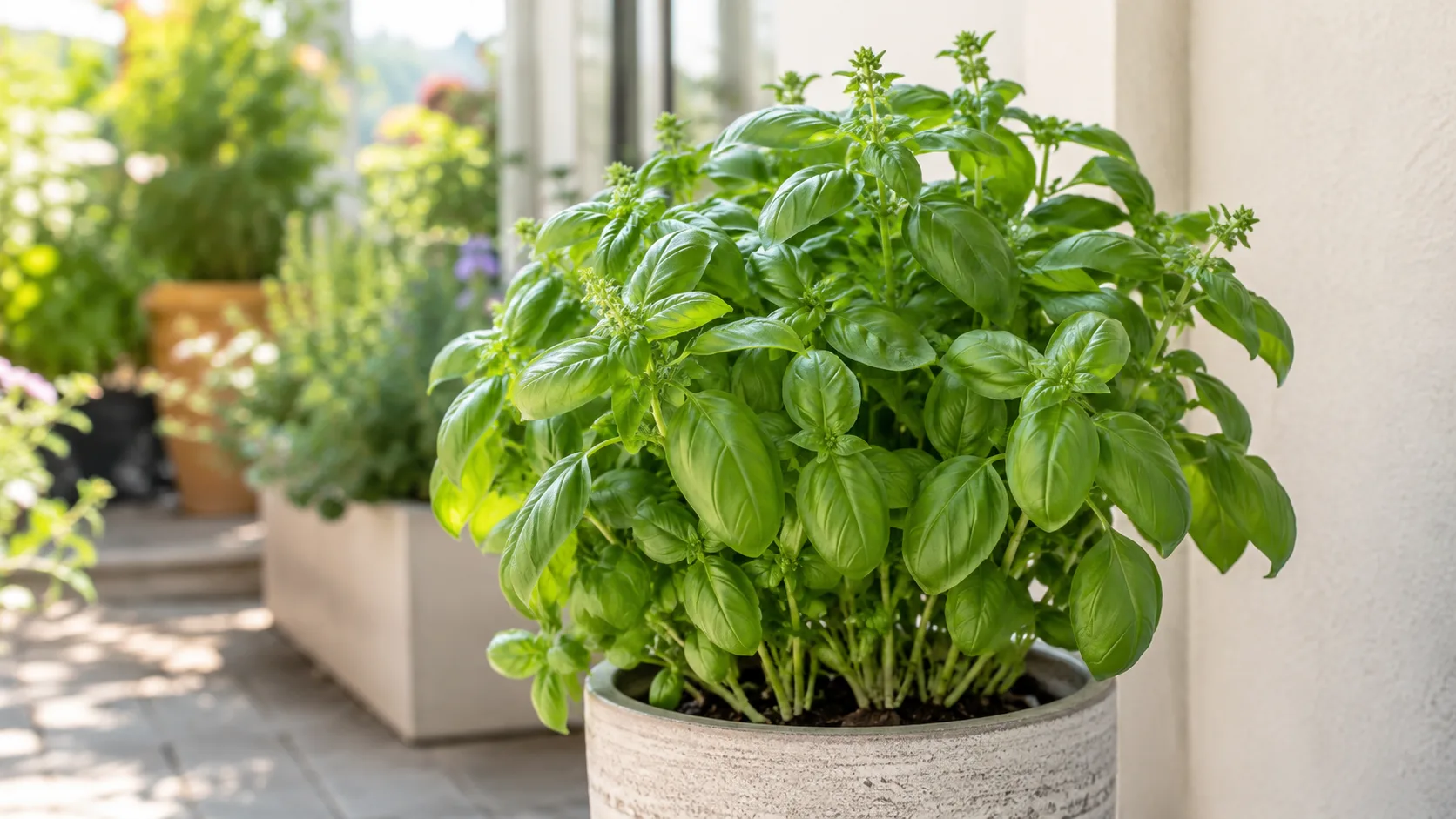
Basil Pruning Guide: When, Where, and How Much to Cut
Basil Pruning Guide: When, Where, and How Much to Cut
Quick Answer - Your First Cut Above a Node
First action: When your basil seedling is about 6 to 8 inches tall with three to four sets of true leaves, cut the main stem one-quarter inch above a leaf node-the spot where a pair of opposite leaves meets the stem. That single cut removes the terminal bud and wakes up the side buds tucked in the leaf axils below, turning one spike into two branching tips.
Do not start by plucking random side leaves or waiting until flower buds appear. One clean stem cut above a node is the shape-setting move everything else builds on.
What Pruning Does for Basil
With Ocimum basilicum and the sweet, Genovese, Thai, and Greek cultivars sold for cooking, pruning and harvesting use the same mechanics. You are redirecting the plant’s energy from upward elongation toward lateral shoots and tender new leaves-the tissue that tastes best.
Basil left untouched grows tall and thin under apical dominance: the terminal bud at the stem tip suppresses side branches. University of Arizona Extension notes that regular pruning during the growing season maintains productivity and promotes succulent new growth, while plants allowed to flower and set seed stop growing and become somewhat bitter. University of Minnesota Extension adds that flowering makes plants woody, cuts yields sharply, and pushes flavor toward bitterness.
Pruning cannot turn an exhausted annual into a perennial. It can, however, stretch a single plant’s useful kitchen life from a few weeks of leggy stretching to months of repeated harvests if you stay ahead of bolting.
Nodes, Terminal Buds, and Why Placement Matters
Run your finger up a basil stem. Each pair of opposite leaves marks a node. In the leaf axil-the angle between leaf and stem-small buds wait, often visible as tiny green dots on healthy plants. Cut between nodes and you leave a bare internode with no buds to activate. Cut through the node and you risk crushing the tissue that should branch. The reliable target is one-quarter inch above the top leaf pair you intend to keep.
UF/IFAS Extension Pasco County describes the goal plainly: prune at the node so the plant grows out instead of up. New shoots typically emerge from the axils below within about a week in warm, bright conditions.
What to Check Before You Cut
Before any cut, scan the plant in good light:
- Flower buds at stem tips-pinch or cut these first if present, before they open.
- Yellow or damaged lower leaves-remove only if they pull away easily or are clearly dead; do not strip healthy foliage chasing tidiness.
- Stem strength-a floppy seedling with only one or two leaf pairs is not ready for a hard first pinch.
- Recent stress-transplant shock, root rot on Basil, or cold nights mean lighter harvests, not aggressive reshaping.
- Tool cleanliness-wipe scissors with rubbing alcohol if you have cut diseased plants recently.
Plan one session’s cuts before you start. Basil tolerates frequent light harvests better than one surprise scalp.
When to Prune Basil
Active growth season-warm soil, long days, and steady new leaves opening at tips-is when basil responds fastest to cuts. Utah State University Extension recommends beginning harvest when plants have 6 to 8 leaves, removing enough stem to leave 2 to 4 leaves on young plants. That early tipping sets branching habit before the plant locks into a single candlestick shape.
For established multi-branch plants, trim the tallest shoots every one to two weeks during peak growth-roughly twice monthly matches UC Master Gardeners of Placer County guidance for keeping harvests steady rather than waiting for one end-of-season strip.
First Pinch Timing for Seedlings
The threshold repeated across extension sources is 6 to 8 inches (15–20 cm) tall with three to four sets of leaves before the first structural cut. University of Arizona Extension says to begin harvesting after plants reach at least that height. A practical readiness test: can the plant lose roughly one-third of its height without wilting for several days? Thin, newly germinated seedlings should wait.
Count nodes from the soil line upward, skipping cotyledons. The first high-leverage cut usually sits above the second or third node, removing about one-third of total height. Compact Greek basil types branch lower and may never reach 8 inches before they look shrubby-cut above a node once enough leaf area exists to recover, even if the plant stays short.
When Not to Prune
Hold off on heavy cuts when:
- The plant was transplanted within the last few days-wait until fresh tip growth resumes.
- Cool or low-light conditions slow metabolism; a large cut sits open without quick regrowth.
- The plant is already wilting from overwatering on Basil, underwatering on Basil, or root damage-fix the stressor first.
- Frost is imminent-basil is frost-tender; harvest heavily before cold nights for preservation, not shape training.
Light flower-bud pinches are fine almost anytime during active growth. Structural reshaping should wait for vigor.
How to Prune Basil Step by Step
- Identify the tallest stem or the main single spike on a young seedling.
- Locate the target node two to three pairs below the tip where side buds are visible in the axils.
- Cut one-quarter inch above that node with sharp scissors or a firm pinch-slight angle optional.
- Inspect remaining branches and repeat on other dominant spikes if shaping the whole plant, staying within the one-third limit.
- Use or preserve the harvest immediately-basil wilts quickly; stand cut stems in water if not cooking right away.
University of Arizona Extension instructs that whole stems harvested should be cut just above a pair of leaves, with new growth emerging from leaf axils below within about a week.
The First Pinch on a Single-Stem Plant
Locate the uppermost leaf pair with visible side buds in the axils-tiny green dots before they elongate. Cut the main stem one-quarter inch above the leaf pair below those buds, not flush against the tip leaves. You sacrifice height to buy two new tips.
Within five to ten days in warm weather, two shoots should emerge from the axils below. If nothing appears after two weeks, check cut placement (too high leaves a dead stub; too low damages buds), light levels, and soil moisture. West Virginia University Extension notes that regular tipping about once per week on actively growing plants promotes branching and leaf formation while delaying bloom.
Maintenance Cuts on a Bushy Plant
Once multiple branches exist, rotate harvests across stems instead of always stripping the same side. Trim the tallest shoots back to a lower node where side buds wait. For daily cooking, take one or two stem tips and leave the rest. For a pesto-sized session on a vigorous outdoor plant, you may remove the top third of several branches at once-then wait two to three weeks before another heavy pass.
Basil harvested lightly but often stays compact longer than basil ignored for a month and then scalped.
How Much You Can Safely Remove
The one-third rule is the safety rail: do not remove more than one-third of the plant’s foliage in a single session (UF/IFAS Extension Pasco County). Leaves are the plant’s solar panels. Strip too many at once-especially in cool weather or right after transplant-and recovery stalls for weeks.
If you need a large pesto batch, take up to one-third from a healthy plant, wait two to three weeks, then harvest another third from different branches. Two moderate passes beat one aggressive cut that leaves bare sticks.
For struggling plants with yellow lower leaves or slow new growth, harvest lightly or skip pruning until vigor returns. Never denude a single stem while leaving the bare stick standing; cut the whole usable portion at a low node or leave the stem intact until side shoots develop.
Managing Flower Spikes Before Flavor Drops
Flowering is basil’s reproductive endgame. University of Minnesota Extension warns that allowing flowering drops yields and turns flavor bitter. Pinch small buds as soon as they appear at stem tips-a quick finger pinch works when only a few buds show.
When a stem keeps re-bolting, a shallow bud pinch is not enough. UC Master Gardeners of Placer County recommend cutting budding stalks at least four leaf nodes down the stem to push the plant back into leaf production. That deeper cut removes the flowering signal on that branch and forces side shoots lower on the stem.
Use shallow pinches on young plants where a deep cut would remove too much mass. Switch to deep node cuts when upper leaves shrink and toughen or when buds return weekly on the same stem. If flowers have opened widely across the plant, cut back multiple stems by one-third and expect gradual-not instant-flavor recovery.
Pruning Leggy Store-Bought Basil
Grocery-store basil-often several seedlings crowded in one small pot-arrives leggy by design. Long internodes and weak lower stems are normal for production growing.
First action after Basil repotting guide: gently tease crowded root clusters apart into individual plants or pairs, each in a larger pot with drainage and fresh mix. Crowding competes for light; pruning alone cannot fix that.
Once repotted and settled for a few days, trim each plant back by about one-third, cutting just above nodes where side buds are visible. Expect temporary wilt for a day or two while roots establish. Keep soil evenly moist-not waterlogged-and give the brightest available light. Without brighter conditions, the plant stretches again after pruning and it looks like the scissors failed when the environment was the real problem.
If the lower stem is woody and leafless, focus cuts on green upper growth. Trimmed tips root easily in water if you want backup plants.
Aftercare and Recovery
After a moderate harvest, water if the soil has dried-leaf loss reduces transpiration but roots still need steady moisture to push new shoots. Avoid foliar spraying on wet cut stems in humid weather. Keep light bright; pale, thin regrowth in dim conditions bolts faster.
Hold off on heavy fertilizer for a few days after a large cut. A light balanced feed once new leaves appear is fine in containers where nutrients leach quickly. Do not leave pruned debris on the soil surface in kitchen pots-it invites fungus gnats.
Harvest in the morning when leaves are cool and dry if you want maximum aroma; essential oils concentrate before midday heat.
Signs Pruning Worked
Look for new shoots in leaf axils directly below the cut within five to ten days in warm, bright conditions. The plant keeps a mounded, bushy silhouette instead of one dominant spike. New leaves should be medium green and full-sized-not tiny stress leaves.
University of Minnesota Extension says new growth at the cut point should be visible within about a week when stems are harvested correctly.
Signs You Cut Too Much or Too Wrong
Wilting beyond 48 hours after a moderate prune suggests over-harvesting, root problems, or pruning during stress. Black or mushy cut ends mean dirty tools or wrong cut placement. Continued legginess with no side branching usually means leaf-only picking left the terminal bud in charge-or light is too weak.
Basil is an annual with a finite lifespan. Even perfect pruning cannot prevent eventual bolting once heat and day length trigger reproduction.
Mistakes to Avoid
Plucking individual leaves without cutting stems leaves the terminal bud growing upward while lower stems go bare. Always take the stem tip down to a node when you want bushier regrowth.
Removing too much at once shocks the plant outside peak growth. Work in stages over two to three weeks for major reshaping.
Ignoring flowers until the whole plant has bolted wastes weeks of leafy production.
Pruning on transplant day stacks two stresses-wait until new tip growth resumes.
Wrong cut placement-too far above a node, between nodes, or through the node itself-produces little or no branching. Aim one-quarter inch above the top leaf pair you are keeping.
Using dull tools crushes soft basil stems, slowing healing and browning cut edges.
Conclusion
Basil pruning and harvesting are one habit: cut stem tips just above a leaf node, never remove more than one-third at once, and start when seedlings reach roughly 6 to 8 inches with enough foliage to recover. Pinch or cut flower buds early; use deep node cuts when stems keep re-bolting. Rotate light harvests across branches every one to two weeks during active growth, rescue store-bought clumps by separating roots and improving light, and watch for new axillary shoots within a week as proof your cut placement worked. Basil rewards consistent, node-aware cuts with months of flavor-it punishes only the wait-until-it-flowers approach.
When to use this page vs other Basil guides
- Basil overview - Start here for whole-plant context before deep-diving this topic.
- Basil problems hub - Jump to symptom-specific fix guides when this care topic does not resolve the issue.
- Leggy Growth on Basil - Escalate here when pruning adjustments are not enough.
- Slow Growth on Basil - Escalate here when pruning adjustments are not enough.
- Brown Tips on Basil - Escalate here when pruning adjustments are not enough.