Low Humidity on Basil: Causes, Checks & Fixes
Quick answer
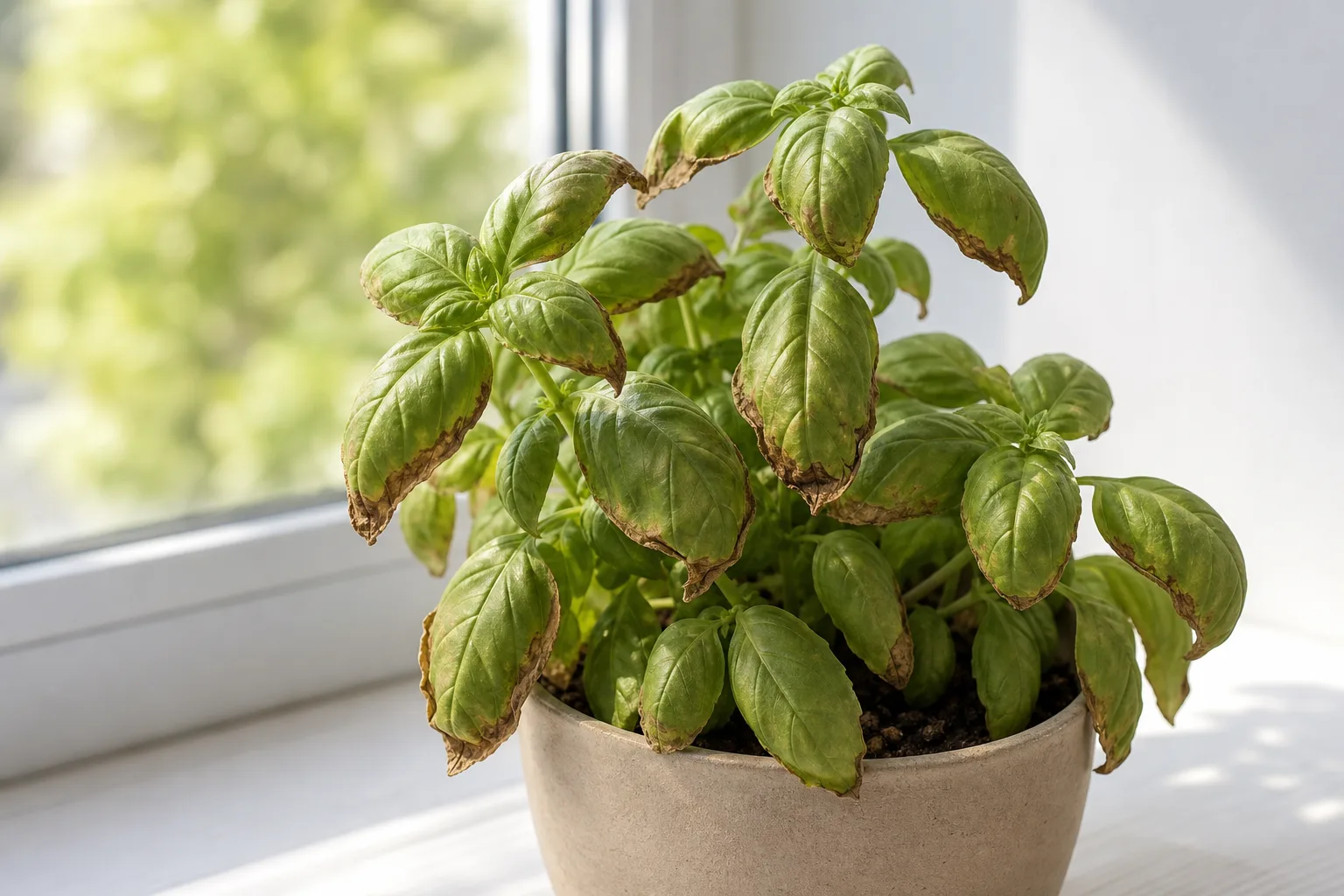
Indoor basil often shows crispy leaf edges when winter heating drops humidity below 30%-even if soil is moist. First step: measure room RH and move the pot away from heating vents, then add a humidifier or pebble tray to raise ambient moisture without wetting leaves.
Low Humidity on Basil: Causes, Checks & Fixes
This guide covers low humidity on Basil. See also the general Low Humidity guide, watering, and light pages for this plant.
Low Humidity on Basil: Causes, Checks & Fixes
Quick answer
Low humidity on basil (Ocimum basilicum) shows up as crispy brown leaf edges and tips while the soil can still feel moist an inch down. Winter heating, forced-air vents, and radiators often drop indoor relative humidity into the low 20s to 30% range, and humidity levels are low inside during winter months-far below what this tropical Asian herb prefers in active growth.
First step: check room humidity with a hygrometer and move the pot off the vent path. If RH reads below 35%, add a room humidifier or set the pot on a pebble tray (pot above the water line) before you change watering, repot, or fertilize.
What low humidity looks like on Basil
Basil has thin, soft leaves that lose water quickly in dry air-especially when you are harvesting regularly or growing it on a bright windowsill above a radiator.
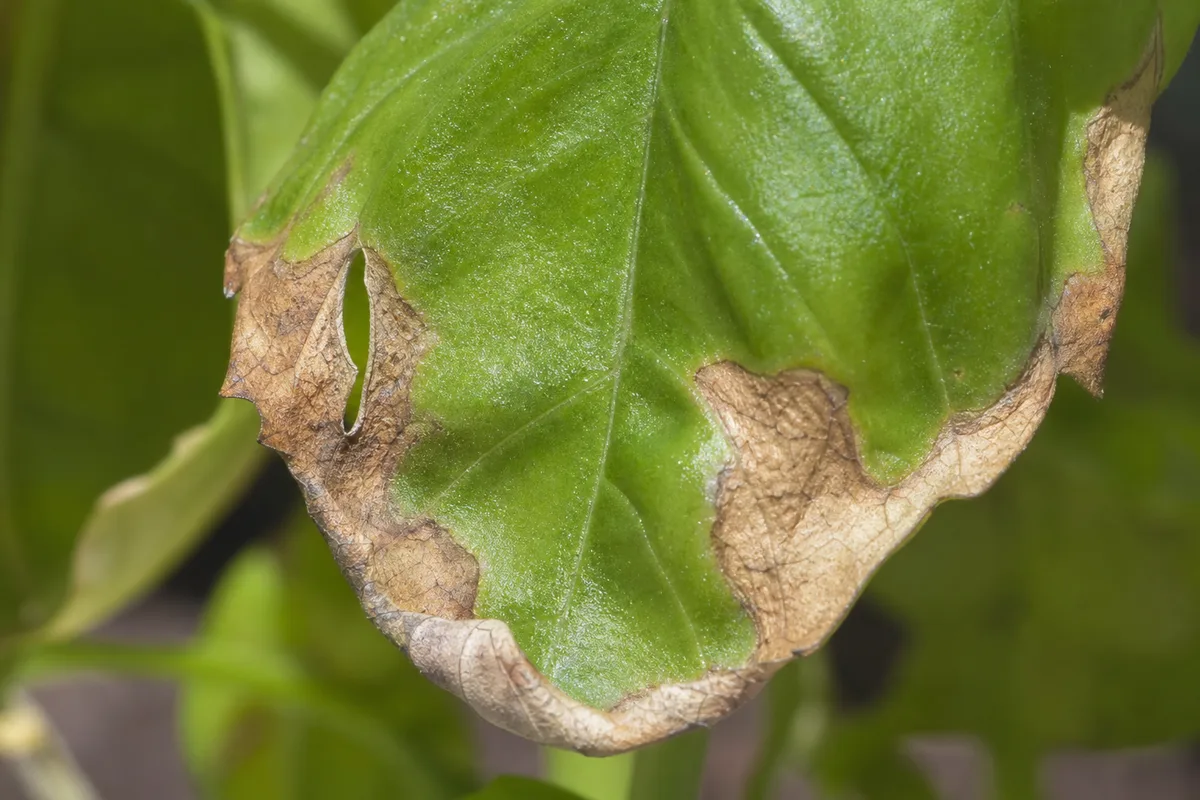
Low Humidity symptoms on Basil - compare with healthy tissue on the same plant.
Above soil, watch for:
- Crispy, light-brown tips on otherwise green leaves-often starting on the outer or upper foliage nearest a heat source
- Papery leaf edges that feel dry when you touch them, without yellowing across the whole leaf
- Midday droop on moist soil-the plant wilts from fast transpiration, not drought
- Slow new growth or smaller leaves on winter windowsill plants despite adequate watering
- Increased spider mite risk on stressed indoor basil in warm, dry rooms
Below soil, roots in pure humidity stress usually stay firm and pale on appropriately moist mix. That matters because underwatered basil wilts with dry, light soil, and overwatered basil shows yellow lower leaves on wet mix.
The classic humidity clue: you water on schedule, the soil is damp when you check, and only the leaf margins crisp-especially in January or February when the furnace runs constantly.
Why Basil gets low humidity stress
Basil evolved in warm, humid tropical regions. Indoors in winter, three forces stack against it.
Winter heating dries the air. Forced-air heat, radiators, and fireplaces pull moisture out of room air. Humidity-loving plants suffer when levels drop in heated homes. Basil is not as demanding as a fern, but very dry air still accelerates tip burn on a fast-growing herb.
Bright light plus dry air increases transpiration. Basil is a high-light culinary herb that uses water aggressively when actively growing. A south-facing winter windowsill gives better light than a dim corner-but sun-warmed glass and dry furnace air together pull moisture from leaf edges faster than roots replace it.
Harvesting and pinching raise water demand. Every time you cut stems for pesto, you remove foliage but the remaining leaves still transpire heavily. A heavily harvested pot in dry air can show crisp edges within days even when watering rhythm has not changed.
Placement near vents multiplies the problem. Leaves closest to a heating register or radiator top brown first. Keep plants away from heat sources that blast hot, dry air across the canopy.
How to confirm the cause
Work through these checks in order before treating:
- Room humidity reading - Place a hygrometer beside the pot for 24 hours. Below 30–35% RH in a heated room strongly supports low-humidity stress. Above 45% makes dry air a less likely primary cause.
- Soil moisture at depth - Push a finger 2–3 cm into the mix. Moist soil plus crispy tips fits humidity. Dry, crumbly soil points to underwatering instead.
- Pot weight - A moderate-to-heavy pot with crisp tips supports dry air. A very light pot supports drought.
- Heat-source proximity - Note radiators, furnace vents, fireplace mantels, and sun-heated window glass. Damage concentrated on the vent-facing side confirms environmental dry air.
- Leaf underside inspection - Clean undersides fit humidity or water stress. Gray, fuzzy growth underneath means basil downy mildew-not a humidity fix.
- Season and indoor context - Symptoms appearing or worsening after heating season starts fit dry air. Outdoor summer basil in humid weather rarely shows this pattern.
- Recovery test - Move off the vent path and add one humidity step (humidifier or pebble tray). Cleaner new leaf edges within 7–14 days confirms dry air was a major driver.
If soil is wet, stems are soft at the base, or gray fuzz appears under leaves, switch diagnosis to overwatering, root rot on Basil, or downy mildew-not more ambient moisture.
First fix for Basil
Raise ambient humidity around the plant without wetting the foliage.
Choose one primary method:
- Room humidifier - Most reliable fix for winter basil. Run it in the same room, aiming for 40–60% RH near the pot. Room humidifiers work better than misting for raising moisture consistently.
- Pebble tray - Set the pot on a tray of stones with water below the pot base so evaporation adds local humidity without soaking roots. Refill as water evaporates.
- Plant grouping - Place several pots together so shared transpiration creates a slightly more humid microclimate.
At the same time, move the pot away from heating vents and off radiator tops. Keep it on the bright windowsill if light is adequate, but add distance from direct hot-air blasts.
Do not:
- Mist leaves to fix humidity-wet basil foliage invites basil downy mildew and other foliar problems; avoid wetting foliage with irrigation water
- Overwater because leaves look dry-soggy soil in low winter light causes root problems
- Fertilize a stressed plant before humidity and placement improve
Step-by-step recovery
After the first humidity fix:
- Confirm winter light - Basil brought indoors needs 10–12 hours of bright light daily, often requiring a grow light. Weak light plus dry air produces leggy, stressed plants. See the basil light guide if stems are stretching.
- Hold watering steady - Continue the top-inch-dry rule from the watering guide. Dry air is not cured by keeping soil constantly wet.
- Trim only fully dead edges - Snip papery brown tips if they bother you cosmetically. Partial damage on a leaf can wait until new growth looks healthy.
- Inspect for spider mites weekly - Warm, dry indoor air favors spider mites on stressed plants. Check leaf undersides for stippling or fine webbing.
- Rotate the pot every few days if it sits on a one-sided windowsill so new growth stays balanced.
- Wait one care cycle - Give humidity and placement changes 7–14 days before adding Basil repotting guide, heavy pruning, or fertilizer.
Recovery timeline
Mild humidity stress often stabilizes within one to two weeks once RH climbs above 40% and the pot leaves the vent path. Crispy brown tips will not turn green again-judge success by new leaves unfurling with clean edges and firm stems.
Signs recovery is working:
- New leaf pairs open without brown margins
- Midday droop reduces on moist soil
- Stems stay green and upright between waterings
Signs the problem is worsening or misdiagnosed:
- Yellowing spreads across whole leaves with gray fuzz underneath-downy mildew
- Wilting continues on wet soil-root rot or overwatering
- Stippling and webbing appear on undersides-spider mites in dry heat
- Blackened leaves after a cold night-cold damage below 50°F, not humidity
Basil is usually grown as an annual. If most foliage is crispy and no clean new shoots appear after three weeks of corrected humidity and light, starting fresh seed or a new transplant is often faster than nursing exhausted winter stock.
Lookalike symptoms
Low humidity on basil overlaps with several other problems:
| What you see | Soil moisture | Most likely cause | Where to read next |
|---|---|---|---|
| Crispy tips only, moist soil, dry heated room | Moist 2–3 cm down | Low humidity | This page |
| Whole-plant wilt, very light pot, dry mix | Dry throughout | Underwatering | Underwatering |
| Wilting on wet soil, yellow lower leaves | Wet at depth | Overwatering / root rot | Overwatering |
| Yellow leaves, gray fuzz underneath | Any | Basil downy mildew | UMN downy mildew guidance |
| Blackened or mushy leaves after cold night | Any | Cold damage | Basil overview |
| Papery tips after heavy fertilizer | Moist | Salt or fertilizer burn | Hold feed; flush if salts suspected |
| Fine stippling, webbing on undersides | Often moist | Spider mites (dry-air stress) | Spider mites |
Brown tips alone can also appear on underwatered basil-the soil moisture check separates the two. Wilting with dry soil is thirst; wilting with moist soil in a 22% RH room above a radiator is humidity.
Why not to mist basil leaves for humidity
Misting seems like a quick humidity fix, but it is a poor choice for basil.
Basil downy mildew spreads on wet foliage in humid conditions. Minnesota Extension advises allowing leaves to dry quickly, avoiding overhead watering, and increasing airflow. Clemson HGIC warns not to wet foliage during irrigation because basil is prone to foliar disease. Penn State Extension lists downy mildew as a major basil disease and recommends avoiding overhead watering.
Misting is not very effective at raising humidity for more than a few minutes, and it increases foliar disease risk. A humidifier or pebble tray changes the air around the plant for hours without leaving leaves wet overnight.
Mistakes to avoid
- Misting leaves daily instead of raising room RH-disease risk with little humidity gain
- Overwatering because leaf edges look dry-wet roots in dim winter light invite rot
- Ignoring the hygrometer and guessing humidity from how the room feels
- Leaving basil on a radiator or vent register while running a humidifier across the room
- Cutting back water and light together-basil still needs strong winter light; see not enough light if stems stretch
- Stacking repotting, fertilizer, and humidity fixes on the same day-change placement and humidity first, then wait one week to read the plant’s response
How to prevent low humidity stress next winter
Build a winter routine before heating season starts:
- Run a humidifier in the room where overwintered basil lives; target 40–60% RH near the canopy
- Place pots on pebble trays or group houseplants together to share moisture
- Keep basil off radiators and away from forced-air vents; avoid hot, dry air blasting foliage
- Supplement light with a grow light for 10–12 hours daily so the plant is not fighting both darkness and dryness
- Water at the base per the watering guide-never shower leaves
- Check a hygrometer weekly in January and February when furnace use peaks
- Inspect for spider mites on indoor herbs during dry spells
Basil replaces easily from seed each spring. For winter windowsill growing, stable humidity and strong light matter more than saving every old leaf-fresh growth with clean edges tells you the room setup is working.
Related problems
If humidity fixes do not match your symptoms, check these guides:
- Brown tips on basil - when tip burn persists after RH is stable (water quality or salt buildup)
- Underwatering on basil - wilt with dry, light soil
- Wilting on basil - midday droop with multiple possible causes
- Not enough light on basil - leggy winter growth that worsens humidity stress
- Basil overview - full care hub for light, water, and winter overwintering
Conclusion
Low humidity on indoor basil is a real, fixable winter problem-not a watering mistake in disguise. Confirm with a hygrometer and moist soil at depth, move the pot off heat vents, and raise ambient RH with a humidifier or pebble tray without wetting leaves. Crispy old tips will not recover, but clean new growth within two weeks means your setup is working. Match humidity fixes with adequate winter light and steady base watering, and basil can keep producing usable leaves through the heating season.
When to use this page vs other Basil guides
- Basil watering guide - Use for routine moisture checks before assuming low humidity is the main issue.
- Basil problems hub - Browse all 16 common issues on this species.
- Brown Tips on Basil - Different entry point when symptoms overlap with low humidity.