Aluminum Plant (Pilea cadierei) Care Guide: Light, Water
Pilea cadierei
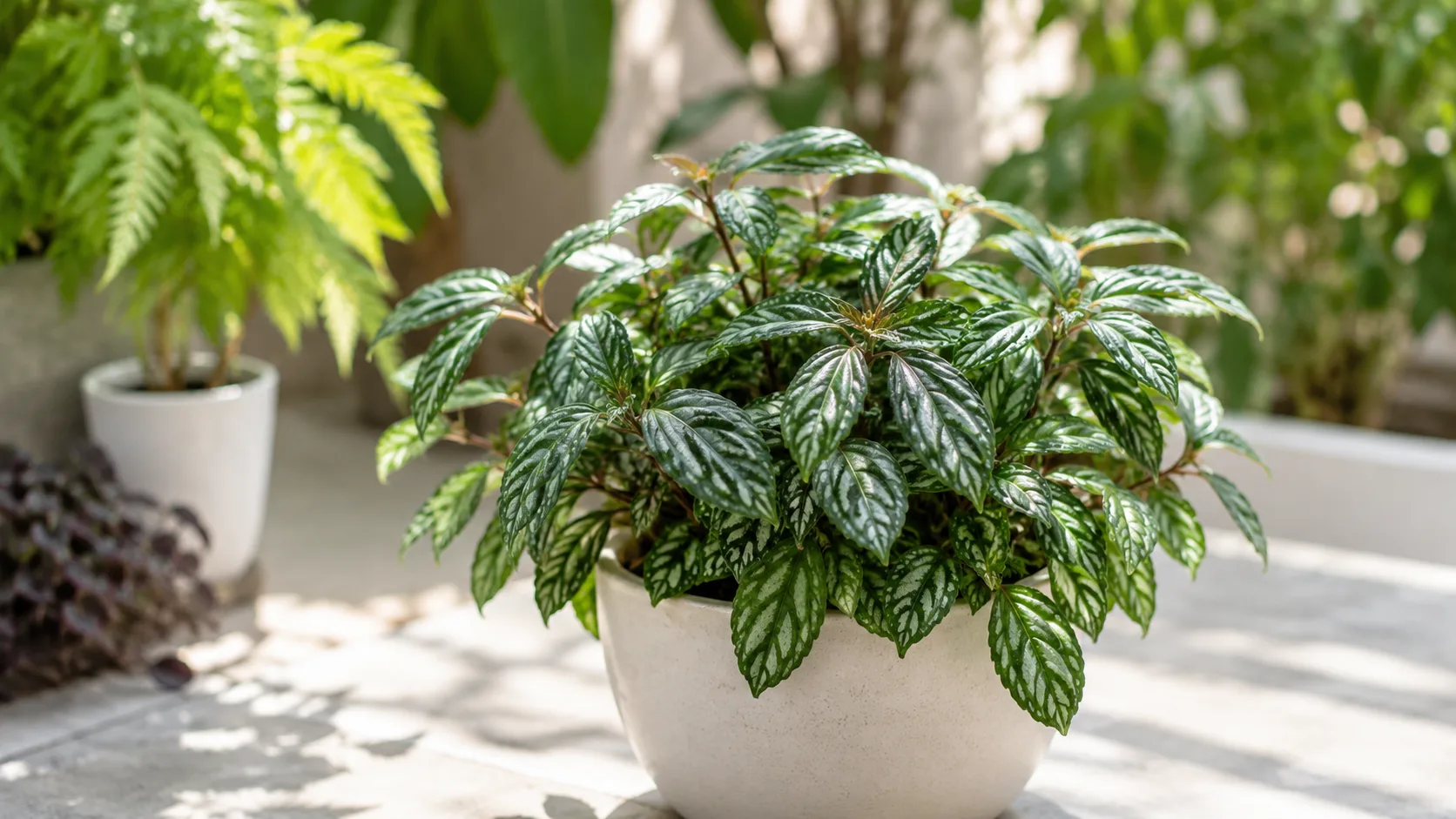
Aluminum Plant needs bright indirect light to maintain its distinctive silver markings and watering when the surface soil just dries. It becomes leggy with age-propagate cuttings regularly for bushy plants. Non-toxic to pets.
Aluminum Plant (Pilea cadierei) Care Guide: Light, Water, Propagation
Start with wateringThe most common care mistake for Aluminum PlantWatering guide →Aluminum Plant care essentials
Light
bright indirect light
Water
Water when the top half-inch of soil dries. Pilea cadierei prefers consistent moisture but not soggy soil.
Soil
Well-draining, light potting mix.
Humidity
50–60%
Temperature
15–26°C (60–79°F)
Fertilizer
Use balanced liquid fertilizer at half strength and stop if the plant is stressed, newly repotted, or not actively growing.
About Aluminum Plant
Aluminum Plant is native to Vietnam and China (shaded tropical forests), typically reaches 8–12 inches tall; bushy with oval leaves marked with silver patches indoors, with moderate to fast growth. Aluminum Plant has a bushy growth habit and part of the Urticaceae family. It is also known as Watermelon Pilea and Aluminium Plant.
| Detail | Information |
|---|---|
| Also known as | Watermelon Pilea, Aluminium Plant |
| Native region | Vietnam and China (shaded tropical forests) |
| Mature size | 8–12 inches tall; bushy with oval leaves marked with silver patches |
| Growth rate | Moderate to fast |
| Growth habit | Bushy |
| Scientific name | Pilea cadierei |
| Family | Urticaceae |
Aluminum Plant (Pilea cadierei) Care Guide: Light, Water, Propagation
What the Aluminum Plant Is and Where It Comes From
The aluminum plant is a small, bushy tropical houseplant grown for one unmistakable feature: leaves that look like they have been splashed with metallic silver paint. Its botanical name is Pilea cadierei, and it is one of the most forgiving foliage plants a beginner can grow indoors. The silver patches are not painted on, not sprayed, and not a marketing trick. They are raised, slightly blistered bands of air-filled tissue that sit on top of a dark green leaf. That leaf is the reason Aluminum Plant overview has two common names. It is sold as the aluminum plant because of the metallic look, and as the watermelon pilea because the silver markings on green resemble the rind of a small watermelon. Both names refer to the same species.
Botanical identity, family, and the two common names
Pilea cadierei is an herbaceous perennial in the Urticaceae family, the same family as the stinging nettle. Unlike stinging nettle, however, the aluminum plant does not sting, and the family connection matters more for care than for any practical interaction. Pilea is a large genus with more than 600 species, including well-known houseplants such as the artillery plant (Pilea microphylla), the Chinese money plant (Pilea peperomioides), and the friendship plant (Pilea involucrata). Missouri Botanical Garden’s Plant Finder and the North Carolina Extension Gardener Plant Toolbox both list Pilea cadierei under its accepted scientific name and treat “aluminum plant” and “watermelon pilea” as alternate common names. (Missouri Botanical Garden, NC State Extension) This matters at the garden center because the same plant can arrive tagged either way, and a buyer who only knows one name may pass it by.
The Latin name also helps disambiguate lookalikes. There are other silver-variegated foliage plants in trade, including some Pilea cultivars and unrelated species like Polka dot plant (Hypoestes phyllostachya). They are not Pilea cadierei, and they have slightly different care needs. Keeping the botanical name on a tag or photo makes troubleshooting faster and prevents mistakes with light, water, or humidity recommendations that do not transfer cleanly between species.
Native range, growth habit, and why origin shapes care
Pilea cadierei is native to Vietnam and southern China, where the Flora of China places it in shaded, moist forest habitats in Guizhou and Yunnan provinces at elevations of roughly 500 to 1,500 meters. (eFloras / Flora of China, GRIN-Global) It grows as a rhizomatous, dioecious subshrub with somewhat succulent stems that become woody at the base, typically reaching 15 to 40 centimeters tall in the wild. That origin is the single most important fact about its indoor care. A shaded forest understory in southern China is bright but never sunny, warm but never hot, humid but never waterlogged. The plant does not want to be repackaged into a desert succulent, a tropical bog, or a Mediterranean windowsill. It wants the middle.
The growth habit at home is upright and shrubby, with branching stems and opposite leaves. Missouri Botanical Garden describes it as a shrubby clump reaching about 12 inches tall, while NC State Extension notes plants grow from 6 to 12 inches tall indoors. Growth rate is moderate to fast in good conditions. Plants grown from cuttings can fill a 4-inch pot in a single warm season. That speed is part of the plant’s appeal and also the reason it eventually needs pinching, Aluminum Plant repotting guide, or replacement.
How the Silver Variegation Forms and What It Tells You
The silver markings on aluminum plant leaves are not surface coloration. They are raised bands of tissue where the upper leaf surface has separated slightly from the lower layers, creating air pockets that reflect light. The Flora of China description of the species specifically notes the leaves are “adaxial surface with 2 interrupted white grooves,” which matches what every grower sees in person. (Flora of China) Missouri Botanical Garden and North Carolina Extension both describe the pattern as four rows of raised silver patches running along each leaf, which is the typical look in trade. (Missouri Botanical Garden)
The patches are part of the plant’s healthy structure, not damage. They are not a sign of pests, mildew, or sunburn, and they are present from the moment a new leaf unfurls. They are also one of the best visual indicators of plant health. When the silver bands look bright, full, and well-defined, the plant is in good light with stable moisture. When the silver fades, the green takes over, or the patches look dull and flat, the plant is often struggling with too little light, too little humidity, or a pot that has dried too far for too long. The leaf is a small diagnostic display.
This variegation is also why the plant tolerates indoor conditions better than many other tropical foliage plants. The silver patches are an adaptation that helps the leaf reflect a bit of extra light in the dappled forest understory, and the leaf still photosynthesizes efficiently in the green tissue between them. As a result, an aluminum plant does not need Aluminum Plant light guide to look its best. It only needs enough bright, indirect light to keep the green color saturated and the silver clearly defined. That makes it more forgiving than highly variegated plants that lose color in low light.
Size, Growth Rate, and What a Mature Plant Looks Like
A healthy aluminum plant grown as a houseplant typically reaches 6 to 12 inches tall indoors. The most common indoor size is in the 8 to 12 inch range after one to two years of active growth. (NC State Extension, Missouri Botanical Garden) Some references mention plants that reach up to 4 feet tall, but that applies to old, well-established plants in ideal conditions, not to a typical potted specimen on a windowsill. Most home growers see a compact, leafy clump rather than a tall cane.
The leaves are the more interesting size story. Each leaf is roughly 2.5 to 6 centimeters long and 1.5 to 3 centimeters wide, with an obovate shape, slightly toothed edges, and a glossy upper surface marked with those four rows of silver patches. (Flora of China) They are not huge, but they are dense, so a small plant can still look full. The plant is herbaceous and somewhat succulent at the stems, with cystoliths (small calcium carbonate deposits) on the surface, which is a normal feature of the Urticaceae family and not a problem.
Indoor plants rarely flower. Missouri Botanical Garden notes that tiny green flowers may appear in cymes but are uncommon indoors, and the species is grown for foliage rather than blooms. (Missouri Botanical Garden) When flowers do appear, they are small, greenish, and unremarkable. A plant that never flowers indoors is not failing; it is behaving normally for Pilea cadierei in low indoor light.
Light: Bright Indirect, With a Few Practical Notes
The aluminum plant grows best in bright, indirect light. Missouri Botanical Garden and North Carolina Extension both specify bright indirect light and warn that direct sun should be avoided. (Missouri Botanical Garden, NC State Extension) North Carolina Extension goes further and lists the plant as suitable for deep shade to dappled sunlight, which means an aluminum plant can tolerate lower light than many tropical houseplants, although it grows most actively in brighter conditions. (NC State Extension)
A practical placement is a few feet back from a bright east- or west-facing window, or directly in front of a north-facing window. A south-facing window is fine if the light is filtered through a sheer curtain or the plant sits beyond the direct sunbeam. Direct sun, especially afternoon sun, will bleach the silver patches, scorch the leaf edges, and can produce a pale, washed-out look. That damage is usually cosmetic and recovers with new growth once the plant is moved, but it is a clear signal to relocate.
The most useful light signal is the plant itself. Aluminum plants stretch in low light. Stems elongate, leaves get smaller, gaps open between leaf pairs, and the silver patches look dull. That is a sign to move the plant closer to a bright window or add a small grow light. The opposite signal is also worth watching for. A plant sitting right on a sunny sill may show bleached or brown patches on the upper leaves while lower leaves stay healthy, which is the visual fingerprint of too much direct sun.
For most homes, a medium to bright indirect light setup is the sweet spot. The plant will tolerate a slightly shadier corner for months, but its growth will slow, and the foliage will look less striking. Grow lights work well for this plant because the foliage is broad and flat. A 20 to 40 watt full-spectrum LED panel placed 12 to 18 inches above the plant for 10 to 12 hours a day produces compact, well-marked growth even in a dim apartment.
Watering: Evenly Moist, Not Soggy, Not Bone Dry
Aluminum plant likes consistently moist soil, but it is not an aquatic plant. Missouri Botanical Garden recommends watering moderately during the growing season and reducing watering from fall to late winter. NC State Extension advises watering moderately in the growing season and reducing watering in fall to late winter. A practical home routine is to water when the top inch of mix is dry, then water thoroughly until a small amount drains from the pot.
The single most common mistake is overwatering on Aluminum Plant. The plant’s fine, somewhat succulent stems are vulnerable to root and stem rot when the mix stays wet for long periods, especially in cool conditions. The second most common mistake is letting the mix swing wildly from soggy to bone dry, which produces brown leaf tips, drooping leaves, and a generally stressed plant. Both mistakes look similar from across the room. The fix is the same: stop watering on a calendar and start checking the actual mix. A chopstick, a wooden skewer, or a finger pushed an inch into the pot should come out slightly damp, not soaking and not dusty. If unsure, wait a day.
Water temperature matters more than people expect. Cold tap water straight from the faucet can shock the roots, and very hard or heavily chlorinated water can build up in the pot over time. Room-temperature water is the safest default. If the local tap water is hard, switching to filtered, distilled, or rainwater every other watering is a useful practice that reduces the white salt crust that can form on the soil surface and on the rim of clay pots.
Bottom watering is fine for aluminum plant. Place the pot in a shallow dish of room-temperature water for 10 to 20 minutes, let the mix wick moisture from below, then remove the pot and let any excess drain. This approach is gentle, keeps the stems and leaf axils dry, and reduces the risk of fungal issues around the crown. Top watering is equally fine if done carefully with a narrow-spout watering can aimed at the soil rather than the foliage. The rule is to water the soil, not the leaves, and to empty the saucer so the pot never sits in standing water.
Humidity and Temperature: A Comfortable Indoor Range
Aluminum plant prefers a humid environment. Missouri Botanical Garden and NC State Extension both note that it does best in high humidity and appreciates humidified rooms or a bed of wet pebbles. Household humidity of 40 to 50 percent is fine for most homes, while higher humidity produces lusher, more dramatic foliage. Pushing above 70 percent in a poorly ventilated room invites fungal problems, so going higher is not always better.
Practical ways to raise humidity include grouping the plant with other tropicals, placing it on a humidity tray (a shallow tray of pebbles with water just below the pot base), running a small humidifier nearby, or growing it in a bright bathroom. Misting the foliage is often recommended but is a short-term fix; the leaf dries within minutes and any benefit is brief. If you mist, do it in the morning so the leaves dry before nightfall, and avoid misting into the crown.
Temperature is the easier variable. Aluminum plant likes ordinary indoor warmth in bright, humid conditions. Missouri Botanical Garden lists winter hardiness in USDA zones 11–12, which reflects its tropical origin indoors. Sustained cold, cold drafts from windows or air-conditioning vents, and sudden temperature swings all cause stress. A leaf that drops suddenly on an otherwise healthy plant is often reacting to a cold draft or a move to a colder room rather than to a watering problem. A simple test: if the air feels comfortable to a person in a T-shirt, the temperature is fine for the plant.
A small caveat on acclimation. Aluminum plants are usually grown in greenhouses with high humidity and bright, filtered light. When a plant is brought into a drier, less consistent home environment, it can lose a few leaves during the first few weeks. That is normal adjustment, not a sign of failure. Holding off on repotting, keeping the watering steady, and giving the plant a stable bright spot allows it to settle.
Soil and Pot Choice: Peaty, Airy, and Free-Draining
The right soil for aluminum plant is a peat-based, well-draining mix that still holds some moisture. Missouri Botanical Garden recommends a peaty, soil-based potting mix, and NC State Extension lists loam texture with good drainage as suitable. Heavy garden soil is a poor choice indoors because it compacts, holds too much water, and suffocates fine roots. Cactus and succulent mixes are also a poor choice because they dry out faster than aluminum plant prefers.
A practical homemade blend is roughly one part peat moss or coco coir, one part perlite, and one part standard houseplant potting mix. This combination holds moisture around the roots, lets excess water drain, and keeps enough air in the root zone to prevent rot. Some growers add a small amount of orchid bark or coarse sand to improve drainage further. The exact recipe matters less than the structure. The mix should feel fluffy when moist, drain freely when watered, and not collapse into a wet brick over time.
Soil pH is generally acidic to neutral. NC State Extension lists acid to neutral soil pH as suitable for Pilea cadierei. Most off-the-shelf peat-based indoor mixes already sit in that range, so chasing a precise pH number is rarely needed. The more useful pH-related practice is to flush the pot with plain water every few months. This carries built-up salts from fertilizer and tap water out of the mix and keeps the root environment stable.
Pot choice is straightforward. Any container with drainage holes works. A 4- to 6-inch terracotta or nursery pot is the typical starter pot, with a 6- to 8-inch pot for a more mature plant. Terracotta breathes and helps the mix dry evenly, which is useful in cooler homes. Plastic or glazed ceramic pots hold moisture longer, which is helpful in dry homes or for forgetful waterers. Cachepots are fine for display as long as the inner pot can be removed for watering. A pot without drainage is not a good idea for this plant, because the mix will stay wet at the bottom even when the surface looks dry, and that is the recipe for root rot on Aluminum Plant.
Fertilizer: Light, Regular, and Seasonal
Aluminum plant is a moderate feeder, not a hungry one. A balanced, water-soluble houseplant fertilizer at half the label rate, applied once a month during spring and summer, is a safe and effective routine during active growth. Some growers prefer a 3-1-2 foliage-leaning ratio, but a balanced feed is hard to overdo at half strength.
The application method matters. Always water the plant first if the mix is dry, then apply the fertilizer solution. Pouring fertilizer into a bone-dry pot burns the fine roots, and that damage is often visible as brown leaf tips or stunted new growth a few weeks later. A moisture meter or a finger test is a useful safety check. If the top of the mix is dry and the pot feels light, water first, wait 15 to 30 minutes, and then feed.
Fertilizer timing follows the plant’s growth rhythm. Aluminum plant grows actively from spring through early fall. It slows noticeably as light drops and temperatures fall in late autumn. Feeding through the winter is unnecessary and counterproductive because the plant cannot use the nutrients, and unused fertilizer simply accumulates as salt in the mix. Pause feeding in fall and resume in spring when new growth is visible, as NC State Extension recommends reducing watering from fall to late winter when growth slows.
The most common fertilizer mistakes are overfeeding, feeding a dry or stressed plant, and feeding a plant in a pot with no drainage. A white crust on the soil surface or on the rim of a clay pot is a warning sign. The fix is to flush the pot thoroughly with plain water, skip the next scheduled feeding, and resume at a slightly lower strength. Aluminum plant responds quickly to correction. A few weeks of proper feeding on moist soil usually returns it to a steady, healthy growth pattern.
Repotting: When, How, and How Often
Aluminum plant is a fast grower and benefits from annual or biennial repotting. Missouri Botanical Garden notes that some gardeners replace the plant each year by taking fresh cuttings, and NC State Extension recommends taking cuttings in early spring to start new plants. In practice, repot every 1 to 2 years in spring, when roots circle the drainage holes, when water runs straight through the pot, or when the plant has clearly outgrown its container.
The standard repotting routine is simple. Water the plant the day before so the root ball stays intact. Choose a new pot one size larger than the current one, usually 1 to 2 inches wider in diameter. Add a small layer of fresh, peat-based mix in the bottom. Remove the plant, gently loosen the root ball with your fingers, and tease out any tightly circling roots. Place the plant at the same depth it was growing before, fill in around the sides with fresh mix, tap the pot to settle, and water lightly to help the new mix make contact with the roots.
A few details matter. Going up more than one pot size at a time is a common mistake. A pot that is too large holds too much mix around a small root system, and that mix stays wet too long. Fresh mix already contains some nutrients, so it is best to wait about a month before resuming fertilizer. After repotting, keep the plant in bright indirect light with stable warmth and moisture, and avoid fertilizing until new growth is visible.
Repotting is also the right moment to inspect the root system. Healthy roots are pale, firm, and slightly fibrous. Brown, mushy, or sour-smelling roots indicate rot. Trim affected roots with clean scissors, dust the cuts with a little cinnamon or a standard fungicide, and repot into fresh mix. The same step lets a grower divide a large plant. Aluminum plant develops rhizomes, so a mature specimen can sometimes be split into two or three smaller plants during repotting. Each division should have its own stems, leaves, and a healthy chunk of root.
Pruning and Shaping: Keeping the Plant Bushy
Aluminum plant has one consistent growth habit indoors: it eventually gets leggy. Stems stretch, lower leaves drop, and the silver pattern fades as old leaves age. Missouri Botanical Garden and NC State Extension recommend pinching stem tips to keep the plant compact and bushy. Pinching means using clean fingernails or sharp snips to remove the growing tip of a stem just above a pair of leaves. The plant then branches from the nodes below the cut, producing two new shoots where there was one.
The best time to pinch is during active growth in spring and summer. Pinch the soft new growth at the top of each stem. A few minutes of pinching every few weeks produces a noticeably fuller plant by midsummer. Mature or woody stems can be cut back harder, just above a node, and they will usually resprout from below the cut. Remove yellow, brown, or damaged leaves at the base of the stem as they appear. This keeps the plant tidy, reduces hiding places for pests, and improves airflow around the lower stems.
Aluminum plant also has a useful built-in reset. Because it grows fast and ages out, many experienced growers treat it almost as an annual. They keep a mother plant, take fresh cuttings once a year, and start over with a new, compact plant every spring. That is also why the plant is so often propagated: it is the easiest way to keep a young, dense, silver-variegated specimen in the house.
Sanitation is the small detail most beginners skip. Wipe pruners with a 10 percent bleach solution or 70 percent isopropyl alcohol before and after use, especially when moving between plants. This is standard advice from extension plant pathologists and is the single best way to avoid spreading fungus, bacteria, or viral issues between specimens.
Propagation: Stem Cuttings in Water or Soil
Aluminum plant is one of the easiest houseplants to propagate. Stem tip cuttings root quickly in water or moist soil, which is why Missouri Botanical Garden notes that the plant “propagates easily by stem tip cuttings in spring or summer.” NC State Extension lists stem cutting as the recommended propagation strategy.
Water propagation is the simplest method for beginners. Take a 3- to 4-inch cutting from a healthy stem, remove the bottom pair of leaves so the lowest node is exposed, and place the cutting in a clear glass with 1 to 2 inches of room-temperature water. Keep the glass in bright, indirect light, change the water every 3 to 4 days, and watch for small white roots in 10 to 18 days. When the roots are 1 to 2 inches long, pot the cutting in a small container with a moist, peat-based mix and treat it like a young plant. The advantage of water propagation is that the grower can see the roots form. The disadvantage is that water roots are slightly different from soil roots, and the cutting needs a short adjustment period after transplanting.
Soil propagation is faster in some hands and produces roots that are already adapted to potting mix. Take the cutting, dip the cut end in a little rooting hormone if you have it, and insert the cutting into a pre-moistened mix of about 50 percent perlite and 50 percent peat. Cover loosely with a clear plastic bag or the top of a clear plastic bottle to keep humidity high, place the pot in bright indirect light, and keep the mix lightly moist. Roots usually form in 2 to 3 weeks, and new top growth is the clearest sign of success. Once new leaves appear, the bag can come off and the cutting can be treated as an established plant.
A few practical tips. Always start with a healthy, well-watered parent plant. Do not propagate a stressed, diseased, or heavily infested plant because the cutting inherits the parent’s problems. Use clean, sharp tools, and label the cuttings with the date if you are starting several at once. Once rooted, pinch the new plant’s growing tip to encourage branching and a bushy shape from the start.
Common Problems: Brown Tips, Leaf Drop, Leggy Growth
Most aluminum plant problems are environmental and visible long before the plant dies. The plant gives clear signals; the trick is learning to read them.
Brown, crispy leaf tips usually mean low humidity, dry soil, salt buildup in the mix, or fluoride or chlorine in the tap water. NC State Extension notes that overwatering or poor drainage commonly cause root rot, which can also show up as stressed foliage. The first check is humidity. If the home is below 40 percent, a humidity tray, grouping with other plants, or a small humidifier usually solves the problem within a few weeks. If humidity is fine and tips are still browning, check the Aluminum Plant watering guide. A pot that swings from dry to wet to dry produces tip burn. Flushing the pot with plain water to wash out built-up salts is a useful reset.
Leaf drop is more dramatic. Aluminum plant drops lower leaves when the plant is overwatered, severely underwatering on Aluminum Plant, exposed to cold drafts, or sitting in a location that is too cold overall. The single most common cause indoors is a cold draft from a window or an air-conditioning vent. The fix is to move the plant to a stable warm spot, check the roots for rot, and trim away any mushy stems or roots. A plant that loses a few lower leaves during seasonal adjustment to a new spot is not in crisis; a plant that suddenly drops many leaves is.
Yellow leaves can mean several things. Overwatering and underwatering both yellow leaves, but the soil moisture tells them apart. Low light produces pale, washed-out leaves that may also yellow. A natural older leaf occasionally yellows and drops, which is normal. Sudden yellowing across the plant is almost always a watering or temperature issue, and the roots and recent care history are the place to start.
Leggy growth with small leaves and long gaps between leaf pairs is a light problem. The plant is reaching for more light. Move it closer to a bright window, add a grow light, or rotate the pot to a brighter spot. Pinching the leggy stems back to a node encourages the plant to branch below the cut, which restores a fuller shape.
Curling or crispy leaf edges with soft, droopy leaves often indicates dry air combined with underwatering. The combination of dry air and a dry pot produces leaves that curl under to reduce surface area, then crisp at the edges. Raising humidity and watering more deeply usually solves this within a couple of weeks.
A quick reference:
| Symptom | Most likely cause | Practical fix |
|---|---|---|
| Brown, crispy leaf tips | Low humidity, dry soil, salt buildup | Raise humidity, water more consistently, flush pot |
| Lower leaves dropping | Cold draft, overwatering, or severe dry spell | Move to warm stable spot, check roots, adjust watering |
| Yellowing across the plant | Overwatering, cold, or sudden change | Check moisture, move to stable warmth, hold fertilizer |
| Leggy stems with small leaves | Not enough light | Move closer to bright window or add grow light, pinch back |
| Curling leaves, dry edges | Dry air and underwatering | Raise humidity, water thoroughly when top inch is dry |
| Silver patches dull or faded | Low light, dry air, or general stress | Improve light and humidity, prune for fresh growth |
| Stem base mushy or black | Stem or root rot | Cut healthy tip, propagate, repot remaining plant in fresh mix |
Pests: Mealybugs, Spider Mites, and Fungus Gnats
Aluminum plant is not a magnet for pests, but it is not immune either. The most common indoor pests are mealybugs, spider mites, and fungus gnats, with occasional scale and aphids. Missouri Botanical Garden flags mealybugs and spider mites as the issues to watch for, and North Carolina Extension adds scale and aphids. (Missouri Botanical Garden, NC State Extension)
Mealybugs appear as small, white, cottony tufts, usually in leaf axils and along stems. They suck sap, weaken the plant, and excrete sticky honeydew that can lead to sooty mold. The first-line treatment is to dab each visible mealybug with a cotton swab dipped in 70 percent isopropyl alcohol, then follow with weekly applications of neem oil or insecticidal soap until the infestation is clear. Quarantining the plant from other houseplants for the duration of treatment is a smart precaution.
Spider mites are tiny and tend to appear in dry, warm indoor air, especially during winter heating. The first sign is usually a faint stippling on the leaves, sometimes with fine webbing in the leaf axils. A strong shower in a sink or bathtub, focusing on the undersides of leaves, dislodges most of the population. Increasing humidity and applying insecticidal soap or neem oil weekly usually finishes the job. A hygrometer helps confirm that the home is below 40 percent, which is a common trigger.
Fungus gnats are small, dark, mosquito-like flies that hover over the soil. The larvae live in the top inch of moist mix and feed on organic matter and fine roots. They are mostly a nuisance, but heavy infestations can damage young roots. The fix is to let the top inch of mix dry between waterings, switch to bottom watering for a few weeks, top-dress the pot with a thin layer of sand or decorative gravel, and use yellow sticky traps to catch the adults. Avoiding constantly wet soil is the long-term fix.
A useful general practice is to inspect the plant weekly. Look at the stem joints, the undersides of leaves, the soil surface, and the pot rim. Most infestations start small, and a 30-second check once a week catches them before they spread.
Buying a Healthy Aluminum Plant
Aluminum plant is widely available in garden centers, big-box stores, and online, usually at a modest price. Choosing a good specimen starts with the leaves. Look for firm, evenly colored leaves with bright, well-defined silver patches. Avoid plants with yellowing lower leaves, soft or mushy stems, or any white cottony residue on the stems or leaf axils. A few dropped leaves at the base of a plant on a crowded retail shelf are not unusual, but a plant with significant leaf loss deserves a closer look.
Check the soil moisture. A pot that feels very heavy and has standing water on the surface is a sign that the plant has been overwatered for display, which can mean root stress. A pot that feels very light and bone dry is also a warning, especially if the leaves are curling. The ideal pot feels slightly damp and slightly heavy, with no sour smell.
Inspect the neighbors. Retail shelves often have multiple plants in close contact, and pests and diseases move easily between them. If neighboring plants show signs of mealybugs, fungus gnats, or leaf spot, choose a plant from a different shelf or a different store. Once home, keep the new plant isolated from the rest of the collection for a week or two, especially if there are other tropical houseplants nearby.
Skip the immediate repot unless the plant is in obviously bad soil. A plant that has just come out of a greenhouse is adjusting to lower light and drier air, and a fresh pot adds one more change to the same week. Give it a stable bright spot, water when the top of the mix is dry, and watch it settle for a few weeks before deciding whether to repot.
Pet Safety and Household Placement
Aluminum plant is one of the safer houseplants for households with pets. The ASPCA lists Pilea cadierei (aluminum plant, watermelon plant) as non-toxic to dogs, cats, and horses.
Non-toxic does not mean edible, and that distinction matters. Even non-toxic plants can cause mild gastrointestinal upset in curious dogs or cats that chew on leaves, and a chewed aluminum plant stem will not regrow the way the parent plant will. The realistic household advice is to enjoy the plant in a stable spot where pets are not tempted to chew, watch for the rare stomach upset, and contact a veterinarian if symptoms persist. The ASPCA’s pet poison control hotline is also a useful resource if a pet ingests a large amount of any plant, even one that is on the non-toxic list.
Placement in the home should protect the plant as much as the pets. Aluminum plant dislikes cold drafts, hot radiators, and direct sun, and it looks best in a stable warm spot with bright indirect light. A plant stand, a high shelf, or a hanging basket all work. The plant is light enough for a small macramé hanger, and the silver-variegated leaves look striking when the foliage trails slightly over the edge of a basket or pot. If the home has cats that climb, choose a stable, inaccessible shelf to keep both the leaves and the cat safe.
Frequently Asked Quick Answers
A handful of short, practical answers to the questions that come up most often when growing aluminum plant. Each one is a quick reference; the rest of the article covers the full reasoning.
- Bright indirect light, no direct sun.
- Water when the top inch of mix is dry, more often in summer, less in winter.
- Yes, it is non-toxic to dogs, cats, and horses per ASPCA.
- 3- to 4-inch stem tip cuttings root in water in about 2 weeks or in soil in 2 to 3 weeks.
- Every 1 to 2 years in spring, when roots fill the pot or the mix dries too fast.
- Brown tips on Aluminum Plant usually mean low humidity, dry soil, or salt buildup.
Conclusion
Aluminum plant earns its place in the average home because it asks for a comfortable, familiar environment and rewards basic consistency. Bright indirect light, a peaty well-draining mix, even moisture, moderate humidity, and an occasional half-strength feeding during the warm months cover almost everything the plant needs. The two failures to avoid are overwatering and chronic dryness, both of which are easy to spot on the leaves. The two successes to build on are pinching for bushiness and propagation by stem cuttings, which together keep a young, dense, silver-variegated plant in the house for years.
The most useful mindset is to treat the plant as a small system. Light drives growth and silver color. Water and humidity keep the foliage from crisping or dropping. Soil and pot choice keep the roots healthy. Fertilizer is a small boost during active growth, not a fix for environmental mistakes. Pruning and propagation are the tools that keep the plant young and full. When those pieces line up, the plant does what it does in its native forest understory in southern China and Vietnam: produces a steady flush of dark green leaves marked with bright, almost metallic silver, and quietly does not ask for much in return.
When to use this page vs other Aluminum Plant guides
- Aluminum Plant overview - Canonical hub for this species - care topics and problems branch from here.
- Aluminum Plant problems - Symptom-first path when you already know something is wrong.
Related Aluminum Plant guides
- Aluminum Plant watering
- Aluminum Plant light
- Aluminum Plant soil
- Aluminum Plant propagation
- Aluminum Plant fertilizer
- Aluminum Plant repotting
- Aluminum Plant pruning
- Leggy Growth on Aluminum Plant
- Root Rot on Aluminum Plant
- Brown Tips on Aluminum Plant
- Mealybugs on Aluminum Plant
- Yellow Leaves on Aluminum Plant
How to care for Aluminum Plant?
How much light does Aluminum Plant need?
bright indirect light
- bright indirect light - bright indirect light.
When should you water Aluminum Plant?
Water when the top half-inch of soil dries. Pilea cadierei prefers consistent moisture but not soggy soil.
- Check the top half inch; water when the surface is just dry - Water when the top half-inch of soil dries.
- Drain excess water - Water when the top half-inch of soil dries.
What soil works best for Aluminum Plant?
Well-draining, light potting mix.
- potting mix - Well-draining, light potting mix.
- perlite (20%) - Light white granules that keep soil airy and help prevent compaction.
Grower notes for Aluminum Plant
What matters most with Aluminum Plant
Aluminum Plant is easiest to grow when you judge the whole plant: new growth, root-zone moisture, light exposure, and how quickly the pot dries after watering. In practice, the care checkpoint is simple: bright indirect light. Pair that with well-draining, light potting mix, and avoid changing water, pot size, and placement all at once.
Best placement in a real home
Aluminum Plant belongs where bright indirect light is realistic for most of the day, not only where the pot looks good. Water when the top half-inch of soil dries. Pilea cadierei prefers consistent moisture but not soggy soil. If the pot stays wet longer than expected, move the plant into better light or reassess the mix before watering again. Humidity target: 50–60%. Temperature comfort zone: 15–26°C (60–79°F).
Before you buy this plant
Choose Aluminum Plant with firm new growth, clean leaf undersides, and soil that does not smell sour or feel compacted. Be cautious if you see leggy-growth, sticky residue, collapsed crowns, or a pot that is wet in poor light. Cosmetic old-leaf damage is less worrying than weak roots or active pests.
First month after bringing it home
Do not repot Aluminum Plant on day one unless the mix is failing or pests are obvious. Quarantine it, learn how fast the pot dries, and keep care boring while it adjusts. Watch especially for leggy-growth, root-rot, and brown-tips. If problems appear, correct the condition first rather than stacking fertilizer, repotting, and pruning together.
Pet-aware note for Aluminum Plant
Aluminum Plant is a better choice for pet-aware homes than toxic ornamentals, but pet safe does not mean the plant should be chewed. Use hanging, shelf, or room placement if pets dig in soil or shred leaves, and choose sturdier plants for high-traffic pet zones.
How to tell Aluminum Plant is settling in
Also sold as Watermelon Pilea and Aluminium Plant, this plant should be judged by stable new growth rather than label names alone. If you plan to multiply it later, common methods include Stem cuttings in water and Stem cuttings in moist mix. Repot only when you see Roots filling pot and rapid drying. If root-rot shows up early, inspect light, watering, and roots before assuming the plant is permanently weak.
Is it pet safe?
Aluminum Plant is generally considered pet safe.
Watering Aluminum Plant
For Aluminum Plant, check the top half inch; water when the surface is just dry and water every 5–7 days in summer; every 7–10 days in winter. Reduce watering in winter.
| Detail | Information |
|---|---|
| How often | Every 5–7 days in summer; every 7–10 days in winter |
| How to check | Check the top half inch; water when the surface is just dry |
| Seasonal changes | Reduce watering in winter |
Signs of overwatering
- Yellow leaves
- mushy stems
- root rot
Signs of underwatering
- Wilting leaves
- dry leaf edges
Soil & potting for Aluminum Plant
Use a mix of potting mix, perlite (20%) for Aluminum Plant. Good drainage. Target soil pH around 6.0–7.0. Repot every 1–2 years, ideally in spring.
| Detail | Information |
|---|---|
| Recommended mix | potting mix, perlite (20%) |
| Drainage | Good drainage |
| Soil pH | 6.0–7.0 |
| Repotting frequency | Every 1–2 years |
| Best season to repot | Spring |
Signs it needs repotting
- Roots filling pot
- rapid drying
Humidity & temperature for Aluminum Plant
Aluminum Plant prefers 50–60%, though normal home humidity is usually fine. Keep temperatures around 15–26°C (60–79°F).
| Detail | Information |
|---|---|
| Humidity | 50–60% - normal home humidity is fine. |
| Ideal temperature | 15–26°C (60–79°F) |
Fertilizer & pruning for Aluminum Plant
Use use balanced liquid fertilizer at half strength and stop if the plant is stressed, newly repotted, or not actively growing. for Aluminum Plant.
| Detail | Information |
|---|---|
| Fertilizer type | Use balanced liquid fertilizer at half strength and stop if the plant is stressed, newly repotted, or not actively growing. |
Common problems on Aluminum Plant
Leggy Growth
MediumLikely cause: Aluminum plant naturally becomes leggy over time or in insufficient light
Quick fix: Pinch back tips; take cuttings to start fresh bushy plants
Full fix guide →Root Rot
HighLikely cause: Overwatering or poor drainage
Quick fix: Repot in fresh draining mix; trim rotted roots
Full fix guide →Brown Tips
LowLikely cause: Low humidity or inconsistent watering
Quick fix: Increase humidity; water more consistently
Full fix guide →Mealybugs
MediumLikely cause: Mealybugs hide in leaf axils
Quick fix: Treat with isopropyl alcohol; apply neem oil
Full fix guide →Yellow Leaves
MediumLikely cause: Overwatering or cold temperatures
Quick fix: Reduce watering; move away from cold drafts
Full fix guide →Overwatering
MediumLikely cause: Common on this plant type; confirm with recent watering, light, and root checks.
Quick fix: Inspect the plant and correct the most likely care stressor before stacking treatments.
Full fix guide →Underwatering
MediumLikely cause: Common on this plant type; confirm with recent watering, light, and root checks.
Quick fix: Inspect the plant and correct the most likely care stressor before stacking treatments.
Full fix guide →Spider Mites
MediumLikely cause: Common on this plant type; confirm with recent watering, light, and root checks.
Quick fix: Inspect the plant and correct the most likely care stressor before stacking treatments.
Full fix guide →Aphids
MediumLikely cause: Common on this plant type; confirm with recent watering, light, and root checks.
Quick fix: Inspect the plant and correct the most likely care stressor before stacking treatments.
Full fix guide →Slow Growth
MediumLikely cause: Common on this plant type; confirm with recent watering, light, and root checks.
Quick fix: Inspect the plant and correct the most likely care stressor before stacking treatments.
Full fix guide →Wilting
MediumLikely cause: Common on this plant type; confirm with recent watering, light, and root checks.
Quick fix: Inspect the plant and correct the most likely care stressor before stacking treatments.
Full fix guide →Drooping Leaves
MediumLikely cause: Common on this plant type; confirm with recent watering, light, and root checks.
Quick fix: Inspect the plant and correct the most likely care stressor before stacking treatments.
Full fix guide →Low Humidity
MediumLikely cause: Common on this plant type; confirm with recent watering, light, and root checks.
Quick fix: Inspect the plant and correct the most likely care stressor before stacking treatments.
Full fix guide →Not Enough Light
MediumLikely cause: Common on this plant type; confirm with recent watering, light, and root checks.
Quick fix: Inspect the plant and correct the most likely care stressor before stacking treatments.
Full fix guide →Fungus Gnats
MediumLikely cause: Common on this plant type; confirm with recent watering, light, and root checks.
Quick fix: Inspect the plant and correct the most likely care stressor before stacking treatments.
Full fix guide →Mold on Soil
MediumLikely cause: Common on this plant type; confirm with recent watering, light, and root checks.
Quick fix: Inspect the plant and correct the most likely care stressor before stacking treatments.
Full fix guide →Curling Leaves
MediumLikely cause: Common curling leaves pattern on Aluminum Plant under indoor care stress.
Quick fix: Inspect roots, watering, light, and pests; adjust one variable and monitor new growth.
Full fix guide →Brown Leaves
MediumLikely cause: Common brown leaves pattern on Aluminum Plant under indoor care stress.
Quick fix: Inspect roots, watering, light, and pests; adjust one variable and monitor new growth.
Full fix guide →Black Spots
MediumLikely cause: Common black spots pattern on Aluminum Plant under indoor care stress.
Quick fix: Inspect roots, watering, light, and pests; adjust one variable and monitor new growth.
Full fix guide →Holes in Leaves
MediumLikely cause: Common holes in leaves pattern on Aluminum Plant under indoor care stress.
Quick fix: Inspect roots, watering, light, and pests; adjust one variable and monitor new growth.
Full fix guide →Pale Leaves
MediumLikely cause: Common pale leaves pattern on Aluminum Plant under indoor care stress.
Quick fix: Inspect roots, watering, light, and pests; adjust one variable and monitor new growth.
Full fix guide →Distorted Leaves
MediumLikely cause: Common distorted leaves pattern on Aluminum Plant under indoor care stress.
Quick fix: Inspect roots, watering, light, and pests; adjust one variable and monitor new growth.
Full fix guide →Scale Insects
MediumLikely cause: Common scale insects pattern on Aluminum Plant under indoor care stress.
Quick fix: Inspect roots, watering, light, and pests; adjust one variable and monitor new growth.
Full fix guide →Thrips
MediumLikely cause: Common thrips pattern on Aluminum Plant under indoor care stress.
Quick fix: Inspect roots, watering, light, and pests; adjust one variable and monitor new growth.
Full fix guide →Whiteflies
MediumLikely cause: Common whiteflies pattern on Aluminum Plant under indoor care stress.
Quick fix: Inspect roots, watering, light, and pests; adjust one variable and monitor new growth.
Full fix guide →Leaf Miners
MediumLikely cause: Common leaf miners pattern on Aluminum Plant under indoor care stress.
Quick fix: Inspect roots, watering, light, and pests; adjust one variable and monitor new growth.
Full fix guide →Caterpillars
MediumLikely cause: Common caterpillars pattern on Aluminum Plant under indoor care stress.
Quick fix: Inspect roots, watering, light, and pests; adjust one variable and monitor new growth.
Full fix guide →Nitrogen Deficiency
MediumLikely cause: Common nitrogen deficiency pattern on Aluminum Plant under indoor care stress.
Quick fix: Inspect roots, watering, light, and pests; adjust one variable and monitor new growth.
Full fix guide →Iron Deficiency
MediumLikely cause: Common iron deficiency pattern on Aluminum Plant under indoor care stress.
Quick fix: Inspect roots, watering, light, and pests; adjust one variable and monitor new growth.
Full fix guide →Magnesium Deficiency
MediumLikely cause: Common magnesium deficiency pattern on Aluminum Plant under indoor care stress.
Quick fix: Inspect roots, watering, light, and pests; adjust one variable and monitor new growth.
Full fix guide →Potassium Deficiency
MediumLikely cause: Common potassium deficiency pattern on Aluminum Plant under indoor care stress.
Quick fix: Inspect roots, watering, light, and pests; adjust one variable and monitor new growth.
Full fix guide →Calcium Deficiency
MediumLikely cause: Common calcium deficiency pattern on Aluminum Plant under indoor care stress.
Quick fix: Inspect roots, watering, light, and pests; adjust one variable and monitor new growth.
Full fix guide →