Mealybugs on Aluminum Plant: Causes, Checks & Fixes
Quick answer
Mealybugs on Aluminum Plant hide in tight leaf axils and the bushy crown. First step: isolate the plant and dab every visible white cluster with a cotton swab dipped in 70% isopropyl alcohol-before spraying anything else.
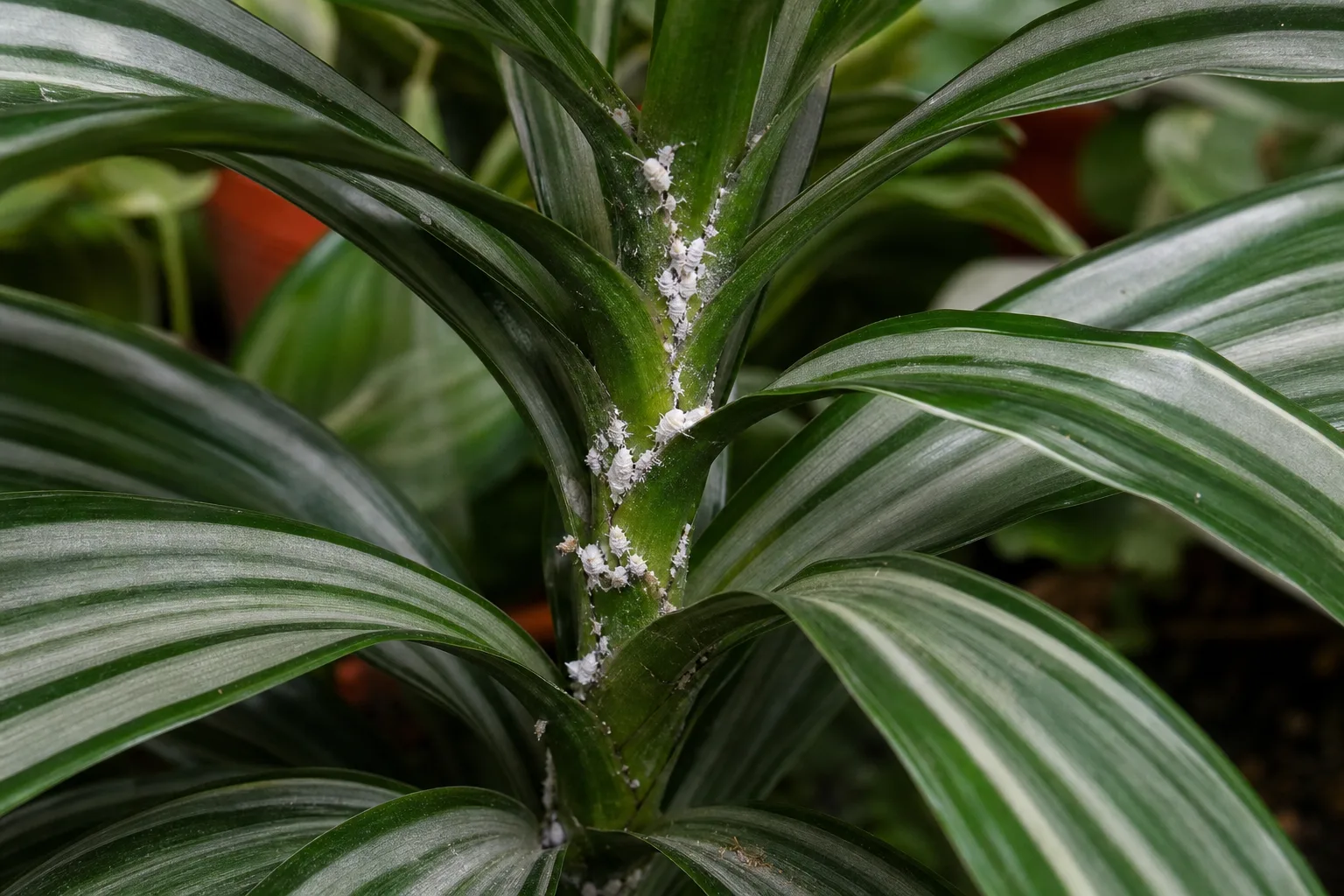
Mealybugs on Aluminum Plant: Causes, Checks & Fixes
This guide covers mealybugs on Aluminum Plant. See also the general Mealybugs guide, watering, and light pages for this plant.
Mealybugs on Aluminum Plant: Causes, Checks & Fixes
Quick answer
Mealybugs on Aluminum Plant (Pilea cadierei) show up as white, cottony clusters tucked into leaf axils, stem joints, and the bushy crown-exactly the sheltered crevices this compact plant creates as its oval, silver-marked leaves overlap. They are sap-sucking insects, not fungus or dust, and they spread slowly to neighboring pots if you ignore them.
First step: move the plant away from others and dab every visible cluster with a cotton swab dipped in 70% isopropyl alcohol. That direct contact kill comes before neem, soap, or any whole-plant spray. Mealybugs hatch on a cycle, so one treatment rarely clears a colony; plan on weekly passes until you see no new white masses for at least three weeks.
What mealybugs look like on Aluminum Plant
On a healthy Aluminum Plant, the silver patches on each leaf are smooth and fixed. Mealybugs break that pattern with irregular white fluff that gathers where leaves meet petioles and along branching stems-not usually as an even coating across the leaf face.
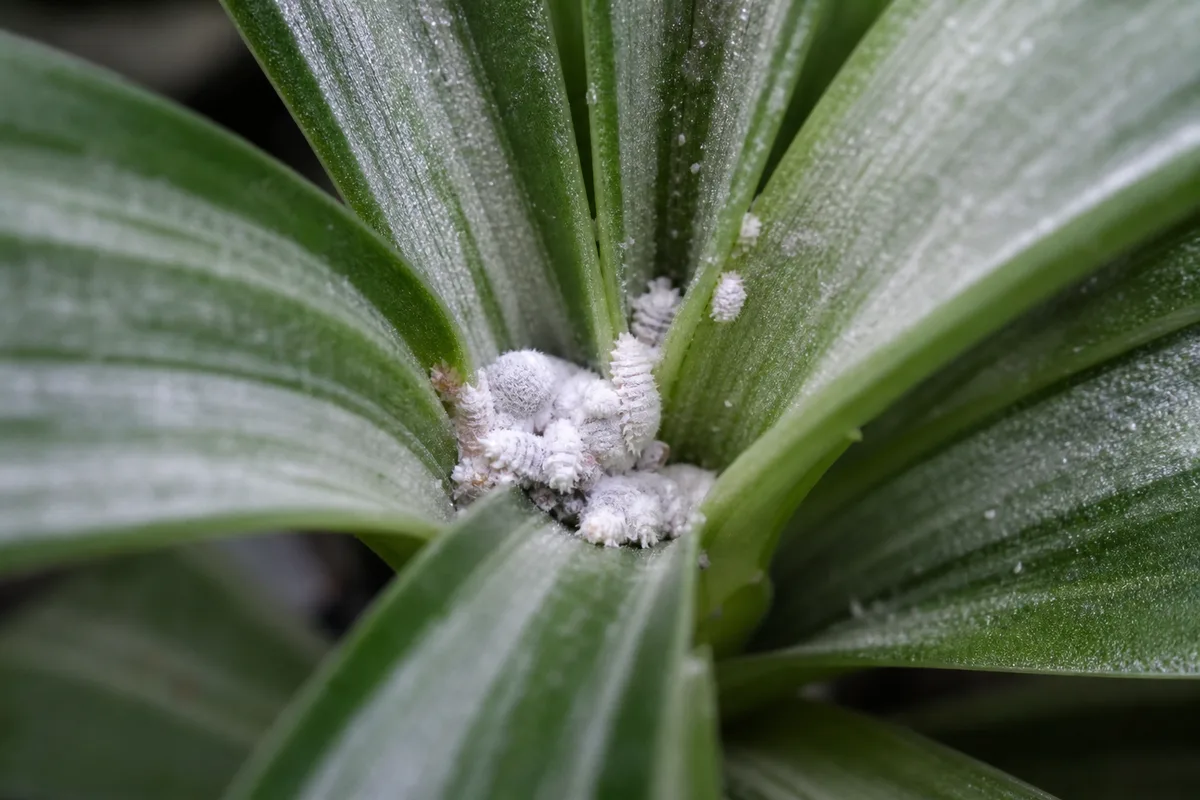
Mealybugs symptoms on Aluminum Plant - compare with healthy tissue on the same plant.
Typical signs on Pilea cadierei include:
- White, waxy, cotton-like masses in leaf axils and crown centers
- Slow-moving pinkish or gray insects beneath the wax if you part a cluster with a swab
- Sticky honeydew on leaf tops, stems, or the table beneath the pot-excess sap feeding produces honeydew
- Yellowing, curling, or slight stunting on heavily fed leaves
- Black sooty mold growing on old honeydew in advanced cases-honeydew can support sooty mold growth
Because Aluminum Plant stays relatively small and bushy, infestations often look like someone dabbed cotton into the plant’s center before you notice damage on the outer leaves. Check undersides along main veins too-mealybugs often live in protected crown and leaf-joint areas, but that tight junction zone is where Aluminum Plant overview hides first.
Why Aluminum Plant gets mealybugs
Mealybugs are common indoor houseplant pests that thrive on indoor plants without natural enemies where year-round warmth replaces outdoor predators. Aluminum Plant fits their habits: overlapping leaves create protected feeding sites, and moderate to fast growth produces tender new tissue they prefer.
The most frequent entry routes:
- New or gifted plants brought home without quarantine
- Contact spread from an infested neighbor on a shelf or windowsill
- Contaminated tools, stakes, or cache pots moved between plants
- Soft, nitrogen-rich new growth after heavy feeding-excess nitrogen can stimulate tender growth where mealybugs lay eggs
Aluminum Plant’s preferred 50–60% humidity and Aluminum Plant light guide do not prevent mealybugs; in fact, grouped plants in humid trays can share crawlers if one pot is infected. Stress from overwatering on Aluminum Plant, cold drafts, or dim corners does not cause mealybugs directly, but weak plants recover more slowly after sap loss and may look worse while you treat.
This is not a hygiene failure. Even well-kept Pilea cadierei collections see mealybugs when a single hitchhiker survives a casual leaf wipe.
How to confirm the cause
Work through these checks before committing to sprays:
- Location of the white material - Mealybugs cluster in crevices (axils, nodes, crown). Even powdery deposits from hard water rarely form thick cottony tufts in leaf bases alone.
- Swab crush test - Touch a cluster with a dry cotton swab, then crush it on white paper. Live mealybugs leave a pink or orange smear; mineral dust or dried water spots do not.
- Movement - Part the wax gently with a toothpick. Nymphs and adults are slow but visible; dust does not have legs.
- Honeydew - Shiny, sticky residue on leaves or nearby surfaces points to sap feeders (mealybugs, scale, aphids)-not edema or fungal issues.
- Pattern on the plant - Mealybugs often start on one stem branch and spread outward. Uniform silver leaf color without clusters is normal Pilea cadierei patterning, not pests.
If you only see flat white film evenly coating leaf tops after misting with hard water, suspect mineral residue first. Wipe with a damp cloth; if it lifts cleanly and no insects appear underneath, mealybugs are unlikely.
Lookalikes to rule out: powdery mildew (flat white powder on leaf surfaces, not waxy tufts in joints), woolly aphids (similar cotton but usually on newer tips), and soft scale (harder brown bumps, less fluffy).
First fix for Aluminum Plant
Isolate the plant and dab visible mealybugs with 70% isopropyl alcohol on a cotton swab or fine brush.
Move the pot to a separate room or at least two feet from other houseplants. Work stem by stem, coating each white cluster until the alcohol contacts the insect beneath the wax. Lift clusters away rather than smearing them across healthy leaf tissue.
Do not start with a full-neem drench or repot on day one. Isolation plus targeted alcohol contact is the fastest way to stop spread while you confirm how far the colony reaches. If the plant sits in direct sun or was recently stressed, spot-test one leaf axil and wait 24 hours before treating the whole plant-alcohol can burn tender tissue in hot, bright conditions.
Step-by-step recovery
After the first alcohol pass, continue in this order based on severity:
- Repeat alcohol dabs weekly - New crawlers hatch over several weeks. Re-inspect axils, crown, and undersides every seven days and dab any fresh white spots; repeat weekly until the infestation is gone.
- Shower or rinse if colonies are widespread - Lukewarm water on leaf undersides and stems knocks down crawlers before they resettle. Let foliage dry in bright indirect light, not harsh midday sun.
- Add insecticidal soap or horticultural oil for heavy infestations - Once alcohol has reduced visible adults, a thorough insecticidal soap or oil spray on stems and leaf undersides can reach thin wax on young nymphs. Cover insects directly; these products have little residual effect.
- Wipe honeydew - Clean sticky leaves with a damp cloth so sooty mold does not block light to silver markings.
- Inspect neighbors - Check other pileas, peperomias, and bushy houseplants on the same shelf. Mealybugs crawl short distances and hitchhike on hands and tools.
- Check stems near soil - Some species feed at the soil line or on roots. If stems look clean but the plant keeps declining, unpot and examine the base after the aboveground colony clears.
- Hold fertilizer - Skip feeding until new growth looks healthy for two weeks. Salt stress on sap-depleted roots slows recovery.
For a lightly infested Aluminum Plant, alcohol alone may be enough. Escalate to soap or oil only when white clusters return after two alcohol cycles or when insects sit deep in the crown where swabs cannot reach.
Recovery timeline
You should see fewer white clusters within one to two weekly alcohol passes. Crawlers that hatch from egg sacs you missed may appear in week two or three-that is normal, not treatment failure.
Good signs: no new cottony masses for three to four consecutive weeks, firm new leaves with clear silver patterning, and sticky honeydew drying up.
Old damage (yellowed or slightly curled leaves) may persist until you prune or replace them with new growth. Expect four to eight weeks of monitoring before you call the plant clear during active spring or summer growth; slower winter recovery is common if the plant was stressed or heavily fed upon.
Worsening signs: clusters multiplying on new stems despite weekly treatment, ants farming honeydew on the pot rim, or widespread leaf drop and stem softening-those warrant escalation or discarding severely compromised plants to protect the collection.
Lookalike symptoms
- Powdery mildew - Flat white powder on leaf faces, often in humid stagnant corners; wipes differently and lacks insects in axils.
- Hard water or fertilizer residue - Chalky film on leaf tops after misting; no clustering in stem joints, no honeydew.
- Normal silver markings - Fixed metallic patches on Pilea cadierei leaves are part of the cultivar, not pests; they do not look cottony or increase over days.
- Aphids - Soft pear-shaped insects on new tips, usually green; less waxy than mealybugs.
- Spider mites on Aluminum Plant - Fine stippling and webbing, favored by dry heat-not cottony axil clusters.
What not to do
Do not return the plant to a group display after one treatment. Isolation should last until you see no new mealybugs for at least two weeks.
Avoid 70% alcohol on sun-stressed leaves in hot direct light without a spot test-phytotoxicity shows as browned patches where alcohol pooled in leaf axils.
Do not compost infested prunings indoors or leave cuttings in water on the kitchen counter; crawlers can migrate to healthy plants.
Skip broad-spectrum indoor pesticides as a first response-they rarely reach hidden colonies and can stress a small Pilea more than alcohol dabs.
Do not over-fertilize while fighting pests; tender nitrogen-flushed shoots attract the next generation.
Aluminum Plant is pet-safe, but keep cats and dogs away from freshly treated foliage until alcohol and sprays have dried.
How to prevent mealybugs next time
Quarantine every new plant for two weeks and inspect plants before bringing them home before it joins your Aluminum Plant shelf. During weekly watering, rotate the pot and check the crown center-thirty seconds catches most outbreaks early.
Match care to the species: bright indirect light, water when the top half-inch of soil dries, and steady humidity near 50–60%. A vigorous plant tolerates minor pest hits better than one already yellowing from overwatering or cold drafts.
Use balanced fertilizer at half strength only in active growth; avoid nitrogen pushes that produce soft, mealybug-friendly shoots. Wipe dust from leaves occasionally so you can see axils clearly.
If you propagate stem cuttings from Aluminum Plant, inspect parent and cutting before sharing pots-mealybugs hide under nodes where leaves were removed.
When to worry
Act the same day if multiple plants show cottony clusters, ants are trailing to your Pilea, or sooty mold covers more than a few leaves. Those patterns mean an established colony, not a single hitchhiker.
On one plant, escalate if weekly alcohol for four weeks still finds fresh egg sacs in the crown, or if stems soften and leaves drop despite clearing visible insects-check for root-zone mealybugs or secondary rot.
Discarding a heavily infested, stunted Aluminum Plant is sometimes the practical choice when treatment cost exceeds replacing a fast-rooting cutting. That protects the rest of your collection.
Conclusion
Mealybugs on Aluminum Plant are a contact-and-patience problem, not a mystery disease. Confirm cottony clusters in leaf axils, isolate the pot, and dab with alcohol before reaching for sprays. Repeat weekly until crawlers stop appearing, watch new growth-not old damaged leaves-for recovery, and inspect neighbors before you declare victory. Pilea cadierei roots easily from healthy cuttings; saving the collection matters more than saving every waxy tuft on one tired stem.
When to use this page vs other Aluminum Plant guides
- Aluminum Plant watering guide - Use for routine moisture checks before assuming mealybugs is the main issue.
- Aluminum Plant problems hub - Browse all 16 common issues on this species.
- Yellow Leaves on Aluminum Plant - Different entry point when symptoms overlap with mealybugs.
- Slow Growth on Aluminum Plant - Different entry point when symptoms overlap with mealybugs.
- Spider Mites on Aluminum Plant - Different entry point when symptoms overlap with mealybugs.