Slow Growth on Aluminum Plant (Pilea cadierei): Causes
Quick answer
Slow growth on aluminum plant is often seasonal in winter, but long gaps between new leaf pairs in spring usually mean insufficient light, root-bound roots, or under-feeding-not random bad luck. First step: compare the newest leaves to older ones and check whether roots circle the pot before you fertilize or repot.
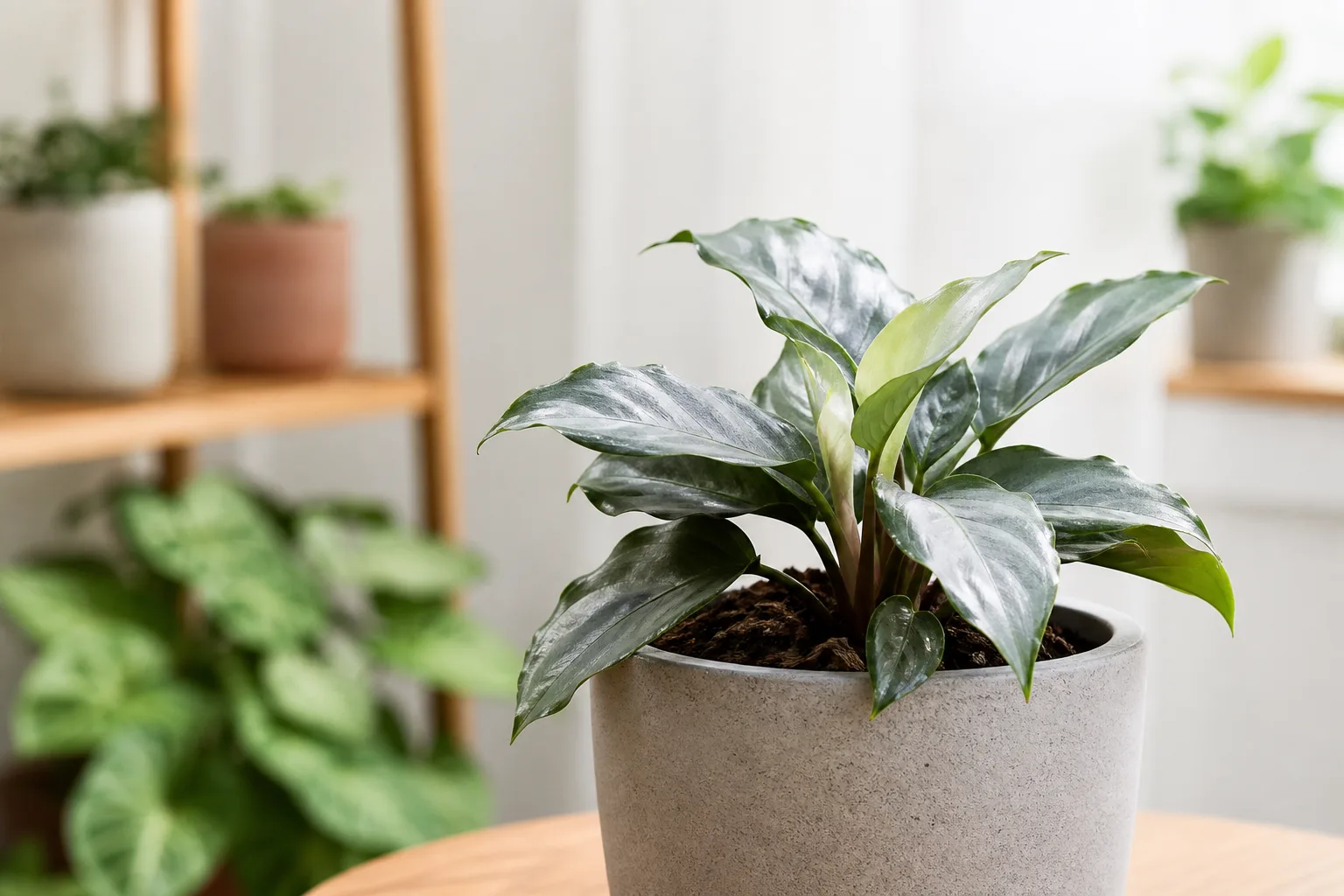
Slow Growth on Aluminum Plant (Pilea cadierei): Causes, Checks & Fixes
This guide covers slow growth on Aluminum Plant. See also the general Slow Growth guide, watering, and light pages for this plant.
Slow Growth on Aluminum Plant (Pilea cadierei): Causes, Checks & Fixes
Quick answer
Aluminum plant (Pilea cadierei) is a tropical understory herb with a medium growth rate in good conditions-compact, bushy, and steadily putting out opposite leaf pairs with raised silver patches. When growth stalls, the cause is usually fixable care stress, not a mysterious disease.
Slow growth here means long gaps between new leaf pairs, new leaves that stay smaller than older ones, or a plant that has not added height for months outside its normal winter pause. It is different from leggy stretch (see our not-enough-light guide), where stems elongate toward windows even though some growth continues.
First step: inspect the newest leaves and the root ball. Compare the last two leaf pairs at the stem tip with mature foliage lower down. Slide the plant out of its pot-if white roots circle the drainage holes or wrap the soil ball in a tight mat, root-bound stress is likely before you reach for fertilizer. If roots look healthy but new leaves are pale and tiny, check light placement next.
What slow growth looks like on Aluminum Plant
On this species, stalled growth shows up in leaf rhythm and size, not always as dramatic wilting.
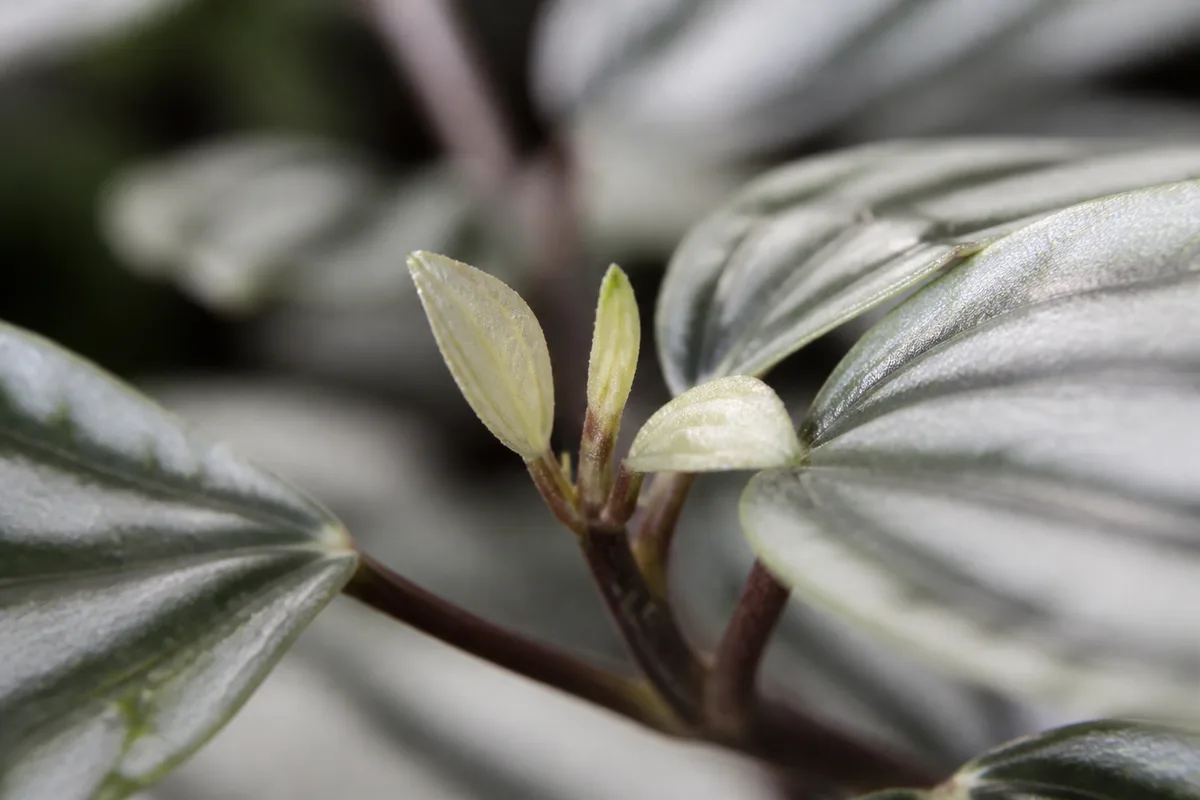
Slow Growth symptoms on Aluminum Plant - compare with healthy tissue on the same plant.
Typical signs:
- Long pauses between opposite leaf pairs - more than three to four weeks in spring or summer
- Smaller new leaves than the mature pairs lower on the stem
- Dull silver patches on fresh growth - the metallic rows lose contrast before growth stops entirely
- No height gain for months while the plant otherwise looks green and upright
- Soil that stays wet for days even though you have not watered recently - metabolism has slowed, often from shade or cool air
- Winter stillness with firm stems - often normal from late fall through early spring
Aluminum plant typically grows in a shrubby clump to about 12 inches tall. NC State Extension lists a medium growth rate and a mature spread of 6 to 9 inches. In bright indirect light during the active season, expect a healthy specimen to add visible new leaves regularly-not one leaf all summer.
Indoor plants rarely flower, so weak blooming is not a useful diagnostic. Track leaf frequency, size, and silver intensity instead.
When winter slowdown is normal
Pilea cadierei is not a true dormancy species, but it slows sharply when light and warmth drop. Missouri Botanical Garden advises watering moderately in the growing season and reducing water in fall to late winter-a signal that metabolism naturally eases during shorter days.
Normal winter pattern:
- Little or no new growth from late November through February in most homes
- Existing leaves stay firm and green; silver markings may look slightly dull in weak north-window light
- Soil dries more slowly; the plant needs less frequent drinks
- No yellowing cascade, soft crown, or pest coating on new buds
Abnormal winter pattern - act before spring:
- Lower leaves yellow while soil stays wet for a week or more
- New buds appear but stall at pin-head size, then brown off
- Mealybugs or spider mites cluster in leaf axils while growth stops
Do not force winter growth with heavy feed or extra water. Wait for brighter days, then reassess in March. If active season arrives and the plant still will not push leaves, treat it as a real stall-not seasonal rest.
Why Aluminum Plant growth stalls
Rank these causes by how often they limit Pilea cadierei indoors:
Insufficient light - but not always leggy yet
Low light eventually causes stretch, but growth can slow first. The silver patches on aluminum plant leaves carry little chlorophyll, so the plant needs bright indirect light indoors to fuel steady leaf production. A pot more than six feet from glass, or on a dim winter shelf, may stall before stems look obviously leggy.
This overlaps our not-enough-light guide-use that page when stretch and faded markings dominate. Use this page when the plant looks compact but simply will not add leaves.
Root-bound in a small pot
Aluminum plant has fine, relatively shallow roots. After one active season in a 4-inch nursery pot, roots often circle the bottom and stall top growth even when you water and feed on schedule. Penn State Extension recommends choosing a pot roughly two inches wider in diameter than the root ball when repotting-jumping to a huge container leaves wet, unused soil that invites rot.
Under-feeding or exhausted soil
This is a foliage plant grown for patterned leaves, not flowers. During spring and summer it uses nitrogen steadily when actively growing. Months of plain tap water in the same peat mix, with no half-strength feed, can leave new leaves small and slow. See our aluminum plant fertilizer guide for safe feeding rhythm-never feed a stressed, wet, or root-rotting plant to “wake it up.”
Overwatering and root stress in dim corners
When photosynthesis slows in shade, the plant drinks less. Soil stays damp, roots lose oxygen, and growth stops even though leaves have not yellowed yet. NC State Extension notes that overwatering or poor drainage commonly causes root rot on this species. Slow growth plus sour-smelling mix or a heavy pot is a root problem, not a hunger problem.
Cool drafts and low humidity
Penn State Extension lists daytime temperatures of 65–75°F as standard for pileas, with nights above 55°F. A pot on a cold windowsill, air-conditioning vent, or drafty door can stall growth while leaves look otherwise healthy. Aluminum plant also appreciates high humidity and wet pebble trays; very dry winter air rarely stops growth alone but can compound stress from light or roots.
Pests draining new growth
Watch for mealybugs in leaf axils and spider mites on undersides. Growth stops when sap-sucking insects hit tender new stem tips-inspect with a hand lens before blaming season or fertilizer.
How to confirm the cause
Work through these checks in order:
- Season and light level - Is it mid-winter in a dim room? Pause may be normal. Is it May in a bright east window with no new leaves for six weeks? Not normal.
- Newest leaf size and silver contrast - Smaller, duller new pairs point to recent stress from light, nutrition, or roots.
- Window distance - Within two to four feet of the brightest indirect window is the target. Farther than six feet usually limits this fast grower.
- Soil dry-down speed - Stick a finger in the top half-inch. If it stays wet four to five days after a normal drink while growth stalled, suspect shade or root stress-not thirst.
- Root ball inspection - Slide the plant out. Circling white roots, roots growing through drainage holes, or a solid root mat mean repotting-not more fertilizer.
- Pot weight and smell - A chronically heavy pot with sour soil suggests overwatering; a very light pot with crispy lower leaves suggests drought.
- Pest scan - Check leaf axils and undersides for cottony mealybugs, stippling, or fine webbing.
Confirmation test: Fix the most likely limiter alone-usually brighter indirect light or a repot into a pot two inches wider-and wait three weeks. A healthy new opposite leaf pair with sharper silver patches confirms you found the bottleneck.
Lookalike symptoms to rule out
Leggy growth - stems stretch with wide internodes while some leaves still appear. That is primarily a light-placement problem; see not-enough-light. Slow growth can coexist but compact stalled plants usually need root or feed checks first.
Not enough fertilizer - pale green new leaves, smaller than old ones, on an otherwise bright, well-watered plant with healthy roots. Link to fertilizer guide; do not confuse with winter rest.
Wilting and drooping - limp leaves with dry or wet soil point to water stress, not a growth pause. See wilting and drooping leaves.
Root rot - yellow lower leaves, soft stems, sour soil. Growth stops, but the urgency is root damage. See root rot before repotting into fresh mix.
First fix for Aluminum Plant
Compare new leaves to the root ball before changing anything else.
If roots circle a small pot and light is already decent, repot into a container only two inches wider with fresh, well-draining houseplant mix. Water once after repotting, place back in the same bright spot, and wait two weeks before feeding.
If roots look healthy but the plant sits far from windows or new leaves are tiny and dull, move to brighter indirect light first-within two to four feet of an east or north window, or set back from a filtered south or west window. See our light guide for placement detail.
If light is strong, roots are free, and it is spring or summer, one half-strength balanced feed after a normal watering can restart a hungry plant. Follow the fertilizer schedule-every four to six weeks, never on dry soil, never in winter unless grow lights keep active growth going.
Pick one of those paths. Do not repot, fertilize, and relocate on the same day.
Step-by-step recovery
Once you identify the limiter:
- Apply the single first fix above and label the calendar.
- Wait for one new opposite leaf pair before adding a second intervention-that leaf proves the change worked.
- Adjust watering to match the new growth rate. Faster growth in brighter light means faster dry-down; check the top half-inch before every drink.
- Pinch stem tips after healthy new growth appears if the plant looks one-sided. Missouri Botanical Garden recommends pinching to keep plants compact.
- Treat pests if confirmed-isolate, rinse undersides, then target the specific insect before expecting growth to resume.
- Optional fresh start: If the mother plant is mostly bare stems with occasional tiny leaves, take three- to four-inch tip cuttings in spring. Aluminum plant roots easily from stem tip cuttings and often shows the best foliage on young, well-lit plants.
Recovery timeline
Expect two to four weeks after a meaningful light upgrade or repot to see a new leaf pair on aluminum plant in active season. Root-bound recovery after repotting may take a full month before visible top growth resumes-the plant rebuilds roots first.
Signs recovery is working:
- New opposite leaves match or exceed the size of older pairs
- Silver rows look raised and distinct on fresh growth
- Soil dries on a predictable rhythm
- Stem tips stay firm and green
Signs the problem is worsening:
- New buds form then abort while soil stays wet
- Lower leaves yellow in batches
- Crown softens or smells sour at the soil line
- Pests spread to every new stem tip despite treatment
Winter recovery after correcting light may wait until March daylight lengthens-judge patience against season, not against summer benchmarks.
What not to do
- Do not fertilize a stalled plant in wet soil or deep shade. Salts build up while roots cannot use them.
- Do not repot and feed on the same day on a stressed plant. Let roots settle in fresh mix first.
- Do not overwater to “encourage” growth. Soggy mix in a dim corner is how slow growth becomes root rot.
- Do not assume every winter pause needs intervention. Reduce water and wait unless yellowing or pests appear.
- Do not judge success by old small leaves. Recovery shows on the next leaf pairs only.
How to prevent slow growth next time
Treat aluminum plant like the moderate-to-fast grower it is in nature-not a set-and-forget shelf plant.
- Keep bright indirect light year-round; add a grow light October through February if windows are weak. See light guide.
- Repot every 12 to 18 months or when roots circle-usually one to two inches up in pot size. See repotting guide.
- Feed half-strength every four to six weeks spring through summer when you see active leaves. Pause fall and winter. See fertilizer guide.
- Water when the top half-inch dries-faster in bright light, slower in winter. See watering guide.
- Pinch tips every few weeks during active growth to keep a bushy clump; best foliage sits on young, well-lit stems.
- Inspect weekly for mealybugs and mites on new growth while problems are still small.
When slow growth is normal vs. urgent
| Situation | Likely normal | Act now |
|---|---|---|
| No new leaves December–February, firm plant, no pests | Yes - seasonal pause | No |
| No new leaves May–August in a bright room | No | Yes - check roots, light, feed |
| Compact plant, tiny new leaves, roots circling pot | No | Yes - repot |
| Growth stopped, soil wet a week+, lower leaves yellow | No | Yes - inspect roots for rot |
| New tips coated in mealybugs or webbing | No | Yes - treat pests |
Conclusion
Slow growth on aluminum plant is usually a resource problem-not enough light, root room, or seasonal nutrition-rather than a mysterious illness. Winter stillness with firm green stems is often healthy; a six-week stall in spring is not. Compare new leaf size to the root ball, fix one limiter at a time, and judge recovery by the next opposite leaf pair with bright silver patches. Old small leaves will not enlarge; new well-lit growth tells you the plant is back on schedule.
Related aluminum plant guides
- Not enough light - leggy stretch and faded silver when placement is the limiter
- Aluminum plant fertilizer - half-strength feeding rhythm for stalled but healthy roots
- Aluminum plant light - window placement and grow-light setup
- Aluminum plant repotting - when root-bound pause needs a larger pot
- Root rot - wet soil and yellow leaves when growth stops from root damage
- Aluminum plant overview - baseline care rhythm for Pilea cadierei