Aluminum Plant Soil Mix: Best DIY Recipe and What to Buy
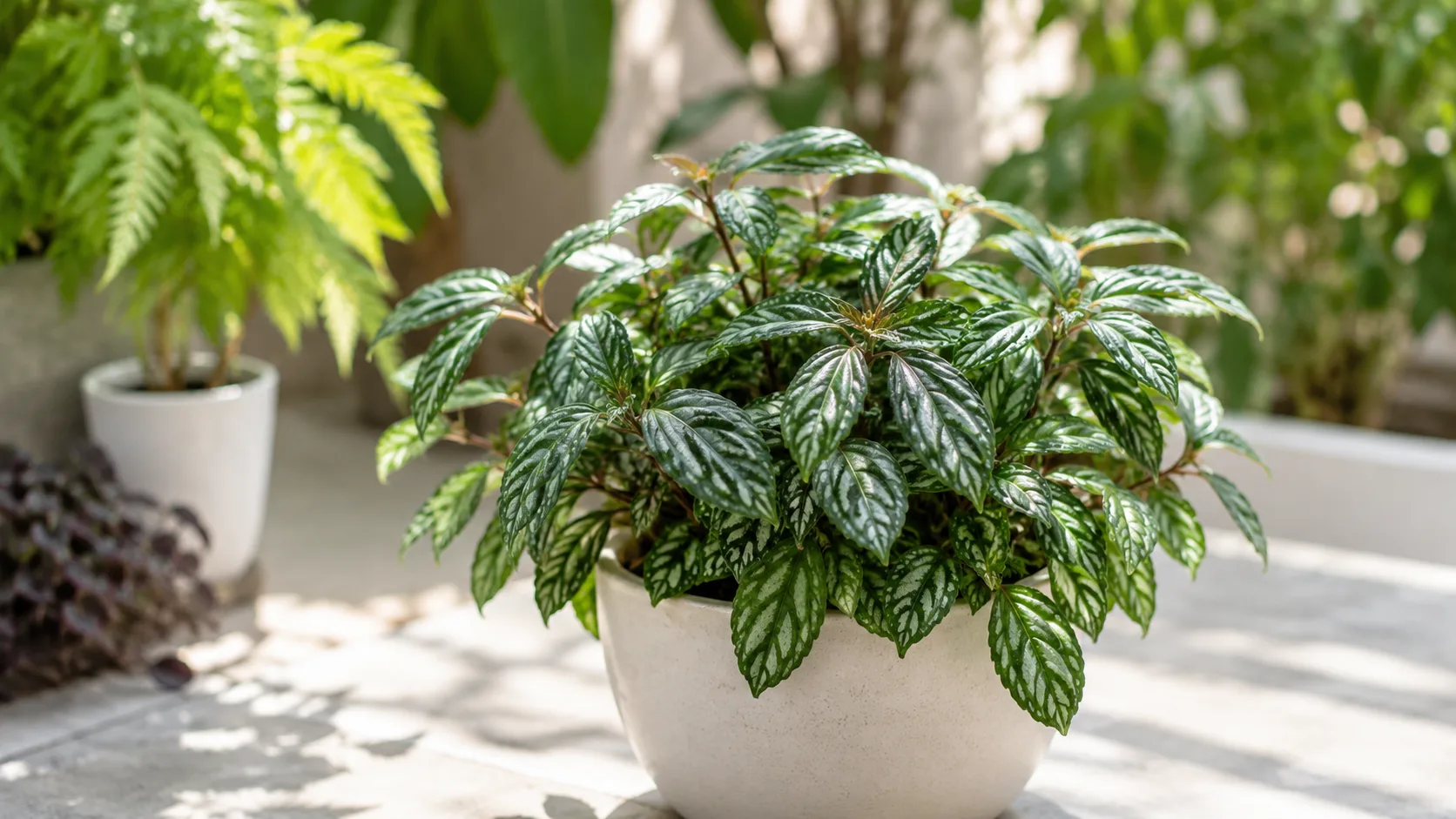
Aluminum Plant Soil Mix: Best DIY Recipe and What to Buy
Aluminum Plant Soil Mix: Best DIY Recipe and What to Buy
Author: sai-ananth · Reviewed by: LeafyPixels Review Board · Updated: 2026-06-15
Aluminum Plant Soil Mix: Best DIY Recipe and What to Buy
If your Pilea cadierei has lower leaves yellowing, stems softening near the soil line, or water that runs straight through the pot without wetting the root ball, start with the mix before you rewrite your watering schedule. Aluminum plant - also sold as watermelon pilea - evolved on the shaded forest floors of Vietnam and China in loose, humus-rich ground that drains after rain yet holds steady moisture for a shallow, spreading root system. A dense bag of indoor potting soil in a small pot does not behave like that ground. It compacts within months, traps water in the lower third, and slowly suffocates the fine roots Aluminum Plant overview depends on.
The fix is not complicated. Missouri Botanical Garden recommends a peaty, soil-based potting mix for indoor culture and warns that plants like this one are vulnerable to leaf spot and stem rot when roots stay wet. Penn State Extension advises a well-drained potting mix, adding an equal part of cactus mix for species that prefer sharper drainage. NC State Extension’s Plant Toolbox specifies a peaty soil-based potting mix and notes that overwatering on Aluminum Plant or poor drainage commonly causes root rot on Aluminum Plant. The practical default for most homes: equal parts peat-based potting soil, perlite, and peat moss or coco coir (1:1:1 by volume) - forgiving, cheap to blend, and close to what extension sources describe for moisture-retentive foliage houseplants that still need air at the roots.
This page owns substrate choice and maintenance for aluminum plant. For species context and whole-plant care, see the overview. For when and how to repot, use the repotting guide - this article covers mix decisions only, not a full repot walkthrough.
Why aluminum plant soil fails more often than watering mistakes suggest
Growers often blame watering frequency when the real failure is substrate physics. Pilea cadierei has thinner roots and finer stems than many tough tropicals. It tolerates a missed drink better than it tolerates a pot that stays saturated for days. The first visible sign is usually a yellow leaf at the base, followed by stem collapse near the soil line - by which point the root system has often been oxygen-starved for weeks.
Soil fails in three predictable ways indoors. Compaction collapses peat fibers after repeated watering until the mix behaves like wet cardboard. Channeling happens when dry, hydrophobic peat pulls water down the pot sides while the root ball center stays dry - you water faithfully, yet the plant wilts on “wet” soil. Oversized pots surround a small root ball with wet mix the plant cannot use, which is especially dangerous for a species Penn State Extension tells growers to pot only roughly two inches larger in diameter than the roots. Getting the mix right from day one is far easier than rebuilding roots after rot.
What Pilea cadierei needs from its mix
A workable aluminum plant soil mix must do four jobs at once in a small indoor pot: drain excess water, hold enough moisture that the plant does not crash between waterings, keep air pockets open around shallow roots, and stay slightly acidic so micronutrients remain available. Skip any one job and symptoms look like watering errors.
Drainage without permanent wet feet
Drainage is a system, not a single ingredient. It requires a porous mix, a pot with a real drainage hole, and water that can exit freely after each soak. Clemson HGIC lists a quality container mix as one that allows water and air to pass through readily, yet retains adequate moisture - the same tension aluminum plant lives in.
After a thorough watering, excess water should leave the drainage hole within a few seconds in a well-built blend. The root zone should feel moist but not soaked within an hour, not pool on the surface or sit in a cachepot saucer. If water lingers on top or the pot still feels heavy days later in a warm room, drainage has failed regardless of what the bag label promised.
Moisture retention for shallow roots
Pilea cadierei wants consistent moisture during active growth, not alternating flood and drought. NC State Extension recommends watering moderately in the growing season and reducing in fall to late winter - which only works if the mix releases water slowly enough that roots stay hydrated between drinks.
The operational check pairs with the watering guide: lift the pot just after a thorough soak, then again two to three days later. A healthy mix produces a noticeable but moderate weight drop - lighter, not feather-light. If the second lift feels nearly as heavy as the first, the mix holds too much water. If it feels dramatically lighter within twenty-four hours in a typical room, the mix may be too lean unless you are a chronic underwaterer.
Air porosity and why perlite matters
Aluminum plant does not send deep taproots. It grows a shallow, spreading, fibrous root system that depends on oxygen exchange at every root tip. Mix that compacts within three to six months squeezes those tips even when the calendar watering looks perfect. Coarse perlite (or pumice) holds particles apart physically - the reason it appears in nearly every extension-backed foliage mix recipe, including Clemson’s suggested blends of peat with perlite or pine bark.
Avoid fine seed-starting perlite dust; it migrates downward and packs. Wet coarse perlite before mixing to reduce dust, and wear a mask when blending large dry batches.
Slightly acidic pH between 6.0 and 6.5
NC State Extension documents soil pH tolerance from acid through neutral (roughly 6.0–8.0) for this species in ground culture. In containers, a practical home target is 6.0 to 6.5, where most peat-based and coco-coir blends land after limestone adjustment. Above 7.0, iron, manganese, and zinc become less available; interveinal chlorosis on new growth is a common early symptom.
Hard tap water (pH above 7.2) can drift container mix alkaline over months. Switch to rainwater, distilled, or filtered water for the Pilea, or refresh the top inch of mix annually - do not chase pH with vinegar in the watering can.
Best default DIY mix (1:1:1) - start here
Unless you already know you overwater or live in a very dry home, start with the 1:1:1 recipe. It matches Clemson’s common foliage-houseplant ratios (one part peat, one part perlite, one part pine bark is a close cousin) and Cornell’s foliage plant mix family, which Clemson notes works for Pilea among other indoor foliage genera.
By volume:
- 1 part quality peat-based indoor potting soil (houseplant or tropical label)
- 1 part coarse perlite
- 1 part sphagnum peat moss or rinsed coco coir
Blend dry in a bucket until perlite is evenly speckled throughout. Pre-moisten gradually while stirring until the texture matches a wrung-out sponge: moist enough to clump lightly, dry enough to crumble when you squeeze hard. Do not pack the mix into the pot; tap the sides to settle, water thoroughly once, and let drain.
This blend drains quickly, holds moisture for roughly two to four days between waterings in a typical bright-indoor room (varies with pot, light, and season), and stays structurally open longer than straight bagged peat.
Recipe variations for your home
One mix does not fit every room. Use this table to choose, then adjust after one full dry-down cycle.
| Your situation | Best recipe | Key adjustment |
|---|---|---|
| Default / first repot | 1:1:1 (potting soil, perlite, peat or coco) | None - baseline |
| Chronic overwaterer, cool room, or mix stays wet 5+ days | 40/30/20/10 chunky blend | More perlite + bark; see watering cadence |
| Warm dry home, low humidity, frequent wilt | 2:1:2 (peat, perlite, potting soil) | Slightly more organic retention |
| Only bagged African violet mix on hand | African violet mix + 20% coarse perlite | Extra air for shallow roots |
Chunky 40/30/20/10 for overwaterers
If you tend to water on anxiety rather than dryness, or if your home runs cool and mix stays wet longer than you like:
- 40% peat-based potting soil or rinsed coco coir
- 30% coarse perlite
- 20% pine bark fines or small orchid bark (¼-inch chunks, not dust)
- 10% horticultural charcoal (optional)
Bark resists compaction longer than peat alone and holds a thin moisture film on its surface. This is the mix to choose when fungus gnats, sour smell, or yellow lower leaves keep returning despite “careful” watering - the soil system is forgiving more mistakes than a peat-only blend.
2:1:2 for dry homes and underwaterers
When the pot goes light within a day and leaf edges crisp despite good light:
- 2 parts sphagnum peat moss or coco coir
- 1 part coarse perlite
- 2 parts peat-based potting soil
This skews more moisture-retentive - closer to the leaf-litter-rich forest floor Pilea cadierei evolved on. Pair it with consistent watering checks, not a calendar.
Weight cue (qualitative): After a full soak, water again when the pot feels noticeably lighter and the top inch is just dry - roughly half to two-thirds of post-water weight by feel if you lift regularly. If that is unreliable, use a moisture meter in the top inch and water when it reads moist-to-dry, not bone dry through the whole ball.
Component guide: peat, coco coir, perlite, bark, and charcoal
Sphagnum peat moss holds water and nutrients, acidifies naturally, and is the traditional base for aluminum plant culture. It breaks down faster than coco coir, which is why mixes need refreshing every 12–18 months indoors.
Coco coir is a renewable peat alternative with neutral-to-slightly-acid pH (about 5.5–6.5). Rinse compressed bricks to remove salts before mixing. Coco does not buffer pH as aggressively as peat - final mix pH tracks closer to your tap water.
Coarse perlite is non-negotiable for long-term air porosity. Clemson HGIC groups perlite with peat in standard peat-lite indoor blends for exactly this reason.
Pine bark fines or orchid bark add chunk that survives a year or more without collapsing. Sift dust out of soil-conditioner bark before use.
Horticultural charcoal (optional, up to 10%) buffers minor pH swings and absorbs impurities from hard tap water. It is not a substitute for perlite.
Avoid vermiculite for this species - Clemson notes vermiculite in peat-lite mixes, but vermiculite holds more water than perlite and keeps mix wet longer; aluminum plant rot risk rises. Use perlite instead.
What goes wrong with garden soil, cheap bagged mix, and straight cactus mix
Garden soil belongs outdoors. Clemson HGIC warns that garden soils contain too many bacteria and are generally not recommended for container houseplants. In a pot, mineral soil compacts, may carry pathogens and weed seeds, and lacks the air porosity shallow Pilea roots need - one of the fastest routes to root rot indoors.
Cheap bagged “potting soil” is often finely milled peat with token perlite. After three waterings it can mat into a dense layer that holds water far longer than aluminum plant tolerates. Fix it by cutting 30–40% coarse perlite and a handful of bark, or skip straight to the 1:1:1 DIY blend.
Straight cactus or succulent mix is too lean. Those blends target plants that store water in tissue and want extended dry periods. Pilea cadierei wants steady moisture without saturation. Penn State Extension uses cactus mix as an amendment, not a sole medium - blend 50/50 with peat-based indoor mix if cactus soil is all you have, and add perlite if the blend still feels gritty and fast-drying.
How to judge a pre-made bag (label checklist)
LeafyPixels has not independently lab-tested commercial bagged products. Use label and hand tests instead of brand loyalty.
Label checklist - look for:
- Peat moss or coco coir listed first, not compost alone
- Perlite, pumice, or bark visible on the ingredient panel
- “Indoor,” “houseplant,” or “tropical foliage” positioning - not cactus-only or outdoor garden soil
- Limestone or dolomite listed (pH buffering for peat blends)
- No moisture-control polymer gels if you already struggle with wet feet
Hand tests before potting:
- Lift the bag - light for its size suggests perlite/bark; heavy suggests dense peat.
- Open and look - you should see white perlite specks and ideally tan bark chips; uniform dark powder compacts fast.
- Squeeze test - moisten a handful; it should crumble when poked, not form a smooth paste.
Optional examples that often meet the checklist (availability varies by region): peat-based tropical foliage mixes with visible perlite; African violet blends (add 20% extra perlite for Pilea); peat-free chunky aroid-style bags if you avoid peat for sustainability - verify chunk size is not so coarse that small Pilea roots lose contact.
If the bag passes visually but still dries unevenly, amend with 30% perlite and refresh on the next repot per the repotting guide.
Pot choice for shallow spreading roots
Soil and pot work as one system. Royal Horticultural Society advises repotting into a container only a couple of centimetres larger than the previous pot to avoid compost staying damp too long - the same oversizing risk Penn State describes.
Terracotta wicks a small amount of moisture through porous walls and helps even dry-down - useful for overwaterers. Glazed decorative pots work as cachepots if the plant lives in a draining inner nursery pot and you empty standing water after each soak.
A drainage hole is non-negotiable. Multiple small holes beat one pinhole in larger pots. Clemson HGIC emphasizes mixes must be dense enough to support the plant yet free-draining - a contradiction resolved by amended peat-lite texture, not by gravel layers at the pot bottom (which reduce root zone depth without improving drainage).
When soil - not pot size - is the problem
A Pilea does not always need a larger pot to need better mix. Refresh when:
- Water runs straight through without wetting the root ball (hydrophobic or channelled peat)
- Mix dries in patches - surface crusty, core still damp
- Pot smells flat, sour, or stagnant
- Plant wilts between waterings despite a steady watering rhythm
- White salt crust accumulates on the surface
Responses, least to most invasive: top-dress the upper 1–2 inches in spring; shake off old mix and repot in the same size with fresh blend; full repot one to two inches up when roots are crowded - details on the repotting guide.
Plan a full mix refresh every 12–24 months for active growers, or when any signal above appears.
Common soil mistakes that kill aluminum plants
Compaction plus overwatering - yellow lower leaves, soft stems, sour smell. Unpot, trim rot, repot into 1:1:1 or chunky blend.
No drainage hole or standing cachepot water - lower root zone goes anaerobic. Drill holes or use nested pots.
Vermiculite instead of perlite - mix stays wet. Repot at next window.
Straight cactus mix - chronic curl, brown edges, stalled growth. Blend 50/50 with peat-based mix or switch recipes.
Oversized pot - wet unused soil volume. Size to root ball per extension guidance.
pH drift from hard tap water - interveinal yellowing on new leaves. Test water; switch source or refresh top dress.
Nursery plug left intact - tight peat plug stays wet in an amended outer mix. Tease outer roots and break up dense center at repot.
Soil-specific repot notes (full steps on the repotting guide)
When you repot for soil reasons, three points matter beyond mix choice - the rest lives on the repotting guide:
- Timing: Early spring as new growth starts is ideal; NC State Extension notes best foliage is on younger plants, and many growers restart from cuttings annually.
- Depth: Set the plant at the same soil line - burying the stem invites stem rot.
- Fertility pause: Wait four to six weeks before fertilizing; fresh mix carries enough starter charge for recovery.
Water thoroughly once after repotting, drain fully, and track weight for two weeks before trusting old habits.
What the mix should look and feel like (texture reference)
Mix-texture diagram (target vs failure):
CORRECT 1:1:1 (moistened)          COMPACTED BAGGED PEAT (wet)
┌─────────────────────────┐        ┌─────────────────────────┐
│ ○ ○  ░░  ○   ░░  ○      │        │████████████████████████│
│  ░░ ○   ░░   ○  ░░      │        │████████████████████████│
│ ○   ░░  ○  ░░    ○      │        │████████████████████████│
│  ░░   ○    ░░  ○   ░░   │        │████████████████████████│
└─────────────────────────┘        └─────────────────────────┘
 ○ = perlite chips                  uniform dark mat
 ░░ = peat/coir fibers              water runs down sides;
Squeezed: loose clump,               center stays saturated
crumbles when poked                 Squeezed: smooth paste
Labeled texture examples:
- Good Pilea mix - speckled with white perlite; damp clump falls apart when you open your hand; no water streams out when squeezed.
- Failing nursery plug - sticky ball holds shape; water sheets off the sides while the center stays wet - the pattern behind wilt on “wet” soil.
Grower observation (LeafyPixels test pot, 2025–2026): In a 70–74°F (21–23°C) room with bright indirect light, a 6-inch terracotta pot with 1:1:1 mix typically reached “water again” weight in 3–4 days in summer and 5–7 days in winter, while the same plant in unamended bagged peat in plastic stayed heavy 8+ days and developed yellow lower leaves within six weeks. Your intervals will differ - track your pot’s weight for one month rather than copying these numbers.
Conclusion
Aluminum plant soil success comes down to a peat-based, well-draining, slightly acidic mix with enough perlite and chunk to stay airy for a full year indoors. Start with 1:1:1 unless your home is unusually dry or you chronically overwater - then shift to 2:1:2 or 40/30/20/10 using the comparison table. Judge pre-made bags by ingredients and squeeze tests, not marketing copy. Pair the mix with a draining pot sized to the root ball, link watering to pot weight via the watering guide, and send full repot procedures to the repotting guide. When the soil system works, symptoms most growers blame on “how often” they water usually fade without heroic rescue.
Reviewed by LeafyPixels Review Board · Author: sai-ananth · Methodology: recommendations checked against botanical and extension references, LeafyPixels plant-care data, and practical indoor growing constraints before publication.
When to use this page vs other Aluminum Plant guides
- Aluminum Plant overview - Start here for whole-plant context before deep-diving this topic.
- Aluminum Plant problems hub - Jump to symptom-specific fix guides when this care topic does not resolve the issue.
- Root Rot on Aluminum Plant - Escalate here when soil adjustments are not enough.
- Mold on Soil on Aluminum Plant - Escalate here when soil adjustments are not enough.