How to Water an Aluminum Plant (Pilea cadierei)
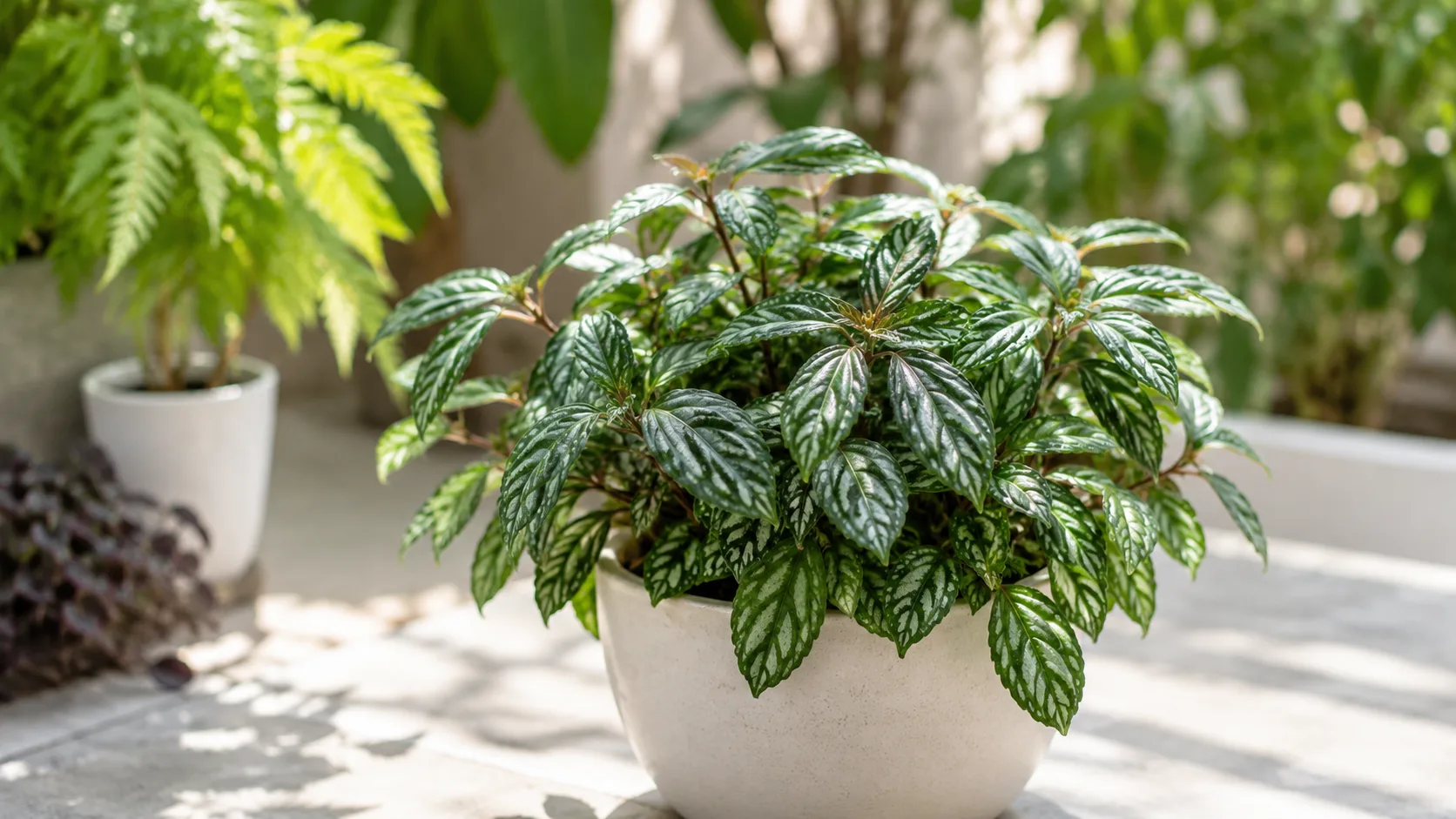
How to Water an Aluminum Plant (Pilea cadierei)
How to Water an Aluminum Plant (Pilea cadierei)
Why Watering Sits at the Center of Aluminum Plant Care
Aluminum plant is a tropical herbaceous perennial native to the shaded understory of Vietnam and China, where it creeps along the forest floor in warm, humid, well-drained soil. The Missouri Botanical Garden describes its indoor water needs as “medium,” with reduced watering from fall through late winter, and notes that the species is highly susceptible to leaf spot and stem rot if kept too wet. Translation for the home grower: the line between “perfectly hydrated” and “rotting from the roots up” is unusually thin, and almost every other care problem with Aluminum Plant overview starts with water. Light, humidity, fertilizer, and pot choice all matter, but a wrong watering rhythm will undo the best of intentions faster than any of them.
The good news is that Pilea cadierei is forgiving once you understand its pattern. It wants a moist root zone, not a wet one. It can bounce back from a forgotten watering, and it will tell you, clearly and in several different ways, when something is off. This guide is built around the two questions that actually drive watering decisions for an aluminum plant: how do I tell when the soil is ready for water, and what do I do when the leaves are already telling me I got it wrong? Everything else is supporting detail.
What “Evenly Moist, Never Soggy” Really Means
Most care sheets describe Pilea cadierei as preferring “evenly moist” soil. That phrase is doing a lot of work, and it is worth pinning down before you water anything. A moist root zone feels like a well-wrung sponge: cool, slightly damp, never dripping, and never bone-dry. When you press a finger an inch into the mix, it should feel like a damp crumb that holds together briefly when squeezed, then falls apart. That is the target.
Soggy soil feels different in three measurable ways. It is heavy for its size. Water lingers on the surface or pools around the stem. And the smell is faintly sour, sometimes musty, because oxygen-starved roots and the fungi that attack them are already at work. A pilea sitting in soggy soil is not being “well-watered”; it is slowly drowning, and the leaves will not get better until the roots can breathe again.
The other side of the coin is “evenly,” not “deeply dry between waterings.” Unlike a snake plant or a zz plant, the aluminum plant does not want to go fully dry to the bottom of the pot. The top inch can dry out, but below that the mix should still feel cool and slightly damp. A pot that goes from soaked to desert-dry in three days is a pot that is too small, too light, in too much light, or sitting in a draft. The plant itself is not the problem; the environment is.
A Realistic Watering Schedule by Season
Schedules are a starting point, not a rulebook, but they help anchor the rhythm when you are still learning a plant. For an aluminum plant in a typical 4- to 6-inch pot, in a typical home, in Aluminum Plant light guide, expect the following pattern.
Spring and Summer
During active growth, most aluminum plants need water roughly every 5 to 7 days, with the actual interval set by pot size, light intensity, humidity, and indoor temperature. A small terra-cotta pot in a sunny window in July can dry in three days. A large plastic pot in a north-facing room in May might still feel damp on day eight. Use the 5-to-7-day figure as a reminder to check, not as a date on the calendar. The Missouri Botanical Garden’s “water moderately in the growing season” guidance lines up with this range, and Gardenia’s care notes echo it with the more useful clarification that frequency depends on humidity, temperature, and light exposure.
The goal in spring and summer is consistent moisture through the active growth window. New leaves should unfurl with their characteristic four rows of silver patches. If new growth is stalling, the mix is probably staying dry for too long, or the light is too weak for the plant to use the water you are giving it. Both are easy fixes, and both are easier to diagnose if you have been paying attention to the soil rather than the date.
Fall and Winter
As light levels drop and indoor heating changes the air, the same pot dries more slowly. Most aluminum plants move to an every-10-to-14-day rhythm in fall and winter, sometimes longer in a cool room with no supplemental light. The Missouri Botanical Garden’s recommendation to “reduce watering in fall to late winter” is the single most important winter-care instruction for this species, because overwatering on Aluminum Plant in cool soil is the fastest route to root rot on Aluminum Plant.
Resist the temptation to keep watering at summer pace just because the plant still has leaves. A pilea in winter is not dead; it is resting, and its roots are using far less water. Watering on a summer schedule in winter is one of the most common reasons Pilea cadierei plants collapse in January and February. If you are unsure, wait two more days and check again.
Three Reliable Ways to Check Soil Moisture
The “how do I know when to water” question is the entire game. Three checks work well for aluminum plants, and most experienced growers combine two of them.
The first is the finger test. Push your index finger into the mix to the first knuckle, about an inch deep. If the soil feels dry at that depth, water. If it feels cool and slightly damp, wait. This works for almost every houseplant and is the single most reliable method for Pilea cadierei, because the species wants exactly that inch of dry-down between waterings. The top can look dry on the surface and still hide moisture below, which is why the depth of the check matters.
The second is the skewer or chopstick test. Slide a plain wooden skewer or chopstick into the mix as far as it will go, leave it for thirty seconds, then pull it up. Damp soil sticks and darkens the wood. Dry soil comes up clean. This is the best method for tightly packed or peaty mixes where the finger test can be misleading, and it is the one to reach for when a plant is recovering from overwatering and you want to be certain.
The third is the pot weight method. Lift the pot right after a thorough watering and remember that weight. Lift it again the next day, and the day after. The difference between a fully watered pilea and a ready-to-water pilea is unmistakable once you have done it a few times. This is the easiest method to use on a shelf of plants, because you can scan the whole collection in seconds, watering only the ones that feel light.
Whichever check you choose, use the same one every time. Consistency is more important than precision. The plant is telling you what it needs; the check is just the translation.
How to Water Aluminum Plant the Right Way
A good watering is thorough, not frequent. The goal is to wet the entire root ball, then let the pot drain freely so the roots can pull oxygen back in. Add water slowly at the surface until it runs out of the drainage holes. Let it drain for a minute, then empty the saucer or cachepot. The plant should never sit in standing water, because that is the condition that leads to root rot.
When you water, water the soil, not the leaves. Aluminum plant leaves are textured and stay slightly cupped, so water that lands on them tends to pool in the leaf axils and on the silver patches. Wet foliage plus still indoor air is an open invitation to leaf spot fungi. A long-spouted watering can, a squeeze bottle, or a slow stream from the faucet aimed at the soil surface all work well.
Bottom watering is also an option for aluminum plants, and it can be particularly useful if the mix has dried out and shrunk away from the sides of the pot. Set the pot in a few centimeters of room-temperature water and let the mix wick moisture up through the drainage holes for 15 to 30 minutes. The surface will darken as water climbs. Lift, let it drip, and put it back in its usual spot. Bottom watering is a tool, not a rule, and it is not a substitute for occasional thorough top watering, because salts and minerals from fertilizer and tap water build up at the surface over time and need a deep flush to leave.
Water Quality Matters: Temperature, Minerals, and Chemicals
The water that comes out of your tap is not all the same, and aluminum plant care guides from Missouri Botanical Garden, Gardenia, and Houseplant 101 all emphasize using water at room temperature. Cold water can shock the roots and cause leaf drop, especially in winter, so let a filled watering can sit on the counter for an hour or two before using it.
Beyond temperature, three water-quality issues affect Pilea cadierei more than most care sheets admit. The first is fluoride. U.S. municipal water is typically fluoridated at around 0.7 parts per million, and a number of houseplant species, including members of the Liliaceae and Agavaceae families, accumulate fluoride in their leaf tips and develop brown, crispy edges. Pilea cadierei is not in the highest-sensitivity group, but fluoride damage shows up over months as burned leaf margins, and the fix is straightforward: use rainwater, distilled water, or reverse-osmosis water. Letting tap water sit overnight removes chlorine but not fluoride, because fluoride does not evaporate, so the open-container trick is not a solution for sensitive plants.
The second issue is hard water. Calcium and magnesium build up in the potting mix over time, raising pH and locking out micronutrients. Symptoms include pale new growth and white crust on the soil surface or pot rim. A monthly flush with rainwater or distilled water, pouring through the mix until the drainage runs clear for thirty seconds, leaches the buildup.
The third is sodium-softened water. If your home has a water softener that uses salt, do not use that water on any houseplant. Sodium displaces calcium in the soil and damages roots quickly. Use a tap that bypasses the softener, typically an outdoor spigot, or fall back on collected rainwater.
If you do not want to track all of this, the simplest rule is to use rainwater when you can and room-temperature tap water when you cannot. Most aluminum plants tolerate average municipal tap water without drama, especially when the soil is flushed every four to six weeks.
Humidity, Temperature, and the Indoor Environment
Watering frequency is downstream of humidity and temperature, so it is worth handling them together. Pilea cadierei evolved in the warm, humid understory of Vietnamese and Chinese forests, and the Missouri Botanical Garden’s care note for indoor plants in general is to aim for 50 percent or higher relative humidity. Houseplant 101 and easyplant both place the species’ humidity comfort zone at roughly 50 to 70 percent. In practice, that means most homes run a bit too dry in winter, especially with forced-air heating, and a pilea’s leaves will show it.
When humidity is too low, the plant transpires faster than its roots can replace the lost water, even when the soil is moist. The result is crispy brown leaf edges, inward leaf curl, and tip burn that looks like underwatering on Aluminum Plant but is really a humidity problem. Three fixes work well: a humidifier set to 50 percent in the room where the plant lives, a pebble tray with water kept just below the pot base, and grouping the pilea with other humidity-loving tropicals so they share a microclimate. Misting helps in the short term but does not move the needle on a dry room; it raises local humidity for a few minutes and can leave leaves wet enough to encourage leaf spot.
Temperature matters for the same reason. Pilea cadierei is comfortable between about 60 and 75 degrees Fahrenheit and will tolerate brief dips near 50. Below 60, growth slows and the soil stays wet for longer, which is another reason winter watering should be conservative. Keep the plant away from drafty windows, heating vents, and exterior doors, because sudden temperature swings cause leaf drop as reliably as drought.
The Soil Mix That Makes Watering Easier
A good soil mix is the single best defense against both overwatering and underwatering, because the right mix holds moisture long enough for roots to drink but drains fast enough to keep oxygen moving. The Missouri Botanical Garden recommends a peaty, soil-based potting mix. Houseplant 101 and forwardplant both add that perlite, orchid bark, or coarse sand should be mixed in to improve aeration, with a typical indoor mix being about two parts peat-based potting soil to one part perlite or bark. The target pH is mildly acidic, somewhere in the 5.0 to 6.0 range, which matches rainwater chemistry and helps micronutrients stay available.
A mix that holds too much water is the most common cause of pilea problems. Standard houseplant potting soil straight out of the bag can be too dense for this species, especially in a plastic pot with no perlite. If water pools on the surface for more than a few seconds when you water, the mix is too heavy. If the pot feels heavy three or four days after a thorough watering, the mix is staying wet for too long. Either way, refresh with a grittier blend at the next repot.
The other half of the soil question is refresh frequency. Even a good mix breaks down over time. Peat compacts, perlite migrates, and organic matter decomposes into finer particles that hold water. Repot every 18 to 24 months, or sooner if the mix starts to dry slowly and stay soggy, and replace most of the old soil rather than just topping it off.
Pot Size, Material, and Drainage
The pot is part of the watering system, and choosing it well removes most of the guesswork. The two non-negotiables are drainage holes and the right size. Without drainage, even a careful watering routine will eventually waterlog the roots. A pot that is too large holds more soil than the roots can use, and that extra soil stays wet for too long. A pot that is too small dries out in a day and forces you to water constantly.
For a mature aluminum plant, expect to step up in 1-inch increments at Aluminum Plant repotting guide. A plant in a 4-inch pot goes to a 5-inch, not a 7-inch. The rule of thumb is to leave about an inch of space between the root ball and the pot wall on all sides. This gives roots room to grow without leaving a large reservoir of unused, wet soil behind.
Material is a personal choice with real consequences. Unglazed terra-cotta is porous and wicks moisture through the pot walls, which makes it the most forgiving material for anyone who tends to overwater. Glazed ceramic and plastic hold moisture longer, which is helpful in dry homes and bright, hot rooms, but punishing if your watering rhythm is already too generous. For a Pilea cadierei in a typical home environment, terra-cotta is usually the safer pick, especially in a small pot.
Overwatering Warning Signs and What Causes Them
Overwatering is the single most common killer of aluminum plants, and the species has a flair for showing the early stages in distinctive ways. The earliest and most reliable sign is yellowing of the lower leaves, often the oldest leaves closest to the soil. The yellowing starts at the leaf tip or margin and creeps inward, and the leaves usually feel soft rather than crispy. A second early sign is edema, which shows up as small water-soaked blisters or rust-colored spots on the undersides of leaves where roots have pushed more water into the leaf tissue than the leaf can transpire. A third is a faint sour or musty smell from the soil surface, the smell of anaerobic conditions taking hold.
If the overwatering continues, the symptoms escalate. Stems near the soil line go soft and dark. New growth stops. The whole plant begins to wilt even though the soil is wet, because the rotted roots can no longer move water upward. At this point the plant is in active root rot, and the situation is reversible only with fast action.
The underlying cause is almost always one of three things: soil that stays wet because the mix is too dense or the pot has no drainage, watering on a calendar instead of by soil feel, or a cool, dim winter location where the plant simply cannot use the water it is being given. Sometimes it is all three, and the fix has to address all three.
Underwatering Warning Signs and What Causes Them
Underwatering is less common and easier to reverse, but it has its own signature symptoms. The earliest sign is drooping. The leaves lose their perk and the stems begin to bend, especially on the newest growth. If the plant perks back up within an hour of a thorough watering, drought was the problem. If it stays droopy and the soil is still moist, you are actually dealing with overwatering damage and rotted roots, and the diagnosis is the opposite of what it looks like.
The next sign is crispiness. Leaf edges and tips turn brown and feel papery. New leaves may come in small, cupped, or curled inward, because the plant does not have enough water to fully inflate them. Brown patches can also appear in the middle of the leaf where the tissue has died back, distinct from the marginal browning of fluoride or low humidity.
The third sign is leaf drop, which is the pilea’s last-resort drought response. The plant sacrifices lower leaves to keep the growing tip alive. Severe underwatering combined with low humidity accelerates all three symptoms, and a chronically underwatered plant will eventually go into a permanent wilt from which it cannot recover without a deep, slow rehydration.
The underlying causes are simpler than overwatering. A pot that is too small for the root system, a soil mix that has become hydrophobic and repels water, a sunny south-facing window in summer, or simply an inconsistent routine. The fix in most cases is to size up the pot, refresh the soil, and water more deeply when you do water, rather than adding small, frequent sips that never reach the bottom of the root ball.
How to Rescue an Overwatered Aluminum Plant
If you catch the problem at the yellow-leaf stage, before the stems go soft, recovery is usually straightforward. Stop watering. Move the plant to a brighter spot with good airflow to help the surface dry. Poke several holes in the soil with a chopstick to aerate the root zone without disturbing the roots. Hold off on fertilizer. If the soil does not start to dry within a week, the mix is the problem and the plant needs repotting.
If the stems are soft or the soil smells sour, unpot the plant. Slide the root ball out, gently shake off the wet soil, and rinse the roots under lukewarm water. Healthy roots are firm and light, like fresh mozzarella. Rotted roots are brown or black, mushy, and may pull apart in your fingers. Trim every soft, dark, or stringy root with sterilized scissors, cutting back into firm white tissue. Dip the remaining roots in a diluted solution of one part 3 percent hydrogen peroxide to four parts water for fifteen to thirty seconds to kill lingering fungi, then rinse briefly.
Repot in a clean pot with drainage holes, using a fresh, gritty mix. A blend of two parts peat-based potting soil to one part perlite works well. Water lightly, just enough to settle the mix, then hold off for several days. Keep the plant in bright indirect light, away from drafts, and resist the urge to fertilize until you see clear new growth. Most aluminum plants bounce back within four to eight weeks of a proper rescue if they still had at least a third of their root system intact.
How to Revive a Drought-Stressed Aluminum Plant
A wilted but otherwise healthy aluminum plant is a happy problem, because the fix is the opposite of the overwatering fix. If the soil has pulled away from the sides of the pot, bottom watering is the most reliable recovery method. Set the pot in a few centimeters of room-temperature water and let the mix wick moisture up from below for 20 to 30 minutes. The surface will darken as the water climbs. Lift, drain, and put the plant back in its usual spot. Within an hour, the leaves should be perkier. If they are not, the plant may have lost enough fine roots that it needs a few days to recover; keep the soil lightly moist, not soaked, and watch for new growth as the sign that recovery is underway.
Trim any leaves that have gone fully brown or crispy. They will not recover, and the plant is better off putting its energy into new leaves. Mist the remaining foliage lightly for the next few days to reduce transpiration stress, but do not overdo it; the goal is to reduce water loss, not to soak the leaves. Resume normal watering once the plant has stabilized, using the finger test as your guide, and consider a half-strength dose of balanced houseplant fertilizer a few weeks later to support new growth.
Watering Myths That Need to Go
Several pieces of well-intentioned advice about aluminum plant care are at best incomplete and at worst actively harmful.
The first myth is that pileas want consistently wet soil. They do not. They want consistently moist soil. Wet and moist are not the same thing, and the difference is oxygen. Roots need both water and air, and a saturated mix has no air space left. A good test: if the pot feels heavy and the surface looks glossy after a day, the mix is too wet.
The second myth is that misting is a substitute for watering or humidity. It is neither. Misting raises local humidity for a few minutes, which can help in dry rooms, but it is not a meaningful substitute for a humidifier or a pebble tray, and it does not address soil moisture at all. Heavy misting that leaves leaves wet overnight can also encourage leaf spot, which is exactly what Pilea cadierei is prone to.
The third myth is that yellow leaves always mean more water. Sometimes they do, but yellowing can also come from underwatering, low humidity, fluoride damage, fertilizer burn, low light, or natural shedding of old leaves. Check the soil moisture, the pot weight, the light, and the fertilizer schedule before reaching for the watering can. The correct response to yellow leaves depends on the cause, and the wrong response often finishes off a plant that could have been saved.
The fourth myth is that a pot without drainage is fine if you are careful. It is not, not for this species. Aluminum plants are unusually sensitive to waterlogged conditions, and a single overwatered episode in a cachepot without holes can rot the roots. If you love the look of a decorative outer pot, keep the plant in a plastic nursery pot with drainage inside it, and lift it out for every watering.
A Simple Weekly and Monthly Watering Routine
For an aluminum plant in a 4- to 6-inch terra-cotta pot, in a typical room with bright indirect light and 40 to 60 percent humidity, a workable routine looks like this.
Weekly: pick a day to do the check. Lift the pot. Stick a finger in the soil. If the top inch is dry and the pot feels light, water thoroughly until it drains. If the top inch is still cool and damp, leave it and check again in two to three days. Log what you did; after a month, you will know the plant’s rhythm by heart.
Monthly: give the soil a deep flush. Pour room-temperature water through the mix slowly, let it run out the drainage holes for at least thirty seconds, and let the pot drain completely. This washes accumulated salts, fluoride, and minerals out of the root zone. If you are using rainwater or distilled water, this is also a good moment to confirm that the mix is draining freely and not compacting.
Every 18 to 24 months: repot, replacing most of the old mix. Step up by one inch if the plant is root-bound, otherwise keep the same size pot and just refresh the soil. Trim any circling roots and remove any that look soft or dark.
When to Adjust Your Routine Mid-Year
Most watering mistakes happen at the transitions. The plant does fine all summer, you keep the same rhythm into November, and by January the leaves are yellow and the stems are soft. The reverse also happens: a plant that coasted through winter suddenly wilts in March because new growth is using more water than the winter routine supplied.
Three signals tell you it is time to recalibrate. The first is new growth. When you see fresh leaves unfurling in spring, the plant has shifted into active growth, the root system is waking up, and the pot will start drying faster. Increase watering frequency and start a half-strength fertilizer routine.
The second is leaf behavior in winter. If the lower leaves start to yellow and drop in December or January, slow down. Let the top inch and a half dry between waterings. If the same pot that dried in five days in August now takes twelve, trust the soil, not the calendar.
The third is light. Move the plant into a brighter spot for winter and the watering rhythm shifts. Move it deeper into a room for summer and it shifts the other way. Whenever you change light, expect to change water within a week or two.
Conclusion
Watering an aluminum plant well is not about following a schedule, using a special water, or buying the right pot. It is about reading three things consistently: the soil an inch below the surface, the weight of the pot, and the leaves the plant is showing you. Pilea cadierei is a tropical understory plant that wants the cool, damp, oxygen-rich feel of a forest floor, and the grower’s job is to recreate that in a pot on a shelf. Do that, and the silver-patched leaves stay sharp, new growth keeps coming, and the plant rewards you for years.
The pitfalls are predictable and survivable. Overwatering shows up as yellow lower leaves, soft stems, and sour soil, and it is almost always a soil or drainage problem before it is a frequency problem. Underwatering shows up as drooping, crispy edges, and leaf drop, and it is almost always a missed check rather than a true drought. Water at room temperature, use rainwater or filtered water when you can, flush monthly, repot every couple of years, and adjust with the seasons. That is the entire system, and it is enough to grow a healthy, full aluminum plant for as long as you want one.
When to use this page vs other Aluminum Plant guides
- Aluminum Plant overview - Start here for whole-plant context before deep-diving this topic.
- Aluminum Plant problems hub - Jump to symptom-specific fix guides when this care topic does not resolve the issue.
- Overwatering on Aluminum Plant - Escalate here when watering adjustments are not enough.
- Underwatering on Aluminum Plant - Escalate here when watering adjustments are not enough.
- Root Rot on Aluminum Plant - Escalate here when watering adjustments are not enough.
Related Aluminum Plant guides
- Aluminum Plant overview
- Aluminum Plant light
- Aluminum Plant soil
- Aluminum Plant propagation
- Aluminum Plant fertilizer
- Aluminum Plant repotting
- Overwatering on Aluminum Plant
- Underwatering on Aluminum Plant
- Root Rot on Aluminum Plant
- Wilting on Aluminum Plant
- Drooping Leaves on Aluminum Plant
- Mold on Soil on Aluminum Plant