Aluminum Plant (Pilea cadierei) Repotting Guide: When, How
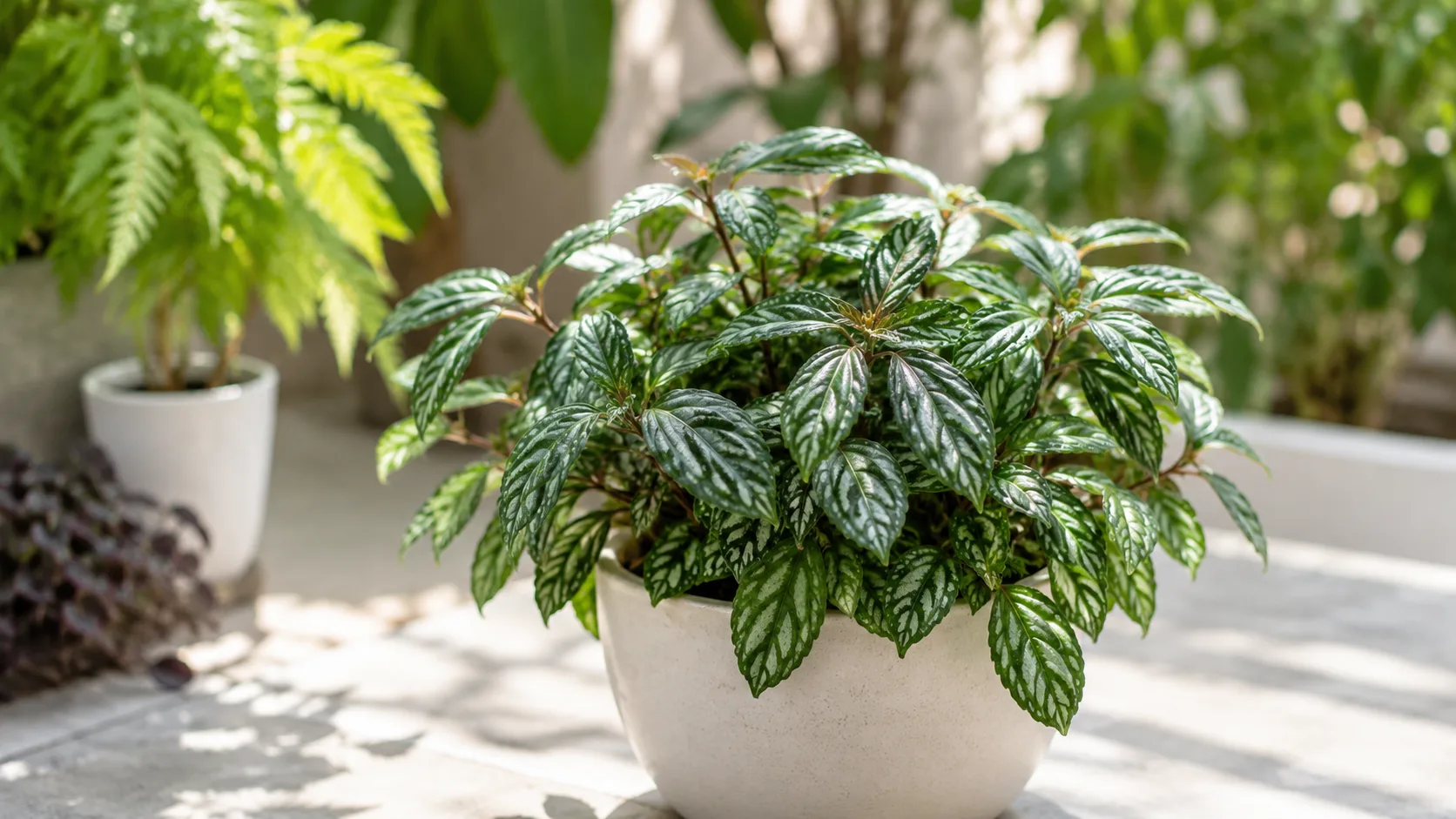
Aluminum Plant (Pilea cadierei) Repotting Guide: When, How, and Best Soil Mix
Aluminum Plant (Pilea cadierei) Repotting Guide: When, How, and Best Soil Mix
Reviewed by LeafyPixels Review Board · Author: sai-ananth
Aluminum plant repotting for Pilea cadierei goes wrong in one predictable way: the grower jumps to a pot that is far too large, waters on the old schedule, and watches fine silver-splashed leaves yellow from root rot on Aluminum Plant within two weeks. The plant is not dramatic - it is a small, clumping tropical herb with a shallow, fibrous root system that evolved on forest floors in Vietnam and China, where loose leaf litter drains fast and never stays waterlogged. Indoors, repotting is how you reset compacted peat, salt buildup, and circling roots - but only if you respect that biology.
Oversizing is the mistake worth fearing first. A 6-inch canopy in a 10-inch pot looks balanced on a shelf; underground, most of the soil volume stays wet for days while the roots occupy only the center. NC State Extension notes that overwatering on Aluminum Plant and poor drainage commonly cause root rot on Aluminum Plant overview, and Missouri Botanical Garden recommends a peaty, soil-based potting mix with moderate watering in the growing season. This guide covers timing, pot choice, a soil summary (full mix science lives in our soil guide), step-by-step repotting, optional division, post-repot recovery, and an emergency protocol for rotting roots.
Why Repotting Matters for Aluminum Plant
Repotting is less about giving Pilea cadierei a decorative upgrade and more about restoring the root environment. Over 12 to 24 months in the same container, peat and coir break into fine particles, air pockets collapse, fertilizer salts accumulate at the soil surface, and roots circle the pot wall. The plant wilts faster after watering, pushes smaller leaves with duller silver patches, and may shed lower foliage even when you have not changed your watering rhythm. A well-timed spring repot - fresh mix, one size up, minimal root disturbance - fixes those problems in under an hour and buys another healthy growing season.
What Pilea cadierei needs from soil indoors
In habitat, aluminum plant sits in humus-rich, well-draining forest soil refreshed by leaf litter. Missouri Botanical Garden describes it as an upright, clumping perennial to 12 inches with elliptic green leaves bearing four rows of raised silver patches - the “watermelon pilea” look. Indoors, the closest analogue is a peat- or coco-coir-based mix amended heavily with perlite so water drains in seconds but the upper root zone stays lightly moist between drinks.
Unlike a pothos or snake plant with thicker roots and more drought tolerance, P. cadierei has fine, shallow roots that suffocate quickly in dense, waterlogged mix. That is why the same “well-draining tropical mix” advice that works for forgiving species can still fail here if the pot is oversized or the peat has compacted. For pH targets, African violet mix comparisons, and three full DIY recipes, see the dedicated aluminum plant soil guide - this page focuses on the repot workflow, not repeating that science.
How fast growth drives pot-bound conditions
Penn State Extension’s Pilea houseplant overview describes aluminum plant as a clumping species native to tropical forests of China and Vietnam, reaching 6 to 12 inches tall and 6 to 9 inches wide. In bright indirect light with regular feeding during spring and summer, a young plant can fill a 4-inch nursery pot within a year. As the canopy thickens, roots spread horizontally rather than diving deep - so root-binding shows up as circling at the pot bottom and water channeling down the sides long before the plant looks “too big” above the soil line.
When to Repot an Aluminum Plant
Cadence: young vs mature plants
The practical rhythm for most indoor growers: every 12 months for fast-growing young plants, every 18 to 24 months for mature clumps that have slowed vertically. The Royal Horticultural Society advises checking roots each spring and repotting pileas when crowded - usually every couple of years - using a pot only a couple of centimetres larger to avoid overpotting.
Treat the calendar as a reminder to inspect, not a command to disturb roots. Slide the plant out in late winter or early spring. If roots are white or cream with plenty of visible mix and no sour smell, you can top-dress or wait. If roots form a dense mat with little soil in the center, plan a repot at the next warm window.
Five signs - repot now vs top-dress vs wait
| What you see | Best action | Why |
|---|---|---|
| Roots through drainage holes + water runs straight through | Full repot now (spring preferred) | Root-bound; mix no longer holds water in the root zone |
| Mix compacted, sour smell, but roots still white | Full repot with fresh mix, same or one size up | Degraded substrate, not necessarily space issue |
| Healthy roots, plant stable, mix only tired on surface | Top-dress - replace top 2–3 inches | Lowest-stress refresh; good in fall |
| One yellow lower leaf after a cold draft | Wait - fix environment first | Not a repot signal |
| Mushy brown roots, soft stems at soil line | Emergency repot - any season | Active root rot; see emergency section |
The three strongest routine signals together - roots at drainage holes, water shedding without soaking in, and stalled new growth despite good light - mean repot at the next spring opportunity unless rot is already present.
Best season: spring and early summer
Spring through early summer is the best window because the plant is entering active growth. NC State Extension recommends taking cuttings in early spring to start fresh plants - the same season when root tips regenerate fastest after disturbance. New white root tips and paired leaf emergence at stem tips are your green light.
Early summer still works if you missed spring. Avoid routine winter repots when growth is minimal and wet soil lingers longer in cool rooms. Exceptions: severe root-bound wilting or active rot - those warrant immediate action regardless of month, with slower recovery accepted.
Choosing the Right Pot
The 1–2 inch rule with worked examples
Move up only 1 to 2 inches (2.5 to 5 cm) in pot diameter - no more. Penn State Extension advises choosing a pot roughly 2 inches wider than the root ball, not the foliage canopy. The RHS warns that an overly large pot keeps compost damp too long and leads to root rot.
Worked progression for a typical indoor aluminum plant:
| Stage | Current pot | Next pot | Notes |
|---|---|---|---|
| Year 1 nursery plant | 4-inch | 5- or 6-inch | First real repot after establishment |
| Years 2–3 active growth | 6-inch | 7- or 8-inch | Largest most windowsill plants need |
| Mature clump | 8-inch | 9-inch max | Divide instead of jumping to 10-inch |
A canopy that looks top-heavy is not permission to skip sizes. Stability problems are solved with a heavier cachepot or pruning leggy stems, not a waterlogged ocean of fresh mix.
Every growing pot needs a drainage hole. Decorative cachepots without holes are display only - keep the plant in a draining nursery pot inside, remove to water, and empty the saucer.
Reusing pots: scrub off old soil and mineral crust, then soak 10 minutes in one part household bleach to nine parts water (a 10% bleach solution), rinse thoroughly, and air-dry - per Iowa State Extension container disinfection guidance and NC Cooperative Extension repotting advice. Prepare the solution fresh; it loses strength within hours.
Terracotta vs ceramic vs plastic
| Material | Moisture behavior | Best for |
|---|---|---|
| Terracotta | Breathes; dries faster | Overwaterers; warm, humid rooms |
| Glazed ceramic | Holds moisture like plastic | Stable waterers; dry winter air |
| Plastic nursery | Retains moisture longest | Travelers; propagation divisions |
Material matters less than size and drainage. Terracotta’s faster drying can protect shallow Pilea roots after repot when you are learning a new watering rhythm in fresh mix - cross-check with our watering guide rather than guessing from the calendar.
Soil for Repotting
Quick DIY mix
For repot day you need a mix that drains in seconds, holds light moisture for two to three days, and stays airy. A reliable shortcut:
- 1 part peat-based indoor potting mix (or coco coir)
- 1 part coarse perlite
- Optional: small handful of orchid bark per quart for extra chunk
Wet a sample handful - it should feel like a wrung-out sponge, not a wet ball. If water pools on top, add more perlite before potting.
Store-bought: any peat-based tropical foliage mix amended with 20 to 30% extra perlite works. African violet mix plus perlite is a close off-the-shelf match; see the soil guide for the African violet comparison and pH troubleshooting. Skip straight cactus mix unless you blend it 50/50 with peat-based indoor mix.
Do not repeat a full recipe essay here - that content belongs on the soil page. At repot time, the test that matters is practical: water the sample mix, let it drain, squeeze it. Light and crumbly passes; dense and clumpy needs more perlite.
Step-by-Step: How to Repot an Aluminum Plant
Prep and pre-watering
Water the plant the day before repotting so the root ball holds together. Gather: new pot, fresh mix, clean scissors, chopstick or pencil, newspaper, and optionally ground cinnamon for cut root surfaces. Work in bright indirect light - not direct sun, which dries exposed roots quickly.
If you are also propagating divisions, prepare one pot per section before you start cutting.
Remove and inspect roots
Turn the pot on its side, support the stem base, tap or squeeze the pot, and slide the plant out. Run a butter knife around the rim if stuck - never yank the stem.
Healthy Pilea roots: white, cream, or pale tan; firm; earthy smell.
Rot: brown, black, or mushy; sour or rotten smell; stems soft at the soil line.
Dense circling at the bottom is normal in a root-bound plant. Tease those outward gently - do not bare-root the entire ball. Fine root hairs near the center absorb water; stripping all soil sets recovery back weeks.
Dividing an Aluminum Plant While You Repot
Safe split procedure
P. cadierei is clump-forming, and the RHS recommends dividing clump-forming pileas in spring or summer so each section has plenty of roots and healthy vigorous shoots. Division succeeds reliably when every piece includes roots plus at least one stem with several leaves - not a single leaf without roots.
Steps:
- Remove the plant and brush away loose surface soil.
- Find natural separations between stem clusters.
- Tease apart by hand; use a clean knife only if roots are tightly tangled.
- Pot each division in a pot sized to the root ball, not the original canopy.
- Water thoroughly; keep in bright indirect light with stable humidity for two to three weeks.
New silver-splashed leaf pairs within that window confirm each division has rooted. For stem-cuttings-only propagation without division, see the propagation guide.
Post-Repotting Care: The First Four Weeks
Light, water, fertilizer, and humidity
Light (days 1–7): Keep out of direct sun. Bright indirect light only while roots re-anchor. Gradually return to normal light placement after the first week if the plant looks stable.
Water: Water thoroughly once after potting, then let the top inch dry before the next drink. Fresh mix often holds moisture more evenly than old compacted peat - resist watering on the old calendar. Mild droop for two to four days is normal transplant shock, not automatic thirst.
Fertilizer: Wait 4 to 6 weeks before feeding. Fresh mix usually carries a starter nutrient charge, and recovering roots are salt-sensitive. Resume at half strength per our fertilizer guide.
Humidity and airflow: Target 50 to 70% humidity and 65 to 75°F (18 to 24°C) daytime temperatures. Avoid cold drafts and heater blasts. NC State Extension notes powdery mildew can occur in high humidity with poor circulation - do not mist leaves after repot; use a pebble tray or small humidifier instead.
Recovery signals:
| Normal shock | Warning - investigate |
|---|---|
| Slight droop 2–4 days | Worsening wilt with wet soil after day 5 |
| Pause in new growth 1–2 weeks | Yellowing spreading up the stem |
| One old leaf drops | Soft stems, sour soil smell |
| New silver leaf pair within 3–4 weeks | No new growth + soil stays soggy (overpotting) |
Common Repotting Mistakes
Overpotting - jumping more than 2 inches in diameter. The fix is always smaller pots, not less water alone.
Bare-rooting - washing all soil off removes absorbing root hairs. Tease circling roots only.
Winter routine repots - slow recovery, easy overwatering. Top-dress or wait for spring unless emergency.
Early fertilizer - burns recovering roots on top of fresh mix nutrients.
Misting after repot - wet foliage plus poor airflow invites powdery mildew on this species.
Stacking stressors - do not repot, divide, prune hard, and fertilize the same weekend. One disruption at a time.
Emergency: Repotting for Root Rot
When stems soften at the soil line, soil smells sour, or roots are mostly mushy, treat it as rot - not transplant shock.
- Unpot immediately. Rinse only enough to see roots; do not destroy the entire ball if firm roots remain.
- Trim all brown, black, or mushy roots with sterile scissors. Dust cut surfaces with cinnamon and let air-dry 30 to 60 minutes.
- Downsize if you removed more than a third of the root mass - a smaller pot reduces wet soil the weakened roots cannot use.
- Repot into fresh, perlite-heavy mix - barely moist, not soggy.
- Hold water until the top inch is dry, then water lightly. No fertilizer for 4 to 6 weeks.
- Discard if the crown is mushy and no firm roots remain - take healthy stem cuttings for propagation if any firm tissue exists above the rot.
Winter emergency repots are acceptable; keep the plant warm and accept a slower timeline. Recovery is confirmed by firm new stems and a fresh silver-marked leaf pair, not by the plant merely stopping its decline.
Conclusion
After repotting Pilea cadierei, run this checklist instead of second-guessing:
- Pot: Only 1–2 inches larger; drainage hole; bleach-rinsed if reused
- Soil: Peat- or coir-based with heavy perlite; water test passed before potting
- Week 1: Bright indirect light, no direct sun; top inch dry before re-watering
- Weeks 2–4: Watch for new silver-marked leaf pairs; no fertilizer yet
- Month 2: Resume half-strength feed only if new growth is active
Routine repotting in spring with modest pot upsizing is one of the highest-leverage moves for aluminum plant health. Oversizing, bare-rooting, and early feeding undo that work faster than almost any pest. When the roots are right, the silver patches on new leaves tell you the repot succeeded.
When to use this page vs other Aluminum Plant guides
- Aluminum Plant overview - Start here for whole-plant context before deep-diving this topic.
- Aluminum Plant problems hub - Jump to symptom-specific fix guides when this care topic does not resolve the issue.
- Root Rot on Aluminum Plant - Escalate here when repotting adjustments are not enough.