Aluminum Plant Pruning: Pinch Tips & Cut Leggy Pilea Stems
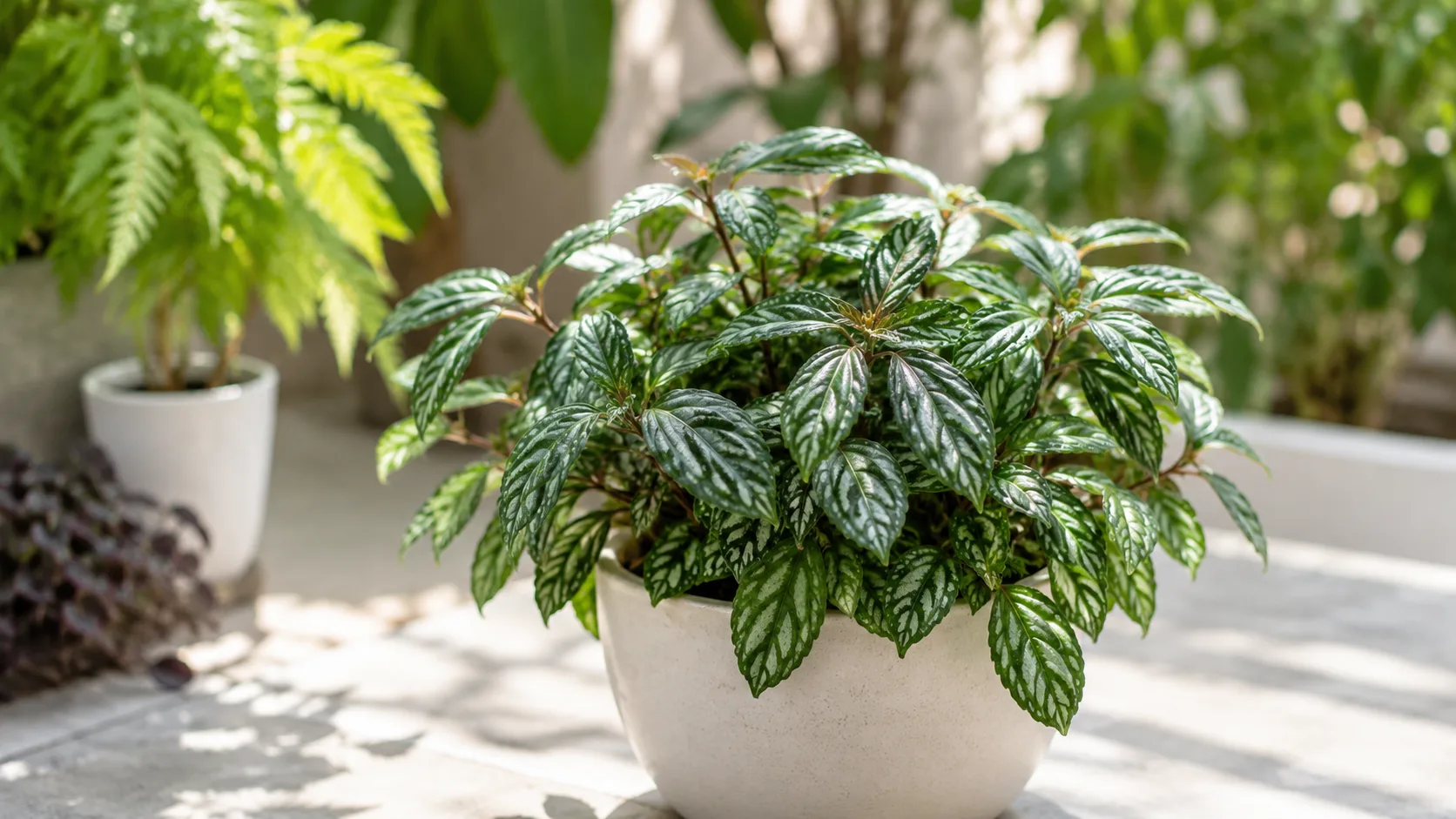
Aluminum Plant Pruning: Pinch Tips & Cut Leggy Pilea Stems
Aluminum Plant Pruning: Pinch Tips & Cut Leggy Pilea Stems
First move: pull off or snip any yellow, brown, or clearly damaged leaves at the base of their petioles with clean scissors. That clears the silver-marked canopy so you can see which of the multiple upright stems are actually leggy before you pinch or cut back living growth. Unlike single-stem Pilea peperomioides, aluminum plant (Pilea cadierei) grows as a bushy multi-stem mound - you groom every soft tip, not one central trunk.
Reviewed by LeafyPixels Review Board · Author: sai-ananth
For full care context - light, watering, and when legginess is really a placement problem - see the aluminum plant overview.
Quick Answer - Remove Dead Leaves, Then Pinch Soft Tips
Aluminum plant is an upright herbaceous perennial that typically tops out around 12 inches in a bushy clump when tips stay pinched. Missouri Botanical Garden recommends pinching stem tips as needed to keep the plant compact, and NC State Extension gives the same advice for indoor growers. Late spring through summer: pinch every soft green tip every three to four weeks, and cut long bare stems 5–10 mm above a leaf node with alcohol-wiped snips. Anytime: remove dead or yellow leaves. Limit live foliage removal to one-third per session. If lower stems are woody and stop sprouting after a summer hard cut, root fresh tip cuttings per the propagation guide and retire the parent - best foliage is on relatively young stock.
Why Aluminum Plant Needs Regular Grooming (Not Optional on Multi-Stem Pilea)
Each stem carries strong apical dominance - the soft tip suppresses side branches below it. Snap that tip and axillary buds at the next node wake up, forking one stem into two. Left alone in average indoor light, stems stretch, lower leaves drop, and the plant becomes a few bare sticks with foliage only at the top. That silhouette is normal for this species, not a sign you bought a bad plant.
The species also sheds lower leaves as stems elongate. Internodes lengthen, silver patches spread apart on the oval leaves, and the mound opens up. NC State Extension describes the habit as dense, erect, and spreading with medium growth rate - but that density only holds with regular tip removal. Pruning here is how you keep a nursery-fresh mound instead of a leggy cluster.
Aluminum Plant vs Pilea Peperomioides - Same Genus, Different Pruning Model
Both are Pilea, but the architecture changes every cut decision:
| Trait | Aluminum plant (P. cadierei) | Chinese money plant (P. peperomioides) |
|---|---|---|
| Stem habit | Several upright stems from one pot | One dominant central stem + basal pups |
| Primary shaping tool | Pinch every soft tip on every stem | Remove yellow lower leaves; optional pup detachment |
| Leggy pattern | Multiple bare sticks, tufts at tips | One bare lower trunk, round leaves at crown |
| Replace cycle | Common - woody lower stems on aging stock | Less common - pups supply fresh plants |
| See also | This page | Pilea peperomioides pruning |
If you own both species, resist treating aluminum plant like a single-stem pilea. Pinching all soft tips on all stems is the maintenance habit here.
What to Inspect Before You Cut
Walk the plant once from base to tip before touching living stems.
- Internode length: Gaps between leaf pairs wider than about 2 cm (¾ inch) on silver-marked stems mean the stem is stretching - often a light placement issue as much as a pruning one.
- Bare lower stems: Leafless sections below a tuft of top growth signal the plant has outgrown its shape.
- Canopy density: You should not see straight through the plant to the window behind it.
- Leaf health: Yellowing at the base often means older decline, not a pruning emergency - but those leaves should come off.
- Pests in leaf axils: Mealybugs hide where leaves meet stems; treat or isolate before grooming spreads insects to neighbors.
Two or more of these signs together mean a full grooming session, not just a single pinch.
When to Prune Aluminum Plant
Active Season vs Light Maintenance
Late spring through summer: Pinch tips, shorten leggy stems, and do any hard rejuvenation. The plant has enough light and warmth to push new shoots - in bright indoor conditions, buds often appear within one to three weeks, though dim or cool rooms can take longer.
Anytime: Remove dead, yellow, or pest-damaged leaves. Snip a single damaged tip if you spot it.
A simple test: if new leaves are opening at the top of most stems, the plant is in season for structural pruning. If growth has stalled, wait.
When Not to Prune Heavily
Fall and winter: Growth slows, wounds heal slowly, and new branches may not appear for several weeks in average home conditions. Stick to cleanup cuts until the plant is pushing fresh leaves again at the stem tips.
Sanitize Tools Before Touching Soft Stems
Aluminum plant stems are soft herbaceous tissue - crushed or dirty cuts invite stem rot, which Missouri Botanical Garden lists among common problems on this species.
Before the first pinch or snip:
- Wipe bypass snips or scissors with 70% isopropyl alcohol - Iowa State Extension recommends sanitizing pruning shears before use and between plants when disease is suspected.
- Let blades air-dry for 30 seconds; alcohol evaporates quickly on metal.
- Re-wipe between stems if you saw white cottony mealybug clusters in axils.
- Pinch with clean fingers when possible - finger pinches on tender tips do not crush tissue the way dull snips can.
Bag and discard trimmings from mealybug-infested plants in outdoor trash - do not compost them on a kitchen counter near other houseplants.
Pinching Soft Stem Tips for Bushiness
Pinching is the highest-leverage habit for aluminum plant. Take the top 1–2 inches of a soft, actively growing stem between thumb and forefinger and snap or roll it off. One tip becomes two branches. Repeat every few weeks through the growing season and the canopy fills in fast.
Pinch only tender new growth. Woody stems crush instead of snapping cleanly - switch to sharp snips for those.
Pinch Frequency During the Growing Season
Every three to four weeks from spring through early fall is a practical cadence for most homes at room temperature. The session takes two minutes: pinch every stem with a fresh green tip. Skip winter unless you see active new growth under grow lights.
Pinch just above the top visible node so the fork starts from a clean point. Do not leave a long bare stub above the leaves - it usually dies back anyway and wastes recovery energy.
Grower Walkthrough - Pinching a Six-Stem Mound
Picture a 10-inch pot on an east windowsill with six stems, each carrying four to five leaf pairs. Lower pairs on the two back stems have yellowed - remove those petioles first. Three stems show soft lime-green tips extending past the silver-marked mature leaves; pinch each tip between thumb and finger just above the top leaf pair, leaving no stub. One stem is already 8 inches tall with 3 cm gaps between pairs - that one gets a snip 5 mm above the third node from the top, not another pinch. Two weeks later at the same light level, forked shoots appear at every pinched node; the cut-back stem pushes a Y-shaped pair from the node below the blade. That is the normal response when bright indirect light is adequate - pinching alone cannot fix a north-facing shelf where internodes keep stretching.
Cutting Leggy Stems Above a Node
When a stem is already long and bare on the lower half, pinching the tip alone will not restore a compact shape. Cut the stem back with sharp, alcohol-wiped snips just above a leaf node - the small bump where a leaf pair attaches. Aim for 5–10 mm above the node at a slight angle so water does not sit on the cut face.
New shoots emerge from buds at that node during active growth - often within one to three weeks in warm bright conditions, longer in cool dim rooms. A single bare stick becomes a Y-shaped fork with fresh foliage.
Never cut mid-internode - the section above a node with no buds will not branch and often dies back several centimeters before sealing. If the node you want is too high, cut lower to the next healthy node instead.
Finding the Node on Silver-Marked Stems
On Pilea cadierei, each leaf pair attaches opposite on the stem. The node is the slight swelling or ring at that junction - often visible as a narrow band on an otherwise smooth green stem, sometimes with a tiny dormant bud tucked in the angle above the petiole. The internode is the smooth stem section between two leaf pairs; cutting there wastes tissue.
Trace upward from the soil: leaf pair → smooth gap (internode) → leaf pair (node here) → smooth gap → leaf pair (node here). Place the blade above the node you want to activate, not through the gap between pairs.
Pinch vs Cutback vs Hard Rejuvenation
| Method | Best season | Risk | Expected response (bright indoor spring/summer) |
|---|---|---|---|
| Soft-tip pinch | Spring–early fall, every 3–4 weeks | Very low | Forked shoots at pinched node within 1–3 weeks |
| Stem cutback above node | Late spring–summer on one leggy stem | Low–moderate | Y-branch from cut node within 1–3 weeks; fuller mound in 6–8 weeks |
| Hard rejuvenation | Late spring–early summer only | Moderate - stalls if over one-third removed | New shoots at low nodes in 2–4 weeks; canopy rebuild over 8–12 weeks |
Spread hard rejuvenation across two to three weeks if multiple stems need resetting. Save healthy tip sections for the propagation guide.
How Much Foliage You Can Remove Safely
Treat one-third of total visible foliage as the ceiling for a single session. Aluminum plant rebounds quickly in good conditions, but removing more than that at once leaves too little leaf area to fuel new shoots - the plant sits idle for weeks.
For a hard rejuvenation, stagger cuts over two or three weeks rather than stripping half the plant in one sitting. Always leave at least two or three healthy nodes on each remaining stem so there are multiple points for new growth.
Dead or fully yellow leaves do not count toward the one-third limit. Remove those whenever you see them.
Hard Rejuvenation for Overgrown Specimens
When selective pinching will not fix a plant with woody, leafless lower stems and a sparse top, cut the worst stems back to within a few nodes of the soil line - but only in late spring or early summer. The Missouri Botanical Garden notes that aluminum plant propagates easily from stem tip cuttings in spring or summer and that some gardeners replace plants each year by rooting fresh cuttings in early spring.
After a hard cutback:
- Keep bright, indirect light steady - do not move the plant into direct sun on cut stems.
- Water when the top half-inch of mix dries, same as normal.
- Pause fertilizer for two to three weeks.
- Expect new shoots at cut nodes within two to four weeks in active-season warmth; fuller shape often takes eight to twelve weeks indoors - faster under grow lights, slower after fall cuts.
Recovery vignette: A two-year-old specimen hard-cut to three nodes per stem in late May on a west-facing sill (bright indirect, no direct afternoon sun) showed paired shoots at every cut within 18 days at 22°C. By week ten the mound looked nursery-compact again - but a sister plant cut the same week in a dim north room still had bare lower stems at week twelve. Light and season matter as much as technique.
Save healthy tip sections from the cutback for propagation rather than discarding them.
What Not to Cut
- Mid-internode stubs with no leaf node nearby - they will not branch.
- Every stem to the soil line at once - leave some foliage so the plant can photosynthesize through recovery.
- The only remaining green leaves on a weak plant - if the specimen is already stressed from overwatering on Aluminum Plant or root issues, fix care before structural cuts.
- Flowers, if they appear - indoor aluminum plants rarely flower as houseplants; if tiny green cymes form, they are insignificant and can stay or go without affecting shape.
Aftercare and Recovery Timeline
Freshly pruned aluminum plant needs steady, boring care for two to three weeks.
Light: Bright, indirect - a few feet from an east- or west-facing window. Leggy rebound growth after pruning almost always means insufficient light, not insufficient pinching.
Water: When the top half-inch of soil dries. Less leaf area means less water use - do not overcompensate.
Humidity: 50–60% supports clean healing on soft stems. NC State Extension recommends high humidity for this species indoors.
Fertilizer: Resume half-strength balanced feed once new shoots are visible, not immediately after the cut.
Recovery signs (active season, bright indoor conditions): paired shoots at pinched or cut nodes within one to three weeks; tighter internodes on new growth; denser silhouette when viewed from above over six to eight weeks after moderate cutback.
Warning signs: black or mushy cut ends (dirty tools or cuts too far from nodes), no new growth after four to six weeks in summer (over-pruned, poor light, or underlying stress), or widespread yellowing (address watering and roots before more cuts).
Common Pruning Mistakes on Aluminum Plant
- Pinching without improving light - new branches stretch just as fast as the old ones in dim corners.
- Cutting in winter and expecting fast rebound - wait for active spring growth.
- Removing more than one-third at once - stalls recovery even on this forgiving species.
- Using dull or unwashed snips - crushed stems on soft tissue invite stem rot.
- Composting mealybug-infested pinchings indoors - isolate, treat, and bag trimmings away from the collection.
- Throwing away healthy tip cuttings - propagation is how many growers refresh aging plants; see the propagation guide.
When to Replace the Plant Instead of Pruning
Aluminum plant looks best on relatively young stock. Both Missouri Botanical Garden and NC State Extension note that the best foliage is on new plants, and replacing via cuttings each year or two is common practice.
Replace rather than keep rejuvenating when:
- Lower stems are woody, mostly bare, and fail to sprout after a hard cutback in summer.
- Persistent leaf spot, stem rot, or recurring mealybugs make every cut a risk to the whole pot.
- A fresh rooted cutting from a healthy tip already looks fuller than the parent.
Take three- to six-inch tip cuttings with two or three nodes, root in water or moist mix per the propagation guide, and start a new plant in the same or a clean pot. Within a few weeks the cutting often outpaces an old, woody specimen.
Related Aluminum Plant Care
Pruning cannot fix chronic stretch from dim placement - adjust light before the next pinch round.
- Aluminum plant overview - species profile, pet safety, and full care rhythm
- Aluminum plant propagation - rooting pinched tips and hard-cut salvage stems
- Aluminum plant light - brightness that keeps internodes short between pinches
- Aluminum plant watering - moisture rhythm during recovery weeks
How We Wrote and Verified This Guide
This page targets indoor growers who need multi-stem Pilea cadierei grooming - pinch cadence on every soft tip, node placement on silver-marked stems, replace-vs-rejuvenate decisions, and mealybug-safe trimmings handling without template recap filler. Recommendations were checked against Missouri Botanical Garden, NC State Extension, Iowa State sanitization guidance, and sibling aluminum plant cluster pages, then validated with a claims audit before publication.
Revision note (2026-06-17): Added visible authorship block, Pilea species comparison table, pinch/cutback/rejuvenation decision table, grower walkthrough vignettes, tool sanitization section, de-templated FAQs, internal cluster links, qualified indoor recovery timelines, and checklist conclusion per E-E-A-T audit.
Author: sai-ananth - plant-care content editor focused on multi-stem houseplant grooming
Reviewer: LeafyPixels Review Board - editorial review against extension and botanical-garden references
Methodology: Claims verified against primary horticultural sources; AI-assisted drafting with human editorial review; unverified statements flagged for human review.
Conclusion - Three Things to Remember
If you remember three things before grooming aluminum plant: (1) dead and yellow leaves first, then pinch every soft tip on every stem - this is a multi-stem mound, not a single-trunk pilea; (2) cut leggy bare stems 5–10 mm above a visible node with sanitized snips, stay under one-third removal, and improve light if internodes keep stretching after pinching; (3) when woody lower stems stop responding to summer hard cuts, root fresh tips via the propagation guide and retire the parent - young stock carries the best silver foliage.
When to use this page vs other Aluminum Plant guides
- Aluminum Plant overview - Start here for whole-plant context before deep-diving this topic.
- Aluminum Plant problems hub - Jump to symptom-specific fix guides when this care topic does not resolve the issue.
- Leggy Growth on Aluminum Plant - Escalate here when pruning adjustments are not enough.
- Slow Growth on Aluminum Plant - Escalate here when pruning adjustments are not enough.
- Brown Tips on Aluminum Plant - Escalate here when pruning adjustments are not enough.